Investing in Birmingham property means decoding the particularities of the British market, from how leasehold works to what prices actually are by district. This guide takes you through weighing the opportunities of the city centre against what a secure purchase requires.
Get the app
What nobody tells you.
Real prices, hidden costs and the traps to check before you commit.
What you actually get buying an apartment in Birmingham
Scroll
What you actually get buying an apartment in Birmingham
Investing in Birmingham property means decoding the particularities of the British market, from how leasehold works to what prices actually are by district. This guide takes you through weighing the opportunities of the city centre against what a secure purchase requires.
Written by the ting.ad editorial team ·
Avenue Road, Birmingham in Street View: drag to look around.
Buying property in Birmingham is not a matter of signing on the strength of theoretical yields and civic announcements. Between the reality of regenerating the old industrial quarters and what a flat is genuinely worth, the trade-offs deserve examining.
The promise of rapid appreciation carried by major regeneration projectsvsA market where prices frequently stagnate short term, given the abundance of similar new schemes
Large infrastructure projects such as HS2 and the reworking of the old canals are redrawing where value sits, but they arrive alongside a volume of completions that absorbs immediate demand and caps resale growth.
The appeal of urban life in a city centre with real momentumvsStructural constraints around building management and high service charges in modern blocks
Service charges rise steadily and weigh heavily on net return, particularly in residential towers with concierge provision.
A strategic position at the centre of the UK with excellent rail accessvsStrong competition between landlords for good tenants in the mid-market
The abundance of recent rental stock in certain segments means a well-presented flat lets easily and an average one sits empty.
Does this fit your life and your plans?
Buying a flat in a major British city answers different requirements depending on whether you want a professional base, a pure rental investment or a long-term main residence.
The investor
Your absolute priority should be the quality of the letting management and control of the service charges, rather than the promise of appreciation in ten years. Transitional districts offer attractive entry prices but demand rigorous selection of the building to avoid surprises on future works.
You also have to account for local taxation and the strict regulatory obligations that govern letting in the UK. Property near the universities or the business district holds up even in a general slowdown.
The permanent resident
You are choosing between the energy of the city centre, with its mobility advantages, and the calm of the residential suburbs served by public transport. Converted Victorian flats often have real character but frequently need a significant works budget to meet modern expectations of insulation and efficiency.
The part-time resident
A compact flat close to New Street or Snow Hill makes sense, since the value is in the walk to the station rather than in floor area. Check the building's rules on short-term letting before assuming you can offset the cost when you are not there.
Buying here when you come from abroad: what genuinely changes
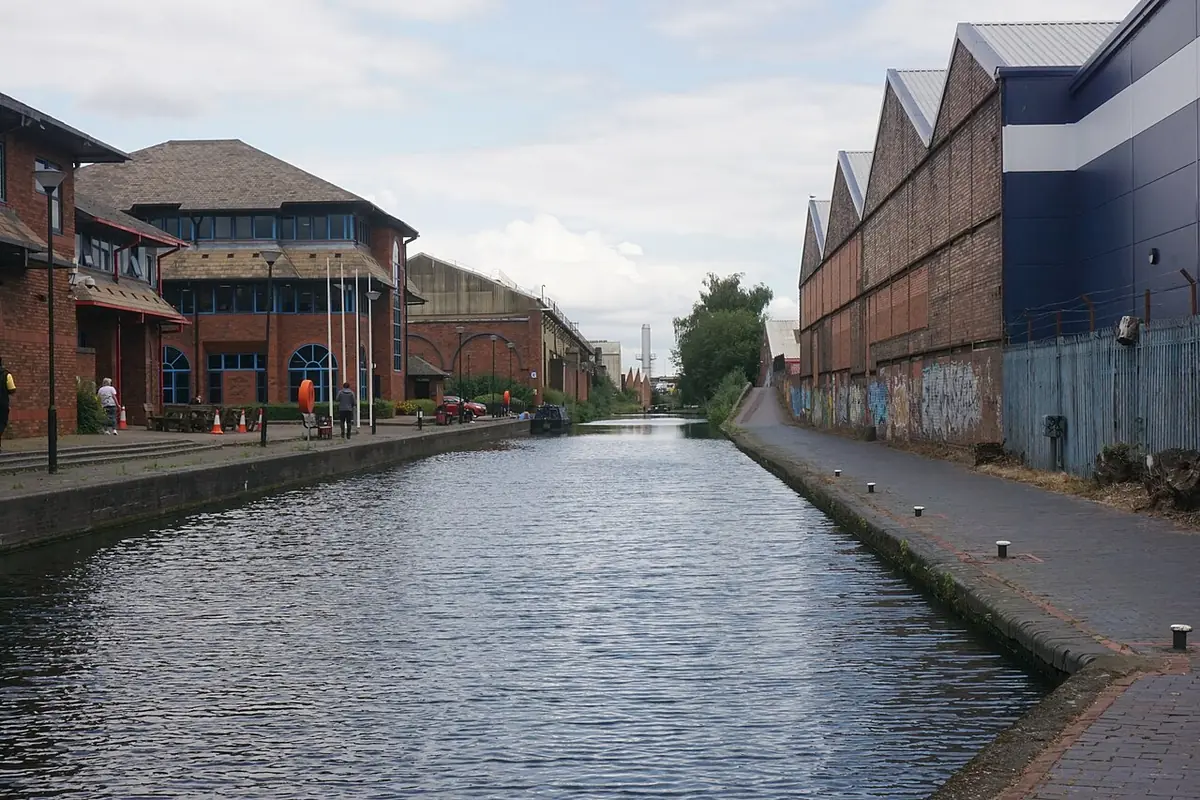
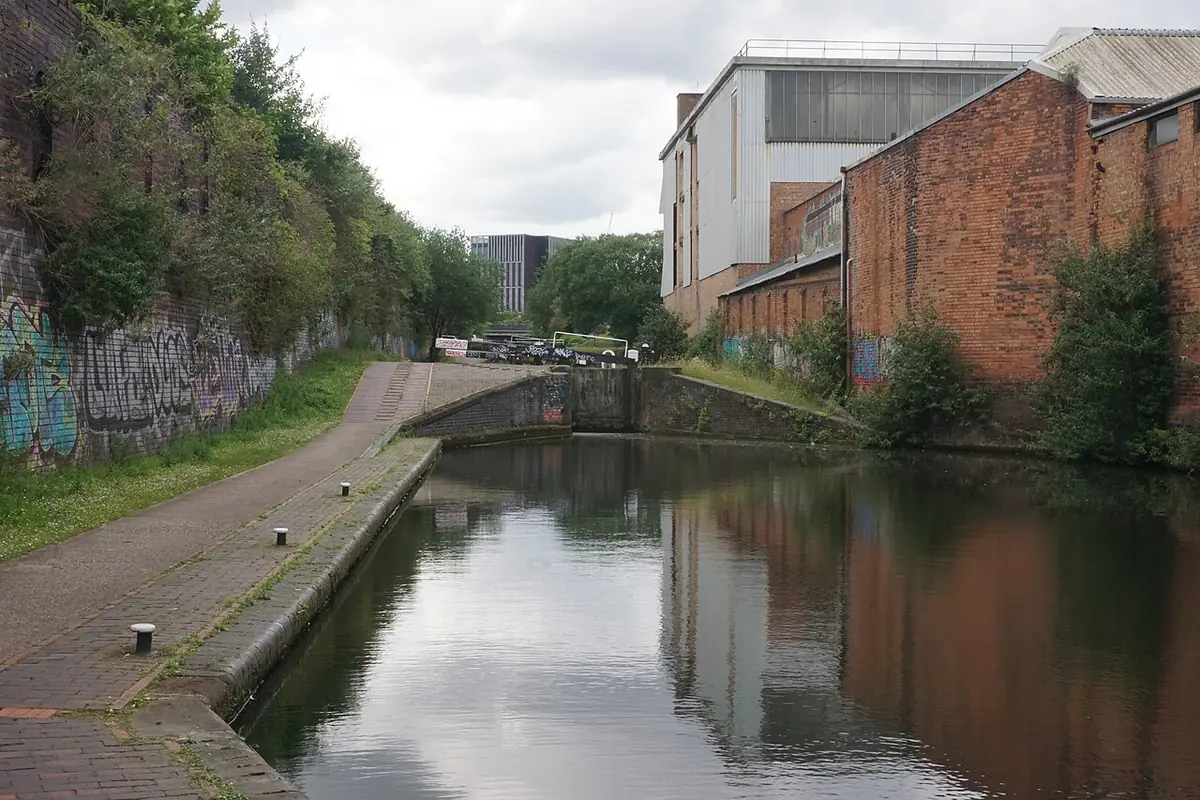
The canal towpath near Aston, part of daily life around the city's waterways — Photo: Bill Boaden · CC BY-SA 2.0 · Wikimedia Commons
Buying property in the UK follows legal and practical codes profoundly different from those in most of continental Europe. There is no direct equivalent to a notary, leasehold is central to how flats are owned, and the process itself works differently.
From abroad
A notary at the centre, and an immediate binding deed
Birmingham
The chain, and specialist conveyancers
The transaction rests on negotiations run by solicitors or conveyancers, where every link in the chain of buyers and sellers conditions the completion date — sometimes stretching it to months.
From abroad
Universal freehold ownership of flats within a building
Birmingham
The fundamental distinction between freehold and leasehold
For a flat, you generally buy a long-term right of occupation rather than the land, which means checking the remaining lease term and the cost of extending it very carefully.
From abroad
Compulsory technical surveys provided by the seller
Birmingham
Caveat emptor — buyer beware
The buyer carries most of the responsibility for verification and must commission their own experts to establish the property's real condition before committing.
From abroad
Service charges governed by a regulated professional manager
Birmingham
Management by freeholders or managing agents of varying rigour
How well the building is run is something you have to investigate yourself, through the accounts and the meeting minutes, before you exchange.
Which district suits your ambitions and your budget?
Birmingham is a mosaic of districts with sharply contrasting dynamics, from the financial core through rehabilitated industrial quarters to greener residential areas. Location conditions almost everything that follows.
Colmore Row and the Financial District
Active and professional during the week, paced by the flow of executives, and noticeably quieter at weekends.
Suits
Investors wanting strong corporate rental demand, and professionals looking for an ultra-central base.
Trade-off
Prices per square metre among the highest in the city, and a more limited evening scene than the fashionable quarters.
Jewellery Quarter
An appealing balance of preserved industrial heritage, jewellers' workshops, independent cafés and modern red-brick housing.
Suits
Those who want authentic historic character while staying ten minutes' walk from the centre and the main stations.
Trade-off
A varied building stock where unrenovated older property needs particular attention to insulation and structure.
Digbeth
A creative, alternative cultural hub in real transition, marked by street art, co-working space and film studio projects.
Suits
Buyers comfortable with an area still changing, and investors betting on the direction of travel.
Trade-off
Ongoing construction, uneven amenities and a character that will not suit everyone.
Edgbaston and Harborne
Green, established residential streets with good schools and independent shops, a short ride from the centre.
Suits
Families and buyers wanting calm without leaving the city, and steady long-term demand.
Trade-off
Less new-build stock, and a slower market than the centre when you come to sell.
What does an apartment in Birmingham actually cost?
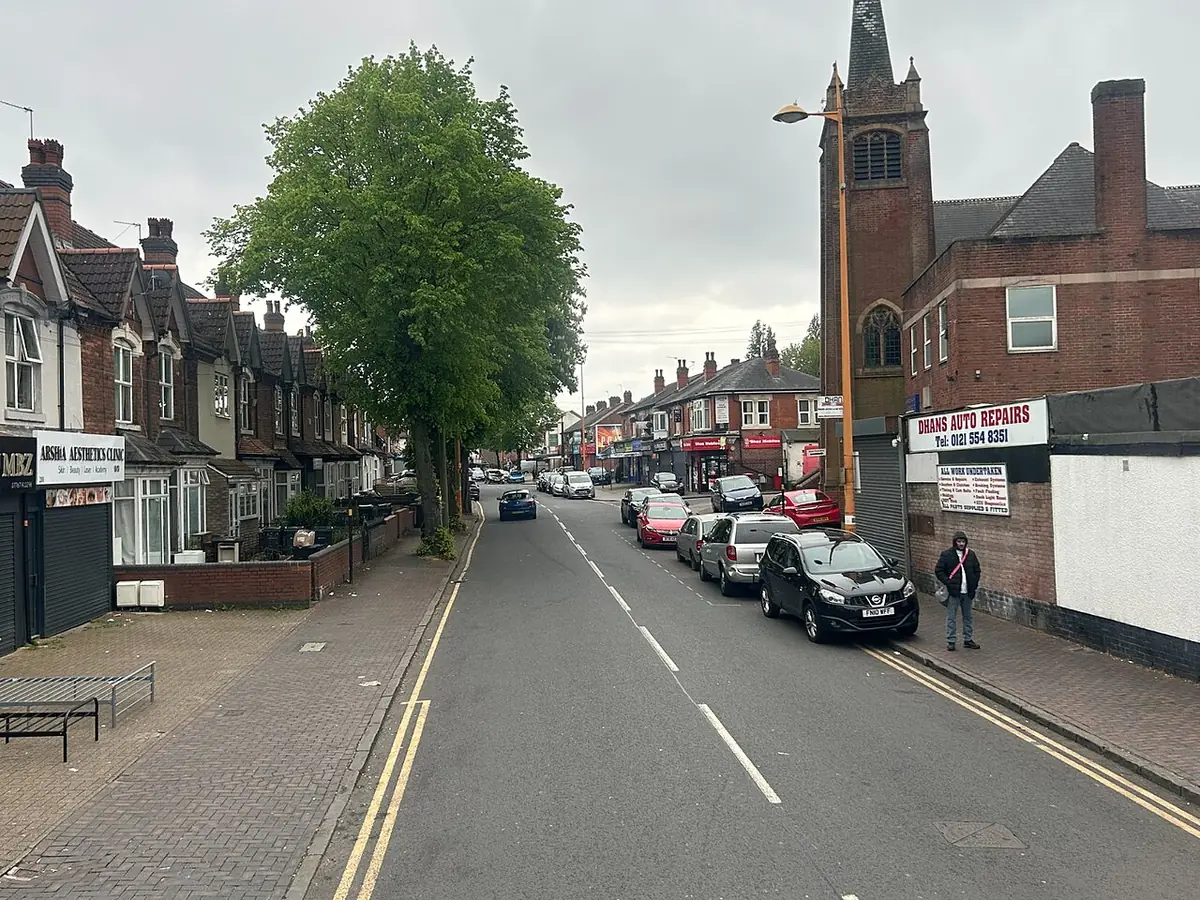
A typical Handsworth high street, shops below flats and houses nearby — Photo: Philip Halling · CC BY-SA 2.0 · Wikimedia Commons
Birmingham's market shows considerable variation by exact location, year of construction and the standard of the building. Beyond the asking price shown by agents, a buyer must budget for the full set of transaction and ownership costs. A clear view of those lines is what makes the purchase viable over the medium term.
birminghamFor saleApartmentestimate
Median price / m²£2,850Half the apartments sell below this
Median price£195kthe average is 14% higher — a few very large properties pull it up
Most common2 bedrooms48 % of listings
Average size65 m²
By number of bedrooms
Bedrooms
Share of market
Avg price
Price / m²
Avg size
1
30 %
£146k
£3,240 +8 %
45 m²
2most common
48 %
£195k
£3,000
65 m²
3
18 %
£248k
£2,820 −6 %
88 m²
4
4 %
£317k
£2,760best value / m²
115 m²
Each row is an average, compared against the area average of £3,000 / m². These are indicative estimates of a typical local market, not a measured sample of live listings. Check current listings before relying on them.
What you can actually own: Victorian character or modern build
Birmingham's stock offers a striking contrast between old factories converted into bright lofts and brand-new residential towers with every modern fitting. Each carries structural advantages and drawbacks.
Converted period property and industrial lofts
These stand out for remarkable ceiling heights, large arched windows and unusual volumes that give an interior real personality. Usually located in districts with a rich manufacturing past, they carry a historic anchoring that demanding tenants and buyers seek out. Thermal insulation is sometimes imperfect, and maintenance of the older parts of the building can surprise you when major roof or façade works arrive.
What it changesYou get a property with unique character, often better located, at the price of closer attention to the building's technical condition and possible energy upgrade works.
New build and residential towers
These meet current standards for acoustic and thermal insulation, which reduces energy bills considerably and removes the need for immediate work. Shared services such as concierge, co-working space and sometimes a gym add real day-to-day comfort.
What it changesFloor areas are frequently tighter and service charges higher, so weigh the convenience against what the building charges you every year for it.
The rule to understand before paying anything
In the UK, an accepted offer carries no binding legal force until contracts are formally exchanged between the two sides' solicitors. That intermediate period, sometimes long and stressful, leaves a buyer exposed.
Your offer is accepted by the seller.
The property becomes 'sold subject to contract' — a status with no binding legal effect on either party.
You instruct your conveyancer immediately to begin the legal searches on title and easements.
You commission an independent survey to identify hidden defects or structural problems.
Your conveyancer reviews the answers to the legal enquiries and confirms there is no dispute or damaging planning proposal.
Exchange of contracts, at which point both sides are committed.
How a transaction runs, step by step
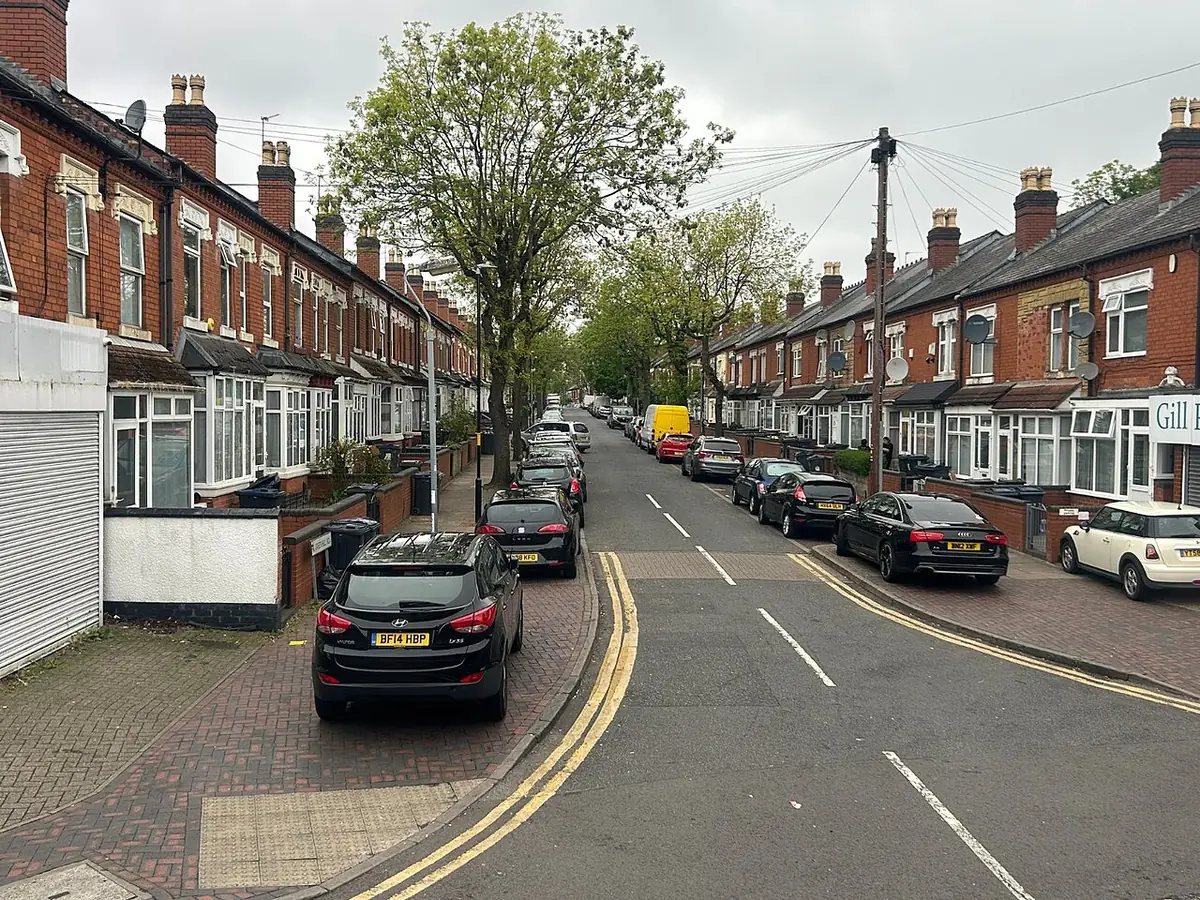
Terraced streets like this are the everyday housing stock across Birmingham — Photo: Philip Halling · CC BY-SA 2.0 · Wikimedia Commons
Completing a purchase in Birmingham means coordinating several specialists under the supervision of your legal adviser. From selecting the property through to keys on completion day, each has a defined role.
You and your brokerConfirming your financingObtaining an Agreement in Principle to demonstrate your financial position to agents before you offer.
The local estate agentSearch and negotiationTargeted viewings and a reasoned offer based on objective analysis of market prices rather than the asking price alone.
Your conveyancer or solicitorLegal searchesRigorous analysis of the lease, the service charges, planning restrictions and environmental risks attached to the site.
The independent surveyorTechnical inspectionA detailed survey — Level 2 or 3 — assessing the roof, façades, foundations and internal installations.
Both sides' solicitorsExchange of contractsFormal commitment on both sides, with a deposit paid, generally 10 per cent of the price.
The parties and the lendersCompletionFunds transferred, the transaction registered with HM Land Registry and the keys handed over.
Why choose an apartment rather than a house in Birmingham?
Buying a flat in Birmingham means understanding the particular dynamics of this West Midlands city, where the market divides sharply between densification in the centre and the spread of the residential suburbs. Unlike the Victorian houses of Moseley or Harborne, flats concentrate heavily in the core and the quarters, particularly around Brindleyplace and the Jewellery Quarter.
That opposition is not only architectural. A city-centre flat buys you a walk to the station, to the office and to the restaurants, and it removes almost all external maintenance. A suburban house buys you a garden, more floor area for the money and freehold ownership — but it commits you to a commute and to maintaining the fabric yourself.
Financially, the leasehold question dominates. A flat with a short lease is difficult to mortgage and expensive to extend, which is why the remaining term matters more than almost any other single factor. A freehold house carries no such issue, and no service charge, though it carries every repair.
The honest test is how you want to spend your time. If proximity and low maintenance matter most, the flat is the right instrument, provided the lease is long and the building well run. If space and control matter more, look at the houses in the outer rings and accept the journey.
What total budget do you need?
Assessing the budget for a flat in Birmingham cannot stop at the price on the portals. You have to include every compulsory additional cost, and they are substantial.
Purchase price ranges by area
Area
Studio / 1 bed
2 bed
3 bed and above
City Centre / Mailbox
£160,000 - £210,000
£230,000 - £320,000
£350,000 - £550,000+
Jewellery Quarter
£150,000 - £195,000
£215,000 - £290,000
£320,000 - £480,000
Edgbaston / Harborne
£140,000 - £180,000
£200,000 - £275,000
£300,000 - £450,000
Outer areas (Sutton Coldfield)
£130,000 - £170,000
£185,000 - £250,000
£270,000 - £400,000
These figures reflect transactions recorded by HM Land Registry for property of normal insulation and energy performance.
Estimated additional costs on a £250,000 purchase
Cost
Estimated amount
Status
Stamp Duty Land Tax
£2,500 as a main residence
Compulsory
Solicitor or conveyancer fees
£1,500 - £2,500
Compulsory
Survey
£400 - £1,200
Strongly advised
Mortgage arrangement or broker fees
£300 - £600
Depends on the broker
First-time buyers benefit from Stamp Duty relief up to thresholds set by the UK government.
What daily life looks like owning a flat in Birmingham
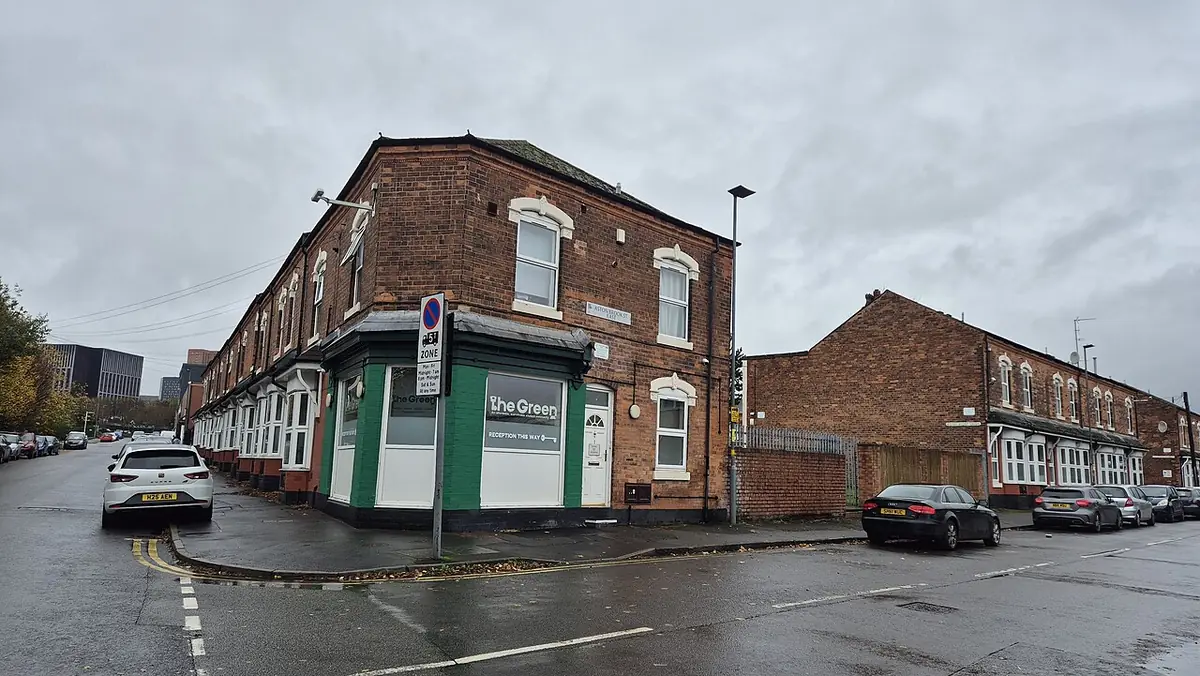
Corner pubs and terraced rows like this define Aston's streets — Photo: Paul Collins · CC BY-SA 2.0 · Wikimedia Commons
Picturing your future routine means walking through an ordinary day, from waking in a city-centre flat to getting home in the evening. Journey times, access to healthcare and how the neighbourhood functions all show up here.
07:30A flat in the Jewellery QuarterStarting the day with a clear view over the quarter's historic red brick, and a quick check of transport running times on the local app.
08:15Jewellery Quarter or Snow Hill stationA ten-minute walk to the platform for the tram or train towards Colmore Row or New Street.
09:00Colmore Business DistrictArriving at the office without the chronic congestion of the Inner Ring Road, thanks to a genuinely central position.
13:00A local GP surgeryA routine appointment close to work, made easier by the density of healthcare provision in the centre.
18:30A local supermarket at BrindleyplaceA quick shop for the evening, avoiding the trek to an out-of-town superstore.
19:45HomeBack to the flat, bike into the building's secure store, and the evening in a quiet living room.
What a listing never mentions
Listings emphasise light, floor area and proximity to shops, and systematically omit the structural and legal constraints particular to English property law.
How many years remain on the lease
A lease below 85 years starts to lose value exponentially and makes obtaining a mortgage from mainstream lenders very difficult. It is the single most important number on a leasehold flat.
Unpredictable increases in service charges
The cost of maintaining common areas, lifts and façades can double within a few years if the building is handed to a managing agent without rigour.
The city's infrastructure and roadworks programme
The Birmingham Development Plan provides for numerous road and construction schemes that can affect the quiet and the access to your street for years.
Strict restrictions on short-term letting
Many buildings formally prohibit short-term subletting in their rules, which stops any plan to offset costs through occasional letting.
What buyers most regret six months later
Looked likeAn excellent deal, at a price per square metre well below the local average.
Turned outA flat with a very short lease, requiring an extension that proved extremely expensive and contentious.
Would have caught itHave your solicitor establish the exact remaining lease term in the first week after your offer, and refuse anything under 99 years without a major discount.
Looked likeA district in full regeneration, with rapid gentrification and guaranteed appreciation.
Turned outA noisy area, with construction running day and night and saturated traffic at peak hours.
Would have caught itVisit the surroundings at different times of day and night, including the weekend, and check the council's planning register.
Looked likeModerate service charges in a modern building with high-specification amenities.
Turned outNo sinking fund at all, forcing owners to vote large levies to fund façade works.
Would have caught itAsk for the last three years of building accounts and meeting minutes to identify current disputes and planned major works.
Looked likeA parking space included in the sale, taken on trust.
Turned outA space leased separately from the council or a third party, terminable at short notice.
Would have caught itHave your solicitor confirm in writing that the parking is demised within the lease rather than licensed separately.
Who should not buy a flat in Birmingham
Buying is not a universal solution and is sometimes entirely unsuited to a particular situation or a short horizon. In Birmingham, the structure of the leasehold market makes that especially true.
An investor who may need liquidity at short notice
→To avoid buying a leasehold flat here.
Reselling a leasehold property, subject to the buyer's solicitor's enquiries, frequently takes three to six months, which makes it unsuitable where cash may be needed quickly.
A first-time buyer on an extremely tight budget with no savings
→To keep renting while building a financial cushion.
Without a reserve for an emergency repair or a rise in mortgage rates, an owner is exposed to serious difficulty very quickly.
Someone working remotely who wants genuine quiet and green space
→A house in a rural or semi-rural part of the neighbouring counties.
Birmingham's urban density and the activity of the central districts generate noise that is inherent to living in a large, busy city.
So are you ready to buy in Birmingham?
Canal walks like this are part of daily routines near Aston — Photo: Bill Boaden · CC BY-SA 2.0 · Wikimedia Commons
Deciding to buy a flat in Birmingham means weighing the maturity of your plans against the rigour of your financial preparation. If you have understood the subtleties of leasehold, checked the state of the building's accounts and accepted the realities of urban life in the West Midlands, you have what you need to buy without second-guessing yourself.
Birmingham offers genuinely interesting prospects — a young population, major infrastructure investment and prices well below London for comparable space. Those prospects are real, and they are slower than the marketing suggests.
Three things decide whether this works: the remaining lease term, the health of the building's sinking fund, and whether you can hold for long enough to absorb the transaction costs. Get those right and the rest is detail.
Related questions
What does a flat in Birmingham cost?
Prices generally run from around £150,000 for a studio in the outer areas to more than £300,000 for a large two- or three-bedroom flat in sought-after central districts such as Colmore Row or Brindleyplace.
What is leasehold?
Leasehold is a widespread form of ownership in the UK where you buy the right to occupy the flat for a fixed term, while the land and the structure belong to the freeholder.
How long does buying take?
From acceptance of your offer to getting the keys, the full process averages twelve to sixteen weeks, because of the detailed legal enquiries carried out by both sides' solicitors.
What costs come on top of the purchase price?
Stamp Duty Land Tax, solicitor's fees of £1,500 to £2,500, and a survey costing £400 to £1,200. Add mortgage arrangement or broker fees where applicable.
Can a non-resident buy in Birmingham?
Yes. International buyers can acquire property in the UK, but they face an additional Stamp Duty surcharge for non-residents and stricter mortgage lending criteria.
What are service charges?
Annual payments made by flat owners to cover maintenance of the common areas, cleaning, lifts, the building's insurance and general management.
How short is too short on a lease?
Below about 85 years, value begins to fall away and mainstream lenders become reluctant. Treat anything under 99 years as needing a discount and a clear plan to extend.
What is a sinking fund, and why does it matter?
A reserve the building accumulates for major works. Without one, façade repairs or lift replacement arrive as sudden large levies on individual owners.
Can I let the flat on a short-term basis?
Frequently not. Many leases prohibit short-term subletting outright, so check the lease before assuming any income from that route.
Is an accepted offer binding?
No. Until contracts are exchanged, either side can withdraw. That period, known as sold subject to contract, is where most failed purchases collapse.
Property review of ting
No ting properties in Birmingham Gb yet
Be the first — share it on ting and it shows up right here.