Settling for the long term in the great historic metropolis of Philadelphia means taking an honest measure of what makes its residential market distinctive. Between the appeal of period housing stock and the demands of local rules, here are the essentials for carrying your purchase through with confidence.
Get the app
What nobody tells you.
Real prices, hidden costs and the traps to check before you commit.
What you actually get when you buy a house in Philadelphia
Scroll
What you actually get when you buy a house in Philadelphia
Settling for the long term in the great historic metropolis of Philadelphia means taking an honest measure of what makes its residential market distinctive. Between the appeal of period housing stock and the demands of local rules, here are the essentials for carrying your purchase through with confidence.
Written by the ting.ad editorial team ·
John F. Kennedy Boulevard, Philadelphia in Street View: drag to look around.
Beyond the nature of the building stock, it is your own daily life that has to line up with the reality of these neighborhoods.
Buying a home in this large historic city offers a rare compromise between relative affordability and urban density. Unlike neighboring markets where every square meter trades at the top of the range, Philadelphia still has districts where older masonry and generous room sizes remain within reach of buyers looking to put down roots on the East Coast. This market is not simply a cheaper alternative; it shapes a way of living where architectural history meets the reality of a big American city in transition. Understanding what you are really buying means looking past the red brick front to examine the structure itself and the character of the neighborhoods. You are investing in a dense urban fabric marked by decades of change, where the precise location dictates quality of life as much as the future value of the property. It is a commitment that requires weighing the appeal of traditional homes against the upkeep that older buildings inevitably demand.
More generous living space and genuine period charactervsInitial renovation costs that newcomers routinely underestimate
Traditional brick houses offer volume that is rare for the price, but they demand constant attention to insulation, the roof and old foundations. The apparent floor area sometimes hides decades of upgrades needed to deliver modern, lasting thermal comfort.
A central position within a major cultural and economic networkvsA pronounced gap between micro-neighborhoods in the level of public services
Living in the city means a lively neighborhood life and remarkable walkability. In exchange, moving from one street to the next can sharply change how safe, how clean and how well kept the immediate surroundings feel.
Long-term appreciation potential underpinned by regional vitalityvsA demanding local property tax that weighs heavily on the annual budget
Property tax is a decisive budget line that should never be brushed aside when working out what you can afford. It funds municipal services but is a large fixed cost that directly affects the yield or the true cost of ownership over the years.
Easy integration into organized and active local communitiesvsLocal administrative complexity of the kind found in historic American cities
Neighborhood associations and local civic life offer a warm welcome to anyone willing to get involved. That said, planning procedures, building permits and historic preservation rules impose a paperwork discipline you need to anticipate.
Does this place really match your way of life and your day-to-day expectations?
That collision between your expectations and local reality takes an even more specific turn when you arrive with reference points formed somewhere else.
Choosing to settle in this metropolitan area answers to different priorities depending on whether you put family life, your career or a lasting cultural anchor first. Every buyer profile faces precise trade-offs between being central and being quiet. The shape of the city, with its historic grid and its scattered centers of activity, forces you to calibrate your choice around the trips you actually make and your tolerance for the noise of a big city. Compromises that feel acceptable in the short term can become wearing if you neglect to look honestly at your own rhythm against local conditions. It is worth examining how each situation finds its answer in the housing on offer, so as to avoid the trap of a purchase driven only by falling for a facade or a fashionable neighborhood.
Urban worker seeking immediate proximity to job centers and transit lines
You value quick trips, being able to do everything on foot or by public transport, and you accept the constant activity of a dense environment. Your days revolve around the busiest parts of the city, where cultural and social life is within reach without major logistical effort. In exchange, you have to live with heavier traffic, small or nonexistent outdoor space, and a noticeably higher land cost per square meter for the same floor area. This balance suits anyone for whom the time saved on the daily commute outweighs the need for a big private garden.
Household with children prioritizing space, parks and quiet streets
Your absolute priority is safety, well-regarded schools nearby and access to leafy parks for weekend activities. You will naturally look toward more residential neighborhoods a little further from the very center, where houses have private yards or small planted back gardens. The downside of that setup is longer trips to reach the central business districts and greater dependence on the area's schools and after-school infrastructure. It is a long-term choice that calls for getting involved in local community life and settling durably into the social fabric of your block.
Lover of period architecture ready to take on substantial renovation work
You are drawn to the aesthetic potential of historic buildings, the period moldings, the solid wood floors and the singular soul of old masonry. You accept the financial and mental burden of a project to bring things up to standard, whether that means plumbing, electrics or thermal insulation. This choice implies rigorous management of the surprises any job throws up and a close relationship with the local authorities charged with preserving architectural heritage. The reward is measured in the creation of a unique home that reflects your taste and whose value consolidates with each renovation carried out properly.
Living here when you come from abroad: what fundamentally changes in your points of reference
Adapting to local practice starts, first of all, with a well-judged choice of the neighborhood you settle in.
Moving to the United States from abroad puts a buyer face to face straight away with radically different property, legal and social standards. The reflexes formed elsewhere around consumer protection, lease regulation or building construction no longer apply in the same way. The American system of land ownership rests on principles of free enterprise and local regulation by county and municipal law, which often surprise newcomers with their apparent flexibility and their real complexity. Understanding these differences is the key to avoiding disappointment at settlement and to settling successfully into the social fabric. It is not simply a matter of changing country, but of adopting a new reading of urban space, of neighborly relations and of the civil liability that comes with private ownership.
From abroad
A protective, uniform national framework governing home purchases
Philadelphia
A decentralized property law in which each state, county and municipality applies its own rules
You absolutely need local professionals around you (agents, title companies or specialist attorneys) to decode the legal and planning subtleties of the specific area, because no national rule uniformly guarantees your interests.
From abroad
Traditional construction in cut stone or heavy masonry block
Philadelphia
A predominance of mixed structures, often timber framed with a brick face
Sound and thermal insulation differ from recent European standards; maintaining facades and managing moisture demand heightened vigilance and thorough technical inspections before you make any offer.
From abroad
Local taxes collected and distributed according to national or regional scales
Philadelphia
A direct and very high local property tax that weighs heavily on the budget
The cost of owning a home does not stop at the mortgage payment; property tax is a recurring annual charge you have to build into your overall financing plan from the outset.
From abroad
Centralized public services that are broadly the same everywhere
Philadelphia
A quality of public services and schools tied to the tax base of the district
The address you choose directly determines the quality of public schools for your children and the effectiveness of local services, which makes micro-local analysis indispensable.
From abroad
A dense urban landscape built around historic squares and neighborhood shops
Philadelphia
A grid layout with residential zones that are sometimes far from the shops
How you get around changes completely: walking remains possible in the very center but quickly gives way to daily car use for groceries and family outings once you move further out.
Which neighborhood should you choose? A comparison of the residential areas that fit your plans
Once you have identified the right area, you have to hold your ambitions up against the financial realities of the local market.
The city is a mosaic of neighborhoods with strong identities, where the atmosphere changes sharply from one street to the next. There is no universally perfect district, only areas that answer precisely to particular lifestyles and particular budgets. Between the historic bustle of the center and the residential calm of outlying areas, a buyer has to arbitrate between being close to cultural amenities and the quiet of a settled family environment. Analyzing the dynamics of each neighborhood lets you anticipate not only your day-to-day comfort but also how easily your property will sell later on. The decisive criteria include transit access, the vitality of nearby shops and the reputation of local schools and leisure facilities.
Center City and the central historic districts
Constant urban activity, intense cultural mixing and remarkable colonial architecture that is best discovered on foot.
Suits
Working adults without children, lovers of a rich cultural life and committed city dwellers who refuse to depend on a car.
Trade-off
Higher prices per square meter, a scarcity of private outdoor space and street parking that is difficult and expensive.
The leafy, family residential neighborhoods to the west and north
A calmer pace, streets lined with greenery, parks within walking distance and a very strong sense of village-like community.
Suits
Families with children, buyers looking for generous rooms and those who put quiet and residential safety first.
Trade-off
Longer trips to reach the central business district and a sometimes less varied range of local shops.
Transitional areas and converted former industrial districts
A palpable creative energy, with cultural spaces, independent cafes and art galleries emerging in a raw setting.
Suits
Bold buyers on a measured budget who want to bet on the future appreciation of an area that is gentrifying fast.
Trade-off
Marked unevenness between adjacent streets, and municipal or school services that are sometimes still catching up.
What does a property cost here? A realistic look at price ranges and running costs
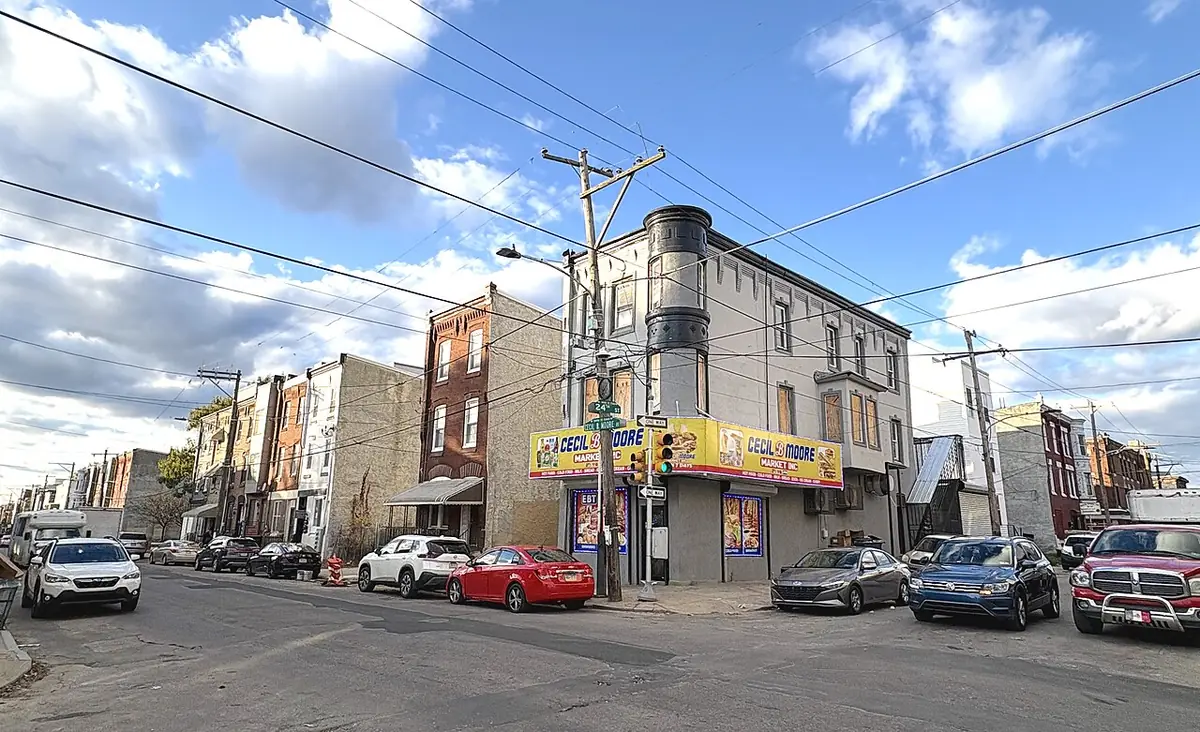
A lively commercial street lined with rowhouses and shopfronts — Photo: Moriah Levin · CC BY-SA 4.0 · Wikimedia Commons
Beyond the raw financial value, the legal nature of what you are buying deserves particular attention.
Budgeting for a home purchase in this large city cannot stop at the asking price alone. The market shows wide variation in price depending on the exact location, the structural condition of the property and how recently it was renovated. To avoid any nasty surprise, you have to fold in all the additional costs, from local transfer taxes to recurring property taxes, by way of the homeowners insurance you must carry and any association fees. A transparent financial picture lets you calibrate what you can genuinely borrow from local lenders and secure your investment for the long term without putting the family budget at risk.
philadelphiaFor saleHouseestimate
Median price / m²US$2,415Half the apartments sell below this
Median priceUS$400kthe average is 14% higher — a few very large properties pull it up
Most common2 bedrooms59 % of listings
Average size158 m²
By number of bedrooms
Bedrooms
Share of market
Avg price
Price / m²
Avg size
2most common
59 %
US$400k
US$2,542
158 m²
3
29 %
US$512k
US$2,339 −8 %
219 m²
4
12 %
US$646k
US$2,237best value / m²
289 m²
Each row is an average, compared against the area average of US$2,542 / m². These are indicative estimates of a typical local market, not a measured sample of live listings. Check current listings before relying on them.
What you can actually own: outright ownership versus an association-governed home
That grasp of the legal side of ownership carries through into strictly following the steps of the transaction.
Property law in the United States, and in this region in particular, offers distinct legal forms that directly affect your freedom of action and your financial obligations. Between the single-family house owned outright and properties governed by association rules, the day-to-day constraints are not comparable. Understanding these legal statuses avoids disputes with neighbors and surprises tied to strict internal rules. Each legal form answers to a different philosophy of housing, and it is worth aligning that with your own aspirations around independence and the management of your assets.
Outright individual ownership (fee simple)
You are the sole owner of the building and of the land it stands on, with no collective dues and no prior agreement required to carry out exterior work, subject to compliance with municipal planning rules.
What it changesYou keep total freedom to alter and manage the property, but you alone bear the full cost of maintenance, roof repairs and bringing the structure up to standard.
Ownership with an association (HOA or condo association)
Your property sits within a residential development managed by an association that oversees architectural consistency, the upkeep of common areas, shared roadways or collective leisure facilities.
What it changesYou get impeccably maintained grounds and shared services, but you have to pay compulsory monthly dues and abide by rules that are sometimes very strict.
The golden rule to understand before you put down a deposit on a property
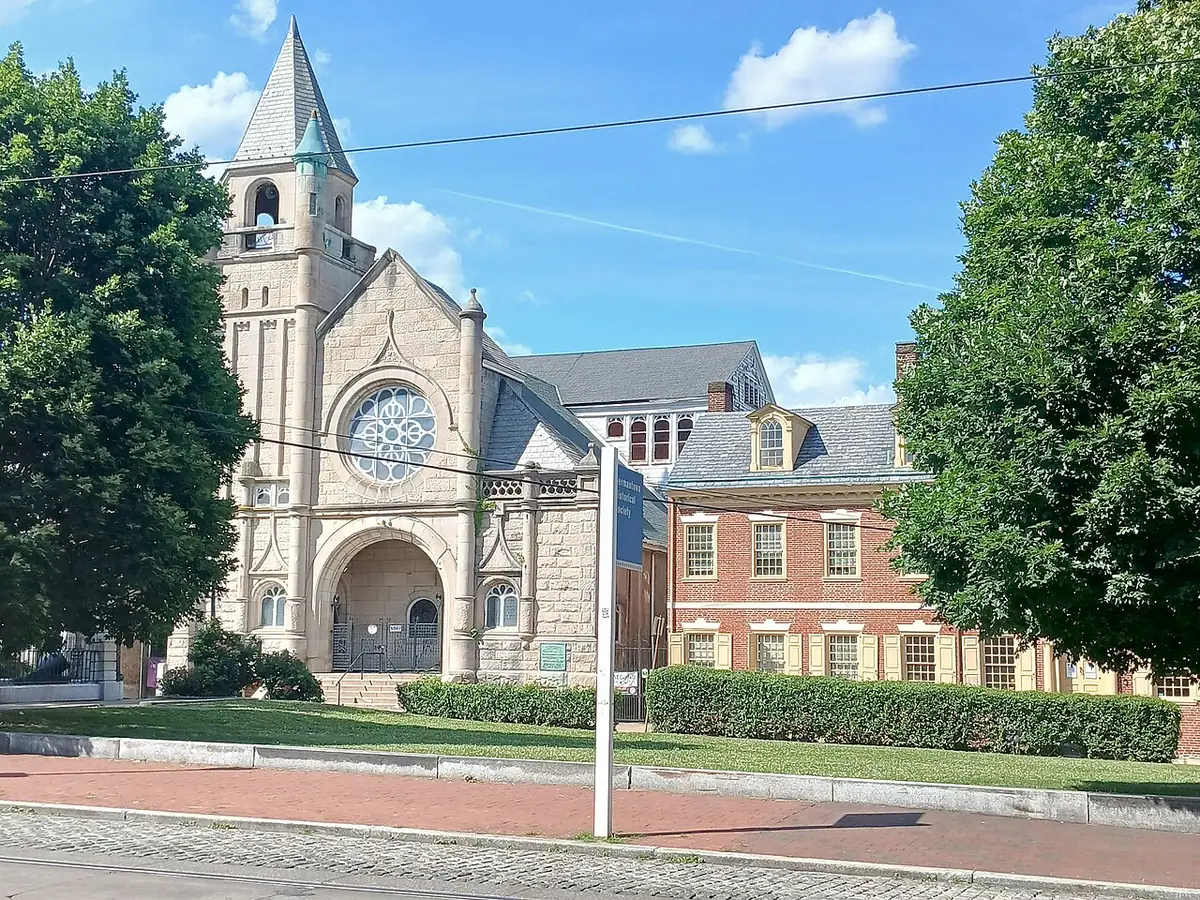
Market Square in Germantown, a historic corner of the city — Photo: Kreuz und quer · CC0 · Wikimedia Commons
To orchestrate that sequence successfully, it helps to spell out what each party to the transaction actually does.
Buying property on the American market follows a strict contractual timeline in which every commitment is legally binding as soon as the parties sign. Unlike practice in some European markets, an accepted offer (the purchase agreement) binds buyer and seller within a regulated framework that carries specific contingency clauses. Mastering this sequence lets you protect your funds, verify the real condition of the property through independent inspections and avoid losing your earnest money deposit if defects come to light. Administrative rigor is the buyer's best ally here in seeing the purchase through calmly.
Identifying the right property and carefully preparing a financing plan validated by a lender.
Drafting and submitting a written, priced offer to purchase that includes financing and inspection contingencies.
Negotiating terms and formal acceptance of the offer by the seller, which officially opens the inspection and due diligence period.
Carrying out thorough physical inspections of the building by a certified professional to uncover any structural or hidden defects.
Releasing the contingencies once the loan is definitively approved and the inspection reports have been reviewed by your advisers.
Signing the deed transferring ownership at closing, and the official handover of the keys to your new home.
How a property transaction unfolds, step by step, with the right people
In short, buying a house in Philadelphia is a structured process that demands method, budget clarity and qualified support.
A successful property transaction rests on the coordinated work of specialists whose roles are strictly defined by local practice and law. From the mortgage broker to the home inspector by way of the title company, each one secures a facet of your investment. Understanding who does what lets you delegate confidently to recognized experts while keeping control of the strategic decisions in your purchase. This professional structure guarantees transparent movement of funds and the unchallengeable legal validity of your title at the end of the process.
The buyer's agentRepresenting and defending your interestsThey guide you through the selection of properties, analyze comparable prices in the local market and negotiate hard on the financial terms and contingencies of the offer on your behalf alone.
The home inspectorA full audit of structural conditionThey go over the roof, the foundations, the electrics, the plumbing and the heating system to produce a detailed report that will let you ask for repairs or a price reduction.
The title officer at the title companySecuring the legal side of ownershipThey carry out the historical searches needed to guarantee that the property is sold free of any lien, undischarged mortgage or earlier ownership dispute.
The mortgage brokerStructuring and obtaining the loanThey approach lenders to secure the best rate and terms for you and make sure the schedule for releasing funds lines up precisely with the settlement date.
The real estate attorneyLegal review of the contractsThey draft and review all the contractual clauses to confirm they comply with state law, and protect your legal interests throughout the transaction.
House or apartment in Philadelphia: which should you choose for your way of life?
Buying property in Philadelphia forces you first to choose between the red brick rowhouse typical of the historic neighborhoods and the modern condominium apartment in a serviced building. Each option shapes your daily life in a radically different way in terms of upkeep, use of space and how you fit into neighborhood life. Traditional rowhouses offer complete independence and a strong historical anchor, often without heavy monthly association fees, but they demand constant vigilance over the state of the roof, the old plumbing and the front facade. You are the sole decision maker on any work, which brings total freedom but puts the entire bill on your own cash reserves when something goes wrong.
A condominium apartment in busy areas such as Center City or Northern Liberties, by contrast, hands the management of common areas, staffing and security over to someone else. In exchange, the monthly association fees can weigh heavily on your recurring budget and generally rise each year, eating into what you can save. Strict condominium rules sometimes limit your renovation plans or the installation of certain exterior fixtures. So you have to weigh precisely the comfort of delegated management against the fixed, permanent cost of these shared services, which are in no way an investment you recover on resale.
Location often dictates the answer to this dilemma. If you are after the relative quiet of a tree-lined street with a small garden or a private patio, the outlying residential neighborhoods or the calmer parts of South Philadelphia will steer you naturally toward the single-family house. If you would rather walk to a restaurant, the theater or your office, the city apartment offers a central position that a house of the same value can hardly match. Your decision should follow from a clear-eyed look at your tolerance for do-it-yourself work, your need for private outdoor space and your attitude to the collective constraints that come with condominium living.
Finally, how easily a property resells varies noticeably by type. Well-maintained townhouses in sought-after areas benefit from steady demand from local families and first-time buyers looking to put down roots. Apartments, particularly in the new developments built in numbers in recent years, sometimes face stiffer competition on resale if further schemes go up close by. Studying the history of local transactions will keep you from buying something so unusual that it would struggle to find a taker on the day your career pushes you to move out of Pennsylvania.
What total budget should you plan for to buy and live comfortably in Philadelphia?
Buying property in Philadelphia does not come down to the price displayed on the listing. You have to build in the specific local taxes, notably the municipal property tax and the very high transfer tax, which directly affect your down payment and your opening cash position. The additional costs, including homeowners insurance, utilities and regular maintenance, complete a financial equation worth modelling over several years so that no budget surprise catches you out.
Upfront and recurring cost lines for buying a house
Cost line
Order of magnitude / rate
Impact on your budget
Realty transfer tax
4.275% of the total sale price
Split between buyer and seller, it represents a large immediate outlay at closing through the title company.
Property tax (real estate tax)
About 1.4% of assessed value
Collected annually by the city, it varies with the exact location and with periodic reassessments.
Homeowners insurance
$1,200 to $2,500 per year
Essential to cover the risks tied to harsh winters and to the age of electrical and plumbing systems.
Projected maintenance costs
1% to 2% of the property's value per year
Essential to smooth out major roof and facade repairs and the replacement of the central heating system.
The figures given are indicative averages based on the city's current tax data and can vary with the exact neighborhood and the floor area.
Comparison of everyday costs by property type
Property type
Average monthly charges
Services included
Older single-family house
$0 to $150 (optional neighborhood association)
Generally no collective charges, complete autonomy but direct management of every maintenance contractor.
Standard condominium apartment
$250 to $600 per month
Upkeep of common areas, trash removal, sometimes a doorman and the building's insurance included.
Upscale condominium with services
$600 to $1,200+ per month
Gym, roof terrace, full-time concierge, 24-hour security and high-end management.
Association fees have historically risen 3% to 7% a year to cope with inflation in maintenance costs and with energy efficiency requirements.
What does an ordinary Tuesday actually look like living in Philadelphia?
St. Helena Catholic Church anchoring its Philadelphia block — Photo: Farragutful · CC BY-SA 4.0 · Wikimedia Commons
To judge whether your future home really works, nothing replaces carefully simulating an ordinary working day. Between transit trips, errands nearby and the reality of traffic flows, each neighborhood imposes its own rhythm. Here is how a Tuesday typically unfolds for a resident settled in the city's busier residential areas.
07:30Home and the immediate surroundingsWaking up and getting ready. A quick trip out for a specialty coffee at the independent neighborhood shop five minutes' walk from your front door.
08:30The commute (SEPTA, Market-Frankford Line)Boarding at the local station to reach the business district in Center City. The trip takes about twenty minutes, with moderate but steady crowds.
09:00Office or shared workspaceArriving at your desk. Settling into offices in the heart of the financial district, well served by the city's transport network.
13:00Lunch break and quick errandsLunch at a restaurant in the area, or a quick stop at the historic covered market to pick up some fresh local produce for dinner.
18:00Coming home and neighborhood lifeThe trip back home. A stop at an artisan bakery on your street for the evening's bread and a brief chat with shopkeepers who know the regulars.
20:00Winding down and a cultural interludeA quiet evening at home or a spur-of-the-moment outing to a neighborhood bar within walking distance, with no need to use the car or hunt for a parking space.
What property listings leave out about Philadelphia
The polished marketing photos never reveal the structural and regulatory subtleties that make up daily life for owners in Philadelphia. Behind a tastefully renovated facade there are sometimes old technical constraints or local administrative quirks that you would do better to identify before signing the final purchase agreement and heading to settlement.
The residential permit parking system
Owning a car in Philadelphia means renewing your parking permit each year with the Philadelphia Parking Authority. Finding a space after 7 pm in some dense areas is a permanent challenge that calls for endless patience.
The condition of lead service lines in older buildings
A large share of the housing stock built before the 1950s still has aging water connections. Replacing these private service lines falls entirely on the owner and represents a cost worth budgeting for.
The strict planning rules of the Historical Commission
If your future house sits in a listed or historic district, the smallest change to the facade, the exterior joinery or even the paint color requires prior approval, a long and finicky process, before work can start.
Municipal management of streets and leaf collection
City services handle street upkeep on a schedule that is sometimes erratic. Residents have to take an active part in keeping their own sidewalk clean or risk fines from zealous municipal inspectors.
The classic traps you discover six months after moving in
Looked likeA quiet residential street lined with mature trees, viewed on a sunny Sunday morning.
Turned outA relief route heavily used by drivers trying to avoid the main boulevards at weekday rush hour.
Would have caught itVisiting the neighborhood several times, notably on a Friday at 6 pm and a Monday at 8 am, to observe the real traffic and noise.
Looked likeA spacious, perfectly dry basement ready to be fitted out as a playroom or a bright home office.
Turned outA cellar prone to repeated water ingress during the heavy spring thunderstorms typical of the mid-Atlantic climate.
Would have caught itHaving an independent expert carry out a detailed inspection of the foundations and the drainage system before releasing any contingency.
Looked likeVery low association fees that seemed to guarantee sound and prudent financial management.
Turned outA complete absence of reserve funds for major work, leading to a massive special assessment to redo the roof six months later.
Would have caught itDemanding access to the minutes of the last three years of association meetings to analyze its real financial health.
Looked likeEffective insulation promising moderate energy bills all year round.
Turned outPermanent drafts through original single-glazed windows, making gas heating very expensive through the harsh winters.
Would have caught itAsking to see the previous owners' past energy bills and budgeting immediately for replacing the exterior windows.
Buyer profiles: who should seriously think twice about buying in Philadelphia?
Buying urban property in Philadelphia has undeniable advantages, but it does not match every buyer's expectations. Certain lifestyles, work constraints or personal aspirations run head-on into the structural realities of the local market. Better to recognize that clearly before taking irreversible steps.
The investor after immediate rental yield with no active management
→Look instead to outlying markets or standardized products managed remotely.
Local taxes and the upkeep costs of Philadelphia's older housing stock eat into the net margins of passive investors who underestimate the day-to-day management load.
The buyer unwilling to compromise on parking and quiet
→Favor a purchase in the outer suburbs with an enclosed garage and a large plot.
The city's density means sharing public space, accepting traffic noise and giving up the comfort of a large private garden with no one overlooking it.
The household on strictly fixed income with no emergency savings
→Wait until a substantial down payment is built up before considering a purchase.
High property taxes and the cost of unforeseen repairs in older homes can quickly suffocate a family budget stretched too thin in the very first year.
So, are you ready to take the step and buy in Philadelphia?
The Betsy Ross Bridge crossing the Delaware River — Photo: SnowFire · CC BY 4.0 · Wikimedia Commons
Reaching the end of this analysis puts you face to face with your own responsibility as a buyer: buying in Philadelphia is not driven by impulse but by strategic conviction. If you have measured the reality of local taxes, accepted the architectural constraints of older buildings and confirmed your ability to absorb unexpected maintenance, then your plan rests on solid, durable ground.
Take the time to revisit the neighborhoods that catch your eye, talk to residents who have been there for years, and never give in to the artificial pressure some market players apply. Philadelphia property rewards patience, method and the clear-headedness of those who know what they are buying and why.
Above all, your future address should simplify your daily life, fit your working balance and answer your deeper family aspirations. If those lights are green, the next step is to structure your financing plan with a local broker so that you approach viewings with a validated, credible offer in hand.
Related questions
How much should I expect to pay in transfer tax when buying a home in Philadelphia?
Realty transfer tax comes to a combined 4.275% of the sale price of the property. This city and state tax is usually split evenly between buyer and seller at settlement, when the deed is signed through the title company.
How is the annual property tax calculated in the city of Philadelphia?
Property tax is calculated by applying a rate set by the city, currently around 1.4%, to the assessed taxable value of your property as determined by the local assessment office. That assessed value is revised periodically.
Do I have to get a residential parking permit for my car?
Yes. If you park your vehicle on the street in Philadelphia's regulated residential zones, you need to buy an annual permit from the Philadelphia Parking Authority, providing proof of residence in your own name.
Which neighborhoods are most sought after for buying an older house?
Historic districts such as Society Hill, Rittenhouse Square, Queen Village and Northern Liberties draw heavy demand thanks to their preserved architecture and their immediate proximity to the job centers of Center City.
Should I set aside a specific budget for bringing lead plumbing up to standard?
It is strongly advised for anything built before the 1950s. A detailed plumbing inspection by a certified professional will identify any lead service lines and let you estimate what replacing them would cost.
How do association fees work in the city's converted buildings?
Association fees cover the upkeep of common areas, trash collection and sometimes the building's insurance. They are assessed in proportion to the floor area of your unit and generally rise each year to keep pace with inflation.
How long does it usually take between an accepted offer and getting the keys?
The full process generally runs 30 to 45 days. That window allows for the necessary inspections, for your mortgage approval to be finalized with your lender, and for the legal paperwork for closing to be prepared.
Can foreign buyers purchase property in Philadelphia without difficulty?
Yes. Local law does not bar non-residents from buying property, but obtaining a loan from a US lender can prove more complicated and may call for a substantially larger down payment.
What precautions should I take about the risk of basement flooding?
It is essential to check whether the property sits in a mapped flood risk area, and to inspect the condition of the French drain and the sump pump in the basement so that heavy storms do not bring nasty surprises.
How can I find out about future development plans around a property I like?
The Philadelphia City Planning Commission maintains public records detailing building permits filed and planned zoning changes in each neighborhood, so you can anticipate construction work going up nearby.
Property review of ting
No ting properties in Philadelphia yet
Be the first — share it on ting and it shows up right here.