Renting in Philadelphia calls for a close reading of local dynamics, the particulars of the lease and the real budget of each neighbourhood. This analytical guide walks you through the decision step by step, calmly and without the marketing gloss.
Get the app
What nobody tells you.
Real prices, hidden costs and the traps to check before you commit.
What renting an apartment in Philadelphia means for your daily life
Scroll
What renting an apartment in Philadelphia means for your daily life
Renting in Philadelphia calls for a close reading of local dynamics, the particulars of the lease and the real budget of each neighbourhood. This analytical guide walks you through the decision step by step, calmly and without the marketing gloss.
Written by the ting.ad editorial team ·
John F. Kennedy Boulevard, Philadelphia in Street View: drag to look around.
Before you commit to one particular area, it is worth checking whether your profile fits how the local market actually works.
Renting an apartment in Philadelphia means looking carefully at how the historic neighbourhoods are laid out and at what the transit network really delivers. Between the density of the central districts and the relative quiet of the outer residential areas, every choice reshapes your budget and your daily commute. This is not simply about finding a roof: it is about understanding how the fabric of this American city shapes your way of living and your spending over the long run. The trade-offs between architectural character and modern fittings show up quickly for any new resident.
The historic charm of the red brick buildingsvsFittings that are sometimes old and need more upkeep
Older buildings offer undeniable architectural character, but they call for close attention to insulation and to the heating system, which is put under real strain during the region's harsh winters.
Cultural and historic life that is exceptionally rich and easy to reachvsA cost of living and rents that keep climbing in the sought-after areas
Being at the cultural centre comes with heavier financial pressure on the rental market, which often forces a choice between the size of the home and how close it sits to the main hubs of activity.
A dense, well-connected transport networkvsLines whose timetables can be restrictive outside peak hours
Although the transit system makes it easy to live without a car day to day in the centre, the outer areas demand careful planning if you want to avoid long journeys.
Does this place really match your way of life and your work expectations?
The cultural and practical gap between wherever you are coming from and this American city also deserves close attention.
Philadelphia's rental market serves an extremely varied set of people, from young professionals drawn by the cultural buzz to families looking for the calm of the parks. Each area has its own traffic patterns, its own noise level and its own distance from the employment centres. Looking honestly at your daily rhythm and your personal priorities will help you avoid the classic mistake of choosing on looks alone.
Choosing to live centrally
Settling right beside the main business centres spares you the constraints of heavy commuting. You get a lively neighbourhood where everything is done on foot or by bike. In return, you have to accept smaller living space for the same budget and a higher level of city noise all week long.
The residential and family neighbourhoods
Areas further from the beating heart of the city offer noticeably more spacious homes, often with a private outdoor space of their own. The atmosphere is calmer and better suited to family life. That said, it means a longer daily journey into the centre and greater reliance on local facilities for shopping and leisure.
The alternative of areas in transition
Choosing a neighbourhood that is gentrifying lets you find more moderate rents while still getting an unusual or recently renovated home. It is a bet on how the area will develop, and it means adapting to local infrastructure that is sometimes still being built out or modernised.
Living here when you have moved from abroad: what actually changes
Once you have those reference points, the crucial question of where exactly to settle remains.
Moving to another country upends habits built up over years. Arriving from abroad, you will find a rental market run on different contractual rules, its own tests of financial standing and a relationship to domestic space that answers to other standards. Anticipating these cultural and administrative differences will spare you a lot of disappointment when you put your rental application together.
From abroad
Rent guarantees framed by strict legal schemes, with family guarantors as the norm
Philadelphia
An application that requires a local credit history, proof of high gross income and a variable security deposit
Local landlords lean heavily on credit scores and background checks, which makes arrival difficult for newcomers with no financial history in the country.
From abroad
Ordinary residential leases that often roll over automatically for long periods
Philadelphia
Fixed one-year contracts, renewable, with rent review clauses set by what the market will bear
The apparent flexibility of these contracts comes with frequent annual renegotiation of the rate, so every lease expiry has to be anticipated well in advance.
From abroad
A floor area measured precisely to a statutory standard, with rooms whose functions are clearly separated
Philadelphia
A floor area that is sometimes stated as a rough overall figure, including shared space or open-plan layouts
Making the most of the interior calls for a critical eye during viewings, because rooms are named and counted differently from what you may be used to.
From abroad
Rental charges that usually include water and the upkeep of shared parts of the building
Philadelphia
Essential services often billed separately (electricity, air conditioning, waste collection)
The real monthly budget takes in variable cost lines that have to be built into your affordability calculation from the very start.
Which neighbourhood to target given your priorities and your budget?
These geographic choices translate straight into financial realities that are worth mapping carefully.
Choosing your neighbourhood in Philadelphia comes down to balancing cultural energy, residential calm and affordability. Each area has its own identity, shaped by its architectural history, who lives there and how close it sits to the main transport lines. A careful look at what each area gives and what it costs will point your search towards the one that genuinely matches your daily expectations.
Center City
Constant activity set by the flow of workers, neighbourhood shops and a cultural offer you can reach on foot.
Suits
Working people who want to cut their commute to a minimum and enjoy city life fully without depending on a car.
Trade-off
Smaller homes at a cost per square metre well above the rest of the metro area.
Fairmount
A striking balance between the major museums nearby, generous green space and the atmosphere of a quiet residential neighbourhood.
Suits
Those looking for a balanced setting, good for outdoor activity while staying connected to the centre.
Trade-off
An older rental stock where demand regularly outstrips what is available, which limits your choice.
South Philadelphia
A warm, down-to-earth atmosphere, with streets lined by small brick houses and traditional shops.
Suits
Tenants after genuine neighbourhood communities and rents more moderate than in the very centre.
Trade-off
Slightly longer journeys to reach certain business hubs, and parking that can be complicated.
What does an apartment really cost to rent in this city?
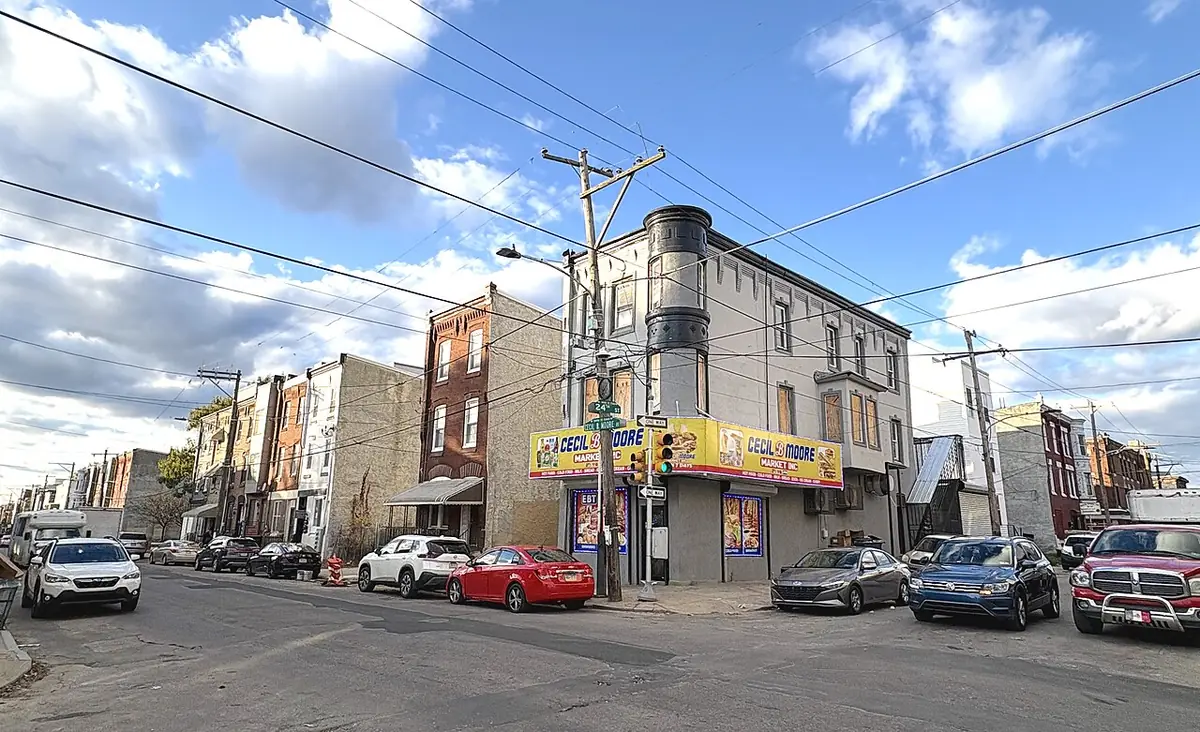
A lively commercial street lined with rowhouses and shopfronts — Photo: Moriah Levin · CC BY-SA 4.0 · Wikimedia Commons
Beyond the purely financial side, the legal nature of what you are signing deserves close examination.
Working out the budget for a rental in Philadelphia does not stop at the figure shown in the listing. The gaps are wide depending on the exact location, the age of the building and what the lease includes. To avoid nasty surprises at signature, you have to split the cost between the headline rent, the charges you cannot avoid and the incidental costs tied to keeping the home in good order.
philadelphiaTo rentApartmentestimate
Median price / m²US$19Half the apartments sell below this
Median priceUS$1.8kthe average is 14% higher — a few very large properties pull it up
Most common2 bedrooms40 % of listings
Average size90 m²
By number of bedrooms
Bedrooms
Share of market
Avg price
Price / m²
Avg size
1
32 %
US$1.38k
US$23 +15 %
60 m²
2most common
40 %
US$1.8k
US$20
90 m²
3
20 %
US$2.3k
US$18best value / m²
125 m²
4
8 %
US$2.9k
US$18best value / m²
165 m²
Each row is an average, compared against the area average of US$20 / m². These are indicative estimates of a typical local market, not a measured sample of live listings. Check current listings before relying on them.
What you can actually do and sign for as a resident tenant
That contractual rigour applies in full through each stage of the transaction.
American rental law places specific responsibilities on each side, a long way from the automatic protections found in some European systems. Understanding what the lease lets you change, and what you can require of your landlord, is essential to securing your move. Between routine upkeep duties and the freedom to personalise the space, the legal boundaries are set strictly by the contract.
Quiet enjoyment and the limits on altering the property
You have an absolute right to the quiet enjoyment of your home for the whole term of the lease. Any structural change, however, whether that means partitioning a room or painting in unconventional colours, needs the landlord's prior written consent, on pain of a deduction from your security deposit.
What it changesYou have to weigh the wish to personalise your interior against the need to hand the place back in its original condition if you want the whole deposit returned.
Maintenance and repair obligations
The tenant is generally expected to keep the supplied fittings in working order and to report immediately any major fault that could damage the fabric of the building. The landlord keeps responsibility for major repairs, provided the damage did not result from clear negligence by the occupant.
What it changesReading the maintenance clauses closely keeps you from carrying unexpected costs caused by the normal wear of old installations.
The basic rule to understand before you hand over a single dollar
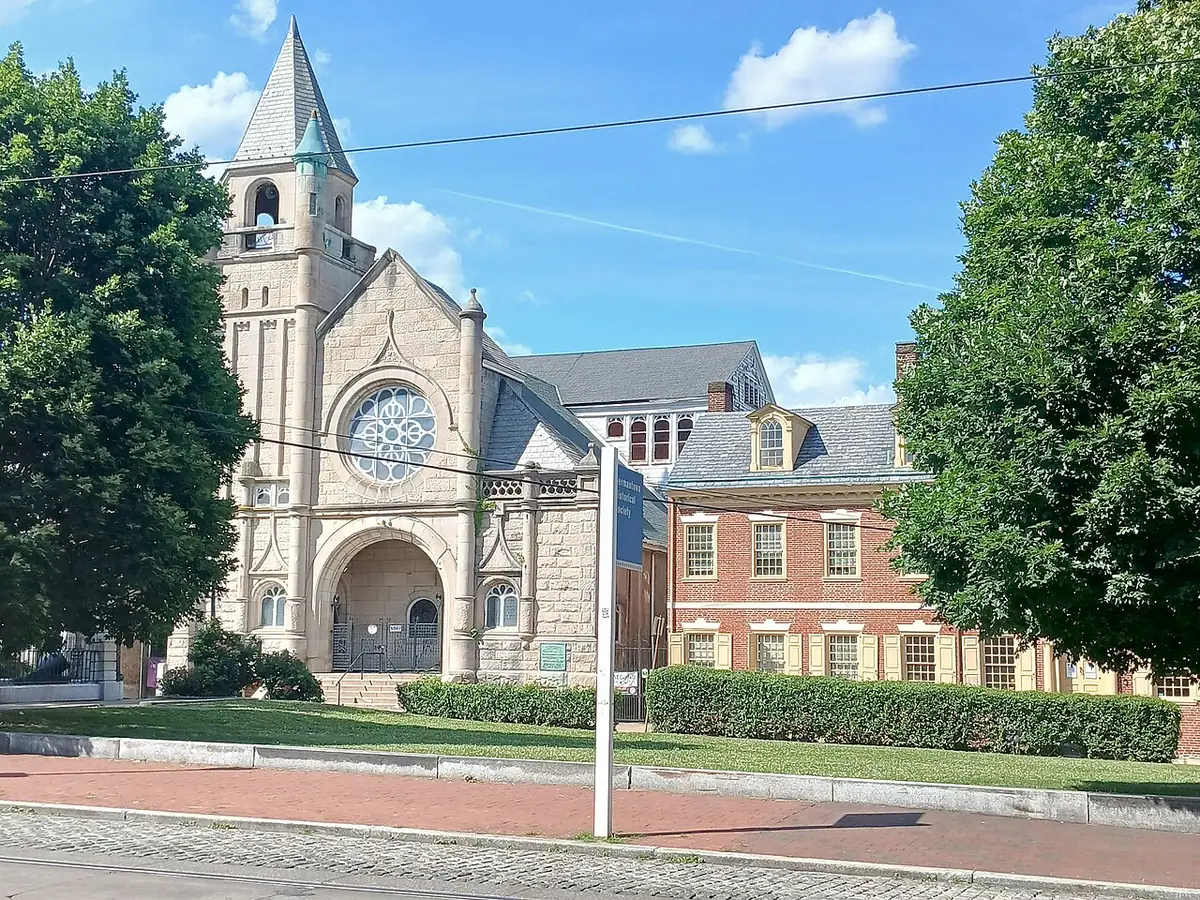
Market Square in Germantown, a historic corner of the city — Photo: Kreuz und quer · CC0 · Wikimedia Commons
To organise the move calmly, let us look at the precise order in which things need to happen.
Renting in the United States follows a strict sequence in which speed has to be paired with caution. Handing over money or signing a commitment before checking every conditional clause exposes you to losses that are hard to challenge afterwards. Following a disciplined method, from the first viewing through to the move-in inspection, keeps the whole process safe.
Careful identification of the property and an objective reading of the listing
Thorough verification of the identity of the landlord or the appointed manager, to avoid online listing fraud.
A detailed viewing of the home, examining closely the state of the plumbing, the electrics and the heating system.
Assembling a complete affordability file, including proof of income and references from previous tenancies.
A full re-reading of the lease to identify the specific clauses on early termination and on charges.
Signing the contract, paying the security deposit securely and carrying out the move-in inspection with both parties present.
How a rental transaction unfolds, step by step on the ground
In short, renting well in Philadelphia takes method, forward planning and a realistic budget.
Anticipating each party and each piece of paperwork turns a complicated journey into a series of controlled actions. From the letting agent to the building manager and on to the utility companies, every actor plays a precise role that has to be coordinated. This chronological run-through gives you the visibility to plan your move without needless stress.
The prospective tenantAssembling and validating the financial fileGather all your proof of income, tax documents and banking references, translated if necessary, to demonstrate your financial standing.
The agent or the landlordViewing and negotiating the lease termsView the property, ask precise questions about how charges are handled and discuss any particular conditions for moving in.
The legal teamReview and electronic signature of the contractCheck that every verbal promise made during the viewing is written explicitly into the clauses of the final lease.
The utility companiesOpening the meters and the accountsTransfer the electricity and service accounts into your name from the official start date of the lease, so nothing is cut off.
The building managerMove-in inspection and handover of keysDocument in writing and in photographs the smallest existing defect on arrival, to protect yourself when the deposit is returned later.
Renting an apartment or a house in Philadelphia: which should you choose?
Once that basic choice between shared and standalone living is settled, the financial reality of the move still has to be measured precisely.
The decision between renting an apartment in a shared building and renting a traditional row house in Philadelphia involves far more than a matter of taste. It determines your daily relationship with the city, how you manage your commute and the scale of the unexpected costs that will weigh on your monthly budget. Historic neighbourhoods such as Center City or Rittenhouse Square lean heavily towards apartments in managed buildings or converted properties, where pooled services make life considerably simpler for people pressed for time. Choosing that route takes off your shoulders the upkeep of the roof, the mowing of outdoor space and the awkward business of a boiler failure in midwinter.
Move a little further out, by contrast, into residential areas such as Mount Airy, Chestnut Hill or parts of South Philadelphia, and you can reach town houses spread over several floors, sometimes with a basement that can be fitted out and a private outdoor space. That alternative appeals particularly to families and to pet owners who dread the constraints of living stacked one above another. This apparent independence, however, hides financial realities that newcomers often underestimate. Heating an old, poorly insulated house through the worst of a Pennsylvania winter can double your energy bill compared with a modern, well-sealed apartment with windows on both sides.
The choice therefore turns on a constant trade-off between available space and peace of mind. In a managed apartment building, the house rules impose strict limits on noise, on moving hours and on the use of shared areas, which can at times weigh on your daily freedom. In return you get better security thanks to centralised access control and, in some cases, a front desk that takes in your parcels safely. That passive security is a decisive advantage for professionals who travel often and cannot keep an eye on their home continuously.
For tenants planning a long stay, the local building stock also demands attention to the age of the infrastructure. Many apartments in older downtown buildings have undeniable architectural character, with their high ceilings and period floors, but they often suffer from imperfect sound insulation between floors. Town houses, for their part, spread out over several levels, which lets you separate work space from rest space, a considerable asset in an age of widespread remote work. It is worth weighing these various factors carefully before signing a long lease in Philadelphia.
What overall budget should you plan for a comfortable life in Philadelphia?
With those figures on the table, it is time to picture concretely what a typical day in the city looks like.
Building a forward budget for an apartment in Philadelphia means going well beyond the headline monthly rent. Additional charges, local taxes and subscriptions to essential services change the arithmetic considerably depending on the area you choose. Consolidated local market data lets you structure this spending realistically and avoid disappointment in the first months of the tenancy.
Estimated monthly running costs for an apartment
Cost line
Low end (USD)
High end (USD)
Analysis
Monthly rent (1 to 2 bedrooms)
$1,400
$2,600
Varies sharply between West Philadelphia and Center City depending on what is included.
Electricity and gas (heating and cooling)
$120
$300
Sharp peaks in January and July because of the local temperature swings.
Broadband internet
$60
$90
Standard rate for a fibre connection from the main providers.
Renter's insurance
$15
$35
Cover required by almost every landlord before the keys are handed over.
These amounts are indicative and based on the averages seen for homes meeting the habitability standards in force in Philadelphia County.
Extra budget for transport and city services
Type of service
Estimated monthly cost
Effect on daily life
SEPTA transport pass (whole network)
$96
Gives unlimited access to the subway, buses and trolleys across the city network.
Residential parking (if you have a car)
$35
Buys an annual parking permit for the zone where you live.
Basic grocery shopping
$400
Estimate for a one-person household shopping at the general local chains.
Owning a car in the city centre adds fixed costs that are far from negligible and should be built into your calculation from the start.
Health, schools, transport: what does an ordinary Tuesday look like renting here?
St. Helena Catholic Church anchoring its Philadelphia block — Photo: Farragutful · CC BY-SA 4.0 · Wikimedia Commons
Beyond that well-oiled routine, some hidden aspects of the rental market deserve your full attention before you commit.
To judge whether a location really suits you, nothing replaces walking through an ordinary weekday hour by hour. From the morning commute to the local shopping at the end of the day, each neighbourhood sets its own rhythm and its own logistical constraints. This walk-through draws on the concrete observations of residents who have lived in the city's various areas for years.
07:30Leaving the apartment and reaching the SEPTA networkThe morning starts with the walk to the nearest subway or bus stop. The Market-Frankford and Broad Street subway lines are reliably regular for reaching the employment centres of Center City before the busiest hours.
08:30Arriving at work or at a coworking spaceSettling into the office districts usually takes under thirty minutes if your home is well connected to the main lines. Working residents stress the importance of living within a ten-minute walk of a major station.
12:30Lunch break and local servicesThe midday break is a good test of a neighbourhood's commercial vitality: independent bakeries, healthy fast food and public green space such as Rittenhouse Square or Logan Square are key indicators of quality of life.
17:30The journey home and end-of-day food shoppingStopping at local shops on the way home shapes the end of the day. Having neighbourhood supermarkets or a permanent covered market nearby saves needless evening car trips.
19:00Admin and contact with the property managerEvenings often go on the practical side of renting: reporting a technical fault through the manager's online portal, or checking the delivery notices for the day's parcels.
21:00Winding down and judging how quiet the night isThe neighbourhood settles gradually once the evening traffic peak has passed. The apartment's sound insulation then becomes decisive in guaranteeing a good night's rest against the noise of the city.
What the listing will never tell you about these apartments
Being clear-eyed about what the market leaves unsaid will keep you from the classic mistakes that many newcomers bitterly regret.
Agency descriptions naturally highlight the light, the floor area and the parks nearby. Yet the experience of sitting tenants reveals fundamental structural and regulatory realities that go unmentioned on guided viewings. Knowing about these invisible factors lets you negotiate with a clear informational advantage.
The real condition of the plumbing risers in historic buildings
Many older buildings still have their original pipework, and its age regularly causes drops in pressure at peak hours and a risk of chronic leaks on the lower floors. It is essential to ask the manager when the water system was last fully renovated.
The strict and demanding rules of homeowner associations (HOAs)
Renting an apartment run by an association means following fussy rules on window air conditioning units, delivery hours or hanging out laundry. Breaking those rules can bring fines that the landlord passes straight on to the tenant.
The awkward business of bulky waste collection and recycling
The city of Philadelphia's waste rules are strict, and the specific bins have to be brought back in promptly after the trucks pass or you risk a fine. In large buildings, a poorly organised bin room can quickly become a nuisance.
The real noise impact of major traffic routes in summer
An apartment viewed on a quiet Sunday morning can turn out to be extremely noisy from Monday at peak hours, because of heavy goods traffic or a fire station nearby. Opening the windows on a second viewing is an essential test of the real noise level.
The mistakes you only discover six months into the tenancy
Now that those traps are clearly identified, it is worth asking whether this kind of rental really fits your own situation.
Looked likeA charming top-floor apartment with an unobstructed view over the historic rooftops and exceptional light from both sides.
Turned outAn absolute furnace through the summer months because there is no insulation under the roof, along with enormous air conditioning bills and a lift that was out of service every other week.
Would have caught itInsisting on seeing the energy bills for the last twelve months and checking carefully how well the heating and cooling system works before signing the lease.
Looked likeAn ultra-central location letting you do everything on foot without ever needing a car.
Turned outConstant night-time noise from late-opening venues and the surrounding traffic routes, making sleep difficult at the weekend.
Would have caught itVisiting the target neighbourhood at two key moments: a Saturday at 11pm and a Monday at 8am, to catch what it really sounds like.
Looked likeA rent advertised as very attractive for the area thanks to a promotional offer from the management company.
Turned outAn aggressive rent review clause as soon as the first year ended, and steep administrative fees charged for every maintenance call-out.
Would have caught itGoing through every line of the lease to identify automatic increases and the renewal conditions before committing to anything.
Looked likeA modern, fully fitted kitchen with brand new appliances in an appealing contemporary design.
Turned outLow-end, underpowered equipment that trips the circuit as soon as the oven and the washing machine run together, which complicates daily life.
Would have caught itTesting the main electrical appliances running at the same time during the move-in inspection, to confirm the real capacity of the supply.
Who really should not rent an apartment in this area?
At the end of this analysis, the time has come to decide and confirm your final choice.
An honest look at any rental market means recognising its structural limits. Some plans, whether for budget, work or family reasons, sit badly with what renting an apartment in Philadelphia actually involves. Far from being idle criticism, saying so protects people from spending time and money on a search that cannot work.
Families wanting large private outdoor space and complete quiet
→Look instead at purely suburban areas well outside the city.
Philadelphia's urban density and the prohibitive cost of single-level homes with a large garden make apartment living in a dense city frustrating for households that need immediate green space every day.
Daily drivers who depend entirely on their car for every journey
→Favour towns with plenty of free parking and direct motorway access.
Scarce on-street parking, the high price of covered garages and recurring congestion on the main routes turn everyday driving into a permanent source of stress.
People on an extremely tight budget with no room for the unexpected
→Target mid-sized Pennsylvania towns where the cost of living and local taxes weigh less heavily.
The general level of rents and the cost of basic services in Philadelphia's busiest neighbourhoods leave no room for financial error if work goes wrong or charges rise.
Fully remote professionals who need complete silence during the day
→Look for modern buildings designed specifically with reinforced sound insulation.
The age of the housing stock in many central neighbourhoods exposes residents directly to noise from neighbours and vibration from the street, which badly harms concentration.
So, are you ready to settle in Philadelphia for the long term?
The Betsy Ross Bridge crossing the Delaware River — Photo: SnowFire · CC BY 4.0 · Wikimedia Commons
Deciding to rent an apartment in Philadelphia calls for a clear-headed balance between the city's exceptional cultural energy and the daily logistical demands set out above. If your work is solidly anchored in the region, if you enjoy the buzz of the historic neighbourhoods and if you accept the compromises that come with dense city living, then everything is in place for the move to work. The city offers a rare richness of daily life, provided you gather the right information from the outset.
Success rests above all on preparing your rental application methodically and on refusing impulsive decisions driven by flattering photographs. By viewing properties at the right moments, checking the real condition of the technical installations and building every fixed charge into your forward budget, you turn a potential source of stress into a smooth, controlled transition to your new home.
Take the time to validate each step on verifiable facts rather than sales promises. Philadelphia's rental market rewards informed tenants who know which questions to put to landlords and managers before initialling the lease. Your peace of mind for the months and years ahead depends directly on the rigour of this last piece of analysis.
Related questions
What is the average rent for a one-bedroom apartment in Philadelphia?
Average rent generally sits between $1,400 and $2,000 a month depending on the neighbourhood you pick, the amenities in the building and whether heating and water are folded into the monthly bill or charged separately.
Is renter's insurance compulsory in order to rent in Philadelphia?
Yes. Almost every landlord and property management company requires proof of a valid renter's insurance policy from the day the lease is signed and for the whole time you occupy the unit.
How does residential parking work in the city centre?
Permanent residents can apply to the Philadelphia Parking Authority for an annual residential parking permit. The modest fee lets you park a vehicle in your assigned zone, provided you follow the street rules.
Which neighbourhoods are most sought after for apartment rentals?
Center City, Rittenhouse Square, Society Hill and Northern Liberties are among the most prized, thanks to their safety, their busy retail streets and their excellent transport connections.
Does the SEPTA transit network cover the whole city?
SEPTA runs a full system of subway lines, trolley routes and buses that criss-cross the city efficiently and link residential neighbourhoods to the main employment centres across the metro area.
What documents should you prepare for a strong rental application?
You will usually need proof of identity, recent pay slips showing an income of about three times the rent, references from previous landlords and a credit report.
Are building service charges paid by the tenant or the landlord?
Day-to-day charges tied to your use of the unit generally fall to the tenant when the lease says so, while structural spending and major repairs remain the landlord's responsibility alone.
Is it easy to find an apartment that accepts pets?
Many buildings accept pets in exchange for a specific fee or an additional deposit, although some buildings impose weight or breed restrictions.
How long is a standard residential lease in Pennsylvania?
The standard residential lease runs for an initial term of twelve months, renewable automatically or by written amendment, with notice conditions clearly framed by local law if you decide to leave.
How are disputes between tenants and landlords settled?
The city of Philadelphia has housing mediation and regulation bodies that help both sides settle disagreements over security deposits and living conditions without going to court.
Property review of ting
No ting properties in Philadelphia yet
Be the first — share it on ting and it shows up right here.