Moving to Melbourne means getting to grips with a rental market that is both demanding and highly structured. This guide sets out the criteria that matter, from budgets to neighbourhoods, so you can handle your move calmly and get it right.
Get the app
What nobody tells you.
Real prices, hidden costs and the traps to check before you commit.
Renting an apartment in Melbourne: urban energy set against market constraints
Scroll
Renting an apartment in Melbourne: urban energy set against market constraints
Moving to Melbourne means getting to grips with a rental market that is both demanding and highly structured. This guide sets out the criteria that matter, from budgets to neighbourhoods, so you can handle your move calmly and get it right.
Written by the ting.ad editorial team ·
Melbourne in Street View: drag to look around.
Understanding these basic trade-offs helps you target the kind of lifestyle that genuinely matches your priorities.
Settling in Victoria's capital gives you direct access to a celebrated cultural life and enviable transport infrastructure. Yet today's rental market forces tough trade-offs between being close to the city centre and the living space you actually get. Central neighbourhoods guarantee a lively local scene but inevitably shrink the square metres available for a given budget. Working through these dynamics helps you avoid disappointment as you search for your next home.
The central location of the historic neighbourhoodsvsSqueezed living space
Living near the main tram lines or the city's landmark parks considerably reduces the size of the properties on offer. You save on travel time but have to lower your expectations on the number of rooms.
Modern residential towersvsOwners' corporation fees and close quarters
Newer buildings often include welcome shared facilities such as a gym or a pool. On the other hand, the common areas bring a lot of foot traffic, and owners' corporation rules can limit your day-to-day freedom.
The charm of traditional terrace housesvsHeating upkeep and sound insulation
Older homes have undeniable architectural character but often suffer from limited energy performance. Australian winters can feel harsh inside them if the heating system has not been modernised.
What kind of tenant are you in the face of Melbourne's market demands?
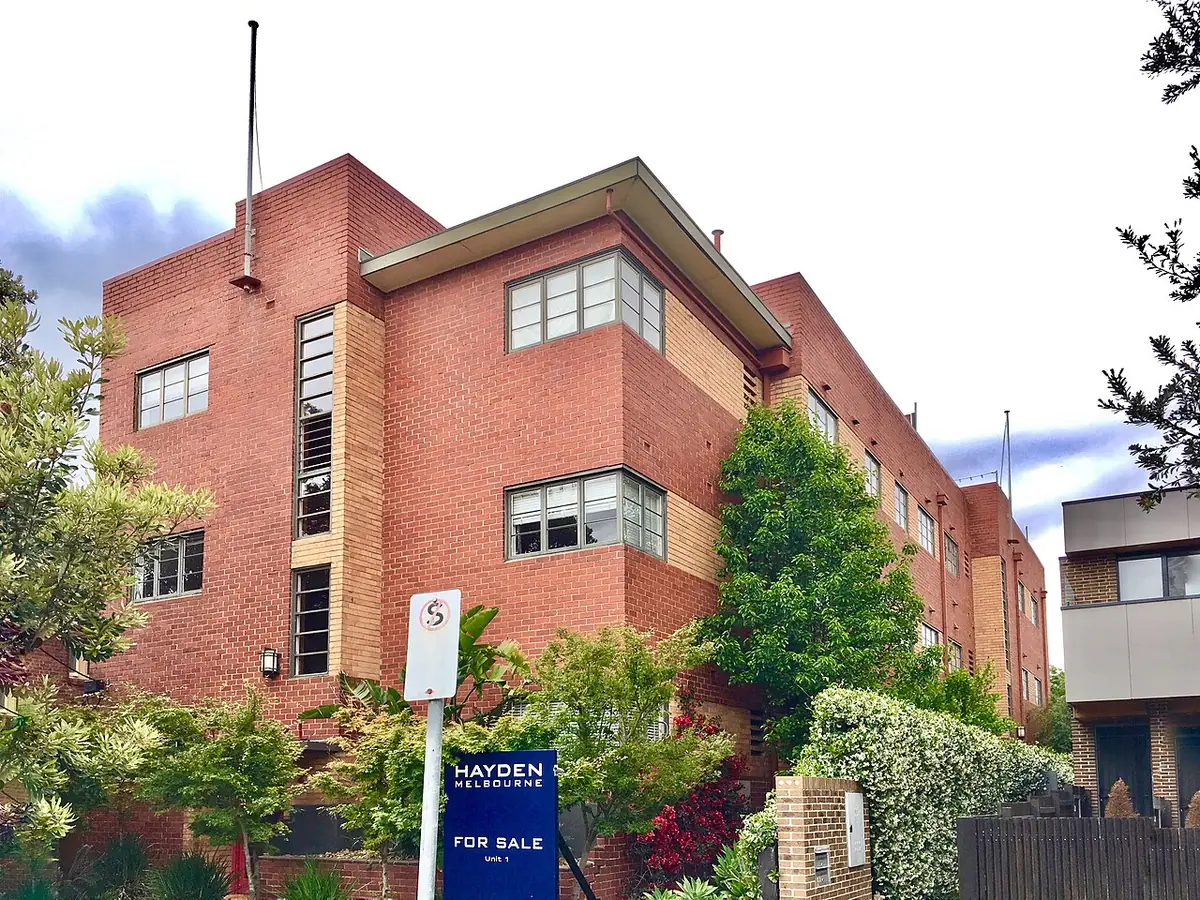
A red-brick apartment block in St Kilda West — Photo: Rohanstorey · CC BY-SA 4.0 · Wikimedia Commons
Once you know your profile, it helps to measure what sets this experience sharply apart from what you are used to.
Choosing an apartment in Melbourne is not just a question of budget. Your working pattern, how you get around and how much personal space you need all change how well each neighbourhood suits you. With tram lines running across the whole city, your distance from the network shapes your daily life directly. Let's look at three typical situations to find the approach that will keep you from heading in the wrong direction.
Looking to live right on the doorstep
If your days start and end in the heart of the financial district, aiming for a compact apartment inside the free tram zone is a smart move. You cut out the commute and enjoy the buzz of the city straight away. The compromise is a higher rent per square metre and no private outdoor space. This option suits people who put efficiency and a social life out and about first.
A modest move out to residential areas
Moving a few tram stops out towards leafier areas completely changes the shape of your daily life. You get access to larger apartments, sometimes with a generous balcony or a landscaped shared courtyard. Daily journeys get a little longer but remain entirely predictable thanks to reliable public transport. It is the ideal choice for balancing a demanding working life with switching off at the weekend.
A dedicated room is a must
Working from home regularly means ruling out studios or cramped spaces where the bed sits next to the desk. Focusing your search on one-bedroom apartments with a study nook, or on two-bedroom apartments, becomes essential to protect your mental balance. Semi-residential neighbourhoods often offer these layouts at a somewhat more reasonable cost than the very centre. This option protects your productivity and your comfort over the long term.
Moving to Melbourne from abroad: what fundamentally changes
Once these reference points are in place, choosing the right area becomes the compass for your move.
Moving to rent in Australia, and especially in the State of Victoria, brings you up against very specific procedures and cultural codes. Rental applications follow strict selection criteria in which every supporting document counts. Knowing about these structural differences lets you prepare your application with the seriousness needed to win over landlords.
From abroad
A rental application built on family guarantors and traditional payslips
Melbourne
A strict points system (the 100-point check) covering ID, bank history and references
You need to gather and scan all your supporting documents well before viewing a single property, so you do not miss out on opportunities.
From abroad
Long leases kept stable by strict caps on rent increases
Melbourne
Initial contracts usually signed for a fixed, renewable term of twelve months
The prospect of a rent review when the lease ends is an integral part of managing your annual budget.
From abroad
Move-in inspections that are often rushed and handled directly between the parties
Melbourne
A detailed photographic inspection report prepared by the real estate agency
Every detail recorded at move-in protects your bond, which is returned at the end of the lease by an independent body.
From abroad
Dealing directly with the landlord in many cases
Melbourne
Almost systematic management by accredited professional agencies
Your day-to-day dealings are with a property manager whose internal procedures require specific forms to be followed.
Which Melbourne neighbourhood should you target for your lifestyle?
These distinct atmospheres come with financial realities that deserve careful analysis.
Each area of Victoria's capital has its own identity, shaped by its history, its architecture and its residents. Living in the bustling heart of the city is a different experience from settling in the inner east or in the trendy northern suburbs. Comparing these options stops you choosing an area whose atmosphere would no longer suit you after a few weeks.
Central Business District (CBD)
Constant bustle set to the rhythm of passing trams and business activity
Suits
Newcomers who want immediate access to every service without owning a car
Trade-off
Smaller homes, high levels of city noise and very little private outdoor space
Fitzroy and Collingwood
A bohemian, artistic spirit, dotted with independent cafés, galleries and converted industrial buildings
Suits
Fans of alternative culture, creative food and a lively neighbourhood scene
Trade-off
Older housing stock that needs close attention to insulation, and high rents
South Yarra and Prahran
An elegant, shop-lined atmosphere, combining leafy riverside parks with shopping streets
Suits
Those looking for a polished setting, places to walk and upmarket dining
Trade-off
A cost of living and rents among the highest in the city for comparable homes
Brunswick
A lively multicultural melting pot, with a wide range of local shops and a relaxed feel
Suits
Tenants looking for a genuine social mix and a strong community spirit
Trade-off
Slightly longer journeys to the secondary business hubs on the opposite side of the city
Rents in Melbourne at a glance: budget benchmarks and market realities
Beyond the raw figures, the legal nature of the property you rent deserves very close attention.
Accurately estimating rental costs in Victoria's capital comes down to looking at the ranges actually seen on the market. Rents vary widely depending on the type of property, its age and its distance from the main transport corridors. These ballpark figures help you calibrate your application before you approach real estate agencies.
MelbourneTo rentApartmentestimate
Median price / m²A$28Half the apartments sell below this
Median priceA$2.6kthe average is 14% higher — a few very large properties pull it up
Most common2 bedrooms36 % of listings
Average size100 m²
By number of bedrooms
Bedrooms
Share of market
Avg price
Price / m²
Avg size
1
22 %
A$1.68k
A$32 +7 %
52 m²
2most common
36 %
A$2.4k
A$30
80 m²
3
28 %
A$3.28k
A$28best value / m²
115 m²
4
14 %
A$4.55k
A$28best value / m²
165 m²
Each row is an average, compared against the area average of A$30 / m². These are indicative estimates of a typical local market, not a measured sample of live listings. Check current listings before relying on them.
Shared tenancy or individual lease: decoding the types of occupancy
The Melbourne skyline seen across the bay from St Kilda — Photo: Sourabh.biswas003 · CC BY-SA 4.0 · Wikimedia Commons
That contractual clarity has to go hand in hand with extra care over each stage of the process, in order.
The Australian rental system draws a clear line between types of commitment depending on whether you rent alone or in a share house. Each arrangement makes you financially liable in a specific way towards the landlord or the managing agency. Grasping these legal distinctions saves you complications if you leave early or renew.
The single or joint lease (Sole or Joint Tenancy)
All occupants sign the same rental agreement and are jointly liable to the agency for the full rent. If a housemate leaves before the end, the remaining signatories stay responsible for the whole amount owed until an official variation has been approved by the landlord.
What it changesThis arrangement calls for careful selection of your housemates and complete clarity on how monthly payments are split, to protect your own financial reputation.
Subletting or joining an existing household
You move into a home where the head tenant holds the original lease, and your presence is formalised through a sublease agreement or an informal arrangement. Your name does not necessarily appear on the property manager's official records, which makes moving in simpler but reduces your direct legal protection.
What it changesYou gain the flexibility to move in quickly without going through lengthy credit checks, while accepting greater dependence on the main signatory.
The critical timeline of a rental: from viewing to getting the keys
To manage all of these steps calmly, let's look at how the roles are shared out between the different parties.
Securing a home in Melbourne is a precise, step-by-step process in which any slip can disqualify your application. Real estate agencies handle a large volume of applications and favour efficiency and administrative compliance. Mastering this chain of events gives you a decisive head start.
Preparing your digital documents and a budget forecast in advance
View the shortlisted properties, checking the condition of fixtures and fittings and the aspect
Submit your application online through the dedicated platforms, attaching your complete file
Get the landlord's approval and review the exact terms of the proposed lease
Lodge the bond with the State of Victoria's official regulatory body
Complete the joint move-in condition report and collect the keys to move in
People and responsibilities: who does what when you move in
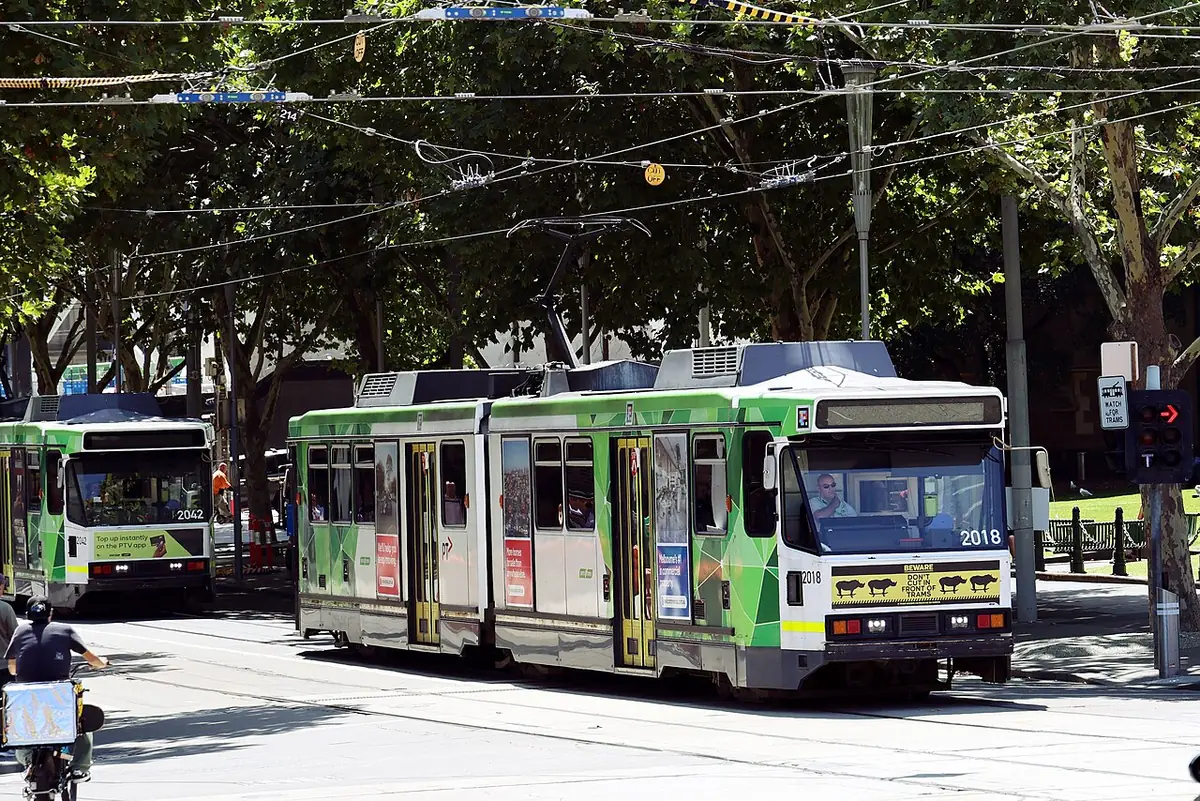
Green trams under the trees on Swanston Street — Photo: Bhullargraphic · CC BY-SA 4.0 · Wikimedia Commons
These institutional and practical reference points give you an overall view so you can approach your housing project with confidence.
Finding your way around Melbourne's property market means dealing with professionals whose powers are clearly defined by Victorian law. Knowing what each of them is responsible for lets you take your requests to the right person and avoid wasting time on paperwork.
The Property ManagerDay-to-day point of contactRepresenting the landlord, they run viewings, assess applications, collect rent and schedule any maintenance work needed in the home.
The Residential Tenancies Bond Authority (RTBA)Institutional safeguardAn independent public body that holds and protects your bond for the whole length of the lease, ensuring it is returned fairly when you leave.
The TenantResponsible occupantThey pay the rent on time, keep the property clean and in good condition, and promptly report any technical fault likely to damage the building.
The LandlordOwner of the propertyThey delegate day-to-day management to their agency while signing off on major decisions about structural repairs and any rent review.
Consumer Affairs VictoriaMediator and regulatorThe regulator that sets the renting rules that apply in the state and offers conciliation services when a dispute between the parties persists.
Renting an apartment or a house in Melbourne: how to decide based on your lifestyle
Once you have settled on the type of property, the central question of how much you can afford and what it really costs comes straight to the fore.
Choosing between an apartment in the heart of Melbourne and a detached house in the residential suburbs is not simply a matter of taste. It is the fundamental trade-off that will shape your daily life, your travel times and your overall budget for the whole length of your lease. Apartments are heavily concentrated in the Central Business District and in neighbouring areas such as Southbank, Carlton and Docklands. They put you right next to public transport, shopping centres, restaurants and employment hubs, which removes the need for a car in everyday life. In return, you have to accept a smaller living space, no private outdoor area and sometimes a densely occupied building where dealing with noise and shared spaces calls for tolerance.
Opting for a house, on the other hand, takes you out to the city's green, sprawling suburbs, whether the historic neighbourhoods of the inner east or the newer estates on the outskirts. Here the promise is space: a private garden for children or pets, more bedrooms, easy parking and genuine peace and quiet. But that breathing room comes at a high price, not only in higher rent but above all in greater dependence on the car. Commuting into the centre can easily swallow more than an hour every morning, turning your routine into a long crawl along the city's congested roads.
Tenant profiles usually dictate which way people go, both in location and in type of home. Young professionals, couples without children and recently arrived expats almost always favour an apartment for its flexibility and its immediate place in city life. For them the city is a playground explored on foot or by tram, and home is a practical base. Families with children, or professionals looking to put down roots, tend to choose a house, accepting the logistical constraints in exchange for a more sheltered home life anchored in the local community.
You also need to factor in the hidden costs of each option beyond the headline rent shown on the property portals. A modern apartment in a newer tower often comes with high owners' corporation fees, passed on or included, but offers efficient insulation that lowers energy bills. An older house, very common on Melbourne's rental market, can turn out to be surprisingly energy hungry because of historically lax building standards, leading to considerable heating and cooling costs during the cool southern-hemisphere winters and the scorching summers.
Your final decision should therefore rest on a clear-eyed map of your weekly priorities and of how much urban friction you can tolerate. If you value spontaneity, culture and professional efficiency, the city apartment is the obvious choice. If you put calm, space at home and tamed nature at the top of your list of needs, a suburban house will meet your expectations, despite the logistical compromises it inevitably demands.
What overall budget do you really need to live comfortably in Melbourne?
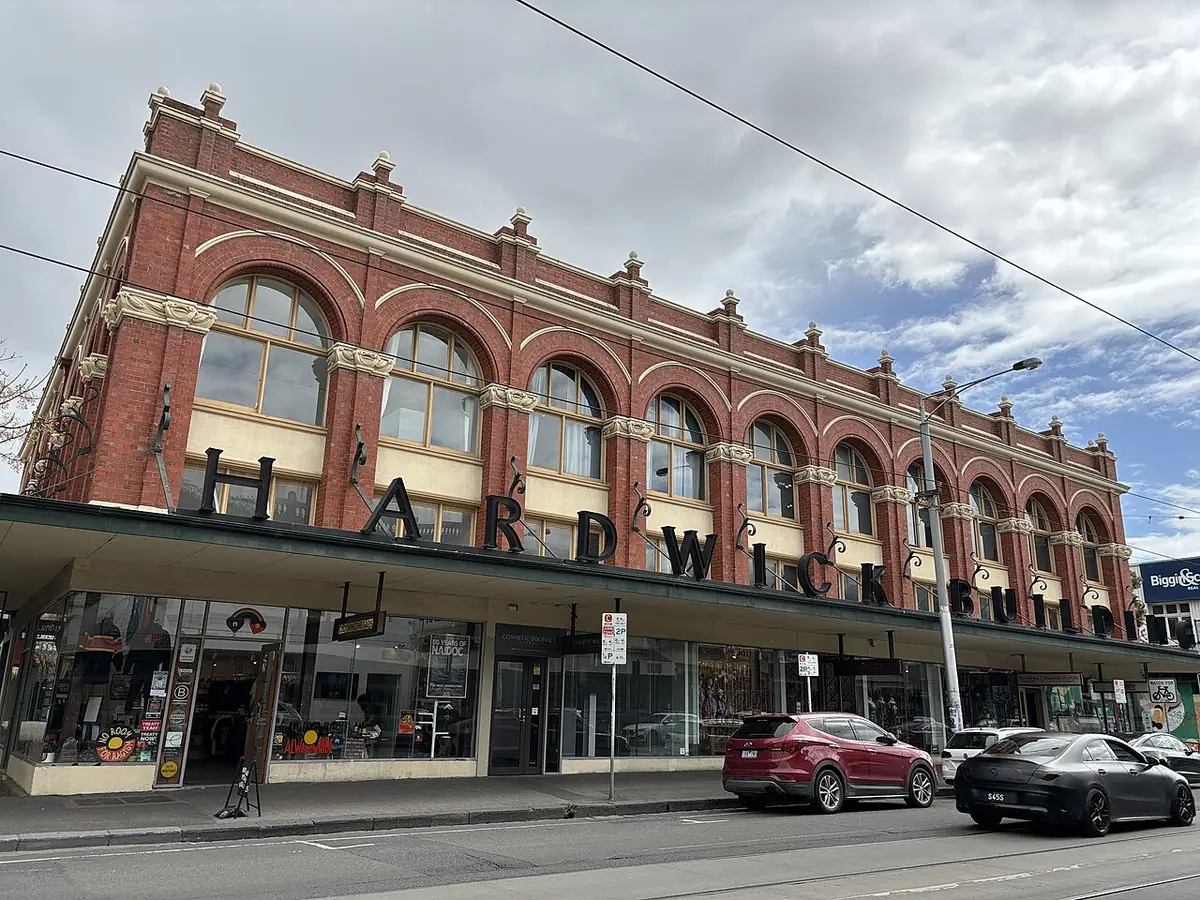
The red-brick Hardwick Building and its shopfronts in Brunswick — Photo: Nick-D · CC BY-SA 4.0 · Wikimedia Commons
With the budget under control, it is time to picture that financial reality in the course of an ordinary day in the city.
Drawing up a budget for renting an apartment in Melbourne means going well beyond the weekly rent shown in the listing. The Australian market traditionally works on a weekly basis, which you should multiply by 52 and then divide by 12 to get your real monthly outgoing. Alongside that base rent, you must set money aside for electricity and gas bills, water, high-speed internet and home insurance. The tables below summarise the ranges seen on the market to help you calibrate your finances with no blind spots.
Median rent ranges by property type and area in Melbourne
Property type
Inner areas (CBD, Inner South)
Middle-ring areas (Inner North, West)
Outer suburbs
1-bedroom apartment
AUD 450 to AUD 550 / week
AUD 380 to AUD 460 / week
AUD 300 to AUD 380 / week
2-bedroom apartment
AUD 650 to AUD 850 / week
AUD 520 to AUD 650 / week
AUD 420 to AUD 520 / week
3-bedroom house
AUD 850 to AUD 1,200 / week
AUD 650 to AUD 850 / week
AUD 500 to AUD 680 / week
Prices exclude running costs and depend heavily on whether the building has premium amenities such as a pool or a gym.
Estimated monthly running costs for a typical renting household
Expense
Estimated monthly budget (apartment)
Estimated monthly budget (house)
Electricity and gas
AUD 150 to AUD 250
AUD 250 to AUD 400
Water and sewerage
AUD 70 to AUD 100
AUD 100 to AUD 150
Unlimited fibre internet
AUD 70 to AUD 90
AUD 70 to AUD 90
Public transport (Myki)
AUD 160 per person
AUD 200 + fuel costs
Energy bills peak sharply by season in winter (June to August) and in summer (January to February) because of heavy use of reverse-cycle air conditioning.
What does an ordinary Tuesday of transport, work and errands actually look like in Melbourne?
Behind that apparently smooth daily routine lie subtler market dynamics that real estate agencies often fail to mention.
To judge whether your move makes sense, nothing beats looking closely at a typical weekday. In Melbourne, the rhythm revolves around an extremely dense multimodal public transport network, anchored by free trams in the city centre. Health services, schools and shared workspaces form a smooth-running ecosystem that nonetheless demands punctuality. Here is how an ordinary Tuesday unfolds for a resident living in a semi-central neighbourhood.
07:30Local café (Fitzroy or Brunswick)Coffee culture is a sacred institution in Melbourne, where the day invariably starts with a flat white ordered from baristas known for their technical standards.
08:30The metropolitan tram network (Yarra Trams)The morning commute is on board the heritage or modern trams that criss-cross the city, offering a calm moment of transition despite the rush-hour crowds.
09:15Workspace or office in the CBDArrival at work in a modern office building or a collaborative coworking space marks the real start of the working day.
13:00Lunch break in a lanewayThe famous laneways are home to outstanding, cosmopolitan street food that reflects the unique cultural and culinary diversity of Victoria's capital.
17:30Local medical centre (GP clinic)A routine appointment with a General Practitioner, the first line of a healthcare system organised into easily accessible neighbourhood clinics by appointment.
19:00Local supermarket (Coles or Woolworths)A last-minute shop for dinner at one of the big grocery chains that open late, topped up with a trip to the covered market at the weekend.
What property listings leave out about the reality of renting in Melbourne
This operational complexity inevitably leads some unprepared tenants to make regrettable mistakes in their first few months.
The Australian rental market follows customs and legal rules of its own that often catch newcomers from abroad off guard. Between fiercely competitive group viewings, strict guarantee requirements and the thermal reality of the buildings, the marketing brochures only show one side of the story. Here are the key points you absolutely need to take on board before signing any residential lease.
Fierce competition at property viewings (inspections)
Rental vacancy is extremely low in Melbourne, which creates huge queues at open inspections. You need to prepare your complete application in advance on the online platforms if you hope to land a home in time.
The bond system overseen by the RTBA
The bond is generally equal to one month's rent and must be lodged with an independent government body, the Residential Tenancies Bond Authority, which guarantees it is returned securely at the end of the lease.
The meticulous move-in and move-out inspection (Condition Report)
Filling in this photographic document with absolute rigour on day one is your only legal protection for getting your full bond back when you leave, whatever the landlord demands.
Variable insulation and energy performance
Many older or hastily built buildings have insulation that falls short, leaving interiors cold in winter and overheated in summer, which pushes up your monthly energy bills considerably.
What are the most common misjudgements people discover six months after moving in?
Faced with these structural demands, it is perfectly reasonable to ask whether this market really suits your profile.
Looked likeAn ultra-modern apartment in the heart of the CBD with panoramic views and upmarket amenities
Turned outA residential tower that is noisy because of constant building work nearby, with lifts that are always packed at rush hour
Would have caught itVisiting the neighbourhood at different times of day and checking the general condition of the building as well as any construction projects under way in the street.
Looked likeA large, charming and affordable house in a green, quiet outer suburb
Turned outA money pit in fuel costs and marked social isolation because of the distance between home and the main cultural and business hubs
Would have caught itWorking out the real travel time at office hours by public transport or by car before committing to the location.
Looked likeAn attractive rent signed quickly without negotiating or checking the property's condition thoroughly
Turned outA poorly insulated home with faulty heating and a reluctant landlord slow to carry out the urgent repairs required by law
Would have caught itAlways testing the appliances, checking for double glazing and insisting that all maintenance conditions are clearly written into the lease.
Looked likeTotal flexibility to end or change the lease easily as job opportunities come up
Turned outA rigid twelve-month contractual commitment with very heavy financial penalties for leaving early without the agency's approval
Would have caught itNegotiating early termination (break lease) clauses when the contract is first drawn up if your work situation is uncertain.
Which tenant profiles should seriously postpone or avoid a move to Melbourne?
With these trade-offs laid out, it is time to make your final decision with a clear head.
Melbourne's rental market has strict financial and regulatory requirements that do not suit every personal situation. Trying to settle in the city without a solid financial footing or clear professional prospects exposes you to quick and costly disappointment. For certain specific profiles, it is much wiser to postpone the move or consider more flexible locations.
Self-employed people or freelancers with no local income history
→To postpone their search for a permanent home
Real estate agencies consistently ask for proof of steady wages over several months (payslips) or substantial financial guarantees that newly arrived freelancers cannot provide straight away.
People on a tight budget with no savings to fall back on
→To go for a temporary share house rather than an individual lease
Upfront moving-in costs, including the bond, rent in advance and utility connection fees, quickly add up to several thousand dollars, putting any thin cash reserve at risk.
Working people who need total short-term flexibility
→To favour a furnished transitional stay such as Airbnb or co-living
Standard Australian residential leases impose firm twelve-month commitments, making any quick career move extremely costly in contractual terms.
So, are you ready to take the plunge and settle in Melbourne for the long term?
Moving to Melbourne to rent an apartment or a house is an exciting step that changes the course of your life for good, but it calls for complete clear-sightedness. Between the administrative rigour of rental applications, fierce competition on the market and adjusting to a new urban rhythm, Victoria's capital is not kind to those who improvise. If you have weighed up the real costs, accepted the geographical constraints and secured a solid financial footing, you have everything you need to make your move to Australia a success in the best possible conditions.
Take the time to validate each step methodically, from choosing the ideal neighbourhood to carefully signing off the move-in condition report. Melbourne's property market always rewards preparation and the reputation of serious tenants who respect the rules and know their rights. Your new home is waiting around the corner of one of those famous lively laneways, ready to offer you an exceptional way of life, provided you have crossed the threshold with your eyes wide open.
Related questions
How does paying rent work in Melbourne?
Rent is traditionally worked out and paid on a calendar monthly or fortnightly basis, even though listings always show a weekly rate calculated over 52 weeks a year.
What documents do you need for a rental application?
Real estate agencies ask for official photo ID, recent proof of income, references from previous landlords and bank statements that show you have a regular ability to pay.
What is the Residential Tenancies Bond Authority (RTBA)?
It is the independent public body of the State of Victoria that holds all the bonds paid by tenants in trust for the entire length of their residential lease.
Are pets allowed in rental properties?
Victorian law gives tenants the right to ask permission to keep a pet, and a landlord can only refuse by obtaining an official tribunal order on legitimate grounds.
How much is the usual bond?
The standard bond is four weeks' rent for homes where the monthly rent does not exceed a regulatory threshold set by the state authorities.
How are urgent repairs handled in a rental home?
The law requires the landlord or agent to act quickly on any genuine emergency, such as a major water leak, a heating failure or a safety problem that makes the property unfit to live in.
What is a routine inspection?
These are periodic visits carried out by the real estate agent every six months to check the general condition of the rented property, after mandatory written notice has been given to the tenant.
Can you sublet part of your apartment?
Subletting or bringing in a new housemate requires the prior formal written consent of the landlord or of the agency managing the original lease.
What costs should you plan for when you first move in?
On top of the bond and the first rent paid in advance, budget for connecting electricity, gas and internet, and possibly for taking out a comprehensive contents insurance policy.
How do you end a lease before it runs out?
Ending a lease early (breaking the lease) usually means paying compensation to cover the re-letting and advertising costs incurred by the agency.