Investing in property in Melbourne calls for a close understanding of the local dynamics, the legal particularities and what sets each neighbourhood apart. This practical guide walks you step by step through your decision, giving you the analytical keys you need to carry out your purchase with confidence.
Get the app
What nobody tells you.
Real prices, hidden costs and the traps to check before you commit.
What you really get when you buy a house in Melbourne
Scroll
What you really get when you buy a house in Melbourne
Investing in property in Melbourne calls for a close understanding of the local dynamics, the legal particularities and what sets each neighbourhood apart. This practical guide walks you step by step through your decision, giving you the analytical keys you need to carry out your purchase with confidence.
Written by the ting.ad editorial team ·
Sale House Melbourne in Street View: drag to look around.
That spatial layout shapes directly how you will organise your daily life around your priorities.
Buying a house in Victoria's capital is about more than acquiring buildable square metres or living space. It means entering an urban system defined by a constant tension between suburban sprawl and the density of the inner neighbourhoods. You need to understand what the structure of the Australian property market means for your assets over the long term. The trade-offs between distance from the centre and available space shape the day-to-day reality of every owner.
Space and landvsDistance from the CBD
Owning a larger private block usually means moving away from the central corridors and accepting longer daily journeys. The outer suburbs offer space but make you more dependent on the road and rail network.
Victorian charmvsThermal efficiency
Historic Victorian terraces and Federation houses have undeniable architectural character but often need heavy investment in renovation. Their original insulation is rarely suited to the city's marked swings in weather.
Neighbourhood lifevsOngoing maintenance
Settling in an established residential area guarantees a leafy setting and local amenities within walking distance. In return, looking after the outdoor spaces and preserving the building demands a constant commitment of money and time.
How easily the property sellsvsPersonalisation
Standard homes in recent estates resell more easily because buyers know what they are getting technically. Unusual properties offer a unique way of life but appeal to a narrower pool of buyers when you come to sell.
Does this place suit your lifestyle and habits?
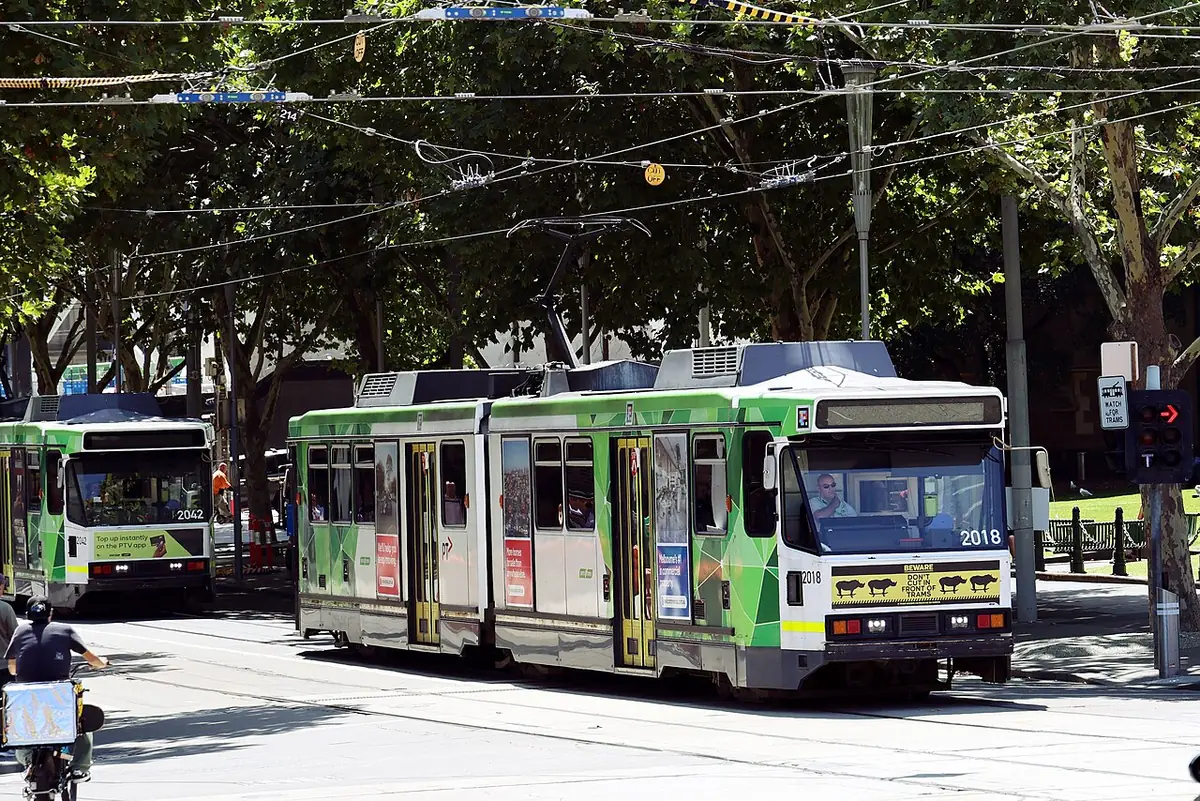
Green trams under the trees on Swanston Street — Photo: Bhullargraphic · CC BY-SA 4.0 · Wikimedia Commons
Moving from one country or region to another also means unlearning some cultural and legal reference points.
Every buyer approaches the property market with specific expectations shaped by their career and personal path. Between wanting a lively neighbourhood and needing residential calm, there are plenty of trade-offs to make. Working through your day-to-day priorities helps you identify the area that will support a lasting balance in your life without unnecessary compromise.
Close to transport and services
If your work is concentrated in the financial centre, favour the middle-ring suburbs well served by the tram or suburban train network. That spares you rush-hour traffic and protects your free time. Semi-detached houses in the nearby neighbourhoods offer an ideal compromise between space and accessibility.
Residential neighbourhoods and school zones
For households with children, the search naturally turns to areas with parks, sports facilities and well-regarded schools. Properties with a secure private garden then really come into their own, even if that means accepting a longer journey to reach the main cultural hubs.
Calm, green neighbourhoods
People after a peaceful setting will look to the more distant residential suburbs, where density gives way to the surrounding nature. These areas offer better value per square metre and a residential stability that many appreciate, at the cost of a quieter urban scene in the evening.
Living here when you come from abroad: what really changes
Once you have taken these reference points on board, choosing the neighbourhood to settle in becomes the key step in your search.
Moving abroad or investing in property across borders brings you up against administrative and cultural practices that can be disconcerting. The Australian land system, inherited from the British tradition, rests on legal foundations quite different from those many buyers know back home. Understanding these structural differences helps you avoid misjudgements when making an offer or managing the property.
From abroad
A traditional dense, centralised city
Melbourne
Wide urban sprawl and multiple centres
Unlike the model of a dense historic core surrounded by outskirts, this city is organised around many self-contained activity centres. A car or the heavy public transport network becomes essential to structure your daily journeys.
From abroad
A preliminary contract drawn up by a notary acting as a public officer
Melbourne
Conveyancers and specialist lawyers
The transfer of ownership does not rely on a single notary acting for both parties. Buyer and seller each engage legal advisers or conveyancing specialists to secure the contractual side and the title searches.
From abroad
Standard thermal insulation and central heating
Melbourne
Design focused on ventilation and keeping cool
Many local homes were built to insulation standards different from those required in Europe. You need to budget for the adaptations required to cope with summer heat peaks and cool winters.
From abroad
Tightly regulated leases and landlord-tenant relations
Melbourne
A flexible rental market with its own specific rules
If you plan to let the property you buy, the mechanisms for reviewing rents and the way professional agencies manage properties follow precise local standards that you should build into your financial strategy.
Which neighbourhood to choose for your aspirations and budget?
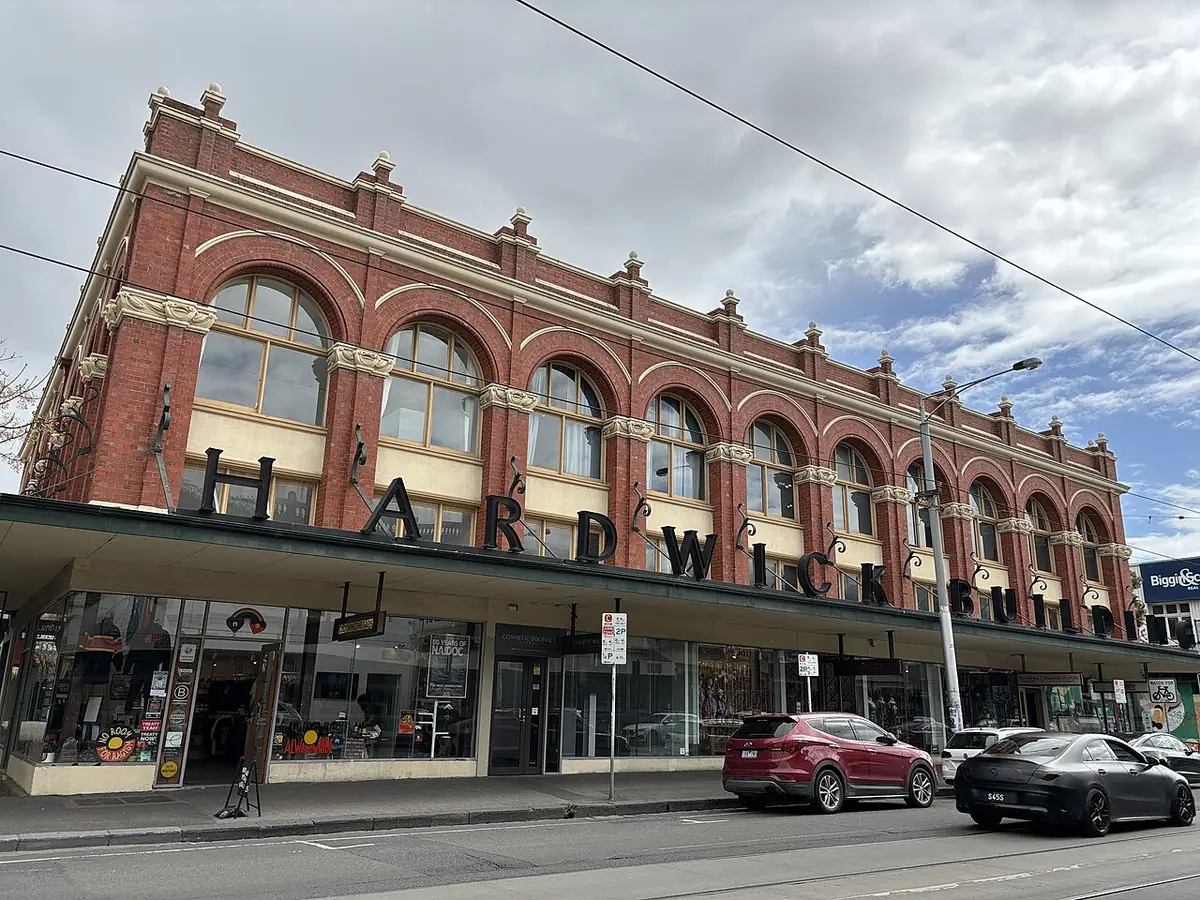
The red-brick Hardwick Building and its shopfronts in Brunswick — Photo: Nick-D · CC BY-SA 4.0 · Wikimedia Commons
This geographical diversity translates into contrasting financial realities that deserve rigorous analysis.
The city is a mosaic of neighbourhoods with strong identities, from historic Victorian areas to new contemporary developments. Each area strikes its own balance between accessibility, cultural energy and the kinds of property available. Weighing up these characteristics lets you target your search precisely without spreading yourself too thin.
The inner and historic neighbourhoods
A lively atmosphere, with local cafés, tree-lined streets and plenty of neighbourhood shops within walking distance. The pace is energetic and fashionable.
Suits
Professionals and lovers of city life who want to keep commutes to the employment hubs short and enjoy a rich cultural offering.
Trade-off
Living space is often smaller for the same budget, and properties sometimes need work to bring them up to standard.
The established middle ring
A good balance between residential calm and commercial activity, with landscaped parks, well-regarded schools and efficient transport infrastructure.
Suits
Families and buyers looking for a lasting place to live, a usable outdoor space and a well-established local community.
Trade-off
Fierce competition in the property market and prices per square metre held up by constant demand from local households.
The outer residential suburbs
A peaceful, nature-oriented setting with larger blocks of land, generous green spaces and local car traffic.
Suits
Those who put living space, complete quiet and a large private garden ahead of being close to the centre.
Trade-off
Longer daily journeys to reach the city centre and a marked dependence on the road or rail corridors.
How much does a property cost here and how should you read the prices?
Beyond the purely financial side, the nature of land ownership deserves particular attention.
Getting to grips with costs in this market means setting aside European benchmarks to understand how auctions and land values work. Prices vary considerably with proximity to transport, build quality and the size of the block. Analysing recent sales and macroeconomic trends lets you adjust your budget.
MelbourneFor saleHouseestimate
Median price / m²A$6,310Half the apartments sell below this
Median priceA$1.16mthe average is 14% higher — a few very large properties pull it up
Most common2 bedrooms46 % of listings
Average size175 m²
By number of bedrooms
Bedrooms
Share of market
Avg price
Price / m²
Avg size
2most common
46 %
A$930k
A$6,642
140 m²
3
36 %
A$1.27m
A$6,310
201 m²
4
18 %
A$1.76m
A$6,111best value / m²
289 m²
Each row is an average, compared against the area average of A$6,642 / m². These are indicative estimates of a typical local market, not a measured sample of live listings. Check current listings before relying on them.
What you can actually own: understanding property titles
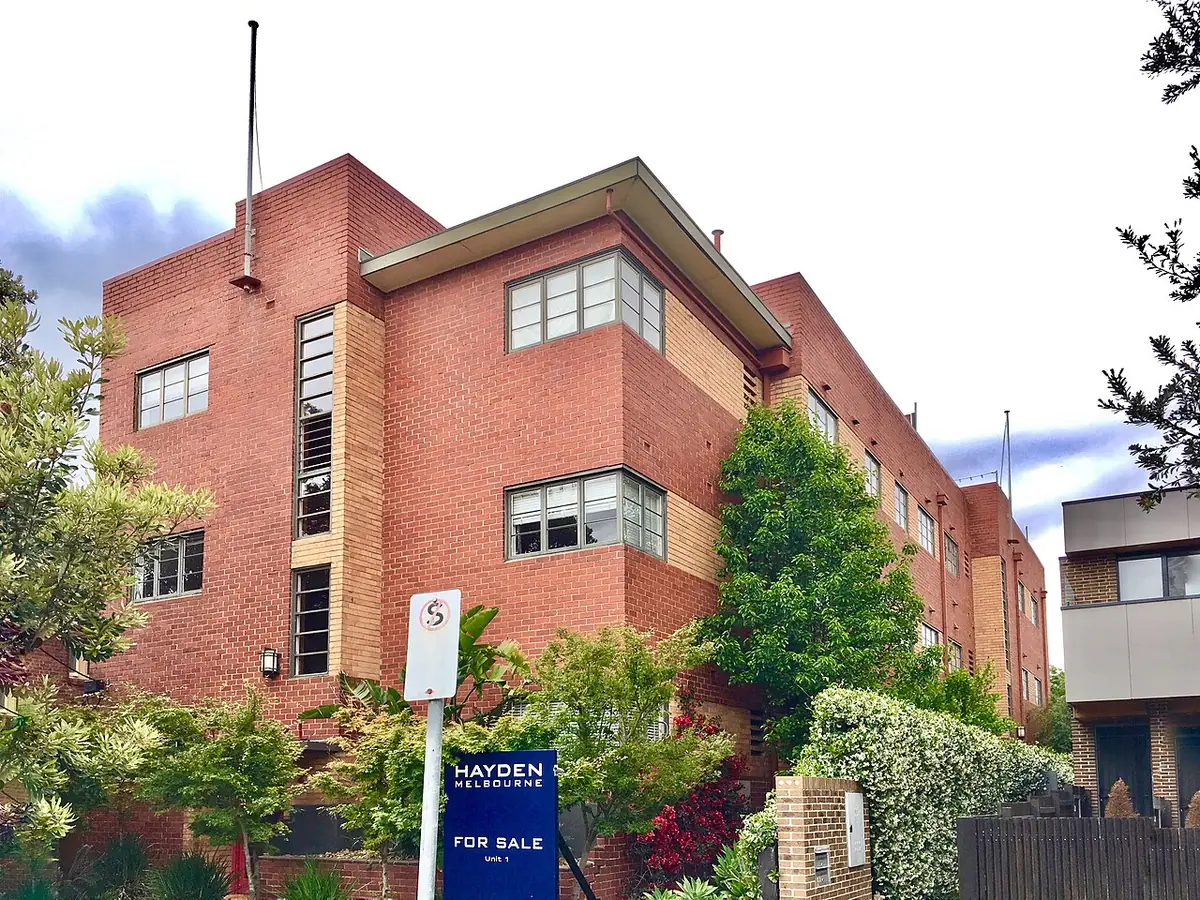
A red-brick apartment block in St Kilda West — Photo: Rohanstorey · CC BY-SA 4.0 · Wikimedia Commons
Securing your purchase legally then depends on following the local transaction process to the letter.
Australian property law draws a clear line between several legal regimes governing the occupation and ownership of land. Grasping these fundamental distinctions keeps your investment legally secure and prevents unpleasant surprises over shared charges or easements. A careful review of the certificate of title is an essential step before any commitment.
Freehold (full ownership)
This regime gives you full ownership of the land and the building on it, with no perpetual ground rent owed to a third party. You have complete freedom to carry out structural changes, provided you comply with local planning schemes and heritage protection rules if the property is listed.
What it changesYou keep full control of your land and its future value over the long term, with no owners' corporation manager involved in structural decisions.
Strata title and shared ownership
Common in developments that group several homes on a single block, this regime involves sharing common areas and paying levies for general upkeep. An owners' corporation manages the shared parts under a precise set of rules.
What it changesYou need to review the owners' corporation accounts and the level of recurring charges so that poor collective management does not dent the overall value of your investment.
The rule to understand before paying a deposit
Each of these steps fits into a precise timetable involving several professionals.
Buying property involves procedural specifics that demand constant vigilance from the buyer. In particular, the phase before final signature is governed by strict legal provisions that protect or bind the parties depending on the method of sale. Anticipating these mechanisms lets you negotiate from a position of strength.
Identifying a property that meets your search criteria and reviewing the preliminary legal documents supplied by the seller.
A thorough review of the 'Section 32', the compulsory legal document setting out the charges, easements and taxes attached to the property.
Arranging an independent building inspection to identify any hidden defects or structural problems linked to local materials.
Making your offer, either through direct private negotiation or by bidding at a public auction.
Paying the standard deposit (usually 10% of the purchase price), held in a trust account until ownership is actually transferred.
The official completion of the transaction at 'settlement', marking the final transfer of funds and the handover of the keys to the new owner.
This rigorous organisation safeguards your investment over time and helps your move go smoothly.
Buying a property follows a strict timeline that you need to master to avoid missteps and meet the legal deadlines. From the initial search to the handover of the keys, each party plays a precise role in securing the process. Seeing the sequence laid out lets you steer your project calmly.
The buyerSetting the budget and getting pre-approvalGet written confirmation of your borrowing capacity from a lender before you start viewing properties.
The real estate agentViewings and shortlisting propertiesView several properties in your target areas to compare features and get a realistic sense of the prices being achieved locally.
The conveyancer or lawyerLegal review of the Section 32 and the titlesHave them check that there are no restrictive easements, hidden mortgages or planning restrictions affecting the block you want.
The building inspectorBuilding and pest inspectionEngage an independent professional to assess the structural condition of the building, its insulation and any presence of termites.
The buyer and the sellerSigning the contract and paying the depositSign the contract of sale and pay the 10% deposit, while observing any cooling-off period that applies to the method of sale.
The financial institutionsPreparing final payment and settlementCoordinate your bank and your legal representatives so the funds are released on the day the sale officially completes.
House or apartment in Melbourne: fall for the dream of a secluded block or lock in a stake at the heart of the action?
Once you have settled that fundamental choice between outer space and central density, it is time to put precise figures on the economic reality of your move.
Buying a house in Melbourne means immediately confronting the reality of distances and urban sprawl. Residential suburbs in the Outer East or on the Mornington Peninsula offer generous blocks and leafy gardens, but they lock you into commutes of more than an hour and a half every morning if you work in the CBD. The detached house embodies the traditional Australian ideal, with room for the children and Sunday barbecues, but it demands a huge investment of time in upkeep and in fuel, while exposing you to the volatility of outer markets that are less liquid than the centre.
By contrast, an apartment in inner neighbourhoods such as Fitzroy, South Yarra or Brunswick offers instant neighbourhood life, where the tram replaces the second car and specialty cafés replace the chore of mowing the lawn. Buyers from abroad often arrive with the European reflex of a compact city centre, only to discover that in Melbourne vertical density is concentrated along the main tram corridors and around suburban stations. Choosing an apartment means accepting the compromise of strata living, sometimes with high owners' corporation fees and cramped floor areas, in exchange for being right next to the employment hubs and the city's cultural life.
Choosing between these two types of property is not simply a matter of taste but a cold calculation about your tolerance for commuting and your investment horizon. If you arrive with school-age children and a wish to plant trees, the 1920s semi-detached houses of the Inner North are often the best historic compromise between character and accessibility. If, on the other hand, you value freedom of movement, a quick resale and no maintenance obligations, the market for new or recent apartments around Richmond will give you far greater liquidity if your job suddenly moves you elsewhere.
You also need to factor in the regulatory dimension specific to the State of Victoria, where planning rules fiercely protect the heritage of residential neighbourhoods against excessive densification. This means the land value of a detached house tends to outperform apartment buildings over the long term, as the supply of apartments keeps growing with new developments. Your buying decision should therefore weigh immediate day-to-day comfort against how your assets will perform over ten or fifteen years, accepting that no option meets all your expectations at once without a financial compromise.
What budget should you really plan to live and own a home in Melbourne without nasty surprises?
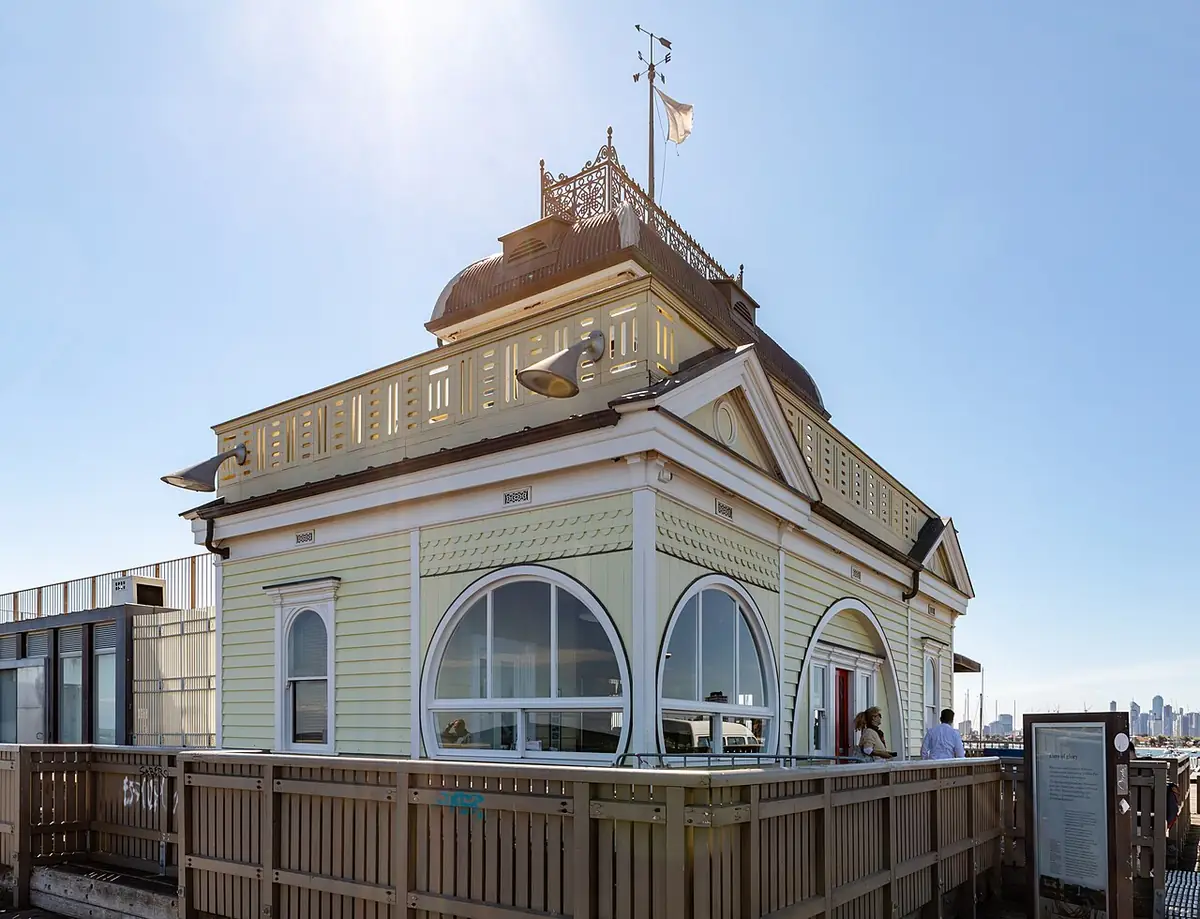
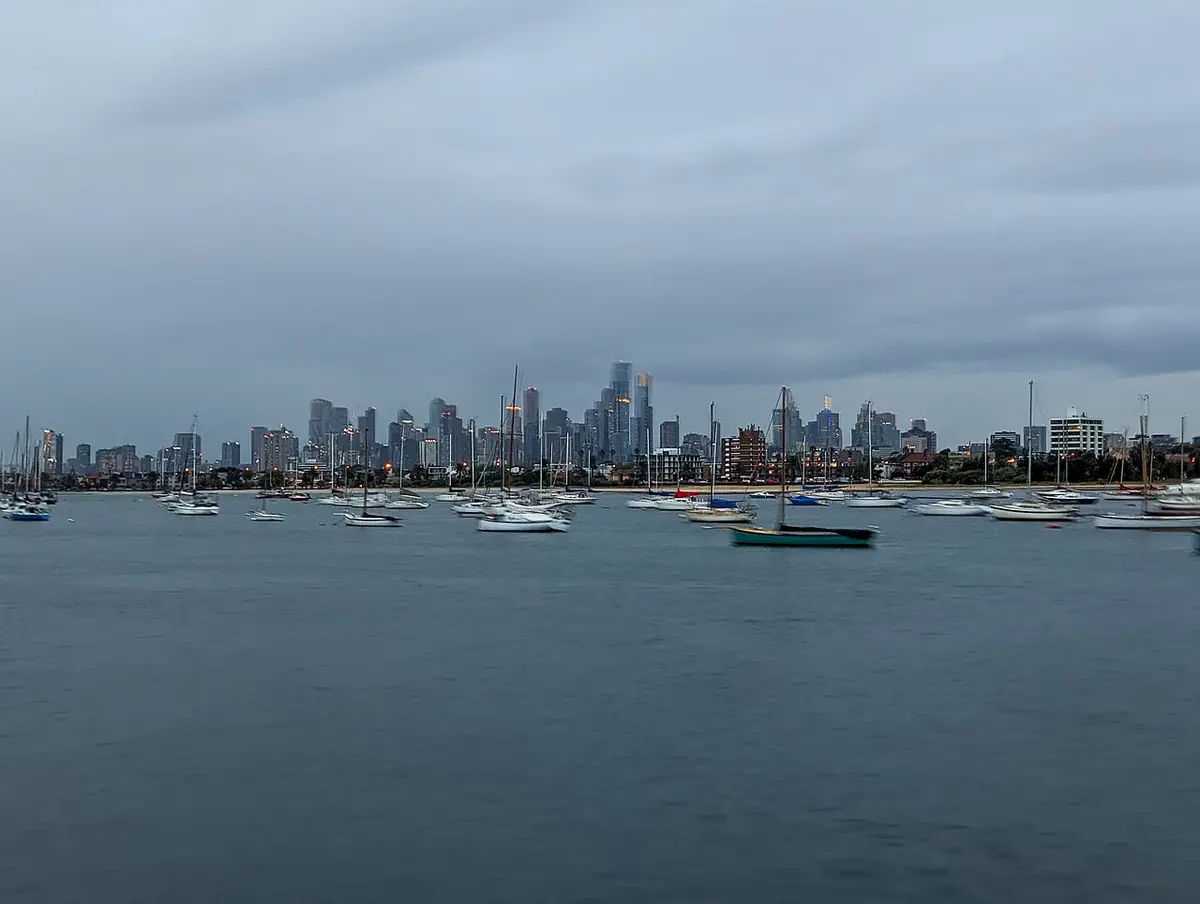
The Melbourne skyline seen across the bay from St Kilda — Photo: Sourabh.biswas003 · CC BY-SA 4.0 · Wikimedia Commons
These raw figures lay the financial foundations of your project, but it is daily life and getting around that will reveal the reality of your lifestyle.
Drawing up a budget for buying and living in Melbourne means looking beyond the monthly mortgage repayment to include local taxes and high fixed costs. Between the State of Victoria's stamp duty, compulsory insurance and the cost of energy, the bill turns out to be noticeably steeper than in Europe for a comparable standard. This table sets out the unavoidable expenses for a household moving into a standard three-bedroom house in the middle ring.
Upfront property and tax costs
Expense
Indicative amount (AUD)
Comment and impact on your cash flow
Stamp duty
AUD 35,000 to AUD 55,000
A progressive State of Victoria tax calculated on the purchase price, paid in cash through the conveyancer at settlement and not able to be rolled into the main loan.
Conveyancing and legal fees
AUD 1,500 to AUD 3,000
The fee paid to the conveyancer or specialist lawyer to check the property titles (Section 32) and handle the official transfer of ownership at the land registry.
Structural and termite inspection
AUD 600 to AUD 1,200
An essential service carried out by an independent expert before final signature to detect hidden defects and the very common, destructive presence of termites.
Stamp duty is the heaviest hidden expense for first-home buyers and requires substantial liquid savings set aside in advance.
Monthly household running costs
Cost category
Average monthly cost (AUD)
Seasonal variations and obligations
Council rates (local taxes)
AUD 180 to AUD 280
Property and waste collection charges paid to the local council, varying with the assessed value of the land and the neighbourhood.
Home insurance (Building & Contents)
AUD 120 to AUD 220
Essential cover including local climate risks, notably violent windstorms and bushfire risk on the urban fringe.
Energy (electricity and gas)
AUD 250 to AUD 450
High bills because of the often poor insulation in older housing stock and heavy use of air conditioning in summer.
The energy budget can double between the southern winter and a scorching summer, so it calls for a regular financial provision.
Healthcare, schools and transport: what does an ordinary Tuesday in a Melbourne suburb actually look like?
This well-oiled routine nevertheless hides administrative realities and construction defects that real estate agents are careful not to mention.
To gauge whether your future purchase makes sense, nothing beats carefully breaking down the weekly rhythm and the traffic flows. Between strict school zones and chronic congestion on major roads such as the Monash Freeway, every journey has to be planned carefully. Here is the timeline of a typical weekday for a working person living in a family home in the inner ring.
07:15Leaving home and the school runDropping the children at the local public school, whose closeness often determines the value of the house you bought.
08:15Commute to the CBD by train or tramTouching on with a Myki card for a thirty-minute trip on the metropolitan network, often very crowded during the morning peak.
09:00Arriving at the office and a morning coffeeSettling into a city-centre workplace, after the obligatory stop in one of the famous laneways for a flat white.
17:30School pick-up and after-school activitiesCollecting the children from after-school care or heading to local sports clubs, which play a big part in Melbourne community life.
19:00Last-minute grocery shoppingA stop at a local Coles or Woolworths supermarket to make dinner, or a takeaway order from one of the many neighbourhood restaurants.
What the listing won't tell you about the real condition of the building and neighbourhood constraints in Melbourne
These technical discoveries are part of the risks of the process, but some strategic misjudgements can ruin your experience of living there.
The marketing photos and glowing descriptions from Australian real estate agencies systematically gloss over the structural and environmental constraints of properties. Behind fresh paint and careful staging there are sometimes serious defects that will weigh heavily on your renovation budget. Here are the crucial points experts look at that you absolutely must check before committing.
No thermal insulation and mould problems
Many Victorian-era or 1970s houses have no glass wool in the walls or roof space, leading to excessive energy use and toxic spores appearing in winter.
Heritage and preservation restrictions
If your house is covered by a Heritage Overlay, you cannot alter the facade or the building's volume without the fussy approval of the council, making any extension complex and expensive.
Proximity to high-voltage power lines and substations
The overhead electricity distribution network runs through many residential neighbourhoods, directly lowering resale value and raising legitimate health questions.
Rights of way and sewerage easements
A public pipe running under your land legally restricts what you can do outdoors and strictly prohibits building a pool or veranda over that strip.
The location and financing mistakes people bitterly discover six months after moving in
With these avoidable mistakes flagged, it is worth taking a clear-eyed look at whether your personal profile really matches the demands of this market.
Looked likeAn extraordinary opportunity in a booming outer suburb with a large wooded block.
Turned outComplete geographical isolation at weekends, an astronomical fuel bill and disastrous resale times when it came to moving back home.
Would have caught itAlways prioritise proximity to heavy public transport and check the actual population density rather than the promises of planning schemes.
Looked likeA rental investment or main home bought without a thorough building inspection in order to beat competing buyers.
Turned outThe discovery of foundations sinking into Melbourne's reactive clay and pipes invaded by eucalyptus roots, requiring AUD 40,000 of work.
Would have caught itNever drop the building inspection condition (Building and Pest Inspection) when submitting your offer.
Looked likeA purchase made in a rush at a public auction under the psychological pressure of the auctioneer.
Turned outGoing far beyond your maximum borrowing capacity and chronic financial stress as the Reserve Bank of Australia's cash rate rose.
Would have caught itSet an absolute bidding ceiling you will not go past and hire a professional buyer (Buyers Advocate) to handle the emotional pressure.
Looked likeA charming period house with no central heating but graced with a beautiful old fireplace.
Turned outFreezing indoor temperatures through July and August, with exorbitant electricity bills from running portable fan heaters.
Would have caught itAsk for the energy rating and check that there is a reverse-cycle split system in every living area.
Risky profiles: who should definitely not buy a house in Melbourne today?
Now that these warnings are on the table, it is time to take stock and decide with full awareness whether to go ahead.
The Melbourne property market does not suit every life path, and insisting on buying in unfavourable circumstances is a major financial risk. The constraints of Australian lending and the specifics of the buying process demand a professional and personal stability that some expats and new arrivals do not yet have. Here are the buyer profiles for whom buying straight away is a strategic dead end.
An employee on a temporary work visa (Temporary Skilled Migration)
→Postpone buying until permanent residency (PR) is granted
Approval from the government's FIRB body comes with dissuasive fees, and banks require very large deposits with no guarantee the visa will be renewed in an economic crisis.
An overseas investor seeking an immediate rental yield above 6 percent
→Look to stock markets or other global cities instead
Net rental yields in Melbourne generally sit around 3 to 4 percent, eroded by high local property taxes and structural maintenance costs.
A household expecting to stay in the area for less than three years
→Keep renting flexibly in the private market
Combined transaction costs (stamp duty on purchase and agent's commission on resale) easily reach 8 to 10 percent of the total amount, wiping out any short-term capital gain.
So, are you really ready to take the plunge and buy property in Melbourne?
Buying property in Melbourne is not just a financial transaction: it is a deep commitment to a way of life, an urban rhythm and a local community. If you have weighed up the constraints of commuting, accepted the reality of maintenance costs and secured solid finance from a reputable lender, then all the lights are green for starting your search on the ground.
The Melbourne market consistently rewards the patience and rigour of those who take the time to analyse every contract of sale (Section 32) with the help of a local legal professional. Never let yourself be swept along by the artificial urgency agencies create at Saturday-morning public auctions. Your absolute priority must remain the quality of the location and the structural soundness of the building.
Ultimately, if your life plans point to long-term stability in Victoria's capital, buying a well-located house or apartment will give you a solid anchor for your assets. Take the time to visit your target properties several times at different times of day, check the noise and acoustic environment, and surround yourself with independent experts so you can confirm your investment with complete peace of mind.
Related questions
What additional costs should you plan for when buying property in Melbourne?
You must factor in the State of Victoria's stamp duty, which varies with the price of the property, as well as the conveyancer's fees, the building inspection costs and the compulsory insurance.
Can you buy property in Melbourne as a non-resident foreigner?
Yes, but a foreign buyer must first obtain approval from the federal body FIRB and pay significant stamp duty surcharges, while facing strict restrictions on buying established homes.
How do property auctions work in Melbourne?
Public auctions usually take place on site on a Saturday morning, and the buyer has no cooling-off right if their bid is accepted and the seller's reserve price has been reached.
What is a Section 32 in a Victorian property purchase?
It is a compulsory legal document supplied by the seller that lists all the key information about the property, including easements, local rates, planning restrictions and the title history.
Which neighbourhoods are most sought after for families settling in Melbourne?
Suburbs in the Inner East and Inner North, such as Kew, Hawthorn, Fitzroy North and Brunswick, are highly prized for the quality of their schools and their closeness to parks and the tram network.
How do termites affect property in the State of Victoria?
Termites are a formidable threat to traditional timber structures. A pest inspection carried out by a certified professional is therefore an absolutely non-negotiable step before signing anything.
How long does a complete property purchase take in Melbourne on average?
The process generally runs over four to six weeks between signing the offer or winning at auction and settlement, when ownership is actually transferred.
What is a Heritage Overlay and how does it affect my plans?
A Heritage Overlay is a heritage protection imposed by the council that considerably restricts the external and architectural changes you can make to your older house.
What does a Buyers Advocate do in the Melbourne property market?
A Buyers Advocate is a licensed professional who represents only the buyer's interests, looks for off-market properties and bids on your behalf so you avoid the trap of emotional pressure.
How do RBA interest rates influence buying power?
Decisions by the Reserve Bank of Australia directly set the maximum borrowing capacity the commercial banks will grant, immediately changing buyers' ability to pay and the direction of prices.