Getting ready to buy a house in Melbourne means mastering a very particular set of local rules, a long way from the traditional notary-led practices many buyers know back home. This guide explains how houses are valued, how to choose a neighbourhood and the legal steps you cannot skip if you want to see your project through with peace of mind.
Get the app
What nobody tells you.
Real prices, hidden costs and the traps to check before you commit.
Why valuing a house in Melbourne defies the yardsticks you bring from abroad
Scroll
Why valuing a house in Melbourne defies the yardsticks you bring from abroad
Getting ready to buy a house in Melbourne means mastering a very particular set of local rules, a long way from the traditional notary-led practices many buyers know back home. This guide explains how houses are valued, how to choose a neighbourhood and the legal steps you cannot skip if you want to see your project through with peace of mind.
Written by the ting.ad editorial team ·
Valuation House Melbourne in Street View: drag to look around.
This nuanced reading of property value lays the groundwork for a closer look at what you actually need day to day.
Estimating what a house in Melbourne is really worth means setting aside the familiar yardsticks that rest only on floor area and the age of the stonework. Here, the property market runs on how well a home matches the lifestyle you want, how close it sits to major transport and the exact layout of the block, which often matters more than the built square metres. Buyers quickly discover that two houses that look alike from the street in neighbouring suburbs can follow completely different price paths because of subtle local factors. Understanding this gap from the outset helps you avoid chronic overpaying and weigh each opportunity with the distance you need when auctions get intense.
The built floor area and the number of main rooms shown in the listingvsThe orientation of the block, the depth of the garden and the quality of the natural light
In Melbourne, how bright a house feels inside drives its real value far more than its raw floor area. A north-facing rear transforms daily life and resale value, making a slightly narrower living room a secondary concern.
Being close to the central business district by roadvsDirect access to high-frequency tram lines and suburban train stations
Buyers from abroad often measure distance in kilometres, whereas real travel time depends entirely on how smoothly frequent public transport runs. A house thirty minutes from the centre by rail always beats a poorly served property that is geographically closer.
The visible state of the paintwork and how modern the kitchen looksvsThe foundations, the condition of the roof and the absence of rising damp
Classic Victorian and Edwardian homes have undeniable aesthetic charm but demand extra vigilance over the timber frame and the floors. A cosmetic refresh can hide essential structural work that completely redefines the real purchase budget.
The price quoted during the first public marketing campaignsvsThe actual sale prices recorded for strictly comparable homes in the same street
The initial price guides from local agencies often act as bait to draw a crowd to public auctions. Only a rigorous analysis of recent comparable sales within a few hundred metres gives you an objective view of value.
Which kind of home should you favour for your personal situation in Melbourne?
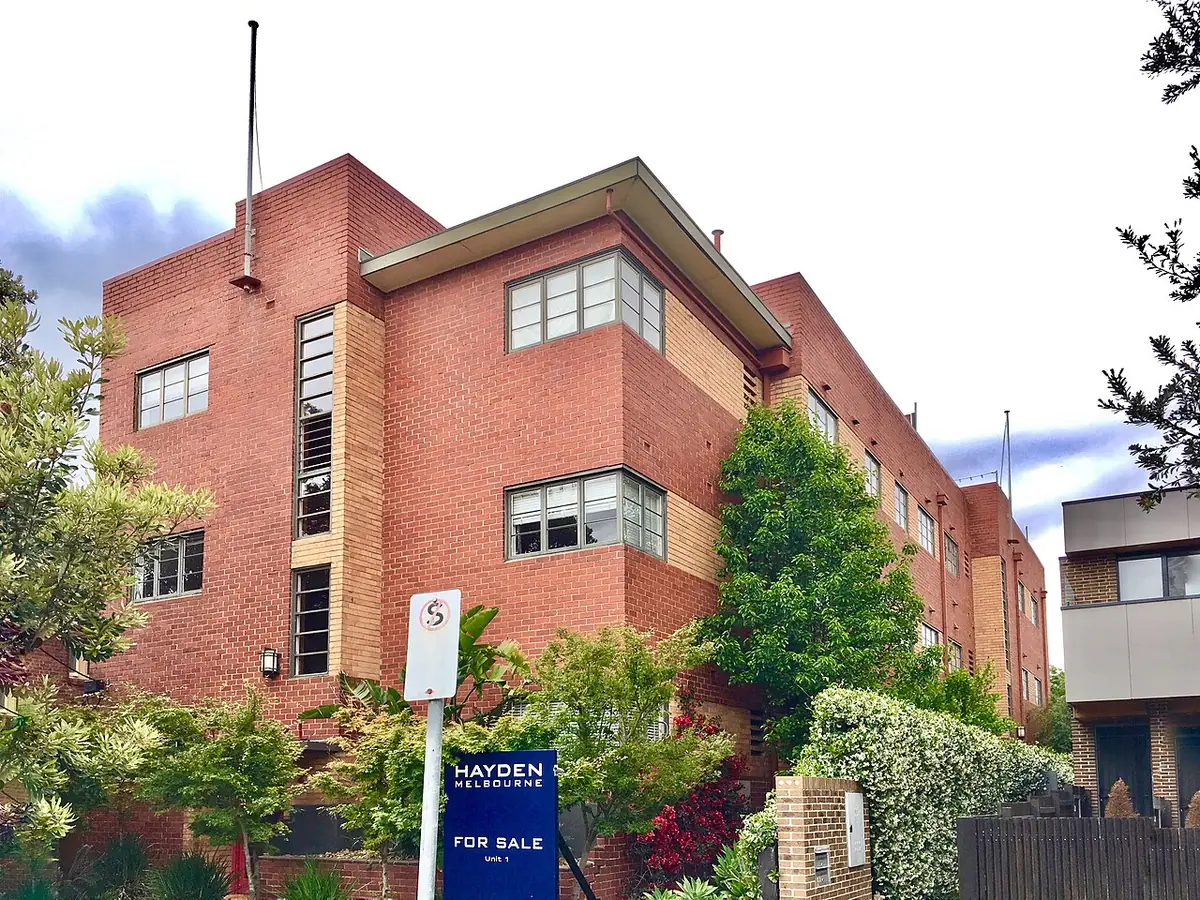
A red-brick apartment block in St Kilda West — Photo: Rohanstorey · CC BY-SA 4.0 · Wikimedia Commons
These lifestyle choices bring out the cultural and practical adjustments needed when you leave your familiar reference points behind.
Choosing a house in Melbourne does not depend only on your maximum borrowing capacity; it depends first on how you organise your days and on your family or professional priorities. Between high-maintenance Victorian period homes, updated terraces and semi-detached houses in the middle suburbs and newer homes in the outer areas, each option shapes a radically different way of life. Local rhythms, with their strong emphasis on outdoor space and outdoor activities, mean you should look closely at how a property is laid out before committing. This framework helps you identify the type of home that really fits your path here.
A renovated terrace house in the middle suburbs
Opting for a reworked period townhouse in the inner suburbs offers an ideal balance between architectural character and a lively neighbourhood. These homes usually have a small patio or landscaped courtyard that needs little upkeep while still letting you enjoy the mild climate. You also get immediate access to major transport, local shops and the green spaces the city is known for. It is the favoured option for working people who want to slash their commuting time while keeping full independence compared with an apartment.
On the other hand, these homes carry a high price per square metre and rarely come with secure off-street parking, which means living with regulated on-street parking. Sound insulation through the shared wall also deserves close attention during inspections to make sure day-to-day living is comfortable.
A family home on a good-sized block in the outer residential suburbs
Heading for a more spacious detached house in well-connected suburban areas guarantees a calm, secure setting for raising a family. These properties offer comfortable living areas, several bedrooms, a lock-up garage and a proper garden where children can play freely. Schools, sports facilities and community groups are particularly well developed, which helps you settle quickly into the local community and a lifestyle built around family wellbeing.
This option does, however, mean longer daily trips into the city centre, making suburban trains or the main roads unavoidable at peak times. The cost of maintaining a large block and a stand-alone structure is also a recurring expense to plan for from the day you buy.
A compact single-storey unit within a small strata development
Choosing a compact villa unit within a landscaped complex or a small low-rise strata development combines the independence of a stand-alone home with shared exterior maintenance costs. This type of property appeals to buyers who want to keep their upkeep budget under control while still enjoying a private, enclosed and secure outdoor space. The modern interior design makes the most of every available square metre, cutting wasted space and often delivering better energy performance than older buildings.
The constraints include complying with owners corporation rules that can be strict about the exterior look of the buildings or the landscaping. In addition, future resale depends on how the whole development is faring and on the associated management fees.
Living here when you come from abroad: what really changes when you buy property
Once you have absorbed these cultural differences, location becomes the key factor in getting it right.
The approach many buyers know from home, closely supervised by a notary and bound by strict legal timeframes, gives way here to an Anglo-Saxon system that is much faster, more competitive and transparent in some respects, but unforgiving for the unprepared. In Melbourne, the local rules of the game demand an immediate response and a fine understanding of how public auctions work, a world away from traditional notary-led practice. Familiar cultural reference points quickly fall apart when faced with contracts drafted differently and planning protections with their own specific limits. This table sums up the fundamental shifts you need to make to secure your purchase in good conditions.
From abroad
Signing a preliminary sale agreement before a notary, with a fixed legal cooling-off period of ten days.
Melbourne
Signing a binding purchase contract drawn up directly by lawyers or agents, often with no automatic cooling-off period outside certain conditions.
You must have every legal clause and report checked by a professional before you make a move, or you risk being irrevocably bound as soon as offers are submitted.
From abroad
A market where asking prices are usually negotiated down through successive offers.
Melbourne
Public auctions where the property goes to the highest bidder with no finance condition on the day.
Your bank pre-approval must be confirmed and your funds immediately available before you even raise your hand or submit a firm offer.
From abroad
Drafting of the deeds and escrow of funds concentrated entirely in the hands of a single public officer.
Melbourne
Conveyancers (licensed property transfer specialists) or specialist lawyers working together to secure the administrative side of the transaction.
Choosing your local legal representative is crucial for auditing the title, checking any easements and managing the transfer of funds safely.
From abroad
Highly standardised compulsory technical reports (asbestos, lead, energy performance, electrics) provided by the seller.
Melbourne
A thorough inspection left to the buyer's initiative (building and pest inspection) to detect hidden defects or termite damage.
You should always budget for a certified independent inspector to examine the structural and sanitary condition of the house before conditions are lifted.
From abroad
Transfer and registration fees calculated on uniform national scales with little local variation.
Melbourne
Progressive stamp duty that varies with the price, your status as a resident or foreign investor and how the property will be used.
Calculating these local taxes precisely at the start of your search avoids nasty financial surprises when you finalise your overall funding plan.
How do you pick the right neighbourhood to settle in and invest for the long term in Melbourne?
Knowing the feel of each neighbourhood lets you tackle the crucial, very practical question of real purchase budgets.
Melbourne is a patchwork of neighbourhoods with strong identities, each striking its own balance between cultural energy, access to transport and residential quality of life. Choosing the right area means weighing the pros and cons of being right next to the centre against the leafy calm of well-connected outer rings. The different areas vary widely in neighbourhood life, architectural style and long-term growth prospects. These comparison cards set out the atmosphere and the trade-offs of the main residential areas that savvy buyers look for.
The historic inner suburbs (Inner North & East)
A vibrant, creative atmosphere shaped by independent cafés, local markets and busy bike lanes.
Suits
Working people without children or young families who want an intense urban life, short trips and preserved period character.
Trade-off
Very high prices per square metre, blocks of land kept to a minimum and on-street parking that is often complicated and regulated.
The established residential suburbs (Leafy Inner Suburbs)
Green calm, with beautiful tree-filled parks, wide avenues lined with mature trees and a deep sense of everyday quiet.
Suits
Families looking for excellent schools, large green spaces and lasting homes with a proper private garden.
Trade-off
A particularly high purchase budget and fierce competition between buyers for every house that comes onto this tight market.
The middle-ring suburbs in full renewal (Middle Ring Suburbs)
A balanced mix of local commercial life, modern neighbourhood shops and direct train links to the centre.
Suits
First-home buyers and buyers on a moderate budget who want a comfortable house with attractive growth potential.
Trade-off
An architectural transition that can feel patchy, and major traffic routes cutting through some areas at peak times.
What does buying a house really cost across the different parts of Melbourne?
Beyond the purely financial side, the exact nature of your ownership rights deserves careful analysis.
Budgeting for a property purchase in Melbourne is not just about the price on the listing or the figure called at auction. You must factor in all the compulsory extra costs, first among them the stamp duty collected by the State of Victoria, legal advisers' fees and insurance premiums. Price ranges can vary threefold depending on how far the property is from the central business district and the size of the block that comes with it. This summary table sets out the price levels seen on the market to guide your financial planning realistically and safely.
MelbourneFor saleHouseestimate
Median price / m²A$6,310Half the apartments sell below this
Median priceA$1.16mthe average is 14% higher — a few very large properties pull it up
Most common2 bedrooms46 % of listings
Average size175 m²
By number of bedrooms
Bedrooms
Share of market
Avg price
Price / m²
Avg size
2most common
46 %
A$930k
A$6,642
140 m²
3
36 %
A$1.27m
A$6,310
201 m²
4
18 %
A$1.76m
A$6,111best value / m²
289 m²
Each row is an average, compared against the area average of A$6,642 / m². These are indicative estimates of a typical local market, not a measured sample of live listings. Check current listings before relying on them.
What types of land ownership and property rights are open to foreign buyers?
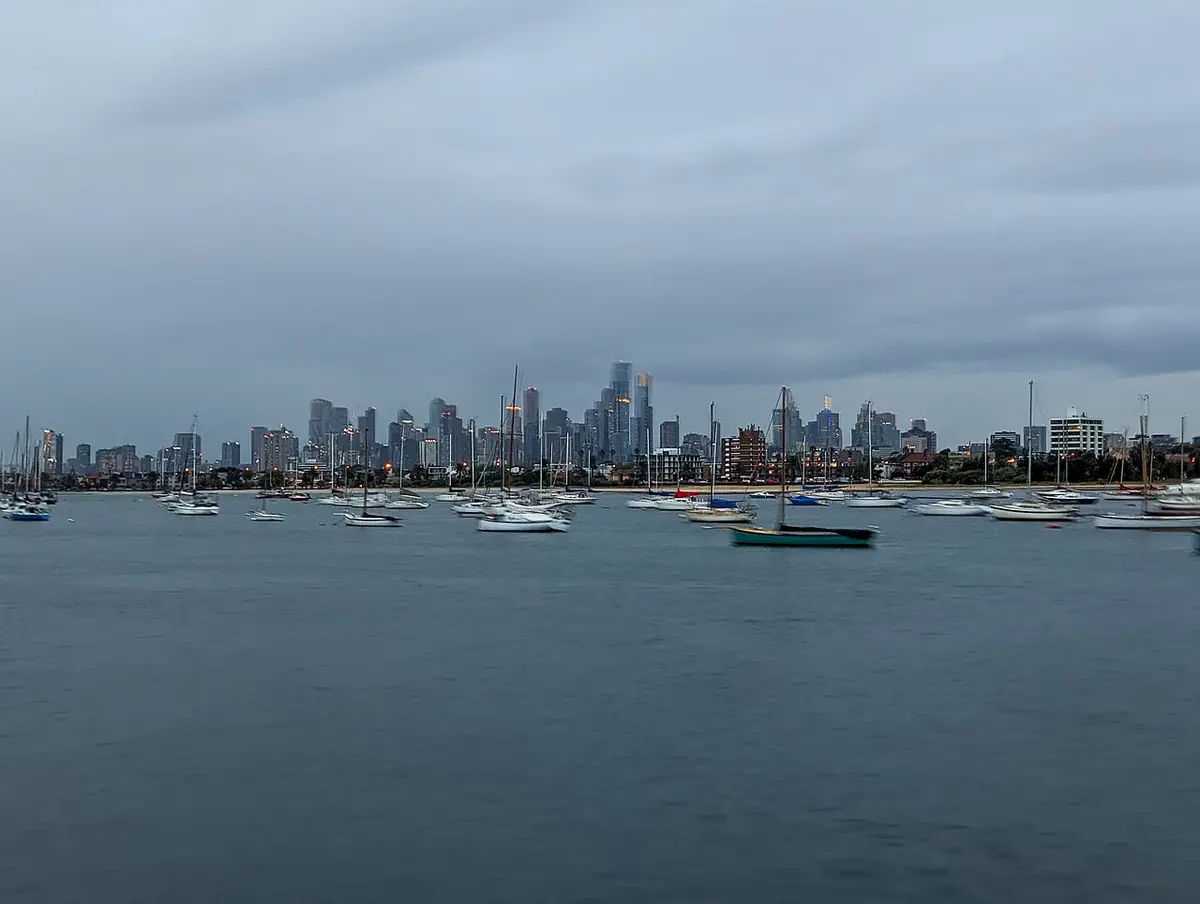
The Melbourne skyline seen across the bay from St Kilda — Photo: Sourabh.biswas003 · CC BY-SA 4.0 · Wikimedia Commons
Mastering these legal frameworks leads naturally to looking at the exact order in which a transaction unfolds.
The legal security of a property purchase rests on the exact type of title you hold once the transaction is complete. In Melbourne, the Torrens land registration system guarantees that registered titles are transparent and indefeasible, but access to certain categories of property is strictly regulated for non-residents by the federal authorities. It is essential to distinguish full freehold ownership from shared or strata forms of ownership so you can anticipate your rights to make changes and your future obligations. This two-sided view sheds light on what your legal status here means in practice.
Full freehold ownership (Freehold / Torrens Title)
You own both the building and the block of land it stands on, with no collective levies and no third-party interference in how your land is managed. This title is the safest and most sought-after form of ownership on the Melbourne property market, giving you complete autonomy over improvements, renovations and adding value in the long term.
What it changesYou keep complete freedom of action and benefit fully from the capital growth of the land over the years, which secures your wealth for the long term.
Ownership within a strata or integrated development (Owners Corporation / Strata Title)
The property is part of a shared development in which common outdoor areas, internal driveways or shared facilities are managed by an owners corporation. This legal structure involves paying regular levies to maintain the common property and build up a sinking fund for major future works scheduled by the owners' meeting.
What it changesYou enjoy a shared, secure setting, but you must examine the owners corporation's accounts and the minutes of its general meetings carefully to avoid nasty financial surprises.
What are the essential steps, in order, to secure the purchase of your house in Melbourne?
To run this sequence successfully, the support of qualified professionals is essential.
Committing to buy a house in Melbourne follows a precise sequence that you need to respect carefully to avoid an irreversible mistake. From first setting a budget approved by a local broker to the final registration of the transfer with the State of Victoria's titles office, each step locks in a technical or legal aspect of the deal. Anticipating these phases lets you negotiate calmly with sellers and agents who are well versed in the finer points of auctions and private sales. This chain of consequences sets out the logical path that leads to getting the keys.
Working out your exact maximum borrowing capacity with a lender or a licensed mortgage broker in Australia.
Obtaining a bank pre-approval that proves your real ability to pay to local real estate agencies.
An independent building and pest inspection to confirm the structural and sanitary condition of the property you have found.
A legal review of the contract of sale (Section 32 statement) by your conveyancer to identify easements and planning constraints.
Actively taking part in the public auction or submitting a formal, firm and irrevocable written offer.
Paying the balance of the price and officially registering the transfer of ownership (settlement), which marks your final move into the property.
Which professionals should you call on, and at what point in your Melbourne property project?
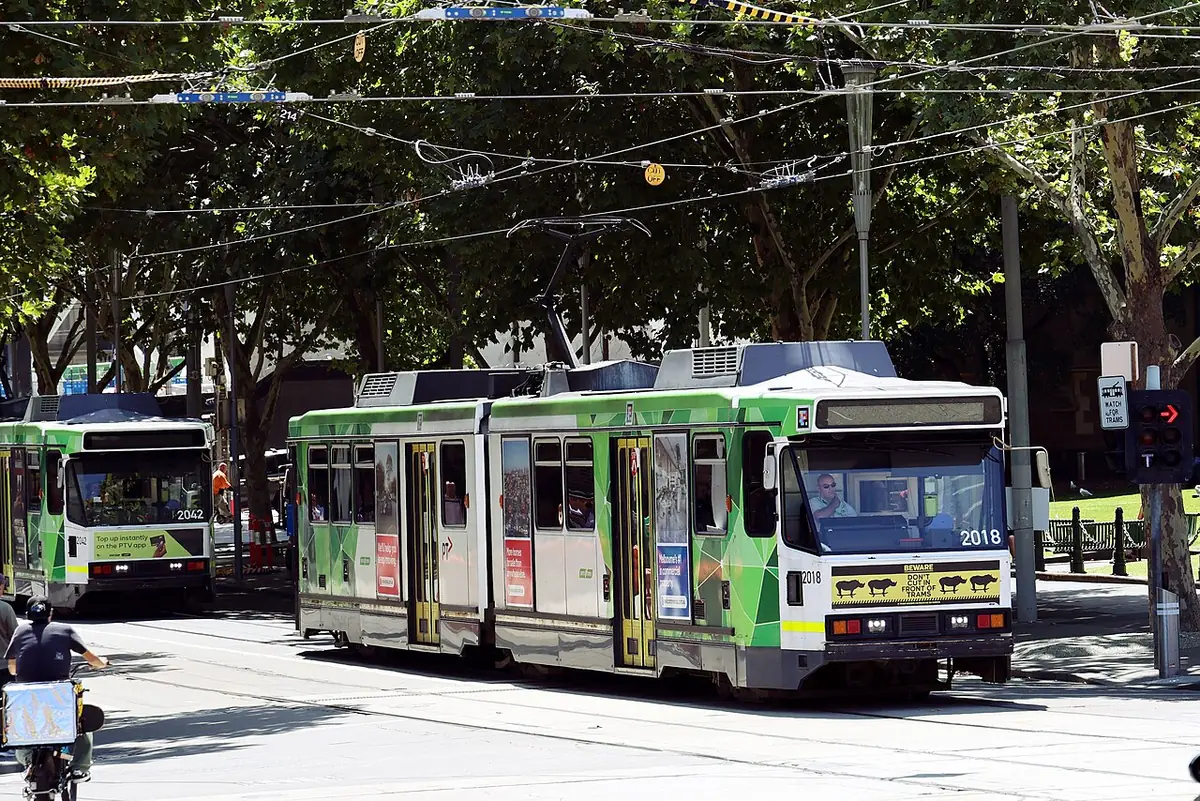
Green trams under the trees on Swanston Street — Photo: Bhullargraphic · CC BY-SA 4.0 · Wikimedia Commons
Buying successfully in Melbourne means surrounding yourself with a network of independent local experts whose skills complement each other throughout the process. Unlike systems back home where a notary handles much of the paperwork, the Australian market relies on a clear division of roles between the finance broker, the valuation expert, the property transfer legal specialist and the building inspector. Knowing exactly what each of them does saves you from costly wrong turns and ensures your interests as a buyer are rigorously defended. This practical summary sets out who is involved and exactly what each person is responsible for.
The finance broker (Mortgage Broker)Structuring and approving your overall funding planThey analyse your personal finances, compare offers from different local banks and secure the pre-approval you need before making any offer.
The inspection specialist (Building & Pest Inspector)An in-depth technical and sanitary audit of the buildingThey carefully inspect the structure, the roof frame and the foundations, and look for any termites or damp hidden in the walls.
The legal adviser (Conveyancer or Solicitor)Checking the Section 32 and securing the deal legallyThey go through the title, analyse planning charges and easements, and manage the secure transfer of funds on settlement day.
The professional buyer (Buyers Advocate)Targeted searching and negotiating at auctionThey represent your interests alone on the ground, assess the fair market value of properties and bid on your behalf to keep emotion out of it.
The local accountant (Tax Accountant)Tax advice and choosing the best buying structureThey advise you on the tax impact of the purchase depending on whether you buy in your own name, through a family trust or via a dedicated structure.
House or apartment in Melbourne: weighing the upkeep of a block against strata living
Once the type of property is settled, the crucial question of financing and the real cost of the extras comes straight to the fore.
Choosing between a house and an apartment in Melbourne involves far more than living space. Houses, often found in leafy suburbs such as Kew or Camberwell, offer precious private space, a garden for the children and complete freedom to make changes without answering to an owners corporation. That independence, however, comes at a direct cost in money and time, because maintaining the roof, the plumbing and the outdoor areas falls entirely on the owner. In a city where the weather can swing quickly between summer heatwaves and damp winters, regular upkeep of an older structure demands considerable personal effort and an unplanned budget that you absolutely have to anticipate.
The city apartment, by contrast, whether tucked into a restored Victorian building in Fitzroy or a modern tower in the Docklands, reshapes daily life around convenience and a central location. Living in a strata building means handing over the upkeep of common areas, security and sometimes even facilities such as the pool or the gym, pooling costs that would be prohibitive for a single house. In return, the owner has to live with owners corporation rules that can be strict, body corporate fees that rise every year and no private green space at all, replaced by balconies or public parks shared with the whole neighbourhood.
The structure of Melbourne's property market sharpens this divide, with constant pressure on well-connected houses, whose scarcity drives prices up, while the apartment sector sees higher construction volumes and sometimes offers more room to negotiate. Investors and owner-occupiers therefore need to assess their own tolerance for shared constraints: do you prefer the trade-off of strata fees and a tram at the door, or complete autonomy at the cost of a longer distance from the CBD and unavoidable weekly maintenance?
This decision also shapes your resale prospects over the medium term, because demand for houses with land in Melbourne has historically held up better through economic swings than demand for high-rise apartments, which are often exposed to local oversupply. Looking at your current lifestyle is not enough; you need to project ten years ahead to judge whether mowing the lawn will weigh more heavily than the frustration of not being able to drill into a wall without the owners committee's permission. It is this personal trade-off between freedom of action and handing off the practical hassles that will make your purchase in Victoria's capital a success.
What overall budget do you really need to set aside to settle in Melbourne for the long term?
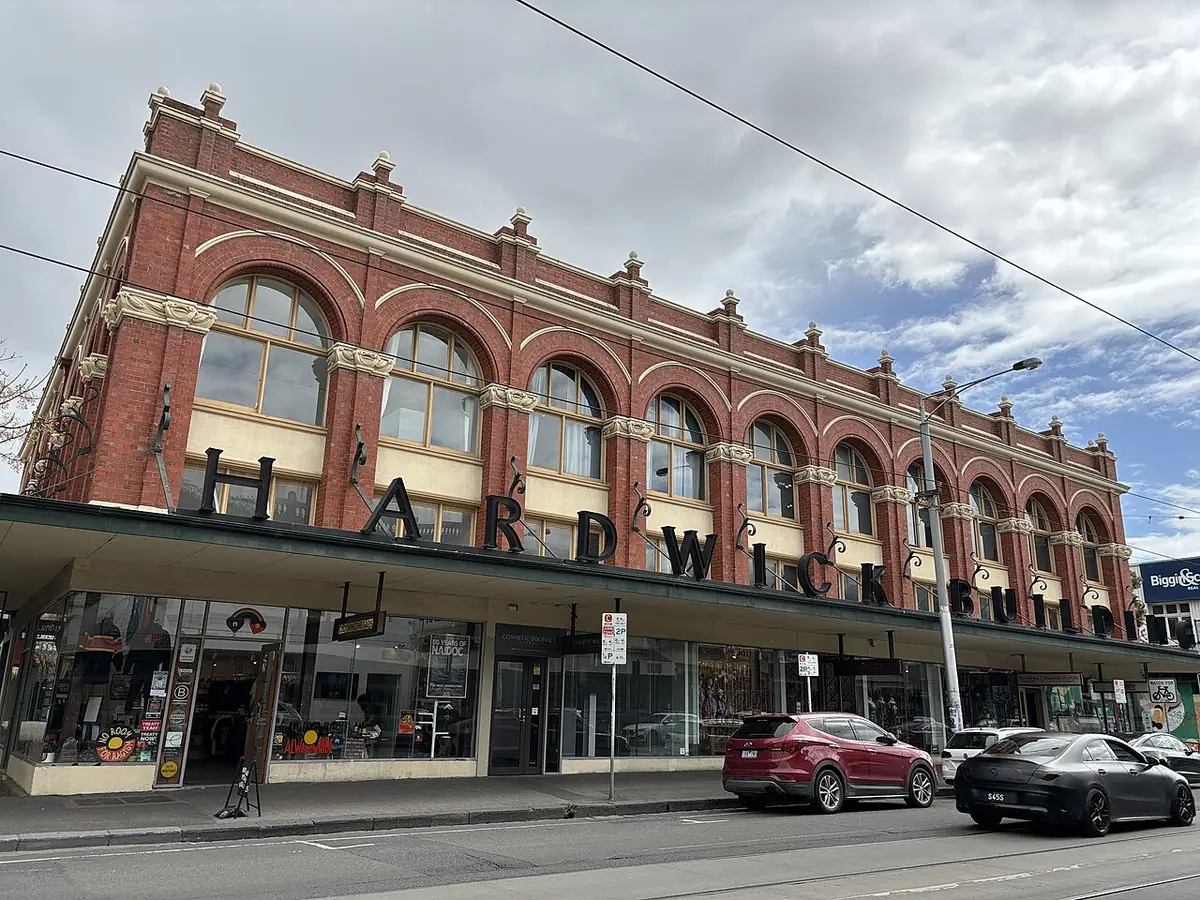
The red-brick Hardwick Building and its shopfronts in Brunswick — Photo: Nick-D · CC BY-SA 4.0 · Wikimedia Commons
Once the budget is confirmed, it is worth looking at how a typical day actually plays out to measure how location affects your quality of life.
Buying a property in Melbourne is not just about the price on the listing or the figure negotiated at auction. Victoria's tax system imposes specific purchase costs, notably stamp duty, whose progressive scale weighs heavily on the buyer's initial cash. On top of that come local council rates, compulsory insurance and, for apartments, quarterly strata fees that rise with no legal cap. Ignoring these structural components when calculating your borrowing capacity would quickly throw your finances off balance in your very first year in Victoria's capital.
Purchase costs and upfront taxes when buying property in Melbourne
Cost item
How it is calculated or indicative rate
Impact on the overall budget
Stamp Duty
Progressive State of Victoria scale (from 1.4% to 5.5% depending on value)
Amounts to AUD 20,000 to AUD 60,000 depending on the price of the property.
Legal and conveyancing fees (Conveyancing)
Fixed fee or variable percentage depending on how complex the title is
Allow between AUD 1,500 and AUD 3,000 to secure the transaction.
Building inspection (Building & Pest)
Flat fee per visit from an independent expert
Around AUD 500 to AUD 800, essential to avoid hidden defects.
Home insurance (Building & Contents)
Annual premium linked to rebuilding value and location
Between AUD 1,200 and AUD 2,500 a year depending on exposure to climate risks.
These amounts are indicative and based on the tax scales in force in the State of Victoria at the time of analysis.
Monthly running costs for a resident household in Melbourne
Type of cost
Estimated range (in Australian dollars)
What makes it vary
Strata fees (Body Corporate)
AUD 300 to AUD 1,200 a month
Whether there is a lift, pool or concierge, and the overall size of the development.
Council rates (Council Rates)
AUD 1,500 to AUD 3,000 a year
Capital improved value of the land as assessed by the local council.
Energy bills (Electricity and Gas)
AUD 200 to AUD 450 a month
The building's insulation, the heating system and how much the air conditioning is used.
Public transport pass (Myki pass)
AUD 160 to AUD 200 a month per adult
How often you travel and which zones you cross (Zone 1 and Zone 2).
Energy costs vary considerably between poorly insulated older homes and new developments built to 6-star standards.
Health, schools and transport: what does an ordinary Tuesday look like for a homeowner in Melbourne?
Beyond this apparent ease, many structural pitfalls and local quirks never make it into the glossy brochures.
Organising a typical day in Melbourne immediately tests how well your choice of location fits your work or family commitments. The transport network, built around the world's largest tram network, efficient suburban train lines and a complementary bus network, shapes daily travel. However, living in outer suburbs such as the outer east or Wyndham means long commutes at peak times, while an inner-suburb location gives you immediate access to leading health services and the state's best public and private schools.
07:30 - Start of the dayResidential neighbourhood (e.g. Hawthorn or Brunswick)Getting ready and leaving home ahead of the first waves of congestion on major roads such as the Monash Freeway or the Eastern Freeway.
08:15 - CommuteLocal train station or tram stopTouching on with your Myki card and a regular service to the Central Business District (CBD) or a secondary employment hub, taking 25 to 45 minutes on average.
12:30 - Neighbourhood lifeLocal shopping centre or High StreetBuying essentials, supporting independent shops and handling local admin during the lunch break.
15:30 - SchoolZoned school (Primary or Secondary College)Picking up the children, managing after-school activities and using the sports facilities and council parks nearby.
18:00 - Health and urgent careLocal medical clinic (Medical Centre) or pharmacyA routine GP visit or a prescription renewal, made easier by the high density of Bulk Billing or private health practitioners.
20:00 - Winding downHome and outdoor spacesRelaxing in the neighbourhood, gauging how quiet it is at night and preparing for the next day in a safe urban setting.
What the real estate agent and the brochures will never tell you about the Melbourne market
These grey areas often turn, before long, into bitter regrets that new owners discover too late.
Melbourne's property market has formidable rules and regulatory subtleties that international or unwary buyers completely miss. Agencies' idyllic descriptions deliberately leave out environmental constraints, complex easements on the land and hidden defects typical of local construction. Understanding these unspoken realities is the only effective protection against a regrettable investment that would bring huge extra costs in the first months of ownership.
Strict heritage restrictions (Heritage Overlays)
Many Victorian and Edwardian houses in sought-after suburbs such as Carlton, Fitzroy and Albert Park are subject to tough planning rules that prohibit any visible exterior change, making extensions or modern thermal insulation extremely complicated and expensive.
Invisible termites and damp damage
Melbourne's climate and the prevalence of timber frames in older homes expose properties to devastating termite infestations and rising damp, requiring heavy, recurring chemical treatments.
Rights of way and easements (Easements)
Many blocks carry underground easements for Melbourne Water sewer or electricity networks, strictly ruling out a pool, a verandah or planting large trees across a significant part of your own land.
The volatility of public auctions (Auction System)
Almost every quality house in Melbourne is sold at auction with no reserve price disclosed in advance, creating intense psychological pressure in which inexperienced buyers frequently go beyond their maximum borrowing limit in the heat of the bidding.
The traps and disappointments buyers discover six months after settling in Melbourne
Given these financial and practical risks, it is fair to ask whether buying in Melbourne suits every profile.
Looked likeA charming period house full of character, with high ceilings and original floorboards.
Turned outA freezing, leaky home in winter, impossible to heat properly without electricity bills skyrocketing because there is no insulation at all in the walls or under the raised floors.
Would have caught itInsist on an independent thermal assessment and always budget for double glazing and effective roof insulation.
Looked likeA calm, leafy and perfectly peaceful residential street at the Saturday morning inspection.
Turned outA weekday rush-hour nightmare, with the street turned into an overflow car park for commuters using the nearby station and cars blocking any way out.
Would have caught itVisit the area several times, including on a Tuesday at 8am and a Thursday at 5:30pm, to see how commuter traffic really behaves.
Looked likeA modern apartment with low strata fees shown in the original contract of sale.
Turned outA sudden jump in fees after the owners corporation voted through special works to bring the fire safety system up to code and refurbish the facade.
Would have caught itGo through the minutes of the last three years of general meetings closely to spot unpaid levies and major works that are still pending.
Looked likeA chance to buy quickly and skip a thorough building inspection to beat the competition.
Turned outThe discovery of major hidden defects in the foundations and a roof that needs completely replacing, with repairs costing more than 15% of the property's market value.
Would have caught itNever sign a clause waiving building inspections, however much competition the local agents are stirring up.
Unusual profiles and personal situations: who should definitely not buy in Melbourne?
It is time to pull these factors together and work out whether you hold all the keys to take the plunge.
Home ownership in Melbourne is often treated as an absolute article of faith in Australian financial culture, yet it is not the right answer for every life path. Taking on a long mortgage or tying up a large deposit in a market marked by fluctuating interest rates can destroy wealth for certain profiles. Knowing when to give up on buying in favour of the flexibility of renting is sometimes the most rational and protective decision.
The young professional on an international or career move
→Short or medium-term renting in central suburbs such as Southbank or Richmond.
High transaction costs (stamp duty and selling commissions) require holding the property for at least 5 to 7 years to recoup them, so any early departure leads to a heavy loss.
The investor who cannot stand regulatory and tax constraints
→Liquid financial investments or diversified assets outside residential property.
Victoria's demanding tax regime, combined with new taxes on second homes and increased obligations towards tenants, reduces real net returns.
The household with a deposit that is only just enough and no emergency savings
→Keeping a cash cushion in a secure savings account while continuing to rent.
Having no financial reserve for health problems, job loss or urgent repairs to the building leaves the owner directly exposed to repossession.
Decision summary: are you objectively ready to go ahead with your property project in Melbourne?
Reaching the end of this analysis shows that buying property in Melbourne is not a matter of impulse or fashion but of a carefully considered strategy. If you have taken on board the real cost of purchase taxes, the impact of strata fees, the specific features of the suburbs you are targeting and the reality of a market driven by unforgiving auctions, you now have the analytical skills you need to succeed in Victoria's capital.
The success of your move lies in your ability to separate the emotional pull of a beautiful Victorian facade or a clean contemporary design from the technical and financial realities of the building. The buyers who do best are those who approach the transaction methodically, surrounding themselves with independent experts to audit the structure, check the easements and negotiate a fair price with seasoned sellers.
Deciding to buy in Melbourne also means accepting a long-term commitment to a dynamic, multicultural urban community with first-class infrastructure. It is a commitment to a way of life in which your choice of neighbourhood directly determines how smoothly you get around, the quality of your children's schooling and your peace of mind in the face of climatic and economic ups and downs.
If your personal finances include a comfortable safety margin, your investment horizon goes beyond a decade and you fully appreciate the demands of maintaining an Australian property, then you are ready to act. Take the time to visit plenty of properties, test the commute at peak times and approach every offer with the cool rigour of a well-informed investor. Your future home in Melbourne is waiting only for your good judgement.
Related questions
What notary-type fees and taxes should you expect when buying property in Melbourne?
Property transactions in the State of Victoria are subject to stamp duty, charged on a sliding scale according to the value of the property and generally ranging from 1.4% to 5.5%. On top of that come conveyancing legal fees of between AUD 1,500 and AUD 3,000, plus a building inspection fee of around AUD 600.
How do property auctions work in Melbourne?
Public auctions are the dominant way houses are sold in Melbourne. They take place on site, with no reserve price disclosed in advance. The buyer needs a bank pre-approval and must pay a 10% deposit on the day if their bid wins, at which point the purchase immediately becomes unconditional.
Can you buy property in Melbourne as a non-resident foreigner?
Yes, but the purchase is tightly regulated by the FIRB (Foreign Investment Review Board). Non-residents must obtain paid approval in advance and can generally only buy new homes or off-the-plan projects, since buying established dwellings is reserved for permanent residents, or for temporary residents under strict conditions.
What are typical strata fees for an apartment in Melbourne?
Strata fees, known as body corporate fees, vary considerably depending on the building's facilities. For a standard apartment without extra services they come to around AUD 300 to 500 a month. In modern residential towers with a pool, a gym and a concierge, these fees can easily exceed AUD 1,000 to 1,500 a month.
Which Melbourne neighbourhoods are most sought after for buying a family home?
Inner-East and Inner-South suburbs such as Kew, Hawthorn, Camberwell, Malvern and Brighton attract the strongest demand, thanks to the quality of their parks, their historic architecture and the reputation of their public and private schools. Unsurprisingly, prices there reach the top of the metropolitan market.
How do you assess the energy performance of an older home in Melbourne?
The official energy rating (NatHERS star rating) is compulsory for new builds but rare for older homes. To assess a period property, check for double glazing, roof and underfloor insulation and the type of heating installed, because uninsulated Victorian houses turn out to be extremely expensive to heat and cool.
What is an easement on a block of land in Melbourne?
An easement is a right granted to a third party, often the public authority Melbourne Water or an electricity provider, to use part of your block to run underground infrastructure. This legal notation on the Certificate of Title permanently restricts what you can build above ground.
How do Heritage Overlays affect property renovations?
Heritage Overlays protect the look of Melbourne's historic streets. If your property is covered, any change to the facade visible from the street, adding a storey or even the choice of exterior paint materials requires a specific planning permit from the council, which considerably lengthens renovation timelines.
How does public transport work for residents of the outer suburbs?
Melbourne's metropolitan network uses the Myki ticketing system, split into two main fare zones. Residents of the Outer Suburbs rely on suburban train lines and regular bus services, with commutes to the CBD generally taking between 45 and 60 minutes at peak times.
What precautions are essential before signing a Contract of Sale?
It is vital to have the Contract of Sale and the Section 32 Statement reviewed by a specialist lawyer or a licensed conveyancer before signing anything. This legal document sets out mortgages, outstanding rates, easements, owners corporation rules and any history of damage or disputes linked to the property.