Valuing an apartment in New York is an absorbing exercise and a demanding one, governed by legal and financial rules found nowhere else. This guide sets out the mechanisms that decide what your figure should be, and how to test it before you rely on it.
Get the app
What nobody tells you.
Real prices, hidden costs and the traps to check before you commit.
What you are actually valuing when you price an apartment in New York
Scroll
What you are actually valuing when you price an apartment in New York
Valuing an apartment in New York is an absorbing exercise and a demanding one, governed by legal and financial rules found nowhere else. This guide sets out the mechanisms that decide what your figure should be, and how to test it before you rely on it.
Written by the ting.ad editorial team ·
Park Avenue, New York in Street View: drag to look around.
Those structural constraints change how you should approach the valuation, depending on why you want the number.
Valuing an apartment in this city is never a matter of multiplying floor area by a district average. What you are pricing is a position inside a heavily regulated system, where the legal status of the unit changes the nature of the ownership and the rights that come with it. Grasp that at the outset and your estimate will survive contact with the local rules on governance and management.
A floor areavsA right of occupation and a share of a building
Owners often expect the estimate to follow the square metres, as it broadly does elsewhere. In New York the building's rules bite into the figure: the enjoyment of common areas and the decisions that shape the property rest with a board of directors whose powers are wide, and a comparable in a differently governed building is not really a comparable.
Freedom to use the property as you wishvsUse and subletting restrictions that show up in the price
Owning the unit does not mean doing as you please with it. Most buildings impose demanding conditions on short-term letting, on pets and even on interior work, and every one of those restrictions narrows the buyer pool that sets your value.
A capital assetvsA standing contribution to running costs
Local property taxes and the monthly charges (common charges or maintenance) weigh heavily on the net return. Any valuation has to treat these constant outflows as an adjustment, not as a footnote, because buyers price them in whether or not you do.
Which kind of valuation does your situation actually call for?
The gap between an automated figure and a considered one is widest for owners who have no local reference points to fall back on.
The New York market rewards an estimate that matches the reason you asked for it. Each owner faces a different trade-off between speed, cost and the depth of the evidence behind the number, and picking the wrong instrument is how a valuation ends up thousands out.
Automated estimate, then a broker's opinion
An online tool priced off recorded sales will get you into the right range in minutes, and for a condo it is often close, because condo sales are numerous and legally comparable. For a co-op it drifts, since the tool tends to miss what the shares actually carry and how the building restricts letting to third parties. Treat the automated figure as a starting bracket, then ask a broker who works that building type to say where inside the bracket you sit and why.
Comparative market analysis on recent local sales
A sale-ready figure needs comparables from the same building or the immediate blocks, adjusted for floor, light, layout and the level of service. Outer districts and parts of Brooklyn behave as separate markets from Manhattan, with their own buyer profile and their own pace, so an average pulled across the city is worse than useless. Proximity to parks, to schools and to transport carries real weight in those areas and should be argued explicitly in the analysis rather than assumed.
Independent expert valuation with written support
When the number has to stand up to a lender, a tax office or another party, an informal opinion will not do. You need an independent professional who inspects the unit, reviews the building's finances and sets out in writing the comparables used and every adjustment made. That report costs more and takes longer, and it is the only form of estimate that survives being challenged.
Valuing here when your reference points come from abroad: what changes
The city's most famous view, Liberty and the skyline together at dusk — Photo: Dillan Payne · CC BY-SA 4.0 · Wikimedia Commons
Once those differences are absorbed, the district and the building become the real substance of the estimate.
The instincts an owner brings from another market rarely transfer to New York. Between the definitions of ownership, the level of charges and the reach of the building's board, the mechanics that drive a figure here will surprise most people arriving from elsewhere.
From abroad
Ownership of a defined lot within a building, on protective statutory rules
New York
The New York system of co-ops and condos
The board holds full discretion to refuse a purchaser without giving reasons, so the credibility of the buyer's file can matter more to the outcome than the price offered. A co-op unit is valued on the price a board-approvable buyer would pay, not on the best offer on the table.
From abroad
Smoothed and predictable service charges
New York
High monthly charges exposed to rising local taxes
Maintenance fees and common charges rise regularly to cover lifts, doormen and the city's own taxation, and a building whose charges are climbing fast will price below an identical one that has held them steady.
From abroad
A single trusted intermediary handling the whole transfer
New York
Specialist lawyers acting for each side
There is no central officer to lean on for a neutral view. Each buyer and each seller instructs their own real estate lawyer, which means nobody is producing an impartial figure for you and the valuation is yours to commission.
From abroad
Standard, mandatory technical surveys supplied by the seller
New York
A thorough inspection at the buyer's expense
The rule is caveat emptor, let the buyer beware. It falls to the buyer to instruct experts to audit the structural and financial condition of the building, and what those experts find is exactly what will be used to argue your figure down.
How the district shifts the figure
Reading those geographic and legal differences correctly is what keeps a valuation honest rather than flattering.
The city breaks into micro-markets whose atmosphere, yields and buyer profiles differ sharply. Each area sets its own trade-off between price per square metre, quiet and cultural energy, and each one values the same apartment differently.
Central Manhattan (Midtown / Financial District)
A constant flow of professionals, towers of glass and steel, and activity that does not stop across the seven days of the week.
Suits
Estimates on ultra-central pieds-a-terre close to the business districts, where the depth of the letting market supports the number.
Trade-off
Prices per square metre among the highest in the world, and an evening emptiness that some buyers discount for, so the range between comparables here is unusually wide.
The residential districts (Upper East Side / Upper West Side)
Tree-lined avenues, Central Park a few steps away and a hushed, settled atmosphere.
Suits
Stable long-run values, family buyers and well-regarded schools, all of which make comparables in these blocks unusually reliable.
Trade-off
Older buildings under strict co-op rules and often very heavy monthly charges, both of which pull the figure below what the address alone would suggest.
Brooklyn on the rise (Williamsburg / Park Slope)
Creative energy, streets on a human scale, plenty of independent cafes and a strong community of artists.
Suits
Larger living spaces, a neighbourhood feel and long-term appreciation, which is where an estimate has the most upside to argue.
Trade-off
A longer journey into the heart of Manhattan and price volatility that can be higher, so comparables here go stale faster than elsewhere.
What the numbers actually say about values here
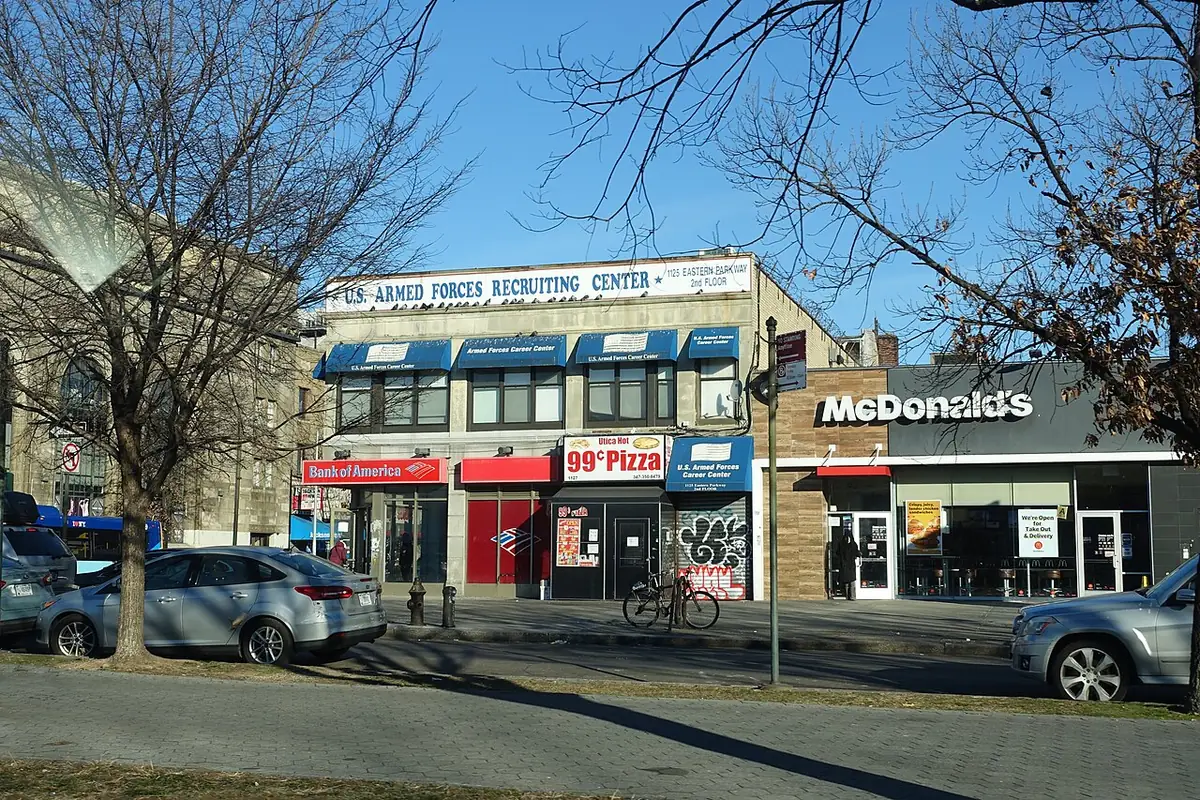
Avenues like this carry the daily mix of shops New Yorkers rely on — Photo: Tdorante10 · CC BY-SA 4.0 · Wikimedia Commons
Beyond the headline figures, the exact nature of the title decides what the number is even measuring.
Any credible valuation in this city starts from a stack of costs, not from a headline figure. Alongside the asking price, transfer taxes, legal fees and recurring charges reshape what a buyer will actually pay, and an estimate that ignores them will sit well above what the market settles at.
new-yorkFor saleApartmentestimate
Median price / m²US$9,500Half the apartments sell below this
Median priceUS$800kthe average is 14% higher — a few very large properties pull it up
Most common2 bedrooms36 % of listings
Average size80 m²
By number of bedrooms
Bedrooms
Share of market
Avg price
Price / m²
Avg size
1
34 %
US$610k
US$11,500 +15 %
53 m²
2most common
36 %
US$760k
US$10,000
76 m²
3
22 %
US$979k
US$9,500best value / m²
103 m²
4
8 %
US$1.48m
US$10,000
148 m²
Each row is an average, compared against the area average of US$10,000 / m². These are indicative estimates of a typical local market, not a measured sample of live listings. Check current listings before relying on them.
What the title is worth: condo versus co-op
That legal distinction then runs through a valuation process that is itself tightly framed.
Ownership structure splits the market in two, with opposite legal and financial consequences. Which side of that line an apartment sits on redefines what a buyer is acquiring, and therefore what the apartment is worth.
The condominium
The buyer acquires real property outright, evidenced by an individual title. There is full freedom to let the unit, resell it or house whoever the owner chooses, subject to the building's house rules. Consent procedures with the managing board are usually formal and quick.
What it changesLiquidity is better and use is flexible, so valuations here rest on a deeper set of comparable sales, and prices per square metre and property taxes both tend to run appreciably higher.
The housing cooperative (co-op)
The buyer acquires not the walls but shares in the company that owns the whole building, together with a proprietary lease on the unit. The board of directors exercises absolute control over applicants, demanding a detailed financial file covering all assets and income.
What it changesEntry prices are often more attractive and the buildings are frequently historic and better maintained, at the cost of tight restrictions on management and letting, which is precisely why a co-op estimate has to be argued from co-op comparables alone.
The rule to grasp before you trust a figure
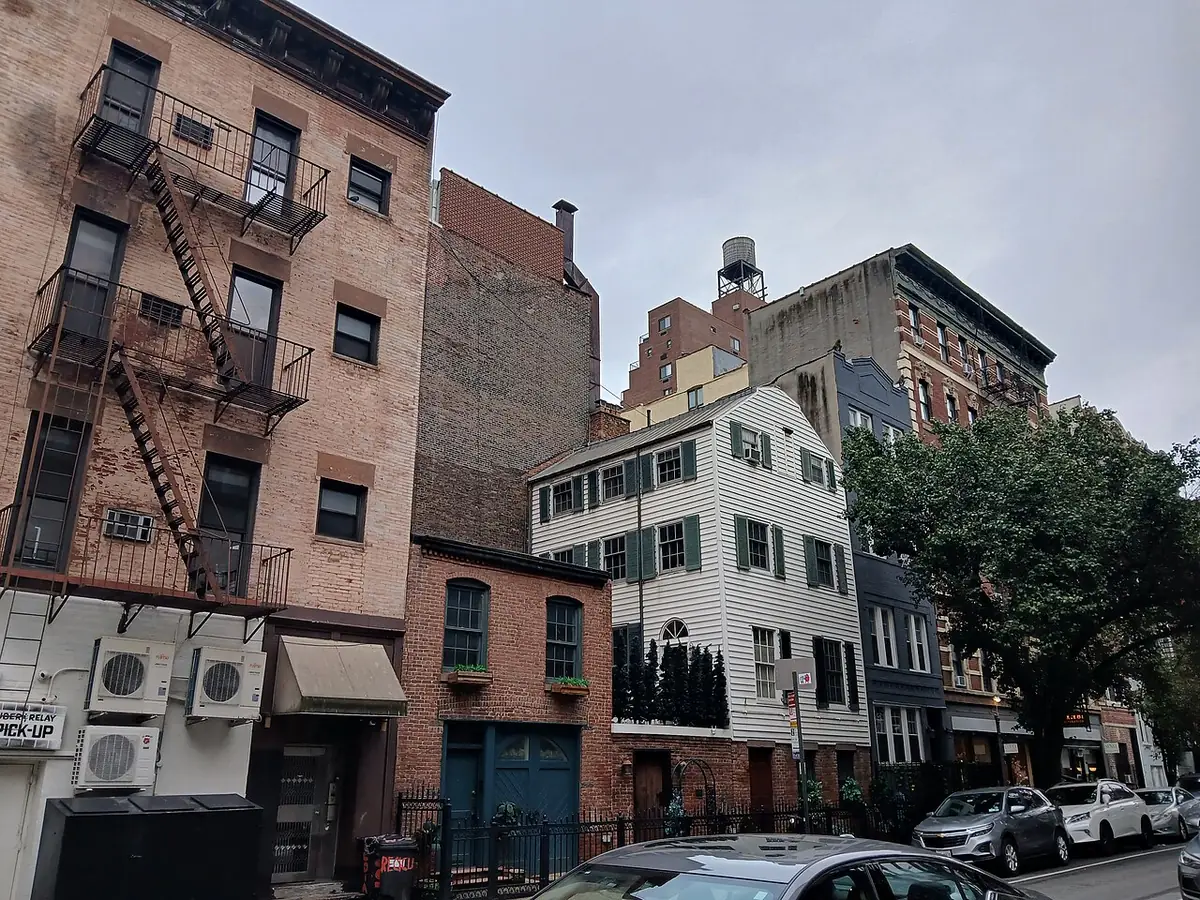
Fire escapes and brick walk-ups like these define classic New York blocks — Photo: Epicgenius · CC BY-SA 4.0 · Wikimedia Commons
To run that course properly, the order of operations has to be handled with care.
Arriving at a defensible number in New York follows a rigorous sequence in which each stage rests on the one before it. Skipping an audit step, or underestimating how much the application file weighs on the outcome, is how an estimate ends up disconnected from what the apartment will actually fetch.
Gathering the unit's own documents: deed or share certificate, floor plan, recent charge statements and tax bills.
Pulling comparable sales of the same ownership type in the same building or the immediate blocks, and discarding anything that is not genuinely like for like.
Adjusting for the physical facts a comparable does not share: floor, light, layout, condition and any works carried out or still outstanding.
Reading the building's financial position, including the reserve fund, the level of common charges or maintenance, and any assessment running or in prospect.
Testing the figure against how the board behaves, since a demanding approval process narrows the pool of buyers who can actually complete.
Settling on a range rather than a single number, with the adjustments that produced it written down.
How a valuation is put together, step by step
In short, pricing this market takes method, preparation and professional support you can rely on.
A sound valuation in this city depends on several professionals working in sequence: lawyers, brokers, inspectors and the managing agent. How thoroughly you prepare decides how much of the figure you can defend when it is questioned.
The ownerAssembling the fileCollecting the title or share certificate, plans, recent charge and tax statements and any records of work done, without which every later step rests on guesswork.
The brokerComparative market analysisReviewing recent sales that match the unit's ownership type and setting out the going prices in the chosen neighbourhood alongside their differences from your apartment.
The lawyerLegal and contractual reviewClose reading of the building's minutes and financial accounts, and of the terms of the lease or house rules, all of which shift the number one way or the other.
The technical expertInspection of the unitChecking the state of the electrics, the plumbing and the internal structure of the apartment, since condition adjustments are the largest single correction most estimates carry.
The board and managing agentCharges, assessments and restrictionsConfirming the current monthly amount, any assessment in force and the restrictions on letting, so that the recurring costs a buyer inherits are priced in.
Owner and adviser togetherSetting and sanity-checking the figureReconciling the analyses into a range, then testing it against what has genuinely sold nearby rather than against what has merely been asked.
Apartment or house in New York: how the two are valued differently
With that distinction settled, it is worth setting out precisely which cost lines have to be modelled before a figure means anything.
Valuing property in New York begins with a structural distinction between vertical ownership, represented by condominiums and the famous cooperatives, and the individual house, which grows scarcer the closer you get to Manhattan. Apartments carry an undeniable logistical security, with concierge services, shared upkeep of the common areas and immediate proximity to public transport and to the main employment centres, and all of that is legible in the price. What that vertical life also carries is a permanent financial commitment in the form of high monthly charges, known as common charges or maintenance, and strict regulation imposed by the boards, which is at its most severe in cooperative buildings. An apartment owner delegates the management of the building envelope but gives up any immediate architectural autonomy, and a valuation has to price both halves of that bargain rather than only the pleasant one.
A single-family house or a historic brownstone, more easily found in the residential districts of Brooklyn, Queens or Staten Island, sits on a completely different basis. Here the owner holds both the building and the land, free of the fastidious rules of the boards and of unpredictable rises in shared charges, so the estimate is not filtered through a building's finances at all. That freedom carries a considerable operating cost, since the roof, the boiler, the facade and the outdoor space fall entirely to the owner, which turns every winter storm and every summer heatwave into a personal technical and financial matter, and turns deferred maintenance into a direct deduction from value. Longer daily journeys into the economic core of Manhattan also have to be weighed, redefining what centrality is worth in money.
Which of the two you are valuing therefore changes the method as much as the number. For an apartment, the comparables are the neighbouring units and the adjustments run through charges, floor, board rules and the reserve fund, so the building's paperwork matters as much as the apartment itself. For a house, the comparables are other houses on similar plots and the adjustments run through structure, roof, systems and land, with condition doing most of the work. In both cases the figure is only meaningful once it accounts not merely for the headline price but for the total cost of ownership across a decade, local taxation and provisions for future works included.
Which cost lines have to be modelled before a figure means anything
Beyond the purely financial balance, what a New York apartment is worth is also shaped by how the days around it are actually lived.
An estimate for a New York apartment is never simply the mortgage payment a buyer could service. The local cost structure includes high property taxes, common charges or maintenance, and a general cost of living that is unusually demanding, and all of it has to be modelled with real rigour before a figure can be trusted. Underestimating these recurring items is the main reason an owner's expectation and the market's answer end up so far apart.
Recurring monthly and annual cost lines for a two-bedroom apartment
Cost line
Estimated amount
Frequency
What it does to the valuation
Building charges (common charges / maintenance)
$800 - $2,500
Monthly
Varies with whether there is a doorman, a lift and other building amenities. Cooperatives often fold a share of the property tax into this single figure, so co-op and condo amounts cannot be compared directly.
Property tax
$600 - $2,200
Monthly (paid quarterly)
Calculated by the city on the assessed value of the property. Reliefs such as the condo/co-op abatement can reduce this temporarily, which is why the assessed value is not itself a market estimate.
Home insurance (homeowners / condo insurance)
$50 - $150
Monthly
Necessary to cover water damage, fire and public liability. Lenders' cover requirements are strict, and a building with a poor claims record makes cover dearer and the unit harder to price.
Utilities (electricity, gas, internet)
$200 - $450
Monthly
Driven heavily by air conditioning through the summer months and heating in winter. ConEdison's rates are among the highest in the country, so a poorly insulated unit carries a visible discount.
These estimates assume a standard two-bedroom apartment in the central boroughs and can vary appreciably with the age of the building.
Transaction and set-up costs to net off an estimate
Nature of the cost
Observed range
When it falls due
Notes and obligations
Closing costs and transfer taxes (Mansion Tax and transfer taxes)
1.4% - 4.5% of the price
At signature of the deed
The Mansion Tax applies from a purchase price of one million dollars and rises in successive bands. Buyer-side and seller-side taxes are negotiable but in practice usually fall to the buyer, and either way they sit between the valuation and the cash that changes hands.
Application and board review fees
$500 - $3,000
On submission of the file
Non-refundable fees charged by managing agents for the detailed review of a purchaser's financial file. Cooperatives are generally the most expensive on this point.
Reserve fund and special contributions (assessments)
Variable
As voted by the building
Sums demanded from owners to fund major facade, roof or lift compliance works. Reading the minutes of general meetings is how you anticipate these calls and deduct them from a figure before a buyer does it for you.
The capital tied up in closing costs is a significant share of the deposit that American mortgage lenders require, and it is the first thing an owner forgets when converting a valuation into expected proceeds.
What an ordinary Tuesday looks like in the life of a New York resident
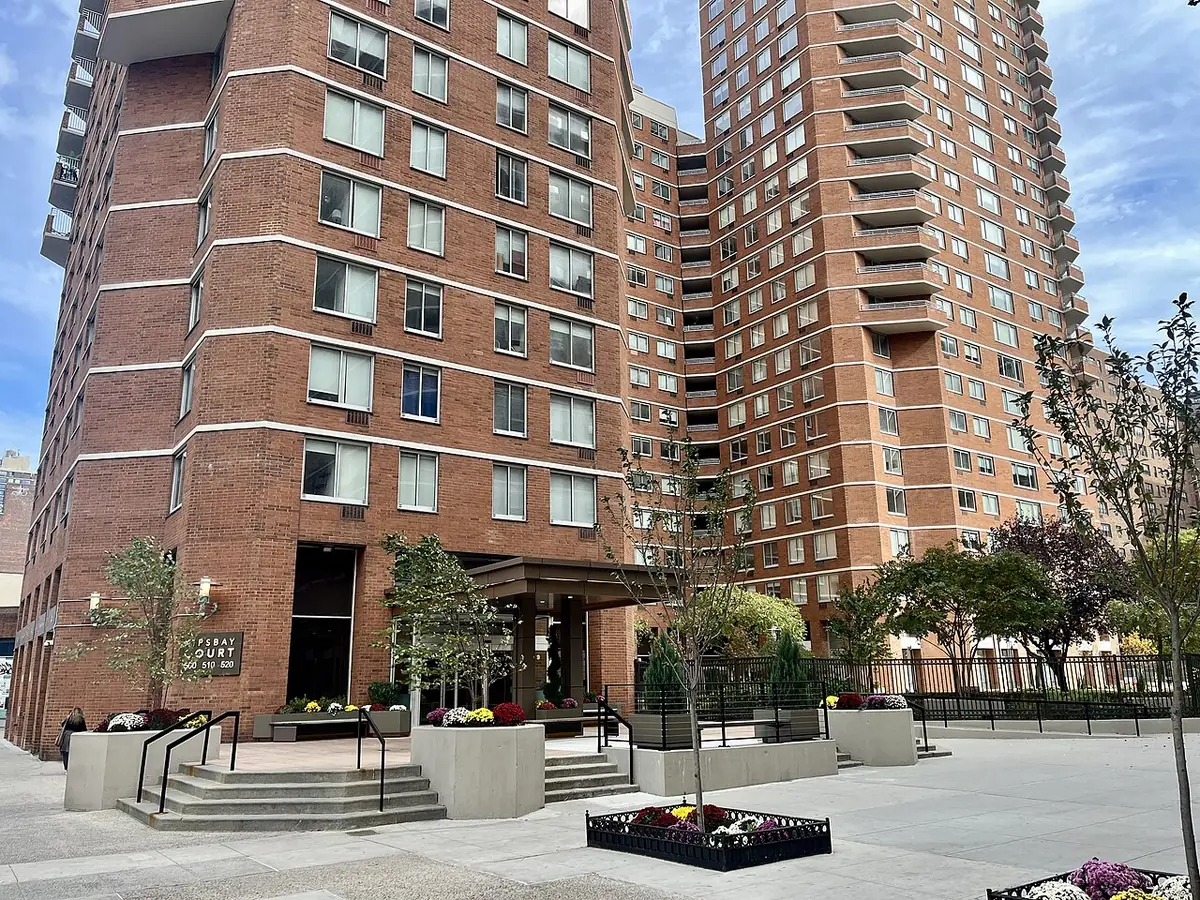
Tower complexes like this are a major part of the city's housing stock — Photo: Transpoman · CC BY-SA 4.0 · Wikimedia Commons
Behind the appealing shop window of these lively districts sit technical realities that sales material never mentions, and that a valuation has to price.
To judge whether a figure for a New York apartment is realistic, it helps to walk through an ordinary day around it. Between the density of the transport flows, the organisation of local services and the demands of working life, daily life here follows a tightly timed choreography. Each district plays a different score, combining the bustle of the main commercial streets with the relative quiet of the secondary residential ones, and buyers pay for the version they want.
07:30Local cafe and departureThe day starts with the obligatory stop at the neighbourhood roaster for a coffee to take away. It is a chance to see the morning life of the street and greet the independent shopkeepers who set the tone of the area, the sort of texture that supports a price rather than merely decorating one.
08:30Commute by subwayDown to the platform at the nearest station for a network that runs around the clock. The carriage, often busy and cosmopolitan, carries commuters to the main business hubs of Manhattan in twenty to forty minutes, and the length of that walk to the station is one of the more measurable adjustments between two otherwise similar units.
12:30Quick lunch and errandsA midday break taken in a decent fast-service spot or at a covered neighbourhood market. New Yorkers use the pause to collect secure parcel deliveries or pick up food, and the density of those services around an address is worth real money.
18:30Back to the neighbourhood and logisticsThe return home with a stop at the pharmacy or the local delicatessen. The doorman or the secure locker system takes in the day's deliveries, a convenience that is one of the clearest reasons a serviced building prices above an unstaffed one.
20:00Dinner locally or an evening outThe evening often continues in one of the many restaurants nearby, showing the range of the city's food. The walk home runs through well-lit and lively streets, and that perceived safety after dark is among the factors buyers reliably pay a premium for.
What the sales brochures never tell you about the real condition of New York buildings
These blind spots explain why some estimates, set without preparation, collapse a few months later when a serious buyer starts asking.
Marketing material shows property from its most flattering angle and passes over the structural constraints built into the New York housing stock. Understanding these invisible factors is essential if you want a figure that will hold, rather than one that is negotiated away in the weeks after an offer. A careful technical review by independent experts is what brings these friction points to light before, not after, the number is agreed.
The true state of the plumbing and electrical risers
Many older buildings have ageing water and electrical infrastructure that will need major compliance work in the short or medium term. That work arrives as heavy special assessments on every owner, and a buyer who has read the engineer's report will subtract their share of it from whatever figure you started with.
The strictness of the building's house rules
Beyond city law, each building writes its own rules on working hours for renovations, whether pets are allowed, short-term letting conditions and even the floor covering required to soften footsteps. Restrictive rules shrink the pool of interested buyers, and a smaller pool means a lower clearing price whatever the comparables suggest.
How the building has historically managed its reserve fund
A building whose charges look abnormally low may in fact be concealing a serious shortfall in provisions for urgent repairs. Examining three years of accounts is the only way to check the real financial health of the building, and a thin reserve is a straightforward deduction from value.
Structural and environmental noise
Urban density and the ever-present transport infrastructure generate high noise levels, particularly on lower floors and near major traffic routes. Sound insulation in period windows and floors is often inadequate without substantial personal spending, and buyers who notice it price the remedial work straight into their offer.
The classic valuation mistakes owners discover six months too late
These outcomes show that arriving at a reliable figure in New York does not suit every temperament and calls for particular financial and psychological discipline.
Looked likeAn exceptional position, with building charges far below competing apartments in the same neighbourhood, and an estimate raised to match.
Turned outNo reserve fund at all in the building, leading to a vote for a large increase in charges and unfunded emergency works within the first year, which cut the achievable price sharply.
Would have caught itInsisting on a full review of three years of general meeting minutes and instructing an accountant who specialises in auditing New York building finances before you fix a number.
Looked likeA bright apartment in a fast-improving district, valued on the assumption of rapid and dramatic appreciation.
Turned outIntolerable night-time noise from bars nearby or from construction sites scheduled to run for several years, which buyers discovered and discounted for.
Would have caught itViewing the property at different times of day and week, and checking the building permits filed with the city's buildings department (NYC DOB) before you rely on a neighbourhood trend.
Looked likeA straightforward, quick sale ahead, without the administrative weight normally associated with New York cooperatives.
Turned outA condominium in which most units are held by absent institutional investors, making effective collective governance impossible and putting lenders off, which narrowed the buyer pool and the price with it.
Would have caught itChecking the proportion of permanent residents against investor owners in the building before you settle on the figure you will go to market with.
Looked likeAn efficient floor area with a modern, uncluttered layout, priced as though a buyer could adapt it freely.
Turned outNo prospect of obtaining board consent to install a washing machine in the unit or to move the bathroom partitions, so buyers valued it as the fixed layout it really is.
Would have caught itGetting the building's architect to confirm in writing, in advance, the technical feasibility of any renovation you are implicitly pricing into the estimate.
When a New York valuation is not the number you should be acting on
Having worked through these constraints and checked how well your case fits the market, it is time to bring the figure to a conclusion.
New York property holds a universal fascination, but its legal complexity, heavy taxation and rigid markets mean that a headline valuation is deeply misleading for several kinds of owner. Recognising that your own situation does not match what the figure assumes is how you avoid losing capital and a great deal of peace of mind.
The owner reading the estimate as an immediate, high rental yield
→Looks instead at secondary American or European markets, where price to rent ratios are far more favourable.
High property taxes, building charges and entry costs in New York mechanically compress the net rental return, so a capital valuation here says almost nothing about the income the same money would generate.
The household whose savings barely cover the deposit, with no safety reserve
→Stays with a long-term rental to keep financial flexibility and absorb the unexpected.
Lenders and boards apply demanding post-closing liquidity requirements, so an estimate that looks affordable on the price alone can still be out of reach once those reserves are counted.
The impatient owner with no appetite for administrative process
→Deals in markets where transactions are quicker and less formalised.
Establishing and defending a figure in New York, particularly in a cooperative, involves a level of financial disclosure and board scrutiny amounting to a genuine investigation, which no quick estimate can substitute for.
The professional whose medium-term location is uncertain
→Keeps renting to preserve complete freedom of movement.
Transaction costs on buying and selling in New York (easily 6% to 10% of the total combined) mean a valuation only translates into a gain over a horizon of at least five to seven years.
So, can you trust the figure you now have for your New York apartment?
Playgrounds tucked between buildings like this are part of everyday city life — Photo: Transpoman · CC BY-SA 4.0 · Wikimedia Commons
Settling on a value for a New York apartment is a significant financial judgement and it should owe nothing to chance or to wishful thinking. Across this guide we have taken apart the mechanisms that govern this singular market, from the basic distinction between vertical ownership and the single-family house through to the careful assessment of hidden costs and recurring charges. If you have weighed those constraints honestly, examined the financial health of the building and matched the estimate to the reason you needed it, you now hold the essentials for a figure you can defend.
The New York market consistently rewards preparation, analytical discipline and patience, and it punishes improvisation and haste just as consistently. Accepting that certain checks belong with independent professionals, whether specialist lawyers, accountants or technical inspectors, is the mark of an owner who wants an accurate number rather than a flattering one. A valuation approached that way becomes a working instrument for a long-term view of the asset, in one of the most dynamic and resilient cities in the world.
The final test is simple enough. Compare your figure against what has actually sold nearby in the same ownership type, not against what has merely been asked; check that every adjustment you made is written down and could be explained to a sceptical buyer; and confirm that the recurring charges, the assessments and the transaction costs have been netted off before you treat the number as money. Take the time to look, audit each financial document with the same care you would bring to any professional decision, and hold your figure with the confidence of someone who has accounted for the whole picture. That is what a reliable New York valuation is built on.
Related questions
What exactly is a 'co-op' compared with a 'condo' in New York, and why does it change the value?
In a cooperative (co-op) you do not own the real property itself but shares in the company that owns the building, together with a proprietary lease. In a condominium (condo) you hold outright legal title to your unit plus a share of the common areas, which generally gives more flexibility and, for otherwise comparable apartments, a noticeably higher value per square metre. Comparing a co-op against condo sales, or the reverse, is the fastest way to produce a wrong estimate.
What do closing costs and taxes typically come to, and should a valuation account for them?
Closing costs generally run between 1.5% and 6% of the total purchase price for a buyer. They cover the city and state transfer taxes, each side's legal fees, and the Mansion Tax that applies once the purchase price passes the one million dollar threshold. A gross valuation figure says nothing about what an owner nets, so subtract these before treating an estimate as proceeds.
Can a non-resident foreign owner have a New York property valued and sold?
Yes, New York law fully allows foreign investors to own property here, resident or not. Lenders do usually require a larger deposit from them, often between 35% and 50% of the value, and cooperative structures are sometimes more restrictive towards international profiles. Both facts narrow the pool of eligible buyers, which is itself a factor a realistic valuation has to weigh.
What is 'board approval' and how does it feed into a valuation?
Board approval is the interview and the detailed review of a purchaser's financial file by the building's board of directors, required mainly in co-ops. Because a board can reject a buyer whose income, debt ratio and post-closing liquidity fall short, a strict board thins demand and drags on price. When you value a co-op unit, read the board's recent record as carefully as you read the comparables.
How does the City of New York calculate and assess property tax?
The New York City Department of Finance calculates property tax by multiplying the assessed value of the property by an equalisation rate and a tax rate specific to the building's class. That assessment is revised regularly and varies sharply between boroughs and between residential and commercial zones. It is an administrative figure, not a market value, so never use it as your estimate on its own.
What tax reliefs exist on a primary residence, and do they show up in the price?
Owner-occupiers can qualify for various reliefs, such as the STAR exemption or the Co-op/Condo Abatement, which directly reduce the property tax due each year. Mortgage interest and part of the local taxes can sometimes be deducted as well, subject to federal and state income conditions. Because a relief lowers the monthly carrying cost, an apartment that carries one tends to appraise slightly above an identical unit that does not.
Why do monthly building charges rise every year, and how does that affect the estimate?
Building charges climb to absorb energy cost inflation, pay rises for building staff (doormen, porters, technicians) and higher collective insurance premiums. Careful management by the board limits the increases but cannot stop them, and they are hardest to contain in older stock. High or fast-rising common charges and maintenance are one of the standard downward adjustments applied when a broker or an appraiser prices a unit.
What are 'assessments', and should one be deducted from a valuation?
These are extraordinary levies decided by the board to fund major work not covered by the ordinary reserve fund, such as refacing the facade, replacing boilers or bringing lifts up to code. They are charged on top of the ordinary monthly amount for a set period. An assessment that is running, or one that is clearly coming, is deducted from the figure a buyer will pay, so ask about both before you settle on a number.
How long does the sale process take once a valuation is set?
The average time runs between 60 and 90 days from acceptance of the offer to the final closing. It stretches considerably for cooperatives, because of the time needed to assemble the application file and arrange the interview with the board of directors. A valuation is a snapshot, and on a co-op it may need revisiting by the time the transaction actually closes.
Do you need a lawyer, and who else should be involved in pricing a property?
Unlike other jurisdictions, having a real estate lawyer for each side is close to obligatory here and is an essential legal safeguard in New York. The lawyer drafts and negotiates the contract of sale, checks title and runs the closing with the lender. On the pricing side, that lawyer's review of the building's finances often explains why a figure has to move.