Putting a credible value on a house in the Dallas metro means moving past the received wisdom about space and Texas living. Between the pull of the residential suburbs, the detail of local property taxes and the rigour of the legal process, this guide sets out what actually drives the figure, how to test it, and what to have ready before an appraisal.
Get the app
What nobody tells you.
Real prices, hidden costs and the traps to check before you commit.
Valuing a house in Dallas: what the headline number hides
Scroll
Valuing a house in Dallas: what the headline number hides
Putting a credible value on a house in the Dallas metro means moving past the received wisdom about space and Texas living. Between the pull of the residential suburbs, the detail of local property taxes and the rigour of the legal process, this guide sets out what actually drives the figure, how to test it, and what to have ready before an appraisal.
Written by the ting.ad editorial team ·
Main Street, Dallas in Street View: drag to look around.
Beyond the raw figures and the advertised floor area, it is your own profile and the way the house will be used day to day that decide whether an estimate holds up.
A house in the Dallas metro is usually valued through the lens of space and gross floor area. In practice a defensible figure here rests on a more awkward set of balances: distance from the economic core, the standing of the school district, and structural costs that never show up in a listing photograph. That gap between the promise of easy suburban living and the real constraints of the Texas market is exactly where estimates go wrong. Understanding the mechanisms is what separates a number you can defend in a negotiation from a number you simply hope is right.
Living space per dollarvsMaintenance and cooling costs
Dallas houses offer generous square footage, and that is the first thing an owner points to when arguing for a high figure. A buyer, and any appraiser working from real comparables, nets off the summer energy load needed to keep that volume habitable, which is a heavy and permanent line item that changes what the space is genuinely worth over a long hold.
The promise of a quiet residential settingvsTotal dependence on the car
The calm of an outlying subdivision is paid for with functional isolation, since every errand requires a drive. Quiet is worth something in a valuation, but only up to the point where the commute starts subtracting from the buyer pool, and that ceiling is what caps prices in the furthest developments.
Property taxes that look highvsThe absence of a Texas income tax
The local system funds itself through taxes assessed on appraised property value rather than through a state income tax. The practical effect on any valuation is that the cost of holding the house stays high even after the loan is paid off, so the recurring bill has to be priced into what a buyer will offer.
Transactions that look fastvsThe complexity of homeowners association rules
A sale can close in a few weeks because the procedures are well worn, which tempts owners to read speed as strength of demand. Strict HOA rules impose aesthetic and behavioural restrictions that narrow the buyer pool for some properties, and a careful valuation reflects that rather than the closing calendar.
Which Dallas submarket does your house actually sit in?
This particular relationship with space and distance is a clean break from the spatial reference points a buyer arriving from abroad brings with them.
There is no single Dallas market, and an estimate borrowed from the wrong part of the metro is worse than no estimate at all. A house near the business core, a house in a northern school district and a house in the older inner ring are priced by three different sets of buyers using three different sets of comparables. Placing your property in the right submarket before you look at any number is the step that most owners skip, and it is the one that produces the biggest errors.
Near Downtown or Uptown
Property close to the central hubs of Dallas combines professional access with the independence of a detached house, and it carries a clearly higher price per square metre on often very small plots. When you value here, weight the location and the walkable amenities heavily and the lot size lightly, because that is how the local buyers weight them. Comparables have to come from the same few streets: a house half a mile out with a bigger garden is not the same product and will drag your figure in the wrong direction.
The northern residential suburbs
In the well regarded districts of the northern metro, the school catchment does a large part of the pricing work, alongside newer infrastructure and a settled family environment. Values are high and the trade is a long, dense daily commute to the employment centres, which is already priced in. When you value here, confirm the exact attendance boundary before anything else, because two houses on opposite sides of the same street can belong to different districts and carry a visible gap in price.
The inner ring, east or west
These intermediate areas sit at an interesting financial balance, with spacious houses and decent plots that never reach the ceilings of the northern enclaves. The architectural mix is far more heterogeneous, so the comparable set is noisy and a single recently renovated sale can distort the average for a whole street. Value here with more comparables rather than fewer, and check how each block is trending, because the long-term direction of the surrounding commercial fabric is doing real work on the number.
What changes when you value a house in Dallas rather than back home
Downtown Dallas glows at dusk above a curving highway — Photo: Shiva Shenoy · CC BY 2.0 · Wikimedia Commons
Once those differences are absorbed, the choice of comparable neighbourhood becomes the cornerstone of the whole exercise.
Moving from a dense, tightly regulated and often vertical housing market to the horizontal scale of Texas requires a full reset of your valuation criteria. Distance, land ownership, timber-frame construction and local taxation all work on logics that are unfamiliar to most owners arriving from abroad. Understanding these differences stops you from misreading a viewing, a comparable sale or a contract, and it stops you from applying a rule of thumb that simply does not travel.
From abroad
Central urban living and shared ownership of older apartment buildings
Dallas
Urban sprawl, with outright ownership of the house and the land under it
You are valuing the roof, the foundations and the grounds as your own liability, with no building management to spread unexpected costs, so deferred maintenance comes straight off the figure rather than being absorbed collectively.
From abroad
Stone or block walls built to last centuries
Dallas
Timber-frame (wood-frame) structures built for speed and for the climate
Sound and thermal insulation answer to different standards, and routine treatment against damp and termites is part of ownership, so the age and upkeep of the frame carry more weight in the estimate than the age of the building alone would suggest.
From abroad
Moderate property tax alongside a high national income tax
Dallas
No state income tax, offset by a heavy local property tax
The recurring cost of the house never stops, even after the loan is repaid, and it is reset each year by the county appraisal, so the assessed value is a second number you have to track next to the market value.
From abroad
Technical surveys tightly framed by public authorities
Dallas
A culture of private audit (the home inspection), commissioned and paid for by the buyer
Nobody hands you a standard condition report, so you have to commission an independent inspector yourself and use the findings as the basis for the condition adjustments that move the price before the contingencies are lifted.
How value behaves across the main residential sectors of the Dallas region
That geographic spread produces extremely wide price bands, and they have to be read with some rigour.
The Dallas-Fort Worth metropolitan region stretches across an enormous territory with very different characters, from wooded historic enclaves to brand new subdivisions still expanding. Each sector has its own economic dynamic, its schools, its architectural style and its tolerance for commuting time, and each therefore has its own pricing logic. Reading these options through their advantages and their unavoidable trade-offs is what tells you which sales are genuinely comparable to yours.
Park Cities (Highland Park / University Park)
Absolute quiet in heavy greenery, lined with substantial houses and public schools regarded as among the strongest in the state.
Suits
Valuations where land and address carry most of the value, and where the building itself is often worth less than the plot it stands on.
Trade-off
Entry prices are extremely high and the local tax burden is correspondingly heavy, so holding costs have to be modelled alongside the headline figure.
Plano / Frisco (northern suburbs)
Modern urban efficiency, thriving business centres, brand new infrastructure and a layout designed around families.
Suits
Valuations with a deep comparable set, since large runs of similar houses of similar age make adjustments unusually clean.
Trade-off
The built environment is sometimes uniform, the road corridors are heavily loaded at peak hours and the distances south are long, all of which cap the ceiling for a given street.
East Dallas / Lakewood
Pronounced historic charm, houses from the 1920s to the 1950s full of character, White Rock Lake nearby and an active neighbourhood life.
Suits
Valuations where condition and period features dominate, and where a renovated house and an original one sit far apart in price.
Trade-off
The market is tight with limited stock, so comparables are scarce, and renovation costs on older structures are often high enough to swallow the premium.
Reference points for putting a number on a Dallas house
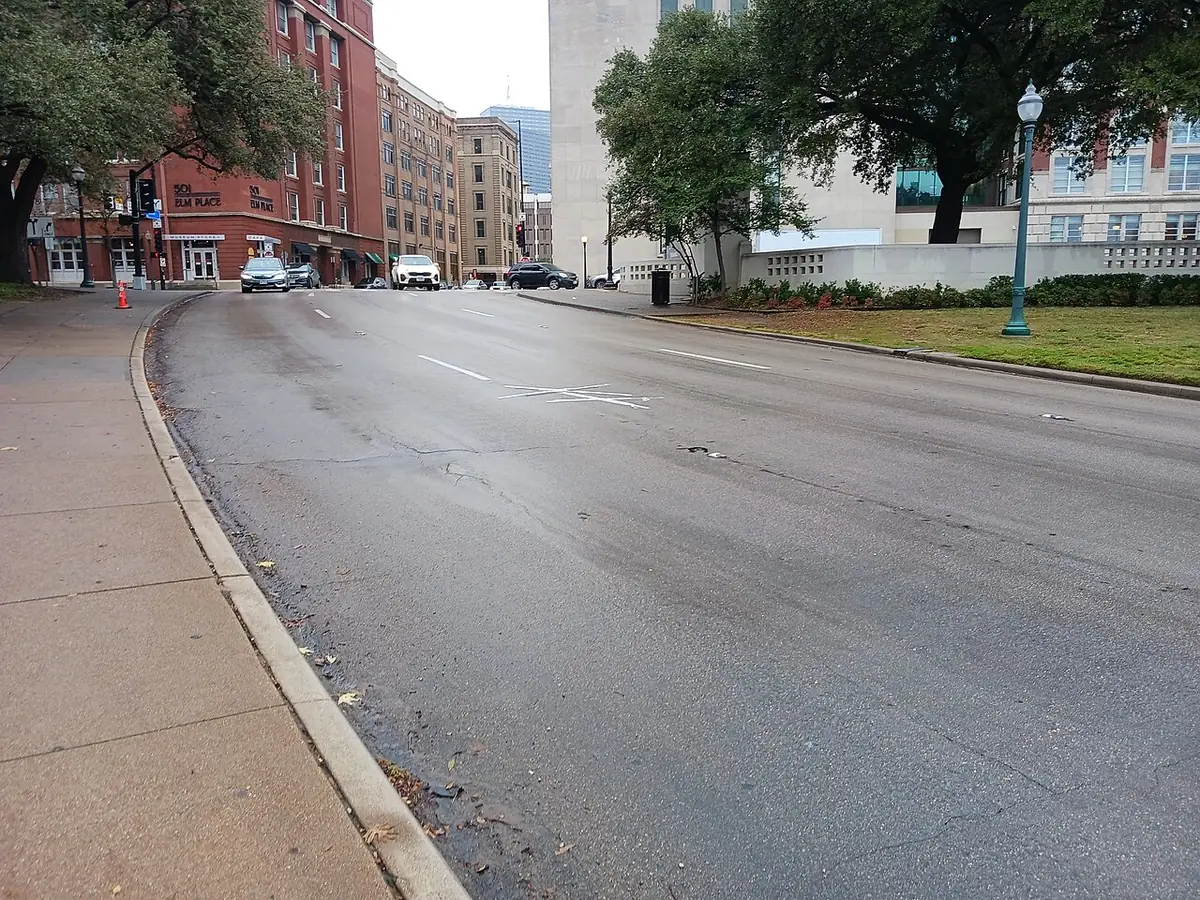
A quiet stretch of downtown Dallas streets, framed by red brick and trees — Photo: Jidanni · CC BY-SA 4.0 · Wikimedia Commons
Beyond the financial picture, the legal structure of Texas ownership sets firm limits on what you actually own, and that feeds back into the value.
Dallas prices moved up sharply over the past few years as companies and new residents arrived, and any valuation has to be read against that recent run rather than against a long flat history. Median figures here stay below the large East Coast and California metros, but the numbers below are only the starting frame: the county appraisal, the insurance exposure to hail and storm, and the condition of the roof and the air conditioning all pull an individual house away from the median. Use these orders of magnitude to place a property in its bracket, then adjust from there.
dallasFor saleHouseestimate
Median price / m²US$2,259Half the apartments sell below this
Median priceUS$375kthe average is 14% higher — a few very large properties pull it up
Most common2 bedrooms63 % of listings
Average size158 m²
By number of bedrooms
Bedrooms
Share of market
Avg price
Price / m²
Avg size
2most common
63 %
US$383k
US$2,378
161 m²
3
31 %
US$489k
US$2,235best value / m²
219 m²
4
6 %
US$659k
US$2,283
289 m²
Each row is an average, compared against the area average of US$2,378 / m². These are indicative estimates of a typical local market, not a measured sample of live listings. Check current listings before relying on them.
Land, easements and association rules: what you are really valuing
The same contractual rigour runs through the timeline of the transaction, which leaves no room for improvisation.
Owning a house in the United States does not mean you have complete freedom over its use or its external appearance, and anything that limits use limits value. The reach of homeowners associations in modern subdivisions and the weight of utility easements both redefine what private ownership actually covers. Reading these constraints before you settle on a figure is what stops you from valuing a plot you cannot fully use.
The strict frame of Homeowners Associations (HOA)
In the large majority of recent developments around Dallas, a residents association imposes a fussy set of rules governing the colour of your exterior paint, the height of your lawn, the type of vehicle parked in the driveway and even whether laundry can be dried outside. Breaches trigger automatic fines and, in extreme cases, foreclosure proceedings. The monthly dues and the restrictions both show up in what buyers will pay.
What it changesRead every line of the HOA rules and note the current dues before you fix a figure, because both the charge and the loss of architectural freedom are priced by the buyers you are comparing yourself against.
Easements and access under the ground
Texas deeds frequently carry easements giving electricity, water or gas companies the right to use a strip of your land for their networks or to intervene when something fails. Those clauses restrict your ability to build a pool, add a sunroom or plant mature trees on parts of your own plot, which means part of the land you are counting cannot be developed.
What it changesHave a professional read the survey carefully and mark these restricted strips, then value the usable plot rather than the total plot, since that is the area a buyer can actually build on.
The critical chain from first estimate to a figure you can defend
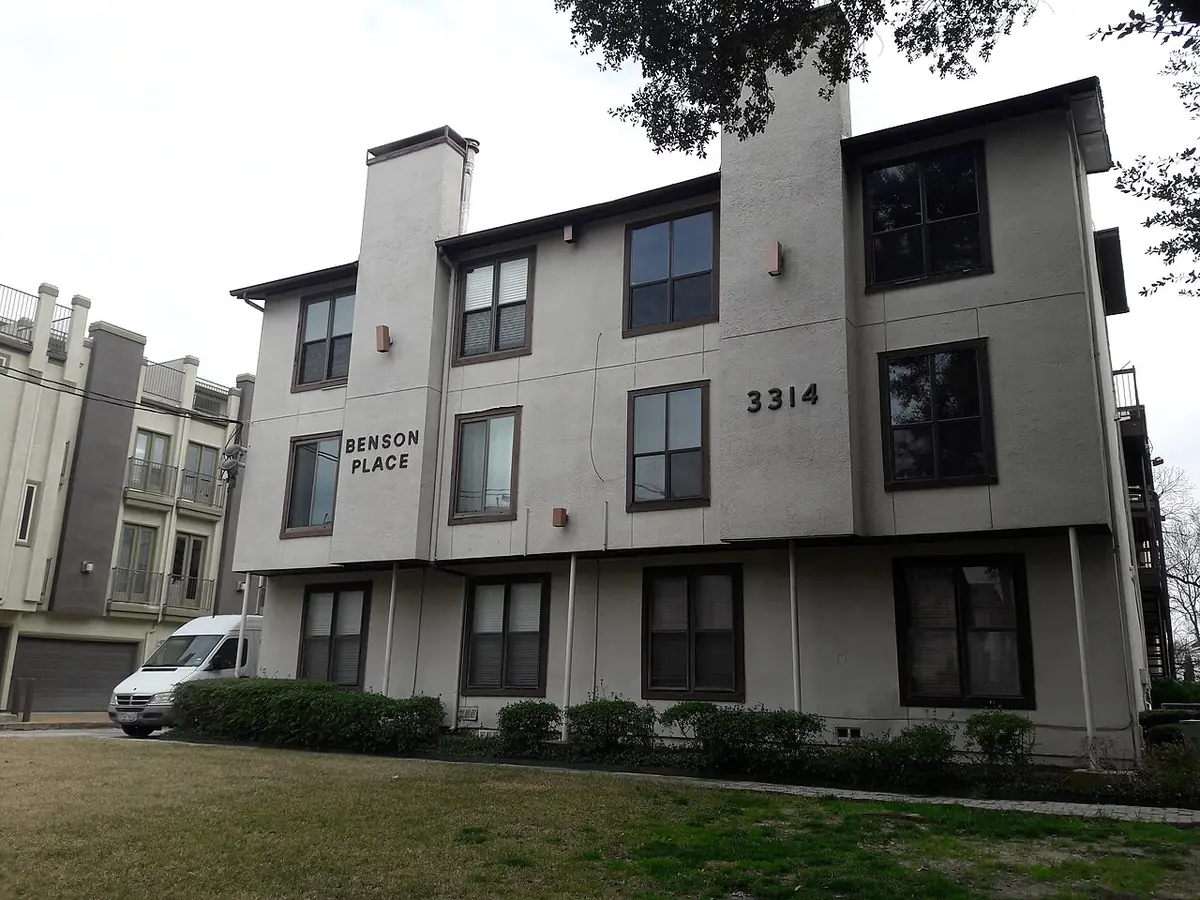
A modern low-rise apartment building typical of Dallas infill housing — Photo: Usernet123u · CC BY-SA 4.0 · Wikimedia Commons
Let us look concretely at how the different parties and steps fit together once a figure is in play.
Valuing property in the United States follows a formal calendar in which each assessment window, including the option period, and each contingency is tightly bounded by the standard Texas contract (TREC). Missing those deadlines or skipping the technical inspection can cost a buyer the earnest money outright, and it can cost a seller the figure they thought they had agreed. Controlling this chain of responsibilities is what protects the number from the first offer onwards.
Assembling the property file: deed, survey, tax record, permits and receipts for every improvement
Pulling the recent comparable sales for the same street, the same school attendance zone and the same house type, ideally from the last six months.
Adjusting each comparable for floor area, lot size, year built, garage, pool and the state of the roof and the air conditioning.
Commissioning a full home inspection by an accredited professional, which converts vague worries about condition into priced repairs.
Negotiating repairs or financial credits with the other side on the basis of that report, which is where the paper figure meets the real one.
Letting the lender order the independent appraisal, which tests your number against what a bank is prepared to lend against.
A single defensible figure, supported by comparables, by the inspection and by the county record
Who values what when a Dallas house changes hands
Unlike the practice in many other countries, a Texas transaction does not rest on a single notary who drafts and certifies everything. It draws on an ecosystem of specialists whose roles are precisely separated: agents for each side, independent inspectors, title companies and mortgage brokers. Knowing which of them produces a marketing opinion and which produces a formal valuation stops you from treating the two as interchangeable.
Your agent (listing or buyer side)Comparative market analysisProduces a comparative market analysis from recent local sales and current competition. It is well informed and free, but it is a pricing opinion aimed at a transaction, not an independent valuation.
The home inspectorFull technical auditEngaged and paid by you, examines the structure, the roof, the plumbing, the electrics and the air conditioning in detail and writes a report. The inspector never states a value, but the report is where most condition adjustments come from.
The title companyLegal security and escrowActs as the neutral third party: checks for liens or hidden debts on the property, holds the funds in escrow and runs the final signing. Anything it uncovers on title can reduce what the property is worth to a buyer.
The mortgage brokerFinancing and structureAssesses affordability, compares American lenders and obtains the loan approval. The broker's view of what a lender will advance is an early reality check on any figure you are attached to.
The appraiserIndependent market valuationIndependent of the bank and of both parties, confirms or rejects whether the agreed price matches recent local market evidence, in order to protect the lender. This is the formal valuation, and it is the one that can stop a deal.
Agent opinion, online estimate or paid appraisal: which figure should you use?
Now that you know which figure to trust for what, the next step is putting a realistic number on the costs that sit alongside it.
Most owners in Dallas end up holding three different numbers for the same house, and the gap between them is not a sign that someone is wrong. An online automated estimate is built from public records and past transactions, so it reads the address, the recorded floor area and the county data, and it is quick and free. What it cannot see is the inside of the house: a kitchen redone last year, a foundation that has been repaired, an air conditioning unit approaching the end of its life. In a market like Dallas, where the housing stock ranges from 1920s houses in Lakewood to new construction in the northern suburbs, that blindness to condition is exactly where the largest errors come from.
An agent's comparative market analysis fixes most of that. The agent has walked the house, knows which street sold well last month and knows what is currently competing with you, and that local knowledge is genuinely valuable. The limit is one of purpose rather than competence: the analysis is prepared to win or close a transaction, and depending on which side is asking it can lean optimistic or conservative. Getting two or three of them and looking at where they agree is more useful than treating any single one as the answer.
A paid appraisal by a licensed appraiser is the formal document. It follows a defined method, adjusts each comparable line by line for floor area, lot, age, garage and condition, and states its reasoning. It is the figure a lender relies on, and it is the one that carries weight in a dispute, a divorce, an estate or a challenge to the county assessment. It costs money and it takes time, which is why it makes sense when the stakes justify it rather than as a routine curiosity.
The practical approach in Dallas is to use all three in order. Start with the automated estimate to fix the bracket, collect agent analyses to correct it for condition and for what is actually on the market this month, and commission an appraisal when a real decision depends on the number. If those three land within a narrow band, you can act with confidence. If they are far apart, the reason is almost always something specific about your property, a foundation history, an unusual lot, an HOA constraint or a school boundary, and finding that reason is more valuable than averaging the three.
The costs that sit behind any Dallas valuation
Once the financial frame is set, it helps to understand the concrete rhythm of a day in this metro, because that rhythm is what buyers are paying for.
A valuation in Dallas is not just the number printed on a listing portal. It has to carry a specific local cost structure, defined by the absence of a Texas state income tax and offset by property taxes among the highest in the United States. Any figure you rely on should therefore be tested against the local taxes, the home insurance exposed to the region's weather and any association dues. A buyer runs these numbers before making an offer, so an owner who has not run them is negotiating with less information than the other side.
Acquisition and first-year ownership costs
Line item
Detached house (standard)
Urban apartment (Uptown/Downtown)
Effect on the figure you are working with
Median sale price
USD 400,000 to USD 550,000
USD 300,000 to USD 450,000
Sets the bracket the valuation starts from and the size of the loan behind it.
Annual property tax
2.2% to 2.8% of the appraised value
2.0% to 2.5% of the appraised value
A significant recurring monthly charge that buyers subtract from what they will offer.
Closing costs and title fees
2% to 3% of the purchase price
1.5% to 2.5% of the purchase price
File fees, valuations and title work, payable in cash on the day, so net proceeds sit below the headline.
Homeowner insurance
USD 2,500 to USD 4,000 per year
USD 800 to USD 1,500 per year
Rising noticeably because of hail and storm exposure, which weighs on what the property is worth to hold.
Property tax rates vary by county (Dallas County, Collin County) and by the school district (ISD) the property belongs to.
Running and routine maintenance costs
Type of charge
Estimated cost for a house
Estimated cost for an apartment
Frequency and variability
Association dues (HOA)
USD 0 to USD 150 per month
USD 300 to USD 700 per month
Monthly, covering shared facilities and grounds maintenance.
Energy bill (electricity and air conditioning)
USD 200 to USD 450 per month (summer peaks)
USD 100 to USD 220 per month
Strongly seasonal because of heavy air conditioning use.
Maintenance and preventive repairs
1% to 2% of the property value per year
Largely included in the HOA dues
Annual, and essential for anticipating air conditioning or plumbing failures.
The Texas energy market is deregulated: the choice of electricity supplier directly affects the monthly bill.
An ordinary Tuesday, read as the thing buyers are actually paying for
St. Matthew's Cathedral, a Gothic landmark in the heart of Dallas — Photo: Farragutful · CC BY-SA 4.0 · Wikimedia Commons
Beyond that well oiled routine, some crucial features of the Texas market stay invisible at first glance.
To test whether a figure makes sense, nothing replaces watching an ordinary weekday around the property. Between the commute along the main corridors such as Interstate 35E or the Dallas North Tollway, the school run and access to daily amenities, the rhythm here is organised around the car. Every step below is something a buyer will experience on a viewing and price accordingly, so walking the day yourself is one of the cheapest sanity checks available on any estimate.
07:30Residential neighbourhood (for example Lakewood)An early start to avoid saturation on the main routes towards Downtown or the Plano and Frisco corridor. How early that departure has to be is a direct discount or premium on the address.
08:15Local school (public or private)Dropping the children at the school district attached to your address, which is one of the strongest single drivers of resale value in Texas and the first thing to verify on a boundary map.
09:00Office or coworking space (Downtown / Arts District)Arrival at work after a run smoothed by sensible use of the tolled express lanes or the right bypass. Reliable access to those routes is part of what the location is worth.
12:30Neighbourhood lunch (Uptown or Deep Ellum)A midday break in an active district. The depth of nearby restaurants and cultural life is a genuine value factor for central properties and close to irrelevant for outer ones.
17:30Shopping centre or supermarket (Whole Foods / Central Market)End of day errands on the way home, made easy by vast free parking at most retailers. Distance to a full grocery run is one of the quiet variables separating two otherwise similar streets.
19:00HomeA quiet evening in the garden or the development, enjoying the mild Texas evenings and effective air conditioning. Noise, shade and how the outdoor space actually works in summer all move the final number.
What the polished Dallas listing leaves out of the price
These technical details explain most of the misjudgements made by recent buyers and sellers in the region.
Bright photographs and slick virtual tours show off volume and careful styling. They hide technical and regulatory realities that bear directly on daily comfort and on the future value of the asset. Each of the items below is a standard adjustment line for anyone valuing a Dallas house properly, and each one is routinely missing from both the brochure and the automated online estimate.
Slab foundations and clay soil (black gumbo clay)
The local clay shrinks in summer and swells in winter, which regularly produces ground movement and significant cracking in house foundations. A careful inspection by a specialist engineer is essential before any figure is fixed, because levelling work runs into tens of thousands of dollars and a documented repair history changes how the market prices the house.
The discretion and restrictions of homeowners associations (HOA)
In many subdivisions and managed developments, the HOA imposes strict rules on the colour of your exterior paint, the bins you may use, which vehicles can sit in the driveway and even the height of your lawn. Those restrictions plus the dues narrow the buyer pool, so a property under a heavy HOA rarely supports the same figure as an unrestricted one nearby.
The real age of the air conditioning (HVAC units) and of the roof
In the demanding Texas climate an air conditioning unit runs hard for much of the year and has to be replaced every ten to fifteen years at a cost between USD 8,000 and USD 15,000. Spotting ageing equipment during the viewing is a straightforward deduction from the price, and documenting a recent replacement is one of the few upgrades that reliably defends a figure.
Utility easements and drainage strips (easements)
Many Dallas plots carry easements allowing the city or utility providers to reach underground pipework crossing your land. That strictly limits future work such as an in-ground pool or an extension, so the buildable area is smaller than the plot size implies and the land component of the valuation has to be cut accordingly.
Valuation mistakes that only surface six months after the deal
With those lessons in hand, it is fair to ask whether acting on your figure is the right move at all.
Looked likeA remarkable opportunity: a large house a little further out, at a very attractive price per square metre.
Turned outA daily transport nightmare, with more than two hours a day accumulated in traffic to reach the economic and cultural core, and a resale figure capped by exactly that.
Would have caught itMeasuring your real journey time at peak hour on a Tuesday morning before you accept any figure, rather than trusting the theoretical estimates a mapping app gives you.
Looked likeA picturesque street with large mature trees generously shading the road and the plot, read as a straight premium.
Turned outSewer pipes damaged by invasive roots and astronomical pruning bills falling entirely on the owner, none of which appeared in any estimate of the property.
Would have caught itInsisting on a camera inspection of the underground waste lines and checking the history of tree work in the area before you treat the mature planting as value rather than liability.
Looked likeAn exemption or a moderate property tax rate highlighted by the seller in the listing.
Turned outA sharp reassessment of the taxable value by the Dallas Central Appraisal District in the year after the sale, pushing the monthly tax up by 30%.
Would have caught itAnticipating the post-sale reassessment on the basis of the actual purchase price and provisioning the predictable increase in your budget from day one, since the assessed value and the market value are two different numbers.
Looked likeA fast purchase with no complex contingencies, to beat other buyers in a tight market.
Turned outMajor hidden defects in the electrical system and the insulation, and compliance costs nobody had priced into the figure that was agreed.
Would have caught itNever giving up the inspection window (the Texas option period) and always engaging an independent TREC-certified professional, because the inspection report is what turns a guess about condition into a priced adjustment.
When you should not act on the figure you have
It is time now to lay the ground for your final decision with clear eyes.
A valuation is often treated as the end of a process, the number that settles the question. Yet the local context, with fluctuating interest rates and high property taxes, means an estimate can be technically sound and still be the wrong basis for a decision. Recognising honestly that your situation does not match what the current market rewards will save you from a risky commitment and from a damaging loss of mobility.
The professional on a short assignment or an uncertain international posting (under 3 years in place)
→Flexible rental of a furnished apartment in an active district such as Victory Park or Oak Lawn, rather than buying at any valuation.
Transaction costs on the way in and the way out (title work, agency commissions, closing fees) come to roughly 8% to 10% of the value of the property. A hold of under three or four years does not absorb those costs if prices flatten, so even an accurate valuation today does not make the purchase work.
The household on a tightly calibrated budget with no emergency savings available
→To stay in rented accommodation for now while building a financial cushion, treating the valuation as information rather than as a green light.
Texas ownership exposes the owner to major unplanned expenses, whether a central air conditioning system that suddenly fails or an unexpected rise in the property tax assessment. Without liquid reserves, one such event puts the whole household budget at risk, and no valuation captures that fragility.
The owner reading Dallas through a walkable-city intuition
→To re-test the figure against how the metro actually works before relying on it.
Dallas urbanism is built around the private car and the major road corridors. Proximity to transit adds far less here than it would in a dense transit city, while garage space, driveway capacity and highway access carry real weight, so a figure built on the wrong intuition about location will be wrong in both directions.
So, do you trust the number you now have for your Dallas house?
A pocket park offering a green pause in Dallas — Photo: Nightryder84 · CC0 · Wikimedia Commons
Settling on a value for a Dallas property means looking past the promises of Texas growth and the postcard images. This market rewards owners who take the local rules seriously, starting with the weight of property taxes and the reality of urban distances. If your comparables come from the same street and the same school attendance zone, if they are recent, and if you have adjusted each of them for floor area, lot, age and condition, the figure in front of you is a solid one.
The key to a valuation that holds is accepting the adjustments. Whether it is a house with a garden that needs attentive upkeep or an urban apartment subject to association decisions, each option carries its own deductions. By bringing in independent professionals to audit the foundations, the roof and the air conditioning, you turn a number you hope is right into a documented position you can defend against a buyer, a lender or the county.
Take the time to visit comparable streets at different hours, to drive the commute at peak time and to pull the tax history of the property from the county record. Cross-check your figure against at least one independent source, and treat any large gap as a question to answer rather than an average to take. If those signals line up, you have everything you need to move forward with confidence.
Related questions
How much are property taxes on a house in Dallas?
Property taxes in Dallas generally run between 2.2% and 2.8% of the appraised value of the property each year. The rate is high because Texas levies no state income tax, so local public services are funded largely through this charge on property, which is why the assessed value matters as much as the market value.
Do you really need a car to live in Dallas?
Yes. The vast majority of residential neighbourhoods and business areas in Dallas require daily use of a private vehicle. Public transport exists, but the sprawl of the metro makes a car essential for commuting and errands, which is why garage and driveway provision carries real weight in local valuations.
What is the option period in a Texas property transaction?
The option period is a window negotiated in the offer, usually 7 to 10 days, during which the buyer can have the property inspected by a professional and withdraw for any reason while recovering the initial earnest money deposit. It is the window in which condition turns into a priced adjustment.
How do homeowners association (HOA) dues work in Dallas developments?
HOA (Homeowners Association) dues cover maintenance of shared spaces, security and sometimes certain external services. The amount varies considerably with the facilities on offer and can rise each year following votes by the members, so the current dues and the trend in them both belong in any valuation.
How does the clay soil affect houses in Dallas?
The local clay soils, known as black gumbo clay, expand and contract sharply with moisture, which can weaken concrete slab foundations. A structural inspection by an engineer is strongly recommended before you fix a value on a detached house, since foundation history is one of the largest single adjustments in this market.
How long does it take to complete a property purchase in Dallas?
The average time between acceptance of an offer and final signing (closing) is generally 30 to 45 days. That period allows for the technical inspections, for the mortgage file to be completed, including the lender's independent appraisal, and for the title to be checked.
Can non-resident foreign nationals buy property in Texas?
Yes. Texas law imposes no particular restriction on the purchase of property by foreign nationals. It is nevertheless advisable to work with a tax specialist to understand the implications for inheritance and for international taxation.
What additional costs come on top of the price?
Beyond the deposit and the loan, allow roughly 2% to 3% of the purchase price in closing costs, covering the title company's fees, valuation fees, prorated taxes and the compulsory first-year insurance. These costs are why net proceeds always sit below the valuation figure.
How much does the school district (ISD) affect house values in Dallas?
The performance of the Independent School Districts directly influences how attractive a property is and what it resells for. Check the official Texas state ratings, and confirm the exact attendance boundary for the address, before you compare your house with sales in a neighbouring area.
What does it cost to replace an air conditioning system in Texas?
Because they are worked hard through the summer months, complete HVAC systems generally cost between USD 8,000 and USD 15,000 to replace, labour and equipment included, depending on the size of the property. An ageing unit is a straightforward deduction from any figure.
Property review of ting
No ting properties in Dallas yet
Be the first — share it on ting and it shows up right here.