Buying an apartment in Dallas means getting to grips with a fast-moving market shaped by urban sprawl, powerful homeowners associations and a wide variety of neighbourhoods. This guide takes you through it step by step: how to structure the purchase, how to assess the real costs, and how to choose the setting that matches what you are after.
Get the app
What nobody tells you.
Real prices, hidden costs and the traps to check before you commit.
Why buying an apartment in Dallas changes what you expect from space and from the city
Scroll
Why buying an apartment in Dallas changes what you expect from space and from the city
Buying an apartment in Dallas means getting to grips with a fast-moving market shaped by urban sprawl, powerful homeowners associations and a wide variety of neighbourhoods. This guide takes you through it step by step: how to structure the purchase, how to assess the real costs, and how to choose the setting that matches what you are after.
Written by the ting.ad editorial team ·
Main Street, Dallas in Street View: drag to look around.
This trade-off between generous space and infrastructure constraints plays out differently depending on your profile and your daily habits.
Buying a home in this Texas metro means resetting your sense of space and your residential priorities from day one. Unlike dense cities elsewhere, or tight coastal markets where every square metre is fought over, Dallas offers a radically different perspective on space and domestic comfort. Buyers quickly discover that the living area their budget commands reshapes their daily life completely. It is not simply a matter of getting more rooms for the same money: it means accepting an urban logic built around distance and around the flow of major road corridors. Understanding that reality before you start viewing is what keeps a purchase from turning into disappointment over commuting distance or condominium rules.
Substantially more living space than a buyer would get in a dense metropolitan marketvsA heavier reliance on the road network for everyday journeys
The generous volumes you buy are paid for structurally, by accepting a less walkable setting in which every trip means planning a drive. That configuration makes travel time a central parameter in what the property is really worth to you.
Association charges that bundle in a wide set of shared amenitiesvsStrict homeowners association (HOA) rules governing how you may use what you own
Buildings often come with pools, gyms and on-site security whose upkeep weighs on the monthly budget. In exchange, these structures impose aesthetic and behavioural restrictions that can feel heavy to a buyer who has not read the rules first.
An active market supported by strong population and economic growthvsPotential volatility in districts gentrifying at speed
The strength of the local economy underpins both rental demand and resale, but it also exposes some neighbourhoods to abrupt change. Look at the resilience of the micro-area itself, well beyond the headline claims made about the city as a whole.
What kind of daily life do you want the apartment you buy in Dallas to support?
For a buyer arriving from abroad, these ways of organising a home unsettle the usual reference points quite deeply.
There is no single answer to buying into a tower or a gated condominium in Dallas. Depending on whether you want the cultural energy of the central districts, the residential calm of the outer neighbourhoods or the flexibility of a professional base, daily life differs completely. Central areas such as Uptown or Downtown offer a life you can walk, but they cut private outdoor space to almost nothing. Outer areas guarantee quiet and high-specification shared amenities, at the price of a weaker connection to the busy life of the city. Pinning down your own usage profile before you view a single property is what prevents the classic mistake: buying a setting that contradicts what you actually wanted.
Buying into central, walkable Dallas
Choosing an area such as Uptown or Downtown means buying immediate proximity to restaurants, cultural venues and business districts. You give up large private green space in return for meaningful time saved morning and evening. Apartments here sit mostly in modern towers with integrated services, but density is higher and visitor parking is more awkward. It is the right purchase if your pace of life leaves no room for the logistics of a large suburban house.
Buying in the leafy in-between neighbourhoods
Areas such as Lower Greenville, or the edges of Bishop Arts, offer a subtle transition between city buzz and residential quiet. You will find smaller-scale buildings, a mixed population and a lively fabric of independent shops. Floor areas tend to be a little larger and the atmosphere is closer to a village inside the city. This suits buyers who want to settle into a close-knit local community for the long term without isolating themselves in the far suburbs.
Buying into a managed condominium just outside the core
If your absolute priority is quiet, controlled access and sport and leisure facilities on your doorstep, look at professionally managed condominium complexes. These schemes offer amenities comparable to a luxury hotel, with a permanent concierge and maintained grounds. In exchange, you accept high monthly management fees and a less organic environment, one that almost always requires a car to leave the perimeter of the development.
What changes most in the way you buy and live when you arrive from abroad
Downtown Dallas glows at dusk above a curving highway — Photo: Shiva Shenoy · CC BY 2.0 · Wikimedia Commons
Once those differences are absorbed, the decisive question of exact location comes sharply into focus across the mosaic of neighbourhoods.
Moving from a property market shaped by long urban history and scarce land to the Texas market in Dallas produces an immediate culture shock. In many older markets, buying means period stock, walkable central locations and service charges that feel rigid but predictable. In Dallas, the reality is built around spatial flexibility, modern construction and the private governance of residential schemes through homeowners associations. What makes a good investment no longer rests on being near a historic metro station, but on the quality of the association's management, the efficiency of the air conditioning and how easy the property is to reach by road. Absorbing these new terms of reference is the precondition for buying here without regret.
From abroad
Historic central locations, with journeys made mostly on foot or by public transport
Dallas
Deliberate urban sprawl, a car-centred layout and employment spread across several poles
You have to reassess your tolerance for travel time completely, and accept that the car becomes a literal extension of the home for the smallest daily errand.
From abroad
Shared ownership governed by strict, protective national legislation that can be slow to act
Dallas
Homeowners associations (HOAs) with wide powers over appearance and over the rules of daily life
Decision-making is highly decentralised and handed to the residents themselves through the association, which means checking its financial health and its litigation history with absolute care before you buy.
From abroad
Value driven by age, architectural character and the scarcity of the location
Dallas
Value driven by the quality of recent construction, energy efficiency and the strength of the school district
Resale rests on very functional criteria: thermal insulation, the performance of the cooling equipment and the reputation of the school district, even for an apartment.
From abroad
A notarised purchase process framed by long, reassuring administrative delays
Dallas
A fast transaction run by title companies and specialist agents
The speed at which a sale executes demands total responsiveness from you, and a meticulous review of every document ahead of final signature.
How to pick the neighbourhood to buy in across the variety of Dallas
Weighing up these areas has to be tested against budget reality and the price structures at work in the local market.
Dallas does not read as a single centre ringed by uniform suburbs, but as an archipelago of neighbourhoods with very distinct personalities. Each area has its own rules of life, its own rhythm, its own architecture and its own type of buyer. Expecting one neighbourhood to deliver everything is an illusion; the functional specialisation of each zone is something to work with instead. Whether you want the cultural energy of a fashionable hub, the calm of a mature residential enclave or the momentum of a fast-growing business district, a careful reading of the trade-offs in each area is essential. That fine-grained mapping stops you buying into a setting that runs out of road against your future needs.
Uptown
A dense, fashionable, fully connected urban rhythm, where walking is the natural way to reach restaurants and coworking space.
Suits
Young professionals, senior executives and investors looking for strong rental liquidity.
Trade-off
Some of the highest prices per square metre in the city, and often smaller living areas for the same budget.
Lower Greenville / M-Streets
An urban village feel, with tree-lined streets, independent shops and a warm, relaxed neighbourhood life.
Suits
Buyers looking for a genuine balance of social life, architectural character and rooted community spirit.
Trade-off
A housing stock made up largely of older property, sometimes needing bringing up to standard or energy retrofitting.
Deep Ellum
A raw artistic and cultural hub, alive with galleries, music venues and a bold food scene.
Suits
Fans of alternative culture, creatives, and buyers drawn to unconventional industrial lofts.
Trade-off
Considerable night-time activity, and only relative quiet at weekends, which will not suit a search for complete calm.
Preston Center / North Dallas
An upmarket, highly ordered residential environment built around security, family comfort and proximity to major shopping centres.
Suits
Buyers who put asset stability, school quality and residential quiet first.
Trade-off
Near-total dependence on the car for any journey, and a much more standardised, impersonal urban atmosphere.
What does buying and running an apartment in Dallas really cost?
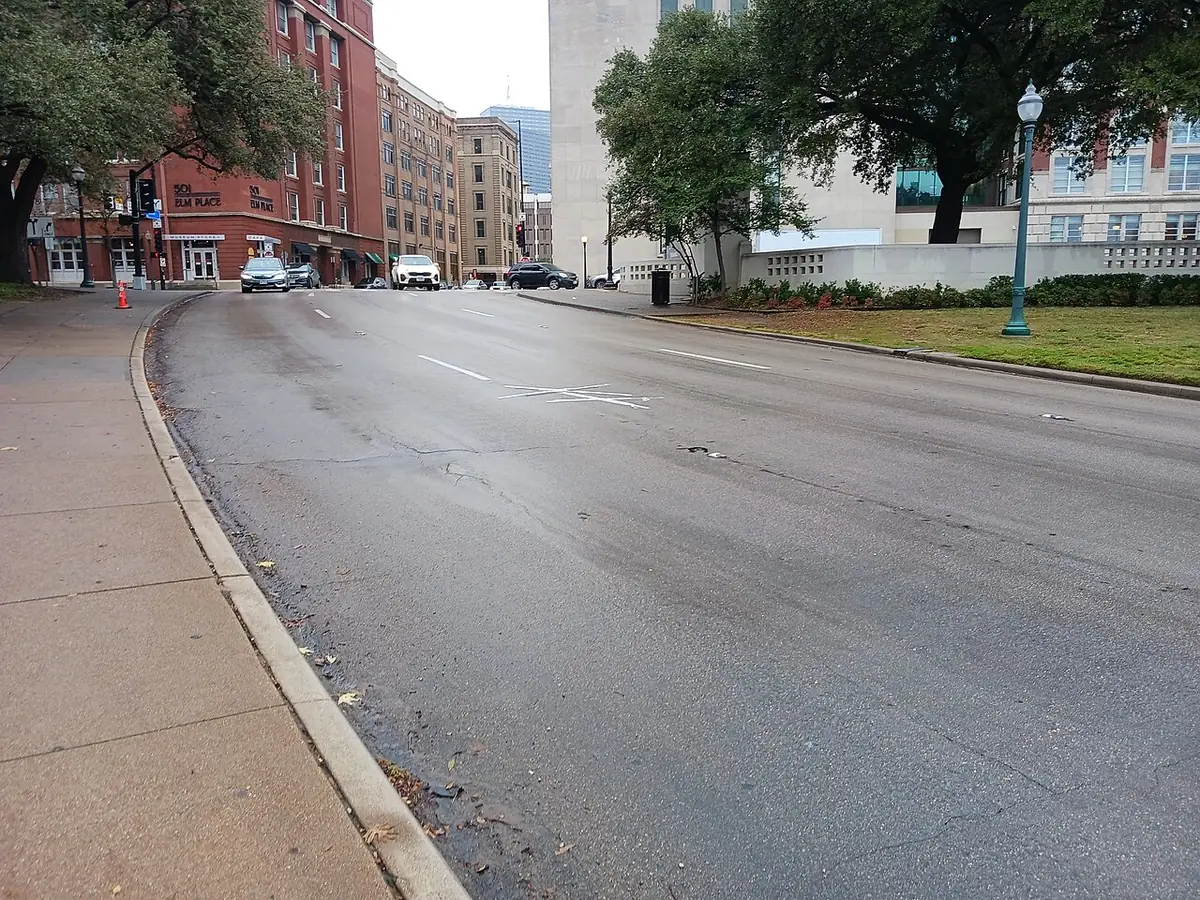
A quiet stretch of downtown Dallas streets, framed by red brick and trees — Photo: Jidanni · CC BY-SA 4.0 · Wikimedia Commons
Beyond the raw figures, the legal nature of what you actually own deserves close attention.
Putting a budget on a Dallas purchase means looking past the headline asking price per square metre. The full cost of owning an apartment here includes variables specific to Texas, in particular the absence of a state income tax, offset by local property taxes that are traditionally higher than in most other markets. Condominium association charges (HOA fees) also vary a great deal with the range of services a building provides. An attractive purchase price in an up-and-coming area can therefore come with structurally heavier running costs over the long term. Reading these cost ranges clearly before you buy keeps the investment manageable and prevents unpleasant budget surprises once the keys are in your hand.
dallasFor saleApartmentestimate
Median price / m²US$2,755Half the apartments sell below this
Median priceUS$260kthe average is 14% higher — a few very large properties pull it up
Most common2 bedrooms44 % of listings
Average size90 m²
By number of bedrooms
Bedrooms
Share of market
Avg price
Price / m²
Avg size
1
30 %
US$201k
US$3,248 +12 %
62 m²
2most common
44 %
US$267k
US$2,900
92 m²
3
22 %
US$341k
US$2,726best value / m²
125 m²
4
4 %
US$459k
US$2,784
165 m²
Each row is an average, compared against the area average of US$2,900 / m². These are indicative estimates of a typical local market, not a measured sample of live listings. Check current listings before relying on them.
What you legally own: understanding the exact nature of your title
This legal structure sits inside a highly codified transaction process that is worth mastering before you commit.
Buying an apartment in Dallas does not always carry the same legal rights, depending on whether the property is a classic condominium or a townhome with partial ownership of the land. In many other markets, the line between outright ownership of the building and a share of the common parts is set by uniform national law. In Texas, shared-ownership law gives pride of place to the internal rules laid down by the owners association (HOA or COA). That private governance hands the body considerable authority over the exterior, over architectural changes and even over the terms on which you may let the property. Grasping exactly how far those rules reach is essential if you want to protect your freedom of use and anticipate the constraints on resale.
The condominium model (full vertical shared ownership)
You buy the interior of your walls plus an undivided share of the common spaces and equipment (roof, foundations, corridors, leisure facilities). The association manages the whole external envelope and the shared services through compulsory monthly dues.
What it changesYou get complete peace of mind on structural matters, but you live under a strict framework set by the local board, which may for instance limit your ability to let the property on short-stay platforms.
The townhome model (horizontal shared ownership)
You generally own the structure of the building and the narrow plot it stands on, while belonging to a neighbourhood association that manages the private roads, the shared green space and the exterior of the facades.
What it changesYou enjoy architectural autonomy and a sense of independence closer to a detached house, while remaining bound by requirements of visual harmony and by the owners association dues.
The rule to understand before you hand over a single deposit
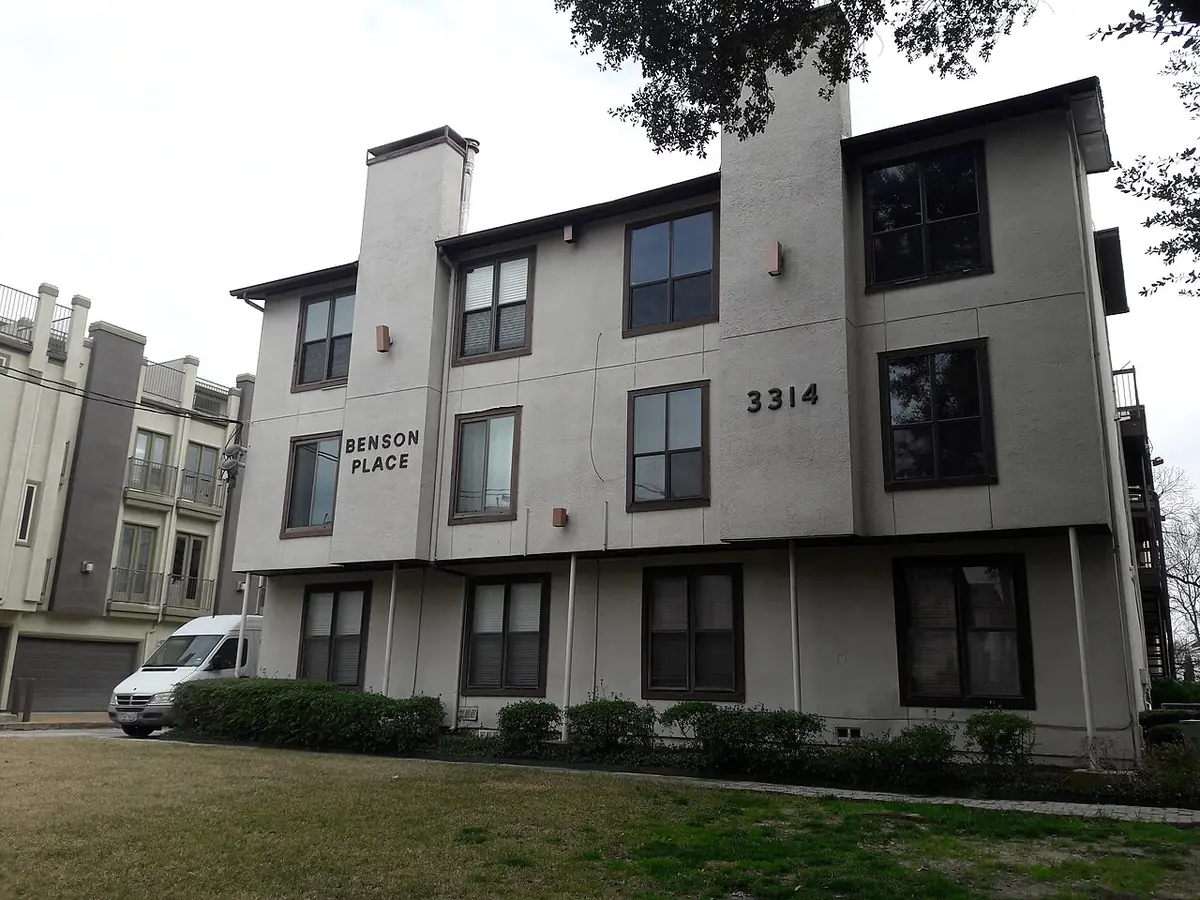
A modern low-rise apartment building typical of Dallas infill housing — Photo: Usernet123u · CC BY-SA 4.0 · Wikimedia Commons
To run that timeline calmly, the coordinated involvement of the different local market professionals is indispensable.
Buying property in the United States runs on a rigorous contractual timeline in which every financial commitment is conditioned by specific clauses known as contingencies. Where many other systems lock a buyer in quickly after the preliminary contract, Texas practice offers a genuine investigation window, the option period, during which the buyer holds a discretionary right to walk away for a modest fee. Once that critical window has closed, however, deposits already paid become progressively harder to recover if you pull out without cause. Understanding the sequence of these stages, and the central role of title companies, is the only way to protect your funds and carry the purchase through without damaging haste.
Signing the formal offer (the purchase contract) and paying the earnest money deposit to the title company.
The opening of the option period, generally 7 to 10 days, allowing you to have the property inspected in every detail.
A detailed review of the association documents (HOA documents, internal rules, financial statements and three years of charge history).
Clearing the loan contingency, once your file has been given final approval by the lending bank.
The title company's examination of title, to confirm there are no hidden liens or earlier legal disputes attached to the property.
Signing the final deed at closing, and the official transfer of funds recorded with Dallas County.
How the purchase actually unfolds, step by step, with the local professionals
Buying successfully in Dallas means working with an ecosystem of professionals whose roles are tightly defined, and quite different from those you may be used to. The buyer's agent represents your interests alone against the seller, while the title company acts as a neutral third party, taking the place of a notary in securing and recording the transaction. The independent home inspector plays an equally decisive role, x-raying the technical condition of the property from the foundation to the cooling system. Knowing each part in the score lets you steer the purchase efficiently, ask the right questions at the right moment, and avoid the confusion of roles that so often derails a deal.
The mortgage brokerAssessing borrowing capacity and obtaining pre-approvalThey review your financial profile and issue the pre-approval letter you need to make your offer credible to sellers in a competitive market.
The buyer's agentShortlisting property, targeted viewings and negotiating the contract termsThey guide you through the subtleties of the different Dallas neighbourhoods and negotiate price and contingencies looking after your interests alone.
The home inspectorCarrying out the full technical audit of the propertyThey examine the structure, the roof, the plumbing, the electrics and the air conditioning units to identify hidden defects or urgent work.
The title companyHolding the funds, running the title search and handling closingIt acts as neutral escrow agent, verifies that title is sound, and orchestrates the final signature and the transfer of funds.
The HOA management companySupplying the internal rules and certifying that no dues are outstandingIt provides the full set of documents governing life in the building and confirms that the current owner is up to date with monthly dues.
Condominium apartment or detached house in Dallas: how do you decide?
Once that first lifestyle decision is settled, the central question of financing and of the overall budget structure comes to the fore.
The choice between an urban condominium and a detached house shapes almost every buying journey in Dallas County. On one side, the condominium towers of Downtown, Uptown and Turtle Creek promise a walkable life that is rare in north Texas, with integrated services such as a concierge, a rooftop pool and no exterior maintenance at all. For a buyer arriving from a large city elsewhere, that formula offers a familiar reference point and immediate access to the chef-led tables and galleries of the Dallas Arts District.
A detached house on its own plot, by contrast, remains the dominant cultural and asset-holding norm across the metro area. Buying in established residential neighbourhoods such as Lakewood or the M-Streets, or moving a little further out towards Richardson and Plano, rebuilds daily life around extended single-level living space, an enclosed garage for several cars, and a fenced yard that families and pet owners consider essential. That option carries a continuous maintenance load in exchange, from the central air conditioning to keeping a lawn alive through the summer heat.
Financially, the comparison goes well beyond the headline price per square metre. Dallas condominiums come with monthly homeowners association charges, the HOA fees, which mount quickly with the range of amenities the building provides. Those fees pool security, structural maintenance and shared facilities, but they are a fixed outgoing that you never recover on resale. Owners of detached houses escape those high monthly dues, but carry the full cost of roof, plumbing and insulation work directly.
The final decision therefore rests on your tolerance for logistics and on how you see space over the long term. If you value a smooth commute into the Central Business District and a life free of exterior maintenance, the apartment is the natural buy. If you want architectural freedom, privacy and the independent value of land, the single-family house remains the better answer, despite the daily effort it demands.
What overall budget do you need to buy and live comfortably in Dallas?
With the financial picture measured, it is worth looking at how an ordinary day actually unfolds, to understand what your choice of location will do to it.
Setting a buying budget in Dallas means factoring in every tax and structural cost specific to the Texas market. Unlike many other markets, the absence of a state income tax is offset by local property taxes among the highest in the country. Every buyer therefore has to build a financing plan that accounts not only for capital repayment and bank interest, but also for the tax rate applied by the municipality and by the school district the property belongs to. Overlooking these recurring charges leads inevitably to a financial squeeze in the very first year of ownership.
Purchase price ranges by property type in Dallas
Property type
Indicative floor area
Observed price range
Main factors behind the variation
Compact apartment (Uptown / Downtown)
60 to 80 square metres
300,000 USD to 450,000 USD
Whether there is a balcony, the quality of the common parts, concierge services
Large high-specification apartment (Turtle Creek)
110 to 150 square metres
650,000 USD to 1,100,000 USD
Open views, ceiling height, number of secure parking spaces
Renovated detached house (M-Streets / Lakewood)
150 to 220 square metres
600,000 USD to 950,000 USD
Proximity to parks, original architectural character, how far the kitchen has been modernised
Median prices vary sharply with the appeal of the Dallas Independent School District and with immediate proximity to the main motorway corridors.
Structure of recurring charges and annual local taxes
Cost item
Estimated amount or rate
Payment frequency
Impact on the overall budget
Property tax
1.8% to 2.4% of assessed value
Annual (paid at year end)
The heaviest line in the budget, reassessed each year by the county
Association charges (HOA / condo fees)
350 USD to 900 USD per month
Monthly
Unavoidable for apartments; covers maintenance and the building's insurance
Homeowners insurance
2,500 USD to 4,500 USD per year
Annual
Rising noticeably in Texas because of weather and hail risk
These estimates apply to standard properties and can move with the insurance deductibles you choose and with changes to the assessment rates set by the Dallas Central Appraisal District.
What does an ordinary Tuesday look like in the home you are thinking of buying in Dallas?
St. Matthew's Cathedral, a Gothic landmark in the heart of Dallas — Photo: Farragutful · CC BY-SA 4.0 · Wikimedia Commons
Beyond the visible surface of daily life, several structural details stay hidden and deserve a careful buyer's full attention.
A working day in Dallas is largely set by the car and by the layout of the major motorway corridors such as Interstate 35E or the President George Bush Turnpike. Unlike very dense cities elsewhere, how smoothly you move depends directly on how well the home you buy lines up with where you work. An ordinary Tuesday shows why anticipating the morning and evening peaks matters so much, and why it belongs in the buying decision itself.
07:30Leaving home and handling the school runThe day starts by dropping children at local schools, often a few minutes away by car if you have bought in a well-served residential neighbourhood.
08:30Arriving at the office in the CBD or an outer business hubParking is usually handled by the employer or built into the office towers of Downtown or Victory Park, giving direct access to the workplace.
12:30Lunch break and business meetingsWorking lunches happen in the restaurants of the business district or the busier parts of Uptown, favouring close proximity to avoid losing time in the car.
18:00The trip home, or local shoppingThe return journey coincides with heavy traffic on the urban motorways, which pushes many residents to shop locally before heading back into their neighbourhood.
20:00Unwinding and neighbourhood life in the eveningEvenings often extend into a walk in the local parks or dinner in a small neighbourhood restaurant within walking distance, if you have bought in the more urban parts of the city.
What the sales brochures never tell you about buying property in Dallas
These technical subtleties lead straight to the classic traps that many buyers bitterly regret having ignored.
Marketing material and virtual tours present an idealised face of Dallas, smoothing away the technical and regulatory rough edges that make up an owner's daily reality. Behind the apparent modernity of the facades and the quality of the interior finish sit climate constraints, administrative easements and demanding association rules. Knowing about these invisible aspects before you commit avoids expensive disillusion and neighbour disputes that need never have happened.
What expansive clay does to foundations
The soil here is a highly reactive black clay that shrinks in drought and swells in heavy rain. That movement puts considerable pressure on building foundations, sometimes requiring the costly installation of steel piers or perimeter watering systems to stabilise the structure.
How much power HOA rules really carry
Homeowners associations hold extremely broad powers in the United States. They can impose strict restrictions on the colour of blinds, where bins are kept and how visitors park, and can even ban short-stay letting of the Airbnb kind, with heavy fines for breaches.
Insurance costs that move with the claims history
Texas is regularly exposed to violent hail and wind storms that damage roofs. Homeowners insurance premiums rise significantly if the property you buy has an older roof, or sits in an area badly hit by recent weather.
Strict planning and zoning laws
Buying in Dallas is no guarantee that the immediate surroundings will stay as they are. Zoning changes voted through by the city can permit commercial structures or taller buildings to go up directly next to your plot.
The classic traps buyers regret ignoring six months after purchase
Against these technical and financial demands, it matters just as much to know whether this market really suits your profile.
Looked likeAn excellent financial opportunity in an area gentrifying fast.
Turned outA zone where saturated roads and a shortage of strong schools keep resale difficult over the medium term.
Would have caught itAlways check the city's ten-year planning documents and look at the ratings of the public and private schools serving the area.
Looked likeAn apartment with moderate association charges and a very appealing outdoor pool.
Turned outAn undercapitalised association that voted massive special assessments to replace the central cooling plant and redo the facade.
Would have caught itInsist on access to three years of general meeting minutes to identify major works still waiting to be funded.
Looked likeA perfect location putting any point in the metro within a few minutes.
Turned outA position taking the full force of constant noise from a major elevated motorway ramp built nearby.
Would have caught itView the property at different times of day and week, particularly at peak hours and with the windows open, to measure the real noise level.
Looked likeA spacious detached house with a serviced, working air conditioning system.
Turned outAgeing, oversized equipment generating enormous electricity bills through the summer heatwaves.
Would have caught itCommission a thorough energy assessment from a certified independent technician before the contingencies are cleared.
Who should absolutely not buy property in Dallas? A critical framing
With those warnings on the table, it is time to take a final view of how ready you are to buy.
General enthusiasm for the economic momentum of Texas should not hide the deep mismatch between certain buyer profiles and the realities of the local market. Buying an apartment or a house in Dallas requires a minimum of geographic stability and full acceptance of American tax and planning rules. If your personal situation or your views on mobility do not fit that model, long-term renting remains a far more prudent alternative.
The overseas investor looking for immediate liquidity and a high net rental yield
→To hold off buying older stock in Dallas without an approved local manager
The weight of local property taxes and the cost of maintaining structures on clay soil eat substantially into net returns, while a quick resale runs into timescales that cannot be compressed.
The prospective buyer whose professional horizon in the region is under four years
→To stay renting in a professionally managed residential complex
Transaction costs on the way in and on the way out (closing costs, agency commissions, transfer taxes) mechanically absorb any potential gain over too short a period.
The buyer unwilling to use a car daily and almost exclusively
→To favour metro areas with dense, heavy public transport networks
Despite extensions to the DART light rail network, Dallas remains a city designed around the private car, which makes life without one extremely complicated day to day.
So, are you really ready to buy in Dallas?
A pocket park offering a green pause in Dallas — Photo: Nightryder84 · CC0 · Wikimedia Commons
Reaching the end of this analysis shows that buying an apartment or a house in Dallas is not an impulse, but a carefully weighed decision. Between the complexity of local property taxes, the rigorous assessment of clay soil conditions and the careful selection of your neighbourhood against your travel needs, every parameter counts. If you have built those constraints into your financial plan, and your horizon in north Texas runs beyond five years, you have everything you need to buy well.
The Dallas property market rewards buyers who are patient, informed and well advised by independent local professionals. Never let yourself be rushed by the commercial urgency some sellers or intermediaries put on the table. Take the time to read the association minutes, check the property tax history of the parcel you want, and test your real journey times at peak hours. The residential calm you are buying depends directly on that methodical care.
Ultimately, becoming an owner in Dallas is a substantial and stimulating commitment at the heart of a metro area in full transformation. By making clear-eyed choices between the urban apartment and the detached house, and by anticipating the recurring costs that come with the Texas environment, you turn the plan into something that lasts. When the moment comes, surround yourself with neutral experts to validate every legal and technical stage before you sign the deed that settles your move.
Related questions
How much are property taxes on an apartment in Dallas?
Property taxes in Dallas generally run between 1.8% and 2.4% of the value the county assesses for the property. That assessment is revised every year by the Dallas Central Appraisal District, which directly affects the total local tax bill payable at year end.
Do you absolutely need a large down payment to buy in Dallas?
Most American lenders require a down payment of between 10% and 20% of the purchase price to offer the best loan terms. International buyers who are not residents often have to plan for higher equity requirements.
What monthly charges come with a condominium apartment?
Association charges, known as HOA fees, generally range from 350 USD to more than 900 USD a month depending on the standing of the building. They cover upkeep of the common parts, security, structural insurance and sometimes certain shared services.
Can you buy property in Dallas without being a US resident?
Yes: Texas law fully allows foreign investors and non-residents to buy property with no restriction on nationality. It is still worth structuring the purchase with a tax adviser to anticipate the rules that apply to inheritance and to capital gains.
Which Dallas neighbourhoods should you look at for a walkable lifestyle?
Uptown, Downtown and Turtle Creek offer the best opportunities for an urban, walkable lifestyle in Dallas. They have a high concentration of restaurants, local shops and access to landscaped green space.
How does Texas soil affect house foundations?
The soil around Dallas contains a high proportion of expansive clay that moves with moisture levels. Owners need to keep the ground around the house evenly watered to limit the risk of cracking and structural movement in the foundations.
How long does a property transaction take to complete in Dallas?
Once the seller has accepted the offer, closing generally takes between thirty and forty-five days. That period allows for technical inspections, clearing the contingencies and finalising the mortgage file.
Do public schools influence property prices in Dallas?
The reputation of the schools attached to the various Dallas districts plays a decisive part in how property is valued. Areas served by the best schools consistently show noticeably higher prices per square metre.
Do you need specific insurance against weather risk in Texas?
On top of standard homeowners insurance, it is strongly advisable to check cover against hail storms and wind damage, which are frequent in the region and carry their own specific deductibles.
How do association rules affect short-stay letting?
The great majority of homeowners associations (HOAs) in Dallas either strictly prohibit or very tightly control Airbnb-style short-stay letting. Reading the internal rules is essential before any buy-to-let plan.
Property review of ting
No ting properties in Dallas yet
Be the first — share it on ting and it shows up right here.