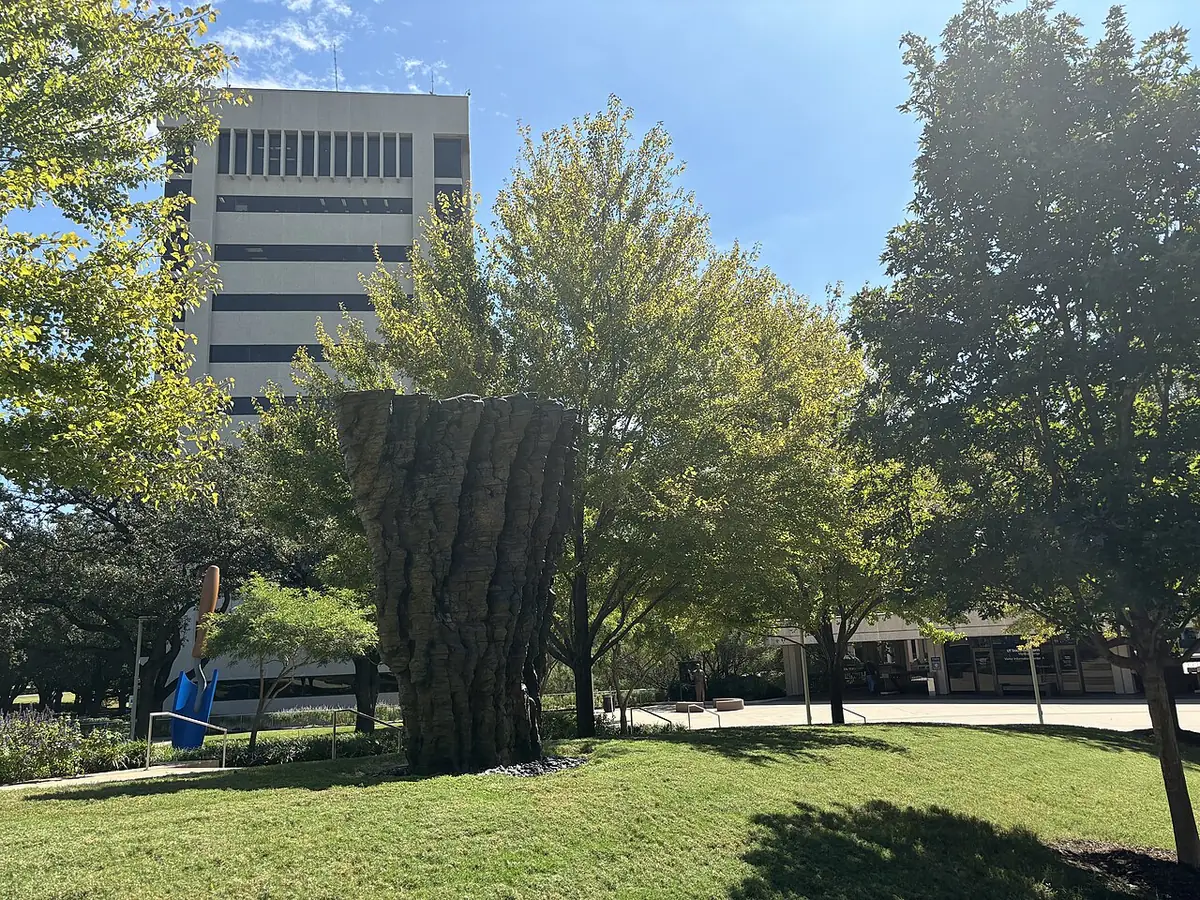
Settling into a rented house in Dallas means reading the city's geography clearly, understanding the real cost of daily life and knowing how the Texan rental market works. This guide walks you through the decision step by step, setting aside received wisdom in favour of concrete reference points.
Get the app
What nobody tells you.
Real prices, hidden costs and the traps to check before you commit.
What renting a house in Dallas really means day to day
Scroll
What renting a house in Dallas really means day to day
Settling into a rented house in Dallas means reading the city's geography clearly, understanding the real cost of daily life and knowing how the Texan rental market works. This guide walks you through the decision step by step, setting aside received wisdom in favour of concrete reference points.
Written by the ting.ad editorial team ·
Main Street, Dallas in Street View: drag to look around.
Beyond the floor area of the home, it is your whole way of life that has to fit the city's particular geography.
Renting a house in Dallas changes your relationship with space, distance and city infrastructure completely. Listings lead with living area and the presence of a yard, but they leave out the reality of driving everywhere and the effect of the Texan climate on your energy budget. Every neighbourhood sets its own rhythm, dictated by how close the main highways are and how the residential blocks are laid out. Understanding those mechanics before you sign a lease is what keeps you clear of hidden costs and geographic isolation.
Generous floor area, at a rent per square metre well below the core of the big coastal metrosvsTotal dependence on a car for the smallest errand, which makes walking almost impossible
Dallas is built around the car. Even a trip for bread needs a vehicle, which loads the transport budget on top of the rent itself.
Green, quiet residential neighbourhoods with well regarded schoolsvsA marked distance from the cultural centres, so every weekend outing has to be planned
The calm of the suburbs is paid for in real separation from the cultural and dining scene of central Dallas.
Modern fittings, open kitchens and private outdoor spacevsHigh electricity bills in summer, because of the constant air conditioning needed to keep the house liveable
Texan summer temperatures demand a powerful air conditioning system running non-stop, which weighs heavily on the monthly running costs.
Does this place match your way of life and your working plans?
Moving to Texas also comes with specific cultural and administrative aspects worth anticipating.
Choosing a rental in Dallas depends closely on your personal circumstances, your family structure and the demands of your job. A busy professional working in the business district will not have the same priorities as a family looking for the quiet of a well rated school district. Reading your daily routine through those lenses is what identifies the exact area that will spare you hours of commuting and needless frustration.
Family with school-age children
Aim first at the well regarded school districts of the northern suburbs or the established residential enclaves. These areas offer houses with yards and a safe environment, but they require you to accept longer journeys to the central employment hubs. Daily life is organised around after-school activities and neighbourhood parks, well away from the buzz of the city.
Rents there run higher, but the stability of the setting repays that for households settling in for the long term.
Young professional without children
Renting a detached house in the inner ring, or a large townhouse, is an interesting compromise between space and access. You get relative proximity to the decision-making centres and the nightlife while keeping a comfortable room to work from home.
Parking and rush-hour congestion will shape your travel times, though, and that calls for real discipline in how you plan the day.
Remote worker
Your freedom of location lets you explore quieter areas, where the space you get for the rent is particularly favourable. You gain a dedicated office room and an outdoor space to break up the day, without living under the pressure of the major highways.
In exchange, you will need to check the quality of the broadband connection, which varies a great deal between subdivisions and between the providers available.
Living there when you arrive from abroad: what actually changes
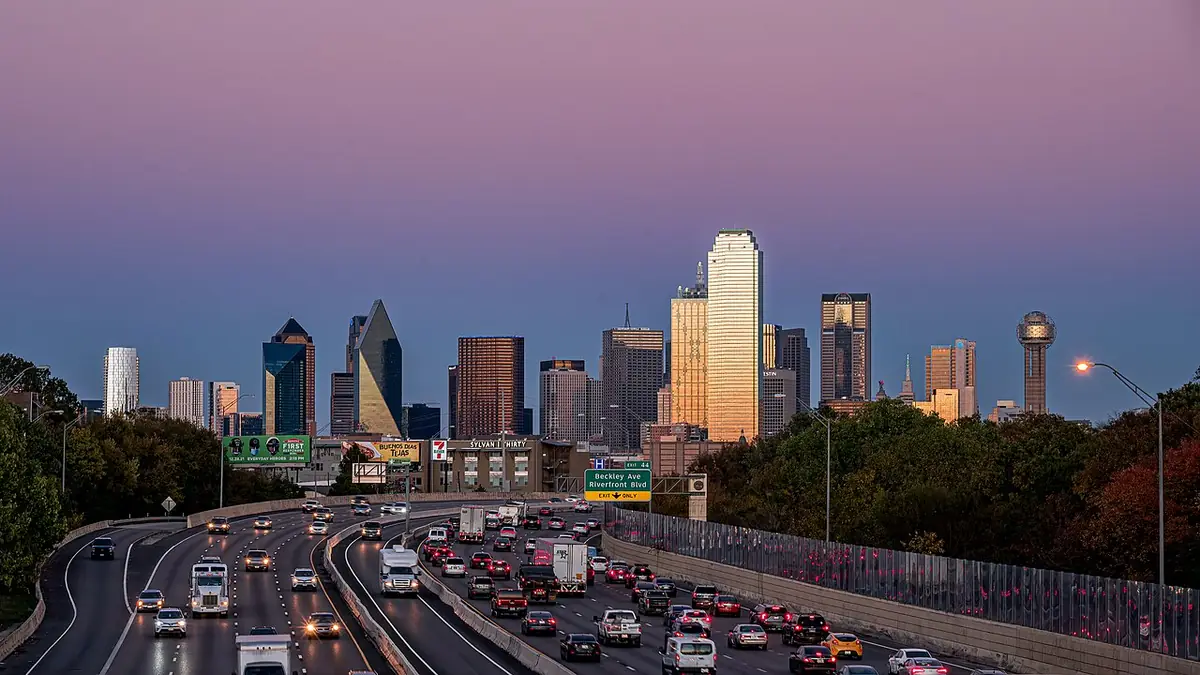
Downtown Dallas glows at dusk above a curving highway — Photo: Shiva Shenoy · CC BY 2.0 · Wikimedia Commons
To pick the right area within this vast urban spread, a methodical comparison of neighbourhoods is the next step.
Arriving in Dallas from abroad forces you to reset a lot of assumptions about housing, mobility and services. There is no historic pedestrian core, the infrastructure is built at an outsized scale, and American leasing works on a different logic, all of which reshapes daily life. Anticipating those structural gaps is what prevents a sense of isolation and gets you into the local fabric faster.
From abroad
Dense city centres where everything is done on foot or by public transport
Dallas
Sprawling development where a car is the only key to shops and services
Budget for buying or long-term hiring a vehicle as soon as you arrive, along with the insurance that goes with it.
From abroad
Tenancy law that is heavily regulated and strongly protective of the tenant
Dallas
Leases governed by the Texas Property Code, often more flexible but demanding when it comes to proving you can pay
Prepare a faultless financial file with translated proof of income and a credit history if you have one. Newcomers with no US credit record are commonly asked for a larger security deposit instead.
From abroad
A network of small local shops within walking distance of the front door
Dallas
Retail organised around large malls and edge-of-town supermarkets
Food shopping happens weekly and in bulk, which calls for real storage space at home.
From abroad
Utilities and health cover largely arranged on your behalf
Dallas
Electricity, water and internet accounts you open yourself, in a climate where summer cooling is the single biggest variable in the bill, plus private health cover through an employer or an individual policy
Open the utility accounts before the move so the air conditioning is running the day you arrive, and check what medical cover your employer actually provides.
Which neighbourhood suits your priorities and your budget?
That geographic variety translates, logically enough, into noticeable differences in what landlords ask.
Dallas is not one centre but an archipelago of neighbourhoods with strongly marked identities. From the urban energy of the areas near Uptown to the residential calm of the inner ring, each district speaks to a particular profile. Measuring real journey times and the everyday atmosphere is what lets you target the zone that fits how you actually live.
Uptown / Oak Lawn
A lively district, walkable in places, with plenty of cafes, restaurants and landscaped green space.
Suits
Working professionals who want to be near the business centres and have an active social life without spending hours in transit.
Trade-off
Distinctly higher rents per square metre, and a housing stock made up mostly of apartments or compact townhouses.
Lakewood
A leafy residential neighbourhood on the edge of White Rock Lake, with the feel of a peaceful, artistic village.
Suits
People who love the outdoors and running, and families after a house with character and a shaded yard.
Trade-off
Strong demand keeps availability thin, and rents are among the highest in the city.
North Dallas / Far North
Large, quiet subdivisions served by big shopping centres and well regarded schools.
Suits
Families with children and professionals who put space, safety and domestic comfort first.
Trade-off
A pronounced distance from the historic centre and total dependence on the car for the smallest errand.
Bishop Arts District / Oak Cliff
A creative, independent neighbourhood with streets of characterful shops and fashionable restaurants.
Suits
Anyone after a bohemian atmosphere, a strong community spirit and eclectic residential architecture.
Trade-off
The urban transition is uneven street by street, and some residential pockets are less consistently quiet than others.
What does renting a house in Dallas actually cost?
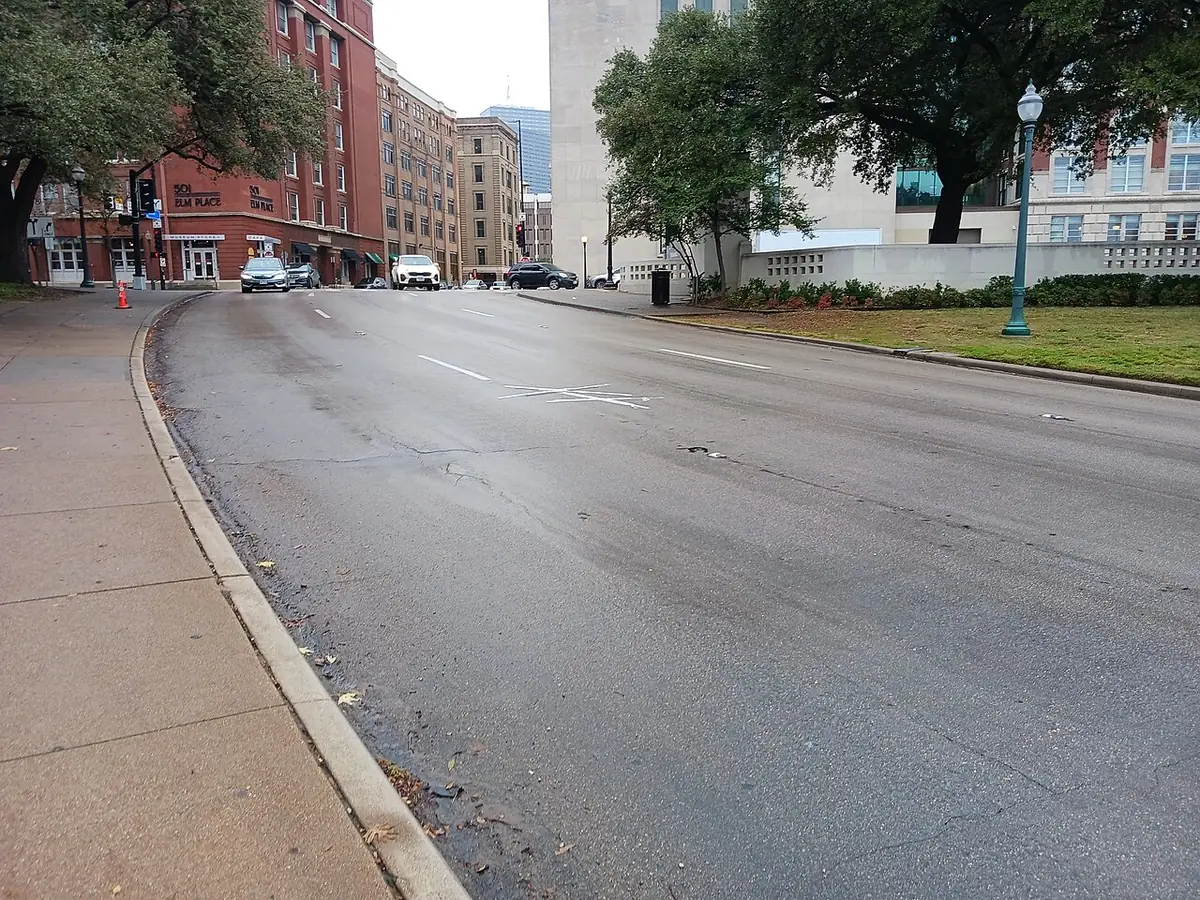
A quiet stretch of downtown Dallas streets, framed by red brick and trees — Photo: Jidanni · CC BY-SA 4.0 · Wikimedia Commons
Knowing the prices is not enough. You also need to understand the legal nature of the arrangement you are about to enter.
The Dallas rental market shows considerable price gaps depending on location, floor area and the age of the property. Beyond the headline rent, you need to factor in everything that comes with Texan life, in particular summer air conditioning and the cost of keeping the outdoor space in order. Having a clear view of the budget ranges is what lets you negotiate calmly with landlords or property management companies.
dallasTo rentHouseestimate
Median price / m²US$13Half the apartments sell below this
Median priceUS$2.2kthe average is 14% higher — a few very large properties pull it up
Most common2 bedrooms63 % of listings
Average size158 m²
By number of bedrooms
Bedrooms
Share of market
Avg price
Price / m²
Avg size
2most common
63 %
US$2.24k
US$14
161 m²
3
31 %
US$2.87k
US$13best value / m²
219 m²
4
6 %
US$3.86k
US$13best value / m²
289 m²
Each row is an average, compared against the area average of US$14 / m². These are indicative estimates of a typical local market, not a measured sample of live listings. Check current listings before relying on them.
What you can actually hold and sign locally
Before you commit financially and hand over any money at all, one fundamental rule applies.
Renting in the United States runs on standardised but adjustable contracts, handled either by institutional landlords or by private owners. Transparency about your financial background is central, as is respecting the lease clauses on looking after the property. Looking at both sides of that contractual market is what secures your move without legal surprises.
Renting through a professional property management company
These firms run whole portfolios of homes. Their leases are rigorous, drafted by lawyers, and call for thorough credit checks, recent pay slips and sometimes an increased deposit for new arrivals from overseas.
What it changesYou get a guaranteed response time on technical repairs, but the rules on ending the lease and the late-payment penalties are applied strictly, with no room to negotiate.
Renting directly from a private landlord
More flexible in the initial negotiation, this kind of contract lets you explain your situation as an expatriate or new arrival with no local US credit history in more human terms.
What it changesIn exchange, how quickly a breakdown or a maintenance job gets dealt with depends entirely on the landlord's availability and goodwill.
The rule to understand before you hand over any money
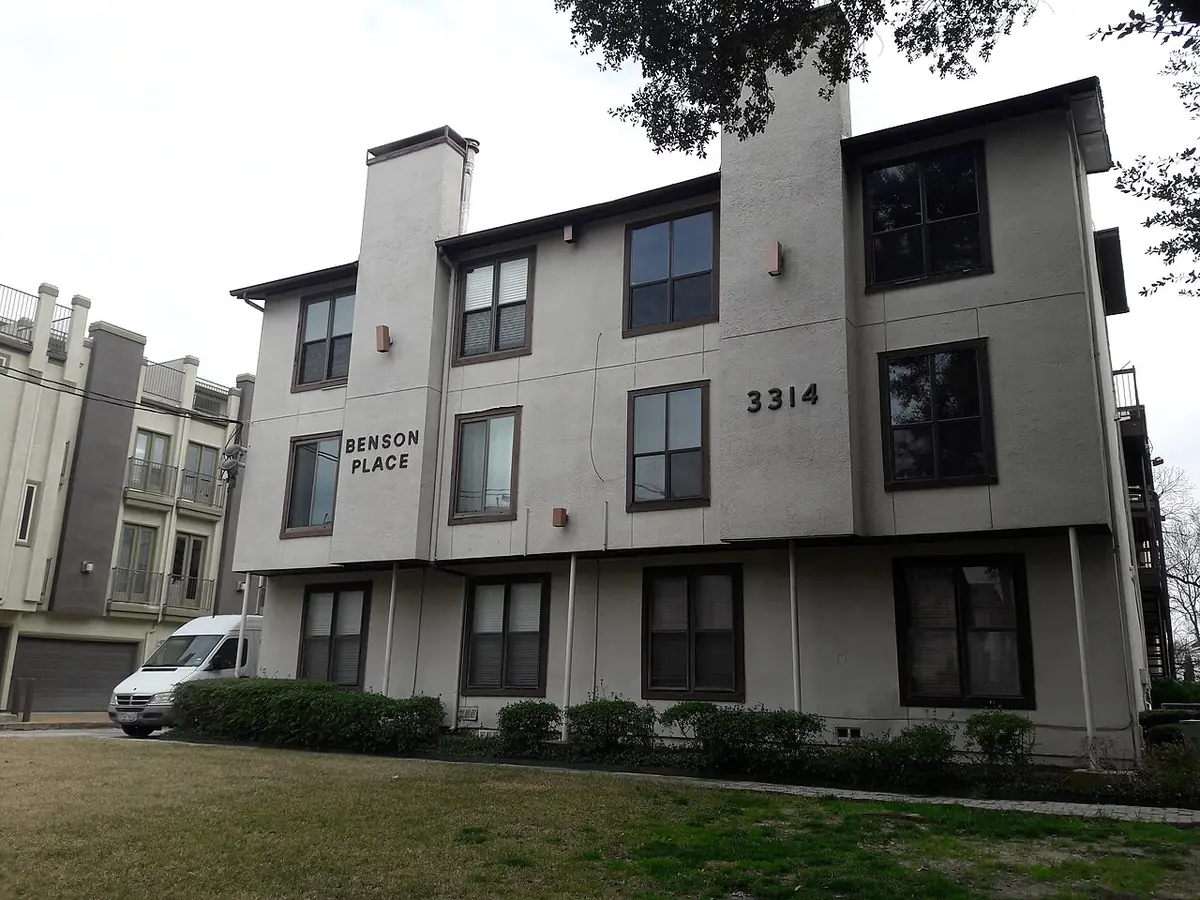
A modern low-rise apartment building typical of Dallas infill housing — Photo: Usernet123u · CC BY-SA 4.0 · Wikimedia Commons
Once those precautions are taken, the practical side of the deal follows a precise calendar you need to master.
The Texan rental market is fast and competitive: an attractive home finds a taker within days. That speed sometimes pushes people into paying a holding deposit too quickly. Understanding the exact sequence of legal and financial checks protects you against scams and against losing money for nothing.
Spotting a home online and arranging a virtual or in-person viewing
Verify the landlord's identity, or that the management company is officially registered with the local authorities.
View the property in detail, paying close attention to the state of the air conditioning, the roof and the plumbing.
Read the lease (Residential Lease Agreement) carefully, along with the rules of any homeowners association (HOA).
Submit your solvency file and your supporting proof of income.
Pay the security deposit into a secure escrow account, never by an unsecured direct transfer.
Final signature of the lease and a joint move-in inspection (Move-In Checklist).
How a rental deal unfolds, step by step
You now have all the factual reference points you need to carry your Dallas housing plan through.
From the first search on the specialist platforms to the handover of the keys, a successful move to Dallas takes about four to six weeks of preparation. Every link in the chain (agent, landlord, tenant, utility providers) steps in at a precise moment to make the move-in possible. Seeing that sequence laid out is what lets you synchronise your departure from home with your arrival here.
The future tenantSetting the working budget and shortlisting target areasFix the maximum rent you can sustain, energy costs and transport costs included.
The local agentSelecting available homes and arranging targeted viewingsThe agent uses the professional MLS databases to find houses matching your criteria.
The future tenantPutting together and submitting the applicationSupply proof of income, identity documents and authorisation for the background check.
The landlord or the agencySolvency review and acceptance of the applicationA credit score check or, for new arrivals, a look at alternative financial guarantees.
The future tenantSigning the lease and paying the initial fundsPayment of the first month's rent and the security deposit by a secure method validated by the agency.
The utility providersOpening the utility accounts (electricity, water, internet)Signing up online before the move is essential so the air conditioning is running when you arrive.
House or apartment in Dallas: how to choose your way of life
Once that first choice about how you want to live is settled, the financial reality of renting in this metro deserves a closer look.
Moving to Dallas means deciding straight away between a detached house and an apartment, two ways of living that have almost nothing in common. The city grew around the car and around sprawl, which makes the house with a yard the historic and cultural norm of the region. Renting one gives you room, an outdoor space of your own and a front door that opens onto the street, but it also hands you a list of upkeep duties written into the lease. Residential neighbourhoods such as Lakewood or Lake Highlands are the clearest expression of that promise of independence.
An apartment, found mainly in the towers of Uptown and Downtown, redefines the daily routine entirely. It suits anyone who wants to be right next to the activity centres, the fashionable restaurants and the transport routes, without the obligation to mow a lawn or watch a roof. The building takes care of the shared infrastructure, from the pool to the front desk, but it also comes with strict rules on noise and neighbours, and with amenity charges folded into a rent you never stop paying.
The living space you get for the same monthly figure can differ by a factor of two between the two options. A house in the inner ring will often give you four bedrooms, a double garage and a private yard for the price of a large, high-specification two-bedroom apartment in the densest districts. The trade-off is measured in journey time and lifestyle: accept living up in the air to win back your evenings, or move slightly further out to breathe in wide open space.
The climate belongs in that decision too. Texan summers are intense and they push the air conditioning in a detached house hard, with energy bills that can climb sharply because of the glazed areas and the high ceilings. Apartments generally benefit from better overall thermal performance thanks to shared walls and the construction of recent blocks, which takes some of the shock out of the July and August bills.
Finally, availability does not behave the same way across the two. Well located houses in sought-after school districts stay in constant demand from local families and new arrivals, which means fewer of them on the market and less room to negotiate at renewal. Apartments feel the cycles of the rental market more directly, and the competition from new blocks coming out of the ground in the fast-changing districts can work in a tenant's favour when the timing is right.
What budget do you really need to live and rent in Dallas?
Beyond the raw figures on paper, it is the shape of an ordinary day that shows you what living here is really like.
Renting in Dallas is not just the headline figure on the listing portals. There is a cost structure specific to Texas sitting underneath it, driven above all by the electricity needed to cool a home through a long, hot summer and by the upkeep duties the lease transfers to you. Tenants should work out what they can sustain month after month, deposit included, before committing to a twelve-month term, so that no line of the budget comes as a surprise.
Typical monthly asking rents by house size in Dallas
Home size
Listings counted
Average monthly rent
Average floor area
2 bedrooms
629
$2,240
161.0 m2
3 bedrooms
314
$2,870
218.8 m2
4 bedrooms
57
$3,860
288.8 m2
Across all sizes the median asking rent is $2,200 and the average $2,500, for an average floor area of 157.5 m2. Rents vary considerably with proximity to the main highways and the quality of the public school districts.
Recurring costs a tenant carries on top of the rent
Cost item
Typical position for a house
Typical position for an apartment
Effect on the budget
Security deposit at signing
Commonly about one month's rent, so roughly $2,200 to $2,500 at the median
Commonly about one month's rent, plus any increase asked of tenants with no US credit record
Paid once, refundable subject to the move-out inspection
Summer electricity for air conditioning
The heaviest line after the rent in July and August, driven by glazed areas and high ceilings
Lower, since shared walls and recent construction insulate better
Seasonal and hard to compress
Yard and exterior upkeep
Usually the tenant's job under the lease: mowing, and watering the perimeter to keep the clay soil stable
Handled by the building and covered by the rent
Time and equipment rather than a fixed bill
Insurance premiums are under strong pressure in Texas because of the regional weather risk (hail and storms). Tenants feel that indirectly, through what landlords ask at renewal.
What does an ordinary Tuesday in Dallas actually look like?
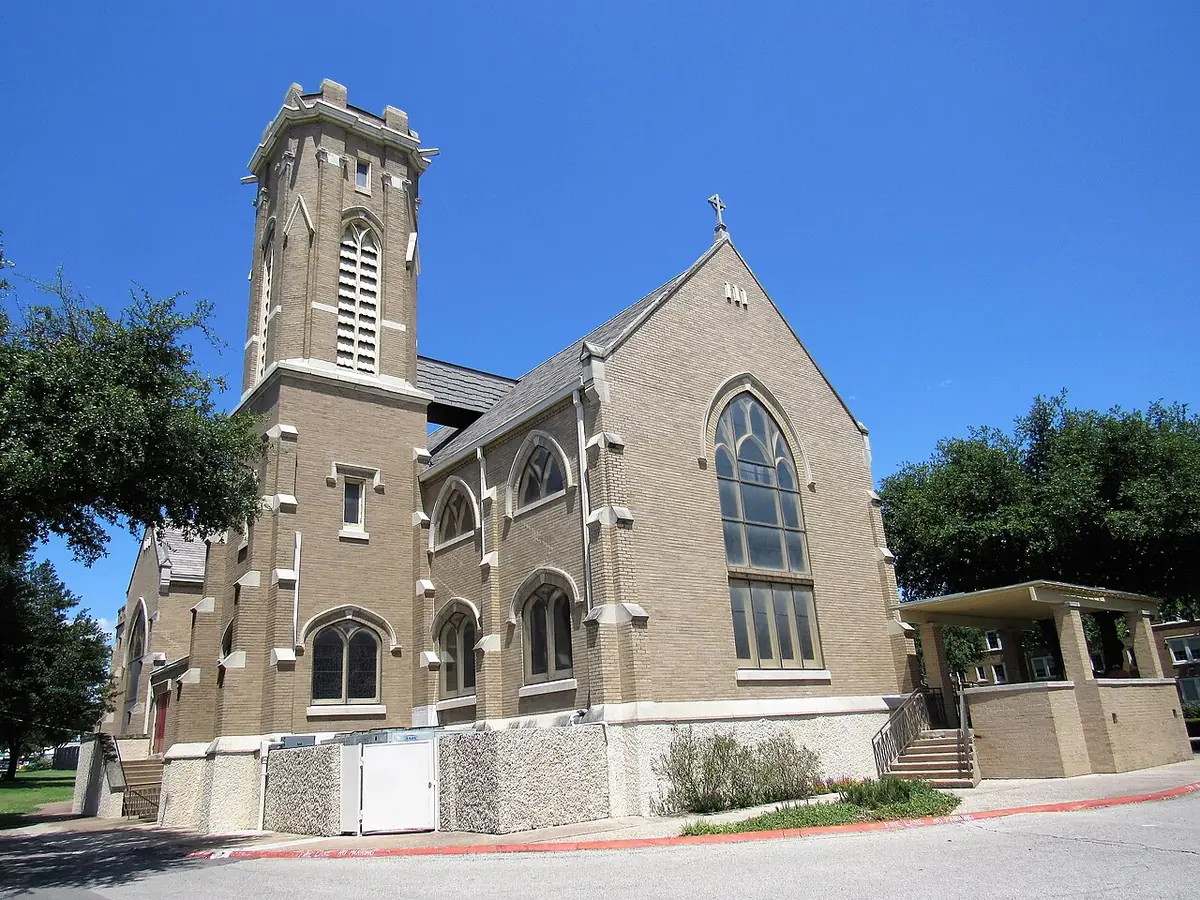
St. Matthew's Cathedral, a Gothic landmark in the heart of Dallas — Photo: Farragutful · CC BY-SA 4.0 · Wikimedia Commons
The practical side becomes second nature with time, but plenty of crucial details escape visitors and new arrivals entirely.
Living an ordinary Tuesday in Dallas shows you immediately how much the local geography shapes the timetable. The city runs on commuting, and the car remains the essential tool for linking residential areas to the big employment hubs such as Downtown, Uptown or the technology corridor in Richardson. Each slot in the day brings its own traffic constraints and reveals the logistics needed to hold together work, family obligations and running a household.
07:15Residential neighbourhood (for example Lake Highlands)Wake up and drive off to drop the children at the local school, allowing for morning traffic on the secondary roads.
08:30Interstate 35E or US-75The commute to work. How smoothly it goes depends directly on the distance and on how much traffic the expressways can absorb.
12:30Business district (Downtown or Uptown)Lunch in a lively business district, often a chance for informal networking or a walk between the office towers.
17:30Local shopping stripA last-minute run to a Texan supermarket (H-E-B or Central Market, say) for the week's provisions, before the evening jams set in.
19:00The family homeHome again: homework, dinner and rest in a quiet, air-conditioned house.
21:30Residential neighbourhoodA peaceful end to the evening in the neighbourhood, wrapping up the day's work and getting ready for tomorrow.
The realities of the rental market that listings leave out
Ignoring these invisible factors leads straight to the disappointments careless tenants discover a few months after moving in.
Rental listings shine through what they choose not to say, because the point is to show the home at its best. Behind the bright photographs and the flattering descriptions sit technical, regulatory and climatic realities specific to Texas that can turn a home you fell for into a monthly drain. Knowing these invisible aspects before you sign the lease is what protects you for the twelve months that follow.
The clay soil under the yard (expansive clay)
Texan soil swells and shrinks with rainfall, which puts considerable pressure on foundations and causes major structural cracks if the perimeter watering is not kept up rigorously. Most house leases put that watering on the tenant, so a neglected summer can become an argument at move-out.
The discretionary power of homeowners associations (HOA)
Many communities have finicky internal rules governing the colour of your exterior paint, the type of bins allowed, or how long a vehicle may sit in the driveway. Those rules apply to you as a tenant even though you never joined the association.
The real age of the roof and the HVAC system
Frequent hailstorms regularly damage roof shingles, and an ageing air conditioning unit is not yours to replace but is very much yours to live with. Ask when the system was last serviced and how emergency repair calls are handled before you sign.
Sharp swings in local property taxes
The appraised value is revised every year by the county. A rapid rise in the neighbourhood's value feeds straight into the landlord's costs, and reappears at renewal in the rent you are asked to pay.
The classic traps people discover six months after moving in
Those disappointments lead naturally to the fundamental question of whether Dallas actually fits the person renting here.
Looked likeA charming, wooded house with big mature trees giving welcome shade in summer.
Turned outInvasive roots that had damaged the underground drains, and dead leaves constantly blocking the gutters.
Would have caught itAsk at the viewing who is responsible for gutters and drains under the lease, and have the move-in checklist record the condition of the trees and downpipes.
Looked likeAn ideal central location, quick to reach every key point of the metro area.
Turned outPermanent noise from an elevated highway or a freight rail line right alongside.
Would have caught itVisit the neighbourhood at different times of day, in particular at rush hour and at the weekend, to gauge the real noise level.
Looked likeA bright city-centre apartment advertised at a moderate monthly rent.
Turned outA renewal offer several hundred dollars higher twelve months later, once the introductory pricing ended and the building's rising costs had been passed on.
Would have caught itAsk before signing how rents in the building have moved at renewal over the last three years, and get any renewal terms in writing.
Looked likeA fast-growing neighbourhood with spectacular short-term potential.
Turned outNo local shops at all, and school facilities undersized for the families moving in.
Would have caught itCheck the City of Dallas planning projects and the official ratings of the public schools attached to the area.
Which kind of renter should stay well away from the Dallas market?
It is time to draw the conclusion and work out whether the moment has come to go ahead.
The general enthusiasm about Texan economic energy sometimes hides deep incompatibilities between the way of life Dallas offers and what some tenants legitimately expect. The city's model rests on very specific assumptions about mobility, tolerance of the climate and how much of your month you are willing to spend in a car. Trying to settle here against those structural realities almost always ends badly.
The committed pedestrian who cannot stand driving
→Renting a large suburban house far out, with no vehicle of their own.
The complete absence of structural public transport outside the city centre makes getting around on foot impossible and turns every trip into a logistical ordeal.
The tenant on an ultra-tight budget with no emergency savings
→Committing to the highest rent an agency will approve, with nothing left in reserve.
High summer cooling bills, a deposit tied up until move-out and the cost of running Texan air conditioning all demand a permanent cushion. Falling behind on rent in Texas moves to eviction quickly.
The lover of dense, historic city life
→Looking for a European heritage atmosphere or hyper-dense century-old neighbourhoods comparable to Boston or San Francisco.
Dallas is a modern, young city in permanent architectural renewal, where the urban fabric favours space, wide arteries and functional development.
So, are you ready to sign a lease in Dallas?
A pocket park offering a green pause in Dallas — Photo: Nightryder84 · CC0 · Wikimedia Commons
Deciding to rent an apartment or a house in Dallas means looking past the headline affordability and taking on a whole way of life. The metro offers considerable personal and professional opportunity, on condition that you accept its rules: the car is everywhere, the summer cooling bill is real, and the upkeep duties written into a house lease are yours. If you have measured those parameters and you expect to stay for more than a single lease term, the local market has solid ground under it.
Whether it works comes down to the rigour of your financial preparation and to choosing your location carefully. Never let yourself be rushed at a viewing, and surround yourself with independent local professionals (agents, inspectors, property managers) who genuinely act in your interest. Every Dallas neighbourhood has its own identity and speaks to a particular way of living, and the job is to line that up with what you actually want.
In the end, renting in this large Texan metro is a serious twelve-month commitment that rewards method and clear thinking. Take the time to drive the different areas, to test the journeys at rush hour, and to budget every cent of what you will pay on top of the rent. When all those lights are green, you can sign your lease with confidence and settle properly into your new home.
Related questions
How much is the security deposit on a Dallas rental?
Landlords and management companies in Dallas generally ask for about one month's rent as a security deposit, paid into a secure escrow account at signing. It is refundable at the end of the lease, minus anything the move-out inspection charges against it.
Do you absolutely need a car to live in Dallas?
Yes. Owning a vehicle is essential to live comfortably in Dallas, because of the urban sprawl and the shortage of public transport outside the city centre.
What is the best time of year to look for a rental in Dallas?
The market is at its busiest in spring (March to June), which gives you the widest choice of homes, while autumn and winter bring less competition but a narrower selection.
Can foreigners rent easily in Texas?
Yes. Texas law places no particular restriction on renting by foreign nationals, whether resident or not. What matters to landlords is proof of income and a credit history, and newcomers without a US credit record are often asked for a larger deposit instead.
What is an HOA, and does it affect me as a tenant?
An HOA (Homeowners Association) manages the common areas of a community, sets rules on appearance and security, and collects compulsory monthly dues from owners. The dues are the landlord's to pay, but the rules apply to you while you live there.
Which type of home holds its rental value best?
Detached houses in top-rated school districts have historically kept the strongest and steadiest demand, which shows up as fewer vacancies and firmer rents over the long term.
How long does it take from first search to getting the keys?
Allow roughly four to six weeks in Dallas between starting the search and moving in, covering viewings, the application, the solvency check, signing the lease and opening the utility accounts.
What do I have to pay at signing?
You normally pay the first month's rent and the security deposit together at signing, by a secure method validated by the agency, never by an unsecured direct transfer.
How do I deal with the shifting clay soils in Texas?
Most Dallas house leases put perimeter watering on the tenant, precisely to keep the soil moisture stable around the foundations. Record any existing cracks on the move-in checklist and report new movement to the landlord in writing straight away.
What effect does the climate have on insurance costs?
Hailstorms and extreme weather events in north Texas keep pushing home insurance premiums up. As a tenant you need renters insurance for your own belongings, since the landlord's policy does not cover them, and you should expect that wider pressure to surface at renewal.
Property review of ting
No ting properties in Dallas yet
Be the first — share it on ting and it shows up right here.