Finding a house to rent in Glasgow means decoding a busy market with rules of its own. Between choosing among the residential districts, pricing the running costs accurately and getting to grips with the Scottish tenancy system, this guide walks you through the decision step by step.
Get the app
What nobody tells you.
Real prices, hidden costs and the traps to check before you commit.
Does renting a house in Glasgow really buy you the space you are hoping for?
Scroll
Does renting a house in Glasgow really buy you the space you are hoping for?
Finding a house to rent in Glasgow means decoding a busy market with rules of its own. Between choosing among the residential districts, pricing the running costs accurately and getting to grips with the Scottish tenancy system, this guide walks you through the decision step by step.
Written by the ting.ad editorial team ·
Chalmers Gate, Glasgow in Street View: drag to look around.
Beyond raw floor area, what daily life feels like depends entirely on your profile and on your working and personal habits.
Renting a house in Glasgow is not a matter of comparing raw square metres. The initial promise of a spacious home runs quickly into the reality of Victorian and Edwardian layouts, which tend to be heavily compartmented. Tenants find themselves trading gross floor area against the real thermal efficiency of these period houses. Working through those compromises is how you understand what your rental budget actually buys on the ground.
Floor area that looks generous on papervsA fragmented layout that cuts down what you can really use
Big volumes under high ceilings increase the space you have to heat without necessarily giving you the open living areas modern life expects. How comfortable it feels comes down directly to whether the insulation has been upgraded.
A private or shared gardenvsDemanding upkeep in a demanding maritime climate
Having outdoor space in Glasgow changes daily life completely, but it brings a real maintenance load with it. Lawns and stone garden walls need regular attention if standing damp is to be kept at bay.
Distinctive, sought-after period architecturevsLimits on what you can alter, tied to heritage protection
Period detail gives every rented house a character of its own, but it rules out any quick structural change. Fitting modern equipment or rethinking the kitchen needs the landlord's agreement and has to respect local rules.
Which kind of tenant finds their balance in a Glasgow house, and in which districts?
For tenants arriving from abroad, the administrative and cultural bearings change completely.
The market for rented houses in Glasgow serves very different profiles whose expectations diverge sharply. Between families looking for parks and schools within reach, and mobile professionals after quiet close to the transport links, the city makes you choose. Each situation implies precise trade-offs on location and on the type of property to target if you want to avoid disappointment.
Remote worker
Working from home in a Scottish house means finding a way to keep street noise out of the rooms that face the road. Residential districts a little further from the centre give you the floor area to set up a proper closed study without eating into the living space. Whether a stable fibre connection is available has to be checked before you sign the lease, because the infrastructure varies sharply from one street to the next.
Household with children
Renting a house with several bedrooms means targeting areas with a dependable school transport network and safe green space nearby. Parents should measure the real journey time at peak hours to the places they work. An enclosed garden becomes a central criterion for the family's day to day safety and wellbeing.
Young urban professional
If you put a busy neighbourhood and immediate access to cafes and music venues first, a detached house is rare and expensive. Upper and lower conversions or terraced houses in the regenerating areas offer an interesting compromise. You have to accept giving up the large private garden in exchange for being more centrally placed.
What genuinely changes between renting where you come from and renting in Glasgow?
A striking sandstone building with matching gothic-style gables in Glasgow — Photo: Michal Klajban · CC BY-SA 4.0 · Wikimedia Commons
Once those rules are understood, the district you settle in will decide the quality of your daily life in Glasgow.
Moving from most rental markets into the Scottish system holds several structural surprises for newcomers. From deposits held by approved third parties to the rules governing open-ended tenancies, habits have to be reset entirely. Understanding these fundamentals saves you misunderstandings when you put your application together and when the check-in inventory is drawn up.
From abroad
Tightly controlled rents and standardised fixed-term leases
Glasgow
A flexible private rented sector built on open-ended tenancies
The Private Residential Tenancy gives you a great deal of flexibility from the outset, but the clauses on rent review need negotiating carefully. The contractual relationship rests on a legal framework built around mutual protection and direct negotiation.
From abroad
A deposit paid straight to the landlord or the agency
Glasgow
The deposit must be lodged with an approved tenancy deposit scheme
The deposit money sits in a secure independent account, which protects the tenant against abuse at the end of the tenancy. Any deduction has to go through a formal process and be backed by evidence.
From abroad
An informal walk-through inventory agreed between the parties
Glasgow
A detailed, photographed check-in inventory drawn up by professionals
The check-in inventory is an exhaustive legal document and the absolute reference point when you leave. Failing to note the smallest defect when you move in can cost you dearly when the deposit is returned.
From abroad
An occupancy tax set by the same national rules everywhere
Glasgow
The Council Tax, based on the assessed valuation band of the property
The Council Tax varies considerably with the band assigned to the house and sits on top of the monthly rent. This fixed local tax has to go into your overall budget from the very first calculation.
Which Glasgow districts should you favour when renting a house?
Knowing the districts lets you tackle the crucial question of what renting a house really costs.
Choosing the right area in Glasgow depends as much on your budget as on how much daily travel you can tolerate. Every zone has its own architectural identity, its own atmosphere and its own level of public transport. People after residential quiet will not be looking at the same streets as those who want permanent cultural energy.
West End
A lively atmosphere, bordered by magnificent green space and remarkable Victorian architecture.
Suits
Families and professionals after a prestigious, culturally rich setting.
Trade-off
An extremely tight market and some of the highest rents in the city.
Southside
A lively village feel, built around well used parks and independent shops.
Suits
Those who want neighbourhood warmth, green parks and quick access to the centre in one place.
Trade-off
Rental demand rising sharply, which narrows the choice of available properties.
East End
An area in the middle of urban change, mixing restored industrial heritage with creative ventures.
Suits
Tenants looking for more space on a budget that stays under control.
Trade-off
Marked differences from one street to the next in services and in liveliness.
What budget should you plan for renting a house in Glasgow without nasty surprises?
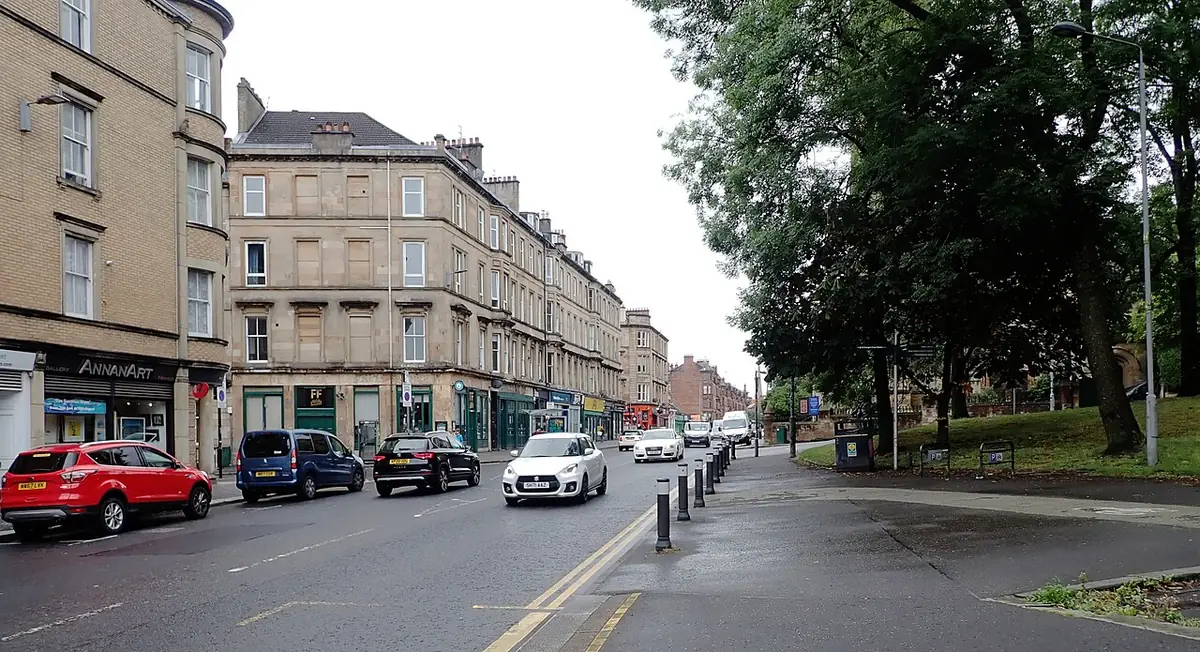
Streets like this, tenements over shops, are everyday Glasgow — Photo: habiloid · CC BY-SA 2.0 · Wikimedia Commons
Beyond the financial side, the type of property you will actually live in deserves a close look.
The figure shown on a rental listing in Glasgow never reflects the full monthly bill. Between the net rent, the Council Tax due to the council and the energy bills tied to the insulation of older houses, the overall envelope deserves a careful calculation. This table sets out the orders of magnitude observed, so you can build your own financial forecast.
glasgowTo rentHouseestimate
Median price / m²£12Half the apartments sell below this
Median price£1.61kthe average is 14% higher — a few very large properties pull it up
Most common2 bedrooms60 % of listings
Average size123 m²
By number of bedrooms
Bedrooms
Share of market
Avg price
Price / m²
Avg size
2most common
60 %
£1.52k
£13
114 m²
3
33 %
£1.94k
£12best value / m²
158 m²
4
7 %
£2.38k
£12best value / m²
201 m²
Each row is an average, compared against the area average of £13 / m². These are indicative estimates of a typical local market, not a measured sample of live listings. Check current listings before relying on them.
Victorian townhouse or recent build: which architectural compromise should you take on?
Once you have settled on the type of property, the signing process follows strict rules that are worth following to the letter.
Glasgow's rental market sets two visions of housing against each other: the historic charm of dressed stone and the technical performance of contemporary construction. Each option changes your thermal and acoustic comfort profoundly, and your monthly energy budget with it. Choosing between these two worlds is one of the decisions that will shape your daily life most.
The charm of Victorian and Edwardian houses
These properties offer exceptional volumes, remarkable ceiling heights and authentic period detail. Their visual character is unmatched and their place in the historic districts guarantees a real neighbourhood life. Against that, their original insulation calls for a bigger heating budget and demands constant vigilance about damp.
What it changesYou get a prestigious and authentic setting, at the price of a heavier energy bill and more delicate upkeep.
The efficiency of modern and refurbished builds
These recent or fully refurbished properties come with proper thermal insulation standards, modern double glazing and optimised internal layouts. Energy consumption is markedly more predictable and easier to control. Against that, the volumes tend to be more standard and the exterior architecture can lack the picturesque character some tenants are looking for.
What it changesYou gain immediate thermal comfort and budget control, at the cost of historic architectural authenticity.
What is the exact order of events for securing a rented home in Glasgow?
Terraces like this crescent are some of Glasgow's most sought-after streets — Photo: habiloid · CC BY-SA 2.0 · Wikimedia Commons
To keep that process calm, here is how the people involved typically fit together from start to finish.
Landing a rented house on a market as tight as Glasgow's is not something you improvise. Speed of reaction has to be paired with faultless administrative rigour if you are going to convince landlords and agencies. Following this logical chain is what puts your application at the top of the pile.
Set the overall budget precisely, including the Council Tax and the running costs
Prepare a complete file with proof of income, references from previous landlords and identity documents
View selectively and check the general condition, the plumbing and the heating system on the spot
Put in a formal application to rent, stating what you want in terms of the move-in date
Reference and affordability checks by the agency, then mutual agreement on the terms of the tenancy offered
Signing the tenancy agreement electronically, lodging the deposit with an approved tenancy deposit scheme and completing the check-in inventory
Who is involved at each stage of your move into a rented home, and what exactly do they do?
A tenancy that works rests on clear cooperation between people with well defined roles. Understanding who does what lets you anticipate who to contact when something technical or administrative comes up during your lease. This division of labour is what gives the Scottish legal framework its shape.
The letting agencyRunning viewings and shortlistingIt organises the viewings, collects the applications and runs the reference and affordability checks on prospective tenants before putting profiles to the landlord.
The landlordApproval and the major decisionsThey make the final call on which tenant to take and remain responsible for the heavy structural work needed to keep the property compliant, along with their own landlord registration.
The tenancy deposit schemeHolding the money safelyAn independent third party, it holds the deposit for the whole length of the tenancy so that the end of the contract is settled fairly.
The tenantLiving there and day to day upkeepThey pay the rent and the Council Tax on time, and keep the home and its outdoor space in good order from day to day.
The council servicesCollecting the Council TaxThey issue the local tax bill attached to the property and run the associated public infrastructure in the neighbourhood.
House or flat in Glasgow: weighing Victorian character against modern practicality
That split between shared buildings and individual homes leads straight to the central question of what the whole thing costs each month.
Renting in Glasgow means choosing between two radically opposed building types that dictate how their occupants live. On one side, the traditional flats set in red or blond sandstone tenements inherited from the Victorian and Edwardian city embody the look Glasgow is known for. Their generous volumes, with ceilings over three metres and big sash windows, win people over immediately, but they hide complicated structural realities. These older buildings, usually managed by an appointed managing agent known as a factor, come with unpredictable maintenance work, particularly on slate roofs and on stone facades exposed to the Scottish weather. A tenant does not pay those bills directly, but scaffolding, a leaking close or a stalled roof repair will shape a year of living there.
At the other end, detached and terraced houses, whether single storey cottages on the outskirts or larger villas in the western residential districts, offer real independence. There are no collective decisions held up by neighbours at a fractious owners' meeting: the property is one whole, from the roof to the private garden, and you deal with one landlord about all of it. That independence is paid for by being noticeably further from the busy transport corridors and from where the cultural life happens. Houses with space command a higher rent and sometimes heavy energy bills in older, poorly insulated structures, despite recent efforts to bring them up to thermal standard.
The type of home you choose feeds directly into how you live in the city. Taking a flat in an area like Finnieston or Hillhead means immediate access to a walkable neighbourhood, where the local cafes, the bars and the public transport are at the foot of the stair. Against that, the absence of private outdoor space makes itself felt as soon as the good weather arrives, pushing you out into public parks like Kelvingrove or the Botanic Gardens. Tenants therefore have to weigh how much they value the daily time saved by being central against the space and freedom of a house with a garden.
The longer term budget finishes the argument. Flats generally show a higher rent per square metre in the sought-after districts, and while the factoring fees for the shared parts fall to the owner rather than to you, a badly run building translates into disruption and into pressure on the rent at review. Houses make monthly costs easier to plan, since heating and garden upkeep are the main variables and both are in your hands, but they concentrate the risk of a long commute if the area you pick loses its transport or its shops. Your own profile, whether you are a young professional who wants mobility or a household looking for several settled years, decides how that equation balances.
What budget do you really need to live comfortably in Glasgow as a tenant?
With that financial frame in place, it helps to understand what a typical week looks like in the middle of this city.
Building a rental and living budget in Glasgow means looking well beyond the rent shown on the listing. Where a purchase would run through Scottish solicitors and the sealed bids of a closing date, a tenancy has its own up-front costs: the deposit lodged with an approved scheme, the Council Tax that lands in your name and the running charges. Bringing local taxes, insurance and recurring costs together is what keeps the first months after the move free of financial shocks.
The essential housing and tax costs for a tenant
Cost item
Typical order of magnitude
Effect on the overall budget
Council Tax (Band D)
1,400 to 1,700 GBP per year
A compulsory tax owed to the council, based on the assessed value of the property as at 1 April 1991, and normally billed to the tenant.
Tenancy deposit lodged with an approved scheme
1,610 to 1,830 GBP up front
Roughly one month's rent, from the median (1,610 GBP) to the average (1,830 GBP) for a house in Glasgow. It is held by an approved scheme, not by the landlord, and returned at the end of the tenancy.
Contents insurance
300 to 600 GBP per year
The landlord insures the structure of the building; the tenant covers their own contents against water damage and storms.
Electricity and gas (standard household)
120 to 250 GBP per month
Varies considerably with the EPC energy rating and with how exposed the property is to the prevailing winds.
The figures given depend directly on the size of the property and on exactly where it sits among Glasgow's postcode sectors.
Everyday running budget and services
Service category
Observed cost
Notes for the tenant
Public transport (monthly Subway and bus pass)
75 to 110 GBP per month
Essential for daily travel if you work in the centre without a dedicated parking space.
Broadband internet (standard fibre)
30 to 50 GBP per month
Several providers on the Openreach network, which covers the great majority of the city.
Food and local market shopping for a household
350 to 550 GBP per month
Covers the weekly shop at the mainstream supermarkets and neighbourhood markets for fresh produce.
These estimates reflect the averages observed on the Scottish market and can move with energy price inflation.
Health, schools and getting about: what an ordinary Tuesday in Glasgow really looks like
Detached villas like this show the grander end of Glasgow's housing stock — Photo: Michal Klajban · CC BY-SA 4.0 · Wikimedia Commons
Beyond that well oiled routine, a closer look at the rental market reveals things future tenants are rarely told.
To grasp what a place is really like to live in, nothing beats watching an ordinary weekday. Between the state primary schools, the public transport network with its famous circular underground nicknamed the Clockwork Orange, and access to NHS Scotland services, every district shows its own logistical character and its own level of ease.
08:15School drop-off around PartickThe local state primaries take in the children of the neighbourhood in a well supervised setting, with safe walking routes but dense car traffic at peak times.
09:00Journey into the business district on the SubwayThe underground network carries passengers quickly from the western stations to Buchanan Street, and is remarkably punctual despite the age of the trains.
12:30Lunch break and local shoppingThe local shops on Byres Road make it easy to pick up fresh local produce while enjoying the constant trading activity of the street.
17:00A visit to the local GP practiceYou register with the General Practitioner for your area as soon as you have moved in, which secures access to healthcare covered by the public service.
18:30Exercise in Kelvingrove ParkThe urban green spaces fill up at the end of the day with residents out running or using the public sports facilities.
What the beautiful letting photographs will never tell you about Glasgow
These physical constraints explain why some tenants arrive full of enthusiasm only to lose heart a few months later.
Rental listings reliably sell the light in Victorian flats and the calm of tree lined streets. Yet the experience of long standing residents brings out major technical and structural constraints that a courtesy viewing simply cannot reveal. Spotting these invisible details is what protects you across the length of a tenancy, and what tells you which questions to put to the landlord before you sign.
Chronic damp in old stone walls
Because of the wet maritime climate of Scotland's west coast, dressed stone walls with no damp proof course frequently suffer from water ingress and condensation. Putting it right calls for specific ventilation measures and costly breathable renders, so ask what has already been done and how the property is meant to be aired.
The lack of agreement among owners in a tenement
Repairing a shared roof needs every owner in the building to agree. If a single one refuses to pay their share for financial reasons, the waterproofing work is blocked, which leaves top floor flats exposed to serious damage and leaves their tenants living with the consequences.
Insufficient thermal insulation in period buildings
Despite double glazing, the large volumes under high ceilings and the solid stone make heating expensive through the long Scottish winter. Improving the energy performance rating often runs into the strict rules governing listed buildings, which means the bill stays where it is for the length of your lease.
Residential parking full to bursting at night
In sought-after areas such as Shawlands or the West End, finding a space for your car in the evening is a permanent challenge. Paid parking permits are spreading and add to the annual cost of running a car without guaranteeing a space outside your door.
The renting mistakes you only discover after a full winter in Glasgow
Faced with those concrete risks, it is fair to ask whether renting a house in Glasgow really suits every profile.
Looked likeA charming top floor flat with exposed beams and a panoramic view over the city roofs.
Turned outA thermal sieve, overheated by the sun in summer and freezing from the autumn on, with repeated water ingress through poorly maintained roof windows.
Would have caught itAsking to see the energy performance certificate and the record of recent roof and window work, and getting the state of the roof written into the check-in inventory before you sign.
Looked likeAn extremely calm and peaceful residential street, seen on a sunny Sunday afternoon viewing.
Turned outA major traffic relief route that comes alive from 7:00 am on weekdays, making it impossible to open the windows on the street side.
Would have caught itViewing several times at different hours, in particular on a weekday morning at peak time and on a Friday evening.
Looked likeA property advertised at a very attractive rent compared with the averages for the area.
Turned outThe reflection of a building whose owners are in serious dispute over unpaid shared charges, with major compliance work outstanding and repairs left undone for months.
Would have caught itAsking the letting agent who the factor is, what shared work is planned, and how long recent repairs have taken in that building.
Looked likeAn exceptional central location where everything is walkable without owning a car.
Turned outConstant night time noise from the pubs and late venues on the ground floor of the building.
Would have caught itChecking what businesses trade at the foot of the building and how well the floors between storeys are soundproofed.
Who should think twice before renting a house in Glasgow?
It is time to lay the ground for the final decision on whether the Scottish move is right for you.
Renting in Glasgow has undeniable attractions, but it asks for a particular temperament and a particular financial discipline. Some tenants set themselves up for a quick disappointment because of the gap between wanting everything turnkey and the administrative and climatic reality of the Scottish market.
The tenant who wants a completely hands off arrangement
→To take a flat in an older tenement without ever engaging with how the building is run.
Upkeep in Glasgow's shared buildings depends on the owners acting together through the factor. As a tenant you need to know who the factor is and how to report a fault through your landlord, otherwise a leak in the close or a stalled roof repair simply drags on.
The renter with no tolerance for disruption or unplanned spending
→To sign for a Victorian house or flat without setting anything aside as a buffer.
Older property demands constant maintenance. Every hard winter brings its share of small waterproofing or plumbing faults, and while repairs are the landlord's responsibility, you need the patience for the work and the cash flow for higher heating bills in the meantime.
The household that depends on steady sunshine and settled weather
→To settle in without coming to terms with the particular weather of Scotland's west coast.
The short winter daylight and the frequency of wet spells can weigh heavily on people who are not prepared for this cool, damp maritime climate.
So are you genuinely ready to rent a house in Glasgow?
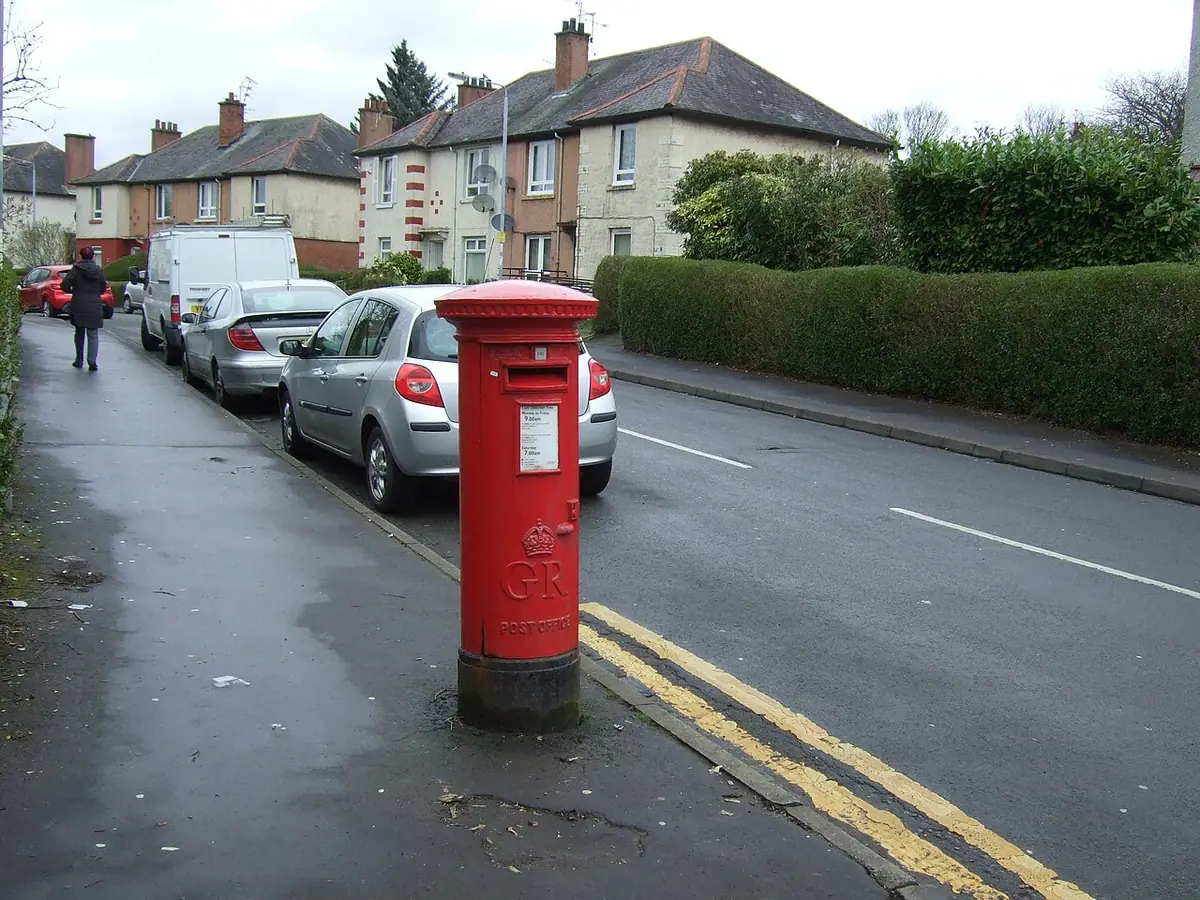
Quiet residential streets like this sit just off Glasgow's main roads — Photo: JThomas · CC BY-SA 2.0 · Wikimedia Commons
Reaching the end of this analysis means you can now measure the distance between the romantic picture of Scottish life and the technical reality of its rental market. Renting in Glasgow is not a matter of signing for a handsome living room with a period fireplace: it is accepting entry into a distinctive legal system, governed by open-ended Private Residential Tenancies and by deposits held outside the landlord's hands, where every line of the energy performance certificate and the check-in inventory counts as much as the beauty of the sandstone.
Whether this works for you depends entirely on how clear eyed you are about the physical constraints. If you have come to terms with how a tenement is maintained, budgeted properly for heating an older building, and accepted the rhythm of a big, lively, rainy city, then the Glasgow market will give you a setting of extraordinary cultural and human richness. The western and southern districts are full of opportunities for anyone willing to look past appearances.
Take the time to check your overall financial envelope, folding in the Council Tax, the deposit, your contents insurance and a solid cushion for the weather and for the building. View more than once, at unsocial hours, talk to the future neighbours, and insist on full transparency about the property's repair history and about who the factor is. Glasgow stone is solid and generous, but it does not forgive tenants who commit to it without preparation.
Related questions
How does the application process actually work when a house comes up to let in Glasgow?
On a tight market a letting agent will usually set a deadline for applications rather than take the first person through the door. Each applicant submits their file without knowing what the others have put forward, so it pays to judge the property honestly against the advertised rent and to have your references ready before you view.
What does the energy performance certificate tell you before you sign a lease in Scotland?
Any property advertised to let has to come with an energy performance certificate. It rates how much the building will cost to heat, which matters a great deal in old Glasgow stone, and alongside the check-in inventory it is the document a tenant should read most carefully before committing.
What does a factor do in a Glasgow tenement, and does it concern you as a tenant?
A factor is a professional company or body appointed to manage the upkeep of the shared parts of a tenement. It arranges the cleaning, coordinates roof repairs and splits the cost between the owners. The bill goes to your landlord rather than to you, but how diligent the factor is decides whether the close and the roof above you are properly looked after.
Can someone arriving from abroad rent a property in Glasgow easily?
There is no particular legal restriction stopping non-residents or foreign nationals from taking on a tenancy in Scotland. Letting agents do, however, ask for rigorous proof of income and a verifiable record of reliable payment, and a reference from a previous landlord carries real weight.
Which districts are the most sought after for renting a house in Glasgow?
The West End, around Byres Road and Hillhead, along with the Southside taking in Shawlands and Strathbungo, are among the most attractive and liveliest areas. They appeal for their closeness to green space, to local independent shops and to transport.
How long does it take to go from a viewing to holding the keys?
Letting moves far faster than buying: a purchase in Scotland, from the seller accepting the offer to the handover of keys, generally runs six to eight weeks, whereas a tenancy decision is usually made within days of the application deadline. The delay is then set by the reference checks and by the move-in date agreed with the landlord.
What taxes and up-front payments apply when you take on a tenancy in Glasgow?
Renting does not attract the Land and Buildings Transaction Tax, which replaced the old stamp duty and is charged in progressive bands on a purchase price. What a tenant pays instead is a deposit, which must be lodged with an approved tenancy deposit scheme, and the Council Tax on the property once the tenancy starts.
How is the Council Tax worked out for a home in Glasgow?
The Council Tax is an annual local tax paid to the council to fund local public services, and in a private tenancy it is normally the tenant's bill rather than the landlord's. The amount depends on the valuation given to the property in 1991, banded from A (the lowest) to H (the highest).
Is it possible to negotiate the advertised rent in Scotland?
Negotiation depends directly on how tight the local market is. If a house draws a long queue of applicants by the closing deadline, the agreed rent often lands at or above the advertised figure. On a quieter market, an offer below the asking rent, or a request that garden upkeep be included, remains perfectly possible.
How can you check the insulation of an older property in Glasgow before you commit?
It is worth reading the energy performance certificate closely and asking to have the external walls and the loft looked at by someone independent, so that any cold bridging or damp problems come to light. The answers the landlord gives on heating and ventilation before signing are a good measure of how the property is run.
Property review of ting
No ting properties in Glasgow yet
Be the first — share it on ting and it shows up right here.