Buying a house in Glasgow calls for a clear grasp of what makes the Scottish market distinct and of the character of its individual neighbourhoods. This guide walks you through the process step by step, from reading the survey reports to concluding the transaction, so you can secure your investment with confidence. Make your decisions calmly, with clear and verified reference points.
Get the app
What nobody tells you.
Real prices, hidden costs and the traps to check before you commit.
Why the charm of Scottish stone hides an insulation problem
Scroll
Why the charm of Scottish stone hides an insulation problem
Buying a house in Glasgow calls for a clear grasp of what makes the Scottish market distinct and of the character of its individual neighbourhoods. This guide walks you through the process step by step, from reading the survey reports to concluding the transaction, so you can secure your investment with confidence. Make your decisions calmly, with clear and verified reference points.
Written by the ting.ad editorial team ·
Chalmers Gate, Glasgow in Street View: drag to look around.
Beyond the fabric of the walls, it is your daily routine that will decide which area suits you.
Buying an older house in Glasgow gets you exceptional architectural character, with red or blond sandstone frontages and generous room proportions. That outward beauty, however, conceals thermal and structural realities you need to anticipate from the very first viewing. The energy performance of these historic buildings often demands significant investment before they reach modern standards of comfort. You have to weigh the genuine charm of the stone against the reality of winter heating bills.
The architectural character and the high ceilingsvsThe thermal mass of solid stone walls
Large rooms are instantly seductive at a viewing, but they also mean a lot of air to heat through the cold months. Stone holds the chill and calls for a heating system sized to keep an even temperature in every room of the house.
The heritage character of the historic neighbourhoodsvsThe strict constraints of local planning rules
Owning a listed house, or one inside a protected area, sharply limits what you can change outside. Replacing windows or insulating externally is governed by very rigorous rules that push renovation costs up.
The legendary durability of traditional masonryvsThe vulnerability of old roofs to the weather
The walls may stand for centuries without flinching, but the slates and roof flashings take the full force of the region's wind and rain. A careful inspection of the roof structure and of the waterproofing above is indispensable before you sign anything final.
What kind of daily life are you looking for when you settle in Glasgow?
Where you land geographically completely resets the reference points you arrive with.
Choosing a house in Glasgow depends closely on your relationship with the city, somewhere between the cultural buzz of the central districts and the residential calm of the outer areas. Each area shapes your daily journeys, your access to green space and the character of your neighbours. Thinking through your work and leisure habits helps you avoid the common mistake of picking an area purely on how it looks. The local market offers strikingly different atmospheres from one street to the next.
The urban, high-energy choice
You will naturally gravitate towards the lively districts close to the city centre or the West End. Houses there are rarer and often subdivided, but a few terraced gems and small single-family properties give you immediate access to the Subway, the theatres and the restaurants. Your daily life happens on foot or by public transport, cutting car use dramatically. In exchange, parking becomes complicated and the urban noise level is higher day to day.
The residential, family choice
You will focus your search on the established residential neighbourhoods a little further from the bustle, such as the areas near the big parks or the well-connected suburbs. Houses there generally come with a private garden, a garage and more living space for a household. Access to well-regarded schools and to sports facilities is much easier. The flip side is longer daily journeys into the heart of Glasgow at peak times.
The in-between, well-connected choice
You will target the neighbourhoods in transition or the waterside areas that have benefited from recent regeneration projects. These areas let you buy more living space for the same budget while staying a reasonable distance from the main transport routes. Local life is building up around new corner shops and independent cafes. You have to accept an atmosphere still taking shape, where modern refurbishments sit alongside older buildings in a mixed streetscape.
How to adapt to the particulars of the Scottish property market when you arrive from abroad
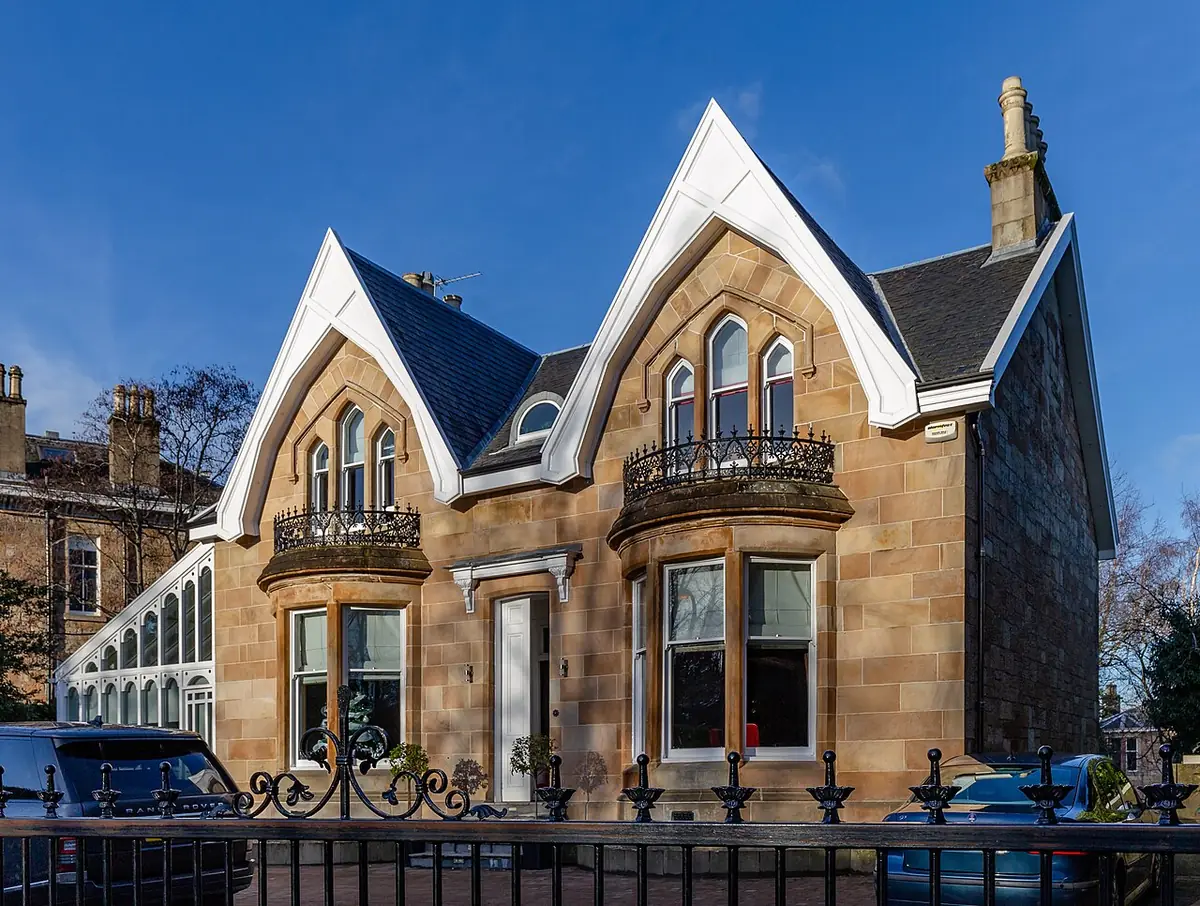
A striking sandstone building with matching gothic-style gables in Glasgow — Photo: Michal Klajban · CC BY-SA 4.0 · Wikimedia Commons
Once these legal rules are second nature, the next step is reading the micro-markets of each neighbourhood closely.
Buying property in Scotland follows legal and financial rules that differ sharply from the habits most buyers bring with them from elsewhere. The system of 'missives' and the central role of the local lawyer, the 'solicitor', call for quick adaptation if you are not to miss an opportunity. Understanding these mechanisms at the outset saves you from unpleasant surprises during the crucial offers stage. Price transparency and the compulsory assessment by an independent expert change the whole acquisition strategy.
From abroad
Negotiating directly with the seller or the estate agent
Glasgow
A sealed offers system with a closing date set by the seller
You need your financing arranged in advance, because the first formal offer your lawyer submits can prove final and legally binding the moment it is accepted.
From abroad
A price estimated by the agent according to their own strategy
Glasgow
The compulsory Home Report drawn up by an independent chartered surveyor
This official document gives a detailed assessment of market value and of the condition of the structure, so you do not buy a house above its assessed worth.
From abroad
A single legal official handling the whole transfer for both sides
Glasgow
A solicitor who handles the negotiation and the property law together
You need to put your file in the hands of a local lawyer from the first viewings, so they can draft the conditions and secure the transfer of ownership under Scots law.
From abroad
Paying a standard deposit once a preliminary contract is signed
Glasgow
Paying the funds in full on the day of entry, with no further grace period
Your financing has to be watertight with your bank, so that nothing fails technically on the day the sale completes.
How to choose between the residential areas when you put down roots
That variety of neighbourhoods naturally translates into substantial price gaps that deserve hard figures.
Glasgow is a mosaic of neighbourhoods with strongly marked identities, and the supply of detached or terraced houses varies considerably between them. The area you choose sets not only your immediate surroundings but also how easily you will be able to sell later. Each zone has its own strengths in transport, local shops and general atmosphere. It is therefore essential to visit at different times of day to feel the real character of each micro-area.
The West End and its immediate surroundings
A lively, student and cultural atmosphere, paced by the parks and the independent cafes.
Suits
Buyers after a fashionable city lifestyle, close to the universities and to green space.
Trade-off
Distinctly higher prices per square metre and fierce competition for every house that comes to market.
The Southside (Govanhill, Strathbungo, Langside)
A strong village feel, multicultural, with a lively arts community and plenty of food shops.
Suits
Those who want social energy, family parks and preserved Victorian architecture at moderate prices.
Trade-off
Marked differences from one street to the next in terms of quiet and of regeneration.
The residential parts of the East End
An area in the middle of an urban revival, mixing converted industrial sites with traditional housing.
Suits
Investors and first-time buyers looking for significant medium-term potential for growth in value.
Trade-off
Shops and transport infrastructure still being upgraded, which calls for a degree of patience.
What the real price ranges are for buying a house in Glasgow
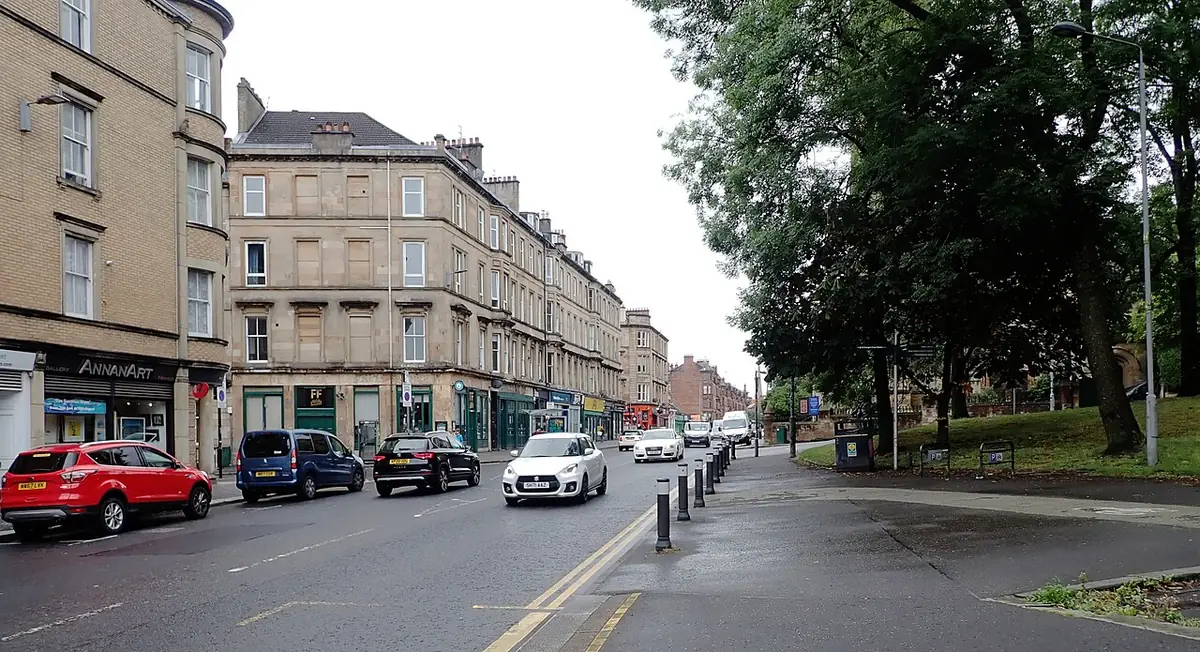
Streets like this, tenements over shops, are everyday Glasgow — Photo: habiloid · CC BY-SA 2.0 · Wikimedia Commons
Beyond the headline purchase figure, the question of who actually owns the walls and the land deserves close attention.
The Glasgow property market shows wide price contrasts depending on the exact location and the general condition of the property. Figures published by the local land registers make it possible to set realistic ranges for calibrating your financing plan. The Home Report is essential for checking whether the asking price matches recent transactions in the immediate neighbourhood. Anticipating the extra costs, particularly local taxes and legal fees, keeps budget surprises out of the picture.
glasgowFor saleHouseestimate
Median price / m²£1,792Half the apartments sell below this
Median price£231kthe average is 14% higher — a few very large properties pull it up
Most common2 bedrooms60 % of listings
Average size123 m²
By number of bedrooms
Bedrooms
Share of market
Avg price
Price / m²
Avg size
2most common
60 %
£219k
£1,924
114 m²
3
33 %
£279k
£1,773 −6 %
158 m²
4
7 %
£342k
£1,697best value / m²
201 m²
Each row is an average, compared against the area average of £1,886 / m². These are indicative estimates of a typical local market, not a measured sample of live listings. Check current listings before relying on them.
Sole ownership or shared building: what you can genuinely own
That same legal vigilance applies to every stage in the chronology of a transaction.
The shape of Glasgow's urban housing produces legal arrangements that can be disconcerting to an unprepared buyer. Between a detached house with its own plot and a building divided into flats with common parts managed collectively, the legal responsibilities are completely different. Managing shared roofs and foundations, known as tenement management, involves strict rules of common ownership. Knowing exactly what your ownership rights are protects your investment over the long term.
Outright ownership of a detached house
You own the whole building, from the foundations up to the roof structure, along with the land around it. You alone decide when maintenance happens, whether that is the roof or the frontage, without having to negotiate with reluctant co-owners. That complete independence simplifies the technical and financial management of your property day to day.
What it changesYou carry the entire bill for major repairs, with no possibility of sharing the cost with neighbours.
Shared ownership in terraces and tenements
Common in the historic neighbourhoods, this arrangement means sharing responsibility for the external structure with the other owners in the building. Scottish legislation sets strict rules for voting on and carrying out maintenance of the common parts, such as the roof or the main entrance. A poor collective agreement can hold up urgent work and weaken the whole building.
What it changesYou must check the history of the charges and the state of the sinking fund before you commit financially.
The golden rule to understand before you formalise your offer
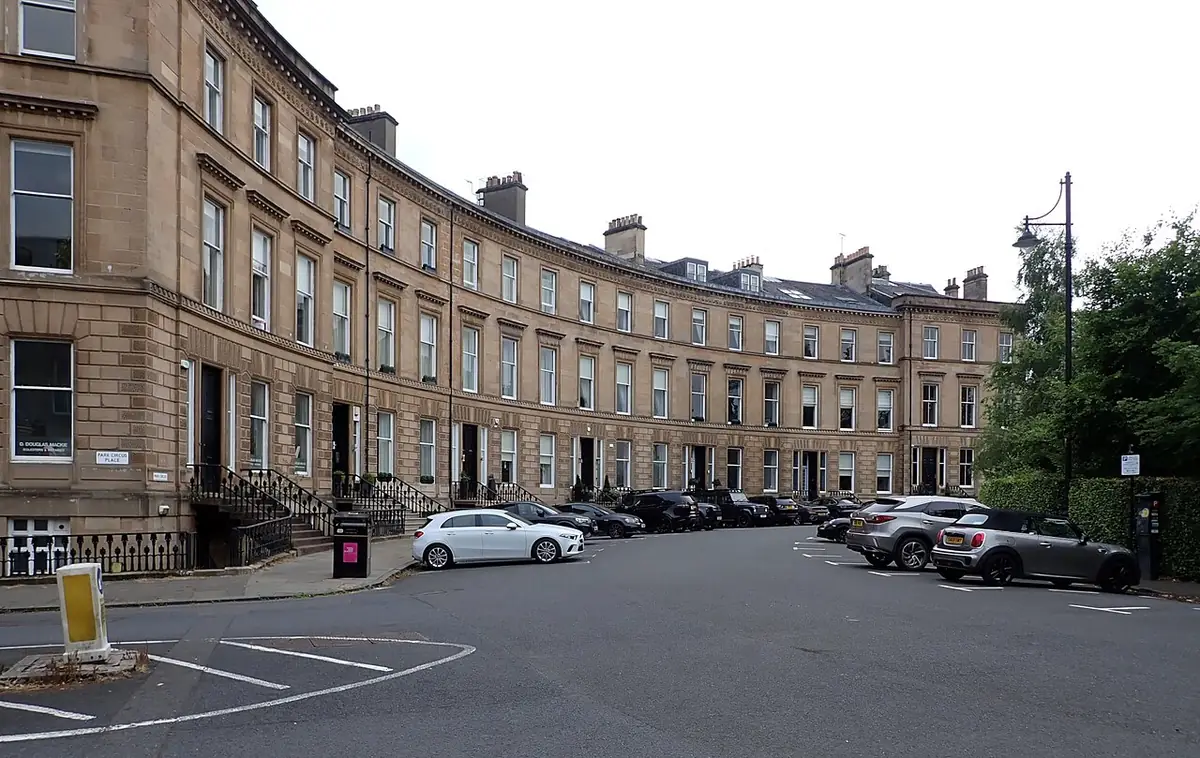
Terraces like this crescent are some of Glasgow's most sought-after streets — Photo: habiloid · CC BY-SA 2.0 · Wikimedia Commons
To handle that chronology calmly, it helps to picture what each party to the transaction actually does.
Buying property in Scotland contains a legal point of no return that you have to understand perfectly. Where many countries give a buyer a cooling-off period after a preliminary contract is signed, Scots law binds the buyer definitively as soon as the seller formally accepts the offer. This particular feature demands careful preparation and unwavering support from your solicitor. Each stage of validating the technical documents makes your financial commitment a little safer.
The initial reading of the full Home Report supplied by the seller.
A thorough analysis of the survey reports by your lawyer, to pick up hidden defects or urgent works.
Final confirmation of your financing plan and of your mortgage offer with your adviser.
Submission of a formal offer through your solicitor, including your own particular conditions.
The exchange of the formal letters of agreement (the conclusion of missives), which seals the transaction definitively in law.
The final transfer of funds and the handover of the keys on the agreed date of entry.
How the transaction actually unfolds, step by step in Glasgow
In short, buying in Glasgow rests on rigorous preparation and on anticipating the local particulars.
Buying a house in Glasgow brings in several professionals whose roles are strictly defined by local practice. From the surveyor who assesses the property to the lawyer who validates the deeds, each one steps in at a precise moment to keep the sale in order. Knowing how this is organised lets you steer your project with confidence and keep to the deadlines. Smooth coordination between these parties is the key to a purchase that completes without needless stress.
The chartered surveyorProducing the Home ReportThey inspect the structure in detail, assign urgency ratings to the repairs needed and set the official market valuation of the property.
The estate agentHandling viewings and receiving offersThey arrange viewing slots for prospective buyers and gather expressions of interest in order to set the closing date for offers.
Your solicitorLegal negotiation and submission of the offerThey translate your proposal into strict legal terms under Scots law and negotiate the conditions attached to it with the seller.
The bank or the mortgage brokerFinal confirmation of the financingThey release the funds into your lawyer's account, keeping strictly to the timetable set by the conclusion of missives.
The land register (Registers of Scotland)Official registration of the titleIt makes the transfer of ownership into your name official and records the transaction history of the plot.
House or flat in Glasgow: how to choose according to your way of life
Once you have settled on the type of property, the crucial question of the overall budget and the extra costs comes straight to the fore.
Choosing between a Victorian sandstone house in Glasgow's residential neighbourhoods and a modern or converted flat in the nerve centre of the city raises a first, fundamental question. Houses generally offer generous space, direct access to a private garden and a welcome structural independence, particularly sought after by families looking for quiet. Maintaining an old roof, the heavy heating costs that come with large volumes and the relative distance from immediate amenities are real counterweights, though, and they belong in your financial and logistical thinking from the start.
Flats in the Merchant City or the West End, by contrast, appeal through walkable access to restaurants, galleries and fast public transport. The shared building charges, often managed by professional factors for the upkeep of the common parts and of the slate roofs typical of the local architecture, spread the cost of major works but impose strict collective rules. Managing the shared outdoor space, such as the back greens common to Scottish tenements, also calls for a cordial understanding between neighbours that first-time buyers frequently underestimate on their first visit.
In purely financial terms, the cost per square metre varies considerably with the type of property and its exact position relative to the main routes through the city. Terraced and detached houses in outer areas well served by the rail network show steady prospects for growth in value, carried by constant family demand. Urban flats, for their part, are easier to move on both to tenants and to buyers, attracting a young, mobile working population that puts location ahead of raw floor area.
Your final decision should therefore rest on a clear-eyed reading of your tolerance for renovation work and of your long-term view. If you are thinking of starting a family or of it growing over the next five years, buying a house with private outdoor space will spare you a complicated and expensive move. If you would rather have an urban base with no gardening to worry about, plugged straight into Scotland's cultural energy, the flat is the obvious strategic answer.
What overall budget and what running costs should you plan for in Glasgow?
With the financial framework settled, the next step is to picture your actual daily life through the rhythms of the city.
Buying a property in Glasgow is not simply a matter of the price advertised on the listing portals. You have to build in all the local taxes, notably the Land and Buildings Transaction Tax, along with routine maintenance and the energy costs specific to the Scottish climate. Anticipating these lines of spending from your very first offer keeps you clear of serious budget imbalances in your first year in the property.
Estimated acquisition costs and applicable taxes
Cost
Estimated range
Explanatory note
Average purchase price
GBP 175,000 to GBP 320,000
Varies widely between a central one-bedroom flat and a three-bedroom family house in the West End.
Legal fees (solicitor)
GBP 1,500 to GBP 3,500
In Scotland, solicitors handle both the legal side of the transaction and the formal offers.
Land and Buildings Transaction Tax (LBTT)
GBP 0 to GBP 15,000
A progressive tax on property transactions, with specific bands for first-time buyers.
Survey report (Home Report)
GBP 120 to GBP 500
A compulsory document supplied by the seller, including a market valuation and a technical assessment.
The amounts shown are based on median market trends observed over the most recent tax period.
Annual running budget and recurring charges
Type of charge
Average annual cost
What drives it
Council Tax (local property tax)
GBP 1,200 to GBP 2,500
Calculated by value band (Band A to Band H) set by the local authority for each area.
Home insurance (buildings and contents)
GBP 300 to GBP 600
Essential cover for the storm damage and water damage that are common in winter.
Shared building charges (factors' fees)
GBP 600 to GBP 1,800
Mainly applies to flats in shared buildings, for the upkeep of roofs and stairwells.
Energy bills (gas and electricity)
GBP 1,500 to GBP 2,800
Highly dependent on the insulation of older buildings and on which way your home faces.
Energy bills can double in unmodernised older homes still fitted with their original single glazing.
What an ordinary Tuesday actually looks like, between transport, schools and services
Detached villas like this show the grander end of Glasgow's housing stock — Photo: Michal Klajban · CC BY-SA 4.0 · Wikimedia Commons
Beyond that well-oiled routine, a great many crucial details slip past you during viewings.
Picturing your week is the best way to test how well a future address fits your working and family commitments. Between using the public transport network, reaching good schools and living near local health services, every neighbourhood plays a different tune. Here is how a typical busy day unfolds for a resident settled in Glasgow.
07:30Home and the morning routineChecking the radiators and looking at the changeable weather typical of the Clyde valley, to dress for whatever the day outside will bring.
08:30The commute by Subway or trainTaking the famous circular underground network (the Clockwork Orange) or the fast urban rail lines linking Queen Street and Central stations.
09:00Dropping the children at the local primary schoolA safe walk through residential streets with supervised crossings and family-friendly infrastructure.
12:30Lunch break and local shoppingBuying fresh produce from the independent shops in the neighbourhood, or a quick trip to a local market to stock up on Scottish produce.
17:00Home again, with a stop at the health servicesRegistering, or a routine appointment, at the local GP surgery attached to the National Health Service.
19:00Winding down and neighbourhood life in the eveningTaking part in a local community group, or dinner at a neighbourhood restaurant showcasing the city's contemporary food scene.
What property listings deliberately leave out
Knowing these technical subtleties helps you avoid the classic misjudgements inexperienced buyers make.
Advertising photographs and glowing agency descriptions flatter the eye while masking structural realities that can carry heavy financial consequences. To avoid signing up to something you would quickly regret, you have to learn to read what is not written in large type. Here are the essential technical and administrative points that sellers prefer to play down during viewings.
The real condition of the roof and the common parts of tenements
In Scotland, repairs to slate roofs and gable walls are shared between all the owners in the same building. If some owners are in financial difficulty, urgent works can be held up for months, letting water ingress do devastating damage inside your own flat.
The thermal insulation and the energy rating (EPC)
Many listed historic buildings have solid stone walls with no internal insulation, which leads to considerable heating bills. Getting planning consent to fit double glazing or solar panels in these protected areas often proves extremely difficult.
The strict planning rules on external alterations
If you buy a house inside a conservation area, you cannot change the colour of your doors, replace your windows or fell a tree without formal prior consent. Ignoring these rules exposes you to fines and to an obligation to put the property back as it was.
How the building's factors are actually run
The choice and reputation of the managing firm directly affect how clean the closes are and how quickly maintenance is carried out. Excessive management fees combined with a lack of transparency in billing for small repairs are a regular source of misery for owners.
Residential parking and traffic restrictions
Keeping a car in some dense areas means obtaining a paid parking permit for which the quotas are limited. Free spaces are scarce in the evening, turning the journey home into a stressful daily hunt if no private parking comes with the property.
The traps and disappointments people discover six months after signing
These hard-won lessons show that this market does not necessarily suit every kind of buyer.
Looked likeA charming period house full of character with a large mature garden on the edge of the city.
Turned outA money pit of insulation work, with recurring rising damp and old pipework that kept leaking.
Would have caught itInsisting on a thorough independent survey (the Home Report) and always budgeting a reserve of ten percent of the purchase price for the unexpected.
Looked likeAn exceptionally bright flat, ideally placed in the heart of the busy shopping district.
Turned outUnbearable night-time noise from the late-night venues and from deliveries starting at dawn.
Would have caught itVisiting at different times of day and night, particularly on Friday and Saturday evenings, to judge the real sound environment.
Looked likeAn affordable investment opportunity in a working-class neighbourhood in the middle of gentrifying.
Turned outA resale stuck by a prolonged stagnation in local prices and chronic difficulty finding reliable tradespeople for the renovation.
Would have caught itLooking at the real transaction history in the street over the last five years, rather than trusting the marketing promises in the sales brochures.
Looked likeA building run by the residents themselves, wiping out the monthly management fees.
Turned outA complete collective inability to agree on funding the frontage repairs and the roof renewal as it visibly deteriorated.
Would have caught itChecking the minutes of the last three owners' meetings scrupulously, to spot neighbour disputes and unpaid charges.
Who should definitely postpone or drop the idea of buying here?
If you have come through all these stages without your conviction wavering, it is time to make your decision final.
Buying property is often presented as the be-all and end-all of getting on in life, yet some personal or financial situations make it risky, or even counterproductive. Recognising that the moment is not right, or that your plan does not match the realities of the Scottish market, is simply sound management of your money. Here are the buyer profiles who should put their search on hold.
The first-time buyer with unstable income or less than two years of visibility on their job
→Postponing the purchase and keeping savings liquid while renting
Legal fees, acquisition taxes and selling commission weigh heavily on your starting capital. Selling a property less than three years after buying it, because a job or a situation changed, almost always leads to a substantial net loss that is hard to absorb.
The investor with no appetite for administration and heavy building work
→Turning to financial investments or pooled property funds instead
Managing the renovation of an older property in Glasgow demands a regular physical presence and the ability to negotiate with trades that are often heavily booked. Without an appetite for the technical management and the surprises of a building site, a rental investment quickly becomes a permanent source of stress.
The household looking for a property that is immediately perfect, with no compromises
→Waiting until the budget is significantly larger, or aiming at new-build
Scotland's housing stock is mostly made up of older buildings that need regular maintenance and some compromise on how the rooms are laid out. Trying to design away every structural flaw inherent in an older property through vast works generally overruns the budget you set at the start.
So, are you ready to take the step and buy in Glasgow?
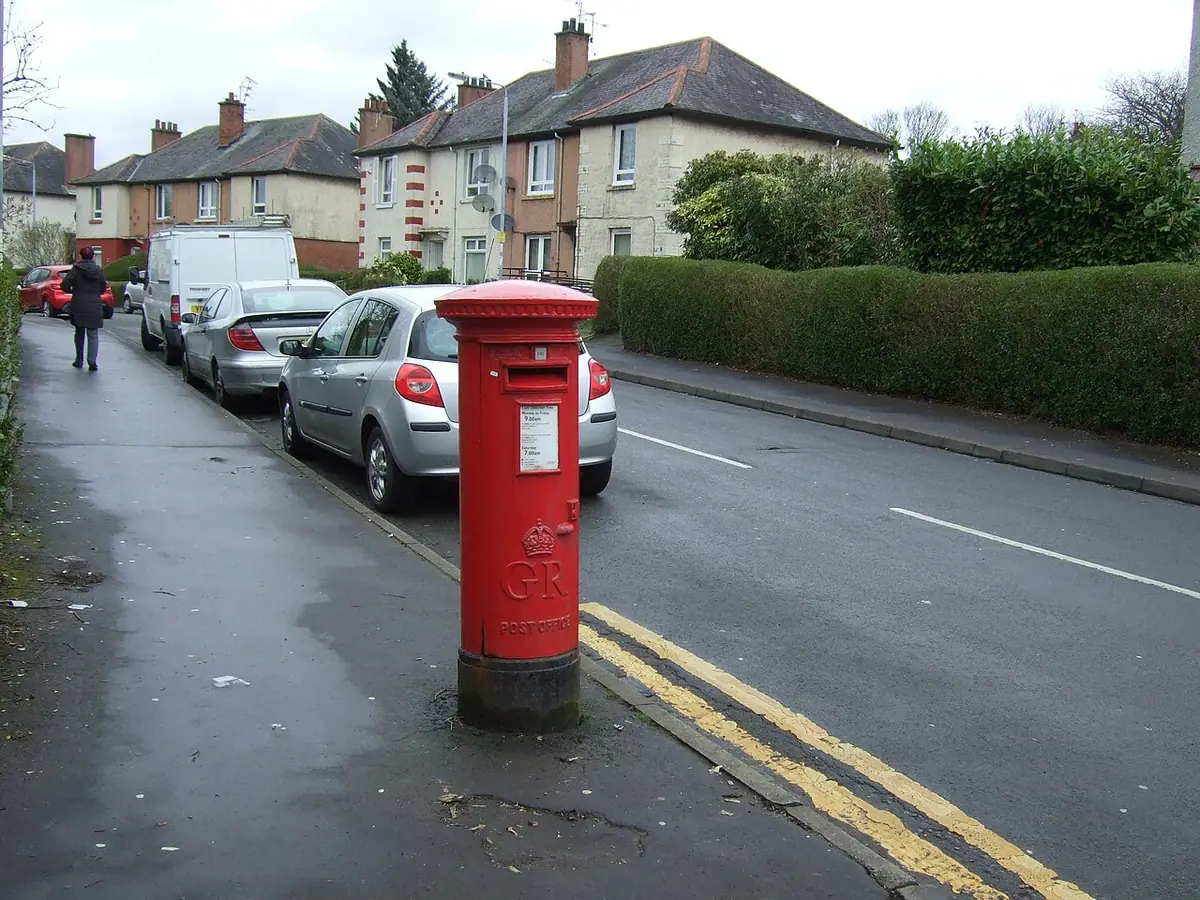
Quiet residential streets like this sit just off Glasgow's main roads — Photo: JThomas · CC BY-SA 2.0 · Wikimedia Commons
Deciding to buy a property in Glasgow means balancing the aesthetic pull of the local architecture against the implacable rigour of the numbers. If you have taken in the real cost of the taxes, set aside a fund for roof maintenance and accepted the particulars of the Scottish market, you now have everything you need to get through the purchase without a nasty surprise.
The property market in this energetic city offers remarkable opportunities to anyone who can look past appearances and anticipate the technical constraints. Whether you go for a flat with character in the centre or a family house in the greener outer neighbourhoods, a clear strategic view will be your best protection against taking a wrong turn.
Take the time to reread your core criteria, go through the survey reports with your legal adviser, and visit the properties that hold your attention more than once, at different times of day. Settling in Glasgow deserves to be treated as a carefully considered life plan, not as a short-term bet on a market that never stops moving.
Related questions
What taxes are payable when buying a property in Glasgow?
Buying a property in Scotland is subject to Land and Buildings Transaction Tax (LBTT), a progressive tax calculated in bands according to the purchase price. Specific surcharges also apply if you are buying a second home or a property intended for buy-to-let investment.
What is a Home Report, and is it compulsory in Scotland?
The Home Report is a full pack that Scottish legislation makes compulsory for any property put up for sale. It contains a market valuation by a chartered surveyor, an Energy Performance Certificate (EPC) and a detailed report on the structural condition of the building.
How does the 'offers over' system work in Glasgow?
In Scotland, properties are often marketed with a floor price signalled by the phrase 'offers over'. Buyers submit a formal sealed offer through their solicitor, and the seller usually accepts the proposal that is strongest on price and on the conditions attached to it.
What are 'factors' in Scottish shared buildings?
Factors are professional management firms appointed by the owners to maintain the common parts, the roofs, the stairwells and the shared green space of a building. Their role is central to keeping older buildings structurally sound over time.
Is it hard to get a mortgage as a foreign buyer in Glasgow?
Getting a mortgage depends above all on the stability of your income, your local credit history and the size of your deposit. Working with a specialist mortgage broker makes dealing with British financial institutions considerably easier.
How long does a property transaction usually take to complete?
Once the seller has accepted your offer, the legal process leading to final completion (the settlement date) generally takes between six and eight weeks. That period allows all the legal searches to be validated and the transfer of funds to be finalised.
Which Glasgow neighbourhoods suit a family purchase best?
Areas such as the West End, Hyndland and parts of the residential south of the city are particularly sought after for the quality of their schools and local infrastructure. These neighbourhoods have historically shown excellent resilience through market swings.
How do I assess the condition of the roof on a tenement flat?
The condition of the roof is always documented in the Home Report supplied with the sale. It is also worth reading the minutes of the owners' meetings to see whether major works have recently been voted through or budgeted for by the residents.
What costs should I plan for on top of the purchase price?
You must build in the solicitor's fees, LBTT, the cost of obtaining the Home Report where that falls to you, and a reserve for the first round of bringing the property up to standard or refreshing its finish.
Do older properties need any particular insurance?
Full buildings insurance is essential, especially for older properties exposed to the harsh winter weather of the west of Scotland. Shared buildings often fold that cover into their overall charges.
Property review of ting
No ting properties in Glasgow yet
Be the first — share it on ting and it shows up right here.