Buying a house in Perth is a long-term commitment in an exceptional urban and natural setting. This guide takes a hard look at the realities of the market, the character of the neighbourhoods and the legal rules you need to know to secure your move to Western Australia.
Get the app
What nobody tells you.
Real prices, hidden costs and the traps to check before you commit.
What you really get when you buy a house in Perth
Scroll
What you really get when you buy a house in Perth
Buying a house in Perth is a long-term commitment in an exceptional urban and natural setting. This guide takes a hard look at the realities of the market, the character of the neighbourhoods and the legal rules you need to know to secure your move to Western Australia.
Written by the ting.ad editorial team ·
Sale House Perth in Street View: drag to look around.
Before committing to such a distinctive geography, it is worth checking whether your profile fits the day-to-day realities of this market.
Buying a house in Perth is not just about square metres of buildable land or enjoying a sunny plot. It gives you access to a way of life that is both isolated and urban, defined by low density and a direct connection with the Indian Ocean. Settling in this western capital means buying into a unique spatial layout, where the city spreads widely along the coast and the Swan River. You need to understand exactly what that sheer scale means day to day if you want to avoid a strategic mistake.
Generous living space and substantial private outdoor areasvsA built-in dependence on the car for even the smallest daily errand
Blocks are rarely smaller than four hundred square metres, which guarantees real privacy from the neighbours. In return, urban sprawl means long daily drives if you work in the heart of the business district.
An exceptional Mediterranean climate with record sunshinevsExtreme summer heat that demands careful thermal choices
Being able to live outdoors nine months of the year profoundly changes family life and the role the garden plays. However, the orientation of the house, the quality of the glazing and an efficient air conditioning system are not optional extras but absolute necessities.
A property market traditionally more affordable than the big east coast citiesvsMarked volatility driven by the cycles of the mining and energy industries
The entry price for a detached house is often more reasonable than in Sydney or Melbourne, with a better ratio of space to price. But the local economy reacts strongly to swings in commodity exports, which directly shapes price movements in the medium term.
Does this place really suit your lifestyle now and in the future?
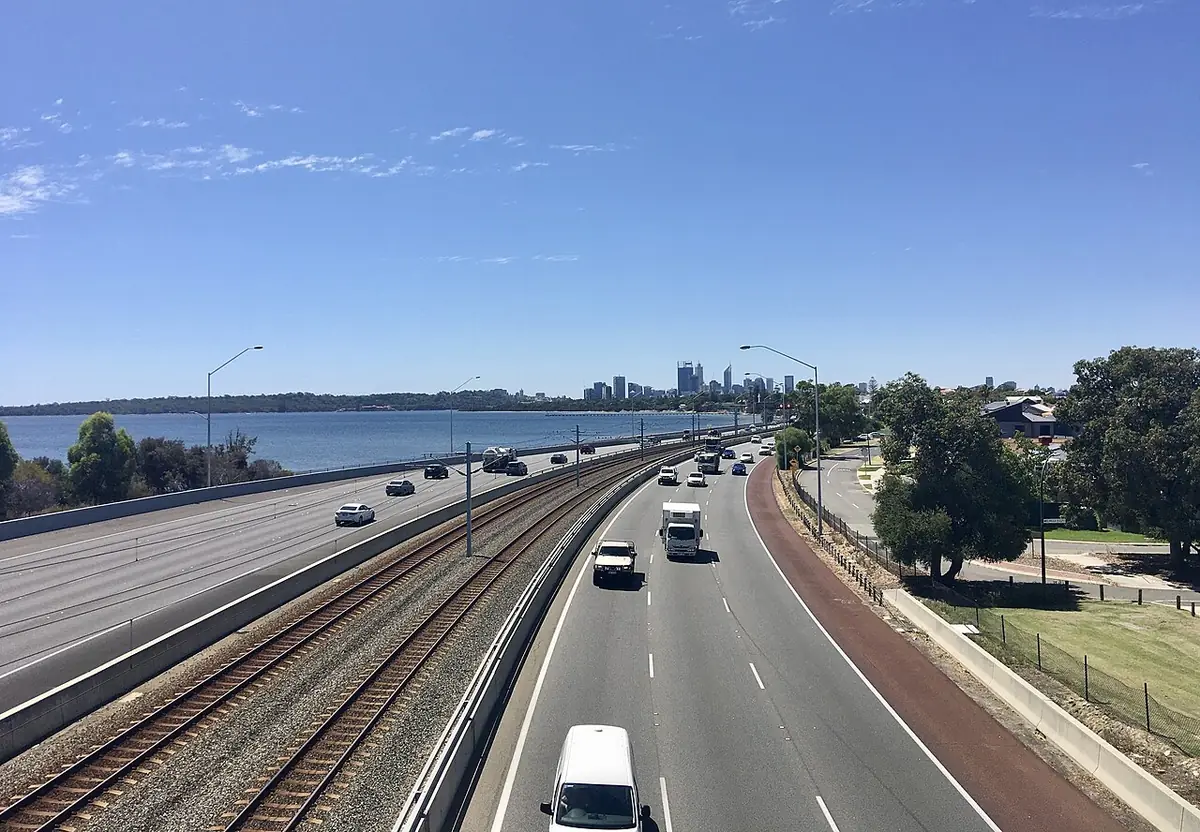
The freeway and rail line run along the river towards Perth city — Photo: Steelkamp · CC BY-SA 4.0 · Wikimedia Commons
To grasp the full weight of this choice, it helps to measure the cultural and structural gap between the reference points you bring from back home and life in Australia.
The Western Australian way of life is built around early mornings, a strong outdoor culture and a relaxed relationship with nature. Even so, the distances between the different parts of the city and the single-family layout of most neighbourhoods do not suit every buyer. Looking at your daily habits through these local lenses will spare you quick disappointment after signing.
The inner-city profile
Detached houses with gardens are found mainly in the suburbs and the middle ring, rarely at the foot of the office towers. If you choose to live close to the centre to save time, you will have to accept significant compromises on living space or budget. Living in the coastal or leafy suburbs means accepting regular travel time by car or on the Transperth rail network.
The suburban family profile
This is the situation where the Perth property market is most relevant and performs best. Houses generally come with backyards, lawns and sometimes pools, in quiet estates with well-kept public parks. Public and private schools have plenty of space, although the choice of school often dictates the exact street or neighbourhood you can buy in.
The coastal free-spirit profile
Settling along the coastal strip, from Cottesloe to the northern or southern beaches, transforms your daily life, with early morning surf sessions and evenings facing the ocean. In return, the sea wind means regular upkeep of exterior joinery, and prices climb quickly as soon as you get a direct water view. Remote work finds its ideal balance here, provided you have a highly reliable fibre internet connection.
Living here when you come from abroad: what fundamentally changes
Once those reference points are in place, the central question becomes exactly where to live among the many faces of the metropolitan area.
The culture shock is not just about the climate or the distance, but about how housing and services are organised. Building standards, the management of urban space and relations between neighbours follow specific Anglo-Saxon conventions that take time to get used to. Here is what concretely differs between what you are used to back home and the reality on the ground.
From abroad
High urban density and shared historic buildings in the heart of the city
Perth
Mostly detached housing, single storey or with one upper floor, surrounded by a low fence
Sound and visual privacy change completely, but looking after the outdoor areas becomes an unavoidable weekly personal chore.
From abroad
Centralised administrative procedures, formalised by strict civil codes and ever-present notaries
Perth
A land registry and property transfer system run by licensed professionals and specialist settlement agents
Transactions are faster and more standardised, but they call for careful checks on local easements and environmental restrictions.
From abroad
A dense public transport network covering the whole country and every city
Perth
A train and bus network that works well on the main corridors but leaves the private car dominant
Having one vehicle per working adult becomes essential for independent shopping, leisure and social life outside the centre.
From abroad
Old building standards renovated over the decades with heavy materials
Perth
Often lighter construction, sometimes on a concrete slab with a steel or timber frame, designed for ventilation
Thermal mass works differently; an Australian house needs particular attention to air conditioning performance and roof space insulation.
Which neighbourhood to choose for your lifestyle priorities and budget?
With the geography mapped out, you need to test your ambitions against the financial realities of the local market.
The metropolitan area stretches almost one hundred and fifty kilometres from north to south and takes in very different atmospheres. Between the leafy historic suburbs near the river, the lively areas undergoing renewal and the popular coastal suburbs, each area has its own socio-economic identity and its own traffic constraints. That makes it crucial to look at what each main type of area really offers day to day.
The Inner Northern Suburbs (Mount Lawley, Leederville)
A buzzing, trendy neighbourhood feel, with independent cafés, tree-lined streets and renovated art deco or workers' cottages.
Suits
Buyers who want to be right next to cultural life and restaurants, with fast train links to the city centre.
Trade-off
Noticeably higher prices per square metre and blocks that are often smaller than in the outer suburbs.
The Coastal Suburbs (Cottesloe, City Beach, Scarborough)
The seaside rhythm at its purest, with sea spray, the westerly wind, walks along the beachfront and a very laid-back atmosphere.
Suits
Those for whom being right by the ocean and close to water sports is a non-negotiable condition of their property purchase.
Trade-off
The highest purchase budget required, and direct exposure to winter storms that speed up wear on paintwork and exteriors.
The Southern Suburbs across the river (Applecross, Fremantle)
A unique mix of historic maritime heritage in Fremantle and quiet, affluent, very green residential areas along the Swan.
Suits
Families and established professionals looking for beautiful leafy blocks, good schools and strong architectural character.
Trade-off
River bridges that can clog at peak times, lengthening the commute to the central business district.
The Outer Ring Suburbs (Joondalup to the north, Mandurah to the south)
Modern, self-contained communities with large shopping centres, big new houses and direct access to wild nature.
Suits
First home buyers or investors after the best ratio of living space to price on a controlled starting budget.
Trade-off
A considerable distance from central Perth, turning commuting into a major daily constraint.
How much does buying a house in this region really cost?
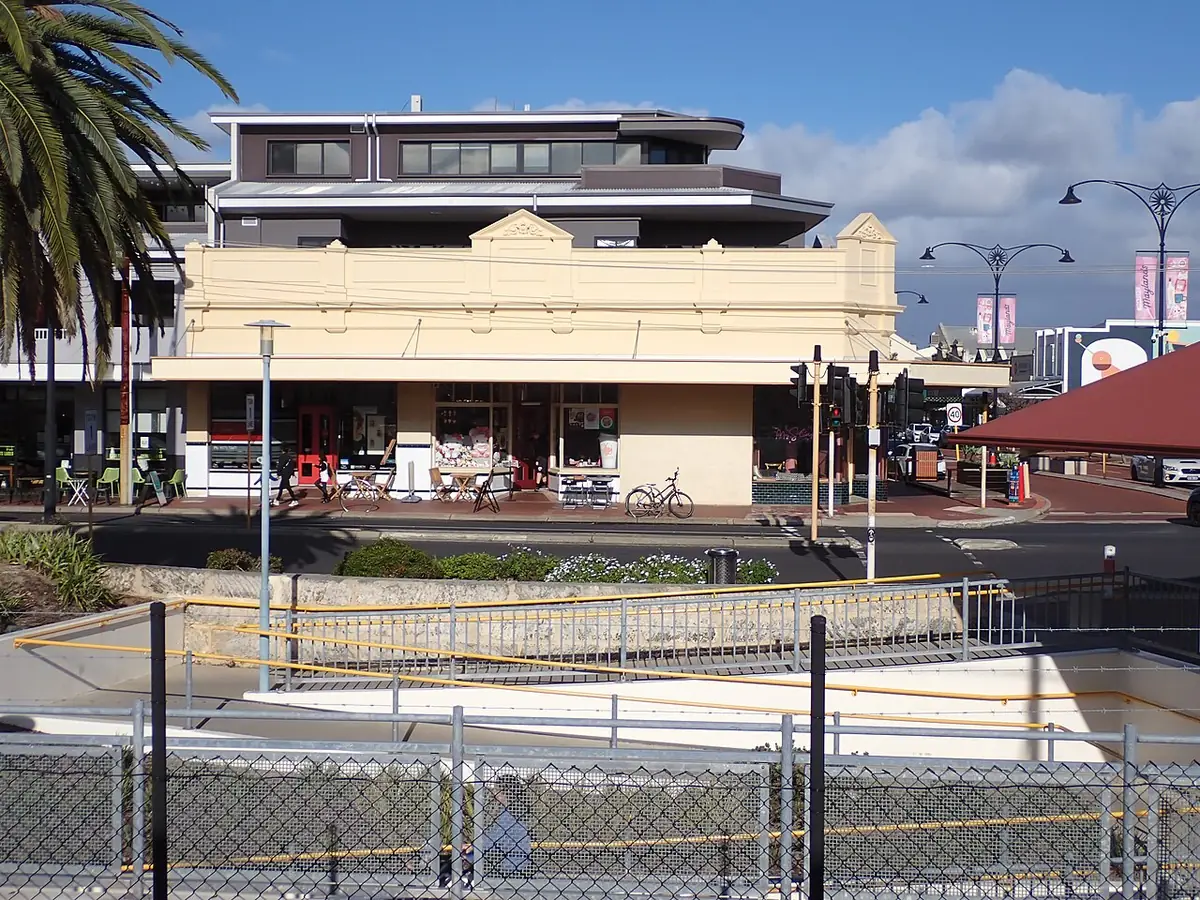
A heritage shopfront on Whatley Crescent in Maylands — Photo: Calistemon · CC BY-SA 4.0 · Wikimedia Commons
Beyond the headline purchase price, the legal structure of ownership deserves close analysis so you know exactly what you own.
Perth's property market has been through contrasting cycles, with a strong recent rise driven by the appeal of Western Australia. Setting a realistic budget means accounting not only for the advertised price but also for land transfer duty (stamp duty), inspection fees and any work needed to bring the home up to energy standards. The figures below reflect the orders of magnitude seen for standard properties.
PerthFor saleHouseestimate
Median price / m²A$5,920Half the apartments sell below this
Median priceA$1.2mthe average is 14% higher — a few very large properties pull it up
Most common3 bedrooms42 % of listings
Average size193 m²
By number of bedrooms
Bedrooms
Share of market
Avg price
Price / m²
Avg size
2
37 %
A$927k
A$6,232
149 m²
3most common
42 %
A$1.3m
A$5,920 −5 %
219 m²
4
21 %
A$1.76m
A$5,733best value / m²
306 m²
Each row is an average, compared against the area average of A$6,232 / m². These are indicative estimates of a typical local market, not a measured sample of live listings. Check current listings before relying on them.
What you can actually own: understanding land tenure
Once the legal nature is clear, completing the purchase follows a precise sequence that should not be rushed.
Western Australia's land registration system is extremely rigorous and transparent, but it rests on specific legal concepts that differ from those used in many other countries. Whether you are buying freehold or under a strata arrangement fundamentally changes your future rights to alter the property and your long-term financial obligations.
Freehold (full ownership of the land)
You own both the building and the land it stands on, with no perpetual ground rent owed to anyone. This is the most common arrangement for traditional detached houses on their own titled block. You have complete freedom to renovate, extend or alter the structure, subject to obtaining planning approval from the local council.
What it changesYou alone bear the full cost of maintaining the block, the dividing fences and the roof, with no way of sharing costs with co-owners.
Strata Title and Survey Strata (shared ownership)
Common for townhouse complexes or for large original blocks subdivided into several house lots, this arrangement divides a parent lot into exclusive areas and common property. Survey Strata, very popular in Western Australia, clearly defines each house's private land while creating a share in the access driveways or shared facilities.
What it changesYou must pay regular strata levies for the upkeep of the common areas and follow strict by-laws on the external appearance of your property.
The rule to understand before paying a deposit on a house
To see the process through to handing over the keys, it helps to picture all the people and stages involved in the transaction.
Buying property in Western Australia relies on an Offer and Acceptance process that legally binds the parties as soon as the conditions are formally accepted. Unlike other jurisdictions where generous cooling-off periods after signing are automatic, you need to be extremely careful before you even initial the first document.
You find a house that meets your criteria and want to put your financial interest in writing.
The agent gives you a standard Offer and Acceptance (O&A) form, which you must complete with your conditions.
You must include explicit conditions covering bank finance approval (finance clause) and the completion of building inspections.
Arrange, at your own cost, an independent inspection to detect any termites, a major pest in regions with a hot climate.
Have a certified professional check the structural soundness of the roof, the stormwater drainage and the condition of the foundations.
Once the seller has countersigned the offer and the conditions are satisfied, the sale becomes unconditional and the settlement process officially begins.
How a property transaction works, step by step
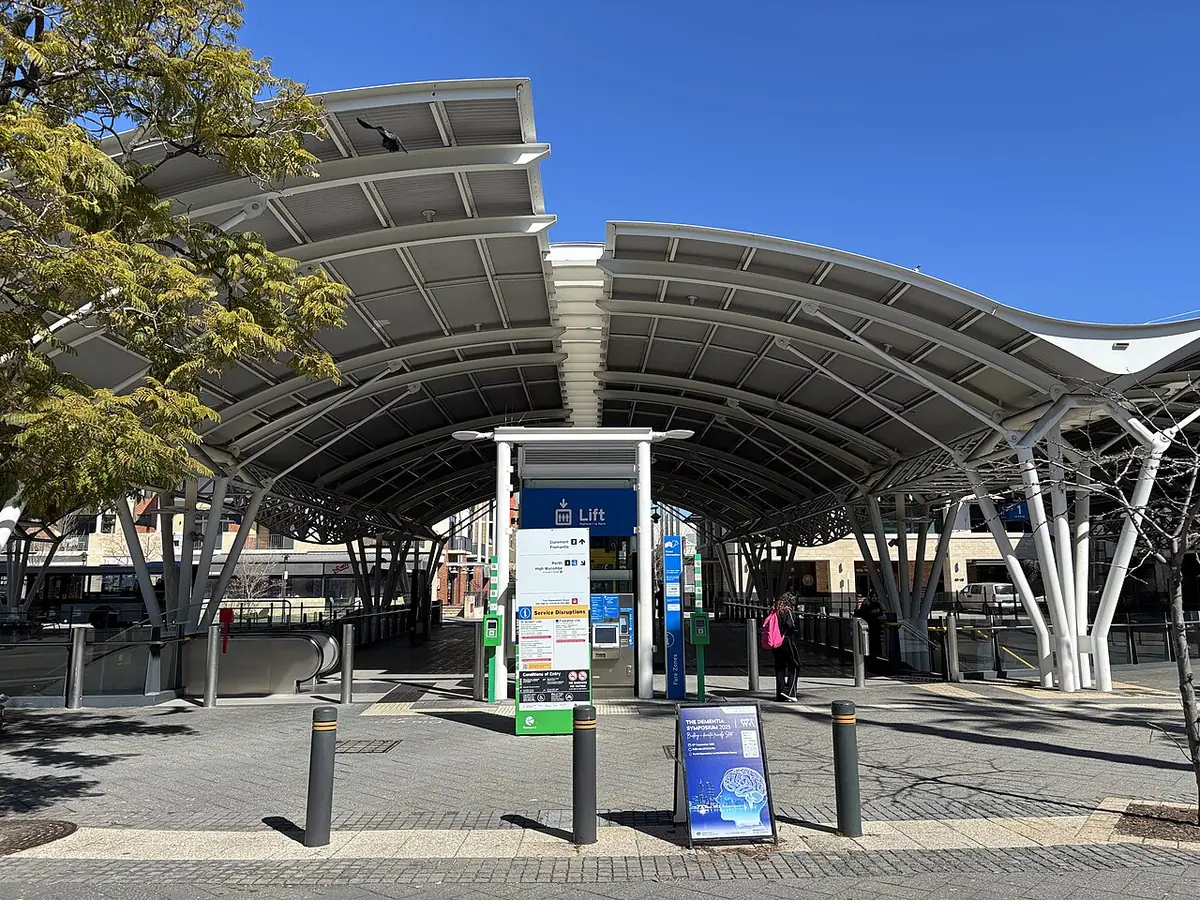
The curved canopy at the entrance to Subiaco station — Photo: Nick-D · CC BY-SA 4.0 · Wikimedia Commons
The timeline of a property purchase in Western Australia is closely managed by specialist professionals known as settlement agents or conveyancers. From the first offer to settlement day, each party plays a precise role in making sure the transfer of ownership is legal and secure, without the buyer ever needing to visit a traditional notary.
The buyer and their brokerConfirming borrowing capacity (pre-approval)Getting solid bank pre-approval before viewing lets you target your budget precisely and move quickly when there is competition.
The real estate agentDrafting and negotiating the Offer & AcceptanceThe legal document is submitted to the seller with all the essential conditions (finance, building inspections).
The building inspectorBuilding and termite inspectionsA careful check of the property's structural integrity and of the absence of timber-boring pests in the roof framing.
The mortgage broker and the bankSatisfying the finance conditionFinal confirmation of the loan approval within the strict deadlines set by the purchase contract (usually 14 to 21 days).
The settlement agentLegal preparation of the land transferTitle checks with Landgate, pro rata calculation of local rates and preparation of the electronic documents.
All partiesSettlement day and handing over the keysThe funds are paid to the seller, the title is updated in the state register and the agent finally hands the keys to the happy new owner.
House or apartment in Perth: a personal trade-off between independence and upkeep
Once that fundamental choice is made, you need to work out precisely the overall budget required to make your property plans happen in this city.
Choosing between a detached house with a garden and a strata apartment in Perth shapes not only your daily lifestyle but also the very structure of your wealth over the long term. The residential suburbs of Western Australia's capital are defined by pronounced urban sprawl, where a house on its own block remains the absolute cultural norm. Going for a house means accepting regular upkeep of the outdoor areas, looking after the pool that often comes with it and a heavier reliance on the car for even the shortest local trip. A house offers the freedom to shape your space and the acoustic privacy that families want when they plan to put down lasting roots, without living under strata by-laws.
Turning instead to an apartment, whether a new development in East Perth or a renovated home in Subiaco, completely redefines your relationship with time and the city. Life speeds up around amenities within walking distance, the public transport network and being right next to the Swan River or the business district. Strata fees, although they are a significant fixed cost, pool the upkeep of major structures, security and common areas. For a first home buyer or an investor keen to cut the logistical mental load, an apartment removes the nasty surprises tied to structural work or the roof.
Capital growth in Perth follows very different dynamics for these two types of property. Historically, land and detached houses have captured most of the gains, driven by the relative scarcity of well-located land as the city spreads towards the foothills of the Darling Range. Apartments, subject to a more erratic flow of new developments coming onto the market, sometimes take longer to resell, which calls for careful selection of location and architectural quality. You therefore have to weigh the operational peace of mind of strata living against the long-term growth potential of a standalone house on its own land.
Your final decision will come down to how you balance the time you are willing to spend maintaining your home against how much you value having your own space. If you arrive with a life plan centred on the outdoors, Sunday barbecues and room for children or pets, the suburban house is the obvious choice. If you put urban efficiency, shorter journeys and a turnkey way of living first, a city apartment will fully meet your goals as you settle for the long term in this dynamic region.
What budget do you really need to buy and live in Perth?
To see how these costs fit together in real life, let us follow a typical day in the life of a resident.
Buying a house in Perth means taking a cool look at every item of spending, well beyond the price shown on the property portals. Between state transfer duty, home insurance premiums pushed up by local climate risks and recurring maintenance costs, the real budget follows a strict logic. The tables below summarise the price ranges seen on the market and the estimated running costs for an average household settling in the Perth region.
Estimated purchase price ranges by area of Perth
Property type
Inner and coastal suburbs
Middle ring suburbs
Outer ring
3 to 4 bedroom house
AUD 1,100,000 to AUD 1,800,000+
AUD 750,000 to AUD 1,100,000
AUD 550,000 to AUD 750,000
2 bedroom apartment
AUD 650,000 to AUD 950,000
AUD 450,000 to AUD 650,000
AUD 350,000 to AUD 480,000
Median prices vary widely depending on how close you are to the Indian Ocean or to the main transport routes into the Central Business District.
Estimated monthly budget for running a house and everyday living
Expense
Estimated average monthly amount
Main factors of variation
Home and risk insurance
AUD 180 to AUD 320
Exposure to bushfires and winter storms
Electricity, gas and water
AUD 250 to AUD 450
Heavy air conditioning use in summer and heat pump heating
Garden, pool and general maintenance
AUD 200 to AUD 500
Whether there is a private pool and the size of the block
These estimates reflect prices charged in Western Australia and may vary with the energy performance of the property you buy.
Health, schools, transport: an ordinary Tuesday in Perth
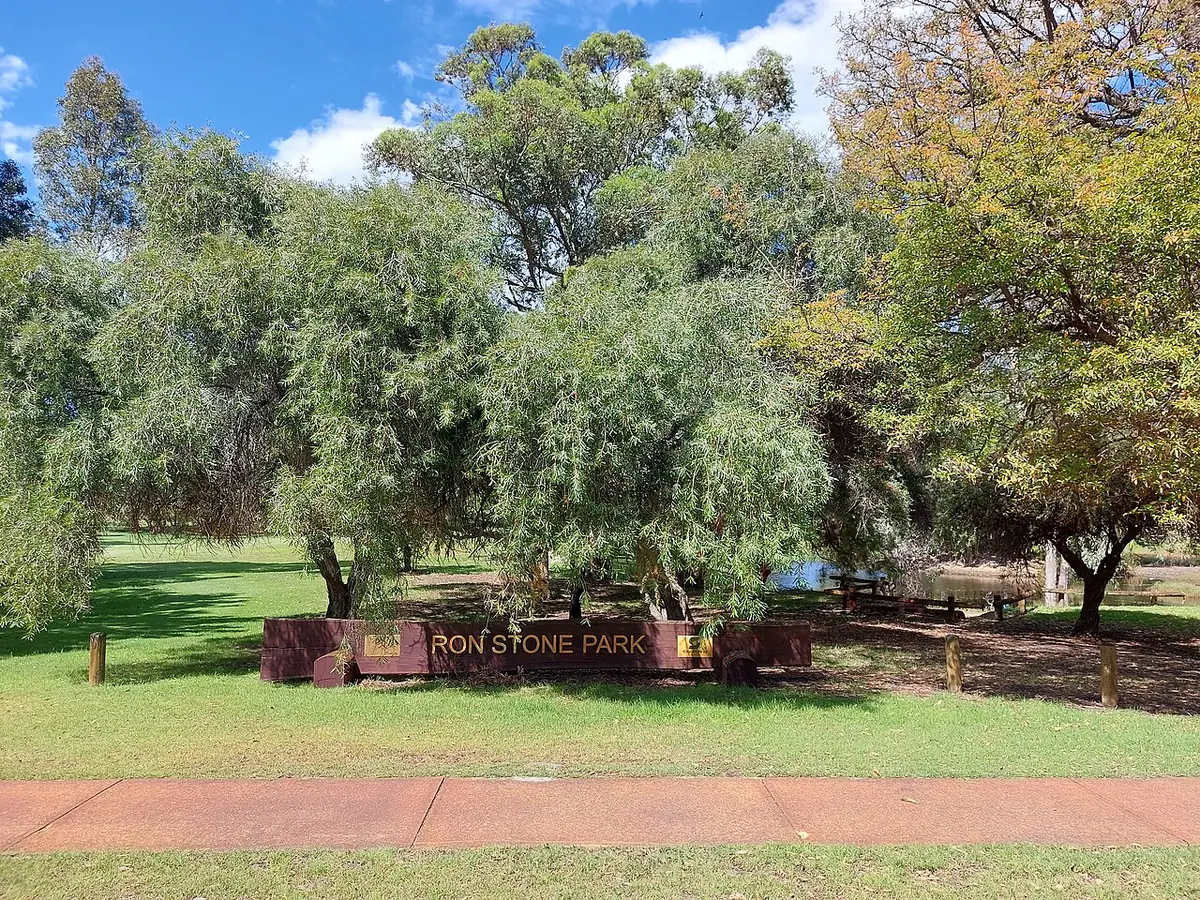
Ron Stone Park, a green space in Mount Lawley — Photo: Orderinchaos · CC BY-SA 4.0 · Wikimedia Commons
Behind this apparent ease, the property market hides technical and regulatory details that no agent will volunteer.
Settling in Perth means immersing yourself in a pace of life set by local infrastructure, the way transport is organised and access to public and private services. The city runs smoothly but calls for careful planning of journeys at peak times, especially on the major freeways such as the Kwinana Freeway or the Mitchell Freeway. This timeline of an ordinary Tuesday shows the timings and logistical realities every resident deals with over the course of the day.
07:15Leaving home and the school runDropping the children at the local primary or high school. Traffic on the secondary roads is heavy but keeps moving, thanks to well-designed signage and generally courteous drivers.
08:30Arriving at work or a coworking spaceLogging on to high-speed internet and starting the working day. For those who work in the CBD, the Transperth urban train is a fast and punctual alternative to driving.
12:30Lunch break and local shoppingBuying fresh food at a neighbourhood shopping centre or a local store such as Coles or Woolworths. Grocery prices reflect Western Australia's relative isolation.
16:00Health appointments and servicesA visit to the GP or a routine medical check-up. The private and public health system works on appointments that should be booked several weeks ahead.
17:30Heading home and sportThe drive home coincides with the evening rush hour. Make the most of the nearby parks or the coastal beaches for a run or some time outdoors before nightfall.
What the glossy developer brochures leave out
Ignoring these technical realities exposes buyers to measurable financial and practical disappointments within the first few months of moving in.
Online listings and sales brochures polish reality to win over hurried buyers, glossing over the structural constraints specific to the Perth market. Between little-known easements on the land, strict building requirements from local authorities and the hidden costs of renovation, transparency is often lacking. Here are the four decisive points you must check before signing a binding offer.
Zoning restrictions and heritage protection
Many historic or residential areas of Perth have extremely strict planning rules that forbid any external change to the facade, or the removal of mature trees on your block, without prior council approval.
The condition of foundations on sandy soils
The ground in the coastal region is mostly sand. Without a thorough soil test and suitable foundations, ground movement can cause significant cracks in the walls through the dry and wet seasons.
Thermal performance and the original insulation
Many houses built in past decades have only basic insulation, which turns the interiors into ovens during summer heatwaves and leaves them losing heat on cool winter nights.
Hidden costs in estates managed under strata
Some properties in recent residential developments carry management fees for the upkeep of private roads, shared green spaces and communal leisure facilities, and those fees can rise sharply.
The post-purchase disappointments newcomers discover six months later
These risks and disappointments naturally lead to the key question of who should hold back from buying here.
Looked likeAn efficient ducted air conditioning system ready to use throughout the house
Turned outAn outdated, power-hungry system whose electricity bill soars with the first January heatwaves, requiring an urgent and expensive full replacement.
Would have caught itAsk for a recent service certificate for the air conditioning system and check its energy rating before the conditions of sale are satisfied.
Looked likeA beautiful low-maintenance landscaped garden with flowering beds
Turned outA faulty automatic sprinkler system and invasive or thirsty plants using excessive amounts of water that is subject to council restrictions.
Would have caught itHave the entire irrigation system inspected by an independent professional and favour landscaping suited to local native plants.
Looked likeA calm, peaceful neighbourhood with no noticeable noise during the day
Turned outAn unseen but very real flight path or freight rail line nearby, with noise that turns out to be intense at peak times and at night.
Would have caught itVisit the area around the property at different times of the day and night, and check the metropolitan planning maps covering noise.
Looked likeA roof and roof framing in apparently perfect condition during a quick viewing
Turned outA discreet but destructive termite infestation that had eaten into the timber framing, a notorious classic in the hot, humid climate of parts of Western Australia.
Would have caught itAlways commission a specialist to carry out a full termite and moisture inspection before signing the final transfer of ownership.
Who this purchase suits and who should steer clear of this property market
It is time to pull all these factors together to help you make a final call on your purchase.
Buying property in Perth is by no means a universal solution, and it carries real risks for some poorly prepared buyers. The rigidity of the local job market, the upfront purchase costs and the distance from Europe and much of the world demand full commitment to the life plan. Looking at how people's lives unfold shows clearly that some buyer profiles walk into financial or personal dead ends by taking the plunge too quickly.
The first home buyer on an unstable income or a short contract
→Borrowing to the limit of their capacity to buy an isolated house on the far outskirts.
Changes in the Reserve Bank of Australia's cash rate and a lack of long-term job security create an immediate risk of default if the economy slows.
The impatient investor after an immediate, high rental yield
→Buying an older apartment in an ageing large complex without studying the strata's maintenance plan.
Special levies for facade restoration and lift upgrades quickly swallow all the rent collected and wipe out the expected net return.
The city dweller used to relying entirely on mass transit
→Buying a large block on a distant estate without owning two reliable vehicles.
Thin public transport coverage away from the main corridors makes daily life miserable and quickly leaves the whole family socially isolated.
The undecided buyer considering a move back home in the short term
→Going through a full property transaction, with all its extra costs, for less than three years in the city.
Legal fees, transfer duty and agent commissions on both the purchase and the resale automatically swallow any potential capital gain over such a short period.
The moment of truth: are you really ready to buy in Perth?
At the end of this detailed analysis, the decision whether to buy property in Perth is no longer a matter of instinct but of weighing your financial means against your vision for your life. If your plans involve putting down roots in the region for at least five years, your work situation is secure and you accept the practical constraints that come with this Western Australian city, then the local market offers wonderful opportunities for personal fulfilment and building wealth. The key is to be clear-eyed about the real cost of upkeep and the reality of daily travel.
Taking the time to check every inspection report, to go over the property from every angle and to ignore sales talk that sounds too good is your best protection against future regrets. The Perth property market rewards methodical buyers who know what they want and refuse to give in to haste or the artificial pressure of auctions. Your financial independence and your peace of mind are worth infinitely more than a hasty crush on a property that you regret by the first wet season or the first unexpected bill.
If doubts remain about where you will be living in the future, or if your budget does not cover all the essential extra costs, the wise course is to postpone your purchase and keep renting for longer. Renting in Perth for a full year will let you try out different neighbourhoods, watch the property market from the inside and refine your criteria without risking an irreversible mistake. The most successful property investment is the one you approach with a completely free mind and fully controlled finances.
It is now up to you to take the steps that will shape your future. Armed with these facts, these concrete warnings and your own assessment of the risks, you have everything you need to decide, entirely on your own terms, whether Perth will be your next home. Take the time to run your numbers, consult the official sources listed below and start the process knowing you have explored every facet of your future investment.
Related questions
What legal fees and taxes apply when buying property in Perth?
In Western Australia, property transactions do not go through a traditional notary but through a settlement agent or a lawyer. Transfer duty depends directly on the purchase price and is charged on a sliding scale set by the state, with various land registration fees added on top.
Can you buy property in Perth as a non-resident or a foreign national?
Non-resident foreign investors must obtain prior approval from the FIRB (Foreign Investment Review Board) before signing a purchase contract. Strict restrictions generally apply to established homes, which often limits purchases to new developments or homes still under construction.
How does mortgage financing work with local banks?
Australian banks generally ask for a minimum deposit of 20% to 30% of the property's value from non-residents, or from first home buyers who want to avoid compulsory Lenders Mortgage Insurance. The affordability assessment rests on a detailed analysis of net income and recurring outgoings.
What are the main climate risks to consider when buying a house in Perth?
The region has very hot, dry summers that raise the risk of bushfires, particularly in the wooded outer suburbs and towards the foothills of the Darling Range. Winter storms can also damage roofs, so you need a solid home insurance policy that fits the risk.
How long does a typical property transaction take from offer to handing over the keys?
The standard settlement period in Western Australia is generally between 30 and 60 days after the seller formally accepts the offer. That window allows time for all the building inspections, title checks and bank transfers required.
Is a building inspection compulsory before buying in Perth?
The law does not always require one, but it is strongly recommended to include conditions in the purchase contract allowing a thorough inspection of the building's structural condition and a specific check for termites.
Which neighbourhoods are most sought after by families settling in Perth?
Families often favour suburbs with excellent schools and quick access to parks and beaches, such as Subiaco, Cottesloe, Claremont or Mount Lawley closer in, as well as Joondalup to the north or Fremantle to the south for a more ocean-focused lifestyle.
How should you approach negotiations and auctions in Perth?
In Perth, most sales are private treaty deals made through written offers submitted via the seller's agent, although auctions are gaining ground in the tightest and most sought-after segments of the upmarket coastal suburbs.
What running costs should you expect for a house with a pool in Perth?
Owning a pool in Perth's sunny climate means regular costs for water testing and treatment, electricity for the filtration pump and seasonal maintenance, and that monthly budget needs to be built into the overall cost of ownership.
How does the rental market compare with buying in the Perth metropolitan area?
Perth's rental market has historically gone through tight cycles with very low vacancy rates and regular rent rises, which pushes many settled tenants to bring forward their plans to buy so they can lock in their housing costs for the long term.
Property review of ting
No ting properties in Perth yet
Be the first — share it on ting and it shows up right here.