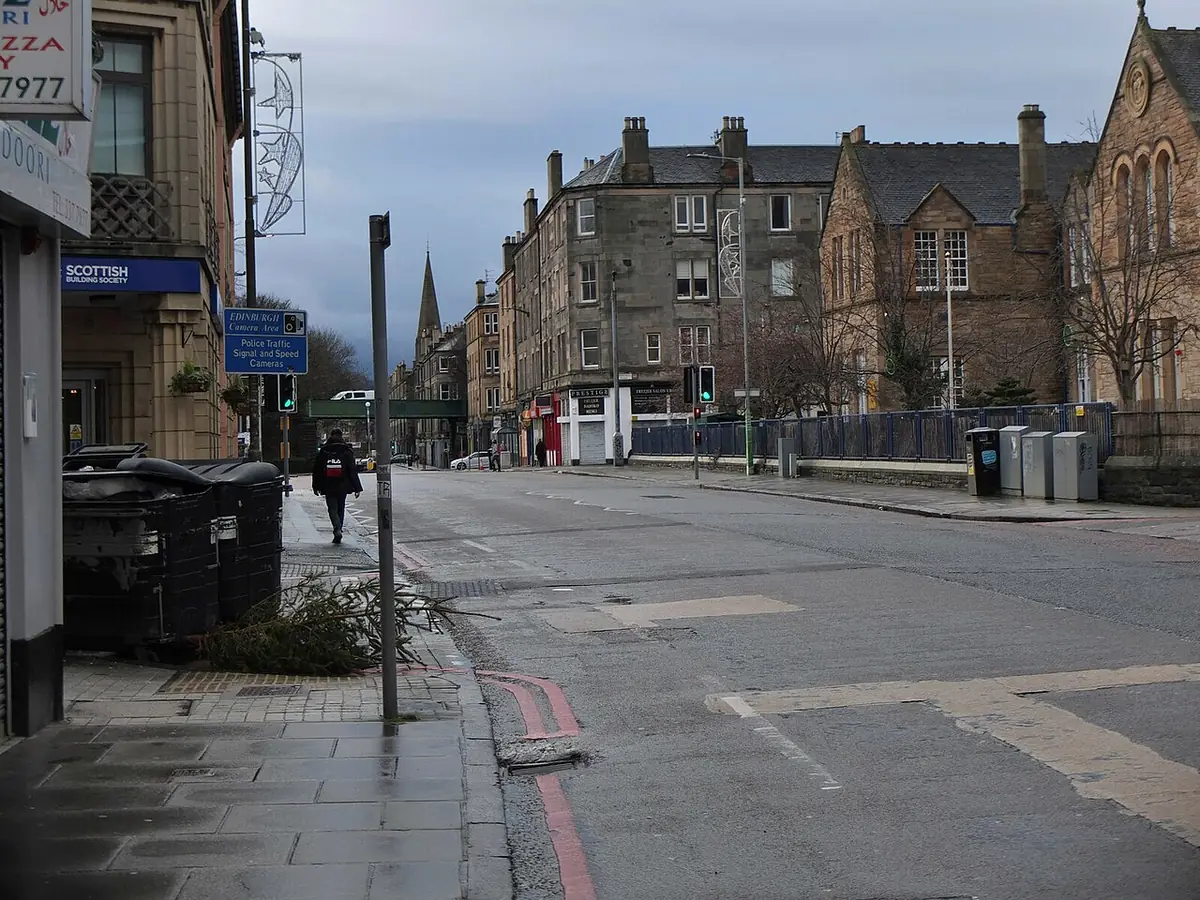
Buying a house in Edinburgh means getting to grips with a market shaped by a legal tradition all of its own and by high expectations around heritage property. This guide sets out the essential mechanics for making your purchase in the Scottish capital a secure one.
Get the app
What nobody tells you.
Real prices, hidden costs and the traps to check before you commit.
Buying a house in Edinburgh: stone heritage on one side, the cost of upkeep on the other
Scroll
Buying a house in Edinburgh: stone heritage on one side, the cost of upkeep on the other
Buying a house in Edinburgh means getting to grips with a market shaped by a legal tradition all of its own and by high expectations around heritage property. This guide sets out the essential mechanics for making your purchase in the Scottish capital a secure one.
Written by the ting.ad editorial team ·
Edinburgh in Street View: drag to look around.
That tension between beauty and technical constraint is felt differently depending on your way of life and your daily habits.
Putting money into property in Edinburgh is not simply a matter of buying square metres. It means entering a market where Georgian and Victorian architecture sets the rules and imposes its structural demands. Between the strict heritage protection that limits what can be changed and the reality of Scottish winters, every owner has to measure the gap between the aesthetic charm of an old building and the real financial burden of keeping it in good order. Buyers quickly discover that a property's value in Edinburgh rests as much on its ability to get through the decades without failing as on its precise location.
Architectural character and lasting visual appealvsThe renovation constraints that come with listed buildings
Owning a Georgian or Victorian house gives you an incomparable visual setting and solid long-term heritage value. In return, the restrictions local authorities place on external alterations turn even a modest insulation or modernisation project into a regulatory obstacle course.
Historic centrality and the scarcity of spacevsCramped plots and the absence of private parking
Living in central areas such as New Town or Stockbridge guarantees immediate proximity to cultural and economic amenities. That centrality is paid for, though, in reduced outdoor space, closely attached neighbours and chronic difficulty parking a vehicle day to day.
Rental demand and resale liquidityvsThe specific tax regime and the initial maintenance costs
Population pressure and Edinburgh's permanent appeal to visitors keep resale prices holding up very well. But that apparent liquidity masks high entry costs, including local taxes and the unavoidable need to deal with rising damp and ageing roofs.
What way of life really suits an older Scottish house?
Old stone houses on Calton Hill, close to the centre — Photo: Jennifer Petrie · CC BY-SA 2.0 · Wikimedia Commons
Moving from another country's housing system into the British market also means taking on some fundamental cultural and legal differences.
Traditional Scottish housing has a spatial and thermal logic that differs radically from modern construction elsewhere. Volumes are often vertical, rooms are partitioned to hold the heat, and circulation was designed for another era. Choosing to settle into a house in Edinburgh means accepting a trade-off between urban living, residential independence and the management of a property that needs an active presence to keep it maintained.
The active city resident
Terraced town houses near the centre or in the inner neighbourhoods let you do everything on foot or by public transport. You give up large private gardens in exchange for cultural and social life a few minutes away. This is the right option if your professional or personal schedule cannot absorb the demands of a large suburban house.
The family looking for greenery
You have to move away from the hyper-central arteries towards areas such as Morningside or Merchiston to find single-family houses with a real garden. Daily life becomes calmer and the local schools are well regarded, but you have to factor in longer journeys into the business district and accept a noticeably higher purchase budget.
The remote property investor
Buying a house in Edinburgh to let out or to stay in occasionally calls for serious administrative discipline. The rules on shared ownership, the energy assessment obligations and the handling of local tenants all require a reliable management agency to be put in place. Gross yields are often held down by the high cost of the property in the first place.
Property in Edinburgh: what fundamentally changes when you are buying from abroad
Once those legal rules are understood, the choice of area becomes the decisive factor in the quality of your investment.
The Scottish property market runs on legal and commercial rules that consistently surprise buyers trained on procedures from elsewhere. From the binding offer to the central role played by a solicitor rather than a notary, the purchase route carries particular risks and opportunities that are worth mastering before you sign a single document.
From abroad
A preliminary sale agreement signed privately, hedged with multiple get-out conditions
Edinburgh
A formal written Offer submitted through a solicitor, legally binding from the moment it is accepted
In Scotland, once the seller accepts your offer through their solicitor, the agreement is all but final. There is no standard cooling-off period of the kind buyers in many other countries rely on, which forces you to audit the property before you make an offer.
From abroad
A market price estimated by the agency or by the seller
Edinburgh
The compulsory Home Report, containing a structural assessment, a valuation and an energy certificate
The Home Report is provided by the seller before the property goes on the market. It gives an official basis for valuation, but in a tight market buyers frequently bid above that Home Report value.
From abroad
A notary handling the whole transaction and drafting the deeds
Edinburgh
Solicitors used exclusively for negotiation, title checks and the transfer of funds
The Scottish solicitor acts both as legal adviser and as negotiating agent on the purchase. You need to appoint one at the very start of your search so they can prepare offers in the required form.
From abroad
Taxation resting mainly on transfer duties and a standard annual property tax
Edinburgh
Payment of Land and Buildings Transaction Tax (LBTT), with its own progressive bands
Local acquisition taxes are calculated on Scottish bands distinct from those in the rest of the United Kingdom, including surcharges on second homes and buy-to-let purchases that have to be anticipated in the financing plan.
Which part of Edinburgh should you target, given your lifestyle and your budget?
Duddingston and its loch, a green corner of the city — Photo: Bill Boaden · CC BY-SA 2.0 · Wikimedia Commons
Those geographic disparities feed straight through into the price levels the Scottish market works with.
Edinburgh's urban structure is made up of sharply contrasted micro-markets, separated by the city's volcanic geography. From the quiet, well-heeled residential areas in the south to the harbour districts changing fast to the north, each sector sets its own pace, its own building type and its own community. Comparing these areas is how you avoid the classic mistake of buying a property that does not fit your daily journeys.
New Town and Stockbridge
An elegant cultural buzz, paced by farmers markets and rows of aligned Georgian facades.
Suits
Buyers after architectural prestige, walkability and a lively neighbourhood life.
Trade-off
Some of the highest prices per square metre in the city, closely attached neighbours and very limited parking options.
Morningside and Bruntsfield
The atmosphere of a peaceful residential village, dominated by independent shops and family parks.
Suits
Families looking for stability, excellent schools and generous living space.
Trade-off
An extremely competitive market where family homes sell quickly and above the advertised price.
Leith and the Shore
A cosmopolitan harbour energy, mixing industrial regeneration, serious restaurants and a maritime feel.
Suits
Investors and first-time buyers after growth potential and an alternative setting.
Trade-off
An urban transition still uneven from street to street, and a longer distance from the historic core.
What does buying a house in Edinburgh really cost?
Beyond the headline purchase price, the legal nature of the title brings technical realities that should not be overlooked.
Edinburgh's property market shows averages above the rest of Scotland, driven by the city's economic pull and its appeal to visitors. Transactions are settled not on the advertised price alone, but on the gap between the Home Report valuation and how far buyers bid above it. Setting a working budget means building in the acquisition taxes and the local legal fees from the outset.
edinburghFor saleHouseestimate
Median price / m²£3,038Half the apartments sell below this
Median price£369kthe average is 14% higher — a few very large properties pull it up
Most common2 bedrooms56 % of listings
Average size116 m²
By number of bedrooms
Bedrooms
Share of market
Avg price
Price / m²
Avg size
2most common
56 %
£350k
£3,230
109 m²
3
33 %
£452k
£3,038best value / m²
149 m²
4
11 %
£591k
£3,070
193 m²
Each row is an average, compared against the area average of £3,198 / m². These are indicative estimates of a typical local market, not a measured sample of live listings. Check current listings before relying on them.
Full and outright ownership or a shared regime: what can you actually hold?
General Register House, in the heart of the city centre — Photo: 瑞丽江的河水 · CC BY-SA 4.0 · Wikimedia Commons
That legal vigilance has to apply from the earliest stages of the transaction, and above all when the financial offer goes in.
Contrary to a common assumption, not every house confers total autonomy over its plot and its structure. Depending on whether you go for a detached house or for one that forms part of a larger whole, the level of legal and financial responsibility changes completely. Understanding how the charges are shared is indispensable if you want to anticipate future spending.
Sole outright ownership (heritable / freehold)
You own the building and the land exclusively, without depending on a co-ownership body for decisions about structural maintenance or roof repairs. This status guarantees maximum freedom to alter the property and makes day-to-day management considerably simpler.
What it changesYou carry the entire cost of renovation alone, which calls for a solid cash reserve to maintain older elements such as roof timbers or dressed stone facades.
The shared or party-wall regime (tenement / shared maintenance obligations)
Common in subdivided structures and in older houses grouped into blocks, this system imposes legal obligations shared between neighbours for the upkeep of common parts, roofs and foundations. The responsibilities are written into the original title deeds.
What it changesA disagreement between owners about the timing or the cost of necessary works can hold up urgent repairs, creating a risk that the surrounding fabric deteriorates faster.
The golden rule to understand before you put money down on a Scottish property
Once that critical step is behind you, the operational timetable of the transaction unfolds according to a strict protocol.
The Scottish purchase system does not forgive improvisation. As soon as your solicitor puts in an official written offer (Formal Offer) and the seller formally accepts it, the transaction enters an all but final phase. There is no safety net comparable to the post-signature cooling-off period that buyers in many other countries take for granted.
A careful reading of the Home Report supplied by the seller, before you take any active step.
Appoint a local solicitor to examine the restrictive clauses in the title deeds.
Have an independent expert check the warning points in the technical report (damp, roof).
Confirm the final financing plan with your bank, with no late conditions attached.
Submit the formal offer through your legal adviser within the timescales the market works to.
Conclusion of Missives, the binding agreement that definitively seals the sale.
How a property transaction in Edinburgh unfolds, step by step
Waterloo Place, stone façades above street-level shops — Photo: Drnoble · CC BY-SA 4.0 · Wikimedia Commons
Anticipating each party and each administrative milestone is what gets you through the buying process without a break in the chain. From the first viewings to the day the keys change hands (Date of Entry), coordination between your solicitor, the selling agent and the lenders is the keystone of the whole operation.
The buyerSelecting properties and reading the Home ReportA thorough look at the technical assessments and a shortlist of properties matching your criteria in the areas you have targeted.
The solicitorRegistering your interest (Note of Interest)Your adviser formally tells the seller where you stand, which guarantees you will be warned if a Closing Date is set.
The buyer and their adviserSubmitting the Formal OfferDrafting and sending the binding financial offer, including your price terms and the date of entry you want.
The solicitors on both sidesNegotiating the contract terms (Conclusion of Missives)Adjusting the legal terms until they match exactly, which locks the transaction down definitively on both sides.
The lender and the solicitorTransfer of funds and registration (Settlement Day)Payment of the full purchase price, settlement of the applicable local taxes and official registration of the title with Registers of Scotland.
House or flat in Edinburgh: weighing shared walls against outright ownership
Once that fundamental choice is made, it is worth turning to the financial reality of settling in.
Choosing between a Victorian house in dressed stone and a flat in a Georgian block in Edinburgh does not come down to simple aesthetic preference or a superficial calculation of floor area. It is above all a structural trade-off between managing a complete property on your own and joining a co-ownership often governed by complex historic rules. Single-family houses, whether in the residential streets of Morningside or along the leafy arteries of Marchmont, offer total freedom over the exterior and free you from compulsory collective decisions. You own the roof, the load-bearing walls and the small private garden, which removes potential friction with immediate neighbours when insulation work or a roof replacement comes round.
Going for a flat, on the other hand, locally called a flat or a tenement, means accepting a form of collective governance deeply rooted in Scottish culture. Running the building frequently rests on owners' associations or on a professional factor whose effectiveness varies considerably from one street to the next. Common charges can swing sharply when the sandstone facades need cleaning or the slate roofs need restoring to the strict requirements of the heritage conservation authorities. Sharing walls and floors also means sound insulation that can be precarious in older construction, where original floorboards transmit impact noise if the acoustic work has not been fully redone by previous owners.
Financially, the valuation gap between these two property types has widened in recent years, with houses that have gardens fetching a premium against family demand structurally greater than the available supply. Flats in the historic centre or in the smart streets of New Town, for their part, enjoy formidable liquidity and strong rental potential, but their net yield can be eaten away by pooled maintenance costs and by tightening regulatory obligations on energy performance. Your decision therefore has to weigh the peace of mind of an independent private space against the constraints and the advantages of dense urban living, where pooling the structural work paradoxically protects the capital value over the long run.
It is also worth examining how location affects your daily life within the Scottish capital. A house far from the centre will guarantee complete quiet and generous living space, but it will expose you to longer journeys and greater dependence on public transport or a car. A central flat, though more compact, drops you straight into the cultural energy of the city, letting you do everything on foot or by bike despite the gradients that characterise the local topography. In the end, an honest reading of your way of life over the medium term should outweigh every other consideration, because Edinburgh's property market does not forgive a wrong turn taken at the start between these two ways of living.
What overall budget do you need to settle in Edinburgh for the long term?
Dalry Road and its sandstone tenements — Photo: Jim Barton · CC BY-SA 2.0 · Wikimedia Commons
With the financial frame in place, it is time to look at how an ordinary day actually runs for residents here.
Drawing up a working budget for buying and maintaining a house in Edinburgh means building in the full set of additional costs, which go well beyond the simple purchase price advertised on the property portals. Between the tax rules specific to Scotland, the insurance costs tied to the weather and the energy spending inherent in older building stock, the real bill often turns out higher than in the rest of the United Kingdom. This section sets out, line by line, the amounts to anticipate so that your first year in the Scottish capital brings no unpleasant financial surprises.
Acquisition costs and up-front taxation
Cost item
Estimated range (GBP)
Analysis
Average purchase price of a house
350,000 GBP - 650,000 GBP
Varies sharply with the neighbourhood, the living area and whether there is a private garden.
LBTT (Land and Buildings Transaction Tax)
7,500 GBP - 35,000 GBP
Scotland's progressive tax on property transactions, heavier where the purchase is a second home.
Legal fees and solicitor
1,500 GBP - 3,000 GBP
In Scotland, solicitors handle the negotiation, the offer and the transfer of ownership alike.
Survey report (Home Report)
500 GBP - 1,000 GBP
A compulsory document commissioned by the seller, covering the valuation, the energy certificate and the condition of the property.
Acquisition costs in Scotland necessarily include the Home Report, a local feature that protects the buyer up front but represents an initial cost that should not be dismissed.
Annual running budget
Charge
Average annual amount
What makes it vary
Council Tax (local property tax)
1,400 GBP - 3,300 GBP
Classified in value bands (Bands A to H), with Edinburgh applying particularly high rates.
Home insurance (buildings and contents)
450 GBP - 900 GBP
Exposure to storms and the age of slate roofs weigh heavily on premiums.
Heating and energy (gas and electricity)
1,800 GBP - 3,200 GBP
The cost depends on the thermal insulation of older stock, often rated D or E on the energy scale.
Maintenance and structural repairs
2,000 GBP - 5,000 GBP
An essential provision for preventing water ingress and maintaining joinery or the roof.
Energy and local tax weigh heavily on a household's annual budget, which makes close reading of the energy certificate included in the Home Report indispensable.
Health, schools and transport: what does an ordinary Tuesday in Edinburgh look like?
Beyond that well-oiled routine, some less visible aspects of the property market deserve your full attention before you sign.
To judge whether a future purchase makes sense, nothing replaces walking through a typical weekday hour by hour. Between morning journeys on arteries that can be saturated, the schooling of children within a well-regarded Scottish education system and access to local health services, each hour reveals the logistical strengths and weaknesses of where you live. This timeline highlights the points of friction and the conveniences the capital's infrastructure offers.
07:30Residential neighbourhood (for example Bruntsfield)Waking up and getting the family ready. The streets come to life gradually with school buses passing and people walking to the local schools.
08:30Catchment schoolDropping the children at the state primary. The Scottish system favours neighbourhood integration, letting families in well-served areas do everything on foot.
09:15Journey to the business district (Lothian Road / George Street)Using the Lothian Buses network, extremely dense and punctual, or cycling along the council's protected bike lanes.
12:30Local shops and lunch breakA quick shop with the independent traders in the neighbourhood. Local retail culture remains very much alive across Edinburgh's various wards.
16:30GP surgery or pharmacyHandling health appointments. Registering with the local NHS practice is compulsory as soon as you arrive, with waiting times that vary with how stretched the area is.
18:00Home again and neighbourhood lifeBack with the family, quiet time and the logistics of running the household. The public parks offer immediate fresh air before nightfall.
20:00The family homeA quiet evening. The sound and thermal insulation of the house comes into its own here, keeping the place comfortable against the cool Scottish night.
What the property listing will not tell you about homes in Edinburgh
These grey areas explain why some buyers become disenchanted within months of getting the keys.
The promotional descriptions published on property portals shine with optimism, but they regularly leave out major technical and regulatory constraints particular to Scottish housing stock. Between the specifics of historic land tenure, the strict obligations to conserve stone facades and the reality of atmospheric damp, many crucial elements only become visible after careful analysis by independent professionals. Here are the blind spots any serious buyer must audit.
The restrictions attached to listed buildings
If your house or flat is listed (Category A, B or C), the smallest change of windows, external paint or heating system requires a complex administrative permission (Listed Building Consent), lengthening timescales and pushing up the cost of works.
The real condition of the roof and of the zinc or slate guttering
Older roofs take the full force of Scottish winter storms. Water ingress into the loft that goes undetected can eat away at the timber structure and lead to colossal repair bills running into tens of thousands of pounds.
The heating system and the energy performance certificate (EPC)
Many Victorian houses carry poor energy ratings (D or E). Without internal insulation or double glazing suited to heritage standards, your gas bills will climb through the long winter months.
Residential parking rules and paid permits
Owning a car in Edinburgh guarantees you nothing about the right to park outside your own door. The Controlled Parking Zones system requires annual permits whose prices rise steadily in order to discourage solo driving.
The handling of party walls and shared responsibilities (tenement law)
Even for a terraced house, the obligations to maintain party walls and shared access are governed by strict Scottish laws that require a cordial and financial understanding between neighbours for every intervention.
The property disappointments people discover six months after moving in
Faced with these technical and financial demands, it matters just as much to know whether this market is genuinely made for you.
Looked likeA charming period house full of character, with its original floorboards and high ceilings.
Turned outA building that leaks heat and is hard to warm properly, producing persistent draughts and punishing energy bills through the heating months.
Would have caught itInsisting on an independent second thermal assessment and checking that loft and underfloor insulation are up to standard before submitting a final offer.
Looked likeA peaceful, leafy residential street, perfectly quiet at the time of the agent's viewing.
Turned outA busy route at peak hours for drivers trying to get round the city centre traffic, making it impossible to open the windows in the morning.
Would have caught itVisiting the neighbourhood at different times of day, in particular between 07:30 and 09:00 and again at the end of the afternoon, to gauge the real level of traffic.
Looked likeA fine investment opportunity with quick renovation potential and no major administrative constraint.
Turned outRenovation work blocked outright after the planning service refused to approve changes to external joinery on a listed building.
Would have caught itConsulting Edinburgh's planning department and a specialist local architect before you even make a firm offer.
Looked likeCommon charges or neighbourhood maintenance costs that looked modest and predictable when reading the Home Report.
Turned outAn extraordinary owners' meeting voting through emergency roof works requiring several thousand pounds per household immediately.
Would have caught itGoing through the minutes of owners' meetings over the past three years and checking how much is actually held in reserve for major works.
Looked likeEasy parking on the adjacent street, with no time limit and no notable additional cost.
Turned outResidential parking completely saturated once evening comes, and an obligation to pay for an expensive council permit subject to strict quotas.
Would have caught itAsking the council how saturated resident permits are on the street in question, and testing the parking on a weekday evening.
Which sort of buyer should stay out of the Edinburgh property market?
It is now time to draw the conclusions that will confirm your purchase, or push it back.
The general enthusiasm the Scottish capital generates through its cultural and economic energy should not hide the potential mismatch between certain ways of life and the structural constraints of the local market. Buying property in Edinburgh demands flexibility, a solid financial base and the capacity to take on a demanding older asset. Some prospective buyers expose themselves to near-certain disappointment if they commit without measuring these fundamentals.
The impatient investor after immediate, effortless rental returns
→Goes for an older property to renovate in the historic centre in order to run it as a short-term let.
Scottish regulation of short-term lets has become extremely strict, requiring costly licences subject to neighbours' approval, which cuts drastically into the hoped-for return.
The first-time buyer on a knife-edge budget with no safety savings
→Borrows to the limit of their capacity to move into a Victorian house that needs work.
The slightest failure of the roof or the heating system can swallow the available budget, tipping the household into an untenable financial position given the high cost of local labour.
The owner allergic to administrative and heritage constraints
→Buys a listed period property in New Town or Old Town intending to change the layout as they please.
Heritage conservation law (Historic Environment Scotland) prohibits any change visible from public space without prior consent, turning renovation plans into an obstacle course.
The highly mobile household expecting to resell within three years
→Buys a family house quickly in order to settle, without allowing for transaction costs.
Between solicitor's fees, the cost of the Home Report and above all the LBTT payable on purchase, the horizon over which a property purchase in Edinburgh pays for itself generally exceeds four or five years of ownership.
So, are you ready to take the step and buy property in Edinburgh?
Committing to the purchase of a house or a flat in Edinburgh is a long-term commitment that tolerates neither approximation nor haste. The property market in the Scottish capital has rules of its own, dictated by the rigour of the competitive solicitor-led offer system and by the upkeep demanded of an exceptional historic architectural heritage. If you have taken the measure of the additional costs, the local taxes and the constraints that come with older stock, you have the keys you need to settle successfully in one of the most dynamic cities in the United Kingdom.
The key to success lies in your ability to audit properties clear-headedly, leaning systematically on survey reports and on the opinion of independent local professionals. Never give in to the psychological pressure of an impulsive offer driven by a tight market. Every old house tells a story you have to know how to listen to if you want to anticipate future works and preserve your financial peace of mind season after season.
In the end, owning property in Edinburgh offers an incomparable quality of life, between the cultural buzz of the festivals, the beauty of the volcanic landscape around the city and the solidity of a market that has historically proved resilient. If your plans fit a medium or long-term view of stability, and if your finances include the necessary margins of safety, the moment has come to structure your approach alongside competent professionals.
Related questions
How does the Offers Over system work in Scotland?
In Scotland, homes are generally marketed with a floor price signalled by the phrase Offers Over. Buyers submit a sealed offer through their solicitor, and the property goes to the highest bidder, or to whoever the seller judges to have the strongest terms, often well above the initial Home Report valuation.
What is the Home Report, and is it compulsory when buying in Edinburgh?
The Home Report is a complete, compulsory dossier that every seller must provide before putting a property on the market. It contains a market valuation carried out by a chartered surveyor, a report on the structural condition of the building, and an energy performance certificate.
What legal fees and taxes should you budget for when buying a property in Edinburgh?
Scotland has no notary in the sense buyers from many other countries expect; instead a solicitor handles the whole legal transaction. The buyer pays Land and Buildings Transaction Tax (LBTT), a progressive tax charged in acquisition bands, together with the solicitor's fees and the land registration costs.
Is it difficult to renovate an old listed building in Edinburgh?
Yes. Work on listed buildings (Categories A, B or C) is tightly regulated by Historic Environment Scotland and by the city's planning service. Any intervention that changes the external appearance, or certain original internal features, requires a specific permission called Listed Building Consent.
How is local property tax (Council Tax) calculated in Edinburgh?
Council Tax is calculated from the property's assessed value as at 1 April 1991, sorted into eight separate bands running from A (the cheapest properties) to H (the most expensive). Edinburgh applies particularly high rates compared with other parts of the United Kingdom.
What precautions should you take about damp in older homes?
The dressed stone walls and slate roofs of Edinburgh's older building stock are especially exposed to wet oceanic weather. It is essential to check for rising damp, the state of the chimney flashings and proper ventilation in the loft space when going through the Home Report inspection.
Is it easy to park on Edinburgh's residential streets if you have a car?
Parking in Edinburgh's central and inner areas is regulated by Controlled Parking Zones (CPZ). Residents have to buy a paid annual permit from the council, and getting one can be subject to waiting lists or to strict quotas.
How long does it usually take to complete a property transaction in Scotland?
Once the seller has accepted your offer, concluding the sale (missives concluded) and the actual transfer of ownership (settlement date) generally take between four and eight weeks, although that timescale can vary with the legal complexity of the file and with the purchase chain.
How do you choose the best neighbourhood for a family move to Edinburgh?
The choice of area comes down to several key criteria: how close you are to well-regarded schools, access to green space such as the Meadows or Holyrood Park, how smoothly public transport gets you to the business district, and how quiet the residential streets are overall.
What are the traps to avoid when buying a flat in a tenement?
Pay extremely close attention to the general condition of the common parts and of the shared roof, and to the rules under which the building is run (a tenants' association or a factor). Maintenance of the building's structure is split between the owners according to shares that can, at times, be a source of disputes.
Property review of ting
No ting properties in Edinburgh yet
Be the first — share it on ting and it shows up right here.