Buying an apartment in Vancouver means mastering the specifics of a dynamic, heavily regulated market. This decision guide walks you through it step by step: weighing one neighbourhood against another, understanding the real costs and securing your purchase on the best possible terms.
Get the app
What nobody tells you.
Real prices, hidden costs and the traps to check before you commit.
Why floor area matters less than the view and the light in Vancouver
Scroll
Why floor area matters less than the view and the light in Vancouver
Buying an apartment in Vancouver means mastering the specifics of a dynamic, heavily regulated market. This decision guide walks you through it step by step: weighing one neighbourhood against another, understanding the real costs and securing your purchase on the best possible terms.
Written by the ting.ad editorial team ·
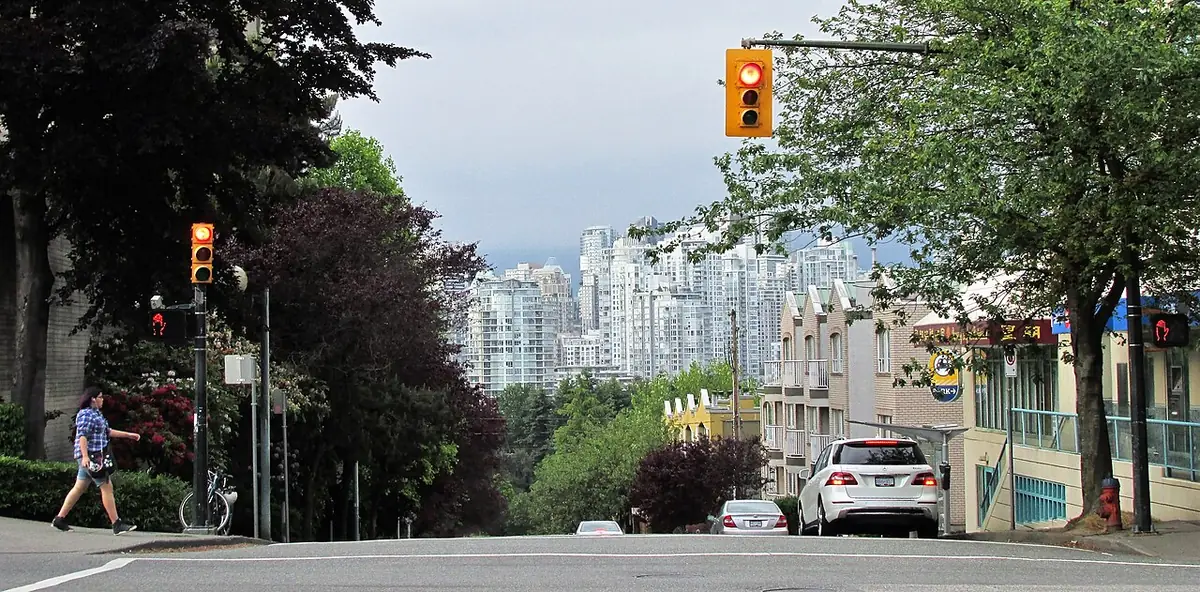
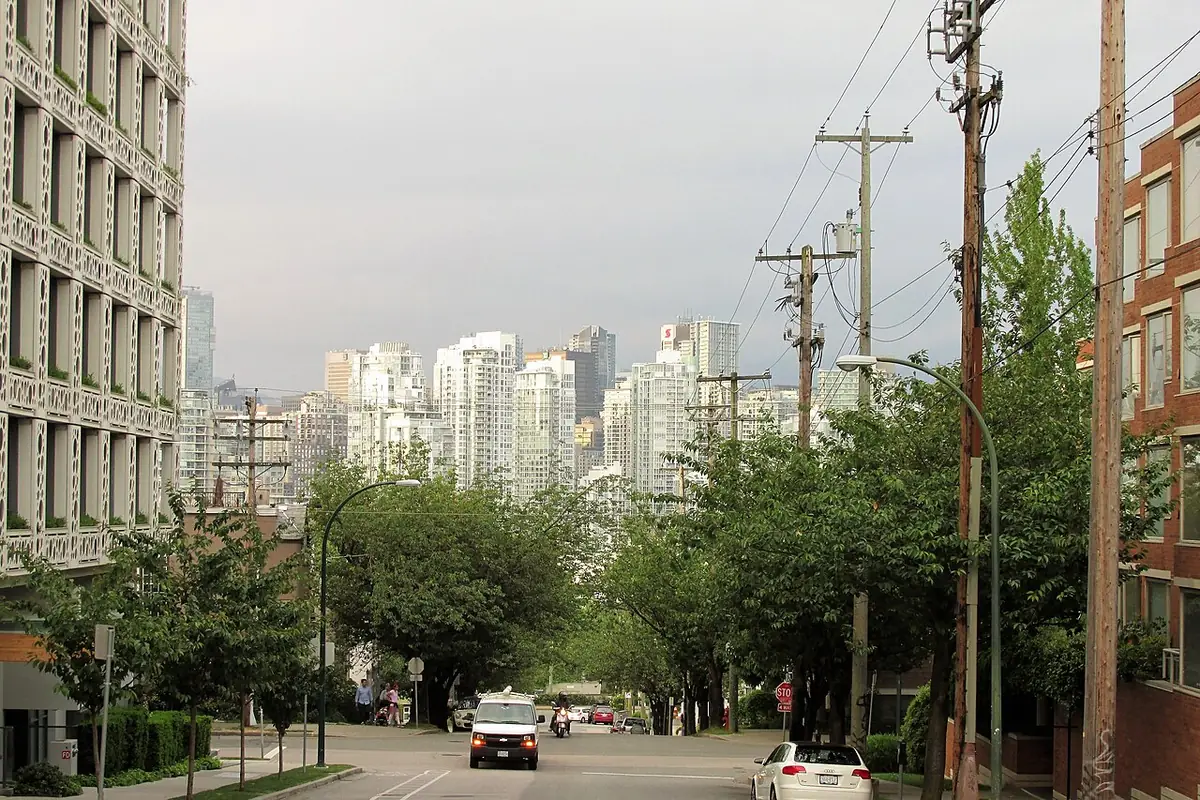
Laurel Street, Vancouver in Street View: drag to look around.
This opening tension between space and light shapes your daily life directly, and it plays out differently depending on the kind of buyer you are.
In Vancouver, living space is negotiated by the square metre, in the glass towers downtown as much as in the quieter residential neighbourhoods. You are constantly trading raw floor area against the quality of natural light, which the ocean mist often filters. The compromise between a large but dark home and a smaller one bathed in light completely redefines what comfort means here. Understanding that local rule stops you regretting a choice made out of the volume habits you brought with you.
Aiming for the largest possible floor area in the area you wantvsFavouring a south or west orientation even if it costs you fifteen square metres
Rainy winters make interior brightness critical for morale. A tighter home that faces the right way clearly beats a large one facing north.
Buying a set back unit with nothing directly oppositevsAccepting a dense tower with an open panorama over the North Shore Mountains or English Bay
Verticality is an integral part of the city's shape. Height more than makes up for the absence of private outdoor land and turns the daily view into a major asset.
Treating the number of rooms as the main resale criterionvsAssessing how flexible the spaces are and whether there is a den or a finished solarium
Apartment floor plans frequently include windowless multipurpose rooms known as dens. How you actually use them determines everyday value far more than the official bedroom count.
Chasing absolute quiet far out on the edge of the regionvsAccepting urban bustle and being right next to a SkyTrain station
Easy movement on public transit wins out over residential isolation. Living close to the main transit spines guarantees permanent accessibility without depending on a car.
What kind of buyer are you in the face of Vancouver's property market?
These local aspirations run into cultural and regulatory realities that differ sharply from the ones you already know.
Buying an apartment in Vancouver suits profiles whose day to day expectations differ radically from the standards most newcomers arrive with. Whether you are a professional chasing proximity to the tech employment hubs or a resident planning ahead for retirement, the choice of neighbourhood and of strata building dictates your access to nature and to services. Each situation carries its own regulatory constraints and management costs, and they are worth anticipating before you sign.
Urban tech professional
You value immediacy and a drastic cut in commuting time. The residential towers of Downtown or Coal Harbour give you built in services such as a concierge desk, a gym and secure parking. In exchange you have to accept high strata fees, sometimes called maintenance fees, which rise steadily. Neighbourhood life is intense, but your outdoor space is often limited to a compact balcony or a shared rooftop terrace.
Resident looking for balance
You would rather move a little away from the very centre to find tree lined streets and the feel of an urban village. Neighbourhoods such as Kitsilano or Mount Pleasant answer that with lower density buildings and a mix of local shops. Your daily life revolves around parks, bike lanes and independent cafes. Prices per square metre remain high, but the residential quality of life more than compensates for being a little further from the financial towers.
Considered long term investor
Your approach rests on the long term solidity of property in one of Canada's most sought after cities. You study the strata corporation's health record, the contingency reserve fund and the history of approved work in fine detail. Sustained rental demand guarantees a high occupancy rate, but local taxation and the rules governing short term rental demand rigorous management. You are buying less for immediate yield than to preserve capital in an area hemmed in by hard geographic limits.
What changes radically when you arrive from abroad to buy in Vancouver
Once those reference points are in place, you need to map the different parts of the city to choose the address that fits you.
The Canadian property system runs on legal and practical mechanisms that surprise buyers trained in civil law traditions. Between the central role of the Realtor, the way strata fees are structured and the complete transparency of past transactions, the buying process follows strict common law conventions. Ignoring those cultural and administrative differences leads to errors in your financial assessment and to delays in securing the home you want.
From abroad
Negotiating directly with the owner or with a single legal officer acting for both sides
Vancouver
The standard use of licensed real estate agents representing each party
Commissions are built into the advertised sale price and paid by the seller, but the whole negotiating dynamic runs through your respective agents.
From abroad
Fixed building charges, with unforeseen work voted through at a general meeting
Vancouver
A mandatory Depreciation Report and strata fees scaled to the services provided
You get an extremely detailed record of the building's condition, which removes the nasty surprises around major roof or facade work.
From abroad
A private preliminary sale contract signed at the agency
Vancouver
A contractual offer to purchase carrying conditional clauses, known as subjects
The commitment becomes legally binding the moment the financing or inspection subjects are removed in writing.
From abroad
A single public officer drafting and authenticating the final deed
Vancouver
The role of the notary public or of a lawyer specialising in conveyancing
Transfer of ownership and title searches run through a secure digital protocol rather than through a traditional notarial office.
Which Vancouver neighbourhood matches your lifestyle and your budget?
That geographic variety translates into strict financial realities worth examining in detail.
Vancouver is a mosaic of neighbourhoods with strongly marked identities, separated by traffic arteries or arms of the sea. Where you settle determines your travel time to amenities, your exposure to natural spaces and the architectural character of your home. Every district strikes its own balance between urban energy, residential calm and budget constraints, and it deserves an objective look.
Downtown and Coal Harbour
Permanent urban buzz, punctuated by float planes coming and going and by the harbour right there. The atmosphere is dense, modern and highly vertical.
Suits
Working people after a car free lifestyle, with a minimal walk to the office and to restaurants.
Trade-off
Smaller living areas, prices per square metre among the highest in the province and substantial strata fees.
Kitsilano and West Point Grey
A relaxed seaside spirit turned towards the Pacific beaches, leafy parks and shopping streets brought to life by independent boutiques.
Suits
People who love the outdoors, running along the water, and residents after the feel of an urban village.
Trade-off
An older housing stock that sometimes needs heavy renovation, and fierce competition for whatever comes up for sale.
Mount Pleasant and Main Street
A creative, on trend cultural hub, marked by eclectic architecture, craft breweries and a high concentration of art galleries.
Suits
Buyers drawn to community energy, modern urban densification projects and proximity to the main cycling routes.
Trade-off
A fast changing urban landscape that brings frequent construction sites and constant upward pressure on prices.
What does buying an apartment in Vancouver really cost?
Beyond the raw numbers, the legal nature of what you own deserves particular attention.
Vancouver's property market shows high valuations, driven by the scarcity of buildable land between the ocean and the mountains. Working out the cost of buying goes well beyond the headline price on the listing portals. You have to factor in the provincial and municipal property transfer taxes, the legal fees and the recurring monthly strata fees to get an accurate financial picture.
vancouverFor saleApartmentestimate
Median price / m²CA$10,925Half the apartments sell below this
Median priceCA$840kthe average is 14% higher — a few very large properties pull it up
Most common2 bedrooms40 % of listings
Average size73 m²
By number of bedrooms
Bedrooms
Share of market
Avg price
Price / m²
Avg size
1
38 %
CA$670k
CA$12,880 +12 %
52 m²
2most common
40 %
CA$888k
CA$11,385
78 m²
3
18 %
CA$1.14m
CA$10,810best value / m²
105 m²
4
4 %
CA$1.61m
CA$11,500
140 m²
Each row is an average, compared against the area average of CA$11,500 / m². These are indicative estimates of a typical local market, not a measured sample of live listings. Check current listings before relying on them.
What you actually own: freehold strata and leasehold land
Once the legal framework is settled, the sequence of administrative steps kicks in under a precise protocol.
Buying an apartment in Vancouver means understanding the legal structure of ownership, because a significant share of the housing stock sits on long term leases. That local particularity changes not only the initial purchase price but also the resale path of your home. Telling these legal statuses apart is essential if you want to secure your investment for the long term.
Full ownership in a conventional strata (Freehold Strata)
You own an undivided share of the land and the common property, together with an exclusive right over your apartment. This is the most common model and the most reassuring for an international buyer looking for legal simplicity and maximum liquidity at resale.
What it changesYou capture the full benefit of the area's land appreciation without worrying about a lease on the underlying ground running out.
Strata on leased land (Leasehold Strata)
You buy the apartment itself, but the land belongs to a third party, often the city, an institution or a First Nation, for a fixed term that shortens as time passes. Purchase prices carry an attractive discount against the open market.
What it changesYou have to look very carefully at the expiry date of the head lease and at the renewal terms, to avoid a sharp discount as the end of the term approaches.
The order of events to understand before you hand over a deposit
That timeline takes concrete shape in the daily work of the various people involved in the transaction.
Buying in Vancouver follows a strict sequence in which each step validates the one before it. Committing without respecting that order exposes a buyer to financial penalties, or to being unable to assert their rights if a technical dispute arises. Procedural discipline protects the buyer just as much as it assures the seller that the financial proposal is serious.
Preliminary confirmation of your financing capacity with a Canadian financial institution.
Shortlisting the homes you want and touring the neighbourhoods thoroughly with your licensed real estate agent.
Drafting and submitting a formal offer to purchase with subject clauses tailored to your situation.
The inspection period, covering a technical building inspection and a full review of the strata documents by a professional.
Formal removal of the subjects and payment of the deposit into the law firm's trust account.
Signing the final transfer documents and the official handover of keys on the agreed date.
How a property transaction unfolds, step by step
In short, a successful purchase in Vancouver demands method, budget realism and scrupulous respect for local procedure.
The success of your project rests on the effective coordination of professionals whose roles are tightly defined by British Columbia legislation. From the buyer's agent to the legal adviser by way of the building inspector, each one secures a technical or financial part of your journey. Knowing their respective responsibilities lets you steer your purchase with confidence.
The buyer's agentRepresentation and offer strategyThey act exclusively in your interest, analyse comparable prices in the area and draft the contractual clauses of your offer to purchase.
The home inspectorTechnical audit of the apartmentThey examine the state of the plumbing, the electrical system and the finishes, and pick up any hidden defects or signs of moisture ingress.
The strata managerHanding over the administrative documentsThey supply the minutes of general meetings, the depreciation report on the reserve funds and the building's bylaws.
The mortgage brokerStructuring the bank financingThey negotiate the best loan terms with the Canadian banks and validate your file on affordability and tax standing.
The notary public or lawyerSecuring the transfer legallyThey verify that the land titles are valid, orchestrate the transfer of funds and register the transaction officially at the Land Title Office.
Apartment or house in Vancouver: choosing between urban strata living and a detached home
Once the type of home is settled, the central question becomes the financial reality and the sums you will actually commit.
Buying property in Vancouver immediately forces an agonising choice between vertical strata living, concentrated mainly in apartments downtown and along the transit corridors, and a detached house with its own private lot. That decision is not simply a matter of taste or of immediate comfort: it structures your whole financial and logistical routine for the next twenty years. Vancouver's market has a rare quirk, in that the scarcity of land on the peninsula and strict geographic constraints protect the value of vertical homes while pushing single family houses into very high price brackets. Choosing an apartment in a neighbourhood such as Yaletown or Mount Pleasant means accepting communal living, rigorous strata bylaws and monthly building maintenance charges, usually called strata fees, which inevitably rise as the building ages.
Opting instead for a detached house, whether on the East Side or out towards the Burnaby boundary, gives you complete autonomy over what work gets done, no neighbours directly above your ceiling and the use of a garden, but it hands you full responsibility for heavy maintenance. In Vancouver, the particularly damp coastal weather puts facades, roofs and timber foundations through a hard test, turning every maintenance job into a costly and complicated project. House owners therefore have to budget a substantial contingency saving every year to deal with water ingress and ageing infrastructure. In an apartment, that major work is pooled and planned by the strata council through a mandatory contingency reserve fund, whose financial health you absolutely must analyse before signing anything with your notary public or lawyer.
On pure investment terms, an apartment in Vancouver generally stays more liquid, because the pool of potential buyers is far wider, taking in young professionals, investors and first time buyers who simply cannot reach the house market. Apartments near SkyTrain stations appreciate steadily and ride out the swings of the top end market less brutally. Detached houses, on the other hand, carry the intrinsic value of land in a city where geographic expansion is physically impossible. That absolute scarcity of ground has historically given houses a superior long term capital gain potential, despite vertiginous financial barriers to entry. Your choice therefore comes down to your investment horizon, your tolerance for the constraints of strata living and your capacity to manage a property asset single handedly in a demanding climate.
What budget do you really need to live and house yourself in Vancouver?
Beyond pure financial arithmetic, it is the concrete shape of a typical day that will tell you whether the Vancouver way of life suits you.
Building a purchase and living budget in Vancouver goes well beyond the mortgage repayment you agree with your financial institution. You have to fold in a series of recurring costs that newcomers routinely underestimate, from municipal property taxes to strata fees and home insurance, which is particularly expensive in this seismic zone. The tables below set out the unavoidable spending lines for a standard two bedroom apartment in the metropolitan area.
Fixed monthly spending lines for a two bedroom apartment
Budget line
Estimated monthly range
Comment and variability
Strata fees
$450 to $850 CAD
Varies with the age of the building, whether there is a pool or a concierge, and the health of the contingency reserve fund.
Municipal property taxes
$150 to $300 CAD
Worked out monthly from the annual assessed value produced by BC Assessment.
Home insurance (strata deductible)
$60 to $120 CAD
Often needs extra cover for the high deductibles carried on the building's insurance policy.
Utilities (electricity, internet)
$120 to $220 CAD
BC Hydro bills electricity every two months, with peaks in winter for supplementary heating.
These amounts sit on top of servicing the mortgage, and they inflate steadily in line with local labour costs.
One off costs tied to buying property in British Columbia
Nature of the tax or fee
Indicative rate or amount
Effect on your upfront cash
Provincial Property Transfer Tax
1% on the first $200k, 2% up to $2M, 3% above that
Collected by the province when the transfer of ownership is registered at the Land Title Office.
Notary and legal fees
$1,200 to $2,500 CAD
Payment for the professional who verifies the titles and draws up the transfer documents.
Pre purchase building inspection
$500 to $900 CAD
Essential for spotting hidden defects and gauging the future condition of both common and private components.
Municipal transfer tax (where applicable)
Varies by municipality
Applies in certain specific jurisdictions across the metropolitan area, on top of the provincial tax.
Always keep a cash reserve of roughly 3% to 5% of the total purchase price to cover this whole set of closing costs and taxes.
What does an ordinary Tuesday actually look like for a Vancouver resident?
But behind that lively, attractive shop window lie administrative and structural realities the sales brochures keep quiet about.
To judge whether buying in Vancouver makes sense, you have to picture the physical and logistical reality of your journeys and your weekly obligations. Between the changeable weather, heavy use of the TransLink transit network and the topography of the city, every day follows a particular rhythm. This hour by hour run through illustrates the daily trade offs of urban life in this Pacific coastal city.
07:30Apartment or residential neighbourhoodWaking up to a view of the mountains or of tree lined lanes, followed by the essential weather check to choose between waterproofs and sunglasses.
08:30SkyTrain station or bike laneThe morning run downtown on the automated trains of the rapid transit network, or on the protected bike lanes that stay busy all year.
09:15Office or shared workspaceArriving at your desk in the financial or tech district, often after an obligatory stop at an independent cafe for a local espresso.
13:00Urban park or the SeawallA midday break given over to a brisk walk along the Seawall or through a neighbourhood park, to catch the sea air and break up the working day.
18:00Local shops in the neighbourhoodLast minute shopping at a local grocer or neighbourhood market to put dinner together at home without using the car.
20:30Home or outdoor activitiesA quiet evening at home or a spur of the moment cultural outing, making the most of amenities right on the doorstep and of safe streets.
What the glossy sales brochures will never tell you about Vancouver property
Those deliberate omissions often turn into bitter disillusionment for new owners about six months later.
Vancouver's property market runs on internal mechanisms that are complex and at times merciless towards badly informed buyers. Marketing agencies push the beauty of the landscape and the modernity of the interior finishes, but they systematically leave out crucial technical and legal details that dictate a home's real value and comfort over the long run. Here are the decisive items you absolutely must audit before committing financially.
The true state of the strata corporation's reserve fund (Depreciation Report)
This mandatory capital assessment report in British Columbia reveals the astronomical spending coming up to replace roofs, windows or pipework. Ignoring the document exposes a buyer to special assessments running to tens of thousands of dollars within months of the purchase.
The strict restrictions on Airbnb style rental
The City of Vancouver and the bylaws of most strata corporations formally prohibit short term rental. Counting on that rental income to make the mortgage budget work is an extremely risky bet, punishable by heavy municipal fines and immediate strata penalties.
The history of water ingress claims (Leaky Condo Crisis history)
Rainscreen construction became mandatory after a historic crisis of building defects in the 1990s. Buying an older building that has been badly remediated, or that lacks this protection against the constant damp of the Pacific coast, condemns you to prohibitively expensive structural repairs.
The draconian rules on keeping pets and on renting out
Strata bylaws can flatly prohibit dogs over a certain size or cap the number of tenants allowed per unit. Failing to read those clauses closely before buying can turn your ideal home into a daily source of legal conflict.
The misjudgements you only discover after six months in your new home
Given these demands and operational risks, knowing when not to buy matters just as much.
Looked likeA neighbourhood that seemed ultra quiet and perfectly residential during a Saturday afternoon viewing.
Turned outAn area turned into a huge, noisy car park from Monday morning by staff from nearby businesses dodging the paid municipal meters.
Would have caught itVisiting the neighbourhood at different times of the week, particularly at the morning peak and in the evening, to see the reality of traffic and parking.
Looked likeVery low, attractive strata fees that brought the overall monthly bill down.
Turned outAn early warning sign of lax management by a strata council that refused to raise contributions, heading straight for a technically bankrupt reserve fund and emergency repairs.
Would have caught itInsisting on reviewing the minutes of the last three years of general meetings to understand the history of financial decisions and internal tensions.
Looked likeA due north orientation offering soft light and an open view of the distant mountains.
Turned outAn apartment that is dark and freezing for much of the year, needing constant electric heating and quick to develop condensation and mould on the walls.
Would have caught itFavouring a south or west orientation and checking the thickness of the insulating glazing along with how well the building's mechanical ventilation performs.
Looked likeQuick access to downtown, talked up by the seller thanks to a bus route nearby.
Turned outChronically overloaded bus routes at peak times, making journeys unpredictable and turning a theoretical twenty minute trip into an hour long daily saga.
Would have caught itTesting the real journey times yourself on public transit at peak hours before you sign a firm offer.
Who should categorically avoid buying property in Vancouver right now?
It is time now to lay the groundwork for your final decision with clear eyes.
Home ownership in Vancouver is not a universal answer, and for some buyer profiles it is economically destructive. The rigidity of the local market, combined with high interest rates and significant structural maintenance costs, makes buying particularly risky for anyone whose personal or professional situation lacks stability. The profiles below highlight the situations in which renting, or simply waiting, is an infinitely more rational choice.
The young professional whose presence in the metro area is uncertain beyond five years
→Carrying on renting a flexible apartment rather than buying.
The upfront transaction costs, combined with the provincial Property Transfer Tax and the notary or lawyer fees, are hard to amortise over less than five years. Selling in a hurry in a volatile market can cost you a considerable slice of your down payment.
The investor after an immediate, high net rental yield
→Putting their capital into other asset classes or other parts of the country.
The ratio between Vancouver's astronomical purchase prices and rents framed by British Columbia legislation produces some of the lowest gross rental yields in the country, often below the current cost of mortgage financing.
The household with a minimal cash cushion and no room for manoeuvre
→Keeping their cash in a secure savings account and staying in a rental.
Owning property in Vancouver exposes you to sudden financial surprises, whether a strata special assessment to replace the elevator or a sharp rise in monthly payments when the mortgage comes up for renewal.
So are you really ready to take the plunge and buy in Vancouver?
Deciding to buy an apartment in Vancouver means tuning out the ambient talk about missing out and concentrating solely on your own balance of life. The property market in this Pacific city forgives neither financial improvisation nor ignorance of the local strata rules. If you have read the engineering reports, checked the strength of the contingency reserve fund, accepted the reality of the taxes and taken on board that your capital will be locked up for several years, then buying is a solid and durable act of financial stabilisation.
If, on the other hand, you are driven by haste, social pressure or the illusory hope of quick, risk free enrichment, renting stands out as a much healthier and more protective alternative. Renting in Vancouver gives you geographic freedom and peace of mind in the face of building maintenance surprises, sparing you the cold sweats of unexpected strata assessments and fluctuating interest rates. Property here has to be treated as a long term life project, not as a short term speculative product.
Take the time to visit several neighbourhoods in the rain, to talk to residents who have lived for years in the buildings that interest you, and to model your finances rigorously against the worst case rate scenario. Your future purchase should bring you calm, not permanent financial anxiety. If the lights are all green after that careful soul searching, you have everything you need to settle successfully in one of Canada's most fascinating cities.
Related questions
What closing costs are unavoidable when buying an apartment in Vancouver?
Buying property in British Columbia carries costs you cannot escape: the provincial Property Transfer Tax, the fees of the notary public or lawyer handling the file, a technical building inspection and a home insurance policy sized to the strata corporation's deductibles. Together these usually represent between 3% and 5% of the total purchase price.
How do strata fees work in Vancouver?
Strata fees are paid monthly by every owner to cover maintenance of the common property, cleaning, building management, blanket insurance policies and the mandatory funding of a reserve set aside for major future work. The amount varies with the size of the apartment, the age of the building and the amenities on offer, such as elevators or landscaped grounds.
Can you rent your Vancouver apartment on Airbnb?
The City of Vancouver enforces extremely strict rules that prohibit short-term rental in the vast majority of second homes and investment units. On top of that, the bylaws of almost every strata corporation formally ban the practice, with very heavy municipal fines and strata penalties for anyone who tries.
What is the Depreciation Report and why does it matter so much before you buy?
The Depreciation Report is a mandatory assessment document in British Columbia that sets out the technical condition and expected remaining life of a strata building's major components over a thirty year horizon. Reading it tells you whether the reserve fund is deep enough to pay for future roof or facade work without hitting owners with heavy special assessments.
How much do orientation and floor level matter for a Vancouver apartment?
Because of the oceanic climate, with its rainy, dark winters, the way an apartment faces plays a fundamental role in natural light and thermal comfort. South facing or west facing units get a saving dose of sunlight, while ground floor units and north facing ones can suffer from persistent damp and a shortage of brightness.
What effect does the SkyTrain network have on property values?
Apartments within a ten minute walk of a SkyTrain station have traditionally seen extremely strong demand from both renters and buyers. That proximity guarantees better liquidity on the market and protects the value of the property more effectively during a regional slowdown.
Do you really need to hire a buyer's agent in Vancouver?
Working with an agent who represents the buyer is standard practice and generally costs you nothing directly, since the commission is traditionally paid by the seller. A good agent who knows the legal specifics of British Columbia inside out protects you against hidden defects and helps you decode a strata corporation's history.
How are property taxes calculated in the Vancouver area?
Municipal property taxes are calculated each year by multiplying the official assessed value set by the public body BC Assessment by the specific tax rate voted by the City of Vancouver or the municipality concerned. They are payable annually but can be budgeted for on a monthly basis.
What are the risks with buildings put up during the 'leaky condo' crisis?
Between the late 1980s and the early 2000s, many wood frame buildings suffered serious envelope failures against the coastal rain, causing destructive water ingress. It is essential to check whether such a building has been through a full remediation programme including the installation of a rainscreen system.
Is it better to buy in an older strata building or in a new pre-sale development?
Buying new brings the advantage of builder warranties and modern fittings, but it often comes with very high prices per square foot and sometimes with additional taxes. A well maintained older unit tends to offer more generous proportions and mature neighbourhoods, provided you audit the strata corporation's financial and technical health rigorously.
Property review of ting
No ting properties in Vancouver yet
Be the first — share it on ting and it shows up right here.