Putting a credible value on an apartment in Vancouver takes a rigorous grasp of local specifics, of how strata ownership is structured, and of the financing rules that apply in British Columbia. This guide lays the groundwork you need to read an estimate lucidly, well away from received ideas and sales talk.
Get the app
What nobody tells you.
Real prices, hidden costs and the traps to check before you commit.
Why valuing property in Vancouver unsettles your usual reference points
Scroll
Why valuing property in Vancouver unsettles your usual reference points
Putting a credible value on an apartment in Vancouver takes a rigorous grasp of local specifics, of how strata ownership is structured, and of the financing rules that apply in British Columbia. This guide lays the groundwork you need to read an estimate lucidly, well away from received ideas and sales talk.
Written by the ting.ad editorial team ·
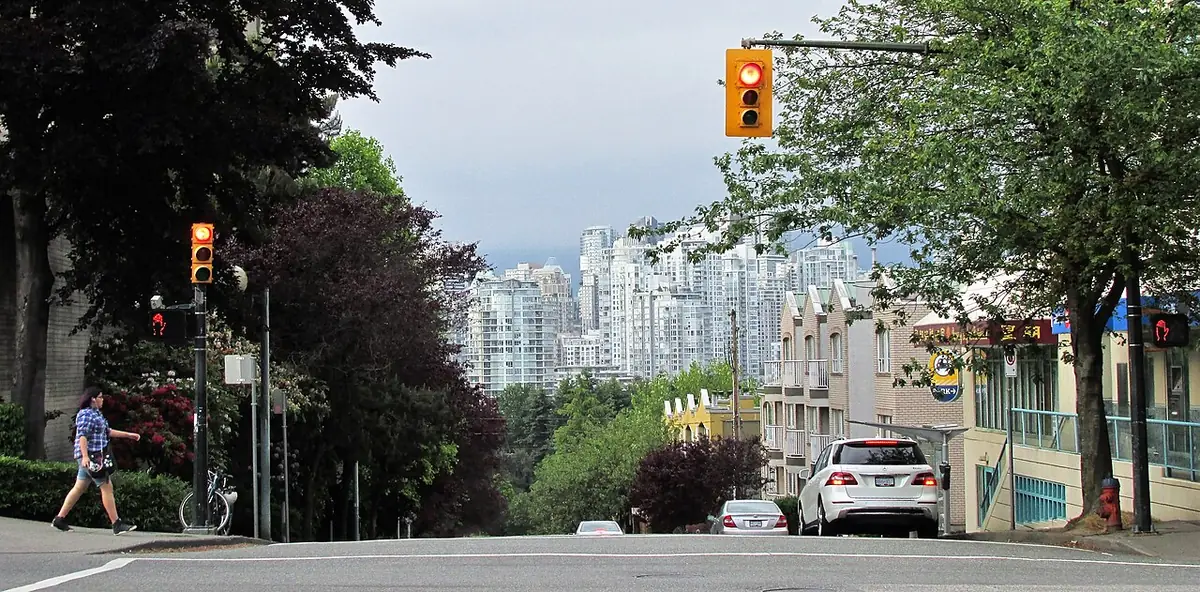
Laurel Street, Vancouver in Street View: drag to look around.
Understanding that financial duality is the first step before working out how your own apartment sits against local expectations.
Valuing an apartment in Vancouver resembles no other North American market, because of a topography squeezed between sea and mountains. On one side, prices per square metre reach levels comparable to the largest cities in the world. On the other, the quality of urban life and the immediate proximity of nature create a perceived value that justifies those figures for many owners. That permanent tension between land scarcity and geographic appeal sets the reality behind every estimate in the metropolitan region.
Constant upward pressure on the headline figurevsStructural protection of value over the long run
Vancouver's geographic scarcity, hemmed in between the Pacific Ocean and the Coast Mountains, mechanically limits urban expansion. That physical constraint keeps property attractive despite high starting valuations, which is precisely why estimates here hold up better through soft patches than in cities that can sprawl.
High strata fees in the modern towersvsDirect access to premium facilities and services
Recent buildings come with full amenities such as gyms, concierge services and private green space. Those advantages translate into significant monthly charges, and any estimate that ignores them overstates what a buyer is really willing to pay.
An extremely tight and heavily regulated rental marketvsLegal certainty and a transparent framework for owners
Accepting British Columbia's strict rules on letting protects the asset against arbitrary treatment. In exchange, day to day management demands absolute administrative rigour, and a unit with a clean compliance record values more easily than one with a disputed history.
New stock that can feel standardised in the large developmentsvsEnergy efficiency standards among the strictest in North America
Recent apartments favour thermal insulation, heat pumps and durable materials. That cuts running energy bills sharply while delivering remarkable acoustic comfort, and it is one of the clearest premiums a valuer can attach to a newer building.
Which kind of apartment are you valuing against the demands of the Vancouver market?
With your profile clear, it is time to measure what makes valuation practice here so different from the habits you arrived with.
An apartment in Vancouver is bought for a particular way of living, and an estimate that misreads the geography will miss badly. Whether the unit works as an urban base, a long-term rental holding or a main home for a family, the criteria that drive the figure change radically. Here is how each situation squares with conditions on the ground in the British Columbia metropolis.
Downtown and the central core
Living in central districts such as Downtown or Yaletown means giving up the car in favour of walking, cycling and the SkyTrain network. Apartments there are compact, often designed with rigorous space optimisation to compensate for smaller floor areas. That is what the estimate is really pricing: minimal commuting time for an active professional. In exchange, the figure has to absorb urban noise, while carrying some of the highest per square metre values in the province.
Semi-residential districts such as Kitsilano
Areas such as Kitsilano or the streets around Queen Elizabeth Park offer a remarkable compromise between city life and natural calm. Buildings are generally lower and sit better among tree-lined streets with quick access to the beaches. Estimates here reward the urban village atmosphere that couples and settled buyers look for. The trade-off is a higher value per equivalent floor area than the downtown towers, so comparables must be drawn from the same pocket rather than across the city.
Transit nodes on the inner edge of the city
Units well connected by the SkyTrain rapid transit network, notably towards Burnaby or the eastern corridors, are valued on their income logic. These areas attract a young, working population looking for rents more accessible than on the central peninsula. That supports demand almost year round, which stabilises the estimate. The counterpart is short-term capital growth potentially more modest than in the most sought-after districts, so a valuation built on yield holds up better here than one built on appreciation.
Three-bedroom family apartments
A spacious apartment with three bedrooms and two bathrooms is genuinely hard to find in Vancouver, because the housing stock long favoured studios and one-bedroom units. Rarity of that kind shows up directly in the estimate, since such homes trade quickly and draw exceptional buyer urgency. In exchange, you are valuing an asset actively sought by local families and qualified new arrivals. It is a particularly resilient figure when the wider economy wobbles.
Valuing property in Vancouver when you have arrived from abroad: what actually changes
Once those ground rules are absorbed, the district becomes the single biggest variable in the figure you end up with.
The British Columbia property system rests on legal and practical mechanisms far removed from what most newcomers know. Forget the idea of a value confirmed slowly through a long chain of pre-contract conditions. Here the speed of transactions and the central role of licensed agents and specialist lawyers redefine how a figure is established, tested and finally proved.
From abroad
A value effectively fixed in a preliminary contract with a long cooling-off period
Vancouver
A binding offer with short subject clauses that test the figure fast
In British Columbia the offer becomes a binding contract as soon as the seller accepts it, subject to removing specific conditions (inspection, financing, strata documents) within a window usually set at seven or ten days. Your estimate has to survive that compressed scrutiny.
From abroad
Near exclusive reliance on a single legal officer to establish and check the paperwork
Vancouver
A licensed real estate agent alongside a notary public or property lawyer
The agent prepares the comparative market analysis and argues the price, while the notary public or lawyer (the conveyancer) confirms that title is clean and handles the transfer of funds rigorously on completion day. Two separate professionals, two separate parts of the valuation question.
From abroad
Standardised summary information about the building's collective rules
Vancouver
A full read of two years of strata minutes and the Form B information certificate
These documents reveal the building's real financial health, work already voted through, live disputes and the claims history. Reading them closely is the step that turns a per square foot guess into an adjusted valuation.
From abroad
Transfer and registration costs calculated at a flat or moderate rate
Vancouver
Provincial and municipal transfer taxes that can be substantial
A buyer has to build the provincial Property Transfer Tax into the overall budget, with its progressive bands and specific surcharges for non-residents or high-value homes. That sits between the market value and what a seller finally receives.
How the district shapes the figure your apartment can support
Looking at districts leads naturally to the central question of the real costs and charges that sit behind any figure.
Every part of Vancouver has its own identity, its own urban micro-climate and its own amenities, and each of those feeds directly into what a unit is worth. Between the buzz of the business core, the waterfront energy of False Creek and the calm of the eastern residential zones, comparables only mean something when they come from the right pocket.
Downtown / West End
A dynamic urban rhythm where everything is done on foot or by scooter along busy streets and protected bike lanes.
Suits
Estimates driven by young professionals, by investors looking for strong rental liquidity, and by buyers who want intense cultural life.
Trade-off
Smaller living areas for an equivalent figure, and a marked level of night-time street activity that some buyers discount for.
Mount Pleasant
A creative, relaxed atmosphere set by independent cafes, craft breweries and design shops.
Suits
Valuations supported by buyers who want a living neighbourhood spirit, close to transit, with an active and fashionable community.
Trade-off
A particularly competitive market where good units find a buyer within days, so asking figures and achieved figures can drift apart quickly.
Kitsilano
Daily life turned towards the outdoors, between paddle sessions at Kits Beach and running along Cornwall Avenue.
Suits
Estimates for couples and residents who balance professional energy with outdoor sport.
Trade-off
Values among the highest in the city for buildings that are often older and sometimes need renovation, which forces real condition adjustments.
East Vancouver (Commercial Drive)
An independent, multicultural spirit marked by committed local shops and a warm, mutually supportive neighbourhood life.
Suits
Those valuing preserved authenticity and easier access to homes with genuine period character.
Trade-off
Transport infrastructure still being modernised, which sometimes means longer journey times and a discount against comparable central stock.
What does an apartment in Vancouver actually cost to buy and to hold?
Beyond the figures themselves, the legal structure of ownership deserves close attention, because it moves the estimate more than most owners expect.
Reading the value of a Vancouver apartment goes well beyond the asking price shown on the listing portals. You have to fold in a set of local taxes, unavoidable transaction costs and monthly strata fees that vary sharply with the age and the facilities of the building. Here are the orders of magnitude to keep in mind when you sanity-check any figure.
vancouverFor saleApartmentestimate
Median price / m²CA$10,925Half the apartments sell below this
Median priceCA$840kthe average is 14% higher — a few very large properties pull it up
Most common2 bedrooms40 % of listings
Average size73 m²
By number of bedrooms
Bedrooms
Share of market
Avg price
Price / m²
Avg size
1
38 %
CA$670k
CA$12,880 +12 %
52 m²
2most common
40 %
CA$888k
CA$11,385
78 m²
3
18 %
CA$1.14m
CA$10,810best value / m²
105 m²
4
4 %
CA$1.61m
CA$11,500
140 m²
Each row is an average, compared against the area average of CA$11,500 / m². These are indicative estimates of a typical local market, not a measured sample of live listings. Check current listings before relying on them.
Strata ownership: what you actually own, and what the valuation covers
With those legal precautions in place, the next step is the exact order in which a reliable estimate is built.
The strata system in British Columbia governs every multi-unit building in the province with extremely precise rules. Understanding the boundary between your own lot and the common property managed collectively is essential, because an estimate that quietly assumes the wrong boundary will value work, space or facilities that are not yours to sell.
The strict perimeter of what you own
You own the interior of your apartment, bounded by the bare walls, floors and ceilings, along with the balcony in most configurations set out in the strata plan. Any structural change or work on the main pipework needs the formal authorisation of the strata council, which means unauthorised alterations can be a liability rather than an improvement in a valuation.
What it changesYou cannot undertake heavy work altering the exterior appearance or the shared services without risking financial penalties and an obligation to restore the premises at your own cost, and a valuer will treat such work as a deduction, not a premium.
The decision-making power of the strata council and the reserve fund
The strata council manages routine upkeep and plans major work from a compulsory engineering study, the Depreciation Report, which anticipates spending over thirty years. A solid contingency reserve fund means the building can face major repairs without imposing massive special levies on the owners in place, and that shows up as a firmer figure per square foot.
What it changesGoing carefully through the financial reports and the maintenance record before you settle on a value protects you from discovering hidden liabilities or imminent structural work that is not funded.
The order of operations to master before you trust a figure
To close this analysis, here is the general spirit that should guide how you read any estimate in this particular city.
Valuing property in Vancouver follows a rigorous choreography in which each stage feeds the next on a tight schedule. Following that sequence scrupulously protects an owner against a figure pulled out of the air, and keeps the estimate defensible from the first enquiry through to completion.
Set the realistic value range with your financial institution or a licensed mortgage broker, so the figure is anchored to what buyers can actually borrow.
Assemble comparable sales with a real estate agent who knows the micro-local specifics of each Vancouver district inside out.
Inspect the unit thoroughly and compare it against prices achieved in the same building or the same street, adjusting for floor, outlook and finish.
Order the supporting documents that justify adjustments: technical inspection, strata minutes, Form B and the Depreciation Report.
Test the figure against the market by taking it to offer, where subject removal after your experts have reported either confirms or corrects it.
Have the transfer prepared by your notary public or lawyer, and reconcile the final figure with the lender's own appraisal before funds are released.
Official registration of the transaction at the provincial land title office, which turns your estimate into the recorded comparable that will value the next unit in the building.
Who does what: the people whose work feeds a Vancouver valuation
A sound valuation in Vancouver rests on the coordinated work of qualified professionals whose roles are tightly framed by British Columbia legislation. Each one contributes a different piece of evidence behind the figure, and leaving one of them out is how estimates go wrong.
The real estate agent (Realtor)Comparative market analysisThey take you through the official MLS records, organise viewings and build the comparative market analysis that sets the opening range, defending your financial interests alone.
The building inspector (Home Inspector)Technical assessment of the apartmentThey examine the condition of the interior installations and equipment and detect hidden defects or signs of water ingress specific to the maritime climate, which is where condition adjustments come from.
The notary public or lawyer (Conveyancer)Legal and financial certaintyThey confirm that title is clean, prepare the legal documents and orchestrate the secure transfer of funds between all parties on completion day, so nothing hidden in title undermines the figure.
The mortgage broker (Mortgage Broker)Structuring the financingThey compare offers from multiple financial institutions to get you the best rate and structure your deposit to local tax requirements, and their lender will commission its own appraisal against your number.
The strata manager (Strata Manager)Supplying the administrative documentsThey issue the minutes, the operating budget and the building rules that are essential for reading the financial health of the strata corporation and adjusting the estimate accordingly.
Apartment or house in Vancouver: how strata and freehold values behave differently
Once that fundamental distinction is clear, the next task is to quantify precisely the running costs that sit behind any figure.
Comparing a strata apartment with a detached house in Vancouver involves far more than aesthetic preference or a superficial calculation of floor area, and the two are valued on genuinely different logic. The market in the British Columbia metropolis is defined by a historic scarcity of land, dictated by the maritime and mountainous geography of the region. In sought-after areas such as West End, Mount Pleasant or Yaletown, the strata apartment is often the only realistic entry point to ownership for households on a middle budget, which keeps demand, and therefore values, unusually firm at that end. These homes offer immediate proximity to employment centres, public transport and urban amenities, while pooling the cost of structural upkeep and outdoor space.
The detached house with its own land, whether on the heights of Dunbar, in the leafy streets of Kitsilano or in the residential parts of East Vancouver, embodies complete independence as an asset. Owning the ground beneath your feet removes the often unpredictable variable of strata meeting decisions and special levies for major work, and it removes a whole category of valuation adjustment with it. That freedom comes with a considerable maintenance burden, both physical and financial, against rainy winters that test timber structures and roofs hard. House owners carry the full cost of energy upgrades and compliance work, with no collective reserve fund behind them, and a valuer will read deferred maintenance straight off the property.
Financially, long-term appreciation follows distinct patterns that deserve rigorous analysis. Detached houses benefit from an irreducible structural scarcity premium, since the municipality fiercely protects its single-family zones against mass densification. Their value per square metre therefore generally rises faster, even though the entry ticket excludes a large majority of buyers. Apartments, by contrast, face a more abundant supply linked to new tower construction, which can moderate their appreciation in the short term, while guaranteeing better liquidity and a gross rental yield that is often higher if plans change. That liquidity is precisely why apartment estimates can be tested against recent comparables while house estimates lean more on judgement.
Day to day life is the final arbiter, and it shows up in the figure. If you value a routine with no gardening obligations, with built-in facilities such as a gym, enhanced security and a minimal commute, the apartment makes its own case and the market rewards it. If your priorities include the freedom to shape outdoor space, to house a growing family without strata rules, and to hold what the Canadian market treats as its safest store of value, the house, even slightly further from the central corridors, will answer better and will be valued on that scarcity rather than on comparable sales alone.
Which running costs have to sit inside a Vancouver apartment valuation?
Beyond the raw numbers on paper, it is the concrete reality of an ordinary day that shows whether a district can support the figure.
The value of a Vancouver apartment is not just the monthly repayment your financial institution will accept. Any serious estimate has to fold in the strata fees, which rise steadily to meet inflation and the demands of provincial law on contingency reserve funding. Municipal property taxes, although proportionally lower than in some other provinces, join the equation, as do the specific insurance policies covering the strata corporation's deductibles. Finally, the general cost of living in the city calls for absolute budget discipline, because a buyer who cannot carry those costs will not support your figure.
Monthly and annual cost lines for an apartment in Vancouver
Cost line
Estimated amount (range)
Frequency
What makes it vary
Strata fees
$350 to $850
Monthly
Floor area, age of the building, facilities (pool, concierge)
Municipal property taxes
$1,500 to $3,500
Annual
The City of Vancouver assessed value, services attached
Home insurance (owner occupier)
$45 to $90
Monthly
Policy deductible, value of contents insured
Utilities (electricity, gas where applicable)
$60 to $150
Every two months
Energy consumption, the building's heating system
These amounts are indicative and based on the averages observed for a two-bedroom apartment in the central districts.
Indicative median values by area for a standard apartment
Area
Approximate median value
Average value per square foot
Market dynamic
Downtown / Yaletown
$750,000 to $1,200,000
$1,000 to $1,300
Strong demand, excellent liquidity, often compact floor areas
Mount Pleasant / Commercial
$650,000 to $950,000
$850 to $1,100
Sought-after district, working population, dynamic urban renewal
East Vancouver (Grandview / Hastings)
$550,000 to $800,000
$700 to $950
More accessible alternative, interesting appreciation potential
Values per square foot vary sharply with the quality of the finishes, the presence of outdoor space and the year the building was completed.
What does an ordinary Tuesday look like in a Vancouver apartment?
If that routine looks idyllic, it hides regulatory and technical subtleties that sales brochures systematically leave out of the figure.
To judge whether a Vancouver address really supports the value put on it, nothing replaces walking through an ordinary weekday hour by hour. From morning journeys at peak time on the SkyTrain network to local shopping in the evening markets, each stage tests the practical ergonomics of the district, and those are exactly the qualities a valuation is trying to price. Transport infrastructure, the density of health services and access to green space shape daily stress and productivity, and they show up plainly in what buyers will pay.
07:30Apartment, Mount Pleasant districtWaking and getting ready in an optimised space, with a clear outlook over tree-lined lanes and the first sunlight filtering through the windows. Outlook and light are among the first premiums a valuer records.
08:15SkyTrain station, Broadway-City HallA few minutes on foot to the rapid transit station, guaranteeing a smooth, congestion-free link to the financial heart of Downtown. Walking distance to a station is one of the most reliable value drivers in the city.
12:30Local shops, Main StreetLunch in one of the many independent cafes in the area, showing the commercial vitality and the range of food within walking distance, which supports values on the surrounding streets.
17:45Delicatessen and local marketBuying fresh produce for dinner from a neighbourhood shop, with an offer built around short supply chains and growers from the Fraser Valley.
19:00Municipal park, False Creek SeawallA run or a walk along the landscaped waterfront, a major asset of urban quality of life in Vancouver and a genuine premium for buildings within reach of it.
21:00Home, the apartment living roomA quiet evening in a thermally efficient home, benefiting from modern sound insulation despite the surrounding density. Build quality of that kind is what separates two units at the same square footage.
What developers and listings carefully leave out of a Vancouver figure
These grey areas explain why some owners, poorly prepared, find themselves badly out on value a few months later.
The Vancouver market has its own conventions and regulatory subtleties that can trap anyone reading a figure at face value. Behind flattering promotional photography and glowing descriptions sit technical and legal realities that have to be unpicked before you accept any estimate. Working carefully through the strata documents and the construction history will save you from dramatic financial surprises once the keys change hands.
The engineering study and the state of the contingency reserve fund
British Columbia law requires regular depreciation studies. An underfunded reserve is the absolute warning sign that massive special levies will shortly have to be paid by owners to fund repairs to the building envelope, and any honest valuation carries that liability as a deduction.
Rental restrictions and letting quotas
Many Vancouver strata corporations apply strict bylaws limiting long-term letting, and prohibit Airbnb-style short-term letting outright. If a figure has been justified by rental income, those clauses can remove the very income the estimate rests on.
Weather-related hidden defects (the leaky condo crisis)
Although recent buildings meet strict standards, the region's damp oceanic climate caused major water ingress failures in poorly designed envelopes in the 1980s and 1990s. Always check the building's full insurance claims history, because a remediated envelope and an unremediated one are worth very different amounts.
Strict rules on keeping pets
The strata bylaws often dictate in drastic terms the number, size and weight of dogs or cats allowed in the building. Never assume a pet is an acquired right in a Vancouver strata, and never assume a buyer pool is as wide as the district average suggests.
The misjudgements owners only discover six months after moving in
Faced with these technical and financial demands, it is worth asking honestly whether the figure in front of you deserves to be acted on.
Looked likeAn open, unobstructed view from the balcony at a spring viewing, priced as a premium
Turned outA construction site for a new residential tower that completely blocked the view and generated permanent noise for three years, wiping out the premium.
Would have caught itAlways check the City of Vancouver planning framework and live building permit applications for sites within a two hundred metre radius before you attach value to an outlook.
Looked likeAn ultra-convenient central position with a bus stop at the foot of the building
Turned outUnbearable night-time noise from the constant passage of emergency vehicles and public transport on a major road, a discount no listing mentioned.
Would have caught itVisit the area at different times of day, especially in the evening and at weekends, with the windows open, to gauge the real noise level behind the figure.
Looked likeModerate, attractive strata fees quoted in the sale listing
Turned outFees that jumped thirty percent after the outgoing strata council voted through unanticipated emergency work, changing what the unit was worth overnight.
Would have caught itInsist on access to the minutes of the last three annual general meetings to identify recurring maintenance delays and neighbour disputes before you settle on a number.
Looked likeA private parking space included in the overall value
Turned outA cramped, awkward spot impossible to manoeuvre a standard family vehicle into, leaving it all but unusable and worth far less than assumed.
Would have caught itPhysically test parking the vehicle at a second viewing before you treat the space as a value line in the offer.
Who can act on a Vancouver valuation, and who should wait?
The moment has come to pull these elements together so you can judge your figure with a clear head.
The Vancouver market carries high valuations that demand impeccable professional and personal stability from anyone acting on them. Treating an estimate as a green light without a clear asset strategy and solid financial footing exposes you to major risk if the cycle turns or if policy rates stay high for long. Analysing your situation coldly will stop you from committing to a figure prematurely.
The young professional in transition with limited visibility in the short term
→To hold off and keep renting flexibly rather than act on a valuation now
Initial transaction costs, combined with exit penalties if the home is resold within five years, absorb almost all of the potential gain the estimate implies and weigh heavily on savings.
The speculative investor looking for immediate, high rental returns
→To look at other provincial markets or other asset classes
The ratio between high Vancouver values and regulated rents produces gross yields that are often modest, largely eaten away by taxes and strata fees, so an income-based valuation will disappoint.
The household with a deposit that only just covers the figure and no emergency savings
→To rebuild a financial cushion before committing
Having no reserve for a strata special levy or a temporary loss of income can force a sale at a low price, well under any estimate made in calmer conditions.
So, can you trust the figure on your Vancouver apartment?
Settling on a value for an apartment in Vancouver means separating the legitimate enthusiasm of ownership from the cold reality of the financial equations. This guide has not tried to sell you a sanitised dream, but to arm you with the facts, the figures and the tests of judgement you need to read an estimate properly in this particular city. The British Columbia market rewards meticulous preparation, rigour in reading the legal documents and clear sight of the constraints of daily urban life.
If your professional plans are anchored in the region for the long run, if your investment horizon goes beyond seven to ten years, and if you have absorbed the real cost of strata fees and municipal taxes, then a figure built on genuine comparables is something you can act on. You are then holding a tangible asset in the heart of one of the most dynamic and envied cities in the world, while protecting yourself against the structural inflation in rents that weighs on tenants over time.
If, on the other hand, there is the slightest doubt about your professional stability, or if your remaining savings would melt at the first strata surprise, be clear that renting in Vancouver is a perfectly honourable and protective financial strategy, whatever your valuation says. The local rental market offers solid legal guarantees for occupants, and keeping your capital in liquid investments may prove far wiser and calmer in the short term.
Your next step is to instruct an independent mortgage broker to confirm your real borrowing capacity, then to go through the strata file with a specialist inspector before you commit to any figure. Take the time to visit several districts at varied hours, talk to the residents already there, and never give in to the artificial pressure of a tight market. The soundness of your Vancouver valuation depends entirely on the method and the clear-headedness you bring to each element of it.
Related questions
Which taxes and fees should a Vancouver apartment valuation account for?
In British Columbia, a sale triggers the provincial Property Transfer Tax, generally one percent on the first 200,000 dollars, two percent up to 2 million, and three percent above that. Exemptions exist for first-time buyers under strict price and residency conditions, and on top of that sit the fees of the notary public or specialist lawyer plus the adjustment of municipal property taxes. None of these change the market value itself, but they separate the headline figure from what a seller actually nets.
How do strata fees work in Vancouver, and how do they move an estimate?
Strata fees are compulsory monthly contributions paid by each owner to cover upkeep of the common property, cleaning, the building insurance, professional management and top-ups to the contingency reserve fund for future major work. The amount is calculated in proportion to the floor area of your apartment and can be revised each year at the annual general meeting of the strata corporation according to inflation and budget needs. Unusually high fees for the area pull a valuation down; an unusually low figure that hides deferred work does the same once a buyer reads the documents.
Does short-term rental potential add value to an apartment in Vancouver?
The City of Vancouver applies extremely strict short-term rental rules, requiring that the home be your declared principal residence and that you hold a valid municipal business licence. On top of that, almost all strata bylaws formally prohibit Airbnb-style or short-term letting inside their buildings to preserve residents' peace and quiet. In practice this means an estimate should almost never carry a short-term rental premium in this market.
What is the engineering study or Depreciation Report in British Columbia?
It is a compulsory technical study carried out by qualified engineers that assesses the physical condition of every major component of a strata building, such as the roof, the exterior envelope, the elevators and the plumbing systems, over a thirty-year horizon. The document projects the spending that will be unavoidable and lets the contingency reserve fund be adjusted so that surprise special levies are avoided. For anyone valuing a unit, it is the single most informative adjustment document in the file.
How do first-time buyer measures feed into what an apartment is worth?
First-time buyers can use the Home Buyers' Plan under their federal Registered Retirement Savings Plan to withdraw funds without a tax penalty in order to build their down payment. Added to that are various partial or full exemptions from the provincial Property Transfer Tax where the home, new or resale, stays within strict value ceilings set by the government. Because those ceilings cluster demand just below the thresholds, they can visibly firm up prices for units that qualify.
What does the empty homes tax do to a valuation in Vancouver?
The City of Vancouver applies an annual Empty Homes Tax targeting properties left unoccupied for more than six months a year or not rented out long term. The measure is designed to push investor owners to put their properties back on the traditional rental market and relieve the chronic housing shortage in the metropolitan area. An estimate for a unit that would sit empty has to carry that annual cost, because any informed buyer will price it in.
How long does a Vancouver transaction take once a value has been set?
Once the seller accepts an offer, the period for removing conditions (financing, building inspection, review of the strata documents) generally runs seven to fourteen business days. Effective possession and the transfer of title then follow the timetable agreed between the parties, often between thirty and sixty days. A valuation therefore has a shelf life: the further you get from it, the more the figure needs re-testing against fresh comparables.
Do you need an inspection to value an apartment properly?
Although the strata corporation handles upkeep of the exterior structure and the common property, it is strongly advisable to have the inside of the apartment inspected by a certified professional. The inspector checks the condition of the unit's own plumbing, the appliances, the interior windows and the electrical outlets to spot hidden defects or recent water damage. Those findings are exactly what turns a generic per-square-foot figure into a condition-adjusted estimate.
How do mortgage interest rates influence values in Vancouver?
Movements in the Bank of Canada policy rate directly change the maximum borrowing capacity of households and shape price dynamics in the short term. A rate rise squeezes acquisition budgets and can slow the market, while a fall stimulates competition between buyers and revives pressure on median prices. Any estimate more than a few months old therefore has to be read against the rate environment that produced it.
Is a pre-sale apartment valued the same way as a completed one?
A pre-sale purchase lets the deposit be spread over several years during construction and delivers a new home built to modern energy standards, but it carries the risk of delivery delays and uncertainty about the final value. A completed apartment offers immediate occupation or immediate letting, with a verifiable financial history for the strata corporation. Valuing a pre-sale therefore rests on projected comparables and contract terms, while a completed unit can be measured against sales that have actually closed.
Property review of ting
No ting properties in Vancouver yet
Be the first — share it on ting and it shows up right here.