Buying a detached house in Vancouver is a major financial commitment at the heart of an exceptional natural and urban setting. This guide works methodically through the realities of the local market, the legal specifics and the decision criteria that let you settle in without blind spots.
Get the app
What nobody tells you.
Real prices, hidden costs and the traps to check before you commit.
Why buying a house in Vancouver demands a clear-eyed analysis of space
Scroll
Why buying a house in Vancouver demands a clear-eyed analysis of space
Buying a detached house in Vancouver is a major financial commitment at the heart of an exceptional natural and urban setting. This guide works methodically through the realities of the local market, the legal specifics and the decision criteria that let you settle in without blind spots.
Written by the ting.ad editorial team ·
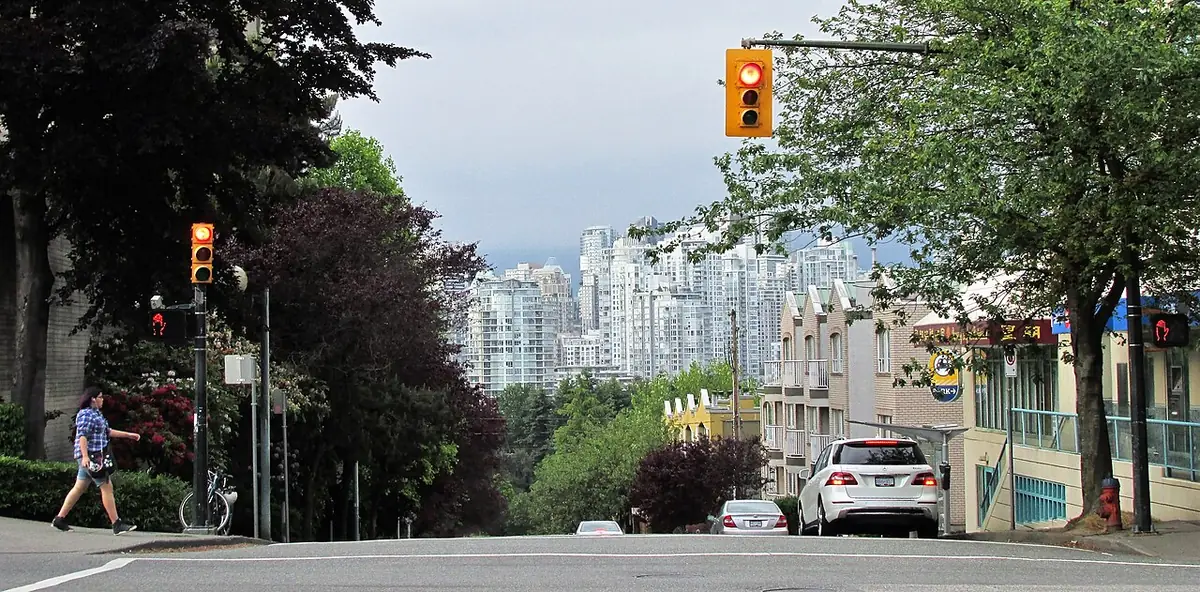
Laurel Street, Vancouver in Street View: drag to look around.
This tension between geographic constraint and long-term value shows up directly in the way people live day to day.
Buying a detached house in Vancouver means testing often idealised expectations against the topographic and regulatory reality of a city hemmed in by ocean and mountains. Scarcity of land shapes value profoundly, turning every square metre into a hotly contested resource. Prospective buyers need to understand that living space and proximity to the main corridors are not traded off on the same terms they may be used to elsewhere. This fragile balance between an exceptional natural setting and strict planning rules redefines what a long-term property holding even means.
Immediate proximity to parks and the shorelinevsOften compact living space and demanding energy retrofit requirements
Coastal neighbourhoods offer an exceptional setting but impose significant structural compromises on older stock, which calls for substantial upgrade budgets.
The promise of a durable long-term assetvsHolding costs and annual property taxes that weigh heavily on the day-to-day budget
The market's historic appreciation sometimes masks the reality of the cash flow needed to maintain a detached house in the sought-after areas.
The complete independence of a property with its own landvsSole responsibility for heavy maintenance in an area with wet winters
Unlike a strata, every roof or foundation repair falls entirely on the owner, which demands a disciplined contingency fund.
Economic and cultural energy recognised internationallyvsConstant competitive pressure on every purchase, which cuts short the time available to think
The speed at which good properties trade forces you to have your financing in impeccable order well before you put in an offer.
What kind of buyer are you against the demands of the Vancouver housing market?
These personal ambitions also run into cultural and procedural reference points that are radically different from the ones most newcomers bring with them.
Whether your habits match the reality of Vancouver property comes down to precise criteria: mobility, the time you are willing to spend on maintenance, and your professional priorities. Choosing a detached house in this region answers to very different imperatives depending on whether you are settling in for the long term with a family or managing a demanding career transition. Looking at your own situation through these different lenses helps you avoid post-purchase disappointment and target the right area straight away.
A family looking for quiet residential neighbourhoods
Families generally favour outlying areas or neighbourhoods with well-regarded schools and safe green space. You will have to accept longer journeys into the business district in exchange for a private garden and a community-focused local life. Managing after-school activities and staying close to sports facilities then become decisive factors in the final choice of location.
An urban professional looking for work-life balance
If your days are set by work commitments in the heart of the city, detached houses are scarce and extremely expensive in the central core. You will more likely look at semi-urban neighbourhoods that are well served by public transit, accepting a smaller footprint in order to protect your commuting time. Optimising the home-office space and digital connectivity weigh heavily in the decision.
A long-horizon investor building an asset base
Your approach is about building capital across borders, which calls for particular attention to local tax rules on unoccupied property. You are looking for locations with impeccable liquidity, even if that means delegating rental management or grounds maintenance entirely to specialist providers. Structural soundness matters more here than purely aesthetic or decorative considerations.
Which habits and assumptions should you adjust when you arrive from abroad to settle here?
Once these administrative rules are understood, the choice of neighbourhood becomes the real test of how well you know the city.
The Canadian property system differs fundamentally from what buyers arriving from abroad are usually used to, both in the legal choreography of a sale and in the technical design of the housing itself. Understanding these gaps is essential if you want to carry your project through without a strategic misstep. From the binding offer to purchase to the central role of the notary public or lawyer, every stage follows conventions worth absorbing quickly.
From abroad
In many countries, signing a preliminary sale agreement protects the buyer for a long stretch, with broad get-out conditions.
Vancouver
In Vancouver, the Offer to Purchase becomes an extremely binding contract on both sides as soon as it is mutually accepted.
Technical checks (building inspections) and financing must be lined up in advance or written in as strict, short-dated conditions, on pain of immediate financial penalties.
From abroad
In many countries, compulsory technical surveys are supplied by the seller in a single, tightly regulated file.
Vancouver
In Vancouver, the rule of caveat emptor (let the buyer beware) applies, which makes an independent building inspection essential and entirely the buyer's responsibility.
You need to hire a certified inspector to scrutinise every structural weakness, the state of the roof and any sign of moisture.
From abroad
In many countries, closing costs are dominated by transfer duties collected by the state and local authorities and billed through a single conveyancing professional.
Vancouver
In Vancouver, the provincial Property Transfer Tax sits alongside separate legal fees billed by a notary public or a lawyer.
Your overall purchase budget has to account for this specific tax burden from day one so that the final transfer holds no unpleasant surprises.
From abroad
In many countries, price negotiation follows a long tradition of discounting from the asking price.
Vancouver
In Vancouver, correctly priced properties frequently attract multiple competing offers (bidding wars) when the market is tight.
Your pricing strategy has to be flexible and quick, worked out in advance with a real estate agent who genuinely knows the area you are targeting.
How do the residential neighbourhoods compare when you are targeting a purchase?
This variety of areas translates into hard pricing realities that deserve analysis free of received wisdom.
Vancouver's urban geography is made up of micro-neighbourhoods with strong identities, where atmosphere, accessibility and building types vary considerably. Choosing where to put down roots means arbitrating between the leafy calm of outlying residential areas and the cultural vitality of the more central ones. Each area sets its own terms on traffic, local services and long-term price dynamics.
Kitsilano
A relaxed atmosphere turned towards the ocean, the beaches and outdoor activity, very popular with active families.
Suits
Anyone who wants a seaside way of life while staying within easy reach of the downtown job market.
Trade-off
Very high density, which translates into small lots and some of the highest prices per square metre in the city.
East Vancouver (Commercial Drive / Strathcona)
An independent, creative and multicultural spirit, with strong neighbourhood life, specialty coffee shops and local initiatives.
Suits
Buyers drawn to architectural variety, older houses full of character and an energetic sense of community.
Trade-off
Marked variation from one street to the next and often significant renovation needs in the historic housing stock.
Dunbar-Southlands
The absolute calm of streets lined with mature trees, a prestigious residential setting and a preserved village feel.
Suits
Families looking for large green spaces, complete quiet and proximity to the city's best schools.
Trade-off
Relative isolation from urban buzz and a financially very high barrier to entry for detached houses.
Kerrisdale
Traditional elegance, upmarket local shops and a long-established population.
Suits
Those who value an orderly, reassuring setting with every amenity within walking distance.
Trade-off
Slower generational turnover and a market that is extremely stingy with buying opportunities.
What budget orders of magnitude should you expect when buying a house in Vancouver?
Beyond the sticker price, the exact legal nature of what you own deserves a careful look.
A rigorous look at the market data shows that buying a detached house in Vancouver requires substantial financial footing. Price ranges vary threefold depending on proximity to the waterfront, the age of the building and the size of the lot. These figures summarise the trends observed on the ground, setting aside speculation in order to concentrate on the tangible economics of the city.
vancouverFor saleHouseestimate
Median price / m²CA$8,958Half the apartments sell below this
Median priceCA$1.21mthe average is 14% higher — a few very large properties pull it up
Most common2 bedrooms65 % of listings
Average size128 m²
By number of bedrooms
Bedrooms
Share of market
Avg price
Price / m²
Avg size
2most common
65 %
CA$1.27m
CA$9,336
137 m²
3
29 %
CA$1.63m
CA$8,864best value / m²
184 m²
4
7 %
CA$2.31m
CA$9,430
245 m²
Each row is an average, compared against the area average of CA$9,430 / m². These are indicative estimates of a typical local market, not a measured sample of live listings. Check current listings before relying on them.
What do you legally and physically own when you buy here?
Getting a grip on the legal framework leads naturally to the strict timeline the transaction process imposes.
The distinction between outright ownership of the land and the easements or planning rules that apply to it is fundamental for any foreign or non-resident buyer. In Vancouver, owning a single-family house on a freehold title confers broad rights but comes with strict constraints set by the municipality on densification and heritage preservation. It is crucial to separate the owner's apparent freedom from the collective obligations that bind them.
Freehold ownership of the land
You own both the structure and the ground it stands on, which allows you to contemplate major renovation or rebuilding projects subject to obtaining municipal permits. This form of ownership is the most sought-after foundation for building a family asset that can be passed on over the long term.
What it changesYou bear the full cost of bringing the property up to code and handle relations with the neighbours on your own if you extend the building.
Zoning and rental restrictions (zoning bylaws)
Vancouver's municipal rules tightly govern the use you can make of your property, limiting for example the unauthorised creation of secondary suites or the running of certain professional activities from home. The city guards the residential character of single-family neighbourhoods fiercely.
What it changesYou must check with the planning department, or hire an expert, before contemplating any future work that could change the use of the property.
Which critical steps must you clear before finally committing to a purchase?
To orchestrate that sequence without a false note, the coordinated involvement of local professionals is indispensable.
A successful property transaction in Vancouver follows a linear chronological sequence in which every link determines the validity of the next. Skipping even one of these stages, whether it is checking title or a thorough technical inspection, exposes the buyer to irreversible financial risk. Procedural discipline is the best protection against post-purchase disputes.
Identifying the right property and comparing it against recent sales in the same micro-area.
Drafting and submitting a formal written offer to purchase, including subject clauses for financing and a building inspection, usually limited to seven or ten days.
Paying a deposit held in trust by the real estate brokerage or the notary within 24 hours of the offer being accepted.
Having a certified professional carry out a full building inspection, which surfaces hidden defects, moisture problems or structural faults.
The formal subjects removal that makes the purchase contract unconditional and legally irrevocable for both parties.
Signing the final transfer documents with the notary public or lawyer and the release of funds by the lender.
Official handover of the keys on the agreed completion and possession date, marking your move-in.
Who is involved at each stage to secure your purchase in Vancouver?
In conclusion, approaching the Vancouver property market calls for rigorous method, budgetary honesty and advice tailored to your situation.
Buying property in Canada rests on an ecosystem of specialists with strictly defined roles, which is what makes a transaction transparent and legally secure. From the agent who negotiates the price to the conveyancer who validates the transfer of title, each one protects a specific facet of your interests. Understanding their respective remits lets you steer your project clearly and efficiently.
The real estate agent (Realtor)Purchase advice and negotiationThey support the active search, analyse market comparables (MLS) and draft the offer to purchase while making sure your subject clauses protect you.
The home inspectorTechnical and structural auditThey go over the foundation, roof, electrical and plumbing systems in detail, producing a report that is essential for pricing the work ahead.
The mortgage brokerStructuring the financingThey negotiate the best loan terms with Canadian financial institutions and confirm how much you can borrow before you make offers.
The notary public or lawyerLegal protection and transferThey verify the validity of title, carry out land title searches, calculate the applicable taxes and orchestrate the final release of funds.
The environmental or site remediation specialistSpecific ground checksBrought in where there is doubt about buried tanks or contaminated soil, particularly on older properties.
House or apartment in Vancouver: how do you decide, given the way you live?
Moving from the theory of choosing a home to the accounting reality means facing the price grids that actually apply across the metropolitan area.
Choosing between a detached house and an apartment in Vancouver directly shapes your daily life and the structure of your investment. On one side, the single-family house represents the traditional North American ideal, offering private land, complete architectural independence and generous living space. That choice, however, means heavy maintenance, high energy bills and often a marked distance from centres of activity if you want to stay within a reasonable budget. Residential neighbourhoods such as Dunbar or Kerrisdale illustrate this type of property perfectly, where quiet is paid for with constant attention to the exterior.
Conversely, the strata apartment, known here as a condo, redefines access to ownership right in the heart of the city. Living in a building in Coal Harbour or Downtown puts you a few minutes' walk from transit, shops and the waterfront. Strata fees, monthly and sometimes unpredictable when major envelope work comes up, pool the cost of the pool, the gym and the upkeep of the roof. It is the option favoured by first-time buyers and by investors looking for liquidity and a quick rental yield in a tight market.
Outdoor space weighs heavily in the balance, especially if you have pets or plan to start a family. A house in Vancouver generally comes with a garden, however modest, which turns summers into a run of barbecues and outdoor play. In an apartment, the balcony or shared terrace stands in for that, which takes some adjusting to if you like gardening or tinkering. On top of that, strata legislation in British Columbia imposes strict restrictions on short-term rentals and sometimes on keeping certain animals, which narrows your freedom of use.
Financially, capital appreciation does not follow the same path depending on the type of property. Historically, single-family houses with land have outperformed thanks to the absolute scarcity of land on the Vancouver peninsula and its immediate surroundings. Even so, the enormous price gap between the two categories is pushing a growing share of demand towards high-end strata units. Your decision should therefore rest on a cool assessment of your tolerance for urban noise, your ability to absorb special levies and your investment horizon in this fast-moving region.
What budget should you really plan for housing in Vancouver?
Once the budget is settled, it is worth looking concretely at how a typical day unfolds, to gauge how smoothly your future life will run.
Putting together a financing plan in Vancouver means going well beyond the price shown on the listing portals. Local property taxes, the province's own conveyancing and legal fees, compulsory insurance and recurring charges completely redraw the monthly bill. Our tables summarise the orders of magnitude observed in the current market so that nothing catches you out at closing.
Order of magnitude of median purchase prices by property type
Property type
Central Vancouver
Outlying neighbourhoods
12-month trend
1-bedroom apartment
CAD 750,000 to CAD 900,000
CAD 550,000 to CAD 700,000
Moderate rise
2-bedroom apartment
CAD 1,100,000 to CAD 1,400,000
CAD 750,000 to CAD 950,000
Relatively flat
Single-family house
CAD 2,200,000 and above
CAD 1,400,000 to CAD 1,900,000
Strongly resilient
Median prices vary considerably with the age of the construction, proximity to the SkyTrain network and whether the property has open views.
Additional costs and running charges you must build in
Cost item
Estimated amount
Frequency
Impact on the budget
Municipal property tax
0.3% to 0.6% of assessed value
Annual
Moderate but recurring
Strata fees
CAD 400 to CAD 900
Monthly
High, depending on amenities
Home insurance
CAD 800 to CAD 1,500
Annual
Essential
Strata fees generally rise each year to keep pace with maintenance cost inflation and to rebuild the contingency reserve fund.
What does an ordinary Tuesday actually look like, between transit, services and neighbourhoods?
Beyond that well-oiled routine, a close look at the market reveals subtleties the sales brochures systematically forget to mention.
To judge whether a location in Vancouver works for you, nothing replaces walking carefully through an ordinary weekday. Between the commute to the business district, family obligations and the use of health or leisure facilities, every minute counts. This timeline sets out the journey times and the logistical realities you will face from the day you move into this British Columbia city.
07:30Home in the Kitsilano neighbourhoodAn early start and coffee made in the light pouring through the large windows typical of local construction.
08:15SkyTrain station or cross-town bus stopA smooth trip into downtown, though connections at peak times call for planning your timings well.
09:00Workspace or office in Downtown VancouverArrival at the office after a quick transition, helped by an interconnected and safe network of bike lanes.
12:30Lunch break near False CreekA bracing walk along the seawall, much loved by residents as a way to decompress in the middle of the working day.
17:30Neighbourhood grocery store and local servicesBuying fresh local produce and a quick stop at the pharmacy to clear the household's small errands.
19:00Back home and winding downMaking dinner as a family and planning the weekend ahead, often built around the parks or the mountains.
What the brochures and agencies leave out about Vancouver
Understanding these grey areas is what keeps a dream purchase from turning into a permanent source of trouble.
Buying property in Vancouver is governed by strict provincial and municipal rules that can unsettle an unprepared buyer. Between the climate constraints specific to the Pacific coast, the disciplined running of stratas and the taxes on transactions, several fundamentals deserve your attention. Here are the decisive points the sales brochures usually pass over in silence.
The state of a strata's contingency reserve fund
A badly scoped engineering study in an older building can lead to special levies of tens of thousands of dollars, payable at short notice.
The effect of rainy weather on the building envelope
The damp oceanic climate puts heavy demands on facades and roofs, which makes maintaining the waterproofing absolutely critical if you want to avoid major water ingress.
Strict rules on short-term rentals
It is close to impossible to let your property on platforms such as Airbnb without meeting principal-residence criteria that the city polices closely.
The complexity of municipal planning rules
If you buy a house intending to extend it or substantially alter the structure, the time it takes to obtain building permits in Vancouver demands considerable patience.
The classic traps buyers discover six months after getting the keys
Having measured these operational risks, it is worth asking the fundamental question of whether this market suits you personally.
Looked likeAn excellent deal on a spacious apartment in a 1990s building, at a price that beat everything else in the area.
Turned outA complete lack of adequate provisions in the strata's contingency reserve fund, leading to an immediate vote for roof work at CAD 25,000 per owner.
Would have caught itInsisting that a specialist reviewer go through the last three years of general meeting minutes in full before you remove your subject clauses.
Looked likeA quiet, green neighbourhood just outside the core, ideal for raising children away from the bustle of downtown.
Turned outUnexpected noise from imminent densification construction sites and a future change to the municipal traffic plan.
Would have caught itChecking the development applications filed with the City of Vancouver and visiting several times at different hours during the week.
Looked likeA fully renovated kitchen with modern, gleaming materials that perfectly concealed the age of the building services.
Turned outOld polybutylene plumbing inside the load-bearing walls, causing slow leaks that are expensive to repair inside the partitions.
Would have caught itCommissioning a thorough technical inspection from a certified professional who is independent of the agent's network.
Looked likeAn included parking space in the building's underground garage, apparently sized for any family vehicle.
Turned outA cramped, badly positioned stall that made manoeuvring impossible with a standard-size SUV, forcing the owner to rent a space elsewhere.
Would have caught itPhysically testing the parking space with your own vehicle on a second viewing before you sign.
In which specific cases should you give up on buying property in Vancouver?
With those guardrails in place, let us take stock overall and work out whether you are now ready to go ahead.
The Vancouver property market has economic and structural specifics that make it a poor fit for some buyers. Insisting on settling here at any cost, without the financial flexibility or a stable investment horizon, opens the door to serious disillusionment. Looking at the counter-examples clarifies whether your own situation really matches what this city demands.
The buyer with an investment horizon of under five years
→Buying an apartment quickly on the grounds of escaping renting
The upfront transaction costs, combined with resale commissions and taxes, simply cannot be amortised over such a short period in this market.
The household on a strictly fixed budget with no room to manoeuvre
→Buying an older house that needs major energy retrofit work
The slightest inflation in material costs or an unforeseen rise in interest rates would instantly put the household's solvency at risk.
The investor looking for immediate, high rental yield
→Buying a condo in the central core and betting on short-term rents
The ratio between high purchase prices and regulated rents produces gross yields that are often modest, far from the standards of other international cities.
So, are you ready to go ahead with your property project in Vancouver?
At the end of this analysis, the decision to buy property in Vancouver is no longer a matter of impulse or of falling for a pretty facade. You now have a realistic picture of the prices in play, the strata fees you cannot avoid and the logistical reality of an ordinary Tuesday in the city's different neighbourhoods. The British Columbia market rewards patience, discipline in financial analysis and an intimate grasp of the local strata rules.
If your investment horizon runs beyond five years, your contingency savings are solidly built up and you accept the constraints that come with a large coastal city, then taking the step into ownership here makes complete sense. Opportunities exist for anyone who can look past appearances and surround themselves with the right technical experts to audit buildings before committing. Take the time to validate your financing plan with an independent local broker and visit your target areas several times at key moments of the day.
If, on the other hand, the prospect of variable charges or special levies makes you anxious, or if your work situation lacks short-term stability, renting remains a perfectly respectable alternative. Renting in Vancouver gives you valuable flexibility to test neighbourhoods, understand the micro-climates of each area and refine your criteria without risking your capital. Above all, your property project should serve your own peace of mind and that of the people close to you.
Related questions
How much should you expect to pay in legal fees and taxes when buying property in Vancouver?
In Vancouver, transaction costs are dominated by the provincial Property Transfer Tax, which varies with the value of the property, plus the fees charged by the notary public or the real estate lawyer handling the conveyancing. Budget roughly 1% to 3% of the total purchase price for all of these mandatory administrative and tax formalities.
Is a pre-purchase inspection compulsory for a strata apartment?
It is not strictly compulsory as a matter of law, but having an apartment inspected by a qualified professional is strongly recommended. It lets you check the interior condition of the unit and, more importantly, have an expert review the strata corporation's documents to identify major work that may be coming.
How do strata fees work in Vancouver?
Strata fees are compulsory monthly payments made by each owner to cover maintenance of the common property, building insurance, management and contributions to the contingency reserve fund. The amount depends directly on the size of the unit and on the shared amenities available, such as elevators or landscaped grounds.
Which neighbourhoods are most sought after for investing or raising a family?
Areas such as Kitsilano, Mount Pleasant, Dunbar and Kerrisdale are particularly prized for their quality of life, their parks and their proximity to well-regarded schools. Each neighbourhood has its own architectural identity and its own level of access to public transit.
How does the Pacific coast climate affect local property?
Vancouver's temperate oceanic climate brings rainy winters that put heavy demands on the exterior envelope of buildings. When buying, pay particular attention to the quality of roofs, facades and rainwater drainage systems in order to avoid moisture problems.
Can you buy property in Vancouver as a non-resident of Canada?
Buying as a non-resident is entirely possible, but the transaction is governed by specific tax rules and by additional taxes designed to cool the market. It is essential to consult a specialist tax adviser before committing funds from abroad.
What is a special levy in a strata?
A special levy is an exceptional sum voted by the owners' meeting to fund major work that was unforeseen or is not covered by the usual contingency reserve fund. Payment is compulsory for every owner on title at the time of the vote.
How do interest rates influence the Vancouver property market?
Movements in the Bank of Canada's policy rates directly change how much households can borrow and shape price dynamics in the short and medium term. A rate rise generally tends to slow demand and stabilise property values.
Is it easy to resell a property quickly in this region?
The Vancouver market remains structurally dynamic thanks to sustained demographic demand, but liquidity varies a great deal depending on the type of property and where it sits on price. A correctly priced, well-maintained property generally finds a buyer within a reasonable time.
What are the alternatives if you cannot afford a single-family house?
Buyers very often turn to strata apartments (condos), townhouses or side-by-side duplexes. These options make it possible to settle in the sought-after neighbourhoods while keeping the purchase budget more accessible.
Property review of ting
No ting properties in Vancouver yet
Be the first — share it on ting and it shows up right here.