Buying a house in Calgary calls for a close reading of the Alberta market, its urban sprawl and its climate-driven demands. This guide walks you through an objective analysis of neighbourhoods, a realistic assessment of costs and the legal protection of your investment.
Get the app
What nobody tells you.
Real prices, hidden costs and the traps to check before you commit.
What you actually get when you buy a house in Calgary
Scroll
What you actually get when you buy a house in Calgary
Buying a house in Calgary calls for a close reading of the Alberta market, its urban sprawl and its climate-driven demands. This guide walks you through an objective analysis of neighbourhoods, a realistic assessment of costs and the legal protection of your investment.
Written by the ting.ad editorial team ·
10 Street SW, Calgary in Street View: drag to look around.
This trade-off between space and mobility plays out differently depending on your profile and your stage of life.
Investing in residential property in Calgary means accepting a permanent trade-off between living space and distance from downtown. The city spreads across an enormous territory, which completely redefines what proximity and day-to-day accessibility mean. Buyers generally look for generous living space and a private lot, but that means rethinking how they travel and how dependent they are on a car. You need to look coldly at the structure of the local market to understand what your budget can genuinely buy without compromising your future standard of living.
A large amount of living space and a private gardenvsA pronounced distance from cultural and professional hubs
Outlying neighbourhoods offer spacious houses at a cost per square metre far more accessible than in Vancouver or Toronto. In exchange, daily journeys get considerably longer, especially at peak times on the main road corridors.
Immediate proximity to wide open spaces and the RockiesvsHarsh winters that demand constant upkeep of the building
Being close to nature is a first-rate advantage for anyone who loves the outdoors. The continental climate, however, imposes thermal constraints and heating costs that are far from negligible and have to be anticipated in your financing plan.
A dynamic market carried by the Alberta economyvsEconomic cycles tied to swings in the energy sector
The local economy reacts quickly to natural resource cycles, which can influence asset values in the short term. A property purchase here should be considered over a long horizon to smooth out these inevitable cyclical variations.
Does this place really match your current and future way of life?
The cultural and logistical shock is particularly pronounced for international buyers.
Choosing a house in Calgary is not simply a matter of matching your income to the asking price. Your daily organisation, your tolerance for the winter cold and the make-up of your household will determine how satisfied you are in the medium term. Every buyer profile faces specific constraints that are worth identifying before signing a binding commitment to purchase. Let us look at how your personal situation interacts with the geographical and social reality of this Alberta metropolis.
Looking for a stable setting and services close to home
Families generally favour residential neighbourhoods with well-regarded schools and landscaped parks. You should check what is on offer outside school hours and how far it is to sports facilities. Life here revolves around outdoor activities and community volunteering. You also need to factor in the parents' journey to employment areas in order to keep family life in balance.
Optimising your workspace and your connectivity
Professional flexibility lets you move away from the financial core and gain square metres. A house with a finished basement or a dedicated office becomes essential to separate private life from work. The quality of the internet connection and the sound insulation of the house deserve particular attention during viewings.
Securing an asset in a growing metropolis
An investor has to look beyond aesthetic appeal to assess rental demand and demographic pressure. Areas undergoing urban change offer greater appreciation potential, but they carry risks of vacancy or of hidden condominium charges. How easily the property can be sold later will depend directly on its location and its general condition.
Living there when you are arriving from abroad: what changes radically
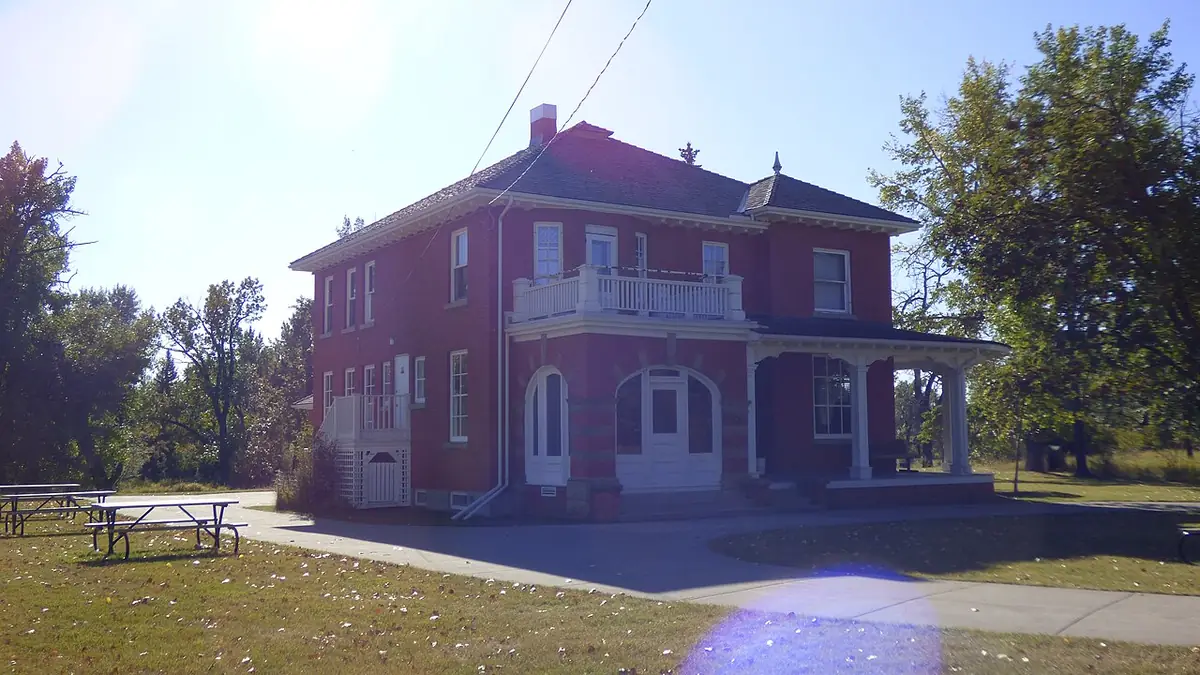
Heritage homes like this anchor Inglewood, one of Calgary's older residential pockets — Photo: James Mott · CC BY-SA 4.0 · Wikimedia Commons
Once these principles are understood, the choice of area becomes the cornerstone of your project.
Moving from an overseas property market to Calgary's upends all your usual reference points. Notions of distance, of shared walls, of building materials and of maintenance costs simply do not mean the same thing here. Understanding these cultural and technical differences will spare you major financial disappointments in your first year of occupancy. Here are the main friction points and what they mean in practice for your budget and your daily life.
From abroad
Dense, historic housing in older city centres
Calgary
Urban sprawl and the predominance of detached houses built in wood
You gain space and thermal independence, but you have to accept sound insulation that is sometimes lighter and regular upkeep of the exterior cladding.
From abroad
A centralised, tightly regulated co-ownership system
Calgary
Full ownership of the lot, and the neighbourhood association system (HOA)
You alone decide on renovation work, but you also have to bear the full cost of the roof, the foundations and the heating system.
From abroad
Dense, closely meshed public transport networks
Calgary
The centrality of the car and the fast ring roads (Stoney Trail)
Owning one vehicle per adult becomes an absolute necessity, as does buying winter tyres suited to extreme local conditions.
From abroad
Regulated technical surveys imposed by law
Calgary
A private building inspection, not standardised by the state
Your choice of the home inspector appointed at purchase is crucial to identify hidden defects, the condition of the furnace or the potential presence of radon.
Which neighbourhood should you choose, given your priorities in life?
These geographical choices feed directly into the overall bill for your purchase.
Calgary is a mosaic of neighbourhoods with strongly marked identities, stretching from the historic core along the Bow River out to the vast outer suburbs. Each area offers a distinct balance of urban energy, residential calm, school quality and ease of transport. Looking for the perfect neighbourhood is an illusion: the task is to identify the one whose trade-offs best match your lifestyle and your time horizon. Here is a comparative look at the key areas to guide your search.
Inner City (Kensington, Mount Royal, Hillhurst)
A walkable pace, tree-lined streets, cafes and riverside urban parks right on the doorstep.
Suits
Buyers who prioritise cultural life, short journeys and the architectural character of renovated older houses.
Trade-off
A markedly higher cost per square metre and lot sizes that are often smaller than in the suburbs.
Established Suburbs (Braeside, Dalhousie, Acadia)
Pronounced residential calm, mature infrastructure, mature trees and a strong neighbourhood association life.
Suits
Families looking for a good balance between the size of the house, the quality of the schools and reasonable access to the centre.
Trade-off
Buildings often dating from the 1960s to the 1980s that need work to meet current energy standards.
New Communities (Auburn Bay, Seton, Livingston)
Modern streets, artificial lakes, integrated shopping centres and a high proportion of young households.
Suits
Those who want a turnkey, heavily insulated house with no work to plan for in the short term and recent technology built in.
Trade-off
A pronounced distance from downtown and a streetscape that at first lacks large mature trees.
What does buying a house in Calgary really cost?
Heritage apartment blocks like the Devenish mix shops and homes downtown — Photo: Benlarhome · CC BY-SA 4.0 · Wikimedia Commons
Beyond the raw figures, the legal nature of what you own deserves close examination.
Budgeting for a property purchase in Calgary does not stop at the price written on the purchase contract. You have to factor in municipal property tax, home insurance suited to the region's climate risks and local closing costs (legal and registration fees). The market reflects the vitality of Alberta's economy, with noticeable variation depending on the type of property and its distance from the C-Train. Here is a structured overview of the orders of magnitude seen in the current residential market.
calgaryFor saleHouseestimate
Median price / m²CA$3,583Half the apartments sell below this
Median priceCA$502kthe average is 14% higher — a few very large properties pull it up
Most common2 bedrooms73 % of listings
Average size133 m²
By number of bedrooms
Bedrooms
Share of market
Avg price
Price / m²
Avg size
2most common
73 %
CA$528k
CA$3,772
140 m²
3
23 %
CA$645k
CA$3,508 −7 %
184 m²
4
5 %
CA$772k
CA$3,395best value / m²
228 m²
Each row is an average, compared against the area average of CA$3,772 / m². These are indicative estimates of a typical local market, not a measured sample of live listings. Check current listings before relying on them.
What you can actually own: freehold versus condominium
That legal clarity has to carry through into strict compliance with the procedural steps of the transaction.
Property law in Alberta offers a range of structures that directly affect your freedom to manage your home and your financial obligations. Between the detached freehold house and horizontal condominium ownership of the townhome type, the rules of the game change completely. Choosing the wrong legal structure can limit your renovation plans or saddle you with unforeseen charges voted through at a general meeting. It is imperative to understand exactly what your title covers before you commit.
Full ownership (Freehold / Single-Family Home)
You own the building and the land outright, with no monthly condominium contribution. You alone decide when to replace the roof, repaint the facade or change the landscaping, within municipal planning rules.
What it changesYou keep complete freedom of management, but you bear 100% of the financial risk in the event of structural damage or ageing technical installations.
You buy the structure of your house, while the land and the common areas belong to all the owners collectively, managed by a condominium corporation. Monthly contributions (condo fees) cover the upkeep of green spaces and private roadways.
What it changesYou get a maintained living environment without having to clear snow from the common areas, but you have to follow strict internal rules and contribute to the reserve funds for major works.
The absolute rule to understand before you pay a deposit
Newer mid-rise blocks like this are common across Calgary's residential streets — Photo: Chris Woodrich · CC BY-SA 4.0 · Wikimedia Commons
Let us now look at how the operational timetable of this transaction fits together.
The property purchase process in Alberta follows a rigorous legal formalism in which every document you sign carries immediate legal force. Unlike other jurisdictions, drafting the offer (Purchase Contract) firmly commits both parties as soon as it is mutually agreed. Including suspensive conditions is your only effective protection against hidden defects or a refusal of bank financing. Following this logical sequence guarantees the legal security of your investment from beginning to end.
A thorough viewing of the property you have found on the local market.
Your real estate agent drafts the purchase contract, setting a price and a possession date.
Negotiation of the conditions (financing conditions, building inspection and review of the condominium documents).
Conditions Removal, once the technical surveys are complete and the mortgage has been definitively approved.
Payment of the deposit into the trust account of the real estate brokerage or the lawyer.
Final signature of the transfer of ownership at the lawyer's office, and handover of the keys.
How a property transaction unfolds, step by step
Buying a house in Calgary means coordinating several professionals: mortgage brokers, home inspectors, specialist lawyers and accredited appraisers. Anticipating each intervention avoids last-minute tension and keeps you within the tight deadlines imposed by Alberta sale contracts. Here is the precise chronology of roles and actions needed to see your purchase through without a false note.
The mortgage brokerObtaining financial pre-approvalThis step confirms how much you can genuinely borrow from Canadian financial institutions and locks in an indicative interest rate.
The real estate agentSelecting and viewing the properties you are targetingThey analyse local comparables (comparative market analysis) to make sure your offer reflects fair value for the area.
The home inspectorA full technical audit of the houseThey examine the structure, the roof, the plumbing, the electrics and the heating system to detect any hidden problems.
The real estate lawyerChecking the titleThey confirm there are no liens or unpaid mortgages, and prepare the official land transfer documents (Land Titles Office).
You, the buyerTaking possession and moving inYou carry out the final walkthrough before signing the last documents and officially receiving the keys to your new home.
Buying a house in Calgary: apartment or detached property?
Once the type of property is settled, the central question becomes the overall financial balance and the reality of monthly costs.
Buying property in Calgary forces a fundamental arbitration between vertical condominium living, often located in the urban core or along the fast CTrain corridors, and the single-family house, anchored in the residential suburbs and the outlying extensions. This distinction is not only about lifestyle or architectural taste: it involves a completely different cost structure that shapes how wealth builds up over the long term. On one side, the apartment offers immediate proximity to downtown employment centres, shared external maintenance costs and a financial barrier to entry that is often more accessible for a first purchase. On the other, the detached house guarantees full ownership of the land, no monthly condominium fees and complete freedom to alter the property, at the price of total responsibility for maintenance and greater dependence on the road network.
In Calgary, the condominium market is marked by association fees that can vary considerably with the age of the building and the services included, such as security, a pool or the upkeep of common areas. These fixed charges come on top of servicing the mortgage and generate no direct return, unlike the capital paid down on the structure of the building. Resale of apartments in Calgary also tends to follow more volatile cycles than that of single-family houses, the latter benefiting from demand structurally supported by families in search of floor area and quiet. That said, Calgary's urban sprawl, which stretches across a vast territory, means that opting for a single-family house often involves accepting longer daily journeys to the business district, unless you target central neighbourhoods where prices per square metre reach peaks comparable to those of Canada's largest cities.
To decide between these two options, look at your investment horizon and the make-up of your household. A couple without children, or an investor looking to capture rental demand from young professionals, will naturally turn to central neighbourhoods such as Beltline or Mission, where the supply of apartments is dense and well connected. A household with school-age children, by contrast, will favour neighbourhoods with parks, well-regarded schools and an established community life, such as those of Northwest or Southwest Calgary, where the detached house remains the dominant norm. The decision therefore has to take in not only the initial purchase budget but also the total cost of ownership over five to ten years, including transport, property taxes and preventive maintenance.
Finally, Calgary's harsh climate plays a quiet but decisive role in this arbitration. A detached house demands constant vigilance over the condition of the roof, over the foundations during the spring thaw, and over the heating systems during winter cold snaps, all of it falling solely on the owner. In an apartment, that major work is planned, voted on and financed collectively through the condominium reserve fund, which shields the occupant from one-off budget shocks. Even so, a poorly run condominium corporation can lead to heavy special assessments, a risk you must audit thoroughly before signing any offer on collective housing in Calgary.
What budget do you really need to live in and own a property in Calgary?
Beyond the raw figures on paper, it is the daily rhythm and the practical shape of a typical day that reveal what life in Calgary is really like.
Buying a house in Calgary is not just about repaying the mortgage to your financial institution. The total cost of ownership takes in a series of recurring expenses and local taxes that vary with the exact location and the age of the building. It is imperative to anticipate these flows from the planning stage, to avoid any cash-flow stress once you have settled into your new home. The tables below set out the fixed and variable expense items observed in the Calgary property market.
Monthly and annual expense items for a single-family house in Calgary
Expense item
Estimated amount (CAD)
Frequency
Comment and variability
Municipal property tax
$2,500 to $4,500
Annual
Assessed by the City of Calgary on the market value of the property and the annual property assessment.
Home insurance
$1,200 to $2,200
Annual
Varies widely with the area, the flood risk from the Bow River and the rebuild value.
Heating and electricity (utilities)
$200 to $450
Monthly
Strongly seasonal, with significant peaks in winter during spells of extreme arctic cold.
Preventive maintenance and repairs
1% to 2% of the value
Annual
An essential budget to cover natural wear on the roof, the furnace and the pipework.
These estimates apply to a standard, mid-sized single-family house in Calgary's established residential neighbourhoods.
Comparison of the additional costs of a property purchase
Purchase cost
Indicative percentage or amount
When it is paid
Legal requirement
Provincial registration fees
Minimal transfer fees
At signing
Mandatory in Alberta, calculated on the value of the property and the amount of the mortgage.
Building inspection fee
$500 to $800
Before purchase
Strongly recommended in order to identify hidden defects and the condition of the foundations.
Legal and conveyancing fees
$1,200 to $2,500
At closing
Essential for the transfer of ownership and the registration of the mortgage.
Alberta levies no provincial sales tax, which slightly reduces the taxes on the professional services connected with a purchase.
What does an ordinary Tuesday actually look like for a homeowner in Calgary?
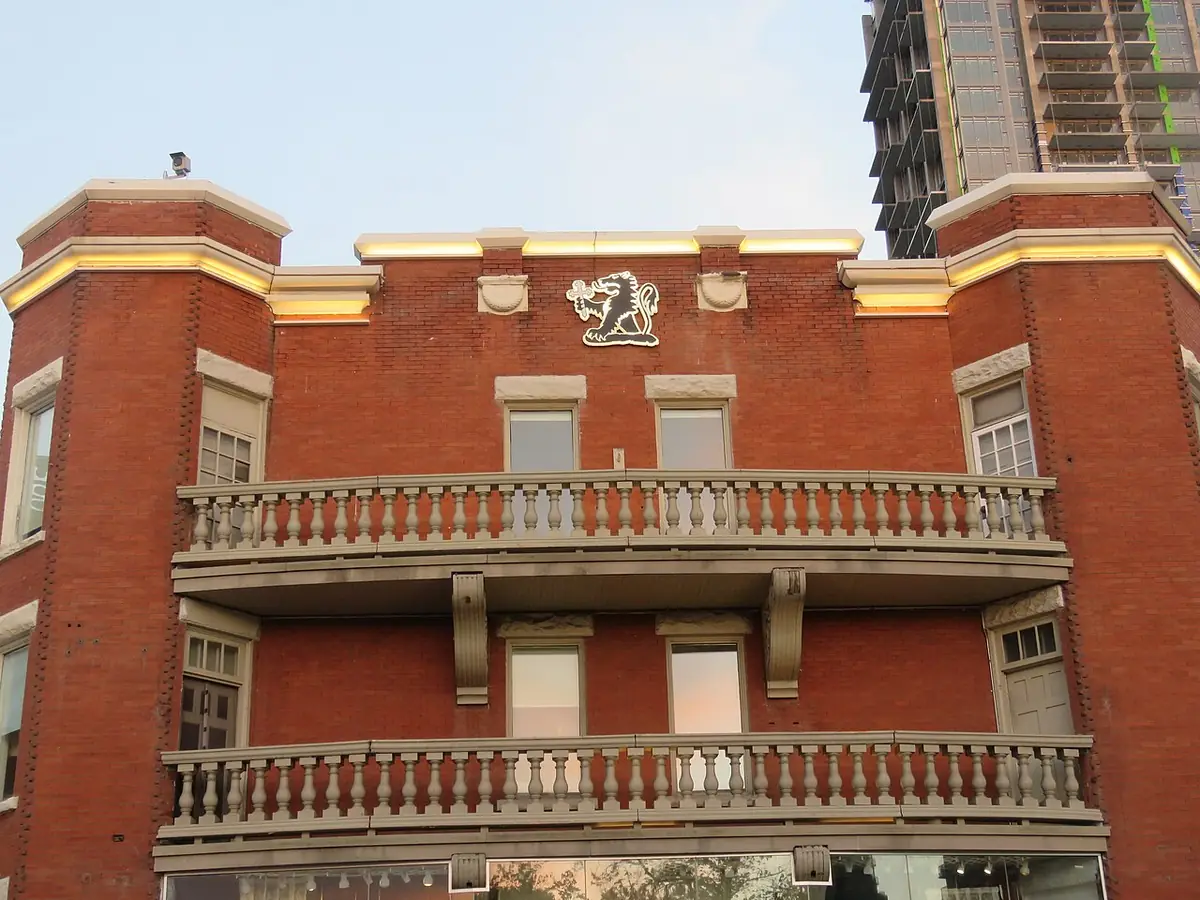
Detailed brick facades like this show the character of Calgary's older apartments — Photo: Benlarhome · CC BY-SA 4.0 · Wikimedia Commons
Daily life may look perfectly oiled on paper, but some realities of the Calgary property market are carefully left out of the sales pitch.
To gauge whether your chosen location in Calgary makes sense, you need to run through a typical weekday in your head. Between the morning demands of the climate, managing the commute to employment areas and reaching local services, each neighbourhood sets its own tempo. This hour-by-hour walkthrough highlights the logistical friction points you will inevitably run into if your choice of location is disconnected from your real habits.
07:00Home (residential neighbourhood)Waking up and checking the central heating system. In winter, a quick look is needed to judge whether the driveway has to be cleared before you leave.
08:15The commute (CTrain or highway)Heading downtown. If you use the main road corridors such as Deerfoot Trail or Macleod Trail, how well the traffic flows depends directly on the weather.
09:00Workspace downtownArriving at the office in Calgary's business core. The concentration of firms in the financial and energy sector shapes every morning transport flow.
12:30Lunch break and local errandsServices and shops within walking distance if you work in the heart of the city, or a quick break in an outlying retail area if you are out in the suburbs.
17:30The journey home and a logistics stopThe return trip, potentially including a stop at a supermarket for the weekly shop or picking the children up from school.
19:00Evening at homeQuiet time at home, dealing with household upkeep and preparing the next day's activities in a residential setting that is generally very peaceful.
What sales brochures and estate agencies leave out about Calgary
For poorly prepared buyers, these hidden aspects often turn into bitter regrets discovered as the seasons pass.
Developer marketing always paints an idyllic picture of new neighbourhoods and turnkey homes. Yet the lived experience of long-standing residents reveals structural and climate-related aspects that are often played down, or left out entirely during guided viewings. Understanding these blind spots will stop you feeling disillusioned a few months after handover, and will protect the value of your investment.
The formidable impact of spring and summer hailstorms
Calgary sits in Alberta's 'Hailstorm Alley'. Roofs and exterior cladding regularly take major damage, leading to insurance costs that are far from negligible and to high deductibles that fall on you.
Solar orientation and snow management in winter
A north-facing driveway holds snow and ice for far longer because it gets no direct sun, turning every snowfall into a demanding daily physical chore.
Rapid swings in municipal property taxes
Calgary city council regularly adjusts its tax rates according to how the burden shifts between commercial and residential property, which can push your tax bill up unpredictably from one year to the next.
The age of underground infrastructure in mature neighbourhoods
In older areas built in the middle of the twentieth century, the water and sewer connections may need costly upgrades for which the adjoining owner is partly responsible.
The strict rules of suburban homeowners associations (HOA)
Many recent subdivisions impose mandatory dues and fussy rules on the exterior appearance of your house, limiting your freedom to change the architecture or the landscaping.
The classic disappointments you only discover after six months of life in Calgary
Faced with these specific demands, some buyer profiles would clearly do better to postpone their plans or explore other options.
Looked likeAn ultra-quiet, green suburb perfectly served by the main road corridors.
Turned outAn area under perpetual construction, where noise from neighbouring sites disturbs the daytime calm and where road access saturates as soon as the first phases of the new subdivisions are delivered.
Would have caught itSystematically check the municipal planning map and how far the surrounding construction phases have actually progressed before signing the final deed.
Looked likeA moderate heating bill thanks to insulation supposedly built to the latest energy standards.
Turned outExtortionate natural gas bills during the polar cold snaps in January, with the building envelope letting heat escape through invisible thermal bridges.
Would have caught itInsist on a full energy audit of the building (thermographic certification) and look at the previous owners' historic bills.
Looked likeA negligible journey time to downtown at peak hours.
Turned outDaily misery on congested arterial roads, with the distance combined with winter conditions tripling the journey time originally estimated.
Would have caught itDo the actual journey at peak time on a Tuesday morning before committing to a property out on the edge.
Looked likeA condominium run by volunteers, with minimal charges and a friendly atmosphere.
Turned outA dramatically underfunded reserve fund, leading straight to a massive special assessment to replace the building's roof.
Would have caught itHave the minutes of the general meetings and the condominium's financial statements analysed in depth by an independent professional.
Which type of buyer should absolutely hold off on buying property in Calgary for now?
It is time to set out the final terms of your decision, so you can approach the Calgary market clear-eyed.
The mortgage and home ownership are universally presented as the royal road to building solid wealth. Yet the Calgary property market, subject to economic cycles tied to the energy sector and to fluctuating interest rates, does not suit every life profile. Insisting on buying under the wrong conditions, whether in timing or in personal circumstances, can destroy your savings instead of growing them. The following cases describe the situations in which renting, or simply waiting, remain the more rational options.
The young professional in a period of high job mobility
→Continuing to rent a flexible apartment downtown rather than committing.
The transaction costs of buying and quickly reselling a house in Calgary (agency commission, legal fees, penalties) wipe out any gain in wealth over a period shorter than four or five years.
The household whose down payment is too tight, with no emergency savings
→Waiting and building up savings before considering a purchase.
Having no financial cushion against major surprises, such as a boiler failure in the middle of winter or emergency roof work, leads straight to default or to a forced sale at a low price.
The speculative investor looking for immediate, effortless rental yield
→Turning to other financial asset classes or to other provincial markets better suited to that strategy.
Rental market regulation in Calgary and the cyclical nature of the local economy do not guarantee secure short-term returns without active, rigorous management of the property.
So, are you really ready to move ahead with your property plans in Calgary?
Green spaces like Inglewood Bird Sanctuary offer an easy escape close to home — Photo: Grungaloo · CC BY-SA 4.0 · Wikimedia Commons
Reaching the end of this analysis shows that buying property in Calgary is a structural decision that tolerates no guesswork. Between the choice of property type, an honest assessment of the hidden costs tied to the climate and to upkeep, and acceptance of the daily logistical constraints, every parameter weighs heavily on whether your project succeeds. The region's economic prosperity and its exceptional setting against the Rocky Mountains continue to attract new residents, but the market rewards only those who act methodically and realistically.
If your investment horizon runs beyond five years, if your professional situation is stable and if you have budgeted for all the recurring charges without putting yourself in financial danger, then buying in Calgary is an excellent foundation for building wealth. If, on the other hand, your short-term plans remain uncertain, or your down payment does not let you absorb the climate and structural surprises of the local housing stock, the prudence of renting remains a financially superior and perfectly respectable strategy.
Take the time to visit the neighbourhoods you are targeting at different times of the day and of the week, audit the technical documents carefully if you opt for a condominium, and surround yourself with independent professionals to confirm the condition of the property. Your future move to Calgary should be the fruit of a considered, costed conviction, not an impulse dictated by haste or by the pressures of a tight market.
Related questions
Which neighbourhoods are most sought after for buying a house in Calgary?
The most prized areas are generally concentrated in the northwest (NW) and southwest (SW) quadrants of Calgary, valued for the quality of their schools, their green spaces and their relative proximity to downtown. Neighbourhoods such as Hillhurst, Mount Royal or Albert Park offer very varied atmospheres, ranging from historic charm to contemporary construction.
Is buying property in Calgary subject to specific provincial taxes?
Alberta stands out for having no provincial sales tax, which slightly lightens transaction costs and the fees of the professionals involved in a purchase. Only the federal tax on certain services and the property taxes collected directly by the City of Calgary apply.
How do you protect yourself against the frequent hail risk in Calgary?
It is essential to take out home insurance that specifically includes cover for hail damage, which is very common in this part of Alberta. When buying a house, check the age and resistance of the roofing materials, since impact-resistant shingles considerably reduce insurance premiums.
What effect does the Calgary winter have on maintaining a property?
Calgary's harsh winters call for heightened vigilance over the heating system (the furnace), insulating pipes to prevent freezing, and managing snow on the roof and on outdoor access. An annual preventive maintenance budget of at least one per cent of the property's value is essential to cope with these climate constraints.
Is it better to buy an older house or a new-build in Calgary's suburbs?
Older houses in mature neighbourhoods come with mature trees, established schools and quicker access to downtown, but they often need renovation. New-builds on the outskirts offer modern energy performance and builder warranties, at the price of being further out and of longer journey times.
What legal and conveyancing fees should you plan for on a purchase in Calgary?
Legal and conveyancing fees to complete the sale and register the mortgage in Alberta generally run between $1,200 and $2,500 CAD. These fees vary with the complexity of the file and with the law firm appointed to carry out the title searches.
How do condominium fees work for an apartment in Calgary?
Monthly condominium fees cover the upkeep of common areas, insurance on the building envelope and contributions to the reserve fund for future major works. It is essential to have an expert examine the financial health of the condominium before completing the purchase, to avoid unpleasant surprises.
How long does a property transaction usually take to complete in Calgary?
The standard time between acceptance of an offer (conditional or firm) and actually taking possession (closing) is generally between 30 and 60 days in Calgary, depending on what the buyer and the seller agree.
Are foreign investors subject to restrictions on buying in Calgary?
Property purchases in Alberta by non-residents are governed by specific federal and provincial legislation covering transparency and the taxation of properties that are not occupied as a principal residence. It is advisable to consult a local tax specialist before committing funds.
Where can you find official information on a property's assessment in Calgary?
The City of Calgary provides a public online portal (Assessment Search) where you can look up the assessment history and the annual tax amount for every residential address listed within the municipality.
Property review of ting
No ting properties in Calgary yet
Be the first — share it on ting and it shows up right here.