Putting a credible figure on a house in Calgary calls for a close reading of the Alberta market, its residential areas and its rigorous legal framework. This decision guide walks you through what drives the estimate, how to build comparables and how to sanity-check the number before you rely on it.
Get the app
What nobody tells you.
Real prices, hidden costs and the traps to check before you commit.
Why the size of a Calgary house reshapes the whole valuation
Scroll
Why the size of a Calgary house reshapes the whole valuation
Putting a credible figure on a house in Calgary calls for a close reading of the Alberta market, its residential areas and its rigorous legal framework. This decision guide walks you through what drives the estimate, how to build comparables and how to sanity-check the number before you rely on it.
Written by the ting.ad editorial team ·
10 Street SW, Calgary in Street View: drag to look around.
These trade-offs only mean something once you know why you are asking for a figure in the first place.
Valuing a detached house in Calgary starts with two numbers that pull against each other: the living area and the long-term cost of keeping it. Floor area lifts the headline figure, but it rarely lifts it in a straight line, because every extra square metre also adds heating, maintenance and exposure to the Alberta market cycle. The useful habit is to read each square metre twice, once as living space and once as an asset priced by a market with its own rhythms. A credible estimate is built on that tension between what the property offers and what it costs to hold.
More living area on the valuationvsHigher energy and maintenance costs behind it
Alberta winters demand faultless insulation and capable heating systems, and those costs weigh on the annual budget of whoever buys. Owning a house means carrying all of it alone, with nothing shared through a condo corporation, and buyers price that in when they decide what the space is worth to them.
Freedom to renovate and reconfigurevsNo condo corporation to absorb the big-ticket work
Unlike an apartment in a condominium, you decide when and how the property is upgraded, which is real value when the work is done well. The bill for the roof or the foundations is yours alone, and an appraiser subtracts any deferred work of that kind straight off the figure.
A durable asset anchored in landvsThinner liquidity if you need a quick sale
Single-family houses hold steady appeal for local families, which keeps demand healthy and comparable sales plentiful. Transaction times still stretch with the seasons, and a rushed sale in the wrong month usually prints below the estimate rather than at it.
Which kind of valuation are you actually asking for in Calgary?
Where you come from also shapes how you read the figure once someone hands it to you.
The Calgary market does not answer the same way depending on whether you are pricing a family home you intend to keep, a holding you measure once a year, or a property you are about to trade for something larger. Each situation puts weight on a different part of the estimate: location, condition, rental income or resale speed. Naming your purpose before you commission a valuation is what keeps the number from being technically correct and practically useless.
The long-term family home
Valuing a detached house with its own lot in Calgary means the comparables that matter are other family houses in quiet residential streets near schools, not condos downtown. Longer commute times to the core are part of the picture and buyers discount for them, offset by space and a safe setting for children. Long winters also belong in the assessment, since snow clearing and outdoor upkeep shape how well the property has been maintained and therefore what an appraiser will credit it with.
The asset valuation
If the point of the exercise is capital value rather than occupation, the figure has to be read alongside rental performance. Demand for this kind of property comes from families looking for stability, which supports long tenancies and steady comparables, but it also means condition between tenants shows up directly in the estimate. Net yield, municipal property taxes and management fees all belong in the calculation, because a gross figure that ignores them overstates what the asset is really worth to you.
The move to more room
Comparing a dense urban home with a detached house in Calgary is not a like-for-like exercise, and treating it as one is the fastest way to misread both values. You gain floor area and privacy, and you lose the walkable access to shops and transit that carries a measurable premium in central pricing. Reading the two figures side by side means accepting that the market prices convenience and space on different scales, with daily car use as the hinge between them.
Valuing property in Calgary when you are arriving from abroad
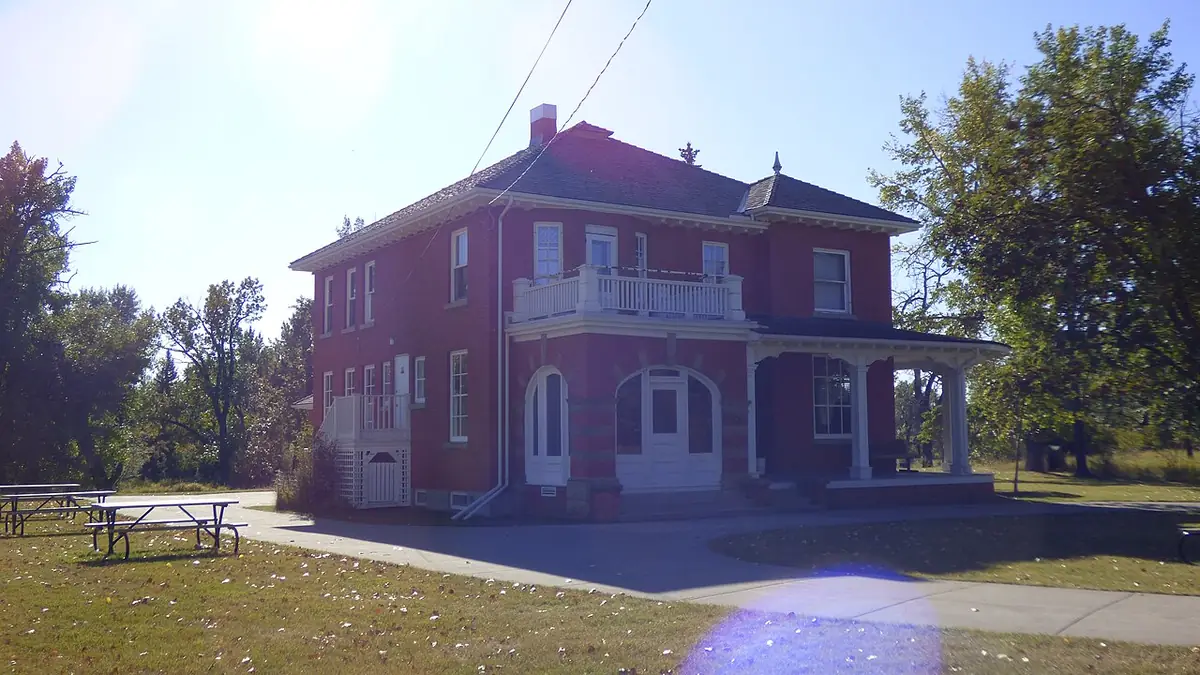
Heritage homes like this anchor Inglewood, one of Calgary's older residential pockets — Photo: James Mott · CC BY-SA 4.0 · Wikimedia Commons
Once those reference points are in place, the question of where the property sits becomes the sharpest variable of all.
Property valuation in Alberta rests on legal and cultural machinery that will feel unfamiliar to almost anyone arriving from another country. There is no single official who both drafts the deed and blesses the price: here, specialist lawyers and real estate brokers split the roles with formidable efficiency and tighter deadlines. That administrative shift comes with a different relationship to construction, land and annual assessment, and each of those changes how a figure is built.
From abroad
One official who drafts the deed and anchors the recorded value
Calgary
A specialist real estate lawyer who handles title and funds
The lawyer verifies the Land Titles record and moves the money, but negotiates nothing and offers no opinion on what the property is worth. The valuation has to be settled upstream with your broker, clause by clause.
From abroad
Dense city centres and stone or concrete construction
Calgary
Spread-out urbanisation and mostly timber-frame construction
Calgary houses insulate well for the climate, which supports their value, but the timber structure has to be inspected closely for damp or premature ageing. Anything found there comes off the figure, so the inspection is part of the valuation, not a formality after it.
From abroad
Regulated, standardised technical surveys attached to the sale
Calgary
An independent home inspection, contractual and not mandatory but vital
The buyer hires and pays a certified inspector, and the detailed report is usually what releases the conditions. It is also the only document that turns an asking price into a defensible number, so nobody should skip this step.
From abroad
Moderate local taxes and capped transfer costs
Calgary
Municipal property taxes reassessed every year
The city publishes an assessed value annually, which gives you a free reference point but is not the same thing as a market valuation. The amount varies noticeably by area of Calgary and weighs on the owner's budget year after year, so it belongs in any financing plan.
Mapping Calgary's areas so your comparables actually compare
That geographic spread turns into budget realities worth examining without flinching.
Calgary is a large, varied city where each quadrant has its own identity, amenities and price behaviour, and a comparable pulled from the wrong one will skew your estimate badly. Location does more than set a starting figure: it decides how much weight to give commute times, park access and the age of the housing stock around the property. Reading the zones carefully is what keeps a valuation anchored in the right slice of the market.
Central and riverside areas (Inner City)
Measured urban energy, the Bow River and its cycle paths a short walk away, streets lined with mature trees.
Suits
Valuations driven by proximity to the business core and by the premium buyers pay for an animated neighbourhood.
Trade-off
Price per square metre is markedly higher here, and houses often need substantial renovation, which an appraiser deducts from the headline figure.
Established suburbs
Settled residential quiet, well-used neighbourhood parks, respected schools and easy access to the main road corridors.
Suits
Valuations resting on generous living space, a proper private garden and a secure setting for families.
Trade-off
Heavy reliance on a car for daily errands and longer peak-hour journeys, both of which buyers price down.
New peripheral developments (New Communities)
Modern construction to strong energy standards, new community facilities and a strong mix of generations.
Suits
Valuations of contemporary houses that need no immediate work and carry current building technology.
Trade-off
Distance from the heart of Calgary and from major cultural infrastructure during the first years of development, which keeps values below comparable central stock.
Reading Calgary's price data before you trust any estimate
Heritage apartment blocks like the Devenish mix shops and homes downtown — Photo: Benlarhome · CC BY-SA 4.0 · Wikimedia Commons
Beyond the raw figures, the legal nature of what is being valued deserves particular attention.
The value of a house in Calgary is never just the figure printed on the listing. A realistic estimate has to sit inside the ranges the market is actually clearing, and it has to survive the transfer taxes, legal fees, inspection costs and tax adjustments that attach to the closing date. The starting point is the observed price bands by property type and bedroom count, which is what any agent or online tool is working from when they hand you a number.
calgaryFor saleHouseestimate
Median price / m²CA$3,583Half the apartments sell below this
Median priceCA$502kthe average is 14% higher — a few very large properties pull it up
Most common2 bedrooms73 % of listings
Average size133 m²
By number of bedrooms
Bedrooms
Share of market
Avg price
Price / m²
Avg size
2most common
73 %
CA$528k
CA$3,772
140 m²
3
23 %
CA$645k
CA$3,508 −7 %
184 m²
4
5 %
CA$772k
CA$3,395best value / m²
228 m²
Each row is an average, compared against the area average of CA$3,772 / m². These are indicative estimates of a typical local market, not a measured sample of live listings. Check current listings before relying on them.
Land and building: what exactly is being valued in Calgary
Legal clarity of that kind has to be matched by a firm grip on the sequence that produces the final number.
In Canadian property law, the distinction between outright ownership (Freehold) and collective arrangements is fundamental, and it changes what a valuation is measuring. In Calgary the overwhelming majority of detached houses are bought Freehold, which means the figure covers both the land and the structure standing on it. Some planned communities, however, come with a homeowners association (HOA) that imposes shared rules or annual contributions for common areas, and that obligation travels with the property into every future estimate.
Outright ownership (Freehold)
You own the building and the parcel it stands on, with no shared land charge payable to a third party. You are free to alter the exterior as you wish, subject to the City of Calgary planning rules, and improvements you make land in your own valuation rather than a collective one.
What it changesYou also carry the full financial responsibility for bringing things up to standard, for fences and for the roof, with no way to spread those costs across neighbours. Deferred work of that kind is read straight out of the figure.
Ownership with an association (HOA / Condo)
Common in newer areas, this model brings compulsory membership of an association that runs neighbourhood parks, access roads or shared leisure facilities in exchange for an annual contribution.
What it changesYou have to comply with strict internal rules on the exterior appearance of your house, from paint colours to street parking, on pain of financial penalties. Buyers discount for those constraints and for the recurring fee, so both belong in the estimate.
How an asking price turns into a verified value
Newer mid-rise blocks like this are common across Calgary's residential streets — Photo: Chris Woodrich · CC BY-SA 4.0 · Wikimedia Commons
Once those checkpoints are cleared, the operational side of the transaction follows a precise calendar.
The Alberta system rests on a strict contractual mechanism in which the Purchase Contract becomes legally binding the moment it is accepted, subject only to its conditions. That short window, usually one or two weeks, is where a proposed figure is either confirmed or corrected, and it is the only stage at which independent evidence can still move the number. Rushing it, or treating it as paperwork, is what exposes the buyer to serious financial loss.
Both parties sign a conditional purchase contract at a figure that is still only a proposal
An independent building inspection by a certified professional, whose findings translate directly into value adjustments
Final mortgage approval from your financial institution, which will not lend beyond what its own view of the property supports
A thorough Land Titles search by your lawyer to surface easements or restrictions that limit what the land can be used for
The formal Conditions Waiver and the deposit, at which point the agreed figure becomes the property's recorded market value
Who touches the figure, and at which point in the transaction
A Calgary valuation is not produced by one person. It passes through the buyer's broker, the seller's broker, the inspector, the lender and the lawyer, and each of them adjusts or confirms it from a different angle. Knowing the order in which they intervene tells you when a number is still negotiable and when it has hardened. It also tells you which document to ask for at each stage rather than after the fact.
Your real estate brokerDrafting and negotiating the offerBuilding the protective clauses and setting the condition deadlines, with the opening figure argued from recent comparable sales and the current tension in the market.
The building inspectorDetailed technical visit and expert reportClose examination of the structure, insulation, plumbing and heating system to surface hidden defects, each of which has a repair cost that comes off the value.
Your mortgage adviserProcessing and final approval of the loanIssuing the formal financing document sent directly to the lawyer handling the file, after the lender has satisfied itself that the property supports the amount.
Your real estate lawyerPreparing the transfer documents and the fundsSigning the legal Transfer of Land documents and calculating the property tax proration, which is worked out from the assessed value the city has on record.
The seller and youClosing day (Possession Day) and handover of the keysThe lawyer transfers the funds to the seller and the keys change hands, and the price recorded that day becomes a comparable for every valuation on the street afterwards.
House or condo in Calgary: why the two are valued on different logic
Once the property type is settled, the central question becomes the financial reality the figure has to survive.
In Calgary, the gap between a detached house and an apartment in a condominium (commonly called a condo) is not a matter of taste, and it is not a matter of price per square metre either. The two are valued on different logic, because Alberta winters, roof maintenance and proximity to transport corridors fall on different shoulders in each case. Central areas such as Beltline or Downtown are overwhelmingly vertical, while the residential suburbs and the extensions south and west offer single-family structures with double garages, so the comparable pools barely overlap. Owning land in Calgary also brings strict legal and climatic obligations, notably prompt snow clearing on the pavement and care of outdoor pipework during the deep freezes of January, and a property that shows neglect on those fronts values lower. A condo hands those duties to the condominium corporation but introduces monthly condo fees, which any serious estimate should model over ten years rather than one.
Financially, a detached house in Calgary represents a larger initial capital commitment, and it has traditionally offered more predictable land value, carried by the constant appeal of outdoor space to families. Condos, by contrast, can show more erratic liquidity when interest rates move, since buyers become sharply attentive to the state of the building's reserve fund and price that risk into their offers. If you own a house, you alone absorb the cost of replacing a roof after a hailstorm, a frequent event in the Alberta corridor and a line item that appraisers and insurers both watch. In an apartment that risk is pooled, but the value of your unit then depends on decisions voted at general meetings about renovating the common parts.
The property type also shapes daily mobility in a city that sprawls across dozens of square kilometres, and mobility is one of the clearest value drivers in the local market. Living in a house in areas such as Tuscany or Legacy usually means accepting a longer commute to the centre unless you use the C-Train from an outlying station, and buyers translate that time into money. Living in an apartment along a transit corridor sharply reduces the need for a second car, a meaningful budget line in Alberta once insurance, fuel and registration are counted. That balance between floor area, travel time and maintenance obligations is the backbone of any Calgary valuation, whichever property type you are pricing.
Finally, the likely evolution of the household weighs heavily on which figure matters to you. A couple without children will find a two-bedroom apartment in Mission or Sunnyside an ideal base, easy to lock up and travel from and free of summer lawn work, and its value tracks the central condo market closely. If the family is likely to grow, a house avoids the transaction friction, the legal fees and the agency commission that come with an early move, all of which erode whatever gain the estimate showed on paper. Looking five or ten years ahead remains the most effective protection against reading today's number as if it were permanent.
The carrying costs any Calgary valuation has to survive
These raw figures make full sense only when you set them against a concrete ordinary day in the city.
Sanity-checking a valuation in Calgary means looking well beyond the price on the deed. Municipal property taxes, set by the City of Calgary, are generally more moderate than in other large Canadian centres, but they follow the assessed value and the area, which makes them a useful cross-reference against any estimate you are handed. On top of that sit the costs the continental climate imposes, with energy bills that can run high through polar cold snaps. The table below sets out the unavoidable lines, so you can test whether a figure is one your budget can actually carry rather than one that merely looks good.
Indicative annual and monthly cost lines for an owner in Calgary
Cost line
Estimated range
Frequency
What moves it
Municipal property tax
$2,000 to $4,500
Annual
Follows the value assessed by the city and the residential area.
Home insurance
$1,200 to $2,400
Annual
Claims history and the condition of the roof (hail) both weigh.
Heating and electricity (gas/grid)
$150 to $350
Monthly
Rises sharply in winter; insulation and floor area of the home.
Condo fees (if a condo)
$300 to $700
Monthly
Covers exterior upkeep, common charges and the reserve fund.
These estimates rest on historical averages observed in the Calgary market and can move with energy inflation.
Testing a location the way an appraiser reads it
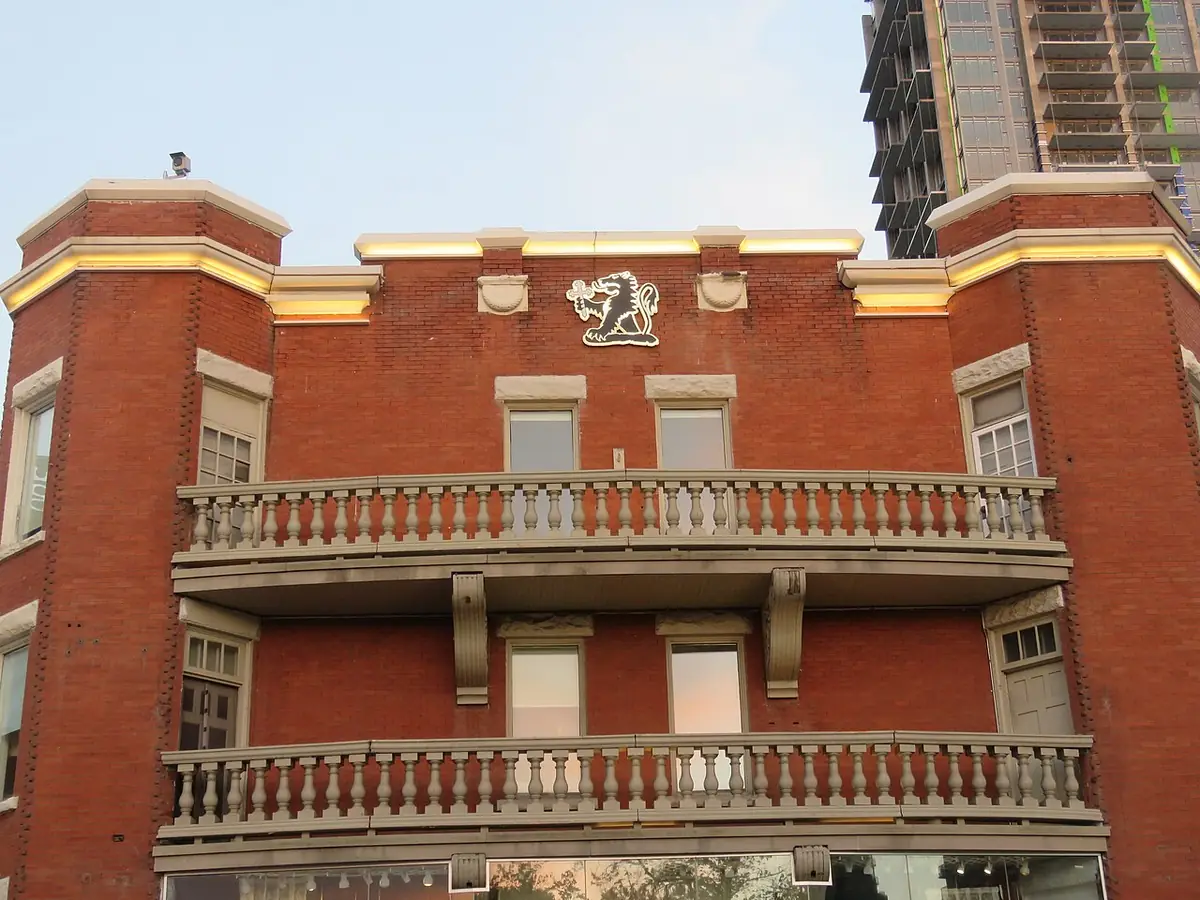
Detailed brick facades like this show the character of Calgary's older apartments — Photo: Benlarhome · CC BY-SA 4.0 · Wikimedia Commons
Beyond the visible routines, the Calgary market carries quieter dynamics worth decoding.
Nothing tests a Calgary location as honestly as walking through an ordinary Tuesday in it, hour by hour. Morning runs on Deerfoot Trail or Crowchild Trail, access to public or Catholic schools and the distance to everyday amenities are exactly the factors that separate two houses of identical size and very different value. The city's infrastructure serves the historic areas near the Bow River and the far peripheral developments quite unevenly. The sequence below shows where those differences show up, and each one has a price attached in the local market.
07:15Residential area (for example Brentwood or Marda Loop)Waking and a quick look at the local weather; in winter, allowing time to de-ice a vehicle parked in the driveway or the garage. Whether the property has a garage at all is a visible line in the valuation.
08:00School drop-off and the road corridorsThe run to the neighbourhood school and then onto the main routes toward the central employment hub. Catchment and commute are two of the strongest premiums in local pricing.
12:30Downtown or a peripheral business zoneThe midday break; access to nearby services, local shops and urban green space such as Prince's Island Park. Amenity density of this kind is what separates central comparables from suburban ones.
17:30Home again and the everyday shopA stop at a local chain (Co-op or Safeway) to restock, and dealing with residential parking. Parking arrangements and shop proximity both surface in what buyers will pay.
19:30Family time and indoor activitiesRest at home and a check on the heating or cooling system depending on the Alberta season. The age and condition of those systems is one of the first things an inspector prices.
21:30Setting up the next dayPlanning journeys around traffic forecasts and any weather alerts. A route that only works in good conditions tells you something about the location's real value.
What listings leave out, and what it does to the figure
Missing these technical realities is what turns a confident estimate into a painful surprise a few months later.
Listing platforms showcase light, floor area and modern kitchens, and they rarely mention the structural constraints particular to Alberta basements. Working through the regulatory, environmental and technical aspects is what separates a marketing figure from a defensible valuation. Ignoring items that never appear in a brochure exposes an owner to tens of thousands of dollars of unplanned spending in the first year of occupancy, and each of those items should have come off the price. Here are the main checkpoints to audit with your building inspector before you accept any number.
The condition and drainage of the basement against water ingress
Many Calgary basements are finished, but poor ground slope or inadequate drainage around the concrete foundations can cause major water damage during the spring melt. A developed basement adds value only if it is dry, and remediation costs are deducted in full.
The history of alterations and municipal permits (Real Property Report)
In Canada the Real Property Report (RPR) is a crucial legal document certifying where the buildings sit on the lot. An undeclared patio or a badly placed boundary fence can stall a transaction at the last moment and force a price correction nobody had modelled.
How exposed the roof is to hailstorms
Calgary sits in the region of Canada most affected by hail. Traditional asphalt shingles wear out prematurely, which feeds directly into the cost and availability of home insurance, and remaining roof life is one of the largest single adjustments in a house valuation.
Easements and planning restrictions on the parcel
Some lots carry underground utility easements that rule out a pool, a large garden building or any future extension. Land that cannot be developed is worth less than land that can, however identical the two look from the street.
Valuation mistakes Calgary owners recognise too late
These accounts show why the discipline to hold back matters as much as the discipline to check.
Looked likeAn unmissable opportunity in a sought-after area, taken quickly at the asking figure with no conditional counter-offer.
Turned outA bill of more than 15,000 dollars to bring the electrics and roof insulation up to standard, none of it covered by the seller and none of it reflected in the price paid.
Would have caught itAlways insisting on a condition for a thorough technical inspection by an independent certified professional before the figure is fixed.
Looked likeA handsome urban condo with attractive monthly fees, a short walk from transit, valued on those fees.
Turned outA special assessment voted a year later by the corporation to replace every window in the building, a liability the estimate had never carried.
Would have caught itReading the minutes of the last three annual general meetings in detail and checking the state of the reserve fund before accepting any condo valuation.
Looked likeA large, very affordable detached house in a fast-developing area on the far edge of the city.
Turned outClose to two hours of commuting a day, chronic fatigue and a punishing fuel budget, all of which the wider market prices in even when the listing does not.
Would have caught itDriving the route at genuine peak times on a Tuesday or Thursday before treating the low price per square metre as a bargain.
Looked likeA purchase made in a period of fierce competition, with no room to negotiate the figure first advertised.
Turned outAn interest rate correction that left the market value of the property flat for a while, well short of the paper gain that had been assumed.
Would have caught itSizing the deposit to absorb rate movements and reading any valuation as a long-horizon figure rather than a short-term one.
When a Calgary valuation is a reason not to transact
If you clear these tests, the last question is how well prepared you actually are.
A favourable valuation is not in itself an instruction to buy or sell, and acting on one at the wrong moment is a common way to lose the value it describes. Transaction costs, mortgage break penalties and maintenance all need a stable base to amortise against. If your professional or personal horizon is uncertain, committing to a Calgary property risks trapping you financially the moment a fast resale becomes necessary, whatever the estimate said. The profiles below set out the situations in which renting remains the objectively rational strategy.
The expatriate or contract worker with a posting shorter than three years
→Staying in the Calgary private rental market rather than acting on a valuation.
Legal fees, the agency commission on resale and transfer taxes absorb the equivalent of several years of rent, so a favourable estimate today cannot be realised over that horizon.
The household with less than a 5 percent deposit and no emergency savings
→Continuing to save each month while renting a functional apartment.
With no cushion for an urgent boiler or roof repair, the owner is exposed to default, and the repairs that get deferred are exactly the ones that erode the property's assessed value.
The person in a major career transition or expecting to relocate quickly
→Keeping the flexibility of a standard residential lease.
Selling into a moving market can take several months, so the figure on the valuation is not money you can reach when a sudden move to another province requires it.
Are you ready to act on a Calgary valuation?
Green spaces like Inglewood Bird Sanctuary offer an easy escape close to home — Photo: Grungaloo · CC BY-SA 4.0 · Wikimedia Commons
Trusting a Calgary valuation means combining financial discipline, clarity about your own plans and complete honesty about the Alberta market. If you have worked through the hidden costs, tested the commute at peak times and secured a mortgage pre-approval from a recognised institution, you have the foundations to treat the number as real rather than aspirational, and to avoid the impulsive bidding that pushes prices past what the evidence supports.
Remember that the soundest figure is not the one promising the largest short-term gain, but the one that holds up against your monthly budget, your quality of life and the local weather risk. Take the time to visit several areas, talk to established residents and read every technical document before you commit your signature to a binding contract, because each of those documents is part of the valuation whether or not anyone presents it that way.
What your figure is worth tomorrow depends directly on how carefully you built it today. By preferring method to haste, you turn the valuation of your house or apartment in Calgary into a solid, durable step toward owning property in Canada on terms you can defend.
Related questions
How long does a property transaction in Calgary usually take from start to finish?
The full process, from active searching to formal possession, generally runs between 30 and 60 days. The timing depends on final mortgage approval and on how complex the required technical inspections turn out to be.
Do I need a 20 percent deposit to buy in Calgary?
No. It is possible to buy a property in Canada with a minimum deposit of 5 percent on the first tranche of the purchase price, provided you take out the compulsory mortgage loan insurance from CMHC or an equivalent private insurer.
Which Calgary areas are most sought after by families?
Areas such as Brentwood, Hillhurst, Marda Loop and the planned communities of the southwest and northwest are particularly prized for the quality of their public schools and for being close to parks and transport routes, all of which supports their values.
How do municipal property taxes work in Calgary?
Property taxes are calculated annually by the City of Calgary by multiplying the assessed value of your property by the mill rate applicable to your residential category. They are payable in a single instalment or by monthly direct debit through the TIPPS programme.
Should I budget separately for air conditioning in Calgary?
Although Calgary's climate has historically been dry with cool nights, recent summers have brought sharper heatwaves. Installing central air conditioning is increasingly common and represents a notable upfront investment, which is worth reflecting in any estimate.
How does the weather affect the upkeep of a house in Calgary?
Harsh winters and summer hailstorms call for close attention to the state of the roof, the insulation of outdoor pipework and regular servicing of natural gas heating systems. Each of those is a line an inspector will price.
What is the Real Property Report and why does it matter?
The Real Property Report is an official survey document showing the exact boundaries of the lot and the position of the buildings on it. It is required in transactions to prove there is no encroachment onto neighbouring properties.
How do interest rates influence the Calgary market?
Movements in the Bank of Canada policy rate change household borrowing capacity directly, which affects overall demand, competition on prices and how quickly transactions complete in the local market.
What are the advantages of a condo compared with a detached house?
Buying an apartment in a condominium hands exterior upkeep, snow clearing and roof management to the corporation, which brings greater flexibility and often a more central location in exchange for a fixed monthly fee.
Where can I check the history of property assessments in Calgary?
The City of Calgary provides residents with mapping tools and online databases that let you look up the assessment history and property taxes of any listed property, which makes a useful cross-check on a private estimate.
Property review of ting
No ting properties in Calgary yet
Be the first — share it on ting and it shows up right here.