Buying a house in Ajman is a structuring decision that calls for a clear-eyed analysis of the local market, its legal particularities and its budgetary realities. This guide takes you step by step through how this emirate works and what makes a residential move here succeed.
Get the app
What nobody tells you.
Real prices, hidden costs and the traps to check before you commit.
What buying a house in Ajman really involves day to day
Scroll
What buying a house in Ajman really involves day to day
Buying a house in Ajman is a structuring decision that calls for a clear-eyed analysis of the local market, its legal particularities and its budgetary realities. This guide takes you step by step through how this emirate works and what makes a residential move here succeed.
Written by the ting.ad editorial team ·
Ajman in Street View: drag to look around.
Buying a house in Ajman is a significant financial commitment that requires a clear view of local realities. Unlike the larger neighbouring cities, this market offers a more measured approach to residential investment.
An affordable purchasevsConstrained resale potential
Entry prices are appreciably more accessible than in Dubai, but the depth of the secondary market is narrower. Plan on holding longer to recover the transfer duty and transaction costs.
Generous spacevsStructural maintenance costs
Living space and plots are incomparably larger for an equivalent budget. In exchange, the climate demands rigorous maintenance of the cooling installations and of façades exposed to sun and sand.
Residential independencevsTotal dependence on a car
Owning a house gives complete freedom over the layout and no heavy community charges. Daily journeys, however, rest entirely on personal vehicles given how the city is laid out.
What kind of buyer are you?
Your personal and professional situation determines whether this works. Whether you work locally, remotely or commute to the neighbouring business centres, where you buy changes everything.
The resident remote worker
If your work does not require daily travel at peak hours, buying a house here offers a notably peaceful and spacious setting. You benefit from a generally lower cost of living and a comfortable home office. The challenge lies in building a local social circle and integrating into the expatriate or resident community.
Settling as a family
For a family, the appeal is the available floor area and the private gardens that central apartments simply cannot offer. You do need to map schools, health centres and after-school activities against the district you choose, or you will spend the week driving.
The inter-emirate commuter
This is economically sound for reducing housing costs, provided you are honest about the road. Target the districts closest to the northern exits, drive the route at real peak times before committing, and treat fuel and vehicle wear as part of the housing budget rather than separate from it.
What changes when you arrive from abroad
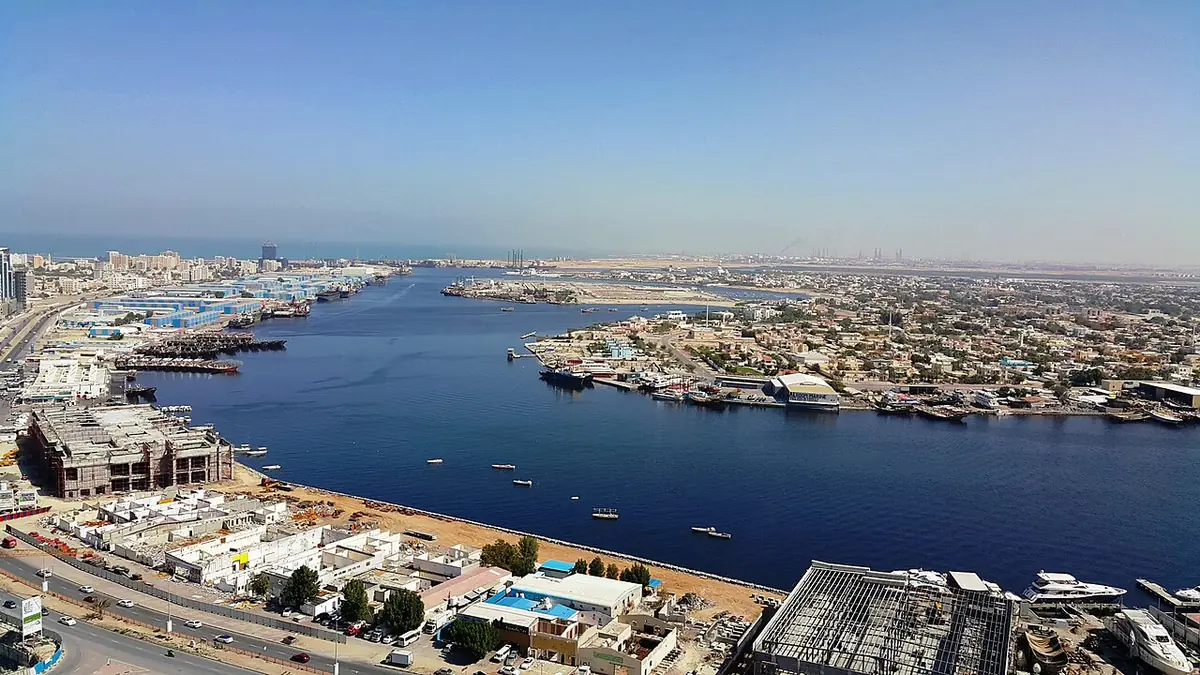
Ajman's waterfront at Al Rashidiya, marinas and low-rise buildings — Photo: pj soans · CC BY-SA 3.0 · Wikimedia Commons
Moving property interests to the UAE unsettles many European habits around law, tax and property management. The local framework protects investors while imposing strict rules worth learning first.
From abroad
Annual property tax and recurring local taxes
Ajman
No recurring property tax on residential ownership
Your long-term cost of holding is considerably lighter, which offsets other lines such as insurance and maintenance contracts.
From abroad
Strong tenant protection and rent capping legislation
Ajman
More flexible tenancy regulation, oriented towards contractual freedom
If you buy to let, you have greater flexibility, but market movements can be more abrupt than you are used to.
From abroad
A notary systematically authenticating and securing the sale
Ajman
Direct registration of title with the emirate's land department
The procedure is quick and paperless, but it requires careful verification of the contractual clauses beforehand by your own legal advisers.
From abroad
Older building stock and strict heritage regulation
Ajman
Mostly recent construction to specific technical standards
There is little renovation risk of the European kind, but assessing the developer's build quality becomes the critical part of your inspection.
How Ajman's residential districts compare for buying
Ajman divides into zones of very different character and urban maturity. The right area depends on your budget, your need for quiet and how close you want to be to the main roads.
Al Rashidiya
An established, lively district with plenty of local shops and traditional neighbourhood life.
Suits
Buyers wanting urban amenities and government services immediately to hand, without a car.
Trade-off
Older housing stock and heavier traffic at peak hours.
Al Jurf
An area under real development, institutional and academic, offering large plots and relative calm.
Suits
Families wanting large sites and spacious houses at competitive prices.
Trade-off
Relatively far from the beaches and the emirate's most active coastal areas.
Emirates City
A peripheral district characterised by large-scale projects and urban development still maturing.
Suits
Investors seeking the best ratio of space to price and betting on future infrastructure.
Trade-off
Local services still thin, and greater dependence on a vehicle for everyday shopping.
What budget do you need to buy a house here?
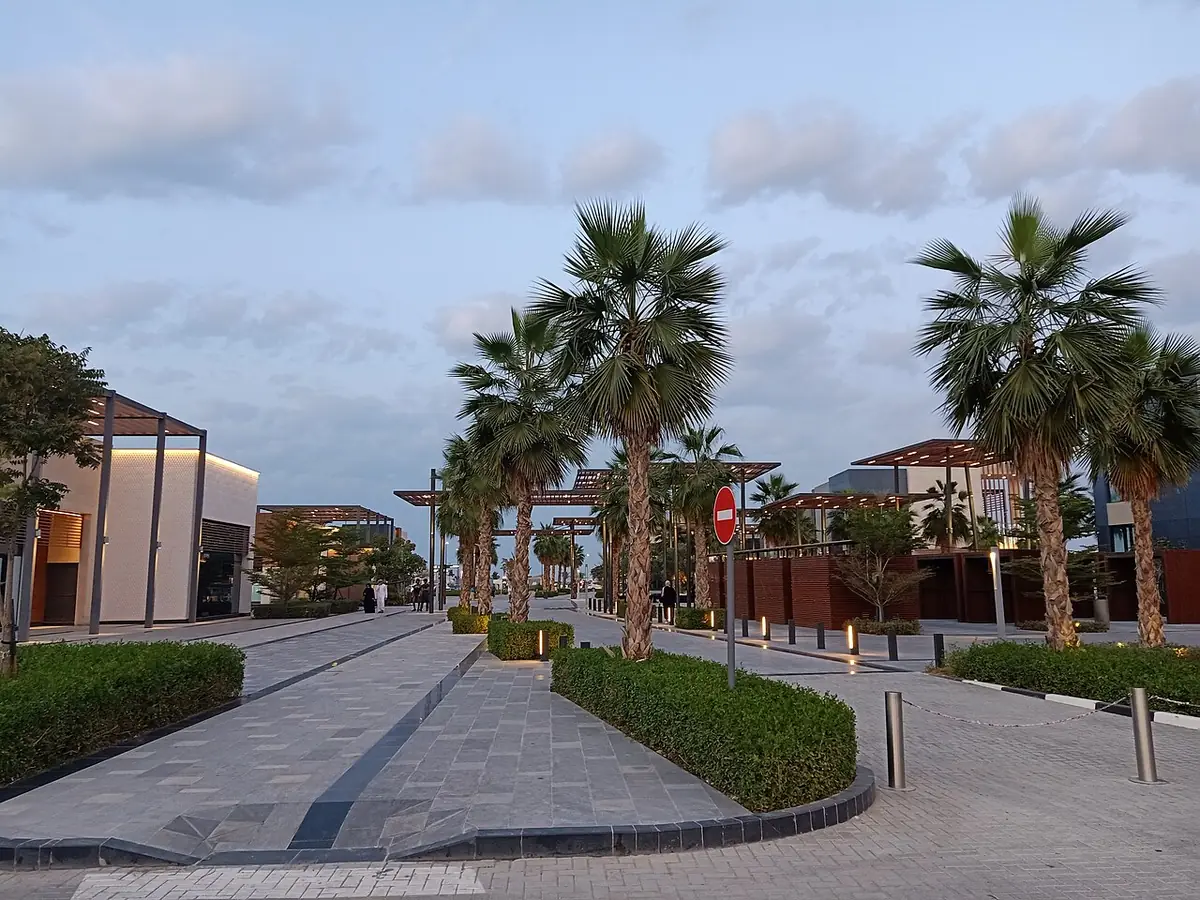
A palm-lined promenade for an evening walk in Ajman — Photo: Ayshamarjana · CC BY-SA 4.0 · Wikimedia Commons
Assessing the acquisition budget should not stop at the headline price on the portals. You have to include every compulsory additional fee, from local registration duty and agency fees through to any updating work the property needs. The ranges below reflect the market for property to a standard specification.
ajmanFor saleHouseestimate
Median price / m²AED 5,064Half the apartments sell below this
Median priceAED 1.01mthe average is 14% higher — a few very large properties pull it up
Most common2 bedrooms59 % of listings
Average size189 m²
By number of bedrooms
Bedrooms
Share of market
Avg price
Price / m²
Avg size
2most common
59 %
AED 979k
AED 5,330
184 m²
3
32 %
AED 1.28m
AED 5,064
254 m²
4
9 %
AED 1.63m
AED 4,904best value / m²
333 m²
Each row is an average, compared against the area average of AED 5,330 / m². These are indicative estimates of a typical local market, not a measured sample of live listings. Check current listings before relying on them.
The legal reality of ownership open to foreign nationals
The distinction between tenure regimes is the most critical point in securing a long-term investment. Depending on the zoning of the plot your house stands on, the nature of your rights differs radically.
Freehold
This permits foreign nationals to acquire full ownership of the property and the associated land with no limit in time. You hold a land title issued directly by the emirate's competent authorities, guaranteeing the usual rights of sale, letting and inheritance.
What it changesYou own a tangible, transferable asset, which secures your position over decades with no risk of your rights being called into question.
Usufruct or long leasehold
In certain specific areas, the acquisition takes the form of a long-term right of use, generally set at ninety-nine years. Legally well framed and widespread, it does not grant perpetual ownership of the land, which can affect how the property is valued at successive resales.
What it changesCheck the exact start date of the original lease to establish precisely how much term remains before committing financially.
The logical chain of a secure purchase
Securing the purchase of a house means following a precise procedural sequence to head off any dispute. Each stage, from selecting the property to obtaining the final certificate, engages your contractual and financial responsibility.
Agreeing terms with the seller.
Signing a preliminary agreement formalising the conditions and the price.
Paying a deposit into escrow with a licensed agency or a law firm.
A thorough technical inspection of the structure, the roof and the cooling installations.
Confirming there are no charges or liens recorded against the land title.
Title registered in your name.
Who does what in your transaction
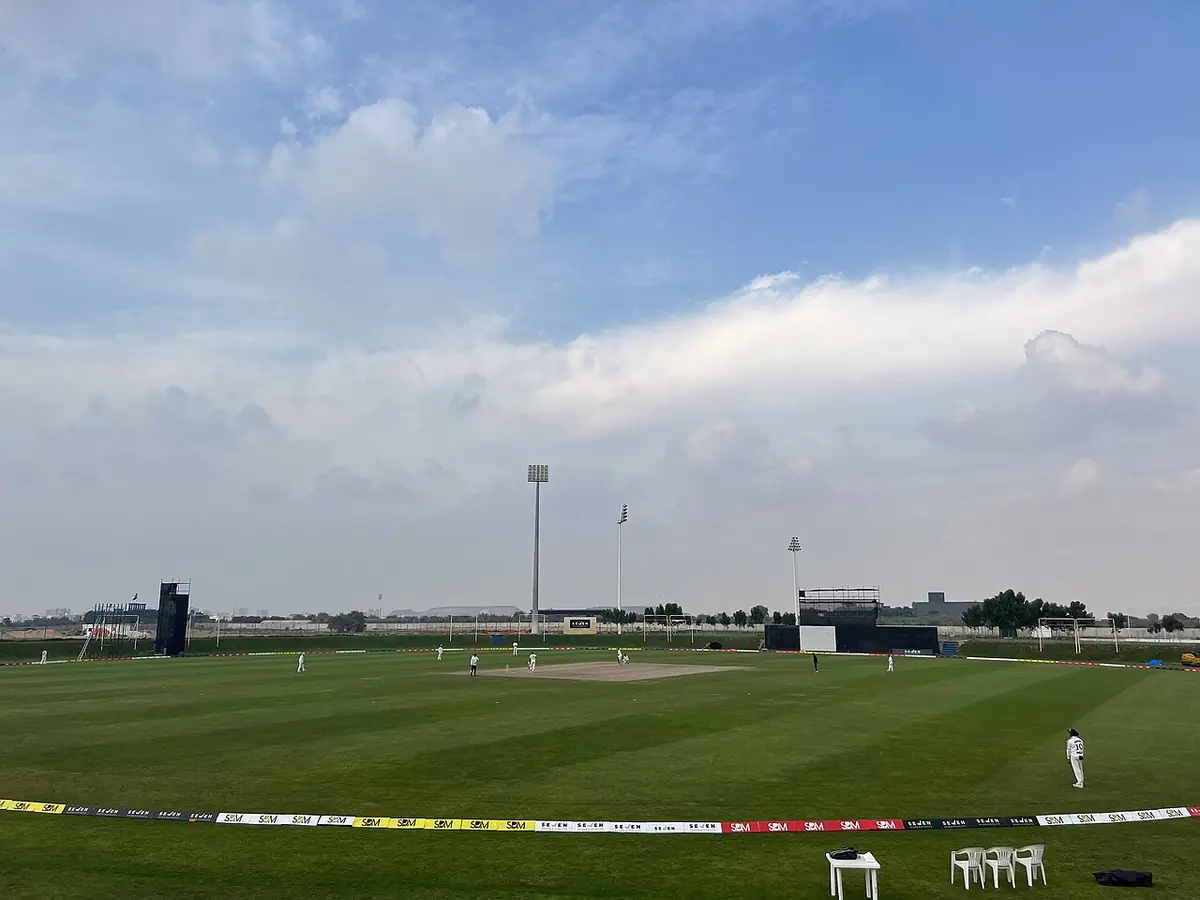
A green cricket ground in Ajman, open under a clear sky — Photo: JairamPJ · CC BY-SA 4.0 · Wikimedia Commons
A successful transaction rests on transparent coordination between professionals with complementary and well-defined roles. Understanding what each is responsible for lets you steer the process rather than follow it.
The licensed estate agentIntroduction and negotiationThey select properties matching your criteria and facilitate the initial discussions between seller and buyer within the conventions of the market.
The independent legal adviserAuditing the contractsThey review every clause of the preliminary agreement and confirm there are no hidden legal defects in the property's history.
The technical inspectorSurveying the buildingThey produce an objective report on the structural condition, estimating the cost of any works needed immediately or to meet standards.
The local land departmentValidating the transferIt registers the change of ownership officially, collects the applicable duty and issues the final title in the buyer's name.
The bank or financial institutionFinancing and escrowIt releases funds against a strict timetable and secures the movement of capital between the parties' accounts.
House or apartment in Ajman: space against service charges
Choosing between a detached house and an apartment in Ajman commits your daily life well beyond the initial financial question. Villas in the outer residential districts such as Al Helio or Al Zahia offer generous volumes, preserved privacy and usually private outdoor space, which changes family dynamics entirely.
That independence has a cost. Every element of maintenance falls to you — the cooling plant under constant strain, the façades taking sun and sand, the garden needing irrigation. An apartment pools all of it into a service charge and a management company, at the price of shared walls and rules about what you may alter.
For valuation, the two behave differently. An apartment is priced closely per square foot against comparable units in the same building, which makes an estimate straightforward and the market relatively liquid. A villa depends on plot size, on the maturity of the community and on the condition of the technical installations, which widens the range considerably and lengthens the time to sell.
If your horizon is short or you are managing remotely, the apartment is the sounder asset. If you are settling with a family for years, the villa repays what it asks — provided you budget honestly for the maintenance this climate demands.
What realistic budget should you plan for?
Building a budget for buying and running a house in Ajman means going well beyond the mortgage repayment. Local administrative duty, agency fees and the recurring costs of this climate all belong in the calculation.
Initial acquisition costs and administrative duty
Cost
Estimated amount or rate
Nature of the obligation
Land registration fee (Ajman Land Department)
2% to 4% of the property's value
Generally shared between buyer and seller, subject to negotiation
Estate agency fee
2% of the sale price
The local market standard for residential transactions
Bank arrangement and valuation fees
1% to 2% of the amount borrowed
Charged by the lender for assessing the mortgage application
Utility deposit (FEWA)
AED 2,000 to 5,000
Refundable when you eventually leave the property
These incidental costs are unavoidable and must be funded from your own capital, since local banks generally refuse to include them within the mortgage.
Monthly running budget for a three-bedroom house
Cost
Monthly range (AED)
What drives the variation
Electricity and water (FEWA)
AED 800 to 2,000
A sharp seasonal rise from intensive cooling, June to September
Internet, telephone and television
AED 350 to 600
Depends on the provider and the fibre package taken
Routine maintenance and gardening
AED 300 to 800
Varies with whether there is landscaped garden and a private pool
Home insurance
AED 100 to 250
The annual premium spread monthly, by reinstatement value
Cooling is the most volatile line in the monthly budget and should be smoothed across the year rather than budgeted month by month.
Health, schools and travel: an ordinary Tuesday in Ajman
Picturing a weekday in Ajman is what lets you measure journey times, how well traffic flows and how accessible the essential infrastructure really is. The pace is a long way from the larger neighbouring cities.
07:00A residential district in Al HelioAn early start to avoid the crush of school buses and commuter traffic heading towards Sharjah and Dubai.
07:45An international schoolDropping the children at one of the emirate's well-regarded schools, with modern facilities and British or American curricula.
08:30The business district or a home officeStarting the working day, helped by good broadband and a growing number of co-working spaces.
13:00A local medical centreHealth services are quickly available for a routine appointment or a specialist consultation, without excessive waiting.
17:30A hypermarket or the central soukThe evening shop for the household, with free parking and a genuinely varied retail offer.
19:30Ajman CornicheFamily time along the seafront, in the sea breeze and the pedestrian areas laid out for walking.
What the brochures never tell you
Ajman's market appeals through its momentum and its accessible prices per square metre against its immediate neighbours. Early enthusiasm should not displace some necessary scrutiny.
How good the thermal and acoustic insulation really is
Many quickly built properties perform poorly, which shows up as noise between neighbours and very high cooling bills in summer. Insist on an independent technical inspection before making any firm offer.
The financial health of the building's reserve fund
In apartment buildings, the absence of a properly funded reserve leads inevitably to exceptional levies for façade works or replacing lifts. Always ask for the minutes of the last three general meetings.
Planned development immediately nearby
A vacant plot in front of your future villa or bright apartment can host a twenty-storey tower within two years. Consult the municipal master plan with the competent authorities to protect your view and your quiet.
Real restrictions on selling quickly
Some off-plan purchases carry lock-in clauses or financial penalties for selling before a certain proportion of the capital has been paid. Read the early-resale clauses of the reservation contract carefully.
What owners discover six months after moving in
Looked likeAn unmissable opportunity at a price per square metre well below the observed market average.
Turned outA property in a poorly served area, with structural damp problems and chronic difficulty reselling or letting it properly.
Would have caught itHave the structure audited by a certified independent expert and compare against the transactions the land department actually registered over the last twelve months.
Looked likeAn off-plan purchase on impulse, with rapid appreciation promised by a persuasive sales agent.
Turned outHandover delayed by more than two years, together with changes to the original plans the buyer never agreed to, and an unreachable developer.
Would have caught itInsist on a verifiable official escrow account with the central bank, and favour completed, connected property.
Looked likeA large isolated villa offering absolute calm away from urban noise and traffic.
Turned outGeographic isolation that became unbearable day to day, with hours of driving for every school, medical or work commitment.
Would have caught itDrive the real journeys at peak times, around 07:30 and 18:00, between the property and the places you actually go, before signing anything.
Looked likeSkipping a careful read of the community rules, to save time.
Turned outRestrictions on parking, external alterations and even the colour of blinds, discovered only after moving in.
Would have caught itRead the community regulations in full before the offer, not after, and get anything you were promised verbally written into the contract.
Who makes a mistake investing in Ajman
Attractive prices do not make this emirate a universal answer for every investor or resident. Settling here without aligning your objectives with the market's character leads nowhere good.
A speculative investor seeking a gain within twelve months
→An off-plan apartment in a peripheral scheme with maximum bank leverage.
Ajman's secondary market is a fundamental one, oriented towards main residences and stable rental income, not the rapid speculative resale that characterises certain very tight Dubai districts.
A professional working daily in central Dubai
→A large economical villa in the most distant parts of Ajman, to maximise floor area.
The fatigue of daily congestion on the routes into Dubai destroys the benefit of the extra space quickly, leading to exhaustion and a rushed sale at a loss.
A buyer with no patience for local administration and regulatory nuance
→A second-hand property without a lawyer or a licensed agent, relying on the seller's word.
Local property law follows strict rules that must be understood to avoid disputes over transfer of title and unpaid charges.
So are you ready to buy in Ajman?
Deciding to buy property in Ajman means testing your own aspirations against the facts set out here. If your plan rests on a long-term view — housing yourself durably, or securing steady rental income in a stable tax setting — the conditions are all in place.
The key is clarity: accepting that every advantage here carries a corresponding constraint. Generous space comes with maintenance in a demanding climate. Low prices come with a narrower secondary market. Independence comes with total reliance on a car.
If those trades suit how you actually live, and your horizon runs beyond five years, this is a sound and unremarkable purchase. If any of them grates, renting here remains an excellent option and costs you nothing in optionality.
Related questions
What registration fees apply when buying in Ajman?
Registration with the Ajman Department of Land and Real Estate Regulation generally runs between 2 and 4 per cent of the property's total value. It is most often shared equally between buyer and seller, unless negotiated otherwise in the sale agreement.
Can a non-resident foreign national buy a house in Ajman?
Yes. Foreign nationals can acquire freehold property in the zones specifically designated by the Ajman government, without needing to hold a UAE residence card.
How long does a transaction take?
For an existing property on the secondary market, allow on average four to six weeks between signing the memorandum of understanding and the actual transfer of title, subject to obtaining any bank financing.
How are FEWA bills calculated?
Water and electricity are managed by the Federal Electricity and Water Authority. Tariffs are banded and depend on actual metered consumption, with notable peaks through the summer because of air-conditioning.
Do I have to use a licensed estate agent?
The law does not strictly require it, but working exclusively with registered professionals is strongly advisable to keep the transaction legally secure and the checks properly done.
What are the total acquisition costs?
Registration of 2 to 4 per cent, agency fees around 2 per cent, bank arrangement fees of 1 to 2 per cent where a mortgage is used, plus a refundable FEWA deposit of AED 2,000 to 5,000.
What does it cost to run a three-bedroom house?
Roughly AED 800 to 2,000 a month for electricity and water, AED 350 to 600 for connectivity, AED 300 to 800 for maintenance and gardening, plus insurance — with the cooling bill peaking sharply in summer.
Is there a recurring property tax?
No. There is no annual property tax on residential ownership and no tax on rental income, which lightens the long-term cost of holding considerably.
How do I check what will be built nearby?
Consult the municipal master plan with the competent authorities. A vacant plot opposite can host a high-rise within two years, and the master plan is the only reliable way to know.
How long should I plan to hold?
At least five years. The transfer duty, transaction costs and the narrower secondary market mean a shorter hold risks selling at a net loss.