Valuing an apartment in Paris, and in the 15e arrondissement in particular, means reading the real worth of the property, the state of the co-ownership it sits in and how its layout matches the way the city actually lives. This guide walks you through the micro-districts that move the figure, the price ranges you should be measuring against, and the legal and technical checks that make an estimate defensible.
Get the app
What nobody tells you.
Real prices, hidden costs and the traps to check before you commit.
What are you actually measuring when you value an apartment in the 15e arrondissement of Paris?
Scroll
What are you actually measuring when you value an apartment in the 15e arrondissement of Paris?
Valuing an apartment in Paris, and in the 15e arrondissement in particular, means reading the real worth of the property, the state of the co-ownership it sits in and how its layout matches the way the city actually lives. This guide walks you through the micro-districts that move the figure, the price ranges you should be measuring against, and the legal and technical checks that make an estimate defensible.
Written by the ting.ad editorial team ·
Rue de Rivoli, Paris in Street View: drag to look around.
This permanent tension between comfortable living and financial constraint raises the underlying question of how well the arrondissement matches the way you actually live.
Valuing a property in the 15e arrondissement of Paris is not a matter of pricing a plain residential space inside the capital. Between the promise of a settled family setting and the reality of an extremely tight market, every square metre represents a hard trade-off between usable floor area and affordability. The value the market attaches to this district has to be read twice over, because stability of capital runs straight into a high cost of entry.
The promise of a residential havenvsThe reality of pronounced urban density
Buyers often look for the calm of the paved streets and closeness to parks such as Georges Brassens, so an estimate has to credit that. It also has to accept that the quiet is paid for at a high price and comes with a dense fabric of Haussmann-era buildings and 1970s architecture right alongside.
The illusion of instant liquidityvsThe constraint of a selective market
The area benefits from steady demand from families and senior professionals, but how quickly a property really sells depends entirely on how accurate the opening figure is against buyers who are better informed and more demanding every year.
The comfort of neighbourhood infrastructurevsThe architectural sameness of certain pockets
The 15e has an exceptional network of local shops and faultless public services, both of which support value, but the concentration of modernist blocks or large co-ownerships can disappoint anyone pricing in authentic, preserved Haussmann character.
Accessible Paris centralityvsRelative distance from the major cultural hubs
On the Left Bank, the arrondissement puts the heart of Paris within quick reach thanks to a dense transport mesh, while carrying an atmosphere that people drawn to nightlife sometimes read as too provincial. Both facts show up in the comparables.
Does the 15e arrondissement, and the way it is valued, match your own situation?
These personal trade-offs become sharper still once you compare local housing standards against the habits you bring from another market.
Putting a defensible figure on a home in the 15e arrondissement means looking coldly at your daily rhythm, your working commitments and your personal plans, because those determine which features the market will pay you for. Whether you arrive alone, as a couple with young children or in search of a capital-preserving foothold, the same apartment is worth different things to different buyers. Working through the standard profiles avoids the classic error of accepting a figure driven only by the district's reassuring reputation.
The space against workspace trade-off
If you spend several days a week working from home, the search for an extra room or an optimised layout becomes the priority in the 15e, and that is exactly what a valuation has to price. Prices per square metre often mean giving up a guest bedroom in favour of a functional desk corner built into the living room, and buyers value the two very differently. The estimate therefore has to weigh a larger floor area at the edge of the arrondissement, near the boulevards des Marechaux, against a tighter but hyper-central property a couple of minutes from la Motte-Picquet. Internet quality and the sound insulation of the 1965 to 1980 co-ownerships are decisive criteria here, and both are visible in what comparable units actually fetch.
Educational and community stability
For parents, the main draw of the 15e is the density and reputation of its state and private schools, together with its many sports facilities, and that draw is what holds valuations up in the family segment. Against it stands the scarcity of large apartments with four rooms or more, which produces fierce competition on precisely that segment and pushes those units above the district average. Buyers routinely accept a property in poorer condition and fund the layout works later, so any estimate on a tired four-room flat has to be built as a renovated value minus a costed works allowance. The immediate closeness of parks and secure squares more than offsets, day to day, the discipline of life in a dense co-ownership, and the market pays for it.
The search for liquidity and safety
If your aim is to protect capital while collecting a moderate but stable rental return, the small units of the 15e show remarkable resilience when the market turns, and that resilience belongs in the valuation as a low discount for risk. Studios and one-bedroom flats near the main transport routes let quickly to professionals and serious students, which shortens the time to sale and firms up the figure. Against that, the initial gross return is often modest because acquisition prices are high, so income-based methods will read lower than comparable sales do. Look very closely at the level of co-ownership charges, which can weigh heavily on the net return and, through it, on what a buyer will pay.
What changes about reading property value when you arrive in Paris from another country?
How that shift lands in practice depends on which micro-district of the arrondissement you are measuring.
Moving from a market of houses and generous floor plans into the 15e arrondissement of Paris produces a jolt of scale and habit that is easy to underestimate, and it distorts a newcomer's sense of what things are worth. The rationing of living space, the way a co-ownership is run and direct access to city services completely redefine the relationship between a home and its price. Understanding these structural differences is what stops an overseas owner from misreading a Paris estimate.
From abroad
A detached house with its own garden and parking on the plot
Paris
An apartment in a vertical co-ownership with a lock-up garage or paid parking in the basement
Value is no longer set by the plot but by the building. The collective setting, the strict co-ownership rules and the recurring cost of maintaining the common parts all enter the figure, so two identical flats in different buildings can be worth noticeably different sums.
From abroad
Large internal volumes available on a moderate budget
Paris
A hunt for optimised square metres and a hard sort through what you own
Every room counts twice. An awkward corner or a badly placed corridor is a direct financial cost, which is why a Paris valuation measures the usable layout and not only the headline floor area.
From abroad
Daily, automatic use of a private car
Paris
A shift to the metro, the bike and walking for every journey
Owning a vehicle becomes a financial and logistical burden, while immediate access to public transport removes the dependency entirely. Walking time to a station therefore carries more weight in the estimate than a parking space does.
From abroad
Absolute quiet and relative isolation immediately around the home
Paris
Constant activity, shared acoustics and neighbourhood density
You relearn how to filter city noise, accept how close the neighbours are and settle into a dense but oddly anonymous urban fabric. Noise exposure is one of the few soft factors that consistently shows up as a discount in comparable sales.
Which micro-districts of the 15e arrondissement carry which valuations?
Once the geography is pinned down, the budget reality sets the strict frame around the figure.
The 15e arrondissement is far more varied on the ground than its blanket reputation as a comfortable residential district suggests, and that variation is the single biggest driver of the estimate. From the commercial bustle of rue du Commerce to the calmer feel of Convention and the urban renewal of Beaugrenelle, each pocket has its own identity and its own trade-offs. Reading these micro-territories correctly is what keeps a valuation from being anchored to the wrong comparables.
Commerce - Motte-Picquet
Constant retail activity, lively pedestrian streets and a Paris village atmosphere that families actively seek out.
Suits
Estimates on properties bought by people who want to do everything on foot and will pay for neighbourhood life rather than raw floor area.
Trade-off
Prices per square metre among the highest in the arrondissement, and strong competition for good family units, so comparables here sit well above the district average.
Convention - Vaugirard
A commercial and genuinely mixed area, drawing varied residents with an abundant offer of services and markets.
Suits
Owners weighing daily convenience and local energy against a slightly more measured price base.
Trade-off
Architecture that is uneven in places and post-war buildings with less prestige than the Haussmann stock, which caps the top of the range.
Javel - Front de Seine
Open views over the Seine, bold modernist towers and wide but harder-edged public spaces.
Suits
Valuations on units where panoramic views, light through the apartment and large balconies or terraces do most of the work.
Trade-off
Co-ownership charges that are often very heavy because of the engineering of high-rise buildings, plus less of a village feel. Both pull the net figure down.
Necker - Pasteur
An institutional, quiet and very central atmosphere, defined by how close the gare Montparnasse is.
Suits
Properties whose value rests on mobile professionals and commuters needing a fast link to the national rail network.
Trade-off
Almost no evening activity and dense car traffic on the main through routes, which trims the premium on lower floors.
What do the published figures really say about values in the 15e?
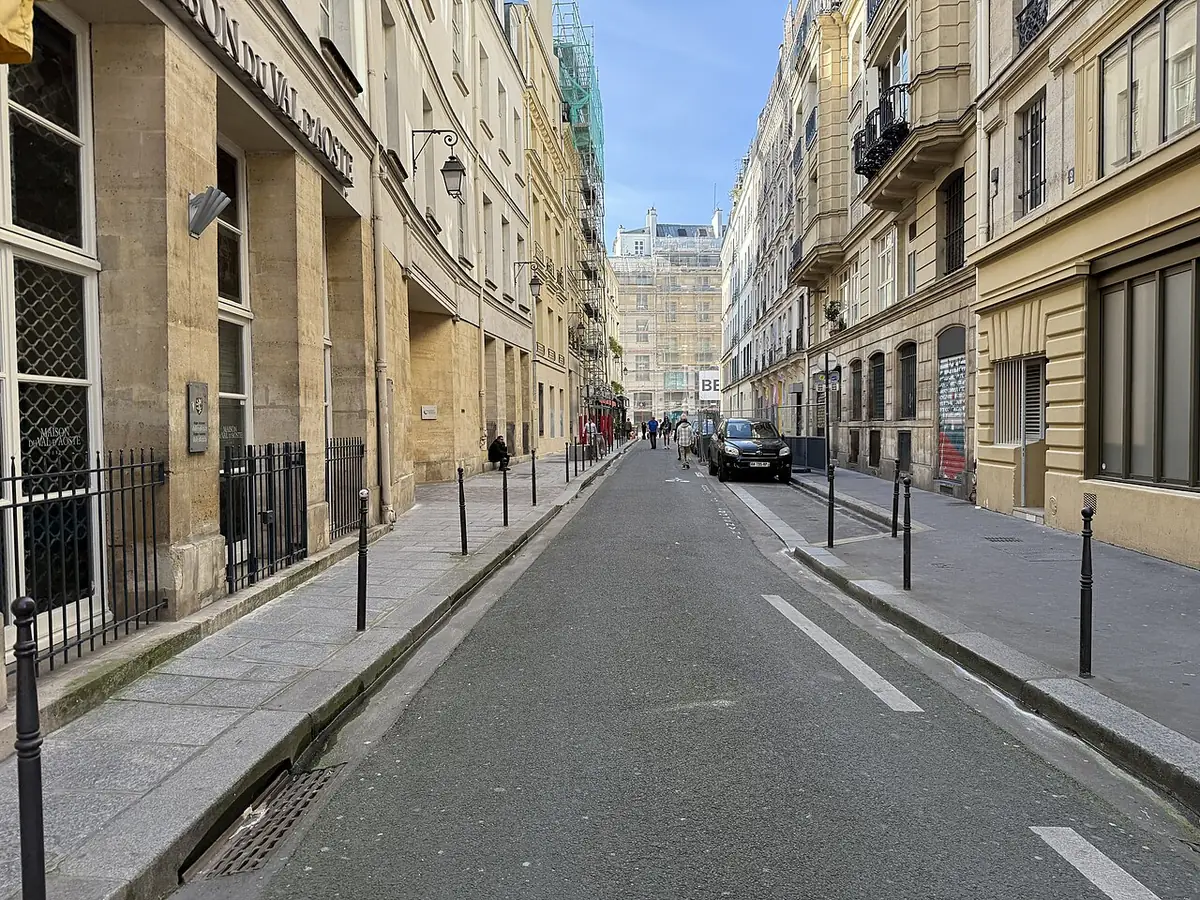
A quiet Haussmannian street in central Paris — Photo: Chabe01 · CC BY-SA 4.0 · Wikimedia Commons
Beyond the raw figures per square metre, the exact nature of the ownership being valued deserves close examination.
Valuing an apartment in the 15e arrondissement of Paris means cross-checking the objective figures published by the notaires against what each individual property actually offers. The published averages hide considerable spread by floor level, orientation, the presence of outdoor space and the overall condition of the co-ownership. An attractive price almost always conceals a structural flaw, and finding it is the difference between a number and a valuation.
parisFor saleApartmentestimate
Median price / m²€9,975Half the apartments sell below this
Median price€545kthe average is 14% higher — a few very large properties pull it up
Most common1 bedroom42 % of listings
Average size52 m²
By number of bedrooms
Bedrooms
Share of market
Avg price
Price / m²
Avg size
1most common
42 %
€445k
€11,130 +6 %
40 m²
2
33 %
€651k
€10,500
62 m²
3
17 %
€887k
€10,080
88 m²
4
8 %
€1.18m
€9,870best value / m²
120 m²
Each row is an average, compared against the area average of €10,500 / m². These are indicative estimates of a typical local market, not a measured sample of live listings. Check current listings before relying on them.
Period character or technical quality: which one is your apartment being paid for?
That architectural distinction sets up the legal and financial checks that any credible estimate has to pass.
The housing stock of the 15e arrondissement splits into two architectural inheritances with opposite value logics, and an estimate built on the wrong one will be wrong by a wide margin. Choosing between historic character and the technical rationality of newer construction shapes not only daily comfort but the co-ownership budget a buyer inherits, which is precisely what they discount for.
The Haussmann-era and older option
This segment sells itself immediately on its traditional attributes: herringbone parquet, refined mouldings, marble fireplaces and generous ceiling height. Structurally, though, these properties often suffer from poor thermal insulation (class F or G on the energy performance diagnostic, the DPE), dated internal layouts needing heavy reconfiguration work, and ageing shared services that expose the co-owners to unplanned calls for funds to redo roofs or facades. Each of those is a measurable deduction from the figure.
What it changesYou are valuing timeless aesthetic character and a strong sense of heritage, offset by high energy bills and an unavoidable near-term works budget that a buyer will insist on netting off.
The modern and contemporary option
The buildings put up between 1960 and 1990, very common in the arrondissement, favour function: rational plans, wide glazing, lifts as standard and compliant, private balconies and basement parking. If the exterior looks more austere or less romantic, these buildings generally offer better acoustic and thermal comfort, along with co-ownership charges that are often better controlled across large co-ownerships. That combination narrows the gap between headline price and defensible value.
What it changesYou are valuing practicality, ease of maintenance and light, at the cost of the old-world charm of period mouldings, and the market prices that trade-off consistently.
What has to be verified before you rely on a valuation figure?
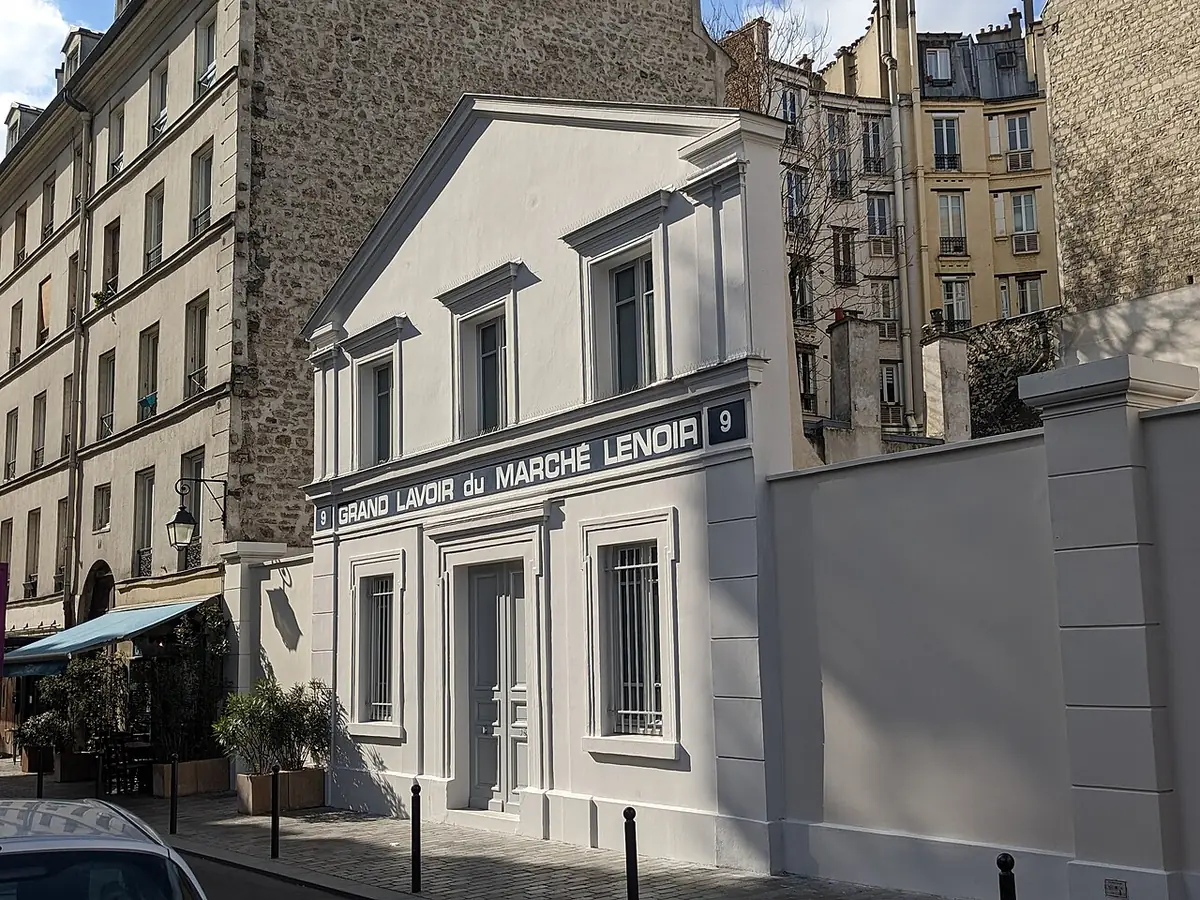
A repurposed neighborhood building near Marché Lenoir — Photo: Artvill · CC BY-SA 4.0 · Wikimedia Commons
Once those checks are cleared, the transaction itself follows a precise calendar worth steering deliberately.
Haste is the sworn enemy of anyone pricing property in Paris, especially in an area where competitive pressure encourages people to skip the legal fundamentals. Before you commit to a figure, whether you are the owner setting an asking price or a buyer testing one against a preliminary sale agreement (compromis de vente), a logical chain of verifications is what makes the number stand up.
The property has been seen properly, a second detailed visit is done, and a first indicative figure is on the table.
A careful reading of the last three sets of minutes from the owners' general meetings, to identify works already voted and any unpaid charges, both of which come straight off the estimate.
A close look at the energy performance diagnostic (DPE) and the insulation works it recommends, so the real running cost, and the discount a buyer will apply, can be costed.
A check with the building's managing agent (syndic) and the co-ownership that internal alterations made by previous owners were properly authorised, since unauthorised work undermines the floor area you are pricing.
Confirmation of the figure against an independent reference, whether a lender's own valuation or the notaires' published statistics, before it is treated as settled.
A number you can hold to in front of the notaire, arrived at calmly and with full knowledge of what sits behind it.
Where is a valuation actually tested, from first offer to final deed?
In short, a sound valuation in the 15e arrondissement rests on a steady balance between financial rigour, a clear reading of the charges and an honest match between the property and the way the city lives.
Carrying a Paris property through to completion means coordinating a number of institutional and technical actors on a precise calendar, and the estimate is stress-tested at each handover. From the opening written offer to the handing over of the keys, every participant plays a specific part, and knowing those parts is what stops administrative delays from eroding the figure you started with.
The buyerThe written purchase offerThe offer is drafted and sent, either at the asking price or argued down with evidence, valid for a limited period and expressing a firm intention to acquire on the stated terms. This is the first external test of whether the valuation holds.
The sellerFormal acceptance of the offerThe owner confirms agreement in writing, settling both the property and the price before the professionals draw up the preliminary documents. Acceptance converts an estimate into an agreed value.
The notaireDrafting the promise or the preliminary sale agreementThe public officer assembles the planning documents, the technical diagnostics and the co-ownership paperwork and runs the statutory cooling-off period. Anything surfacing here, from a works vote to a floor area discrepancy, can reopen the price.
The lenderProcessing and issue of the loan offerThe complete financing file is assembled so the mortgage can be formally issued within the deadlines set by the conditions precedent. The lender's own view of the property is the most independent check the figure will get.
The notaireSignature of the deed and transfer of fundsOn the day, the funds are transferred to the notaire's account, the final deed is signed electronically and ownership passes formally. The recorded price then becomes a comparable for the next valuation in the building.
House or apartment in the 15e arrondissement: what the scarcity of houses does to values
Once the property type is settled, the central question of how much floor area a given budget commands follows naturally.
Approaching the property market of the 15e arrondissement of Paris through the choice between a house and an apartment means running straight into an enormous asymmetry, and that asymmetry is the first thing a valuation has to absorb. The housing stock of this arrondissement is overwhelmingly made up of apartments in shared buildings, inherited from the large post-war construction programmes and from the Haussmann and post-Haussmann densification of the Left Bank. Detached houses are exceptionally rare, confined for the most part to a few privileged enclaves such as the hidden villas near the Petite Ceinture or the scarce surviving pockets of low-rise housing towards Brassens and Saint-Lambert. That structural scarcity should not paralyse an owner trying to price a property; it should push them towards a clear reading of what the market can actually evidence.
An apartment in the 15e is valued on fluidity, liquidity and the immediacy of city amenities, all of which are measurable. Sizes run from a studio optimised for letting to a large family flat with a run of balconies looking towards the tour Eiffel or over the Paris rooftops, and the price per square metre falls as the unit gets bigger. The co-ownerships are generally well run, often with a caretaker, lifts and underground parking, features that have become essential for anyone combining an intense working life with family life, and each of them shows up as a premium in comparable sales. Against that, apartment living imposes unavoidable compromises on acoustic independence, on co-ownership charges that are sometimes heavy because of facade renovations or energy compliance work, and on the absence of private outdoor space at ground level. Those compromises are the deductions side of the ledger.
Finding a house in the 15e arrondissement, by contrast, is a search for prestige and rare privacy in the middle of the capital, and it is a search that defeats ordinary valuation method. When these properties come up they address a very specific set of buyers with substantial budgets, able to absorb not only the high entry price per square metre but also the structural cost of maintaining a roof, an older facade and an enclosed garden. The advantages are obvious: no neighbours above or below, a sense of complete calm a short walk from the ring road or the main shopping streets, and far more architectural flexibility than a co-ownership's rules allow. It is the capital asset in its purest form, highly resilient through downturns, but with so few comparable sales that any figure carries a wide margin.
Set side by side, the two paths lead to different valuation logic rather than a simple matter of taste. Where budget, or the need to be close to transport and employment, points naturally to an apartment, the figure can be built confidently from comparables, from the price ranges by sector and from the condition adjustments set out above. Where the search is for something close to provincial living inside the Paris area, the estimate rests on scarcity and has to be argued rather than calculated. In both cases the intrinsic value of the location within this family-oriented arrondissement means capital is remarkably well preserved over a ten to fifteen year horizon, and that durability is itself part of what the property is worth.
Which price ranges should an apartment valuation in the 15e be measured against?
Once the price base is set, it is worth picturing the daily life the arrondissement actually offers, because that is what the base is built on.
A valuation in the 15e arrondissement cannot rest on a single blended average, which would hide considerable local spread. Between the more accessible outer boulevards and the immediate approaches to the Champ-de-Mars or la Motte-Picquet, prices differ by several thousand euros per square metre. That spread is why comparables have to be drawn sector by sector, both to avoid overpricing and to calibrate the adjustments with something close to surgical precision.
Price ranges observed by sector in the 15e arrondissement
Sector
Low price (EUR/m2)
High price (EUR/m2)
Trend and profile
Dupleix / Saint-Charles
8200
9500
Family-oriented and lively sector, strong demand for two and three bedroom units.
Convention / Porte de Versailles
8000
9200
Shopping district, well suited to first-time buyers and investors.
Cambronne / Motte-Picquet
9500
11500
Sought-after sector, immediately next to the 7e, high standing.
Beaugrenelle / Front de Seine
8500
10200
Modern buildings, open views, integrated services.
Prices are net to the seller, excluding the notaire's fees and transfer duties and any agency commission, and are drawn from recent transactions.
How individual features move the overall valuation
Feature
Estimated adjustment (%)
Effect on resale
Availability in the market
High floor with lift and a view
+15% to +25%
Very strong (liquid asset)
Low to moderate
Outdoor space (balcony or terrace)
+10% to +20%
Decisive
Rare
Private basement parking
+EUR 30,000 to +EUR 50,000
Essential for larger units
Moderate
Energy retrofit work required
-10% to -20%
Neutral once the work is done
High
These ratios vary with the quality of the co-ownership and the general condition of the common parts.
Schools, health, transport: what an ordinary Tuesday in the 15e tells a valuer
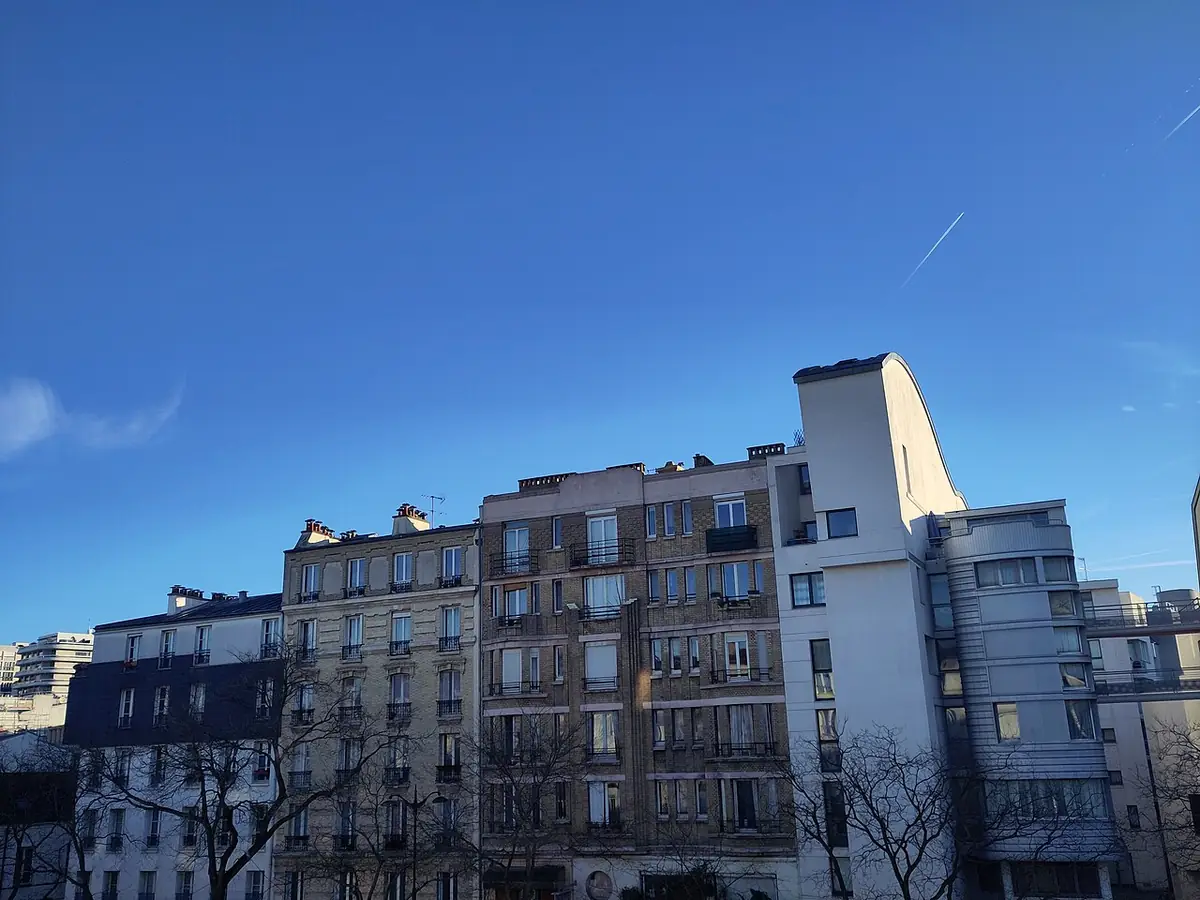
A classic Haussmannian apartment building in Paris — Photo: Exilexi · CC BY 4.0 · Wikimedia Commons
If daily life runs smoothly, a close look at the properties themselves usually reveals what viewings do not.
Living in the 15e arrondissement of Paris means a fine balance between metropolitan energy and residential ease, and that balance is what underpins the price base. Away from the tourist churn of the central arrondissements, the day turns around a dense network of public services, well-regarded schools and efficient transport links. Following an ordinary day is a practical way to see which amenities a valuation should be crediting, and by how much.
08:15The school run and neighbourhood lifeThe approaches to the nursery and primary schools, such as those on rue de la Convention or rue Blomet, come alive early. Families get a dense and safe network of schools, letting children grow up in reassuring surroundings in the middle of the city, and catchment proximity is one of the firmest premiums in the local comparables.
09:00The commute and connectionsBoarding at Convention (line 12) or Pasteur (lines 6 and 12) gives a fast link to the business districts of the Right Bank or Montparnasse. Smooth interchanges and frequent trains make daily professional travel easy, and walking time to these stations is measurable in the price per square metre.
12:30Lunch and local shopsRue du Commerce and the streets around the mairie du 15e offer a remarkable retail ecosystem, mixing national chains with independent food shops. Local commercial vitality of this kind is one of the reasons the sector holds its value through slower markets.
17:30Green space and public realmThe parc Georges-Brassens and the parc André-Citroën take in parents and children through the late afternoon. These large green lungs are a considerable asset against the density of the Paris built fabric, and an address within easy walking distance of one of them prices accordingly.
19:30Evenings and residential calmThe area settles into a peaceful, family atmosphere quite unlike the nightlife districts of the capital. Neighbourhood restaurants fill with regulars, confirming a reputation for easy living that supports both demand and the speed at which properties sell.
What a headline valuation will not tell you about an apartment in the 15e
Missing these invisible factors is what produces a figure that collapses the moment a serious buyer looks at it.
Property listings excel at flattering volumes and smoothing away rough edges, so anyone putting a figure on a home has to investigate properly. Behind a handsome Paris stone facade or a bright living room there can be technical, legal or environmental realities that weigh heavily on what the property is worth and on how it lives over the medium term. These are the points a valuation has to audit before the number is treated as final.
The real state of the co-ownership and the works already voted
Many of the 1960s and 1970s buildings in the 15e are reaching the end of major maintenance cycles. Failing to read the minutes of the owners' general meetings over the last three years leaves an estimate exposed to sudden, large calls for funds for facade renovation, flat-roof waterproofing or bringing lifts up to standard, any of which a buyer will deduct in full.
The real energy performance (DPE) and poorly insulated homes
Small units and top floors under the roof frequently carry an F or G energy label. Costing internal insulation work, or a vote on external insulation across the co-ownership, is essential to avoid a figure that ignores both a future discount and the progressive ban on letting the worst-rated homes.
Noise exposure from the main traffic routes
The 15e is crossed by major arterial boulevards such as boulevard de Vaugirard, boulevard de Grenelle and the ring-road corridor. An apartment described as quiet but sitting on the first or second floor above a busy bus route will suffer permanent noise with the windows open, and comparable sales on those stretches price it in.
The real make-up of the charges and services
A caretaker and communal heating, sold as marks of a high-standing building, often translate into extremely high co-ownership charges. Those fixed costs weigh on the household budget month after month and have to be set against the yield or the net saving effort before any figure is agreed.
Six months on: where owners find their valuation was wrong
These accounts of what went wrong lead directly to a critical question: for whom is the district average a poor guide at all?
Looked likeA charming top-floor pied-a-terre with exposed beams and undeniable period character, valued on its charm.
Turned outAn oven in summer, hard to ventilate, needing an awkward portable air-conditioning setup that requires the co-ownership's approval, all of which a buyer discounts.
Would have caught itAlways checking summer sun exposure and true ceiling height, and reading the co-ownership rules on external air-conditioning units, before crediting the charm premium.
Looked likeAn apartment ideally placed at the foot of the elevated line 6 metro, priced on its transport access.
Turned outRegular vibration and high noise from the first morning trains onwards, making it awkward to open the windows, which cuts the transport premium rather than adding to it.
Would have caught itVisiting at different times of day, windows closed and then open, to measure precisely how much nearby transport infrastructure moves the figure.
Looked likeA large, cheap family unit in a 1970s co-ownership with a caretaker, valued on its price per square metre.
Turned outExorbitant co-ownership charges tied to unpaid charges within the building and to worn-out communal heating equipment, which is exactly why the price per square metre looked low.
Would have caught itRequiring the co-ownership's financial statement and the arrears rate from the managing agent (syndic), and reviewing how the charge calls have moved over the last five years.
Looked likeA ground-floor flat with direct access to what appeared to be a private planted courtyard, valued as outdoor space.
Turned outA severe shortage of natural light in winter, heavy overlooking from the floors above and recurring damp problems, none of which the outdoor premium survives.
Would have caught itChecking which way the courtyard faces, measuring real light levels on an overcast day and confirming there is no rising damp in the load-bearing walls.
Who should not trust a headline valuation in the 15e arrondissement?
Having worked methodically through what moves value in the 15e, it is time to settle on a figure.
The general appeal of the 15e arrondissement of Paris does not make it universally suited to every plan or every capital position, and the district average is not a valuation. Insisting on the sector without accepting its economic and planning constraints exposes you twice over: a high acquisition cost and a poor fit with what you actually wanted. Looking at the profiles for whom this purchase is ill-advised is the fastest way to see where an average estimate misleads.
The investor chasing a high gross rental yield
→Reading the small units of the 15e as an immediate income play and valuing them on that basis.
Acquisition prices per square metre are so high that regulated rents can only produce modest gross yields, rarely above 3% or 3.5% before any tax relief. An income-based valuation here will always sit below what the sales comparables say.
Anyone who prizes absolute quiet and open space
→Buying on the edge of the main roads or the outer boulevards, where the price per square metre looks like a bargain.
Urban density, heavy traffic and crowded public space are incompatible with a search for rural calm or low population density, which is exactly why those addresses are priced below the district average.
The first-time buyer on a tight budget with little deposit
→Trying to secure a large family apartment by compromising on the quality of the building or the location.
The Paris market punishes poor quality or badly located property severely, exposing the owner to a loss on resale in the short or medium term while interest rates stay high. The valuation gap between a good and a poor building widens in a soft market rather than closing.
So, are you ready to put a defensible figure on your apartment in the 15e arrondissement?
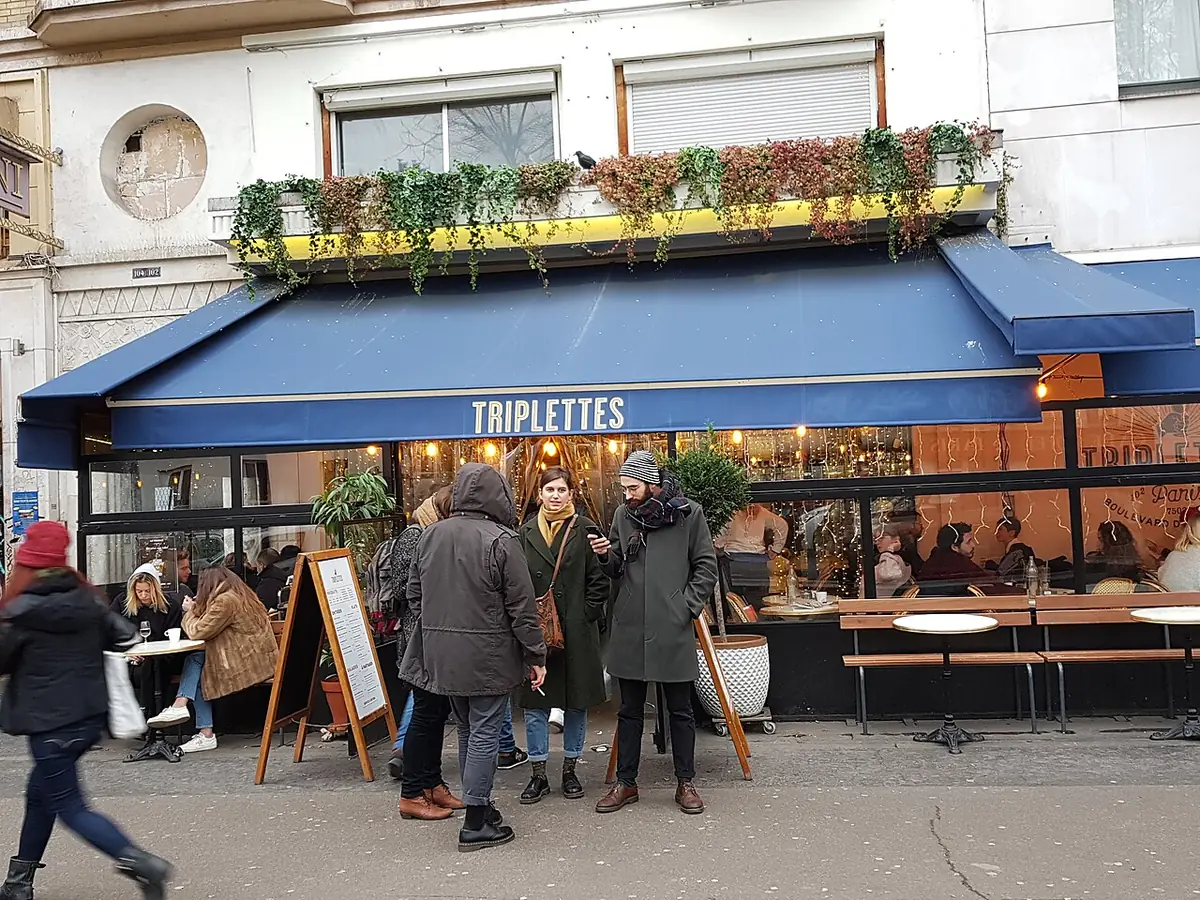
A brasserie terrace bringing life to the boulevard — Photo: Dhehz · CC BY-SA 4.0 · Wikimedia Commons
At the end of this close reading of the property market in the 15e arrondissement of Paris, the moment has come to test your figure against the facts set out above. Valuing an apartment or a house here is not a matter of sentiment or of a passing enthusiasm for a fine Haussmann moulding. It is a serious financial judgement, one that shapes your savings and your quality of life over the next ten or fifteen years. The 15e offers rare stability, recognised safety and an exceptional network of public facilities, and in return it demands complete clarity about prices, charges and the technical constraints that come with a Paris co-ownership.
Before you commit to a number, ask yourself the fundamental question of your time horizon, because it changes what the figure has to cover. If you expect to sell again soon, the notaire's fees and transfer duties combined with uncertainty about interest rates can turn the whole operation into a loss no valuation can rescue. If instead this is a long-term move, to house your family, protect your capital or keep a lasting base in the capital, the fundamentals of the 15e arrondissement make it one of the sturdiest places to hold value in the French property market.
Take the time to reread all the minutes of the owners' general meetings, audit the actual energy bills, fold both the running and the exceptional charges into your monthly financial plan, and visit the property at several times of day to judge the sound and the light for yourself. If after that scrutiny the numbers and the logistics still line up with what you want, your figure is one you can defend to a buyer, a lender or a notaire. The 15e arrondissement tends to repay that care, both in the quality of daily life and in the durability of the value it holds.
Related questions
What average price per square metre should an apartment valuation in the 15e arrondissement start from?
The average generally sits between EUR 8,500 and EUR 10,500 per square metre, with wide swings by micro-district, floor level, the presence of outdoor space and the overall condition of the co-ownership. Treat that band as the starting point, not the answer.
Which parts of the 15e carry the strongest family demand, and so the firmest valuations?
The stretches around rue du Commerce and la Motte-Picquet, along with the approaches to the parc Georges-Brassens and the mairie du 15e, concentrate the heaviest demand because of the schools and the shops. Comparables from those streets sit at the top of the range.
How should a valuation treat a detached house in the 15e arrondissement?
As an outlier. Detached houses are vanishingly rare in this heavily built-up arrondissement, confined to a few discreet villas and preserved pockets of low-rise housing, and they command extremely high prices. There are too few comparables for a routine per-square-metre method to hold.
How much do the metro lines serving the 15e move an estimate?
A great deal at the margin. The arrondissement is served by metro lines 6, 8, 10 and 12, plus the T3a tram and several major bus routes, giving smooth access to the whole Paris area. Distance to a station is one of the few adjustments that shows up consistently in comparable sales.
How do high co-ownership charges in the 15e feed into a valuation?
You have to read the building's accounts over the last three years, identify works already voted or coming, and subtract those recurring flows from what the property is worth to a buyer. A heavy charge line reliably shaves value off an otherwise strong estimate.
What do long-term capital prospects in the 15e mean for a valuation today?
Structural demand, safety and the quality of the infrastructure give the 15e arrondissement excellent resilience through down cycles and better than average liquidity. In practice that means estimates here hold their shape rather than needing deep discounts to find a buyer.
Are poorly insulated homes common in the 15e, and how far do they pull an estimate down?
Yes, particularly small units under the eaves and certain poorly insulated older buildings. The cost of the energy retrofit has to be deducted from the headline figure, because a buyer will price that work in before making an offer.
Is the 15e arrondissement a market where rental yield supports the valuation?
The rental market is extremely tight and secure, with very low vacancy, though gross yields stay moderate because acquisition prices per square metre are high. Yield therefore underwrites liquidity here rather than driving the estimate upward.
Which green spaces should a valuation credit in the 15e?
Residents mainly use the parc Georges-Brassens, the parc André-Citroën and a number of landscaped local squares, a real counterweight to the hard density of the capital. Proximity to them is a genuine premium, though a modest and walkable-distance one.
What should an owner check before signing off on a valuation figure in the 15e?
Beyond reading the minutes of the owners' general meetings, confirm there are no proceedings running against the co-owners' association, inspect the state of the roof and facades, and validate that the electrical installation is compliant. Any one of those can move the defensible figure by several percent.