Committing to a house in Dublin takes a close understanding of the local dynamics, the particular features of the market and the legal rules that apply in Ireland. This guide takes you through it step by step, so you can structure your approach, find the neighbourhood that suits the way you live and secure your investment with peace of mind.
Tell us about your life. Ex: I’m relocating to Nice next year
Attach file
Get the app
Valuation House Dublin
Committing to a house in Dublin takes a close understanding of the local dynamics, the particular features of the market and the legal rules that apply in Ireland. This guide takes you through it step by step, so you can structure your approach, find the neighbourhood that suits the way you live and secure your investment with peace of mind.
Why does the shortage of houses in Dublin change everything about your plans?
Scroll
Why does the shortage of houses in Dublin change everything about your plans?
Committing to a house in Dublin takes a close understanding of the local dynamics, the particular features of the market and the legal rules that apply in Ireland. This guide takes you through it step by step, so you can structure your approach, find the neighbourhood that suits the way you live and secure your investment with peace of mind.
Written by the ting.ad editorial team ·
Valuation House Dublin in Street View: drag to look around.
Once you understand this basic tension between supply and demand, you can calmly turn to the question of lifestyle and whether a property truly fits the way you want to live day to day.
Owning a house in the Irish capital runs up against a structural reality: very little land can be built on, while demand is kept high by the technology and finance sectors. For a buyer, this permanent imbalance means separating long-term asset value from short-term swings in lending. Reading this market properly means looking past first impressions to understand how the city's dynamics feed directly into property values. Between a historic shortage of land and strict renovation standards, every opportunity deserves to be judged on its real ability to hold or grow its value over time.
Structurally strong demand from both renters and owner-investorsvsA limited stock of older houses that cannot absorb the pressure of a growing population
This constant pressure protects assets in established neighbourhoods, but it means being far more selective about a property's overall condition to avoid the extra cost of bringing it up to standard.
High purchase prices per square metrevsLong-term capital growth potential driven by the region's economic strength
The large upfront outlay has to be weighed against the stability of the currency and the resilience of the Dublin property market in the face of European economic uncertainty.
A strict regulatory framework protecting architectural heritagevsTechnical and financial hurdles when extending or modernising a home
Before making a firm offer, factor in the cost and the administrative complexity of any work on an old structure.
Infrastructure and jobs concentrated in the centre and the inner suburbsvsEver fewer affordable homes with a private garden for first-time buyers
The trade-off between a central location and living space becomes the key variable in any successful negotiation in the capital.
Does this place really suit your lifestyle and your everyday expectations?
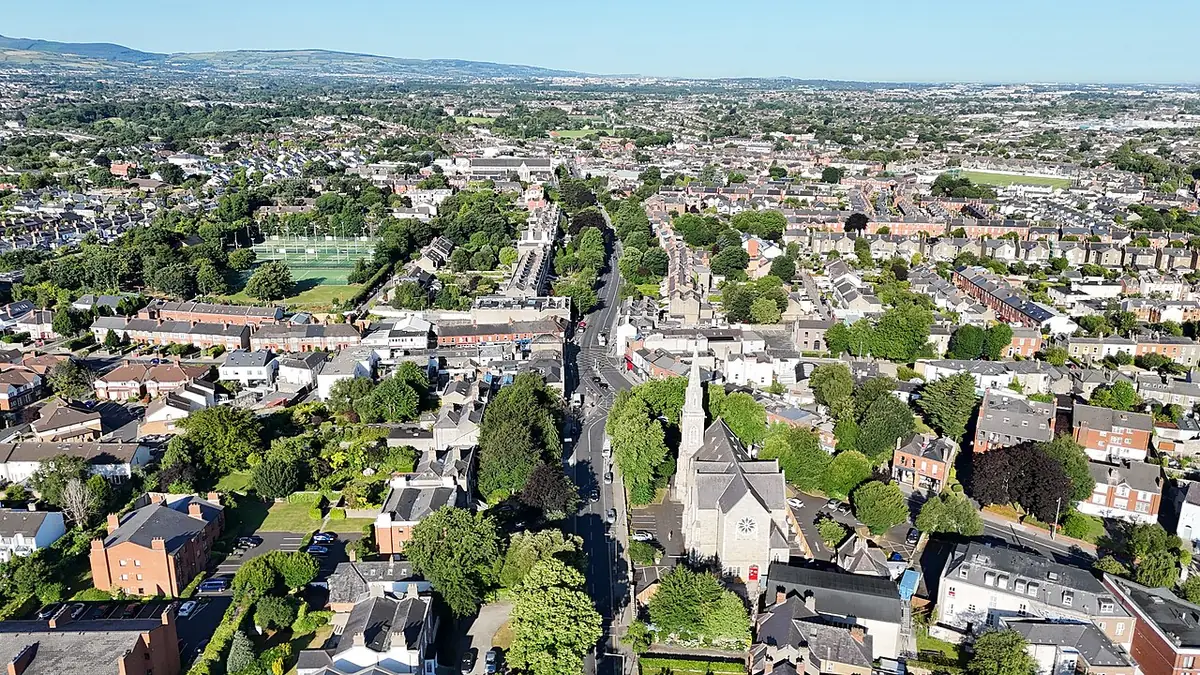
Rathgar from above, a leafy neighbourhood of houses and gardens — Photo: 瑞丽江的河水 · CC BY-SA 4.0 · Wikimedia Commons
Looking at how you live lays the groundwork for settling in, but the cultural shift from what you are used to back home deserves particular attention.
Settling into a house in Dublin means embracing a particular way of life, shaped by the nearby sea, the city's parks and a uniquely lively cultural scene. Each neighbourhood strikes its own balance between residential calm and quick access to services. Your choice should reflect your priorities on getting around, commuting time and everyday surroundings. By assessing honestly how you live, you will avoid the disappointments that come with local quirks, whether that is rush-hour traffic or the upkeep of an old building.
Choosing the city centre
Central neighbourhoods and inner suburbs such as Ranelagh and Rathmines drastically cut daily travel time thanks to the Luas tram network and the cycle lanes. The flip side is that buying a house with real outdoor space in these areas takes a substantial budget and the ability to move instantly against fierce competition. You enjoy a lively neighbourhood, plenty of local shops and culture within walking distance, at the cost of sometimes having less living space.
The outer residential suburbs
Areas such as Blackrock, Dun Laoghaire and Dundrum offer an ideal compromise between the calm of leafy suburbs and easy access to the city centre by DART train or the main roads. Houses there generally have more space and simpler private parking. This way of life suits households looking for well-regarded schools and a strong community network, as long as they accept slightly longer journeys into the heart of the capital.
Life along Dublin Bay
Settling along the coast, from Howth to Bray by way of Clontarf, transforms everyday life with stunning sea views and direct access to walking trails. It also means living with the local climate, especially the sea winds and damp, which demand careful maintenance of woodwork and façades. Frequent public transport keeps you well connected to the business district while giving you a genuinely relaxing break every evening.
Living here when you come from abroad: what really changes day to day
Once you have absorbed these cultural reference points, choosing the right area becomes the decisive step in making your purchase happen.
Leaving home to settle in Dublin is about far more than a change of address. The administrative system, the customs around buying property, the layout of homes and even relations with neighbours all have their own codes. Anticipating these cultural and practical gaps will spare you the frustrations of the first few months. From Irish-style heating to the unwritten rules of the residential property market, every detail counts when it comes to fitting into the local community.
From abroad
A property market closely supervised by notaries, with long but predictable legal timescales back home
Dublin
A sales system based on an accepted offer that remains subject to legal and technical checks (contracts and closing)
Negotiation calls for total responsiveness and the support of a local legal adviser (a solicitor) from your very first offer to protect your interests.
From abroad
Modern building standards focused on whole-house insulation and air conditioning
Dublin
A largely old housing stock, often listed, where heating systems and energy performance (the BER rating) come first
You need to budget precisely for the energy upgrades required to keep your bills under control and stay comfortable through the winter.
From abroad
Centralised administrative procedures, often rigidly formalised in writing
Dublin
A pragmatic, relationship-based approach, but strict legal formality when ownership of land changes hands
Communication with everyone involved comes easily, but every financial commitment must be put in writing in line with the strict requirements of Irish law.
From abroad
A well-established culture of apartment living and shared buildings in dense urban areas
Dublin
A dominant cultural preference for a house with a garden, even in the heart of the city
This deep-rooted preference for houses explains why so few are available and why prices hold so firm in this particular segment.
Which Dublin neighbourhood should you favour for your priorities?
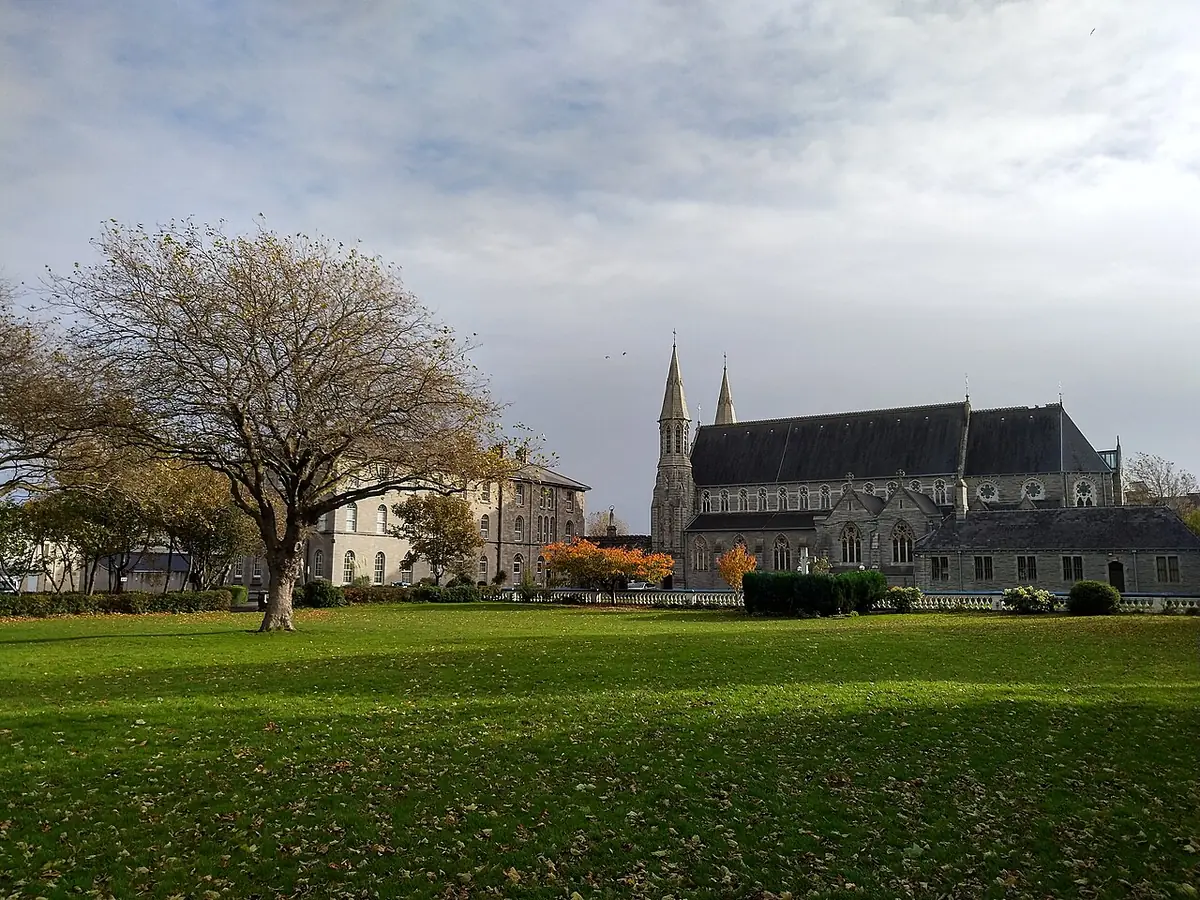
Open green space by the church grounds in Inchicore — Photo: Swifty4 · CC BY-SA 4.0 · Wikimedia Commons
Your ideal area now needs to be matched against a realistic view of budgets and current price ranges.
Dublin is a mosaic of neighbourhoods with strong identities, divided by the Liffey and shaped by the circular roads and transport lines. Each area has its own atmosphere, price level and particular strengths in schools, shops and green space. To focus your house hunt, you need to test your expectations of daily life against the geography and the prices of each part of the capital.
Ranelagh and Rathmines
A lively village feel, set to the rhythm of trendy cafés, independent food shops and a buzzing cultural life.
Suits
Urban professionals and families who want to be right next to the city centre without giving up a lively neighbourhood.
Trade-off
Some of the highest prices per square metre in the capital, and fierce competition for every house that comes up for sale.
Clontarf and Fairview
A calm seaside setting, dominated by the promenade along the water, large parks and a strong sense of community.
Suits
Those who want the perfect balance of sea air, outdoor space and quick access to the business districts.
Trade-off
Extremely few properties on the market and heavier maintenance needs because of the salt spray.
Dundrum and Churchtown
A modern, established residential area, well served by the tram, with large parks and first-rate shopping.
Suits
Families looking for spacious houses with big gardens and easy access to well-regarded schools.
Trade-off
A sometimes more impersonal feel and very busy roads at rush hour that you need to plan around.
Phibsborough and Smithfield
A creative, alternative spirit in full transformation, marked by the conversion of old industrial spaces and the arrival of young professionals.
Suits
Bold buyers and investors looking for good growth potential in neighbourhoods on the move.
Trade-off
Marked differences from one street to the next in terms of quiet and cleanliness.
What does buying a house on the Dublin market really cost?
Once your budget is confirmed, it is time to look at exactly what kind of property you can actually own there.
Dublin's residential property market is defined by high entry prices, driven by the scarcity of land and the strength of the local economy. Drawing up a rigorous budget means accounting not only for the asking price but also for the unavoidable extra costs, transfer taxes and money set aside for any energy renovation work. Looking at price ranges by property type and area lets you calibrate your plans precisely.
DublinFor saleHouseestimate
Median price / m²€4,362Half the apartments sell below this
Median price€683kthe average is 14% higher — a few very large properties pull it up
Most common2 bedrooms53 % of listings
Average size149 m²
By number of bedrooms
Bedrooms
Share of market
Avg price
Price / m²
Avg size
2most common
53 %
€603k
€4,592
131 m²
3
33 %
€763k
€4,362 −5 %
175 m²
4
14 %
€1.04m
€4,225best value / m²
245 m²
Each row is an average, compared against the area average of €4,592 / m². These are indicative estimates of a typical local market, not a measured sample of live listings. Check current listings before relying on them.
What you can really own: period heritage versus modern standards
Sandymount Strand, the wide shoreline of Dublin Bay — Photo: Josi · CC BY-SA 4.0 · Wikimedia Commons
Looking at the type of property leads naturally to the legal and financial rules you must understand before committing.
Buying property in the Irish capital puts a fundamental choice in front of you: the timeless charm of Georgian or Victorian architecture, or the streamlined practicality of contemporary builds. Each option has far-reaching implications for thermal comfort, maintenance costs and planning constraints. Understanding this divide helps you match your taste with the technical reality of the local housing stock.
The charm and heritage value of Victorian and Edwardian houses
These homes stand out for their generous ceiling heights, authentic period features and elegant proportions, which guarantee strong long-term appeal. On the other hand, their original insulation is often poor, requiring significant investment to reach acceptable energy performance without spoiling the protected historic character.
What it changesYou get a unique property of character with strong value potential, provided you accept careful technical oversight and renovation budgets suited to specialist tradespeople.
The practicality and performance of recent developments
Houses built over the last two decades offer high energy performance (often rated A on the BER scale), a flowing layout, secure private parking and almost no immediate maintenance needs. Their architecture can, however, feel more standardised, and their location in outer housing estates means a lifestyle more dependent on cars or the main transport routes.
What it changesYou enjoy excellent thermal comfort and easy day-to-day management, while giving up the unique architectural character of the historic central neighbourhoods.
The legal and financial rule to understand before paying a deposit
Mastering these legal steps lets you approach the full chronological course of your purchase methodically.
The Irish legal system governing property sales follows specific rules that differ noticeably from continental practice. Knowing exactly how commitments unfold, from the initial deposit to the final signature, protects you against withdrawals and unpleasant surprises during the survey. Procedural rigour is the best guarantee of a calm, secure purchase here.
You find a house that meets your criteria and make an offer through the estate agent handling the sale.
Payment of a good-faith booking deposit, fully refundable until the legal contracts have been signed and exchanged.
Instructing your solicitor to carry out the investigation of title and review the sale documents.
A thorough structural survey by an independent surveyor to identify any hidden defects or upgrades needed.
Formal exchange of contracts together with payment of the final contractual deposit, usually set at ten per cent of the purchase price, which makes the sale legally binding.
Closing, when your solicitor pays the balance and the keys to your new house are officially handed over.
How does a property purchase actually unfold, step by step?
O'Connell Street, the broad main avenue of central Dublin — Photo: CAPTAIN RAJU · CC0 · Wikimedia Commons
Following this methodical path ensures a successful move and the lasting security of your investment in the Irish capital.
Seeing a property purchase through in Dublin requires close coordination between several specialists whose roles are strictly defined by local practice. From the first search to moving in, each one steps in at a precise moment to protect your financial and legal interests. Anticipating this organisation lets you manage your project efficiently and stay on schedule.
The buyerSetting the budget and getting mortgage approval in principleYou confirm how much you can borrow with an Irish lender or a specialist broker before starting viewings.
The estate agentSelecting properties, arranging viewings and presenting offers to the sellerThey act as the commercial go-between and collect offers on behalf of the owner, with the transparency that regulation requires.
The solicitorChecking the title and drawing up the contractsThey secure the entire legal framework of the sale and make sure there are no hidden easements or land disputes.
The surveyorCarrying out the technical and structural survey of the buildingThey produce a detailed report on the condition of the roof, foundations, insulation, wiring and plumbing.
The lenderReleasing the funds and paying the purchase price to the solicitorIt approves the final valuation report on the property before authorising the transfer of the funds needed to complete the sale.
House or apartment in Dublin: weighing space against urban density
Once you have settled on the type of property, the next step is to measure the financial reality of buying in the capital.
Choosing a main residence in Dublin means immediately weighing the reality of the Irish capital's Georgian and Victorian streets against the way the land market has evolved. On one side, a house offers much-sought-after privacy and a private garden, two rare and highly valued features in residential neighbourhoods such as Rathmines and Ranelagh. On the other, an apartment wins on direct access to city-centre amenities, sharply reducing the burden of daily travel in a city known for chronic traffic congestion. It is not just a matter of comparing floor areas, but of understanding how each type of property fits the life cycle of a household.
Traditional Dublin houses are often laid out over several floors, a legacy of older architecture that needs rigorous and costly structural maintenance. Slate roofs, endemic damp caused by the oceanic climate and often mediocre original energy performance all call for considerable renovation budgets after purchase. By contrast, new or converted apartments pass part of this maintenance burden to the owners' management companies, although you should examine their financial health and the level of annual fees before making a final commitment.
In terms of long-term value, buying a house with its own land in Dublin generally delivers steadier capital growth, because of the structural shortage of available land within the city. Apartments, although cheaper to buy and very popular with young professionals and buy-to-let investors, can see sharper swings in value depending on the supply of new developments in the Docklands or the outer suburbs. The buyer's profile, whether a family seeking stability for the children's schooling or a couple without children prioritising career mobility, should drive this defining decision.
Taxes and running costs also differ significantly between the two options in Dublin. Local taxes, home insurance and heating bills weigh differently depending on whether you are heating a large, poorly insulated house over three floors or a well-oriented, dual-aspect apartment in a modern building. Assessing your overall financial capacity means including all these recurring costs from the first year, to avoid any financial disappointment when you live in the property or come to sell it.
What real budget should you plan to live and buy in Dublin?
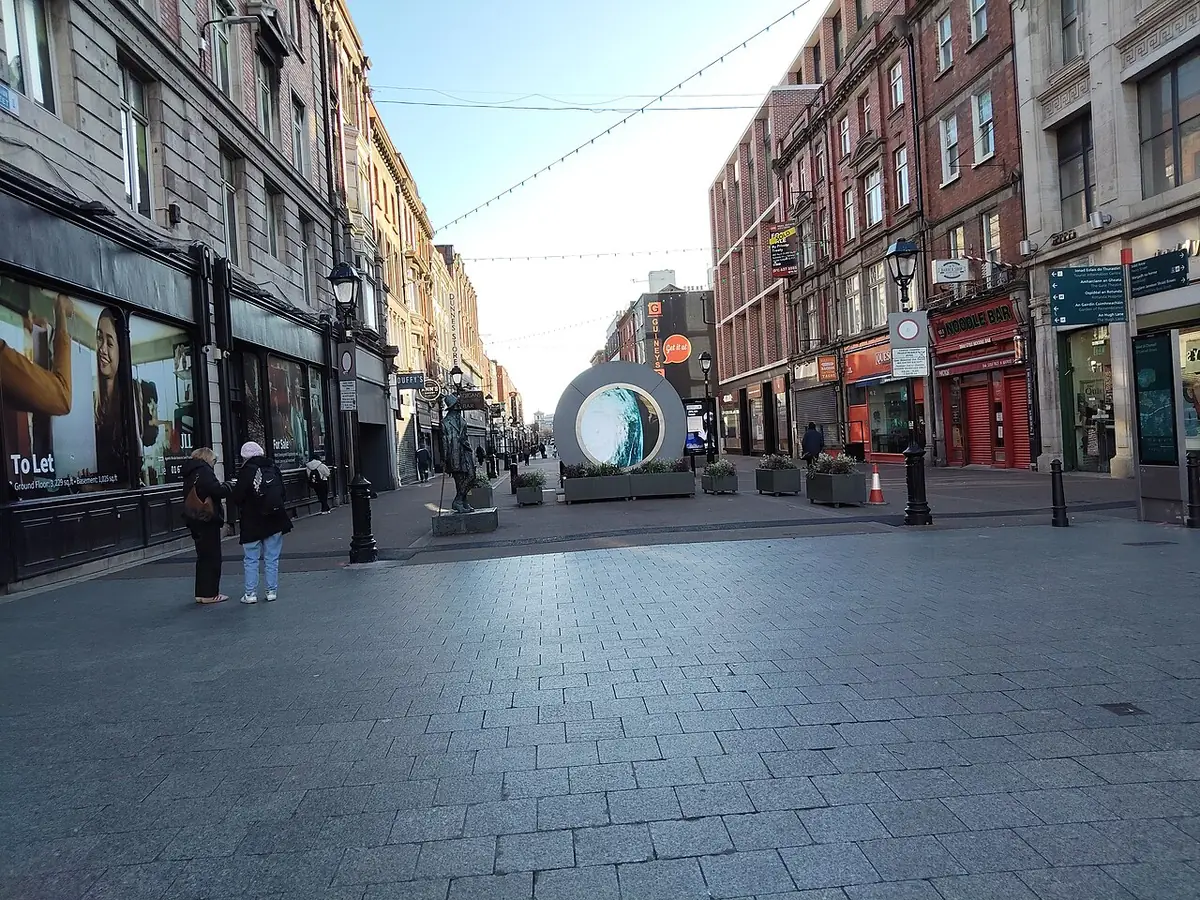
A pedestrian shopping street in central Dublin — Photo: CAPTAIN RAJU · CC0 · Wikimedia Commons
Beyond the raw figures, it is the daily rhythm of Dublin life that you need to put to the test.
Buying property in Dublin is about more than the headline price agreed through the solicitor, the Irish equivalent of a notary. You have to allow for high transaction costs, notably stamp duty and legal fees, as well as a cost of living among the highest in Western Europe. The market demands solid savings, as Irish banks apply very strict lending criteria in line with Central Bank rules. Every item of spending must be anticipated precisely to avoid cash-flow strain in the first years of ownership.
Purchase costs and upfront taxes in Dublin
Cost item
Amount or percentage
Impact on the budget
Stamp Duty
1% up to €1 million
Mandatory tax calculated on the sale price
Solicitor's fees
1.5% to 2% of the property price
Essential legal costs to secure the title
Structural survey report
€400 to €800
Essential for spotting hidden defects and damp
These costs come on top of the deposit required by the banks.
Indicative monthly budget for a household in Dublin
Cost category
Monthly range
Comment
Service charges (management fee)
€120 to €300
Applies only to apartments and some residential developments
Local Property Tax
€30 to €100
Based on the property's value as declared to the Revenue
Home insurance and maintenance
€80 to €150
Varies widely with the age and insulation of the building
Energy costs have risen sharply, which makes the energy assessment (BER) essential before buying.
Health, schools and transport: an ordinary Tuesday in the life of a Dublin resident
But behind this well-worn routine lie technical realities that the sales brochures never mention.
Grasping the quality of life in Dublin means diving into the reality of a busy week. Between commutes often slowed by traffic along the canals, school admissions in the local education system and access to healthcare, every hour counts. Transport, whether the DART or the bus routes, sets the morning timetable for thousands of commuters. Following an ordinary Tuesday shows the practical adjustments that come with settling in the Irish capital.
7:30amBus stop or DART stationThe early start is dictated by congested traffic on the main roads into the business district. Allowing for delays is a habit every resident has to learn.
8:45amSchool drop-offAccess to schools depends closely on the area you choose, and some secondary schools have waiting lists stretching back years, so check well in advance.
12:30pmLunch and errands in the neighbourhoodLocal shops keep the high streets busy, with frontline health services and pharmacies conveniently close by.
5:30pmHome, and building management mattersGetting home often means reading the minutes of the management company's meetings if you live in an apartment.
8:00pmCommunity activities or quiet timeThe neighbourhood winds down, leaving time for green spaces such as St Stephen's Green or Phoenix Park, depending on where you live.
What the listing will never tell you about your future home in Dublin
These omissions sometimes lead to serious disappointments whose effects are felt for months after moving in.
Marketing descriptions systematically gloss over the technical constraints of Dublin's older housing stock. Between rainwater leaks, strict rules in protected areas and the complexity of shared sewer connections, last-minute surprises are common. A savvy buyer must learn to read between the lines of the brochures and insist on thorough technical surveys before signing a final offer.
Insulation and the BER certificate
Many older properties have dismal energy ratings of E or F. Bringing a Victorian house up to standard costs a huge sum that is never reflected in the asking price.
The condition of pipes and water systems
Underground infrastructure in some historic neighbourhoods is showing its age. Water backing up during heavy Atlantic rain is a real risk for ground floors and converted basements.
Restrictions on protected buildings
If the property lies in an Architectural Conservation Area, every change to the façade or replacement window requires lengthy and complex planning permission from Dublin City Council.
The financial health of the management company
A poorly run apartment building with large unpaid service charges will hit new owners with immediate special levies as soon as they arrive.
The misjudgements you only discover six months after moving in
Given these demands, not everyone has the profile to venture into the Dublin property market.
Looked likeA charming period house full of character, with unique architectural appeal right in the heart of the city.
Turned outA permanently draughty home with damp walls that needs electric heaters running constantly at great expense.
Would have caught itAlways commission an independent energy assessment and check the thickness of the load-bearing walls before making any offer.
Looked likeA lively, vibrant neighbourhood with plenty of pubs and shops within walking distance at any hour.
Turned outUnbearable late-night noise at weekends and a chronic inability to park your car.
Would have caught itVisit the area at midnight on a Friday to gauge the real nightlife and the pressure on parking.
Looked likeA rental or long-term investment on an excellent footing, with rental demand that never lets up.
Turned outStrict rent controls in Rent Pressure Zones (RPZ) wiping out the expected return once work is needed.
Would have caught itCheck the history of registered rents with the Residential Tenancies Board (RTB) in detail before calculating your yield.
Looked likeA commute advertised as quick and direct thanks to the major roads nearby.
Turned outDaily gridlock that turns a ten-minute journey into an hour of enforced patience.
Would have caught itTest the exact route at rush hour on a Monday morning, at peak traffic time.
Who really should not buy property in Dublin today?
Now it is time to decide, and to measure your own readiness to take the plunge.
Owning a home in Dublin is often held up as the ultimate achievement, but for some buyers it is a major strategic mistake. A rigid lending market, high transaction costs and slow resale if your working life changes all call for extreme caution. Recognising that buying does not suit your personal situation is a clear-headed step that saves years of financial strain.
The young professional with an internationally mobile career
→Flexible renting
Legal fees and stamp duty only pay for themselves if you hold the property for more than five to seven years in the same area.
The household with a deposit that is only just enough
→Saving a bit more
Having no financial cushion for unexpected service charges or urgent repairs exposes the family to rapidly spiralling debt.
The buyer who can't stand paperwork
→A turnkey home managed by a third party
The legal complexity of property transactions in Ireland demands constant personal involvement with solicitors and banks.
So, are you really ready to take the plunge and buy in Dublin?
Reaching the end of this analysis means taking a clear-eyed look at your real motivations, your finances and your personal time horizon. Buying in Dublin is not a simple opportunistic investment, but a life commitment in a dynamic, demanding capital facing persistent structural housing challenges. If your plans rest on staying put for at least five years and on a clear understanding of the local technical constraints, the investment makes complete sense and gives you a lasting foothold.
If, on the other hand, your job situation is uncertain or the prospect of maintaining a demanding older property puts you off, renting remains a wise and protective choice. The Dublin property market does not forgive improvisation or overly optimistic financial calculations. Take the time to check how much you can borrow with approved lenders and to visit several neighbourhoods in the rain as well as the sunshine before signing any commitment.
Ultimately, the success of your property project in the Irish capital depends on methodical preparation and on accepting the realities on the ground. There are opportunities for well-informed buyers who surround themselves with the right professionals, from an experienced solicitor to an independent surveyor. Your decision should come from a considered conviction, free of any pressure from market conditions or the artificial urgency pushed by those selling.
Related questions
What legal fees apply when buying property in Dublin?
Ireland has no notary in the continental sense. Instead you instruct a solicitor, whose fees usually come to between 1.5% and 2% of the property price. On top of that comes Stamp Duty, set at 1% on the portion of the price up to one million euros.
Can you buy property in Dublin without being tax resident in Ireland?
Yes, it is entirely legal to buy property in Dublin without being tax resident there, but getting a mortgage from an Irish bank is far harder, with deposit requirements that often exceed 30%.
What is a BER certificate and why does it matter so much in Dublin?
The Building Energy Rating is a mandatory assessment that grades a home's energy performance from A to G. With energy costs rising and so much of Dublin's housing stock being old, it directly determines the work you will need to plan for after the purchase.
How do service charges work for an apartment in Dublin?
The charges, known as management fees, are paid each year to a management company made up of the owners. They cover upkeep of the common areas, building insurance and sometimes waste collection, and typically run from 120 to 300 euros a month.
Which areas are most sought after for buying in Dublin?
The residential neighbourhoods on the south side, such as Ranelagh, Rathmines, Ballsbridge and Donnybrook, remain the most prized thanks to their good schools, their green spaces and their closeness to the business district.
Are rents controlled in the Dublin property market?
Yes. Most of Dublin is designated a Rent Pressure Zone, which means rent increases are strictly limited by law for investors who plan to let their property after buying it.
How long does it usually take to complete a property purchase in Dublin?
Once the seller has accepted your offer, allow roughly three to five months to complete all the legal checks, arrange the mortgage and have the solicitors sign the final deed of sale.
What damp problems should you watch out for in Dublin houses?
The Irish capital's oceanic climate leaves older buildings exposed to leaks and condensation. It is essential to commission a detailed structural survey to check the condition of the roof and the foundations.
Do you need to go through an estate agent to buy in Dublin?
Most properties are put on the market by estate agents acting for the seller. The buyer pays no agency fee directly, but has to deal with online bidding or sealed bids.
How can you find out what homes have actually sold for in Dublin?
Ireland's Property Price Register is an official public database listing every property sale completed and registered in the country, so you can check real prices street by street and neighbourhood by neighbourhood.