Buying an apartment in Dublin means learning to read a lively property market shaped by scarcity and by its own particular legal rules. This guide sets out what the neighbourhoods are really like, the price ranges you can expect and the essential steps for seeing your purchase through with your eyes open.
Tell us about your life. Ex: I’m relocating to Nice next year
Attach file
Get the app
Buy Apartment Dublin
Buying an apartment in Dublin means learning to read a lively property market shaped by scarcity and by its own particular legal rules. This guide sets out what the neighbourhoods are really like, the price ranges you can expect and the essential steps for seeing your purchase through with your eyes open.
What you really get when you buy an apartment in Dublin
Scroll
What you really get when you buy an apartment in Dublin
Buying an apartment in Dublin means learning to read a lively property market shaped by scarcity and by its own particular legal rules. This guide sets out what the neighbourhoods are really like, the price ranges you can expect and the essential steps for seeing your purchase through with your eyes open.
Written by the ting.ad editorial team ·
Dublin in Street View: drag to look around.
Understanding these basic trade-offs lets you approach the question of how you will actually live here with a clear head.
Investing in bricks and mortar in Dublin is about more than buying square metres in a pressured European capital. It means choosing a market where demand structurally outstrips supply, and where every neighbourhood has its own way of gaining value. Buyers have to weigh being right next to the business district against the calm of the outlying residential areas. That reality calls for a clear-eyed look at potential rental yields set against the upfront cost of buying.
The central position of the DocklandsvsThe affordability of the outlying neighbourhoods
The business districts attract a young, mobile population with large budgets, which means a property resells quickly. Moving away from the centre, on the other hand, gets you noticeably more space for the same budget, at the price of a longer commute.
The security of a scarce assetvsStrict regulatory constraints
The shortage of land protects the long-term value of your property against economic ups and downs. Even so, the legal framework governing letting and shared ownership demands constant administrative care if you want to avoid management dead ends.
The momentum of the tech sectorvsDependence on the services economy
The presence of global headquarters gives lasting support to the local economy and to the spending power of potential tenants. However, any swing in that particular industry feeds straight through to the residential property market.
Does Dublin fit your lifestyle and what you expect from daily life?
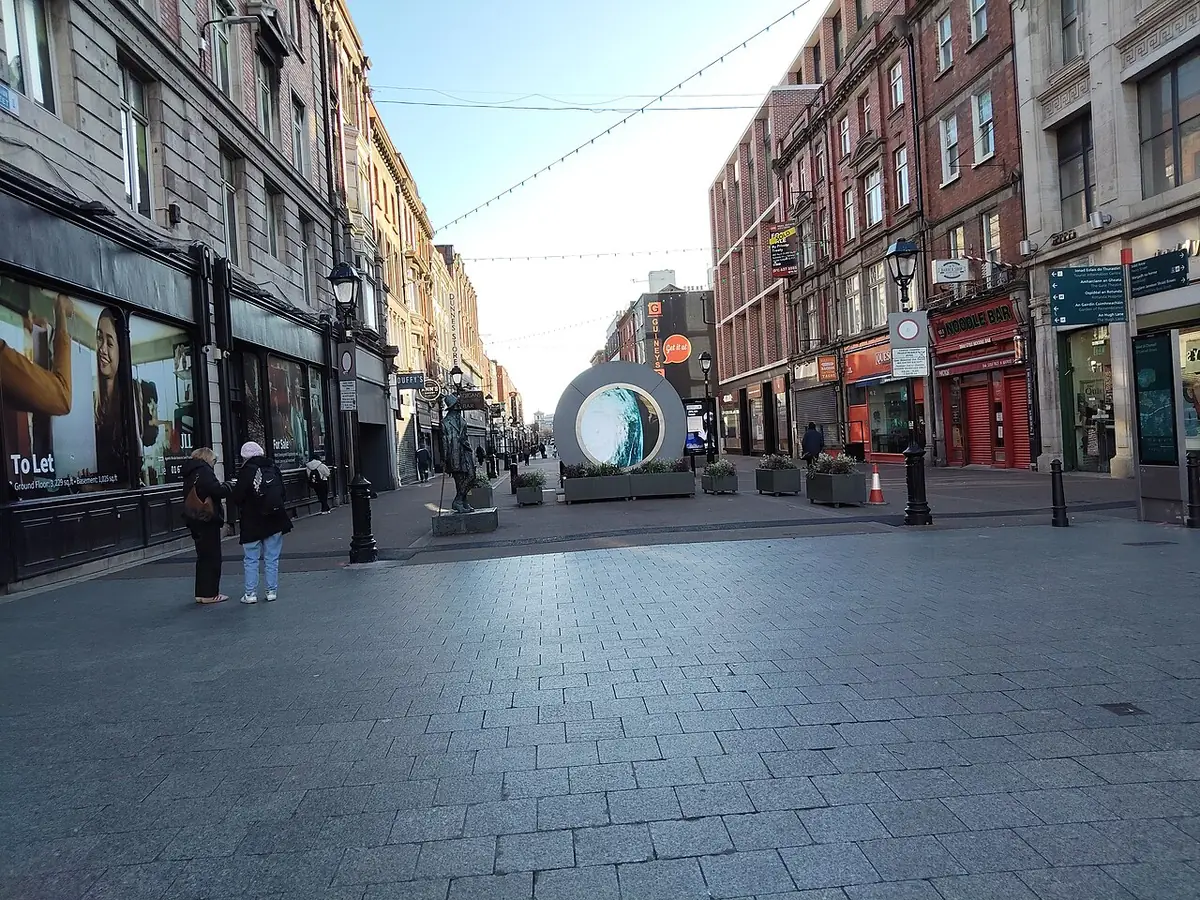
A pedestrian shopping street in central Dublin — Photo: CAPTAIN RAJU · CC0 · Wikimedia Commons
Moving from one way of life to another means measuring precisely what changes compared with what you are used to.
Daily life in Dublin follows a distinctive urban rhythm, shaped by bikes everywhere, neighbourhood life centred on traditional pubs and the closeness of the sea. Your property choice has to match your real habits rather than an idealised picture of Irish life. Each type of buyer runs into specific constraints linked to the climate, the layout of the older housing stock and the transport infrastructure.
Choosing to live close to the action
You favour a modern apartment in the Docklands or along the Luas tram lines to cut down your daily commute. That choice means accepting smaller floor areas and a high cost per square metre, offset by cultural and social life within walking distance. Everything you need is on your doorstep, but night-time quiet is often in short supply in these very busy areas.
Targeting furnished rental properties
You are after a studio or a one-bedroom apartment with good transport links, to meet the constant demand from professionals on assignment and new arrivals. Managing it requires close attention to the caps on rent increases in pressure zones and to management fees that are often high. Void periods are almost non-existent, but the gross yield needs to be judged against local taxation.
The residential neighbourhood alternative
You turn to areas a little further from the centre, such as Ranelagh or Rathmines, to get a terraced house or a spacious family apartment. You enjoy green spaces, well-regarded schools and a strong community fabric, while accepting longer journeys into the heart of Dublin at rush hour. The trade-off here is giving up some urban agility in exchange for everyday comfort.
Living here when you come from abroad: what actually changes
Once you have taken these reference points on board, choosing a neighbourhood becomes the decision that shapes your whole project.
Moving to Ireland to buy property exposes you to deep cultural and administrative differences. Construction standards, the customs around shared ownership and the relationship with property professionals can differ considerably from what you know back home. Anticipating these differences saves you a great deal of disappointment when you make offers and when you manage the property.
From abroad
A sale framed by a binding preliminary contract signed early on, as in many countries back home
Dublin
The 'subject to contract' system, with a deposit held by the Irish solicitor
The initial offer is not as binding as you may be used to; the real legal commitment comes later in the process, which calls for you to react very quickly.
From abroad
Thermal insulation set and standardised by building energy regulations
Dublin
The crucial importance of the home's BER (Building Energy Rating)
Energy performance varies enormously from one building to the next; a poor rating can lead to very high heating costs and expensive upgrades.
From abroad
Centralised management by a professional managing agent with formal general meetings
Dublin
'Management Companies' that are often run by the owners themselves
Get involved in monitoring the annual charges and building up the sinking fund, so you avoid nasty surprises over the upkeep of the shared areas.
From abroad
Floor areas measured strictly according to legal standards
Dublin
Living space estimates often given in square feet and sometimes generous
Always insist on floor plans measured by an independent professional to confirm the real dimensions before you sign the final deed.
Which Dublin neighbourhood should you choose for your profile?
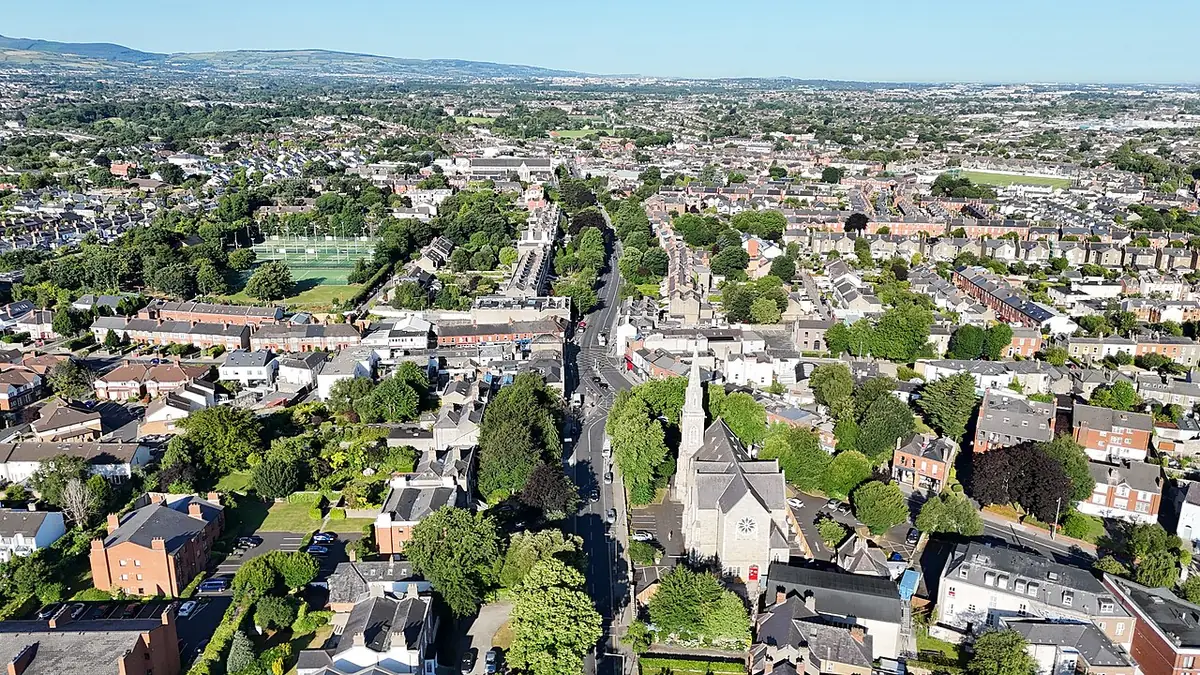
Rathgar from above, a leafy neighbourhood of houses and gardens — Photo: 瑞丽江的河水 · CC BY-SA 4.0 · Wikimedia Commons
These neighbourhood dynamics translate directly into price realities that are worth analysing methodically.
Dublin's geography is organised around the River Liffey, which traditionally divides the Northside from the Southside, each with a very different atmosphere and very different investment prospects. The neighbourhood you choose shapes not only your quality of life day to day but also how easily you will be able to sell in future. Each area has its own pace, its own infrastructure and its own market quirks.
The Docklands and the city centre (Dublin 1 and 2)
Constant economic buzz, an endless stream of office workers and pedestrians, and ultramodern architecture standing alongside renovated historic buildings. The atmosphere is firmly international and connected.
Suits
Young professionals, senior executives and investors looking for strong rental demand with no void periods.
Trade-off
Prices per square metre among the highest in the country and a lack of private green space for larger apartments.
Ranelagh, Rathmines and the southern suburbs (Dublin 6)
Tree-lined streets, independent local shops, well-known cafés and a much sought-after, well-heeled village atmosphere just a short walk from the centre.
Suits
Families and buyers looking for architectural character, peace and quiet, and good schools nearby.
Trade-off
Fierce competition between buyers that pushes prices up and leaves few properties on the market.
Stoneybatter and Smithfield (Dublin 7)
A bohemian, trendy spirit, brought to life by craft breweries, makers' markets and a creative crowd that has made these former industrial districts its own.
Suits
First-time buyers and bolder purchasers keen to get into an area that is gentrifying fast.
Trade-off
Architecture that is still very mixed and pockets that can vary a lot in how quiet they are at night.
How much does an apartment in Dublin really cost?
Beyond the raw figures, the legal nature of what you are actually buying deserves particular attention.
Dublin's property market follows strict valuation rules driven by the scarcity of available homes and the cost of building materials. Prices vary considerably depending on the exact address, the general condition of the building and its energy performance rating. It is essential to cross-check the official register of transaction prices against the real condition of the property to estimate your overall budget.
DublinFor saleApartmentestimate
Median price / m²€5,320Half the apartments sell below this
Median price€460kthe average is 14% higher — a few very large properties pull it up
Most common2 bedrooms38 % of listings
Average size85 m²
By number of bedrooms
Bedrooms
Share of market
Avg price
Price / m²
Avg size
1
28 %
€302k
€6,048 +8 %
50 m²
2most common
38 %
€420k
€5,600
75 m²
3
24 %
€532k
€5,320 −5 %
100 m²
4
10 %
€721k
€5,152best value / m²
140 m²
Each row is an average, compared against the area average of €5,600 / m². These are indicative estimates of a typical local market, not a measured sample of live listings. Check current listings before relying on them.
What you can actually own: freehold and leasehold
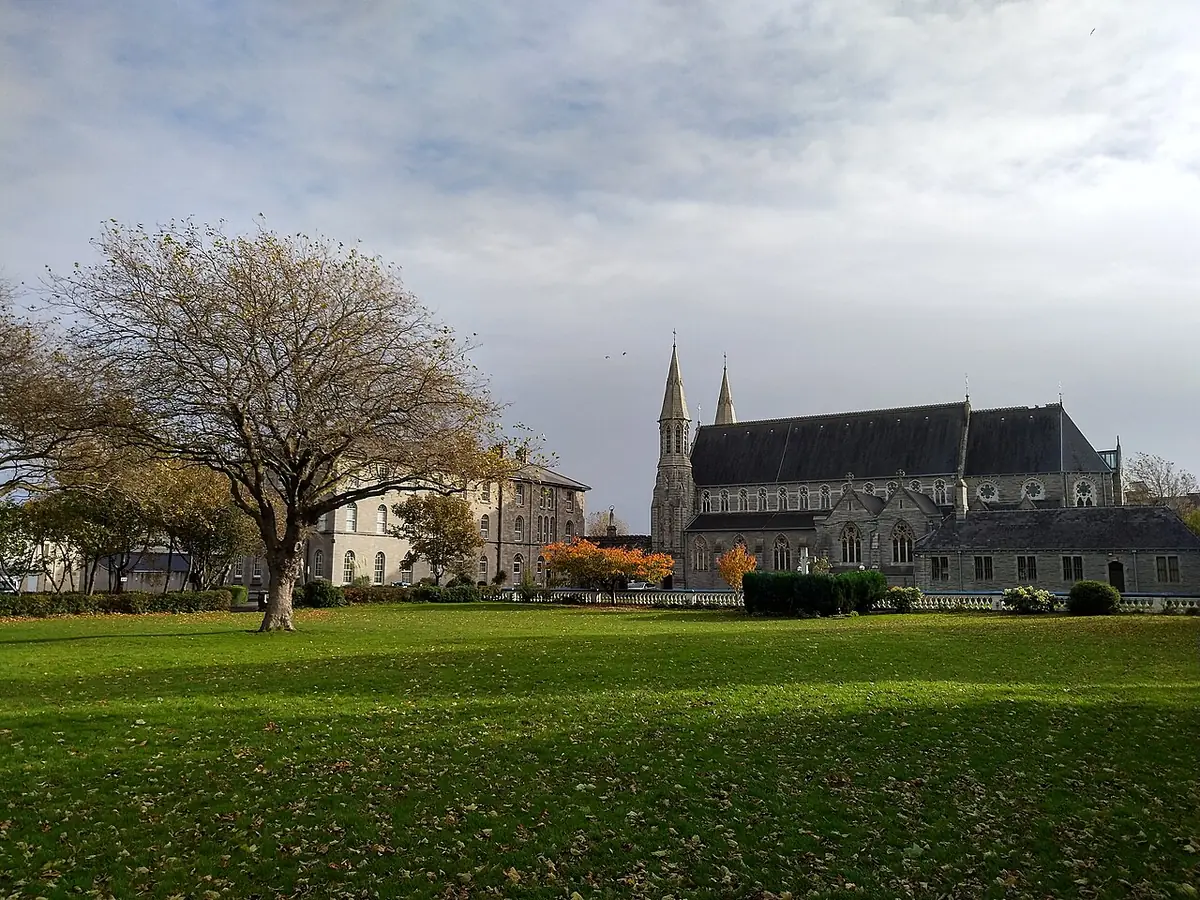
Open green space by the church grounds in Inchicore — Photo: Swifty4 · CC BY-SA 4.0 · Wikimedia Commons
That legal rigour carries through into the precise sequence of steps in the financial transaction.
The Irish legal system draws a sharp distinction between outright ownership and holding land for a limited period, and that distinction weighs heavily on the long-term value of your investment. Grasping these legal subtleties protects you against hidden costs and unexpected restrictions on use. A thorough review of the title deeds by your legal adviser is therefore a non-negotiable step.
Freehold (outright ownership)
You own both the building and the land it stands on, with no perpetual ground rent and no expiry date on your rights. This status offers maximum security and complete freedom of management over the long term, although it is rarer for apartments in shared buildings.
What it changesYou keep full control of your asset without having to worry about renewing a ground lease or paying complicated annual charges.
Leasehold (long lease)
You buy the right to occupy and own the home for a fixed period, often a long one (99 or 999 years), possibly in return for an annual payment known as 'ground rent'. This arrangement is extremely common for apartments in shared buildings in Dublin.
What it changesYou must check how long the lease has left to run and the terms for renewing it before you commit, because a short lease sharply reduces the value of the property.
The rule to understand before paying a deposit in Dublin
To see this process through, here is the exact order of the steps you need to take.
Buying property in Ireland rests on one cardinal principle: 'Buyer Beware' (the buyer alone is responsible for their own checks). Unlike in many other systems, an accepted offer does not bind either party until the formal contracts have been exchanged and signed. That in-between period carries specific risks you need to manage if you do not want to lose your deposit.
Viewing the property and making an offer to buy through the estate agent.
Paying a good-faith booking deposit, which is refundable until the contracts are signed.
Instructing your own solicitor to carry out in-depth legal searches (title investigation).
Having an independent structural survey carried out to assess the condition of the building and its fittings.
Formal exchange of contracts and payment of the non-refundable deposit (usually 10%).
Completing the sale on the closing date, with the balance of the funds transferred and the keys handed over.
Officially registering your title to the property with the Irish Land Registry.
How a property transaction unfolds, step by step
Sandymount Strand, the wide shoreline of Dublin Bay — Photo: Josi · CC BY-SA 4.0 · Wikimedia Commons
Buying successfully in Dublin means coordinating many local players in a precise order. From choosing your legal adviser to getting the keys, each of them plays an essential technical role. Planning this timeline ahead helps you avoid administrative hold-ups and speeds up the final signing.
The buyerSecuring the financing planGet a letter of Approval in Principle from a local lender before you start viewing properties.
The estate agentShortlisting and viewing propertiesIdentify the apartments that meet your criteria and make a written offer through the agency handling the sale.
The solicitorChecking the title and the reportsYour solicitor examines the property's legal compliance, the management charges and whether there are any hidden easements.
The surveyorStructural survey and BERHave the real condition of the apartment, its thermal insulation and any upcoming works on the building assessed.
The solicitors on both sidesExchange of contracts and depositThe firm commitment is signed and the deposit is paid and held in escrow until the closing date.
The buyerClosing the sale and moving inThe balance of the purchase price is transferred, the official deeds are registered and you take possession of your new home.
Victorian house or modern apartment in Dublin: how to decide without regrets?
Once you have settled on the type of home, the unavoidable hurdle of investing in Dublin remains a realistic assessment of your overall budget.
Choosing between a traditional Victorian or Edwardian house and a new apartment in one of Dublin's newer districts poses a fundamental architectural and financial dilemma. Period properties in neighbourhoods such as Ranelagh or Rathmines win buyers over with their unmatched character, their high corniced ceilings and their place in the capital's Georgian heritage. However, these older structures demand a substantial maintenance budget and often have poor energy performance, rated low on the BER scale, which pushes heating bills up considerably through the long Irish winters.
By contrast, recent apartments built along Dublin's docks or in urban regeneration areas offer faultless thermal comfort and predictable service charges. These new developments take away the stress of unexpected renovations and include modern green solutions that meet the latest European standards. Even so, this option means accepting strict building rules, annual management fees that can be very high, and outdoor space often limited to a simple balcony or a shared terrace.
To choose between these options, you need to look at the make-up of your household and your tolerance for technical risk. If you do DIY at the weekend or have a works budget to insulate, redo the plumbing and preserve the original woodwork, the older house offers an asset whose value erodes less in the face of cyclical swings. If you would rather move straight in with no budget surprises and have direct access to public transport without parking headaches, the new apartment is a rational and efficient alternative.
The Dublin property market punishes badly judged compromises severely. Buying an older property without checking the roof or looking for pyrite and mould leaves you exposed to disastrous extra costs. In the same way, buying an apartment off plan without checking the developer's reputation or the financial strength of the management company can turn your investment into an administrative nightmare. Take the time to weigh the mental load of upkeep against the intangible cost of architectural uniformity before you sign any offer.
What budget do you really need to settle in Dublin for the long term?
O'Connell Street, the broad main avenue of central Dublin — Photo: CAPTAIN RAJU · CC0 · Wikimedia Commons
Mastering these figures is necessary but not enough if you overlook the day-to-day reality of getting around and of local services.
Buying property in the Irish capital is about more than the price displayed at the estate agent's. Local taxes, legal fees, survey costs and running charges completely reshape the initial bill. Careful planning builds in all of these financial frictions, so you are not caught short when the time comes to finalise the transaction with your lender.
Upfront costs and taxes when buying property in Dublin
Cost item
Estimated range
Impact on the overall budget
Stamp Duty
1% to 2% of the purchase price
Compulsory tax payable when the deed is registered.
Solicitor and legal fees
€1,500 to €3,500
The solicitor's fee for checking the title to the property.
Structural survey (surveyor)
€400 to €900
Essential for spotting hidden defects and structural damp.
Stamp Duty rates rise progressively with the market value of the property under current Irish legislation.
Running costs and annual taxes for an apartment in Dublin
Type of charge
Average annual amount
How it is paid
Building management fees (Management Fees)
€1,500 to €3,000
Compulsory quarterly or annual payments for the upkeep of the shared areas.
Local Property Tax (LPT)
€400 to €900
Calculated on the basis of the official valuation of the property for Revenue.
Comprehensive home insurance
€350 to €600
Cover required by banks before they grant any mortgage.
Management fees rise in line with the services provided in the building, such as a concierge or a lift.
Health, schools and transport: what does an ordinary Tuesday living in Dublin look like?
Yet this apparent smoothness hides regulatory subtleties and administrative pitfalls that sales brochures never mention.
How a typical day in the Irish capital runs depends directly on where you live in relation to the main transport lines such as the DART or the Luas. Between leaving early to avoid the traffic along the canals and juggling places at crèche or school, every minute counts. Seeing the real rhythm of an ordinary Tuesday helps you anticipate the logistical friction that weighs heavily on quality of life over the long term.
07:30Residential neighbourhood of Rathmines or PhibsboroughGetting up and getting the children ready. Traffic is already starting to clog the main radial roads into the city centre.
08:15The nearest Luas tram stop or DART stationThe commute. Trams and trains are very busy but more reliable than the buses.
09:00Arriving at the office in the financial district (Grand Canal Dock)Settling in at your desk. The digital infrastructure and local coworking spaces support a demanding working pace.
13:00Lunch break in the historic centre (Temple Bar or Grafton Street)A quick bite or some top-up shopping in nearby shops. Prices reflect urban inflation.
17:30Picking the children up from the local school or crècheA race against the clock to meet the strict opening hours of childcare facilities.
19:00Back home and sorting out the shoppingA quiet evening in the neighbourhood. Home deliveries round out a very active local food scene.
What the property listing will never tell you about life in Dublin
These deliberate omissions all too often lead to bitter regrets that many new owners voice just a few months after getting the keys.
The bright photographs and glowing descriptions put out by Dublin estate agents deliberately leave out crucial technical and structural issues. To avoid disappointment after signing, you need to examine the things that are invisible in a brochure but decisive for your everyday peace of mind and for selling the property later on.
Sound insulation between floors and shared walls
Many older buildings converted into apartments suffer from high sound transmission. Footsteps from the neighbours upstairs and muffled conversations through the partition walls considerably reduce everyday comfort.
The financial health of the Management Company
If owners build up unpaid charges, maintenance of the lifts, facades and green spaces is suspended straight away. An audit of the last three years' accounts is absolutely essential before you commit.
Urban development plans and building work nearby
A vacant plot or a run-down warehouse opposite your future living room can quickly become the building site for an eight-storey block, permanently wiping out your natural light and your view.
The real water pressure and how well the boiler performs
Several parts of Dublin see significant swings in water pressure at peak times. Replacing an outdated boiler or bringing the plumbing up to standard means spending several thousand euros.
The buying mistakes you only discover after six months of living in Dublin
Faced with these hard truths, you need to ask yourself the fundamental question of whether this property purchase really suits your profile.
Looked likeAn ideal buy-to-let or first purchase thanks to a supposedly perfect central location.
Turned outNo chance of parking in the evening and constant noise from late-night venues and never-ending traffic.
Would have caught itVisiting the property late on a Friday or Saturday night to gauge the neighbourhood's real night-time atmosphere and checking whether residents' parking permits are available.
Looked likeA remarkable financial opportunity on an older apartment priced below the local market.
Turned outA sky-high bill once all the owners voted through and funded roof repairs and energy upgrades.
Would have caught itInsisting on the minutes of the building's most recent general meetings to identify any major works that have been approved or are under discussion.
Looked likeAn up-and-coming neighbourhood set for rapid gentrification and guaranteed capital growth.
Turned outLasting isolation, few local services and no food shops at all within walking distance.
Would have caught itWalking the surrounding streets at different times of day to map out where the supermarkets, pharmacies and health professionals really are.
Looked likeWell-optimised living space with a modern, bright layout on the plans shown at the agency.
Turned outNext to no storage space and an internal layout that makes it impossible to set up a workable home office.
Would have caught itBringing a laser measure to the second viewing to check where your furniture will really go and to measure the ceiling height.
Who really should not buy an apartment or a house in Dublin right now?
Once you have passed these filters and tested your assumptions, the time has come to make the final decision with full awareness.
Buying property in Dublin is neither a universal solution nor a necessary step to make a success of life in Ireland. Several types of potential buyer expose themselves to major financial and personal risks by rushing into the local market in the current economic climate. Recognising these mismatches saves you from considerable losses and legal dead ends.
The professional on a short-term international posting
→Quickly buying an apartment to avoid paying rent that feels like money down the drain.
Legal fees, stamp duty and selling commissions swallow up any potential capital gain if the property is sold before a minimum of five to seven years.
The household with no emergency savings
→Putting all of its savings into the deposit that Irish banks require.
The slightest technical breakdown, a spell of unemployment or a sharp rise in variable interest rates can instantly push the household into over-indebtedness and leave it unable to keep up the repayments.
The buyer who cannot stand administrative and shared-ownership constraints
→Investing in a large apartment block run by an outside company without reading its house rules.
Not being allowed to change the facade, install certain equipment or let the property short-term creates daily frustrations that independent-minded people find hard to live with.
So, are you really ready to take the plunge into Dublin property?
Committing to a property purchase in Dublin demands complete clarity and financial preparation free of any romantic illusions. The Irish capital is a demanding, competitive market marked by strong structural constraints, whether that means construction costs, the complexity of shared buildings or overstretched transport infrastructure. If your plan rests on solid financial foundations, untouched emergency savings and a long-term view stretching beyond seven years, the local economic fundamentals fully justify the investment.
On the other hand, giving in to the fear of missing out, or underestimating the extra charges and the cost of energy upgrades, would leave you facing serious disappointment. Property in Dublin rewards patience, rigour in the structural survey and a refusal to settle for cut-price compromises. Take the time to do your own research on the ground, consult the official registers and check every line of your financing plan with independent professionals before you sign any contract.
The final decision is yours alone. If the constraints set out in this guide fit with your hopes for stability and for building up an asset, you now have every indicator you need to move forward calmly. If not, renting for longer while you build up a stronger financial cushion often turns out to be the wisest and safest decision for your future.
Related questions
How much are legal fees on average when buying in Dublin?
A solicitor's fees generally range from €1,500 to €3,500 before tax, and on top of that you have to add administrative outlays and the compulsory legal registration charges.
Do you have to pay Stamp Duty when buying property in Ireland?
Yes, stamp duty applies to every residential property transaction in Ireland. The rate is generally 1% for properties worth less than one million euros.
What are management fees in Dublin apartment buildings?
They are the annual charges owners pay to cover the upkeep of the shared areas, cleaning, the building's insurance and the running of the lifts.
Is it easy to sell an apartment bought in Dublin quickly?
How quickly it sells depends heavily on the location, the BER energy rating and how well the building is managed, but a well-located property usually finds a buyer within a few weeks.
What is the Local Property Tax (LPT) and who has to pay it?
It is an annual local tax based on the estimated value of the property. It is owed by whoever owns the property on 1 November of each calendar year.
Why should you have a structural survey carried out?
An inspection by an independent surveyor can uncover damp, roof problems, possible pyrite or insulation defects that you cannot see during viewings.
Which are the most sought-after neighbourhoods for buying in Dublin?
Popular areas include historic residential neighbourhoods such as Ranelagh, Rathmines and Ballsbridge, as well as the newer modern developments along the Docklands.
How does public transport work for commuters in Dublin?
The network is built around the Luas tram lines, the DART suburban trains and an extensive urban bus network run by Dublin Bus and Transport for Ireland.
How does the BER energy rating affect a property's value?
A poor BER rating means high heating bills and calls for significant spending on renovation, which weighs heavily on the price you end up negotiating.
Can you buy property in Dublin if you are not a resident?
Yes, buying property in Ireland is open to non-residents, but getting a mortgage from a local bank is more complicated and requires a larger deposit.