Finding a home to rent in Dublin calls for a rigorous method and a close understanding of the local market. This guide walks you step by step through assessing the neighbourhoods, estimating the real costs and securing your lease.
Tell us about your life. Ex: I’m relocating to Nice next year
Attach file
Get the app
Rent Apartment Dublin
Finding a home to rent in Dublin calls for a rigorous method and a close understanding of the local market. This guide walks you step by step through assessing the neighbourhoods, estimating the real costs and securing your lease.
What you really get when you rent an apartment in Dublin
Scroll
What you really get when you rent an apartment in Dublin
Finding a home to rent in Dublin calls for a rigorous method and a close understanding of the local market. This guide walks you step by step through assessing the neighbourhoods, estimating the real costs and securing your lease.
Written by the ting.ad editorial team ·
Dublin in Street View: drag to look around.
This tension between location and comfort feeds directly into the kinds of tenants and what they expect from day to day.
Renting in the Irish capital means looking beyond the advertised floor area to understand how the market really works. Between particular building standards, heavy pressure on supply and bills that are often separate from the base rent, you are constantly weighing one thing against another. What looks like a good deal on paper often hides compromises on insulation or distance from public transport. You need to examine every aspect of a home before committing, or your initial budget will quickly be overtaken by local realities.
A central, immediately convenient locationvsA smaller living space and common areas that can be dated
Properties in the historic districts or near the main routes give you walking access to the main employment areas and amenities, but you have to accept less space and a charm that can sometimes be run-down.
A recent home built to high energy standardsvsA noticeably higher monthly rent and a location further out
New developments offer welcome thermal comfort and lower bills, but they are mostly found along the Luas tram lines, which means a longer daily commute.
Apparent flexibility with shorter leasesvsFierce competition that narrows your choice and demands an instant response
Although the rental market should in theory let things move quickly, the structural shortage of available homes turns every viewing into a selection process that requires a flawless application.
Transparent overall charges with professional managementvsCompulsory extra costs that pile up month after month
Including building management services in some developments keeps the shared spaces well maintained, but it creates fixed costs you cannot cut that weigh heavily on the household budget.
Does this place really suit the way you live now?
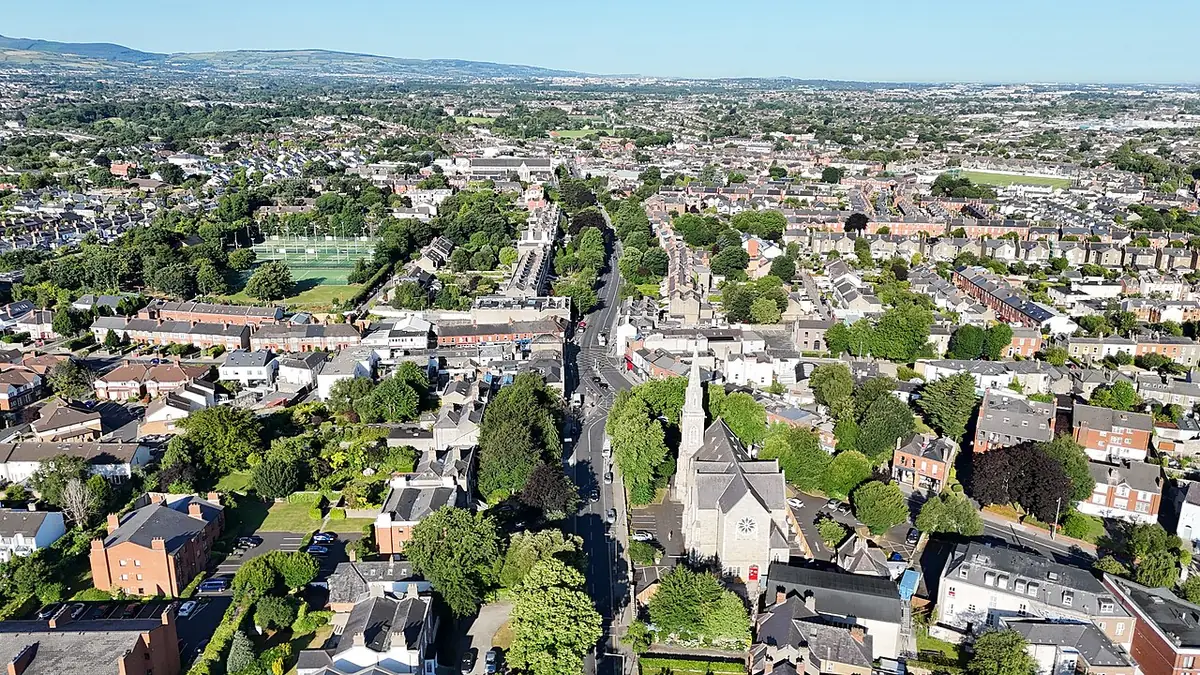
Rathgar from above, a leafy neighbourhood of houses and gardens — Photo: 瑞丽江的河水 · CC BY-SA 4.0 · Wikimedia Commons
These personal trade-offs take on a particular colour when you arrive with different administrative and cultural habits.
Whether a place suits the way you live comes down to more than being close to an office or a transport stop. In Dublin, each type of tenant faces their own constraints, whether that means working from home, the changeable weather or the character of the neighbourhoods. Looking at your daily routine through these typical situations will help you quickly pinpoint the area and type of home that will spare you disappointment in the first few months.
Remote work and connectivity
If you split your week between home and an office in the Docklands business district, finding a separate workspace becomes a priority. Older homes in the city centre often struggle to offer enough sound insulation and a stable internet connection without investment on your part. Choosing an apartment a little further out but with a dedicated room transforms your day-to-day comfort, provided you accept a regular commute for in-person meetings.
First move abroad
When you arrive without any bearings, the top priority is to keep transport logistics to a minimum and dive straight into the city's social life. The lively neighbourhoods south of the Liffey let you do everything on foot or by bike, making it easier to build a network and deal with paperwork. In return, you will have to live with city noise and a higher cost per square metre, which cuts the private space you get.
Settling long term as a couple
When the aim is to put down roots, being close to green spaces, schools and health services matters more than having nightlife on your doorstep. The residential neighbourhoods beyond the canals offer quieter surroundings, accessible parks and space suited to living together for the long haul. That stability comes at a price, both in rent and in distance from cultural and entertainment venues.
Living in Dublin when you arrive from abroad: what really changes day to day
Once you have taken these cultural reference points on board, choosing the area becomes the cornerstone of your plans.
Moving from one country to another is about more than a change of language or currency. The Irish rental market rests on legal practices, building customs and contractual relationships that differ noticeably from what you may be used to back home. Understanding these structural differences before signing a lease will save you many misunderstandings with estate agents and local landlords, and make it easier to settle into local life.
From abroad
A protective regulatory framework with renewable multi-year leases
Dublin
Leases whose length and review terms follow specific Residential Tenancies Board rules
You need to anticipate the contractual flexibility and the termination terms, which often involve strict notice periods and grounds regulated by Irish law.
From abroad
Being used to fixed service charges or charges reconciled once a year
Dublin
Separate handling of energy, internet and local waste collection bills
The advertised rent is only part of your real monthly budget, so you need to plan carefully for every variable expense from the day you move in.
From abroad
A standardised supply of apartments with uniform proof-of-income requirements
Dublin
A highly competitive rental application requiring local references and very detailed proof of income
Without a traditional guarantor, this becomes a process where your responsiveness and the clarity of your documents make all the difference with landlords.
From abroad
Sound and thermal insulation set by strict national regulations
Dublin
A mixed housing stock where energy performance (BER) varies considerably from one building to the next
Always checking the energy performance certificate (Building Energy Rating) avoids nasty surprises on your winter heating bills.
From abroad
A culture of negotiating price and terms before moving in
Dublin
A balance of power that heavily favours landlords in the most pressured parts of the city
Trying to negotiate the rent down in a market short of supply usually gets your application dropped immediately in favour of another applicant.
Which neighbourhood should you target to settle in, depending on your priorities?
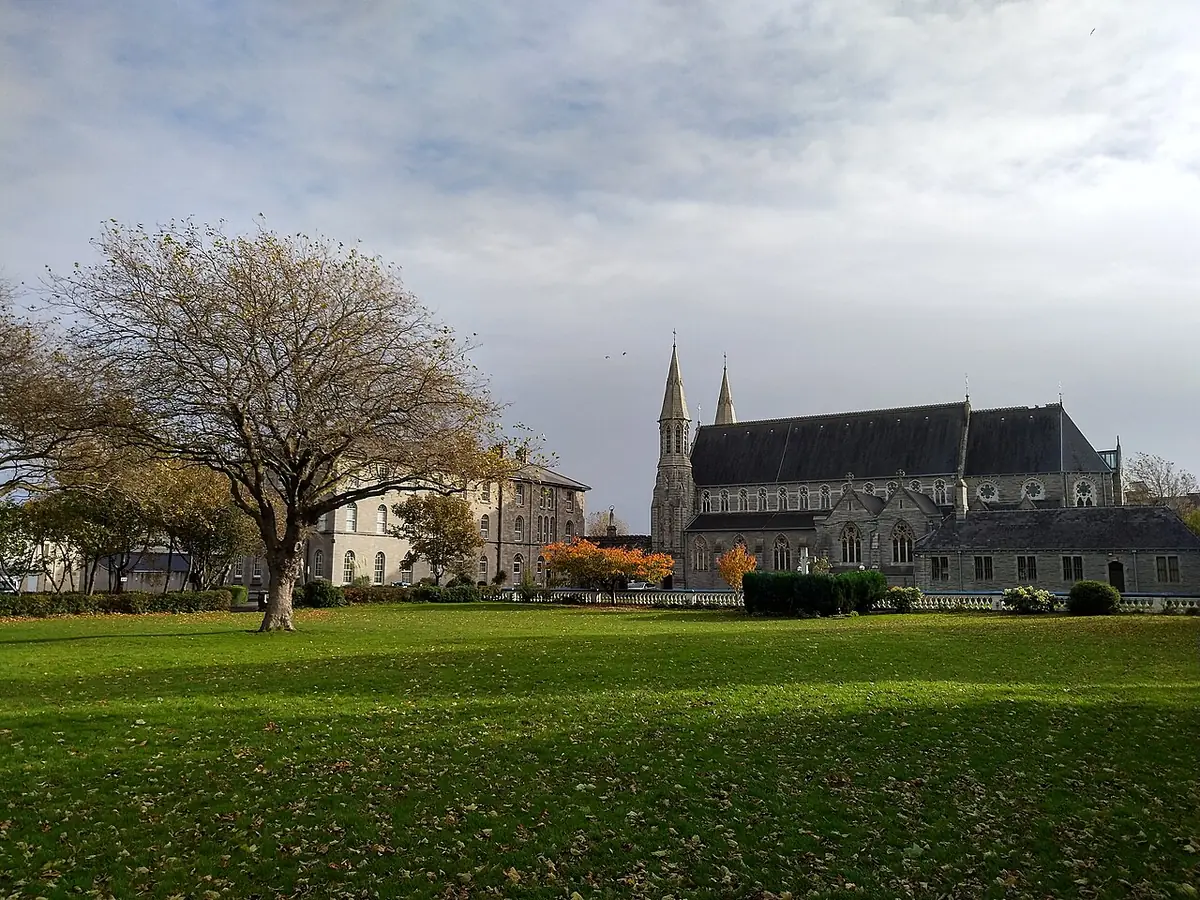
Open green space by the church grounds in Inchicore — Photo: Swifty4 · CC BY-SA 4.0 · Wikimedia Commons
These geographical contrasts translate into very concrete budget realities that are worth looking at without any filter.
Dublin's urban layout is shaped by the River Liffey and the ring of canals that separate the centre from the residential neighbourhoods. Each area has its own identity, level of activity and style of architecture. Choosing where to live means weighing up immediate neighbourhood life, quiet evenings and easy travel to your place of work or study.
The Historic Centre and the Banks of the Liffey
Constant bustle driven by shops, cafés and streams of pedestrians.
Suits
Urban professionals who want to do everything on foot and enjoy cultural life without depending on transport.
Trade-off
High noise levels, smaller homes for the same budget and parking that is almost impossible.
The Docklands and the Business District
Modern glass-and-steel architecture geared towards innovation and multinational tech companies.
Suits
Professionals in tech and finance looking for recent buildings with high-end amenities.
Trade-off
A sometimes impersonal feel in the evenings and at weekends, and some of the highest rents in the city.
Portobello and the Southern Canals
A trendy village feel, canal banks laid out for running and plenty of small independent shops.
Suits
People seeking a fine balance between neighbourhood buzz, specialty coffee and closeness to the centre.
Trade-off
Extremely strong rental demand that makes available homes scarce and listings turn over fast.
The Residential Neighbourhoods beyond the Canals (Ranelagh, Rathmines)
Tree-lined streets, subdivided Victorian houses and a peaceful, family atmosphere.
Suits
Families and settled couples looking for calm, nearby parks and a real neighbourhood life.
Trade-off
Distance from the very centre, which means using the tram or a bike every day.
How much does it really cost to rent an apartment in the capital?
Beyond these monthly amounts, the legal nature of rental contracts deserves particular attention.
The Dublin rental market is marked by high price ranges that reflect the imbalance between supply and population demand. To avoid disappointment, your budget needs to include not only the headline rent but also all the compulsory extra costs at signing and throughout the lease. The figures below summarise the trends seen across the standard segments of the market.
DublinTo rentApartmentestimate
Median price / m²€27Half the apartments sell below this
Median price€2.3kthe average is 14% higher — a few very large properties pull it up
Most common2 bedrooms38 % of listings
Average size85 m²
By number of bedrooms
Bedrooms
Share of market
Avg price
Price / m²
Avg size
1
28 %
€1.51k
€30 +7 %
50 m²
2most common
38 %
€2.1k
€28
75 m²
3
24 %
€2.66k
€27
100 m²
4
10 %
€3.61k
€26best value / m²
140 m²
Each row is an average, compared against the area average of €28 / m². These are indicative estimates of a typical local market, not a measured sample of live listings. Check current listings before relying on them.
What you can actually sign and expect from your lease
Sandymount Strand, the wide shoreline of Dublin Bay — Photo: Josi · CC BY-SA 4.0 · Wikimedia Commons
This contractual rigour applies from the very first steps of putting your application together.
Rental contracts in Ireland follow a precise legal framework administered by the Residential Tenancies Board (RTB). Unlike markets where informal practice prevails, securing your tenancy depends on strict compliance of the paperwork. Understanding what a landlord is entitled to ask of you, and what you can ask in return, ensures a smooth relationship throughout your stay.
The legal framework and tenant protection
Residential leases include provisions on the length of occupancy and caps on rent increases in pressured areas (Rent Pressure Zones). The landlord must register every new tenancy with the RTB, which gives your tenancy official standing and protects you against arbitrary increases.
What it changesYou have an official route of appeal in a dispute, but you should keep all your rent receipts and written exchanges with the management.
The deposit and the inventory
The standard deposit is usually one month's rent, paid together with the first month in advance when you sign. The move-in inventory should be done with the greatest care, backed by photographs, because deposit returns are scrutinised closely when you leave.
What it changesThorough documentation from the day you move in is your best insurance for getting your full deposit back at the end of the lease.
The essential rule to understand before paying a deposit
This careful sequence leads into a clearly mapped-out process for settling in.
In a market under heavy pressure, rushing is the tenant's worst enemy. Fake listings regularly circulate on online platforms, preying on newcomers in difficulty. Following a strict step-by-step method, from checking the listing to the final bank transfer, is the only way to secure your search without putting your savings at risk.
Spotting a property that matches your criteria and checking that the advertised price is consistent with the market.
Getting in touch immediately with the agency or landlord through the proper official channels.
Preparing a complete digital application in advance, including proof of income and references.
Always viewing the property in person to assess the real condition of the fittings and insulation.
Checking the landlord's registration and that the proposed lease complies with RTB requirements.
Signing the contract and paying any money only once the home's actual availability has been confirmed.
How a rental transaction unfolds, step by step
O'Connell Street, the broad main avenue of central Dublin — Photo: CAPTAIN RAJU · CC0 · Wikimedia Commons
Anticipating each stage of the rental process lets you stay responsive when properties are taken within hours. From the first click on a listing to getting the keys, here is how the timeline for settling into the Irish capital actually plays out, and what each party in the chain does.
The tenantPreparing the digital applicationGather employment contracts, payslips, bank references and ID into a single PDF that can be sent straight away.
The estate agentShortlisting applicants and arranging viewingsApplications are sorted within the first hours after the listing goes live, and applicants judged financially sound are invited to a group or individual viewing.
The tenantViewing and expressing interestAn on-site assessment of the property's condition, fittings and immediate surroundings, followed by a quick email confirming your interest.
The landlordFinal selection and letting the propertyThe tenant is chosen on the strength of the financial guarantees provided, and instructions are sent for paying the initial funds.
Both partiesSigning the lease and the inventoryThe contract terms are agreed, the first month's rent and the deposit are paid, and the move-in inventory is carried out jointly.
The tenantMoving in and setting up utilitiesOpen electricity, gas and internet accounts in your name, and report any defects you find within the legal time limit.
Apartment or house in Dublin: should you give in to the pull of the suburbs?
The choice between a city apartment and a family house further out shapes the entire Dublin property market. On one side, central Dublin concentrates job opportunities, major public transport such as the Luas and the DART, and a rich cultural life, but at the cost of living space that is often limited and no private outdoor space. On the other, the neighbouring counties and outer areas such as Swords or Tallaght offer houses with gardens and generous floor space, ideal for families looking for stability. However, this option involves a stark trade-off in commuting time, as the road and rail routes are saturated at rush hour.
The Dublin market is marked by heavy pressure on the supply of new apartments in employment hubs such as the Docklands or Grand Canal Dock. These properties are aimed primarily at young professionals and investors looking for high liquidity and near-instant rental demand. Building charges, known as management fees, are substantial there, however, and need to be factored into the overall cost of ownership from the outset. By contrast, buying an older or semi-detached house often means planning for major energy-efficiency renovations to reach a satisfactory level of thermal comfort, an expense that should never be underestimated.
As an asset, a city-centre apartment is less affected by swings in demand as families move out, because it meets the structural needs of single people and couples without children. A suburban house, for its part, benefits from long-term value growth driven by the scarcity of land in Greater Dublin, but leaves its owners exposed to the ups and downs of local transport infrastructure. The choice therefore comes down to your investment horizon and how much daily commuting you can tolerate, bearing in mind that in Dublin every extra kilometre out is paid for in time lost in traffic.
It is also worth considering how flexible each type of property is if your personal circumstances change. A well-located apartment can be sold or let quickly if your plans change, whereas a suburban house is a heavier commitment, harder to sell quickly if the market turns. Your final decision should come from a clear-eyed look at how you live now and how you picture your working and personal life over the next five to ten years in the Irish capital.
What real budget do you need to live and settle in Dublin?
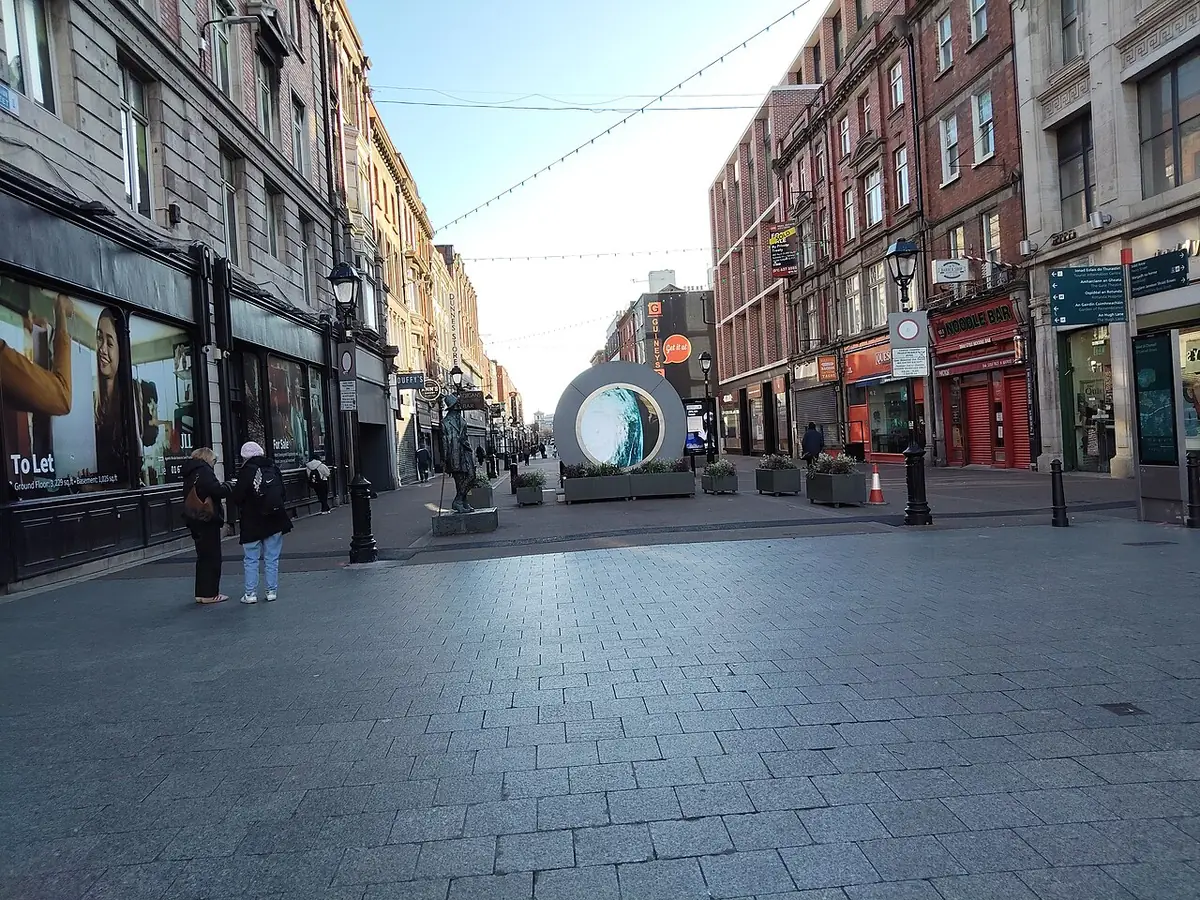
A pedestrian shopping street in central Dublin — Photo: CAPTAIN RAJU · CC0 · Wikimedia Commons
Drawing up a budget for Dublin goes beyond your monthly mortgage repayment or the initial rent. It means mapping out all the unavoidable expenses that come with living in the Irish capital, from local taxes and building charges to transport passes and compulsory insurance. The tables below summarise these essential costs so you can plan calmly around what you can really afford.
Housing costs and recurring charges
Expense
Estimated amount (range)
Frequency
Comment
Building management charges (Management fees)
€1,500 to €3,500
Annual
Essential for the upkeep of common areas, security and lifts in recent buildings.
Property tax (Local Property Tax - LPT)
€450 to €1,200
Annual
Calculated on the estimated market value of the property as assessed by the Revenue Commissioners.
Comprehensive home insurance
€350 to €700
Annual
Varies with location, type of construction and the value of the contents insured.
Building management charges tend to rise steadily to meet the energy-efficiency upgrades required in apartment blocks.
Monthly budget for utilities and everyday living
Category
Average monthly budget
Impact on the budget
Electricity and gas
€150 to €300
Strongly affected by the seasons and the home's energy performance.
Transport (Leap Card / Fuel)
€120 to €250
Varies with how you combine the DART, the Luas, Dublin Bus services and any tolls.
Internet, phone and TV
€60 to €100
High-speed fibre broadband is essential if you work from home often.
Energy bills in Ireland are among the highest in Europe, which makes the BER rating of your future home absolutely critical.
Health care, schools and transport: what does an ordinary Tuesday in Dublin look like?
Picturing a typical day is the best way to gauge what living in a city is really like. In Dublin, the rhythm is set by the intensity of morning traffic and the timing of public services. This hour-by-hour walk-through highlights the logistical friction points you will face every week, from commuting to work to health appointments and local errands, so you can judge how smoothly your future daily life will really run.
07:30Your home in DublinAn early start to avoid the worst congestion on the main roads and on the Luas trams.
08:15Luas or DART station / Bus stopCrowded platforms; punctuality depends heavily on the weather and on traffic.
09:00Business district (Docklands or centre)Arriving at the office or settling into a coworking space after an average commute of around thirty to forty minutes.
13:00Local shop or pharmacyThe lunch break is used for top-up shopping and the practical side of daily life.
17:30School or childcarePicking up the children, a crucial logistical moment that requires school and home to be genuinely close.
18:30Back home and household tasksMaking dinner and dealing with paperwork in a residential area that gradually quietens down.
What property listings will never tell you about Dublin
Behind the flattering photos and glowing descriptions from estate agents lie technical and regulatory realities specific to the Dublin market. Knowing about these hidden aspects helps you avoid costly misjudgements and discovering the true weaknesses of your purchase only once the deed has been signed at the solicitor's.
The real energy rating (BER)
Many older properties have poor energy ratings (D, E or F), leading to sky-high heating bills and requiring major investment in insulation to be decently habitable.
The finances and management of the building
A building with an inadequate sinking fund or significant unpaid charges from owners will soon face very heavy special levies to pay for facade or roof works.
Chronic shortage of residential parking
Owning a car without an allocated space or a valid residents' parking permit for your zone turns every trip home into a stressful, costly late-night search.
Noise and nearby development plans
The pace of construction in Dublin means many vacant sites and old warehouses are the subject of planning applications for apartment complexes that could block your view and bring years of building work.
Real access to health services and waiting times
Registering with a GP in some neighbourhoods can be extremely difficult because local practices are full, a critical detail for families with young children.
The traps and disappointments people discover six months after moving in
Looked likeA charming Victorian house full of character and architectural appeal in a central neighbourhood
Turned outA damp, draughty house with old foundations needing prohibitively expensive structural work that cannot be done without approval from the heritage protection authorities.
Would have caught itHaving a thorough technical inspection carried out by a qualified independent Building Surveyor before submitting a firm offer.
Looked likeA bright, modern apartment right next to a major transport route that makes getting around easy
Turned outA constant acoustic nightmare because of heavy traffic noise, sirens and late-night activity that make it impossible to rest with the windows open.
Would have caught itVisiting the property at different times of day, especially at rush hour and at the weekend, to measure the real noise level objectively.
Looked likeAn affordable buy-to-let or first purchase in an outlying area undergoing rapid gentrification
Turned outAn area poorly served by basic infrastructure, badly lacking local shops and isolated in terms of safety at night.
Would have caught itStudying the local development plan closely and looking into the real status of the retail and school projects planned in the area in the short term.
Looked likeA quick purchase without much negotiation to beat other bidders in a tight market
Turned outA clear overvaluation compared with recent comparable sales on the same street, ruling out any later resale without a financial loss.
Would have caught itConsulting Ireland's public Property Price Register so your offer is based on verifiable market data.
Unusual profiles: who should definitely hold off buying in Dublin right now?
Buying property is often presented as the be-all and end-all of financial stability, but the current Dublin context carries specific risks that make some situations completely incompatible with a long-term commitment. Taking a cool look at your profile will stop you tying up your capital in a highly regulated market subject to demanding economic cycles. The profiles below illustrate cases where renting or waiting remain far more rational choices.
The employee on an insecure contract, or who may move abroad again in the short term
→Keep renting a flexible apartment
Transaction costs, solicitor fees and taxes in Ireland are too high to recoup in less than five to seven years of ownership, so any quick resale would be at a loss.
The buyer whose deposit only just covers the minimum required
→Build up additional emergency savings
Having no savings left after the purchase leaves the new owner exposed to the slightest unexpected building charge or structural repair, leading straight to technical over-indebtedness.
The investor who cannot stand regulatory constraints and the costs of managing a let
→Turn to alternative financial investments
Irish rent control legislation (Rent Pressure Zones) and the heavy taxation of rental income drastically limit net returns, especially after management fees are deducted.
The household that cannot tolerate daily commutes of more than an hour each way
→Rent as close as possible to the central employment hub
Buying an affordable but far-flung house will quickly wreck your quality of life and family balance because of chronic traffic congestion.
So, are you really ready to take the plunge into the Dublin property market?
Reaching the end of this analysis shows that buying property in Dublin is not a matter of impulse or fashion but of a carefully considered strategy. The Dublin market rewards rigour, patience and financial clear-sightedness, while severely penalising improvisation and haste. If you have confirmed that you can absorb the hidden costs, accepted the geographical compromises and secured solid financing, you have what you need to succeed in the Irish capital.
Never forget that your first property purchase is not necessarily the home of a lifetime, but a decisive first step on the property ladder. It should be chosen pragmatically, favouring the intrinsic quality of the location and the property's future liquidity over purely emotional criteria. Take the time to visit, to question agents and neighbours, and to have every technical document checked by independent professionals before committing legally.
Ultimately, the success of your property plans in Dublin depends on your ability to align your personal aspirations with the economic reality on the ground. If all the signs are good and your future lies in Ireland for the long term, investing in local bricks and mortar remains a powerful way to build wealth, provided you navigate this demanding market with method and clear judgement.
Related questions
What deposit do banks in Dublin typically require from buyers?
Central Bank of Ireland rules generally require a minimum deposit of 10% for buyers of a primary residence, and up to 20% for investors or second-home buyers. You therefore need those savings in place beforehand, plus an extra margin of 3 to 5% to cover legal fees, stamp duty and valuation fees.
How do Rent Pressure Zones (RPZ) work in Dublin?
Rent Pressure Zones are designated areas where rent increases are strictly capped by law to protect tenants from soaring prices. This regulation limits the potential returns for property investors, a key factor to build into the forecasts for any buy-to-let project in the capital.
Can you buy property in Dublin as a non-resident?
Yes, it is entirely legal to buy property in Ireland without being tax resident or living there. However, getting a mortgage from an Irish bank is considerably harder for a non-resident, often requiring more extensive proof of income and a larger deposit to offset the risk the lender perceives.
What solicitor fees should you expect on a transaction?
In Ireland, the legal work involved in buying property is handled by a solicitor rather than a continental-style notary. Fees generally range from €1,500 to €4,000 excluding VAT, on top of which comes stamp duty, charged at 1% of the property's value for a primary residence up to one million euros.
What is the Building Energy Rating (BER) and why does it matter so much?
The BER is the energy performance certificate required whenever a property is put up for sale or rent in Ireland, graded from A (very efficient) to G (very inefficient). With energy costs high, a poor BER rating sharply reduces a property's value and usually means heavy, expensive renovation work for the buyer.
How do you go about searching for property in Dublin?
Most of the Dublin property market is concentrated on major websites such as Daft.ie and MyHome.ie. It is worth setting up personalised real-time alerts and contacting local estate agents directly so you can move quickly, as good-quality properties are often agreed within just a few days of being listed.
How long does it usually take from an accepted offer to getting the keys?
The legal and administrative process in Ireland, from the seller accepting the offer (Sale Agreed) to final signing and transfer of funds (Closing), takes on average between ten and fourteen weeks. It can take longer if the sale chain involves several parties or if the title deeds need clarifying.
What are management fees in apartment buildings?
Management fees are compulsory annual charges paid to the building's management company (Owners' Management Company) to fund upkeep of the common areas, building insurance, cleaning, waste collection and maintenance of shared facilities. Failing to pay them leads to serious legal consequences.
Is it wise to buy a property in Dublin that needs full renovation?
Buying a property to renovate can be an excellent way to add value, provided you have a firm grip on current building costs in Ireland, which have risen sharply. You absolutely need to budget a safety margin of at least 20% to cover unexpected overruns and the waiting times for qualified tradespeople.
Which Dublin neighbourhoods suit a balanced first purchase?
The right neighbourhood depends on your priorities, but areas well served by the Luas or the DART, such as parts of Dublin 7 and Dublin 8 or nearby suburbs like Rathmines and Phibsborough, offer a good balance between cultural life, access to work and long-term potential for your property to gain value.