Buying an apartment in Dublin means decoding a lively and heavily regulated property market. This guide takes you through it step by step, so you can understand prices, choose the right neighbourhood and secure every stage of your property investment with complete peace of mind.
Tell us about your life. Ex: I’m relocating to Nice next year
Attach file
Get the app
Sale Apartment Dublin
Buying an apartment in Dublin means decoding a lively and heavily regulated property market. This guide takes you through it step by step, so you can understand prices, choose the right neighbourhood and secure every stage of your property investment with complete peace of mind.
What you really get when you buy an apartment in Dublin
Scroll
What you really get when you buy an apartment in Dublin
Buying an apartment in Dublin means decoding a lively and heavily regulated property market. This guide takes you through it step by step, so you can understand prices, choose the right neighbourhood and secure every stage of your property investment with complete peace of mind.
Written by the ting.ad editorial team ·
Sale Apartment Dublin in Street View: drag to look around.
Beyond these broad economic balances, it is your own day-to-day life that will decide whether settling here makes sense.
Investing in an apartment in Dublin is about more than acquiring square metres in a lively European capital. Behind the appeal of a booming tech market lies a complex property reality, shaped by a structurally tight supply and strict planning rules. Every buyer has to weigh the promise of long-term growth against the reality of local property management constraints. Understanding that paradox is the essential first step to shaping your purchase with clear eyes.
The promise of a quick resalevsThe reality of a market under constant pressure
Demand from both renters and buyers remains extremely strong against an insufficient housing stock, which in theory guarantees an easy exit. However, administrative delays and access to credit call for flawless financial preparation before you make an offer.
The appeal of modern new-build developmentsvsScarce plots and the limits of expansion
New developments meet high energy standards, but they are often located far from the historic heart of the city. Older properties offer sought-after character but often need a substantial renovation budget.
The stability of an institutional marketvsThe regulatory constraints on letting
Irish law strongly protects tenants and tightly controls how rents can rise in certain pressure zones. That legal security for the occupant translates into rigorous management and limited room for manoeuvre for the landlord.
Does this place really suit the way you live?
O'Connell Street, the broad main avenue of central Dublin — Photo: CAPTAIN RAJU · CC0 · Wikimedia Commons
This choice of location comes with a deep cultural shift compared with what you are used to back home.
Dublin's urban geography forces clear-cut choices depending on your work and personal situation. Between the buzz of the tech business districts along the Liffey and the calm of the outer residential areas served by the DART, the experience of city life changes radically. It is therefore crucial to weigh up your tolerance for commuting, your need for outdoor space and how much neighbourhood life matters to you before targeting a specific area for your purchase.
Choosing a central, walkable life
You put being right next to your workplace first, to remove the hassle of the daily commute. Living in the central districts or the Docklands means accepting smaller floor areas for the same budget, offset by cultural and social life within walking distance. Recent apartments there offer modern comfort and welcome shared amenities, although the price per square metre reaches the highest levels in the Irish capital.
The inner-suburb option
You want to combine a job in the centre with a more breathable setting, close to the sea or to parks. Areas along the coast or towards the first hills give access to more generous floor areas and developments with green space. The compromise lies in using public transport every day, whether the DART or the main bus routes, whose reliability weighs on how you organise your days.
Banking on university and hospital demand
Your main aim is to secure a steady income stream backed by a stable pool of workers or students. Properties close to the major university or hospital hubs guarantee smooth tenant turnover and minimal vacancy. You still need to factor in rent caps in pressure zones and the specific tax rules on rental income in Ireland to calculate your net return accurately.
Living in Dublin when you arrive from abroad: what actually changes
Once these reference points are absorbed, choosing the neighbourhood becomes the defining decision of your purchase.
Settling in Dublin after living elsewhere means dropping some of the administrative, urban and cultural reflexes you bring from home. The Irish property market, the way apartment buildings are run and the contractual relationship with intermediaries all follow distinct common-law traditions. Anticipating these cultural gaps will spare you disappointment when viewing properties and drafting purchase offers.
From abroad
Grand historic centres built around dressed-stone apartment blocks
Dublin
Georgian style everywhere, and Victorian houses divided into apartments
Ceiling heights are often spectacular, but the thermal and sound insulation of older buildings needs careful attention during the pre-purchase survey.
From abroad
A highly protective, centralised notary system
Dublin
The central role of solicitors in transferring title deeds
The legal due diligence is carried out by specialist lawyers whose checks can stretch the transaction timeline beyond the usual continental standards.
From abroad
Service charges smoothed out and governed by long-standing co-ownership law
Dublin
The system of Management Companies and annual service charges
Every owner is a shareholder in the company that runs the building. Paying the charges is compulsory, and the amount, voted at the general meeting, funds structural upkeep and the reserve fund.
From abroad
A rental market tightly regulated by national law and standard leases
Dublin
Strict re-letting rules and Rent Pressure Zone designations
If you are buying to let, you have to accept that rent adjustments are strictly controlled by law, limiting your freedom to set the initial rent at renewal.
Which neighbourhood to choose for your priorities in Dublin?
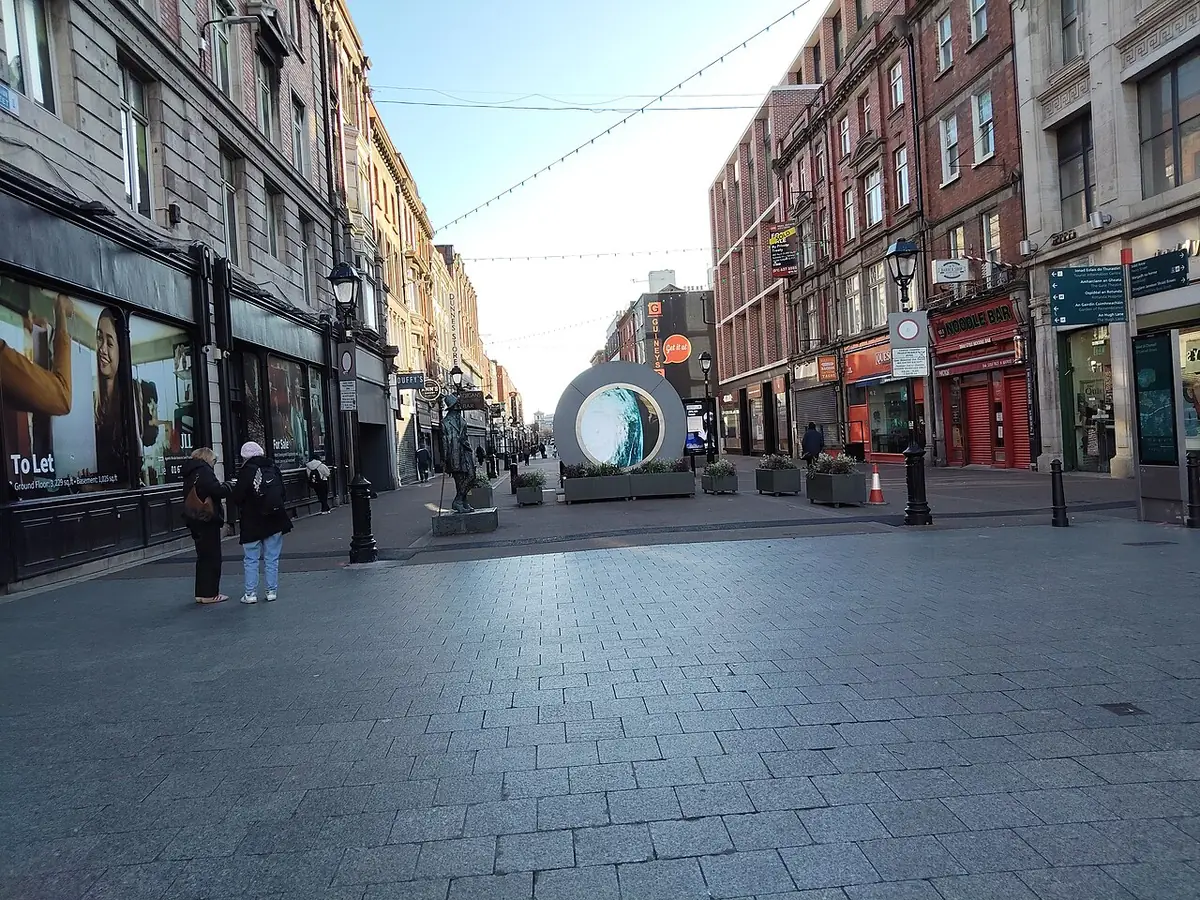
A pedestrian shopping street in central Dublin — Photo: CAPTAIN RAJU · CC0 · Wikimedia Commons
This map of neighbourhoods leads straight to the central question of budget and valuations.
Dublin is divided into postcodes and micro-neighbourhoods with very distinct atmospheres. From the tech energy of the quays to the leafy residential areas in the south of the city, each area offers its own trade-off between accessibility, type of property and quality of life. Getting a feel for daily life in each zone will help you match your budget to the reality of how you live.
Dublin 2 and the Docklands
A highly dynamic atmosphere driven by the flow of tech and finance headquarters, with modern glass-and-steel architecture along the water.
Suits
Professionals who want to get around on foot or by bike, working in tech or finance, and who want to do everything without a heavy commute.
Trade-off
One of the highest prices per square metre in the capital, and apartments that are often smaller for the same budget.
Dublin 4 and the south coast (Ballsbridge, Donnybrook)
A prestigious, leafy and quiet residential setting, dotted with embassies, large green spaces and upmarket local shops.
Suits
Families or buyers looking for peace and quiet, elegant period buildings and easy access to the sea and good schools.
Trade-off
Extremely scarce and coveted supply that sells at very firm prices, with strong competition from wealthy buyers.
Dublin 6 and the residential areas (Ranelagh, Rathmines)
A lively, village-like feel with plenty of shops and a cosmopolitan crowd, perfectly served by the Luas tram that links the area to the centre in a few minutes.
Suits
People who want a bustling neighbourhood life (cafés, restaurants, markets) and quick access to the city centre without living right in the heart of it.
Trade-off
Constant pressure on both rentals and sales keeps prices high and makes buying a fast-moving process.
What does an apartment in Dublin really cost?
Beyond these raw figures, the legal nature of property ownership in Ireland deserves a close look.
Working out the cost of an apartment in Dublin does not stop at the headline price shown by the agencies. The Irish market runs on open bidding or sealed offers, which often pushes final prices above the initial asking price. To build a realistic financing plan, you need to cross-check price-per-square-metre data by area with the unavoidable extra costs that come with the purchase.
DublinFor saleApartmentestimate
Median price / m²€5,320Half the apartments sell below this
Median price€460kthe average is 14% higher — a few very large properties pull it up
Most common2 bedrooms38 % of listings
Average size85 m²
By number of bedrooms
Bedrooms
Share of market
Avg price
Price / m²
Avg size
1
28 %
€302k
€6,048 +8 %
50 m²
2most common
38 %
€420k
€5,600
75 m²
3
24 %
€532k
€5,320 −5 %
100 m²
4
10 %
€721k
€5,152best value / m²
140 m²
Each row is an average, compared against the area average of €5,600 / m². These are indicative estimates of a typical local market, not a measured sample of live listings. Check current listings before relying on them.
What you can really own: freehold versus leasehold
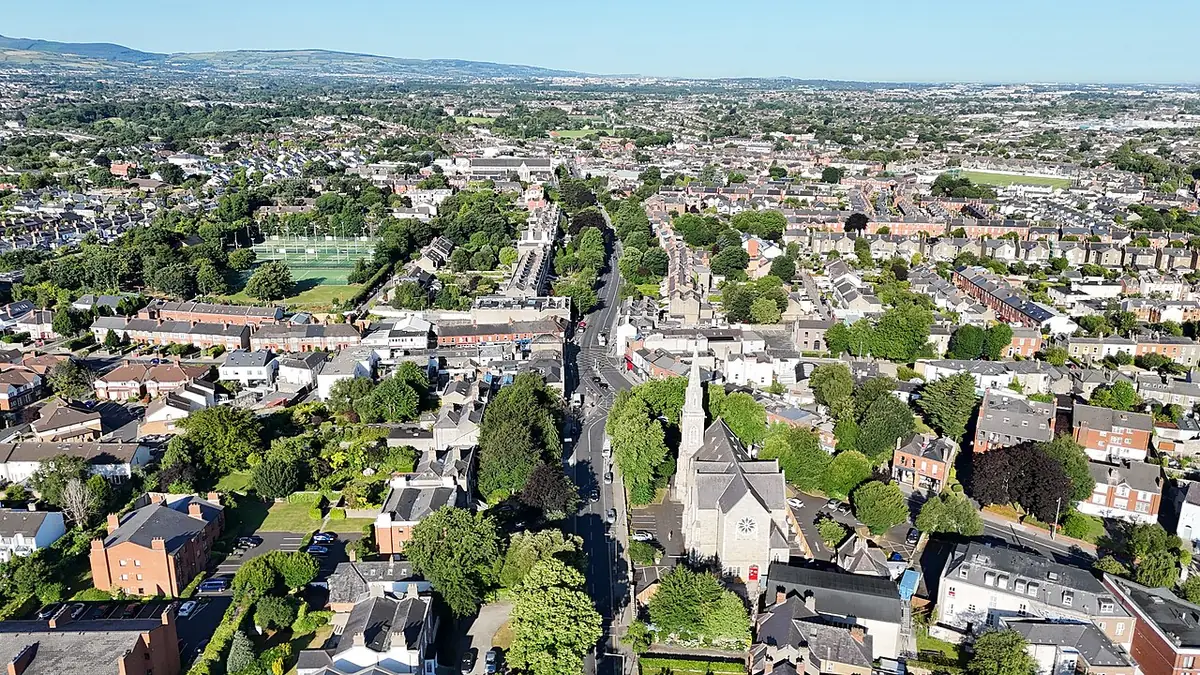
Rathgar from above, a leafy neighbourhood of houses and gardens — Photo: 瑞丽江的河水 · CC BY-SA 4.0 · Wikimedia Commons
These legal precautions fit into a tightly structured transaction timeline that you need to master step by step.
In Irish property law, the question of who owns the land and the structure of the building is fundamental. Unlike buying a detached house, which often comes with full ownership of the land, buying an apartment almost always falls under a shared arrangement. Grasping the legal nuance between these forms of tenure protects you from major financial surprises in the long run.
Leasehold and collective management
The vast majority of apartments in Dublin are sold leasehold, meaning you buy the right to occupy the property for a set term (often 99 or 999 years), together with shares in the building's management company. This structure guarantees the upkeep of the common areas but means following strict house rules and paying the compulsory annual charges that keep the building sound.
What it changesYou must have your solicitor check the remaining term of the lease and the financial health of the management company before you sign any firm commitment.
Your share and keeping service charges under control
Service charges cover building insurance, lift maintenance, cleaning of shared spaces and contributions to a sinking fund for major future works. In Ireland, the law requires management companies to build up sufficient financial reserves to avoid sudden calls for funds when the façade needs refurbishing or the roof needs replacing.
What it changesA thorough review of the building's accounts for the last three years will help you spot any collective arrears or major works that have not been funded.
The rule to understand before paying a deposit in Dublin
To handle these stages calmly, here is how a typical transaction in Dublin unfolds, in order.
Buying property in Ireland follows a specific sequence in which a moral commitment comes before the formal legal one. Understanding the nature of the booking deposit and the solicitor's role will stop you losing money or getting stuck in an unfavourable negotiation. It is this sequence of safeguards that you must take on board before making an offer.
Viewing the property and checking the initial technical details provided by the estate agent.
Making a verbal or written offer, passed on through the seller's agent.
Paying a booking deposit to the agent, which is fully refundable as long as the formal contracts have not been signed.
A thorough review of the title deeds and reports by your solicitor, which kicks off the legal due diligence.
Signing the final Contracts for Sale along with a non-refundable deposit, usually set at 10% of the purchase price.
Closing the sale and handing over the keys, managed by each party's lawyers.
How a property purchase in Dublin works, step by step
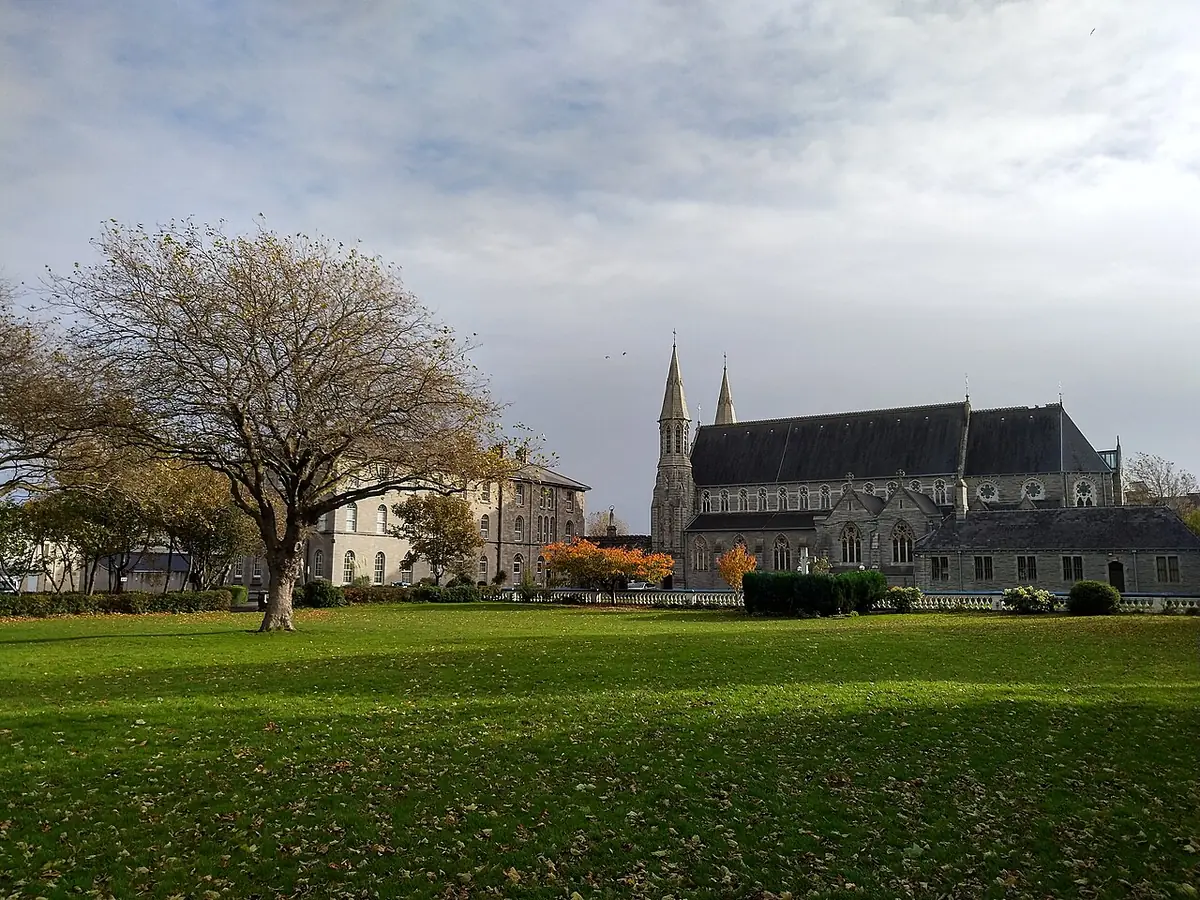
Open green space by the church grounds in Inchicore — Photo: Swifty4 · CC BY-SA 4.0 · Wikimedia Commons
Buying property in Dublin means coordinating several key players: the buyer, the selling estate agent, both parties' solicitors and, where relevant, a financial adviser. Each one plays a precise role in a staged timeline that ensures the transaction is legally secure. Here is the typical path from the first viewing to getting the keys.
The buyerGetting mortgage Approval in PrincipleEven before viewing, you need to confirm your borrowing capacity with an Irish lender or a broker, so you can prove your creditworthiness to sellers.
The estate agentChoosing the property and submitting the offerYou view the apartments on your list and make your offer through the agency. If the seller accepts, you pay a booking deposit that is held in escrow.
The buyer's solicitorLegal enquiries and due diligence (Requisitions on Title)Your lawyer examines all the title deeds, checks the property complies with planning rules and makes sure the building's management company is in good order.
The surveyorTechnical inspection and assessment of the building (Structural Survey)It is strongly recommended to commission an independent technical report to identify any hidden defects, damp problems or energy renovation needs.
Both solicitorsSigning the contracts and paying the 10% depositOnce the checks are cleared, the formal contracts are signed and the final deposit is paid, making the transaction legally binding on both parties.
The parties and the banksClosing the sale and transferring the fundsYour bank pays the balance of the price to the seller's lawyer, the official deeds are registered with the Land Registry and you are handed the keys so you can move in.
Apartment or house in Dublin: which suits your life plans?
Once the type of property is settled, the central question of the overall budget becomes pressing in the Dublin context.
Choosing between an apartment in Dublin's central districts and a single-family house in the outer residential areas depends above all on how much everyday hassle you will put up with and on your long-term view of Irish property investment. Prospective buyers need to assess the reality of the local market, marked by strong rental demand in the centre and continuous urban expansion along public transport lines such as the DART and the Luas. An apartment in Dublin, whether in the modern Docklands or in a converted Georgian building, puts you right next to the tech and finance employment hubs, drastically cutting daily commuting time. On the other hand, service charges, known as management fees in Ireland, are a significant recurring cost that must be carefully built into your initial financing plan.
Opting instead for a house, even a modest one, in neighbourhoods such as Phibsborough or Rathmines, or further out in suburbs like Dundrum, gives you independence and a private plot that are often missing from apartment living. Victorian and Edwardian houses, however, often need a renovation budget that foreign buyers underestimate, particularly because of the energy efficiency standards and insulation requirements now in force. The energy assessment, the well-known BER rating, becomes a deciding factor not only for comfort but also for the property's future value and for securing favourable mortgage terms from Irish banks such as AIB or Bank of Ireland.
The structural choice therefore comes down to a trade-off between central living with shared management on one side, and residential independence with full responsibility for maintenance on the other. Professionals working at the heart of the Silicon Docks generally favour the ease of urban apartment life, even if it means less outdoor space or a shared balcony. Families with children, or people looking to put down lasting roots in a local community, naturally turn to suburban houses with gardens close to well-regarded national and secondary schools. Analysing your weekly travel habits remains the most objective way to decide between these two options before you sign a sale agreement.
What overall budget do you need to settle in Dublin for the long term?
Sandymount Strand, the wide shoreline of Dublin Bay — Photo: Josi · CC BY-SA 4.0 · Wikimedia Commons
To gauge the real impact of these costs on your quality of life, let us look at how a typical day in the capital actually unfolds.
Buying a property in Dublin is about more than the price listed on portals such as Daft.ie. Buyers need to anticipate all the compulsory extra costs, including stamp duty, agency fees, legal fees and annual local taxes. Structuring the financing also means meeting the Central Bank of Ireland's strict rules on borrowing limits relative to income. These financial parameters set precisely which neighbourhoods of the capital are within reach, from the outer commuter belt to the most sought-after areas in the south of the city.
Purchase costs and property taxes in Dublin
Cost item
Estimated rate or range
Impact on the initial budget
Stamp Duty
1% up to €1 million, 2% above that
A compulsory tax paid through the solicitor when the sale is completed.
Legal fees (Solicitor)
€1,500 to €3,500 excluding VAT
Varies with the complexity of the title and the price of the property.
Valuation fees (Valuation Report)
€150 to €300
Required by the lender to confirm the mortgage offer.
Service charges (Management Fees)
€1,200 to €3,000 a year
Applies only to apartments and some gated developments.
The amounts shown are based on averages observed in the Dublin market and may vary with the market value of the property purchased.
Monthly running costs for a household in Dublin
Expense category
Average monthly range
Main factors behind the variation
Electricity and gas (heating)
€150 to €300
Depends heavily on the home's BER energy rating and its size.
Home and life insurance
€50 to €120
Required to obtain the mortgage and varies with the value of your contents.
Public transport (TFI Leap Card)
€100 to €160 per person
Combined use of the DART, the Luas and Dublin Bus city services.
Broadband and phone
€55 to €90
Standard fibre packages offered by the main providers in Ireland.
The cost of living in Dublin remains one of the highest in Western Europe, which calls for careful budgeting of everyday spending.
Healthcare, schools and transport: what does an ordinary Tuesday in Dublin look like?
Beyond appearances and tourist brochures, several structural realities of the Dublin property market deserve close attention.
Living in Dublin means dealing with very particular mobility patterns, shaped by commuter flows between the outer suburbs and the centres of economic activity. An ordinary Tuesday starts early, organised around school runs and commutes across a transport network that is being overhauled. Understanding this daily routine helps you fine-tune where you choose to live according to your real tolerance for journey times and rush-hour traffic on major routes such as the canals or the M50.
07:30Family home (e.g. Rathmines)Getting ready in the morning and checking live traffic conditions on local mobility apps to anticipate delays.
08:15Local national or secondary schoolDropping the children off on foot or by bike on safe routes where the infrastructure allows, or using dedicated school bus services.
08:45Commute to the business hub (Docklands / St Stephen's Green)Riding the Luas tram or using the cycle lanes along the Grand Canal to reach the office without getting stuck in car traffic.
12:30Lunch break in the business districtVisiting nearby shops and local cafés for a quick bite or an informal work meeting.
17:30Last-minute shopping and local servicesA stop at a local convenience store for fresh groceries before heading back home to the residential neighbourhood.
19:00Back home and unwindingEnjoying a quiet evening or joining neighbourhood clubs and sports activities, which are deeply rooted in Dublin community life.
What property listings will not tell you about Dublin
These blind spots explain why some buyers quickly become disillusioned a few months after the final signing.
Property listings on online platforms always show homes in their most flattering light and often leave out significant contextual constraints. In Dublin, the history of the building stock, the specifics of rental law and ongoing infrastructure projects profoundly change how usable a property is over time. Spotting these blind spots before committing financially protects buyers from costly disappointments and difficulties when reselling later.
The real condition of the drainage and plumbing in older buildings
Many Georgian or Victorian buildings converted into apartments have ageing pipework that causes recurring leaks and requires heavy, expensive works that owners must vote on.
Dublin City Council's strict residential parking policy
Owning a car without a private parking space attached to the property means buying a paid parking permit, which is subject to strict quotas and long waiting lists.
Noise from dense nightlife and building sites
Dublin's economic dynamism brings many construction sites and intense nightlife in certain districts, directly affecting the peace of homes with poor sound insulation.
The complexity and slowness of planning procedures for any alteration
Heritage protection rules considerably limit your freedom to extend or change the exterior, even for installing solar panels or certain types of double glazing.
The buying mistakes you only discover six months after settling in Dublin
These hard lessons naturally raise the question of which buyers should postpone or drop their plans in this city.
Looked likeAn ideal opportunity thanks to an attractive price per square metre in the far suburbs
Turned outMarked geographical isolation and daily car or rail costs far higher than expected.
Would have caught itWork out the total annual cost of travel precisely before accepting how far the property is from the centre.
Looked likeA modern apartment with moderate service charges in the first year
Turned outA sharp rise in management fees after works were voted to bring the façade and lift up to standard.
Would have caught itAsk for the minutes of the last three years of general meetings to anticipate exceptional building costs.
Turned outPersistent night-time noise from neighbours and chronically overstretched local schools.
Would have caught itVisit the neighbourhood at different times, especially on weekend evenings, to judge the real atmosphere and how quiet it is.
Looked likeAn efficient individual heating system that seemed fine on a winter viewing
Turned outSky-high energy bills because of poor overall insulation that a basic inspection failed to pick up.
Would have caught itInsist on a thorough technical survey and check every line of the BER energy certificate before making any firm offer.
Who really should not buy property in Dublin right now?
If you clear these hurdles with your eyes open, it is time to pull your approach together and make an informed decision.
Investing in property in the Irish capital requires professional and personal stability and a medium- to long-term horizon. Not every would-be buyer has what it takes to absorb market swings and local regulatory constraints. Clearly identifying the profiles for whom buying now is a major financial risk helps avoid over-indebtedness or having to resell early at a loss.
Internationally mobile professionals on a fixed-term employment contract
→Flexible renting rather than a rigid property purchase
High upfront transaction costs (notably stamp duty and fees) cannot be recouped over a stay of less than five years in Ireland.
Investors looking for immediate, high net rental yields
→Other European markets or alternative financial investments
Strict rent controls in Rent Pressure Zones (RPZ) and heavy taxation of rental income severely limit net returns in the short term.
Households whose deposit is too small to cover the unexpected
→Building up their savings before applying for a mortgage
Having to fund energy upgrades or building works at short notice exposes financially stretched buyers to a serious risk of default.
So, are you really ready to go ahead with your purchase in Dublin?
Deciding to buy a property in Dublin marks a major turning point in life, and it calls for a close fit between your personal ambitions, your real financial means and the reality of the local market. If you have looked objectively at the transport constraints, factored in the true cost of service charges and accepted the particularities of Irish regulation, you now have what you need to move forward with confidence. The Dublin market rewards methodical rigour and careful preparation far more than impulsive reactions to properties marketed as rare opportunities.
Your plans should span at least five to seven years, so you can properly recoup all the purchase costs and ride out the property market's economic cycles calmly. A solid financing plan, approved by a reputable local lender, is the real key to submitting a credible offer and getting ahead of the competition on the capital's most sought-after homes. Take the time to visit several neighbourhoods, talk to local residents and check every technical detail before making a legal commitment.
Ultimately, buying an apartment or house in Dublin is not just a financial transaction but the building of lasting roots at the heart of a dynamic and attractive European city. If your job is stable, your savings secure and you have a clear view of the compromises you are willing to make, you are ready to take the plunge. Surround yourself with trusted professionals, solicitors and licensed agents, to turn this complex project into a lasting and fulfilling achievement.
Related questions
Which documents are essential to get a mortgage in Ireland?
Irish banks ask for three months of bank statements, recent proof of income, a P60 form or the Employment Detail Summary, and evidence of a stable, traceable deposit.
What is the BER system and why does it matter so much when buying in Dublin?
The Building Energy Rating is a mandatory certificate that grades a home's energy performance on a scale from A to G. It has a direct effect on heating bills and often opens the door to preferential green mortgage rates.
How long does a property purchase in Dublin usually take, from offer to handing over the keys?
The whole process generally takes between three and five months in Ireland. The timing depends on how complex the legal checks carried out by both parties' solicitors are, and on how quickly the mortgage is approved.
Can non-resident foreigners easily buy property in Dublin?
Yes, there is no legal restriction stopping a non-resident from buying property in Ireland. However, getting finance from an Irish bank is considerably harder without a history of local income.
What are Dublin's Rent Pressure Zones and what impact do they have?
RPZs are areas designated by the government where rent increases are strictly capped by law. The measure protects tenants but affects the return calculations of buy-to-let investors.
Is it possible to negotiate the asking price of an apartment or house in Dublin?
Negotiation depends entirely on how tight the local market is and on demand for the type of property you are after. In the most sought-after neighbourhoods, homes often sell at the asking price or go to bidding wars.
What notary or solicitor fees should you budget for when buying in Dublin?
Solicitor fees generally range from €1,500 to €3,500 excluding VAT, on top of which come various administrative charges, land registration fees and the compulsory Stamp Duty calculated on the purchase price.
How do shared ownership and service charges work for an apartment in Dublin?
Every apartment owner is a member of a Management Company and must pay compulsory annual management fees that cover the upkeep of common areas, the lift and the building insurance.
Which Dublin neighbourhoods are best for a long-term family investment?
South Dublin residential neighbourhoods such as Rathmines, Ranelagh, Dundrum and Stillorgan have long been in high demand for the quality of their schools, their green spaces and their easy transport links to the centre.
What exactly does a surveyor do when you buy an older property?
A surveyor is an independent expert who carries out a detailed technical inspection of the building to spot hidden defects, damp problems, the condition of the roof and structural risks before you sign for good.