Buying a house in Dublin means making sense of a fast-moving property market and legal rules that are specific to Ireland. This guide sets out what the neighbourhoods are really like, how prices work and the essential steps to carry your purchase through with peace of mind.
Tell us about your life. Ex: I’m relocating to Nice next year
Attach file
Get the app
Buy House Dublin
Buying a house in Dublin means making sense of a fast-moving property market and legal rules that are specific to Ireland. This guide sets out what the neighbourhoods are really like, how prices work and the essential steps to carry your purchase through with peace of mind.
What you really get when you buy a house in Dublin
Scroll
What you really get when you buy a house in Dublin
Buying a house in Dublin means making sense of a fast-moving property market and legal rules that are specific to Ireland. This guide sets out what the neighbourhoods are really like, how prices work and the essential steps to carry your purchase through with peace of mind.
Written by the ting.ad editorial team ·
Dublin in Street View: drag to look around.
Buying a house in Dublin is about more than acquiring square metres in a European capital under housing pressure. It gives you access to a particular urban model, shaped by surviving historic streets of houses and strong demand for older homes. Living space is traded off against the requirements of architectural conservation, so you need to look closely at what you are really getting behind the Georgian front or the Victorian terrace.
The illusion of a standard propertyvsThe reality of very varied housing stock
Listings often flatten everything into the generic label of a townhouse. In practice, each building's history, its successive alterations and its period materials dictate the real upkeep and the thermal performance you will live with every day.
The promise of private spacevsThe compromise of the urban garden
Buying a house in Dublin very often means living with long narrow plots and cramped back yards. Privacy comes at the cost of frequently being overlooked, which goes with the density of the residential neighbourhoods close to the centre.
The appeal of generous period roomsvsThe need to renew the infrastructure
The high ceilings and character of Victorian houses win you over instantly, but they hide plumbing and insulation that are often out of date. The purchase price never reflects the investment needed to bring the property up to modern standards of comfort.
The freedom of a standalone homevsThe strict framework of planning rules
Unlike buying in a shared building, you alone are in charge of the roof and the outside walls. However, Irish heritage protection law severely limits any ambition to make architectural changes visible from the street.
Does this place suit your day-to-day way of life?
Sandymount Strand, the wide shoreline of Dublin Bay — Photo: Josi · CC BY-SA 4.0 · Wikimedia Commons
Beyond your personal situation, the cultural and administrative leap between your home country and Ireland resets the familiar reference points of buying a home.
Daily life in Dublin revolves around a strong centre and residential suburbs linked by transport routes that clog up at rush hour. Where you choose to settle will directly shape your relationship with time, with the weather and with commuting. Every kind of household finds its own balance here between being close to the main employment hubs and looking for a calmer setting.
Working in the city centre or the Docklands
Professionals working in the big international hubs often want to cut their commute drastically. Settling in a house near the canals or in central neighbourhoods such as Portobello offers that rare opportunity, but it means accepting smaller floor areas and very high prices per square metre. The bike then becomes your main way of getting around, sidestepping the chronic traffic congestion that marks the crossings of the Liffey.
A family looking for a stable home
Families naturally favour the outer residential areas that are well served by the DART or the main bus routes. Neighbourhoods such as Rathgar, Ranelagh or, further south, Blackrock offer well-regarded schools and the local parks that matter so much. The flip side of this choice is the intensity of competition for property in these areas, and the need to plan family logistics well in advance.
Looking for a coastal balance
Settling along Dublin Bay, towards Howth on the northside or Dun Laoghaire on the southside, changes the experience of the city completely. Life follows the tides, the open spaces and a more village-like neighbourhood feel. In return, commutes into the heart of Dublin become noticeably longer, so you have to fully accept the daily travel time in exchange for an exceptional natural setting.
Living here when you come from abroad: what really changes
Once you have absorbed these rules, analysing the local micro-markets becomes the decisive step in targeting the right area.
Buying property in Ireland rests on common law legal and contractual traditions that differ sharply from the civil law systems many buyers know back home. The familiar reference points disappear from the very first offer, as the system works on private negotiation handled by solicitors with separate roles. Understanding these structural differences avoids disappointment when the funds are released or the deeds are signed.
From abroad
A binding preliminary sale agreement signed by both parties
Dublin
A conditional contract and the 'subject to contract' stage
Back home, an accepted offer may commit both parties firmly once the preliminary agreement is signed. In Dublin, the initial agreement stays informal and can be withdrawn until the final contracts are signed (closing), which leaves the buyer exposed to being outbid or to the seller pulling out late.
From abroad
A single, central notary handling the whole sale
Dublin
Two solicitors, one representing each party
Each party instructs its own solicitor to examine the title and draw up the documents. This set-up lengthens the checking period and increases the legal fees compared with a single-notary system.
From abroad
Standardised compulsory technical inspections
Dublin
The principle of caveat emptor (let the buyer beware)
In Ireland, the burden of uncovering hidden defects falls heavily on the buyer. Instructing an independent surveyor to inspect the structural condition of the house is not a mere formality; it is your only protection against major financial surprises.
From abroad
Tight regulation of leases and rent increases
Dublin
A rental market that has historically been very liberal
Even if you are buying to live in, the local property culture includes a flexible rental market and property management practices that differ from the more rigid rules on unfurnished lettings you may know back home.
From abroad
Uniform, centralised administration and taxation
Dublin
Local Property Tax and specific charges
Local taxation is based on property valuations managed by municipal and national authorities according to Ireland's own assessment bands, which changes how an owner's recurring tax bill is calculated.
Which neighbourhood to choose for your way of life in Dublin?
O'Connell Street, the broad main avenue of central Dublin — Photo: CAPTAIN RAJU · CC0 · Wikimedia Commons
Dublin's geography is traditionally organised around the River Liffey, which divides the northside from the southside, with well-established patterns of price and reputation. Choosing a neighbourhood means weighing the cultural buzz of the central areas against the calm of the Victorian enclaves and the accessibility of the residential suburbs. Each area gives your daily life its own particular character.
Ranelagh and Rathmines
A constant buzz of shops, a mix of young professionals and settled families, set to the rhythm of cafés and the Luas green line.
Suits
People who want to combine an active urban life, quick walking access to the centre and a residential village feel without being cut off.
Trade-off
Demand for property is at its peak here and prices per square metre are among the highest in the capital, for houses that are often terraced.
Stoneybatter and Smithfield
An alternative, creative spirit in full transformation, where old shopfronts are making way for independent breweries and neighbourhood cultural spaces.
Suits
Buyers drawn to urban authenticity, immediate proximity to the city centre and a social fabric that is changing fast.
Trade-off
Houses are scarce and often need major modernisation work to reach a satisfactory level of thermal comfort.
Blackrock and Dun Laoghaire
Constant sea air, wide tree-lined avenues and a seaside calm combined with first-rate schools and sports facilities.
Suits
Families and buyers looking for space, well-regarded schools and a natural setting open to the Irish Sea.
Trade-off
Travel times to the city centre stretch out at rush hour, and the price of entry for a detached house is particularly high.
Drumcondra and Phibsborough
Traditional northside neighbourhoods with a strong community spirit, leafy parks and genuine local life.
Suits
People looking for a balanced compromise between access to the centre, somewhat more moderate prices and characterful terraced houses.
Trade-off
Traffic is heavy, and some parts suffer from the noise of the main arterial roads into the city.
What does buying a house here really cost?
Beyond the headline purchase price, the legal structure of ownership means you need to understand exactly what you will own.
The Dublin property market is marked by a structural mismatch between supply and demand, which keeps valuations high by European standards. Prices vary considerably with proximity to transport routes, the energy efficiency of the property and whether it is on the northside or the southside. Setting your budget means factoring in all the extra costs, from Stamp Duty to professional fees.
DublinFor saleHouseestimate
Median price / m²€4,362Half the apartments sell below this
Median price€683kthe average is 14% higher — a few very large properties pull it up
Most common2 bedrooms53 % of listings
Average size149 m²
By number of bedrooms
Bedrooms
Share of market
Avg price
Price / m²
Avg size
2most common
53 %
€603k
€4,592
131 m²
3
33 %
€763k
€4,362 −5 %
175 m²
4
14 %
€1.04m
€4,225best value / m²
245 m²
Each row is an average, compared against the area average of €4,592 / m². These are indicative estimates of a typical local market, not a measured sample of live listings. Check current listings before relying on them.
What you can really own: freehold versus leasehold
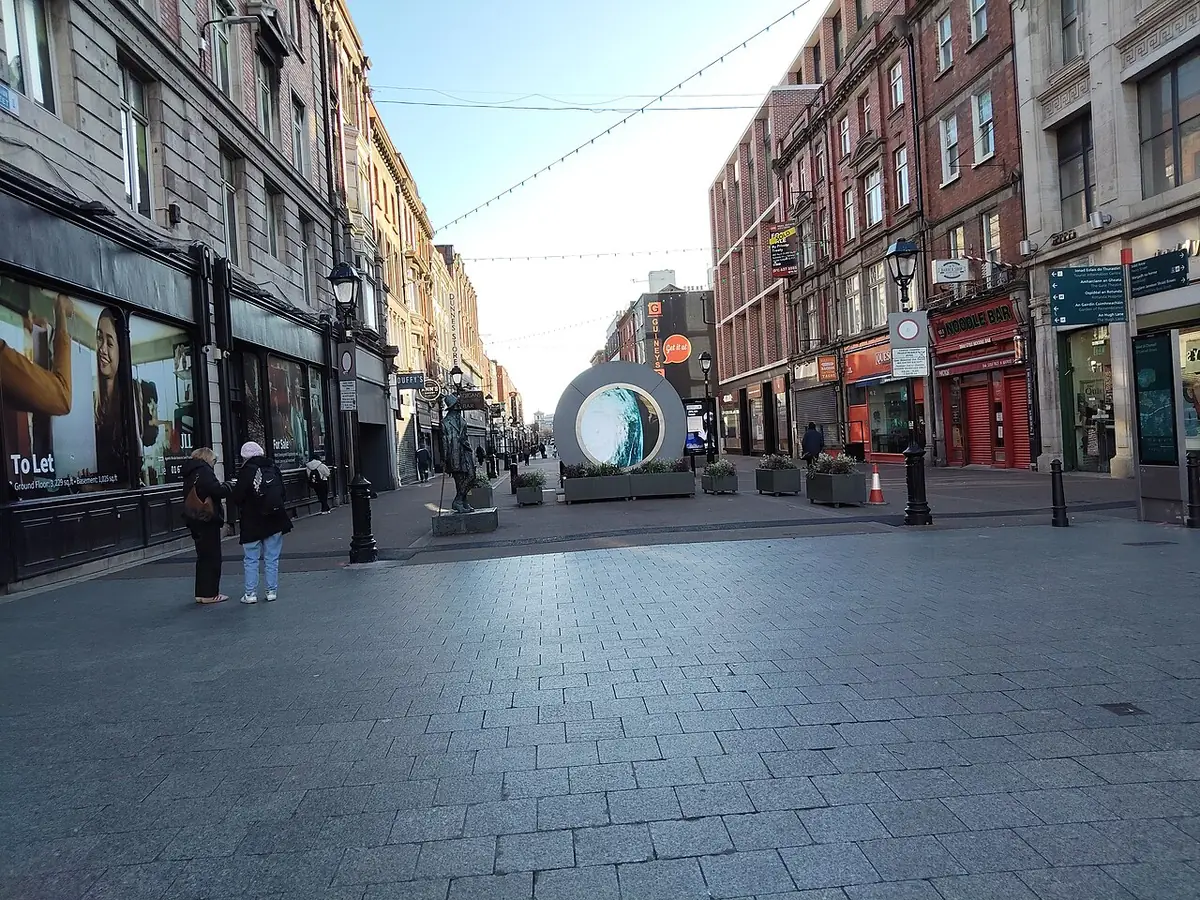
A pedestrian shopping street in central Dublin — Photo: CAPTAIN RAJU · CC0 · Wikimedia Commons
Land ownership in Ireland has historical subtleties that call for absolute vigilance from a buyer coming from abroad. Far from a simple picture of outright ownership, a significant share of the older housing stock rests on long leases that need to be examined in detail.
Outright ownership (Freehold)
Buying freehold means you own both the building itself and the land it stands on, with no ground rent and no end date. It is the safest and most sought-after form of ownership on the Dublin market, giving you complete control over your asset and the best long-term value.
What it changesYou decide on upkeep and alterations within the planning rules, without answering to a separate owner of the land.
The long lease (historic Leasehold)
Many Victorian houses and last-century housing estates are held on leasehold, where you buy the right to occupy the property for a fixed period, sometimes several hundred years, in return for a small annual payment known as ground rent. Although legislation has made it easier to buy out these rents, a short lease or one with restrictive clauses can complicate a future sale or make it harder to get a mortgage.
What it changesYour solicitor must check the remaining term of the lease and identify any restrictive clauses before you commit to the purchase.
The rule to understand before paying a deposit in Dublin
The way a property sale works in Ireland follows a chain of steps that are not legally binding for many weeks. Knowing how to move between a simple expression of interest, paying a good-faith deposit to the estate agent and the final signing of contracts protects the buyer from disappointment in a tight market.
You spot a house that meets your criteria and decide to make an offer through the estate agent handling the sale.
The estate agent records your offer and passes it to the seller, while continuing to collect competing offers in a market open to informal bidding.
Once your offer is accepted (sale agreed), you pay a refundable booking deposit to the agent or the solicitor to reserve the property provisionally.
Your solicitor starts the detailed legal checks (requisitions on title) to confirm the title deeds are in order and that there are no hidden charges or planning disputes.
The technical inspection report (structural survey) is carried out to identify any hidden defects or urgent insulation work to plan for.
The formal contracts of sale are drawn up and approved by both parties, marking the move from an informal agreement to a binding legal commitment, with payment of the full deposit (usually 10 per cent).
The closing date is set, allowing the final transfer of funds, the handover of the keys and the registration of your title with the Property Registration Authority.
How a transaction unfolds, step by step
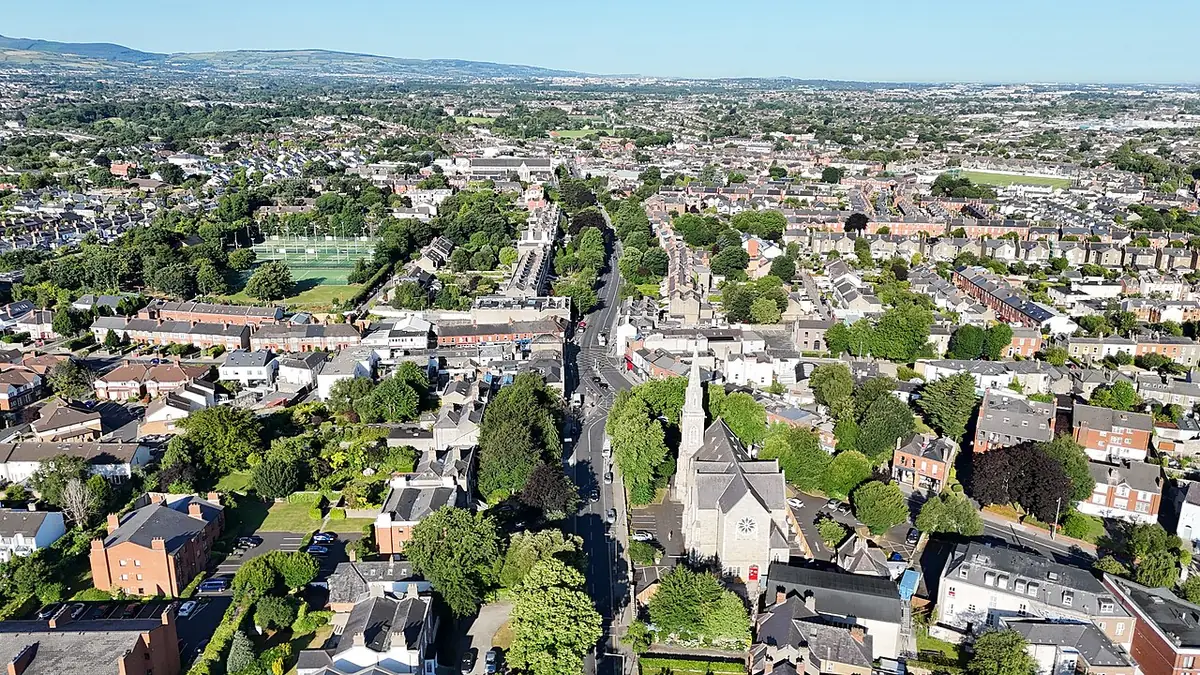
Rathgar from above, a leafy neighbourhood of houses and gardens — Photo: 瑞丽江的河水 · CC BY-SA 4.0 · Wikimedia Commons
Seeing a property purchase in Dublin through to the end means coordinating several professionals with strictly defined roles. From mortgage pre-approval to the handover of the keys, each one secures a technical, financial or legal aspect of the transaction.
The mortgage broker or bankGetting pre-approval (Approval in Principle)Before you even start viewing, you need a financing certificate from an Irish lender, which is essential if agents are to take you seriously.
The estate agentNegotiating and recording the offerThe agent represents the seller's interests and runs the viewings and the flow of successive offers in a very competitive market.
The surveyorChecking structural and energy conditionThe surveyor inspects the roof, damp and foundations and assesses the building's real energy performance, which often has a BER with room for improvement.
The solicitorChecking title and drawing up contractsThe solicitor secures the transfer of ownership, examines easements and makes sure the property is sold free of any mortgage or dispute.
The home insurerTaking out the compulsory policyThe bank requires comprehensive home insurance and suitable mortgage protection cover before it will actually release the funds.
YouFinal signing and taking possessionYou carry out the final walk-through, approve the last payment through your solicitor and receive the keys to your new house.
House or apartment in Dublin: choosing to suit your way of life
Once that fundamental choice is made, the crucial question of your overall budget and the extra costs naturally follows.
Choosing between a traditional Victorian or Georgian house and a modern apartment in Dublin's new docklands is not just a matter of raw financial calculation. It directly shapes your daily life, your commute in the Irish rain and your relationship with space. The red-brick terraced houses typical of neighbourhoods such as Ranelagh or Rathmines offer private gardens and undeniable architectural charm, but they often need significant insulation work and constant attention to damp. In contrast, new developments in Grand Canal Dock or Smithfield come with high management charges but guarantee A-rated energy efficiency, better security and no urgent work to plan for when you move in.
Dublin's urban layout sharpens this dilemma. The city spreads out along the Luas tram lines and bus routes, which makes buying a house a little further out very popular with families looking for parks and good secondary schools. Apartments, meanwhile, are concentrated in the Dublin 1, 2 and 4 postcodes, where the cluster of tech and finance jobs means you can do everything on foot or by bike. However, the running of apartment buildings, handled by what are called Management Companies in Ireland, follows strict rules that deserve close analysis before you sign anything, because the annual charges for maintaining the common areas can sometimes surprise unprepared foreign buyers.
Over the long term, how easily your property can be resold will be another decisive factor. Family houses with three or four bedrooms in well-connected suburbs keep exceptionally strong demand, driven by a growing population and a supply held back structurally by slow local planning. One- and two-bedroom apartments, although much sought after by young professionals and institutional investors, sometimes see sharper swings linked to rental market regulation and rent caps in areas under housing pressure. Choosing between the two therefore comes down to deciding whether you value the peace of a home rooted in Dublin or the flexibility of an urban base that works from day one.
What real budget do you need to live and buy in Dublin?
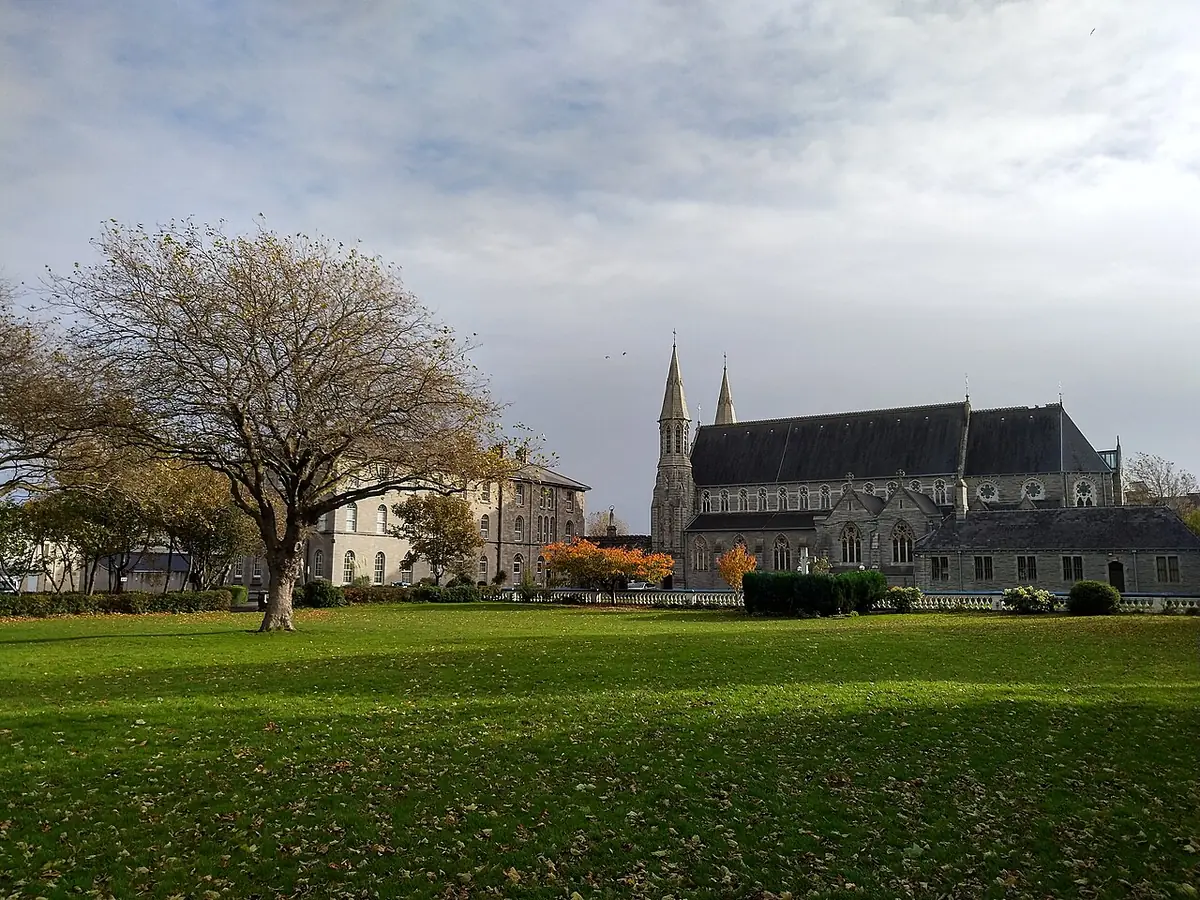
Open green space by the church grounds in Inchicore — Photo: Swifty4 · CC BY-SA 4.0 · Wikimedia Commons
With that financial framework in place, it is worth understanding in practical terms the pace of life that awaits you once you have settled in the capital.
Drawing up a financing plan in Dublin means looking well beyond the headline price handled by the conveyancer, known as a solicitor under Irish law. Stamp Duty, legal fees and Local Property Tax change the total amount you need substantially. On top of that, Irish banks' requirements on deposits and debt ratios remain particularly strict, set by the Central Bank of Ireland to guard the market against a repeat of past speculative overheating.
Rough costs of buying and living in Dublin
Cost item
Indicative range
Context
2-bedroom apartment (Dublin centre/docklands)
€400,000 to €600,000
Very competitive market, strong rental demand and modern finishes.
3-bedroom terraced house (inner suburbs)
€550,000 to €850,000
Energy upgrade work is often needed and should be budgeted for.
Legal fees and Stamp Duty
1% to 2% (new builds) / 1% to 7.5% (older properties)
Stamp Duty is charged at 1% up to €1 million for main residences.
Home insurance and annual charges (Management Fees)
€1,500 to €3,500 a year
Management fees for an apartment include building insurance and maintenance.
These ranges reflect the averages seen on the Dublin market for properties with an acceptable energy performance certificate.
The Dublin rhythm: what does an ordinary Tuesday in the capital look like?
Beyond this well-worn routine, many practical aspects stay invisible during the first viewings.
Living in Dublin means getting used to daily life shaped by changeable weather and transport infrastructure that is constantly evolving. Between the morning Luas ride, the bustle of local schools and a lunch break in a neighbourhood pub or café, a typical day shows the city's true face. Residents quickly learn to be flexible about traffic jams on the main roads and the ups and downs of suburban rail services.
07:30Home in a residential suburbGetting ready in a typical brick house, checking the gas boiler and taking a quick look at the changeable sky.
08:30Luas stop or Dublin Bus stopThe commute to the business district, a moment shared with thousands of other commuters tapping their Leap Cards.
09:30Office or co-working space (Grand Canal Dock)Arriving at your desk in the tech quarter, settling in and a first milky coffee with colleagues.
13:00Lunch at an independent neighbourhood caféA quick break over a hot soup or a handmade sandwich, often a chance to check the weather for the afternoon.
17:30Picking the children up from the local school (National School)Chatting with other parents at the school gate, sorting out after-school activities and Gaelic Games clubs.
19:00Top-up shopping at the corner shopBuying fresh food for dinner, with a quick stop at the local bakery or independent wine shop.
21:00A quiet evening in the living roomUnwinding by the fire or reading, enjoying the hushed atmosphere of Dublin's residential neighbourhoods away from the bustle.
What glossy property listings will never tell you in Dublin
These little-known subtleties lead straight to the classic mistakes made by buyers in too much of a hurry.
The Dublin property market has its own codes and administrative complexities that promotional photos take care not to reveal. Between the tricky handling of long leases, the quirks of the drainage system and the reality of thermal insulation, the buyer needs a sharp critical eye. Ignoring these invisible factors exposes you to major extra costs and administrative setbacks long after you get the keys.
The tenure system (freehold versus leasehold)
Many apartments and some houses in managed developments are held on a limited-term lease, which can mean paying ground rent or negotiating to buy out the freehold from the landowner.
Real energy performance (BER Rating)
A low BER (D, E or F) means sky-high heating bills in winter and insulation work you will need to reach the modern standards of comfort today's buyers expect.
The condition of old pipes and plumbing
Victorian buildings often have lead pipes or ageing drainage that need a careful inspection by a qualified engineer before you confirm your offer.
Strict planning and heritage protection rules
If your property is protected or located in an Architectural Conservation Area, the slightest change to the front, the windows or the roof will require permissions from the council that take a very long time to obtain.
How well the Management Company actually works
A badly run development with significant unpaid charges can block a future sale of your property and let maintenance fall behind on the building's roofs or lifts.
The typical regrets people discover six months after settling in Dublin
Knowing these pitfalls lets you ask yourself the ultimate question before committing to this market for good.
Looked likeA charming period house full of picturesque character in a quiet neighbourhood.
Turned outA damp, draughty home that leaks heat, needing an exorbitant heating budget and urgent weatherproofing work.
Would have caught itInsist on a full independent technical report (structural survey) and always check the BER certificate before raising your bid.
Looked likeA bright apartment ideally placed a stone's throw from the quays and the city-centre buzz.
Turned outSignificant night-time noise at weekends and management charges that keep rising, voted through at the annual general meeting.
Would have caught itVisit the area at different times of day and night, and go through the last three years of the Management Company's meeting minutes.
Looked likeA big, affordable family house a little further out in the green outer suburbs.
Turned outHours lost every day in commuter traffic and total dependence on the car for the smallest trip.
Would have caught itTry the exact journey at rush hour on a rainy Tuesday morning before signing, and check how close the main public transport lines really are.
Looked likeA quick purchase without a local adviser or broker, to keep pace with the competition.
Turned outLess than optimal financing costs and weak conditional clauses in the purchase contract drawn up by the seller's solicitor.
Would have caught itWork with an independent adviser (a buyer's agent or your own solicitor) who will defend only your interests as a foreign buyer.
Risky profiles: who really should not buy in Dublin right now?
Now is the time to pull all these factors together so you can make your final decision with a clear head.
Buying property is not a universal solution and can prove very costly depending on your professional or personal situation. The constraints of the Irish market, combined with high upfront costs, demand a stability that not everyone has or wants. Working out clearly whether you fit one of these risky profiles will save you from a premature financial commitment that is hard to unwind if your plans change.
The professional on a short-term assignment or a probation period
→Put off buying and go for a flexible 12-month rental
Purchase costs (Stamp Duty, legal fees) are hard to recoup over less than 5 or 7 years in Ireland, so a quick resale could well lose money.
The investor who cannot stand regulatory and tax constraints
→Turn to other asset classes or other European markets
Ireland's tax treatment of rental income and property gains, combined with the strict Rent Pressure Zone rules, sharply limits net returns without rigorous management.
The household looking for a perfect property with no compromise on location
→Wait and build up a bigger deposit to target the right area
Settling for a property in a poorly connected area just to satisfy an immediate urge to buy almost always leads to lasting regret and a possible loss in value.
So, are you really ready to take the plunge and buy in Dublin?
Settling in Dublin and becoming a homeowner there is a deep life commitment that goes well beyond a simple investment. It is a choice to put down roots in a warm culture, a dynamic market and an urban environment in full transformation. If you have measured the real extra costs, accepted the quirks of the climate and confirmed that your location fits your day-to-day aspirations, then you have everything you need to make your purchase a success on the best terms.
The Dublin market rewards patience, careful preparation and realism. By surrounding yourself with the right local professionals (solicitors, engineers and independent brokers), you turn a potentially stressful buying journey into a well-managed move to your new home. Take the time to view properties, study every BER certificate carefully and listen to your instincts about the neighbourhoods that best match your way of life.
Your home in Dublin is waiting for you, as long as every decision has been guided by clear thinking rather than haste. All that is left is to formalise your financing plan with an authorised lender and start your active search on the ground, always remembering that the best investment is the one that simplifies and enriches your everyday life.
Related questions
What legal fees and taxes should I budget for when buying property in Dublin?
Purchase costs include Stamp Duty (the tax on property transfers), which is generally 1% for a main residence up to €1 million, plus the solicitor's fees, which range from €1,500 to €4,000 depending on the value of the property and the complexity of the file.
Can you buy property in Dublin as a non-resident?
Yes, it is entirely possible to buy property in Ireland without being tax resident. However, getting a mortgage from an Irish bank is considerably harder and usually requires a larger deposit, often in the region of 30% to 40%.
What is a BER certificate and why does it matter so much when buying?
The Building Energy Rating (BER) is Ireland's energy performance certificate. It rates a building's energy efficiency on a scale from A to G. A poor rating means very high heating bills and insulation work you will have to carry out.
How long does a property transaction in Dublin take on average?
From the moment your offer (bid) is accepted to the final signing of the deed of sale (closing), you should generally allow 10 to 14 weeks. The time is taken up by the thorough title deed checks carried out by the solicitors on both sides.
What is a Management Company for apartments in Dublin?
It is a company formed by the owners in a building to maintain the common areas, insure the building and look after the outdoor spaces. Every owner has to pay compulsory annual charges (service charges).
Which neighbourhoods are most sought after by families buying in Dublin?
Residential areas on the southside such as Ranelagh, Rathmines, Ballsbridge and Donnybrook, as well as coastal suburbs like Dún Laoghaire and Blackrock, are especially popular for their schools and parks.
How does the bidding process work when buying a house in Ireland?
Unlike the system in many other countries, property sales in Ireland usually go through agents, with prospective buyers making successive offers (bids) that the estate agent records. The winning offer only becomes legally binding when the contracts are signed.
What minimum deposit do Irish banks require?
For a main residence, the Central Bank of Ireland generally requires a minimum deposit of 10% for first-time buyers and 20% for other buyers, although lending decisions also depend strictly on your income.
What is a leasehold compared with a freehold?
Freehold means you own the building and the land outright and in perpetuity. Leasehold means you own the property for a fixed term (for example 950 years), sometimes with an annual payment to the landowner known as ground rent.
Is it essential to have an engineer inspect the property?
Yes, a technical survey by a chartered surveyor or qualified engineer is strongly recommended before you sign the final contract. It will identify hidden defects, damp problems or major structural faults.