Settling in Dublin by renting a house calls for a close understanding of how the Irish property market works and of its local dynamics. This guide sets out the essential criteria for choosing your area, planning your budget and securing your lease with confidence. Make informed decisions so your move to the Irish capital goes smoothly.
Tell us about your life. Ex: I’m relocating to Nice next year
Attach file
Get the app
Rent House Dublin
Settling in Dublin by renting a house calls for a close understanding of how the Irish property market works and of its local dynamics. This guide sets out the essential criteria for choosing your area, planning your budget and securing your lease with confidence. Make informed decisions so your move to the Irish capital goes smoothly.
Renting a house in Dublin: the hidden reality of the Irish property market
Scroll
Renting a house in Dublin: the hidden reality of the Irish property market
Settling in Dublin by renting a house calls for a close understanding of how the Irish property market works and of its local dynamics. This guide sets out the essential criteria for choosing your area, planning your budget and securing your lease with confidence. Make informed decisions so your move to the Irish capital goes smoothly.
Written by the ting.ad editorial team ·
Dublin in Street View: drag to look around.
Understanding these basic trade-offs helps you judge whether the Dublin way of life matches what you want.
Renting a house in Dublin is not just a matter of signing a lease and moving into a standardised space. The Irish property market forces structural compromises between closeness to the centre and the living space available. Tenants quickly find that the charm of Georgian or Victorian houses often hides problems with insulation and energy performance. Every housing decision in the Irish capital means weighing modern comfort against traditional architectural character. So you need to look closely at what your rent actually buys in terms of features and location.
The architectural character of Victorian housesvsEnergy performance that is often limited
Period homes offer remarkable ceiling heights and generous volumes, but they frequently suffer from poor insulation and high heating bills in the winter months. Tenants have to choose between aesthetic charm and keeping their day-to-day energy budget under control.
Quiet, residential neighbourhood lifevsBeing relatively far from the main office hubs
Settling in leafy suburban areas brings welcome peace and quiet, but it inevitably lengthens daily commutes on public transport. That distance reshapes how you organise your week and how easily you can drop in on the cultural life of the city centre.
The apparent flexibility of being a tenantvsFierce competition and a scarce supply of homes
Although renting avoids tying up capital the way buying does, the pressure on Dublin's rental market makes every lease renewal or initial search highly competitive. Finding a suitable house takes quick reactions and flawless financial preparation from the moment listings go live.
What kind of lifestyle are you looking for in the Irish capital?
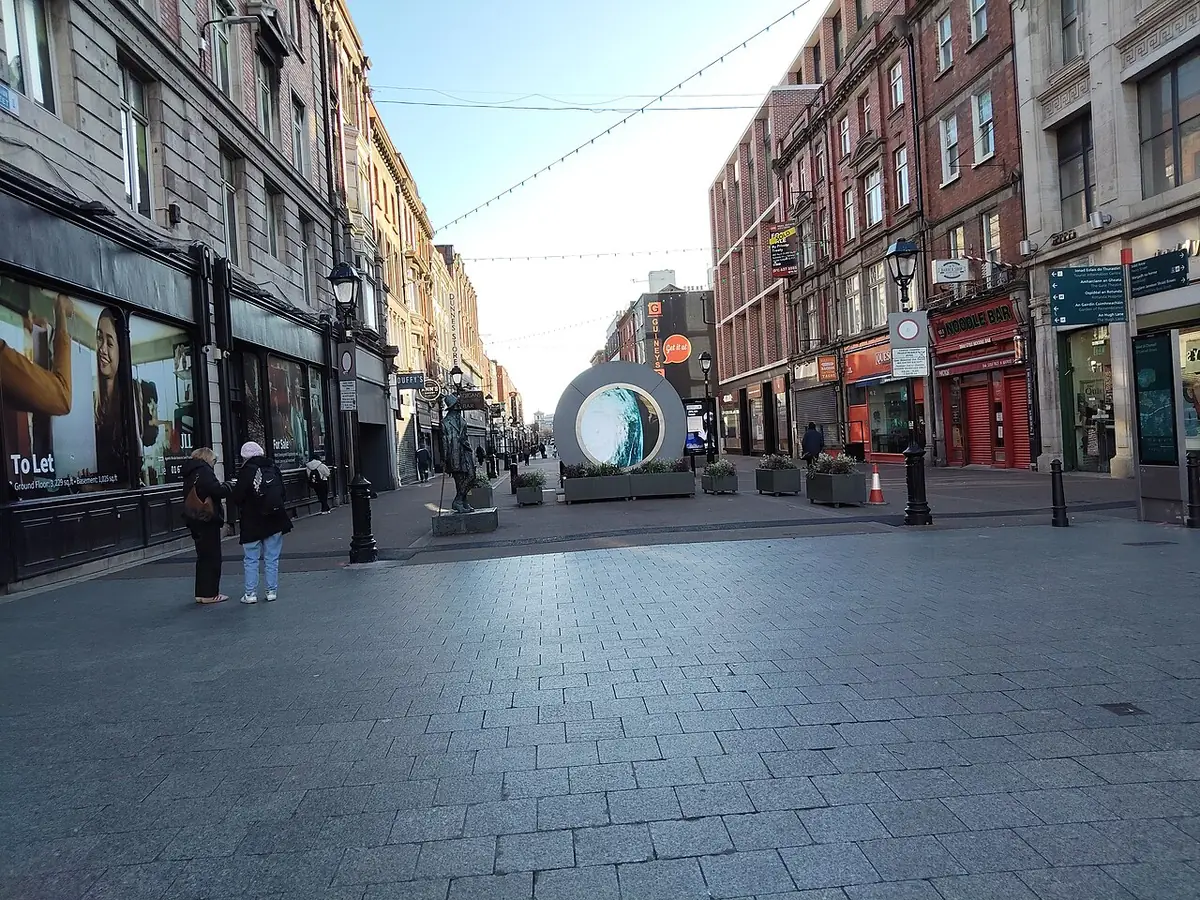
A pedestrian shopping street in central Dublin — Photo: CAPTAIN RAJU · CC0 · Wikimedia Commons
How well your profile fits the local urban fabric also shows up when you compare it with the reference points you bring from home.
Choosing a home in Dublin depends above all on your daily rhythm and your work or family priorities. The city shows very different faces depending on whether you favour urban buzz or the calm of the residential suburbs. Each type of tenant faces specific practical constraints that are worth anticipating to avoid disappointment. Looking at how you get around and how much space you expect will point you to the most suitable area.
Choosing the outer residential suburbs
Working remotely changes your selection criteria completely, putting space ahead of being right in the centre. Neighbourhoods beyond the canal, such as Rathfarnham or Dundrum, let you get an extra room to set up a comfortable office. You enjoy a greener setting and direct access to parks while staying connected to the rest of the city by the Luas tram network. This option does mean accepting longer journeys on the occasions you head into the business district.
Looking for somewhere right next to the centre
Living within walking distance of the Liffey quays and the lively districts means giving up some living space. Because single-family houses are rare and expensive in the very centre, searches often turn to compact terraced houses or transitional neighbourhoods such as Portobello. You save precious time every day by cutting out commuting, which makes it much easier to take part in social and professional events. In return, the cost per square metre reaches heights you absolutely have to build into your financial plan.
The option of family and school-focused neighbourhoods
Settling in Dublin as a family depends largely on the reputation of local schools and on having sports facilities nearby. Areas such as Ranelagh or Clontarf offer the balance people look for between safety, green space and an active community life. Houses there generally come with a private garden, which makes everyday family life more enjoyable. That stability comes at a high financial cost, though, and school enrolment needs to be planned well before you actually move to the country.
Settling in Dublin from abroad: what really changes day to day
Once you have absorbed these cultural reference points, choosing your area becomes the decisive step in your plans.
Moving to Dublin from abroad upsets deeply rooted administrative, cultural and practical habits. The Irish rental market runs on legal codes and negotiating customs that differ noticeably from what you may be used to back home. Anticipating these structural differences will save you needless friction when you put together your application or manage your lease. Your whole household and financial organisation ends up being redefined by the local context.
From abroad
Lease structures and regulated tenant protection back home
Dublin
The Irish residential tenancy system governed by the Residential Tenancies Board (RTB)
Rules on rent control and notice procedures are different, so you need to read the contract clauses specific to Irish law carefully to secure your home for the long term.
From abroad
The weight given to traditional personal guarantors and paper files
Dublin
A firm requirement for local professional references and a verifiable credit history
Irish landlords attach great importance to references from your former local employers or landlords, which can make the first searches difficult for newcomers with no history in the country.
From abroad
Standardised sound and thermal insulation in recent buildings
Dublin
An often older housing stock that calls for close attention to the BER (Building Energy Rating) certificate
Checking the property's energy rating every time becomes a budgeting must if you want to estimate your future heating costs through damp oceanic winters.
From abroad
The traditional pattern of local services and high-street shops
Dublin
A retail landscape largely dominated by major shopping streets and out-of-town retail parks
Your weekly trips for shopping and household errands need rethinking, especially if you choose to live in outlying residential areas.
How to choose the Dublin neighbourhood that suits your lifestyle
Rathgar from above, a leafy neighbourhood of houses and gardens — Photo: 瑞丽江的河水 · CC BY-SA 4.0 · Wikimedia Commons
Exploring these different areas naturally leads to the central question of what renting in the capital really costs.
Greater Dublin is a mosaic of neighbourhoods with strong identities, divided by the River Liffey and shaped by its transport lines. Each area gives your daily life its own atmosphere, whether urban energy, seaside calm or a residential village feel. Your choice should rest on a clear-eyed look at your travel needs and the social environment you want. The cards below compare the main options to guide your decision.
Ranelagh and Rathmines
A lively village atmosphere, full of independent shops, neighbourhood cafés and busy community spaces.
Suits
Professionals and couples looking for an active neighbourhood life a few minutes by tram from the business district.
Trade-off
Some of the highest rents in the capital and strong competition for the properties available.
Clontarf and the northern coastal areas
A calmer pace of life, set by the tides at Dollymount's bathing spot and walks along the seafront.
Suits
People who love open space and coastal walks, and families looking for a peaceful environment.
Trade-off
Relatively far from the tech hubs on the south side of the city, with longer journeys at rush hour.
Drumcondra and Phibsborough
An authentic, down-to-earth character, with a diverse population, traditional pubs and direct access to the university routes.
Suits
Budget-conscious people who want to stay close to the very centre while keeping a sense of community.
Trade-off
Housing stock of very mixed quality, which calls for a careful viewing before you commit.
What budget to plan for renting a house in Dublin, area by area
Beyond the purely financial side, the legal structure of renting in Ireland forces some fundamental choices about the contract.
Dublin's rental market is defined by heavy pressure on the supply of single-family houses, and that feeds straight into the rents you will see. Amounts vary widely with floor area, year of construction, energy efficiency and distance from the main transport lines. You need to work from realistic ranges and factor in the running costs you cannot avoid. The figures below sum up the orders of magnitude seen on the current market to help you structure your budget.
DublinTo rentHouseestimate
Median price / m²€22Half the apartments sell below this
Median price€3.42kthe average is 14% higher — a few very large properties pull it up
Most common2 bedrooms53 % of listings
Average size149 m²
By number of bedrooms
Bedrooms
Share of market
Avg price
Price / m²
Avg size
2most common
53 %
€3.01k
€23
131 m²
3
33 %
€3.82k
€22
175 m²
4
14 %
€5.18k
€21best value / m²
245 m²
Each row is an average, compared against the area average of €23 / m². These are indicative estimates of a typical local market, not a measured sample of live listings. Check current listings before relying on them.
Furnished or unfurnished: what can you realistically expect to sign in Dublin?
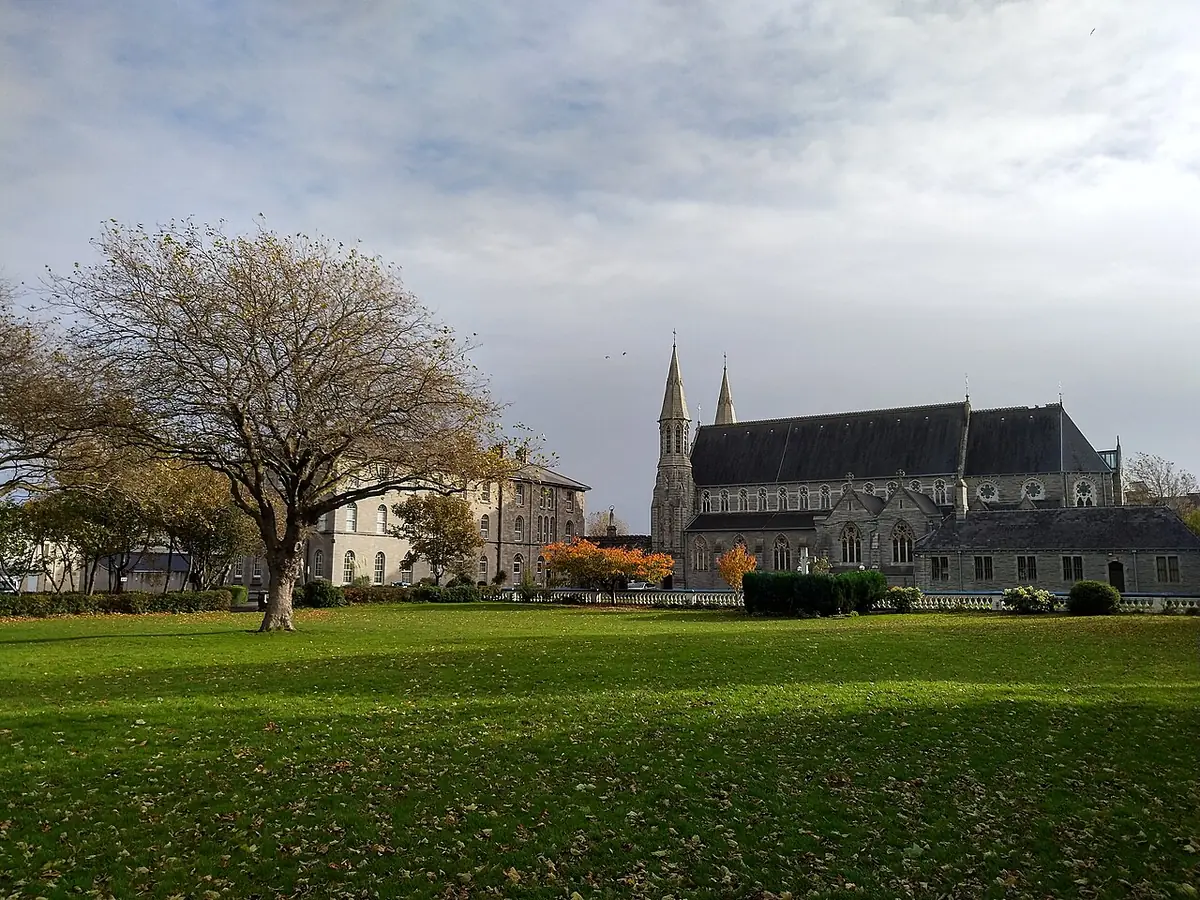
Open green space by the church grounds in Inchicore — Photo: Swifty4 · CC BY-SA 4.0 · Wikimedia Commons
The lease is signed at the end of a rigorous checking process that you need to understand thoroughly.
The difference between the properties offered for rent on the Dublin market comes down to very particular criteria of fittings and contractual flexibility. Landlords often tailor what they offer to the kind of tenant they are targeting, whether professionals on assignment or families settling in for the long term. Understanding both options lets you align your search with your own belongings and how you see your move. It is a decisive trade-off if you want to move in without unnecessary extra cost.
The furnished rental option
Often favoured by international newcomers, furnished lets include all the appliances, bedding and basic furniture you need to move straight in. This removes the heavy logistics of buying furniture or shipping it from abroad. On the other hand, the choice of available properties is narrower and the rent includes a premium for the equipment provided.
What it changesYou move in quickly with minimal logistics, but you accept a higher monthly rent and a particularly strict move-in inventory.
The unfurnished rental option
Rarer for small properties but more common for large family houses, unfurnished lets give you a blank canvas for your own decorating choices and furniture. Leases in this segment tend to run longer, offering greater residential stability that families appreciate. This alternative does, however, require a substantial upfront outlay to buy essential equipment and organise the move.
What it changesYou make the home entirely your own and may secure a more stable rent over the long term, at the cost of a significant initial financial and logistical effort.
The fundamental rule to understand before paying a deposit in Dublin
Once these precautions are covered, the transaction unfolds in a well-established order.
The rental process in Dublin is tightly regulated, but it demands constant vigilance from applicants. Given the pressure on the market, fraud attempts regularly target newcomers who are unfamiliar with local practice. Understanding the sequence of safety checks protects your money from the very first contact with agencies or landlords. Following these steps scrupulously guarantees that your future home is legitimate.
Finding an attractive listing on a specialist local platform.
Always check that the letting agency is accredited with the professional bodies, or confirm the real identity of a private landlord.
Refuse outright to pay any money in cash or by transfer to a third-party account before you have viewed the property in person.
Insist on seeing the BER (Building Energy Rating) certificate to assess the house's future energy consumption.
Go through the lease in detail to identify the specific clauses on rent control (Rent Pressure Zones) and review conditions.
Signing the lease securely and paying the regulated deposit directly into the designated account.
How a rental transaction in Dublin works, step by step
Sandymount Strand, the wide shoreline of Dublin Bay — Photo: Josi · CC BY-SA 4.0 · Wikimedia Commons
This rigour in carrying out each step completes your preparation for starting your new Dublin life with peace of mind.
Renting successfully in Dublin takes method and quick reactions in a market where properties are taken within days. Everyone involved, from the applicant to the agency and the regulators, plays a precise role in keeping the process secure. Knowing the sequence lets you anticipate the documents you will need and improve your chances when landlords make their choice. Here is the timeline of a successful move into the capital.
The applicantPutting together your references fileGather proof of identity, recent payslips, tax statements and reference letters from former employers or landlords in advance.
The letting agencyArranging viewings and shortlistingBook viewings as soon as listings go up and submit your complete file quickly through the relevant portals to make the shortlist.
The landlordReviewing applications and choosing a tenantAssess the financial guarantees and the strength of the references before officially offering the home to the chosen applicant.
The applicantPaying the depositPay the amount, usually equal to one month's rent, to officially secure the property, making sure you get an official, traceable receipt.
Both partiesSigning the lease and the inventoryDraw up a detailed inventory of the fittings agreed by both sides and sign a tenancy agreement governed by current Irish legislation.
The tenantRegistering the tenancy with the RTBCheck that the landlord officially registers the tenancy with the Residential Tenancies Board within the legal deadline.
Renting a house in Dublin: between urban opportunity and hard financial trade-offs
To size your move properly, you need to break down the real budget beyond the monthly rent figure alone.
Renting a house in Dublin means taking a close look at a property market marked by a long-standing structural imbalance between the supply available and growing demand from people working in tech and finance. The capital's residential neighbourhoods, whether traditional Victorian areas or newer estates in the outer suburbs, show sharply contrasting price trends depending on how close they are to public transport such as the DART or the Luas. This forces applicants to prepare their financial file thoroughly, including the solid guarantees local agencies often ask for before even considering a viewing.
Dublin's housing stock is made up mostly of terraced houses with typical red-brick façades, whose energy efficiency can vary enormously from one building to the next. When choosing a property, checking the energy performance certificate, known locally as the BER, is an essential step to avoid excessive heating bills in the winter months. On top of that, residential leases follow a specific regulatory framework, with Rent Pressure Zones (RPZ) strictly limiting annual rent changes to protect sitting tenants from unfair increases.
Beyond the contract itself, settling into a house in Dublin means accepting an island way of life in which changeable weather strongly shapes how you use outdoor space and run your household day to day. Families also need to plan for the crucial question of school catchment, since access to well-regarded schools is often tied to the exact location of your home within the parish or district concerned. Every decision about where to settle therefore has to be weighed against these practical constraints to ensure lasting residential stability in a city undergoing rapid change.
What real budget do you need to live in a house in Dublin?
O'Connell Street, the broad main avenue of central Dublin — Photo: CAPTAIN RAJU · CC0 · Wikimedia Commons
Once the finances add up, it is the practical shape of a typical day that reveals the true nature of life in Dublin.
Drawing up a budget for renting a house in Dublin cannot stop at paying the rent. Running costs include specific items such as the charge for waste collection, electricity and gas subscriptions whose prices remain volatile, and local charges for the upkeep of urban infrastructure. Households also need to set money aside for regular maintenance of the garden and the heating system, which often gets heavy use. A clear-eyed reading of these costs ensures no nasty surprises in your first months after moving in.
Indicative monthly rent ranges for a house in Dublin
Property type and location
Estimated monthly rent
Usual deposit
3-bedroom house in a residential suburb (e.g. Dundrum)
EUR 2,200 to EUR 2,800
1 to 2 months' rent
Terraced house near the centre (e.g. Ranelagh)
EUR 2,800 to EUR 3,800
1 to 2 months' rent
Large family house in a coastal area (e.g. Dún Laoghaire)
EUR 3,500 to EUR 5,000+
1 to 2 months' rent
The amounts shown reflect averages observed on Dublin's regulated rental market and depend closely on living space and energy rating.
Estimated regular monthly running costs for a household
Expense
Average monthly budget
What makes it vary
Electricity and gas
EUR 200 to EUR 350
Thermal insulation of the building and lifestyle
Broadband internet and phone
EUR 55 to EUR 85
Fibre technology and included TV options
Waste collection and other charges
EUR 30 to EUR 50
Volume of sorted waste and provider chosen
These fixed costs come on top of the gross rent and vary noticeably with the seasons, especially over the winter.
Pace of life and logistics: what does an ordinary Tuesday look like in Dublin?
Beyond this well-oiled routine, many things you will never see in a property brochure deserve your full attention.
Getting to grips with daily life in Dublin means factoring in the commuter flows that mark rush hour on the main roads and public transport lines. From the morning school run to shopping at neighbourhood stores, each part of the day has its own timing. The city's infrastructure, though dense, calls for constant planning to avoid congestion, whether you take the bus network or use the fast-growing cycle lanes. This timeline shows the practical reality of living in a house in the capital.
07:30Residential neighbourhood, leaving homeGetting ready in the morning at home and checking the heating before setting off for work.
08:15Local schoolDropping the children at the parish school, often within walking distance or reachable by a short, safe journey.
09:00Commute to work (Grand Canal Dock or the centre)Taking the Luas or the DART, or cycling along the city's historic canals.
13:00Lunch break in the business districtA break in a café or public space in the city centre, good for work conversations and quick errands.
17:30Heading home and the usual stopsStopping at local shops for fresh food for the evening and picking up the children.
19:00Evening at homeRelaxing as a family in the living room, handling household tasks and getting ready for the next day.
What the listing won't tell you: the hidden realities of Dublin housing
These technical subtleties lead straight to the most common disappointments newcomers face after six months.
Dublin's rental market is full of technical and planning subtleties that listing descriptions often leave out. Between managing the damp that comes with the east coast's maritime climate and the quirks of sound insulation in older buildings, every tenant needs to do their own investigating. Ignoring these factors when you sign the lease can quickly turn daily life into a constant source of administrative and practical headaches. A careful look at the real condition of the building is therefore absolutely essential before you commit.
The energy rating (BER) and its real impact
A poor BER rating translates straight into sky-high heating bills during the Irish winter months, putting a heavy strain on the household budget.
Careful management of ventilation and damp
Because of the oceanic weather, many older houses quickly develop condensation problems if occupants do not keep the ventilation systems well maintained.
The strict rules of Rent Pressure Zones (RPZ)
Although they protect tenants, these zones can complicate renewal negotiations and require a good grasp of the legal formula for rent indexation currently in force.
The complexity of on-street residential parking
Owning a car in some central or inner-suburban Dublin neighbourhoods requires specific permits from the council, which are allocated under strict quotas.
Internet connectivity that varies from street to street
Fibre rollout is uneven across the city's streets, which can be a serious handicap for people who regularly work from home.
After the move: what you discover six months after settling in Dublin
Given these demands, it is just as important to know whether this kind of housing plan really suits your profile.
Looked likeA charming period house full of character with a seemingly attractive rent.
Turned outA badly insulated energy drain with an outdated heating system running on expensive natural gas.
Would have caught itAlways ask to see the previous occupants' energy bills in detail before signing.
Looked likeA very quiet residential neighbourhood, ideally within walking distance of the main roads.
Turned outAn area clogged by morning through-traffic from commuters trying to avoid tolls and the main boulevards.
Would have caught itVisit at the exact morning and evening rush hours to gauge the real traffic situation.
Looked likeA simple rental process handled directly by a well-known local letting agency.
Would have caught itPut together a complete, checked digital file in advance, with every supporting document ready to send immediately.
Looked likeA private parking space included in the tenancy agreement with no special conditions.
Turned outA shared or cramped space that makes daily use of a family car particularly awkward and stressful.
Would have caught itTry out the size of the space with your own car during the final viewing of the property.
Not the right fit: who should seriously reconsider renting a house in Dublin?
It is time to pull all these factors together and work out whether you hold all the cards.
Dublin's rental market demands stable finances and a great deal of organisational flexibility, which does not suit every life path. Taking on the rental of a detached house brings maintenance responsibilities and high fixed costs that can weigh heavily on budgets during a career transition. Looking objectively at your personal situation helps you avoid major setbacks in a city where competition for housing remains particularly fierce.
The self-employed worker setting up a business
→Postpones moving into a detached house with a garden
Letting agencies' demands for several years of certified accounts block access to stable residential leases without an external financial guarantor.
The highly mobile professional who wants total flexibility
→Opts for a furnished apartment in the city centre or co-living
House leases require long-term commitments and involve the heavy logistics of furniture and looking after outdoor space.
The household on a very tight budget with no margin for error
→Looks at outlying towns with better rail connections
Energy costs and commuting from the outer suburbs quickly swallow up the supposed savings made on the gross rent.
Conclusion: are you fully ready to take the step and settle in Dublin?
Settling into a house in Dublin is a defining decision that leaves no room for a vague approach. Between the real prices on the rental market, the administrative complexity of applications and a careful analysis of energy costs, every step calls for constant clear-sightedness. If you have weighed the impact of the weather on your daily life, factored in the reality of commuting times and built up a financial cushion large enough for the unexpected, then your plan is on a solid and well-considered footing.
The Irish capital offers a dynamic and welcoming place to live, provided you accept its urban and economic rules of the game. The families and professionals who settle in successfully are those who approach the transition pragmatically, putting proximity to schools and transport ahead of the mere charm of a façade. Take the time to view several properties at key times of day, talk to local residents and check every technical detail of the lease before you sign.
Ultimately, a successful move to Dublin depends directly on how well you prepare beforehand and how readily you adapt to local particularities. By asking landlords the right questions and insisting on transparency about the energy performance of homes, you give yourself every chance of enjoying your Irish experience in the greatest possible peace of mind and comfort.
Related questions
How long does it usually take to find a house to rent in Dublin?
Finding a house to rent in Dublin generally takes between two and six weeks of intensive searching, because of strong competition and a chronic shortage of family homes on the market.
Which documents do you need to put together a valid rental application in Ireland?
You will need proof of identity, recent payslips, a reference letter from your previous landlord and a letter from your current employer confirming your financial situation.
How do Rent Pressure Zones (RPZ) work in Dublin?
Rent Pressure Zones strictly limit annual rent increases, capping the maximum rise allowed according to the consumer price index and the exact location of the property.
How much deposit do landlords usually ask for?
The standard deposit is generally equal to one month's rent, although some landlords or agencies may ask for the equivalent of two months depending on the applicant's risk profile.
Can you rent a house in Dublin without being there in person?
Renting without viewing in person is strongly discouraged because of the higher risk of online fraud, even though some agencies now offer certified virtual viewings.
What is a BER certificate and why does it matter so much?
The BER certificate rates a building's energy performance on a scale from A to G; it matters because it directly determines how much your winter heating bills will be.
Which neighbourhoods are most sought after by families in Dublin?
Residential neighbourhoods such as Ranelagh, Rathmines and Dundrum, as well as the coastal areas of Dún Laoghaire, are particularly popular for their well-regarded schools and green spaces.
How do you pay for household waste collection?
Rubbish collection is run by private companies rather than the council; residents take out a subscription whose price varies with the volume and weight of the waste collected.
Are pets accepted in Dublin rentals?
Whether pets are accepted is entirely at the landlord's discretion, and it is essential to get explicit written permission before moving in.
What are the main hidden costs to plan for when moving in?
On top of rent and the deposit, plan for the cost of connecting energy meters, possibly buying furniture if the property is let unfurnished, and local service charges.