Settling in the city-state means getting to grips with a highly structured property market and its own contractual rules. This practical guide takes you step by step through choosing between neighbourhoods, getting on top of the real costs of renting and moving in with complete peace of mind.
Get the app
What nobody tells you.
Real prices, hidden costs and the traps to check before you commit.
What you really get when you rent an apartment in Singapore
Scroll
What you really get when you rent an apartment in Singapore
Settling in the city-state means getting to grips with a highly structured property market and its own contractual rules. This practical guide takes you step by step through choosing between neighbourhoods, getting on top of the real costs of renting and moving in with complete peace of mind.
Written by the ting.ad editorial team ·
Singapore in Street View: drag to look around.
To work out which kind of setting suits you best, you need to look at how your daily routine fits the different types of neighbourhood.
Renting an apartment in Singapore is not just a matter of finding a roof in the tropics. It means entering a tightly regulated system in which every square metre of the city is optimised. Between gated private developments known as condominiums and the public housing managed by the HDB, daily life varies enormously depending on the legal status of the property you live in. The trade-offs concern the indoor floor area as much as access to the city-state's shared facilities.
Indoor spaces that are often compactvsShared facilities worthy of a grand hotel
Developers shrink living spaces to keep overall prices within reach, shifting the comfort onto infinity pools, gyms and landscaped outdoor areas shared within the development.
Strict regulation of leases and rentsvsFull legal certainty and rare transparency
Singapore's rental market runs on standardised contracts and rigorous registration rules. Disputes between landlords and tenants are extremely rare thanks to how predictable the regulatory framework is.
Housing costs among the highest in the worldvsVirtually no infrastructure failures or administrative delays
Rents reflect how scarce land is on the island, but that financial outlay buys flawless water, electricity and air-conditioning networks and public transport linked directly to the developments.
Does this place fit your way of life?
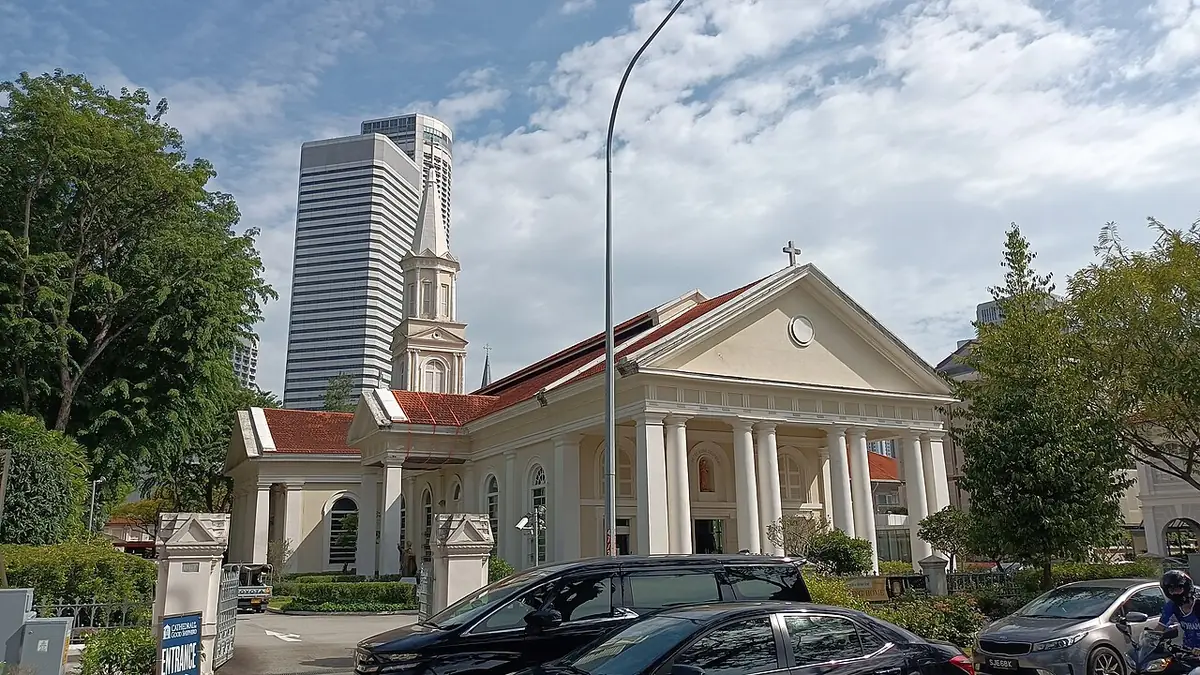
Heritage and modern Singapore side by side — Photo: GoAheadFan95 · CC BY-SA 4.0 · Wikimedia Commons
Leaving your home country to settle here means weighing up the cultural and practical differences from the moment you sign the lease.
The layout of the city changes everything depending on whether you arrive alone on a short assignment, as a working couple or with school-age children. Each profile has to choose between being right next to the central business district and the residential calm of outlying areas linked by the MRT network.
Choosing to be at the heart of the city
You want to cut your daily commute to a minimum so you have more free time. Renting a studio or a small apartment near Raffles Place or Tanjong Pagar drops you straight into the energy of the city. The concierge services built into the developments make up for the lack of a traditional home life, while neighbourhood shops open late in the evening make it easier to manage a demanding working life.
The option of green residential neighbourhoods
Your top priority becomes access to schools, open spaces and family sports clubs. Areas such as Bukit Timah or the surroundings of the Botanic Gardens offer more spacious apartments, often with three bedrooms, surrounded by greenery. The pace of life is calmer there, with walking, cycling or dedicated school buses to the campuses.
The alternative of the city fringe and historic neighbourhoods
You would rather discover authentic Singaporean culture by settling in areas such as Tiong Bahru or Katong. Apartments there often have more architectural character, inherited from past decades. Daily life revolves around local hawker centres and small independent cafés, giving you more financial breathing room without sacrificing the quality of the urban environment.
Living here when you arrive from abroad: what changes completely
Once you have taken these ground rules on board, choosing your area becomes the decision that shapes your whole move.
The legal and practical reference points you built up in the property market back home do not apply in the tropics. From condominium service charges to the taxation of leases and dealings with local estate agencies, tenants discover a highly professional ecosystem that has no patience for amateurism.
From abroad
In many countries, the law strongly protects sitting tenants and tightly caps rent increases.
Singapore
In Singapore, leases are signed for fixed terms of one or two years and renegotiated at market rates each time they expire.
You need to anticipate possible rent swings at renewal and keep some room in your budget to absorb increases driven by demand.
From abroad
Back home, the move-in and move-out inspections are often a joint record that both sides argue over.
Singapore
In Singapore, the clause requiring the property to be returned in its original state (good tenant condition) is enforced with absolute rigour.
It is essential to have even the smallest defect recorded when you move in and to hire approved contractors for the mandatory professional end-of-lease cleaning in order to get your deposit back.
From abroad
Back home, small routine maintenance jobs are usually handled by the tenant as they come up.
Singapore
In Singapore, the tenancy agreement usually includes a mandatory maintenance clause for the air conditioning.
You must take out a quarterly servicing contract for the air-conditioning units, or risk seeing your deposit cut at the move-out inspection for premature wear.
From abroad
In many countries, the security deposit is capped by law at one or two months' rent.
Singapore
In Singapore, the general rule is one month's deposit for each year of the lease (so two months for a standard two-year lease).
The cash you need on hand when you move in is structurally higher, on top of agency fees and the first utility payments.
Which neighbourhood should you choose to settle in?
To turn your rental plans into reality, you need to test your expectations against the budget realities of the local market.
The island is divided into official regions known as the CCR (Core Central Region), RCR (Rest of Central Region) and OCR (Outside Central Region). Each zone meets specific criteria of budget, commuting time and everyday cultural atmosphere.
Orchard / River Valley (Districts 9 and 10)
Constant bustle at the foot of luxury residential towers, between giant shopping malls and avenues lined with tropical trees. The noise of city traffic blends with the hum of air conditioners, in a spotless and highly secure setting.
Suits
Single professionals or couples without children working in finance who want to live within walking distance of their office or of places to go out.
Trade-off
Rents per square metre among the highest on the market and apartments that are often smaller for the same budget.
Tiong Bahru / Outram (District 3)
A unique retro charm of low-rise Art Deco buildings, shaded pedestrian lanes and trendy cafés alongside traditional markets. The atmosphere is more human and relaxed than at the heart of the business district.
Suits
Lovers of historic architecture, creative types and residents looking for a neighbourhood on a human scale with a strong cultural identity.
Trade-off
An older housing stock where some apartments need careful checks on the condition of the plumbing and electrics.
East Coast / Katong (District 15)
A constant sea breeze, the sea and coastal parks right on your doorstep, combined with colourful Peranakan heritage. The pace of life is firmly geared towards outdoor activities, cycling and relaxed Sundays.
Suits
Families and fans of water sports or running looking for an airy setting without being completely cut off from the city.
Trade-off
A greater distance from the financial centre, which means taking buses or the future MRT line for the morning commute.
How much does renting an apartment here really cost?
Beyond the money, condominium law defines precisely what kind of property you are able to occupy.
Singapore's rental market is governed by supply and demand on a small island territory. Prices vary widely depending on the age of the development, how close it is to MRT stations and whether it has shared facilities such as a pool or tennis court.
SingaporeTo rentApartmentestimate
Median price / m²SGD 49Half the apartments sell below this
Median priceSGD 4.2kthe average is 14% higher — a few very large properties pull it up
Most common2 bedrooms34 % of listings
Average size90 m²
By number of bedrooms
Bedrooms
Share of market
Avg price
Price / m²
Avg size
1
22 %
SGD 2.81k
SGD 56 +8 %
50 m²
2most common
34 %
SGD 3.9k
SGD 52
75 m²
3
32 %
SGD 5.19k
SGD 49 −6 %
105 m²
4
12 %
SGD 6.7k
SGD 48best value / m²
140 m²
Each row is an average, compared against the area average of SGD 52 / m². These are indicative estimates of a typical local market, not a measured sample of live listings. Check current listings before relying on them.
What you can actually hold or occupy as an expatriate
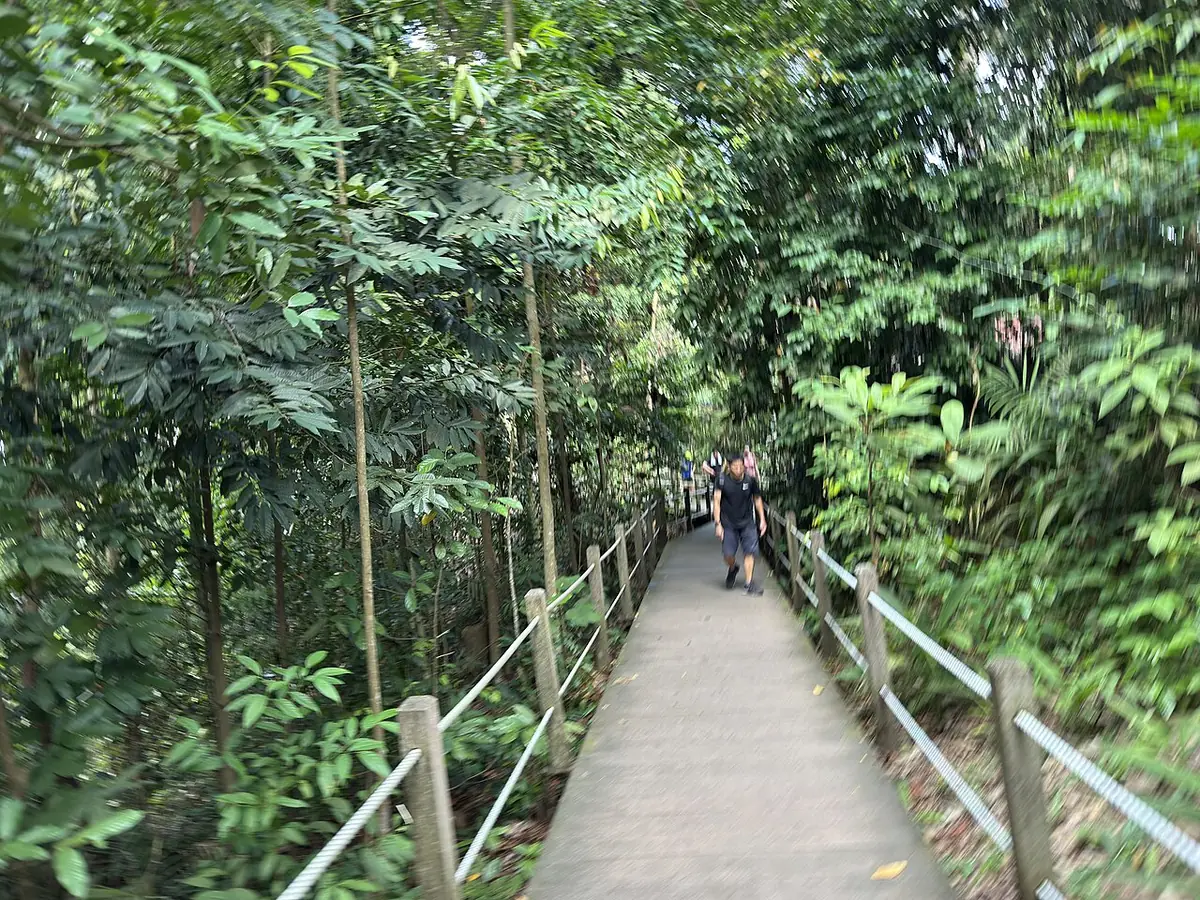
A quiet forest walk in Bukit Timah Nature Reserve — Photo: LN9267 · CC BY-SA 4.0 · Wikimedia Commons
Signing a tenancy agreement follows a strict chronological process that should never be short-circuited.
The distinction between buying and renting is fundamental in the city-state, but even as a tenant, the status of the landlord (private individual or institutional investor) shapes your rights. Understanding these distinctions saves you from unpleasant surprises when signing a residential lease.
Renting in a private condominium
This is the most common option for expatriates. You rent an apartment within a development managed by a management corporation of owners. You enjoy free, regulated access to all the development's sports and leisure facilities with no management costs of your own.
What it changesYou get a standardised, secure level of comfort, while accepting the condominium's strict house rules on noise, pets and the use of common areas.
Renting subsidised public housing (HDB)
Around 80% of Singaporeans live in public housing built by the Housing & Development Board. Renting out these flats by private owners is subject to extremely strict ethnic and nationality quotas, as well as a minimum occupation period by the owner beforehand.
What it changesAlthough often more affordable and located in lively neighbourhoods with co-located amenity centres, these properties call for rigorous administrative checks with the authorities beforehand to confirm that you are legally eligible.
The rule to understand before you pay a holding deposit
To manage your move without stress, every administrative step needs to be planned on a precise timetable.
In Singapore's rental system, speed is dictated by how few properties are available. However, committing too quickly without checking the fundamental clauses exposes the tenant to outright financial losses or complicated contractual dead ends.
You spot an apartment that matches your criteria and want to secure it ahead of other potential applicants.
Issuing the Letter of Intent (LOI): you set out your rent offer in writing, together with a cheque or bank transfer for a Good Faith Deposit, usually equal to one month's rent.
Holding the property off the market: the landlord signs the LOI, which legally commits them to withdraw the property from the rental market and stop showing it while the final contract is being negotiated.
Drafting the Tenancy Agreement (TA): the lawyers or estate agents write in the specific clauses that were negotiated (diplomatic clause, maintenance of appliances, responsibility for minor repairs).
Both parties sign the final contract, the balance of the security deposit is paid and the keys are officially handed over for the move-in inspection.
How a rental transaction unfolds, step by step
Moving into an apartment in Singapore follows a well-rehearsed administrative routine in which each party plays a specific role. From the first viewing to the handover of the keys, the whole process usually takes between two and four weeks.
The tenantViewing and choosing the propertyYou view several properties with an agent licensed by the CEA (Council for Estate Agencies) to identify the right apartment.
The tenantIssuing the Letter of IntentYou draft and submit the LOI with the good faith deposit to reserve the property and set out your conditions.
The landlordAcceptance and countersignatureThe landlord accepts the terms of the LOI, places the deposit in an escrow account and commissions the drafting of the full contract.
Both partiesSigning the Tenancy AgreementA careful review of the contract clauses, in particular the diplomatic clause allowing the lease to be ended if you leave the country.
The utility providerConnecting the metersTransferring or opening electricity, water and gas accounts (SP Group) and signing up for high-speed internet.
The inspector or agentJoint inventory inspectionA thorough inspection of every room, with photographs of every mark or defect to avoid any future dispute.
The tenantActually moving inCollecting the keys, moving your belongings in and starting the mandatory quarterly air-conditioning servicing contract.
Apartment or house in Singapore: how do you choose the right kind of home?
Once you have settled on the type of property, you need to test your ambitions against the financial realities of Singapore's rental market.
In Singapore, the choice between a condominium apartment, usually called a condo, and a house essentially comes down to a trade-off between location and living space. Condos make up the vast majority of the rental stock available to expatriates and urban professionals, offering standardised amenities that almost always include swimming pools, gyms, tennis courts and round-the-clock security. This option is ideal for those who prioritise being right next to public transport and the business hubs of the Central Business District, cutting their daily commute dramatically.
On the other hand, houses and so-called landed property are scarce and extremely expensive, as local law heavily restricts access to freehold land ownership for non-citizens. Renting a semi-detached house or a townhouse in quieter residential areas such as Serangoon Gardens or Bukit Timah means accepting a longer distance from MRT stations and a greater reliance on buses or a car. In return, the extra space, a private garden and having no neighbours directly above or below you transform everyday life, particularly for families with young children or pets.
The total cost of owning or renting is not limited to the headline rent shown on property platforms. Condominium service charges, which may or may not be included depending on the lease, weigh heavily on a condo budget, while the upkeep of a house, its garden and its central air conditioning generates significant recurring bills. What is more, the convenience condominiums offer on maintenance, where the managing agent looks after all the common areas and structural faults, contrasts sharply with the self-reliance a house demands, where every repair is the direct responsibility of the occupant or the subject of tough negotiation with the landlord.
It is also worth considering how urban density will affect your lifestyle in Singapore. Living in a thirty-storey residential tower encourages a vertical neighbourhood life, marked by chance encounters in the lifts or by the pool, but can also mean unavoidable noise from having so many neighbours close by. By contrast, settling in an enclave of low-rise houses brings a welcome sense of seclusion from the constant bustle of the city-state, while requiring cultural and practical adjustment to a wilder tropical environment, with local wildlife close at hand and less sound insulation from the outside.
What total monthly budget should you plan for to rent and live in an apartment in Singapore?
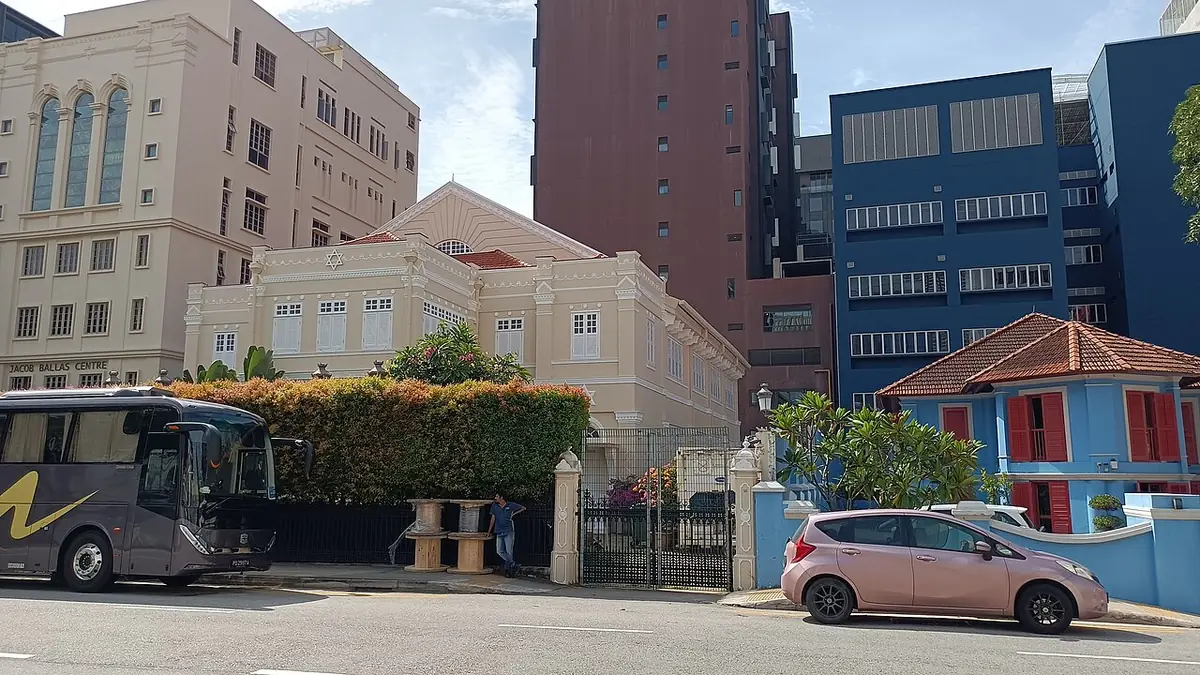
Old shophouses and new towers share this Singapore street — Photo: GoAheadFan95 · CC BY-SA 4.0 · Wikimedia Commons
Beyond the budget calculations alone, daily reality shows itself in the string of practical constraints that make up a typical Tuesday.
Drawing up a budget for an apartment in Singapore means looking well beyond the rent shown in listings. The local rental market runs on strict rules in which stamp duty, agency fees and utilities all add to the initial bill. You therefore need to factor in every one of these components from the first month to avoid financial dead ends in an economy where the cost of living is among the highest in the world.
Indicative monthly rent ranges by property type in Singapore
Type of home
Outlying areas (OCR)
City-fringe areas (RCR)
City centre and surroundings (CCR)
Studio / 1 bedroom
SGD 2,500 to 3,500
SGD 3,500 to 4,800
SGD 4,800 to 7,000
2 bedrooms (apartment)
SGD 3,500 to 5,000
SGD 5,000 to 7,500
SGD 7,500 to 11,000
3 bedrooms or more
SGD 4,500 to 7,000
SGD 7,000 to 10,500
SGD 11,000 to 18,000+
These amounts exclude charges and can vary considerably depending on the age of the building, whether it has been recently renovated and how close it is to an MRT station.
Recurring and additional costs of renting an apartment
Expense
Estimated average monthly amount
Comments and conditions
Electricity, water and gas (SP Group)
SGD 250 to 500
Heavily affected by constant use of air conditioning, which is essential in the tropical climate.
High-speed internet and phone
SGD 60 to 120
Very stable gigabit fibre subscriptions, usually taken out for 24 months.
Air conditioning (quarterly servicing)
SGD 100 to 180
A frequent contractual obligation in leases to keep the split units in good condition and prevent humidity-related breakdowns.
Home insurance
SGD 30 to 70
Covers tenant's risks, theft, water damage and the occupant's personal liability.
Condominium service charges are in principle paid by the landlord, but tenants should make sure that routine upkeep of the fittings inside the home remains their responsibility only within the legal limits of the contract.
What does an ordinary Tuesday actually look like when you rent an apartment in Singapore?
This apparent smoothness should not hide the less visible aspects that estate agencies deliberately leave out.
Moving into an apartment in Singapore profoundly changes your body clock and your daily movements. The formidable efficiency of the transport infrastructure contrasts with demanding working hours and the need to cope with tropical weather. Following an ordinary day shows how much the location of your home affects your quality of life and your chronic tiredness.
07:15Apartment - waking up and the air conditioningSwitching off the air-conditioning units that have run all night to fight the humidity, opening the curtains to enjoy the tropical morning light and checking the weather.
08:00Local MRT stationA five to ten-minute walk under canopies or covered walkways to the nearest MRT station, avoiding the frequent and sudden torrential downpours.
08:30MRT trainThe commute in an air-conditioned, clean and extremely punctual train, among a quiet, disciplined crowd checking work emails on their smartphones.
12:30Neighbourhood hawker centreLunch break at a popular open-air food centre, enjoying an affordable local dish while large ceiling fans keep the air moving.
18:30Condominium or shopping mall supermarketLast-minute shopping in a supermarket built into the base of the MRT station, making it easy to pick up imported fresh produce before heading home.
20:00Condo pool or gymUnwinding at the end of the day in the development's shared facilities to shake off the stress of the working day in warm water under a night sky lit up by skyscrapers.
22:00Inside the apartment - night-time quietTurning the quiet bedroom air conditioning back on to ensure restful sleep despite the heat that lingers outside through the Singapore night.
What property listings consistently fail to mention about apartments in Singapore
These omissions directly threaten newcomers' peace of mind, paving the way for bitter regrets after a few months in the property.
Singapore's rental market is known for extremely polished visual presentation on online portals, but wide-angle photographs and glowing descriptions often hide restrictive structural realities. Understanding these blind spots lets you approach viewings with a sharp critical eye and avoid disappointment once the two-year lease is signed.
The real orientation to the sun and heat exposure
A west-facing apartment takes direct, intense sunlight all afternoon, turning the living room into an oven and sending the air-conditioning electricity bill soaring. Agents rarely fail to praise the brightness, without mentioning that the light comes with a stifling heat that is hard to counter.
Construction sites nearby (URA Master Plan)
Singapore is one vast permanent building site where new MRT lines and residential towers keep springing up. An open view today can turn within eighteen months into a noisy, dusty site working seven days a week from eight in the morning.
The unseen presence of tropical pests
Because of the constant humidity and lush vegetation, flying cockroaches, pharaoh ants and geckos are part and parcel of the local ecosystem. Lower floors near parks or drains are particularly prone to these intrusions if the building has gaps in its sealing.
The hidden age of household appliances
Kitchens in older apartments are often fitted with ineffective extractor hoods and ageing ovens, and replacing them often falls to the tenant if the repair cost is below the threshold set in the lease's minor repair clause.
Structural noise from transport infrastructure
An apartment supposedly in a quiet spot may in fact suffer the dull, continuous vibrations of elevated MRT lines or the constant flow of lorries on the raised expressways (PIE, CTE), nuisances you will not notice during a quick viewing in the middle of the day.
Which misjudgements do people bitterly regret after six months in their apartment?
Faced with these contractual and practical pitfalls, some people would be better off simply giving up on the idea altogether.
Looked likeA financial bargain, with rent well below the market average in an up-and-coming outlying neighbourhood.
Turned outA logistical trap cut off from MRT stations, forcing a daily mix of crowded buses and expensive taxis that wipes out the initial saving on the rent entirely.
Would have caught itAlways check the real door-to-door journey time to your workplace at rush hour before signing, rather than relying on the straight-line distance.
Looked likeA charming older apartment with authentic colonial character, solid wooden floors and high ceilings.
Turned outA poorly insulated heat trap, overrun with mosquitoes because of warped wooden window frames and plagued by recurring plumbing failures.
Would have caught itFavour developments built after 2000, with modern double glazing and recent, easy-to-control air-conditioning systems.
Looked likeA two-year lease signed in a hurry without negotiating an early termination clause (Diplomatic Clause).
Turned outAn unexpected work transfer or a sudden change in personal circumstances that leaves the tenant stuck, liable for all the remaining rent or losing the deposit.
Would have caught itInsist on including a clear diplomatic clause allowing the lease to be ended after twelve months with two months' notice.
Looked likeA quick, superficial move-in inspection carried out with the landlord without noting the hairline cracks.
Turned outUnfair charges from the landlord when the keys are returned, blaming the tenant for pre-existing damage and keeping the entire security deposit.
Would have caught itPhotograph every defect, scratch or stain on the walls and furniture on moving-in day and record it all in a written report signed by both parties.
Who should not rent their own apartment in Singapore and should rethink their plans?
After this clear-eyed look at the constraints and costs, the time has come to decide once and for all whether you are ready to take the plunge.
Singapore's rental market does not suit every mobility profile or every financial situation. Insisting on renting your own apartment in the city-state without weighing its structural constraints inevitably leads to financial and psychological exhaustion. Some working people and families would do better to explore more flexible or less demanding alternatives.
The young professional on probation or on an assignment of less than twelve months
→To give up on renting a traditional unfurnished or furnished apartment.
Standard leases in Singapore impose a rigid minimum term of two years, and landlords flatly refuse short commitments, which makes flat-sharing or serviced residences far more sensible.
The tight budget hoping to recreate a European level of comfort at low cost
→To turn to coliving or to share a large apartment.
Rents in Singapore have reached historic highs, and wanting a home of your own in the centre on a limited budget means accepting cramped, run-down spaces or locations that are far too remote.
The digital nomad with fluctuating income and no local contract
→To settle temporarily in neighbouring Southeast Asian countries (Malaysia, Thailand, Indonesia).
Singapore estate agencies demand stringent financial guarantees, including proof of local income and a proper work visa (Employment Pass), which automatically rules out freelancers without an established legal structure.
The family with unsubsidised education and housing costs
→To look very carefully at the overall cost before signing the residential lease.
Between the sky-high fees of international schools and the local cost of living, adding a high rent for a large apartment can swallow more than half the household's income, creating an unacceptable financial vulnerability.
So, are you really ready to take the plunge and sign a lease in Singapore?
Moving into an apartment in Singapore is a decision that goes far beyond the administrative act of signing a tenancy agreement. It means accepting an ultra-urban, highly structured way of life, in which the city-state's smooth logistics and legendary safety come at a high price in the form of constant financial pressure. If you have accepted that every square metre comes at a premium and that tropical comfort demands unwavering budget discipline, then you have the maturity needed to approach this market calmly.
The success of your move will depend above all on your ability to resist the lure of glossy marketing images and to analyse every clause of the lease methodically. Distance from transport, the heat exposure of the home, future construction sites and anticipating additional costs are not trivial details: they are the pillars that will decide whether your daily life in Singapore is a source of fulfilment or a constant cause of frustration. Take the time to view several properties, compare neighbourhoods and refuse to be rushed by a market under pressure.
Ultimately, renting in Singapore is like investing in a unique life experience at the heart of Southeast Asia, an unrivalled professional and cultural springboard for anyone who knows how to get the right information. If your plans stand up to the hard figures we have set out, and if your finances can absorb the ups and downs of the local cost of living without flinching, you are ready to sign. All that remains is to contact a licensed agent and open this new Singapore chapter with your eyes wide open.
Related questions
What documents are required to rent an apartment in Singapore as an expatriate?
Landlords and estate agencies routinely ask for a valid passport, an official work visa (Employment Pass or Dependant's Pass), a letter from your employer confirming your salary and role, and a security deposit that is usually equal to one month's rent for each year of the lease.
What is the diplomatic clause in a Singapore tenancy agreement?
It is an essential clause that protects the tenant if they have to leave Singapore unexpectedly, for example after a redundancy, a work transfer or the cancellation of a visa. It allows the tenant to end the lease unilaterally after twelve months of occupation by giving two months' written notice, with no financial penalty.
Is the security deposit paid to the landlord easy to get back at the end of the lease?
Getting the full deposit back depends on the move-out inspection. If the home is handed back clean, with no damage beyond normal wear and tear and with all appliances in working order, the landlord should return it within a few days, although disputes over deductions for cleaning costs do sometimes arise.
Do you have to go through an estate agent to rent an apartment?
Although it is technically possible to deal directly with landlords through online platforms, using a licensed estate agent is strongly recommended for newcomers. The agent protects your interests, drafts the contract to CEA (Council for Estate Agencies) standards and attends the inspections with you.
What agency fees should you expect when signing a tenancy agreement?
In Singapore, agency fees generally amount to one month's rent for a two-year lease when the agent represents the tenant for properties below the regulatory monthly rent threshold, or are paid by the landlord when the rent exceeds certain market ceilings. It is worth clarifying this from the very first contact.
How do you pay electricity and water bills in Singapore?
Almost all water, electricity and gas services are handled centrally by a single operator, SP Group. Tenants must open an account in their own name when they move in, pay an initial deposit of around SGD 100 to 200, and then settle a monthly bill based on their actual consumption.
Can you negotiate the rent shown in property listings?
In a tight rental market like Singapore's, the room for negotiation is often very limited, especially for properties in the most sought-after central districts. Even so, for apartments that have been empty for several weeks or for long leases, a modest reduction of 3 to 5% is sometimes possible.
What is the minor repair clause and how does it affect the tenant?
It is a contractual provision that sets a cost threshold below which the tenant must pay for routine repairs to the home's fittings and appliances (for example SGD 150 or 200 per repair). Above that amount, the cost falls entirely on the landlord.
Which Singapore neighbourhoods are best for a first apartment move?
Central districts (CCR) such as Orchard, River Valley or Tanjong Pagar suit working people who want to be close to the office, while the city-fringe areas (RCR) such as Queenstown, Tiong Bahru or Bishan offer an excellent balance between price per square metre, green space and access to the MRT.
Are apartments in Singapore rented furnished or unfurnished?
The market offers both: 'partially furnished' homes usually include air conditioning, light fittings, curtains and the main kitchen appliances, while 'fully furnished' properties also come with living room and bedroom furniture, a convenient option but often a more expensive one.
Property review of ting
No ting properties in Singapore yet
Be the first — share it on ting and it shows up right here.