Buying a residential property in the city-state of Singapore means reconciling an absolute scarcity of land with a strict regulatory framework. This guide sets out the financial, geographical and legal mechanics you need to understand to put your project together with a clear head.
Get the app
What nobody tells you.
Real prices, hidden costs and the traps to check before you commit.
What do you really gain by investing in a house in Singapore?
Scroll
What do you really gain by investing in a house in Singapore?
Buying a residential property in the city-state of Singapore means reconciling an absolute scarcity of land with a strict regulatory framework. This guide sets out the financial, geographical and legal mechanics you need to understand to put your project together with a clear head.
Written by the ting.ad editorial team ·
Valuation House Singapore in Street View: drag to look around.
Understanding this basic tension between scarcity and constraint helps you judge whether this kind of property genuinely fits the way you live.
Buying a single-family house or landed property in Singapore is a paradox unlike anything else on the global market. On one hand, the absolute scarcity of land in this densely populated city-state underpins long-term growth in value. On the other, the regulatory constraints placed on foreign buyers and the restrictions on resale call for a careful look at what really drives returns, beyond appearances.
An absolute scarcity of landvsDrastic restrictions on access
Less than five per cent of the total housing stock is landed property that non-citizens can buy or sell, which concentrates enormous structural demand on a supply locked in place by geography and public planning.
Complete political and monetary stabilityvsHistorically low gross rental yields
Strong institutions and a robust Singapore dollar protect capital well against regional inflation, but rents rarely exceed two per cent a year because purchase prices are extremely high.
An exceptional residential settingvsOff-putting maintenance and tax costs
Enjoying large leafy plots and complete calm in neighbourhoods such as Bukit Timah means accepting high transfer duties for foreigners and heavy maintenance costs driven by the tropical climate.
Does Singapore suit your pace of life and your long-term wealth goals?
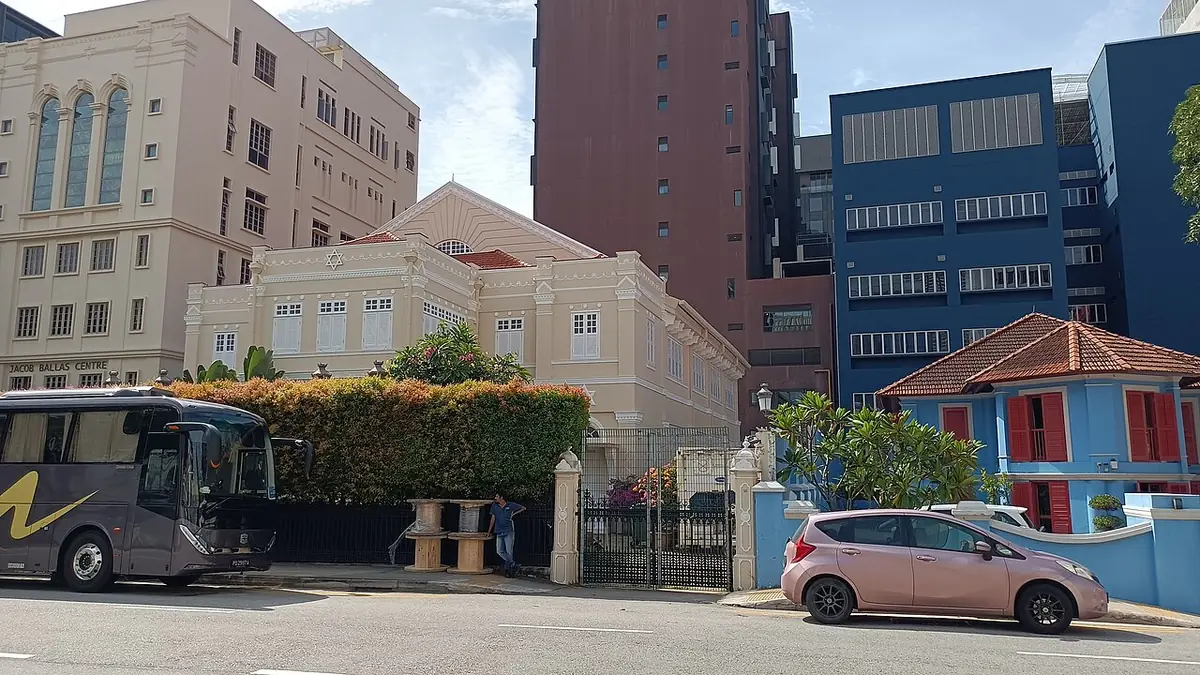
Old shophouses and new towers share this Singapore street — Photo: GoAheadFan95 · CC BY-SA 4.0 · Wikimedia Commons
Moving from the perspective you are used to back home to the reality of Singapore means measuring precisely the cultural and practical breaks that lie ahead.
Living in a house in Singapore is a radically different experience from high-rise condominium living or a suburban house back home. Depending on whether you prioritise being close to the business district, architectural independence or long-term family peace and quiet, the equation changes completely. Every type of buyer has to weigh their day-to-day expectations against the island's physical and regulatory realities.
A long-term family home
Choosing a detached house means accepting strong roots in quiet residential areas that are sometimes some way from the purely business districts. You get a large living space, rare on the island, ideal for raising children in a safe and green environment. In return, the day-to-day running of the house, its tropical garden and relations with the neighbours demand a significant personal commitment that many people underestimate at first.
A pure wealth strategy
Landed properties follow market logic completely separate from apartment blocks, because only citizens can buy certain types of land without special approval. For a permanent resident or an eligible investor, this is the ultimate store of value against the ups and downs of Asian economies. However, these assets remain illiquid because of the sums involved and the small pool of buyers approved by the authorities.
Vertical versus horizontal
Choosing between a central penthouse and a townhouse on the edge of the central districts depends directly on how you value your time and your commute. The penthouse offers built-in services, managed security and an immediately central location, while the house gives you outright ownership of the land and total privacy. The decision is less about the price per square metre than about the way of life you want to adopt day to day in the tropics.
Living here when you arrive from abroad: what changes radically
Once these structural differences are understood, choosing the neighbourhood becomes the geographical decision that shapes your daily life the most.
Buying and living in a house here follows administrative, climatic and social codes very far from the standards many buyers know back home. From the way urban space is managed to your dealings with public services and regulators, every stage of settling in requires you to set aside your usual reference points and adopt local rigour.
From abroad
A fluid property market framed by well-established consumer protection laws
Singapore
A market tightly regulated by the state, with deterrent taxes for non-residents
You need to factor in very heavy additional purchase costs from the start, notably the Additional Buyer's Stamp Duty, which radically change the return calculation for your investment.
From abroad
Distinct winters and mild summers that call for conventional insulation
Singapore
A permanent equatorial climate with constant heat and humidity
Your house's design, natural ventilation, orientation and protecting materials against mould become critical to both your finances and your comfort.
From abroad
Land often owned outright and planning rules set by the local council
Singapore
A complex mix of 99-year leases, 999-year leases and freehold
You must check the remaining length of the land lease before signing anything, because the discount on a property whose lease is nearing its end can be extremely steep.
From abroad
Local paperwork handled by notaries whose fees are regulated
Singapore
A British-inspired legal system in which specialist law firms run every transaction
Legal advice is essential to audit the title and clear any public or private easements attached to the land.
Which neighbourhood should you target to settle in Singapore?
With these geographical markers in place, it is essential to face up to the financial reality of the sums involved in this market.
Singapore's geography reads as a mosaic of districts with very distinct atmospheres, from the green hills of the interior to the more relaxed coastal enclaves. Each area has its own social micro-climate, schools and access constraints, which are worth mapping precisely before you view a single property.
District 10 (Bukit Timah, Holland Village)
A peaceful residential haven set among lush greenery, very popular with international families.
Suits
Buyers who want to be near the best international schools and enjoy complete calm while staying close to the centre.
Trade-off
Some of the highest prices per square metre on the island and roads that can be congested at rush hour.
District 15 (East Coast, Joo Chiat)
A laid-back seaside atmosphere mixing striking cultural heritage with lively neighbourhood life.
Suits
People who favour an outdoor lifestyle, water sports and a very rich local food scene.
Trade-off
Direct exposure to noise from expressways and from flight paths close to the airport.
District 11 (Newton, Novena)
An upmarket urban compromise combining leading medical facilities with quick access to the central business district.
Suits
Demanding professionals who refuse to spend hours commuting to an office in the city centre.
Trade-off
Detached houses are even rarer here, often replaced by low-rise residential developments.
How much do you really need to budget to buy a property here?
Beyond these raw figures, the legal structure of your ownership defines exactly the nature and durability of your investment.
The landed property market in Singapore is defined by extremely high entry thresholds, reflecting the physical scarcity of space in this city-state. Far from national averages that include apartments subsidised by the Housing and Development Board, the private freehold residential segment follows its own price logic, underpinned by the country's economic strength and the scarcity of properties available for sale.
SingaporeFor saleHouseestimate
Median price / m²SGD 15,190Half the apartments sell below this
Median priceSGD 2.52mthe average is 14% higher — a few very large properties pull it up
Most common2 bedrooms44 % of listings
Average size158 m²
By number of bedrooms
Bedrooms
Share of market
Avg price
Price / m²
Avg size
2most common
44 %
SGD 2.1m
SGD 15,990
131 m²
3
41 %
SGD 2.79m
SGD 15,190 −5 %
184 m²
4
15 %
SGD 3.6m
SGD 14,711best value / m²
245 m²
Each row is an average, compared against the area average of SGD 15,990 / m². These are indicative estimates of a typical local market, not a measured sample of live listings. Check current listings before relying on them.
Freehold or long leases: what can you actually own?
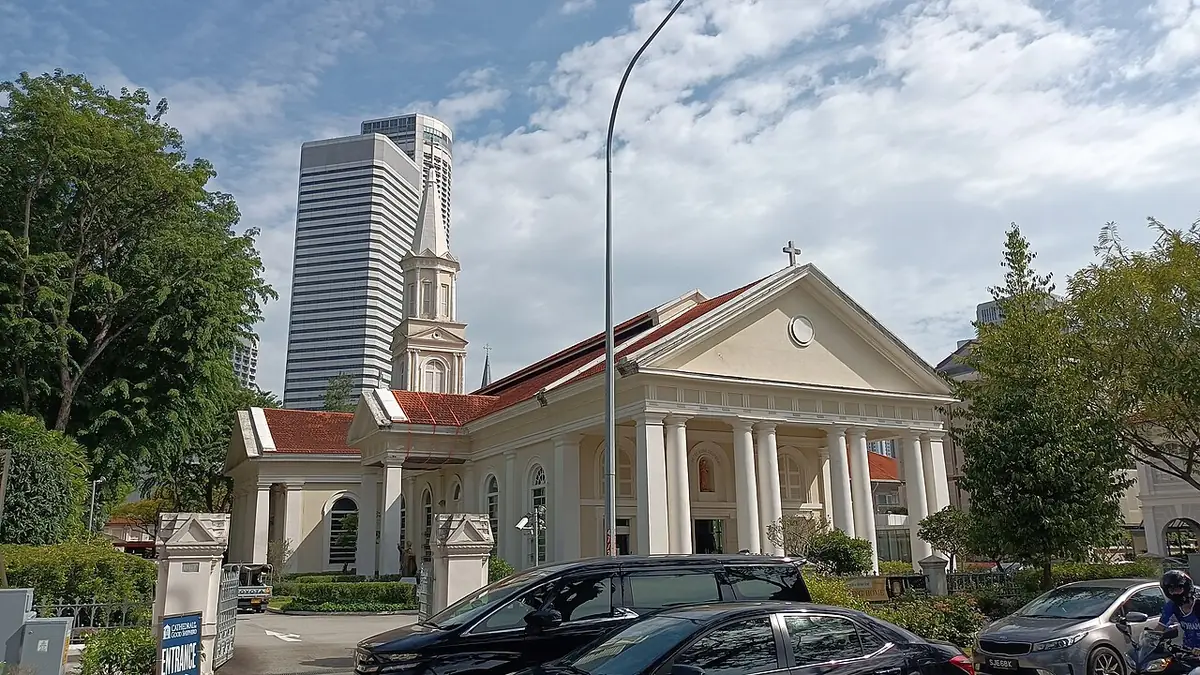
Heritage and modern Singapore side by side — Photo: GoAheadFan95 · CC BY-SA 4.0 · Wikimedia Commons
Once the legal structure is confirmed, the buying process follows a very strict sequence of steps that you need to master before committing any money.
The legal nature of the title is central to any property buying strategy in Singapore. Contrary to the common assumption that outright freehold is always best, the local market offers a complex mix of freehold properties and long leases administered by the state or institutional landowners. Understanding the distinction avoids unpleasant surprises for your wealth in the long run.
Freehold (Freehold / 999 years)
Properties with a freehold title or a 999-year lease offer maximum security for passing wealth on and suffer less from the discount that comes as a lease runs down. They are the holy grail for wealthy investors looking to safeguard family capital across generations over several decades without worrying about the land asset losing value over time.
What it changesThese properties always sell at a significant price premium, which demands a particularly long investment horizon to absorb the extra initial cost compared with a 999-year or 99-year lease.
The 99-year lease
Most land in Singapore belongs to the state and is released on 99-year leases. These properties often offer a modern living environment, more efficient layouts and recent shared facilities in highly sought-after areas. The discount becomes particularly noticeable once the lease crosses the critical threshold of fifty years remaining with no prospect of early renewal by the authorities.
What it changesYou need to analyse carefully how the value is likely to decline over time and the authorities' policy on lease renewal, so you are not caught out by an unavoidable loss of value as the lease nears its end.
The fundamental legal rule to understand before paying a deposit
To handle this timeline calmly, let us go step by step through the people and actions that shape the transaction.
Buying property in Singapore rests on rigorous contractual formalities in which the option to purchase plays a decisive role. Each step is legally binding and leaves no room for approximation or second thoughts after signing. Protecting your funds and using approved legal advisers ensure the transaction is sound from start to finish.
Finding the right property and first checking your legal eligibility with the relevant authorities.
Negotiating the financial terms and signing the Option to Purchase against payment of a one per cent holding deposit.
Your lawyer carries out thorough legal and technical checks to identify any easements or hidden defects.
Formally exercising the option to purchase within the legal deadline, together with a top-up payment that brings the deposit to five or ten per cent.
Paying the remaining funds, settling the transfer duties and officially registering the change of ownership with the land registry.
Receiving the keys and taking actual possession of your new Singapore property.
How does the transaction unfold, from first contact to handing over the keys?
A successful property transaction in Singapore involves precise coordination between several accredited professionals. From the estate agent licensed by the industry regulator to the lawyer specialising in property law, each one secures a specific part of the deal to protect your financial interests.
The buyerConfirming the budgetGetting a mortgage agreement in principle in advance and checking that the cash needed to cover the price and taxes is immediately available.
The estate agentShortlisting and targeted viewingsIdentifying properties that match your regulatory and geographical criteria exactly, in the districts open to non-citizens.
The specialist lawyerFull title auditCarefully checking the history of the title, the absence of hidden charges and whether the buildings comply with planning rules.
Both partiesSigning the Option to PurchaseFormalising the sale agreement by signing the official document and placing the initial one per cent deposit in escrow.
The tax authorityPaying the transfer dutiesCalculating and paying, within strict deadlines, the stamp duties and surcharges that apply to your tax residency status.
The specialist lawyerCompletion and registrationPaying the balance of the purchase price, exchanging the formal deeds and officially recording the new owner in the state land registry.
Apartment or detached house: which is the right choice for your property project in Singapore?
Once this fundamental choice between vertical and horizontal living is made, the unavoidable question of the overall budget comes sharply into focus.
In Singapore, choosing between a detached house (often called landed property) and an apartment in a shared development (a condominium or HDB flat) is not simply a matter of floor area or initial budget. It is a fundamental trade-off between an urban, highly secure and connected lifestyle and the search for control over land that has become extremely rare and precious in this cramped city-state. Singapore's property market has structural barriers unlike anywhere else in the world, particularly around nationality and government regulation, which steer most buyers towards apartment living from the outset.
On one side, the condominium and apartment market offers unrivalled liquidity, fully delegated maintenance and first-rate shared facilities such as pools, gyms, tennis courts and round-the-clock security. For an investor or an expat, the apartment is the pragmatic option par excellence, making daily travel easier thanks to its closeness to public transport and the main business centres. It is the choice of operational ease and financial flexibility, allowing you to enter and leave the market with relative ease as economic cycles turn.
On the other side, the detached house represents the pinnacle of property status in Singapore, making up less than five per cent of the total housing stock. Buying a landed property means owning not only the building but, above all, the land it stands on, a tangible asset whose structural scarcity gives it remarkable long-term resilience. That exclusivity has to be earned, however, and comes with severe regulatory constraints, as the government strictly limits access to these properties for non-citizens, apart from very specific enclaves such as Sentosa Cove. Maintenance, the roof, the air conditioning and the grounds are entirely the owner's responsibility, requiring constant logistical and financial involvement.
The choice between these two types of property therefore depends directly on your investment horizon, your legal status and your tolerance for upkeep. If you want a base that works from day one, fully integrated into the urban fabric and free of day-to-day management worries, the apartment is the obvious answer. If, on the other hand, you have the required status, substantial capital and a multi-generational view of wealth rooted in Singapore soil, the detached house remains the ultimate property prize, despite its maintenance demands and prohibitive entry cost.
What overall budget do you really need to live and invest in property in Singapore?
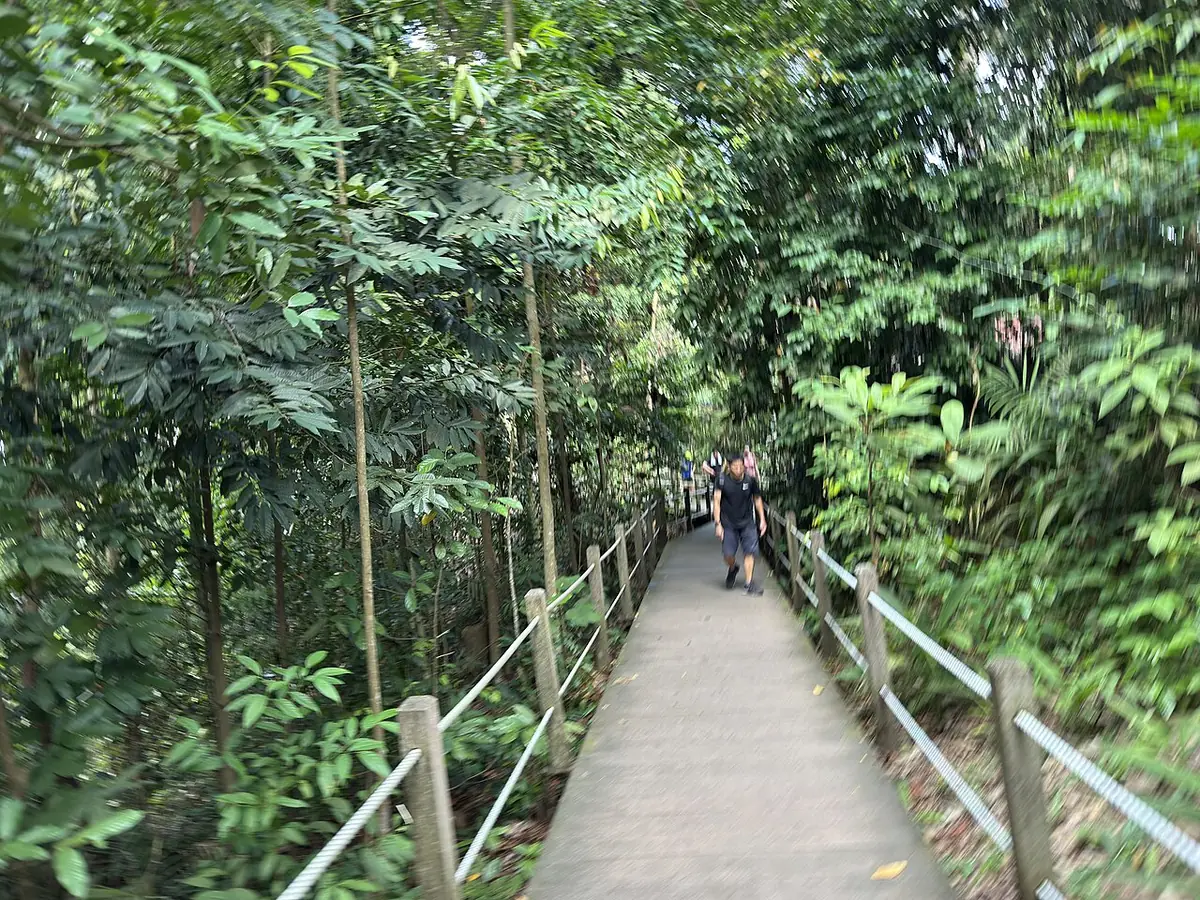
A quiet forest walk in Bukit Timah Nature Reserve — Photo: LN9267 · CC BY-SA 4.0 · Wikimedia Commons
Once the financial equation adds up, it is essential to picture your actual daily life through the local rhythm.
Budgeting in Singapore cannot stop at the purchase price shown on property portals. Between hefty transfer taxes for foreigners, local conveyancing fees and recurring condo charges, the real financial envelope demands meticulous planning. Historical market data shows that each type of property carries its own specific structure of fixed and variable costs, which should be modelled with the greatest care before you sign any sale agreement.
Purchase and ownership costs for an apartment (condominium)
Cost item
Typical amount or rate
Impact on cash flow
Transfer duties (ABSD for non-residents)
Up to 60% of the property's value
Requires a very large deposit of your own funds that cannot be financed with a bank loan.
Conveyancing and legal fees
0.2% to 0.5% of the purchase price
One-off costs paid when the final sale deed is signed.
Condo charges (management fees)
SGD 300 to SGD 1,000 a month
A recurring expense linked to the size of the unit and the standard of the development.
Annual property tax
Progressive scale from 4% to 32% of the annual rental value
A mandatory annual tax owed by every owner, calculated according to how the property is occupied.
Additional Buyer's Stamp Duty (ABSD) rates are revised regularly by the Monetary Authority of Singapore to regulate price momentum.
Budget items specific to owning a detached house (landed property)
Type of cost
Estimated amount
Practical specifics
Structural maintenance and waterproofing
1% to 2% of the property's value a year
Borne entirely by the owner, with no way of sharing the cost with other owners.
Extended comprehensive home insurance
SGD 1,500 to SGD 4,000 a year
Essential cover including storm risks, major water damage and third-party liability.
Garden upkeep and air conditioning
SGD 400 to SGD 800 a month
Requires recurring maintenance contracts to preserve the building's appearance and technical condition.
Detached houses require a much larger cash buffer because there is no shared sinking fund.
What does an ordinary Tuesday actually look like, between commuting, work and services?
While the visible surface of the market impresses with its efficiency, many crucial aspects never make it into the sales brochures.
Grasping the reality of a property investment in Singapore means understanding how smooth and demanding daily life is in this highly organised city. The rhythm of a typical day reflects the formidable efficiency of local infrastructure, from the exemplary punctuality of the metro to immediate access to healthcare and education. Each part of the day shows how well controlled planning and a practical quality of life fit together.
07:30Residential neighbourhood (Bukit Timah or East Coast)An early start along green, spotless streets, where the morning calm contrasts with the bustle of the city-state still to come.
08:15Mass Rapid Transit (MRT) stationBoarding an air-conditioned, fully automated train that gets you to the Raffles Place business district on a precisely timed journey.
12:30Neighbourhood hawker centreA lunch break at an essential local food institution, combining exceptional culinary variety with strictly monitored hygiene.
17:00International or local schoolPicking up the children from ultra-modern campuses offering teaching programmes recognised worldwide for their excellence.
19:30Local medical centre or polyclinicEasy access to a world-class healthcare system, known for its responsiveness and cutting-edge facilities.
21:00Main home (condominium or house)Unwinding by the pool or on the terrace, enjoying complete security and a preserved urban quiet despite the density.
What sales brochures and estate agents consistently fail to mention
These regulatory grey areas often lead to major disappointments that new buyers discover, to their dismay, after a few months here.
Singapore's property market cultivates an image of absolute institutional transparency that can sometimes hide formidable regulatory and technical subtleties. Between leases that run down over time, little-known planning easements and restrictions on interior changes in condominiums, investors often discover the rigid rules of the game too late. A clear-eyed look at these grey areas is essential to protect your capital over the long term.
The declining value of 99-year land leases (leasehold)
Unlike perpetual freehold ownership, a 99-year lease loses value at an accelerating rate once the remaining term drops below the critical 60-year mark, making any future resale or bank refinancing drastically harder.
The strict rules of the Building and Construction Authority (BCA)
Changing the interior structure of an apartment or renovating the facade of a detached house requires complex administrative approvals and long processing times, ruling out any improvised design changes.
Rights of way and future public infrastructure projects
The Singapore government retains very broad compulsory acquisition powers in the public interest to extend its transport network or expressways, which can radically change the peace of a residential neighbourhood overnight.
Strict restrictions on short-term lets (such as Airbnb)
Local law expressly bans short-term furnished lets in condominiums below a minimum period set by law, instantly ruling out any holiday-let income strategy.
The strategic misjudgements you only discover after six months of living here
Given these high financial and organisational demands, you need to decide honestly whether your personal profile truly matches this kind of investment.
Looked likeAn exceptional rental opportunity with an attractive gross yield in an up-and-coming outlying neighbourhood.
Turned outA long vacancy caused by expat tenants suddenly turning away from areas poorly connected to the main rapid transit network.
Would have caught itCarefully analysing the area's historical tenant turnover and always favouring being right next to a major MRT station, even if it means accepting a slightly lower headline yield at first.
Looked likeA charming older property with unique historic character and an apparently very competitive price per square metre.
Turned outAn unexpected money pit because the costs of bringing it up to energy standards and redoing the roof were badly underestimated at purchase.
Would have caught itAlways hiring an independent, government-certified technical expert to inspect the entire structure before lifting the conditions of sale.
Looked likeQuickly buying a large family apartment without checking the state of the sinking fund (Management Corporation Strata Title).
Turned outAn immediate vote on an extraordinary contribution (special levy) of several tens of thousands of dollars per owner to pay for mandatory facade repairs.
Would have caught itInsisting on seeing the minutes of the development's last three general meetings to identify any major works under discussion.
Looked likeUnderestimating the psychological and financial impact of living far from the main international school hubs.
Turned outExhausting daily journeys that overloaded family logistics and led to a quick wish to sell at a loss and move.
Would have caught itMapping the schools precisely and testing real journey times at rush hour before making any offer.
The profile of buyers who make a fundamental mistake by investing in property in Singapore
Now is the time to bring all these factors together and reach a final decision on whether your plan makes sense.
Singapore's global appeal acts as an irresistible magnet for international capital, sometimes pushing investors with unsuitable profiles into heavy property purchases. The city-state's punitive tax structure and the rigidity of its market demand a perfect fit between the buyer's personal situation and local regulatory constraints. Ignoring these warning signs exposes you to major capital losses and to being stuck in a damaging financial position.
The expat on a short-term work assignment (under five years)
→Buys a high-end apartment straight away to avoid paying monthly rent that feels like dead money.
The hefty purchase taxes (ABSD) and the costs of exiting the market cannot be recouped over such a short period, turning the deal into an outright financial loss when forced to sell.
The investor seeking high immediate rental yields (above 6% net)
→Targets the Singapore market hoping for returns comparable to emerging Southeast Asian cities.
Singapore's property market is mature, extremely regulated and designed through its tax system to favour stability, structurally delivering moderate net rental yields that generally range between 2% and 3.5%.
The buyer with tight cash flow and no emergency savings
→Uses all their cash to put together the deposit required by local banks.
Without a financial safety net, the borrower is left short at the slightest unexpected condo charge, change in mortgage interest rates or rise in property taxes.
So, are you really ready to go ahead with your property project in the heart of Singapore?
After this close analysis of the mechanics, hidden costs and practical realities of Singapore's property market, the decision to buy can no longer rest on impulse or passing enthusiasm for a fascinating city. It demands unflinching clarity about your real financial capacity, your long-term investment horizon and your acceptance of local regulatory constraints. Singapore rewards patience, financial strength and strict compliance, while heavily penalising amateurism and financial haste.
If you have the financial depth to absorb the heavy purchase taxes, your time in Singapore is set to last and you value the security of a tangible, well-protected asset, then the city-state's market is one of the most stable and high-quality safe havens for wealth on the planet. Buying a well-located condominium or, for those eligible, an exceptional detached house is a cornerstone of successful international diversification, with a practical quality of life second to none.
If, on the other hand, your time horizon is uncertain, your deposit would leave you exposed to the slightest setback or you are hoping for quick speculative gains, the wise choice is to keep renting. Singapore's rental market offers remarkable flexibility that shields your savings from tax and regulatory upheavals. The best property decision is the one that protects your financial peace of mind and fits the real course of your personal and professional life.
Related questions
Can a foreigner buy property freely in Singapore?
Non-resident foreigners can buy apartments in private condominiums without major restrictions, but buying detached houses (landed properties) is strictly off limits to them, except in very specific areas such as Sentosa Cove, and even then only with particular government approval from the Singapore Land Authority.
What exactly is the Additional Buyer's Stamp Duty (ABSD) in Singapore?
It is an additional transfer duty levied by the Singapore government when a property is bought, and its rate varies sharply depending on the buyer's nationality and the number of properties they already own. For foreigners the rate can be very high, a considerable financial burden that absolutely must be built into the initial return calculation.
What is the fundamental difference between a 99-year lease and outright ownership?
A freehold property belongs to the buyer and their descendants with no time limit, whereas a property on a long lease (a 99-year leasehold) reverts to the State of Singapore at the end of the term. Once the remaining lease falls below 60 years, the property's value usually takes a significant discount and getting a bank loan becomes considerably harder.
What average net rental yield can you expect in Singapore?
Singapore's property market is highly mature and tightly regulated, which produces net rental yields that most often sit between 2% and 3.5% a year. Investors looking for double-digit returns will need to direct their capital towards other, more speculative markets.
How are service charges calculated in a condominium?
A condominium's management and maintenance fees are calculated according to the share value attached to each apartment, which generally depends on the floor area bought. These charges pay for the upkeep of shared facilities such as the pool, 24-hour security, tennis courts and the gardens.
Can you finance a property purchase in Singapore with a local bank loan?
Local and international banks based in Singapore offer mortgages to non-residents, but the loan-to-value ratio is generally capped at stricter levels than for citizens, which always means putting down a very substantial deposit of your own money.
What are the main additional costs to plan for when buying an apartment?
On top of the purchase price and the ABSD, the buyer has to pay the standard Buyer's Stamp Duty, the estate agent's fees, legal fees for the conveyancing handled by an approved lawyer, and the annual property tax calculated on the property's estimated rental value.
Is there a risk of a speculative bubble in Singapore's property market?
The Singapore government proactively rolls out market cooling measures (curbing prices, tightening credit and adjusting taxes) to prevent any speculative property bubble from forming, which gives the market remarkable structural stability over the long term.
What are the obligations of a resident landlord in Singapore?
An owner who lets their property must declare all the rental income received to the local tax authority (the Inland Revenue Authority of Singapore) and pay the corresponding income tax, while scrupulously respecting the contractual terms registered when the tenancy agreement was signed.
Why are short-term lets such as Airbnb banned in condos?
Singapore law sets a minimum rental period for condominiums to protect the peace of permanent residents, avoid the disturbance that comes with a constant turnover of tourists and maintain high standards of security and community within residential developments.
Property review of ting
No ting properties in Singapore yet
Be the first — share it on ting and it shows up right here.