Finding and renting a detached house in Singapore means getting to grips with a property market that is dense, heavily regulated and fiercely competitive. This guide sets out the financial realities, the neighbourhood choices and the contractual rules you need to know to settle on the island successfully.
Get the app
What nobody tells you.
Real prices, hidden costs and the traps to check before you commit.
What renting a house in Singapore really means day to day
Scroll
What renting a house in Singapore really means day to day
Finding and renting a detached house in Singapore means getting to grips with a property market that is dense, heavily regulated and fiercely competitive. This guide sets out the financial realities, the neighbourhood choices and the contractual rules you need to know to settle on the island successfully.
Written by the ting.ad editorial team ·
Singapore in Street View: drag to look around.
Before you start searching, work out whether your profile genuinely fits the demands of this way of living.
Renting a house in Singapore, often called landed property in local parlance, is a radically different lifestyle choice from the typical city apartment. Unlike in many countries where detached houses sit on the outskirts, Singapore's detached and terraced houses occupy sought-after residential enclaves despite the density of the city-state. You need to accept from the outset that space comes at a premium on this small island, which completely redefines what domestic comfort and accessibility mean. Maintenance demands driven by the tropical climate add to the bill, turning every choice of location into a constant trade-off between budget, floor space and commuting time to the business districts.
The promise of rare space and a private garden in the heart of an ultra-dense megacity.vsThe reality of an extremely tight market where available homes are let within days.
Living space is priced per square metre at rates that put off most newcomers. You have to accept your budget ballooning to get a genuinely independent space.
The illusion of peace comparable to a suburban village back home.vsThe constant presence of city noise, traffic and the endless construction that defines the island's development.
Even in so-called quiet residential areas, the surrounding high-rises and dense infrastructure sharply reduce the sound insulation you would expect from a house.
The vision of a stable rental arrangement with no regulatory surprises.vsThe strict framework of local leases and Singaporean law, which strongly protects landlords at the end of the contract.
Renewal terms and early-exit clauses need a careful read to avoid heavy financial penalties when you hand back the keys.
The appeal of open tropical architecture bathed in natural light.vsThe need to run air conditioning constantly to fight a permanent humidity that damages structures.
This technical necessity weighs heavily on monthly electricity bills, an expense that expats arriving from abroad often underestimate.
Does this type of home really suit your lifestyle?
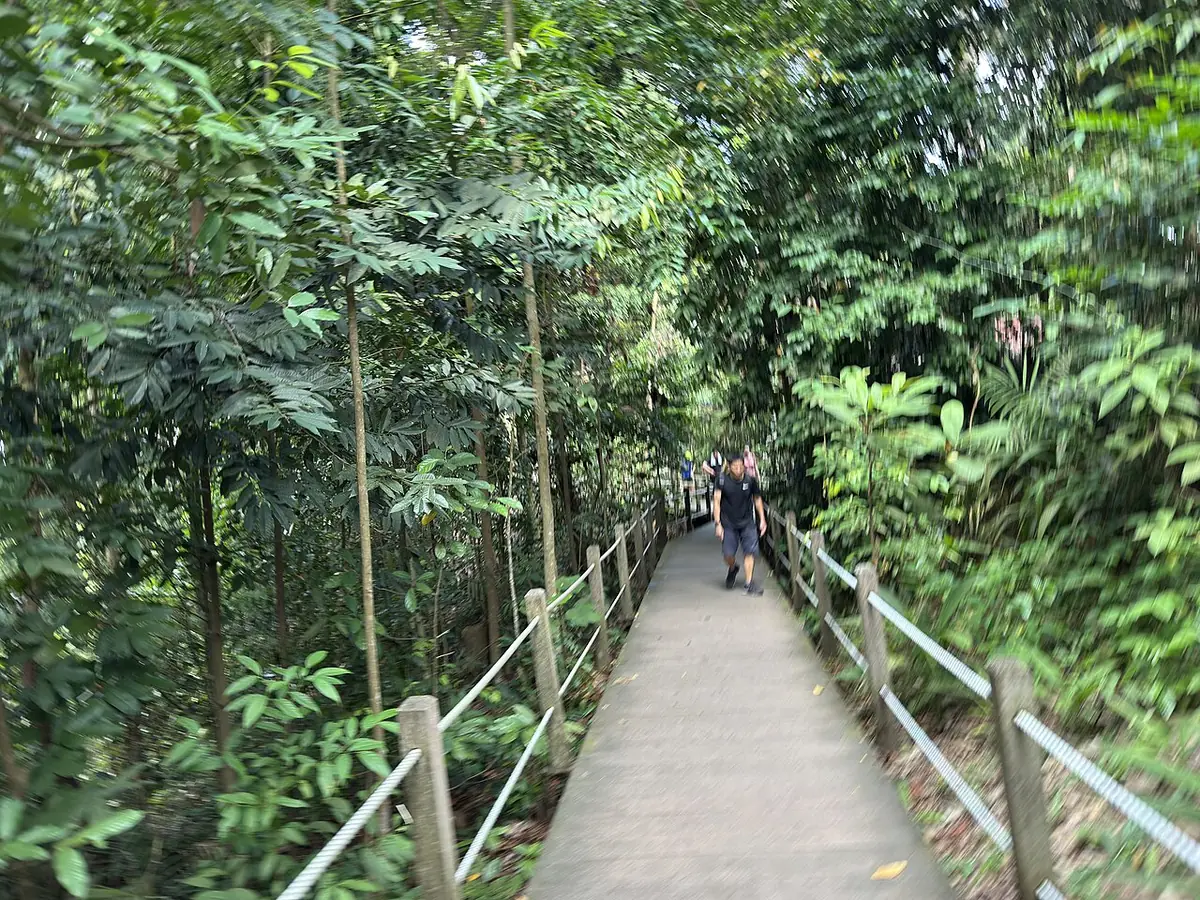
A quiet forest walk in Bukit Timah Nature Reserve — Photo: LN9267 · CC BY-SA 4.0 · Wikimedia Commons
The cultural and practical gap between your habits back home and life in Singapore deserves to be measured precisely.
Singapore's rental market does not forgive a poorly targeted search. Depending on your household, your working hours and your tolerance for commuting, a detached house can be either a source of exceptional fulfilment or a daily logistical trap. Landed housing estates are rarely at the foot of the Raffles Place towers, so you need to plan for your real journeys. Assess your daily life objectively before signing a two-year lease in an outlying area.
Family with children
Renting a house in leafy areas such as Bukit Timah or the East Coast makes real sense if your children attend nearby international campuses. You get an environment suited to family life, with parks and sports facilities within walking distance. The flip side is that your weekday evenings will revolve around the school run if your own office is in the Central Business District. You have to accept this geographical compromise to give your household a more open way of life.
Young working couple
Renting a secluded house when you both work in finance or tech in the city centre creates needless daily friction. Public transport journeys can grow considerably longer from outlying landed estates. A penthouse-style apartment or a large, well-located condo often turns out to be more sensible for protecting your free time. If you are set on living in a house, you will have to rely on taxis or adjust your office hours.
Freelancer or remote worker
Having the space of a house in Singapore transforms the experience of remote working in the tropics. You get a separate office, natural light from both sides and a private outdoor space to recharge between video calls. The high rent is then justified by the productivity gains and everyday wellbeing that the extra floor space brings. This is the profile best placed to absorb the financial burden of this type of property.
Living here when you come from abroad: what changes radically
Once you have absorbed these rules, the next step is finding the neighbourhood that matches your pace of life.
Rental systems back home that are tightly regulated and protective of tenants do nothing to prepare you for Singapore's contractual reality. Here the market runs on strict common-law rules, negotiation is hard-nosed and every clause of the tenancy agreement is enforced to the letter. Understanding these cultural and legal differences will spare you costly disappointments in the first weeks of settling in the city-state.
From abroad
Back home, leases on a main residence often run for several years, renew automatically and come with strict rent controls.
Singapore
In Singapore, standard tenancies last two years, with no automatic renewal and complete freedom for landlords to set the rent.
From the end of the first year you need to plan for a possible renegotiation or a move if the landlord decides to raise the rent sharply in line with the market.
From abroad
Back home, the security deposit is often capped by law at around one month's rent for unfurnished lettings.
Singapore
In Singapore, the norm is one month's rent per year of lease, so usually two months tied up from signing on a standard contract.
This significant sum of locked-up cash must be built into your overall moving-in budget, alongside agency fees and your first utility sign-ups.
From abroad
Back home, structural repairs and major works are legally and systematically the landlord's responsibility.
Singapore
In Singapore, the well-known Minor Repair Clause makes you liable for small repairs up to a fairly high fixed amount per job.
Every plumbing or air-conditioning call-out below the agreed threshold remains entirely at your expense, which often surprises newcomers.
From abroad
Back home, the move-in and move-out inspections are carried out jointly with precise legal formalities.
Singapore
In Singapore, landlords are particularly exacting about the condition of the property at handover, especially the paintwork and the professional cleaning required.
You must budget for a full repaint and a certified professional clean at your own expense before handing back the keys to recover your deposit.
From abroad
Back home, a tenant's notice period to leave can be as short as one to three months.
Singapore
In Singapore, breaking a lease early without a specific diplomatic clause means losing your entire deposit and paying the remaining rent.
Make absolutely sure there is an early-termination clause (Diplomatic Clause) if the length of your work assignment on the island is uncertain.
Which neighbourhood to choose for settling into a detached house?
Now let us look at what the financial reality of these rentals on the island looks like.
Your choice of neighbourhood shapes your entire daily life in Singapore, dictating your commuting times, your schooling options and your access to green space. Unlike apartment areas clustered around MRT stations, the landed house enclaves each have their own identity and their own degree of distance from the urban bustle. Weighing up the trade-offs of each area will help you target your viewings effectively with your property agent.
District 10 (Bukit Timah / Holland Village)
A leafy haven, popular with expat families for its tall trees, gentle hills and upmarket residential atmosphere.
Suits
Families wanting to be close to the best international schools in a calm and secure setting.
Trade-off
Some of the highest rents on the island and heavy traffic at peak hours on the main roads.
East Coast (Marine Parade / Joo Chiat)
A relaxed seaside feel, blending traditional Peranakan architecture with a lively coastal lifestyle.
Suits
Those who value outdoor activities, cycling along the sea and quick access to the airport.
Trade-off
Relative distance from the financial centre and flight paths passing over certain parts of the area.
District 11 (Novena / Thomson)
A strategic balance between residential and urban, with streets of houses just steps from major medical hubs.
Suits
Working people who want to keep their commute short while enjoying the comfort of a house with a garden.
Trade-off
Ageing housing stock that often needs substantial refreshing, which the landlord does not always take on.
Serangoon Garden / Upper Thomson
A genuine, down-to-earth village spirit, centred on its famous hawker centres and lanes lined with terraced houses.
Suits
Residents looking for lively neighbourhood life that is less sanitised and more affordable than the ultra-luxury enclaves.
Trade-off
More limited public transport access, meaning frequent use of buses or ride-hailing services.
How much does renting a house in Singapore really cost?
Beyond the headline rent, the legal status of what you are renting deserves particular attention.
The house rental market in Singapore shows high figures that reflect the absolute scarcity of land in the city-state. There is no point hoping to find large spaces at low cost, as every square metre is priced on strict criteria of location and amenities. The table below shows the monthly rent ranges seen on the market, to help you calibrate your projected budget without giving in to wishful thinking.
SingaporeTo rentHouseestimate
Median price / m²SGD 41Half the apartments sell below this
Median priceSGD 6.72kthe average is 14% higher — a few very large properties pull it up
Most common2 bedrooms44 % of listings
Average size158 m²
By number of bedrooms
Bedrooms
Share of market
Avg price
Price / m²
Avg size
2most common
44 %
SGD 5.6k
SGD 43
131 m²
3
41 %
SGD 7.44k
SGD 41
184 m²
4
15 %
SGD 9.61k
SGD 39best value / m²
245 m²
Each row is an average, compared against the area average of SGD 43 / m². These are indicative estimates of a typical local market, not a measured sample of live listings. Check current listings before relying on them.
What you can actually rent and occupy as a foreigner
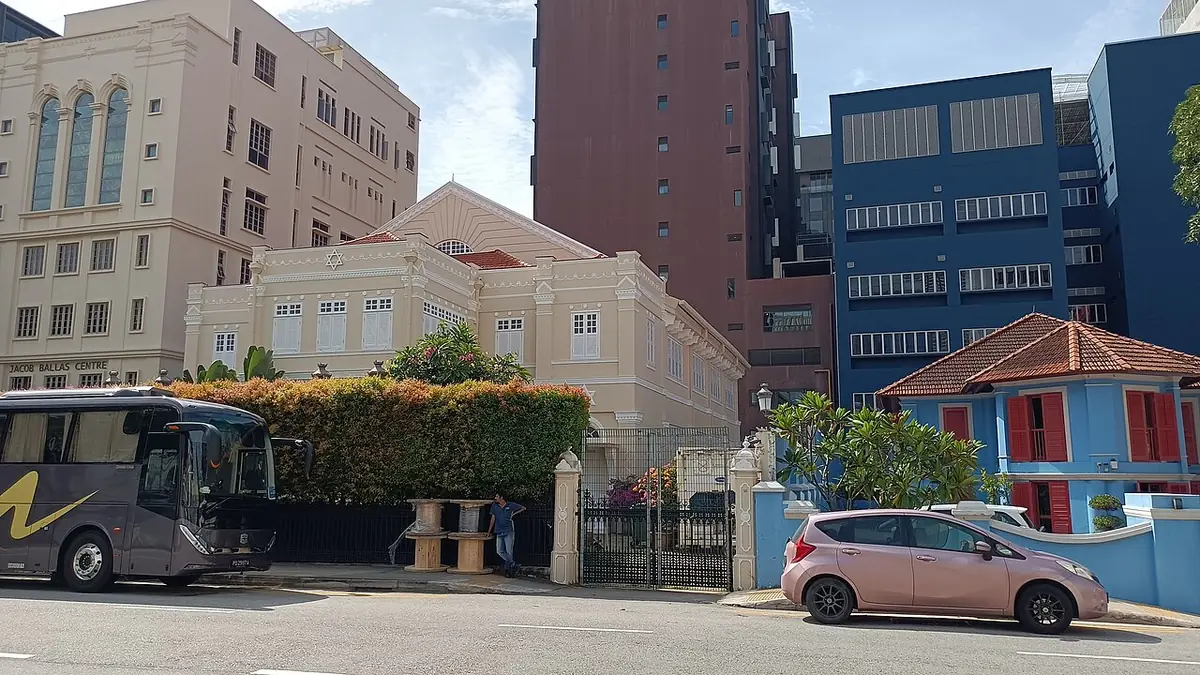
Old shophouses and new towers share this Singapore street — Photo: GoAheadFan95 · CC BY-SA 4.0 · Wikimedia Commons
The final administrative step before signing requires understanding exactly how the transaction unfolds.
In Singapore, the distinction between property types carries major legal weight that every foreign tenant needs to master. While buying so-called landed property is tightly restricted for non-citizens, renting remains open, but follows very strict planning and subletting rules. Knowing these limits protects you from risky rental arrangements offered by some unscrupulous middlemen.
Renting standard private houses (Landed Properties)
As an expat holding a valid work pass (Employment Pass), you can rent a terraced house, semi-detached house or bungalow owned by a private landlord. The contract is registered with the relevant authorities and guarantees you quiet enjoyment of the property for its full term. The landlord remains responsible for major structural works while you look after day-to-day life in the home.
What it changesYou enjoy an independent way of life without breaching the strict regulations that bar non-residents from acquiring Singaporean land.
The trap of public subsidies and non-compliant leases
It is strictly forbidden to rent out an entire HDB flat (Singapore's public housing) without respecting strict quotas and minimum occupation periods, and public houses do not exist in this form. Some dishonest landlords sometimes try to let outbuildings off the books or sublet portions of land. Any breach spotted by inspectors leads to the immediate eviction of the occupants with no recourse.
What it changesAlways ask to see the title deed or the officially registered authorisation before paying any deposit to an intermediary.
The rule to understand before paying the landlord a deposit
Let us now recap the full timeline of your move-in journey.
The rental process in Singapore follows a very strict chronological sequence of steps that leaves no room for improvisation. Paying money before the official letter of intent has been agreed exposes you to outright losses, which local courts view harshly if the rules have not been followed. Mastering this chain of decisions keeps your rental commitment secure from the very first exchanges.
Spotting the ideal property and a mandatory in-person viewing with a CEA-licensed agent.
Drafting and signing the Letter of Intent (LOI) together with a Good Faith Deposit cheque, usually equal to one month's rent.
Negotiating and agreeing the specific clauses of the tenancy agreement (Tenancy Agreement), including the diplomatic clause and the list of repairs payable by the tenant.
Formal signing of the lease by both parties and payment of the balance of the security deposit into an escrow account or directly to the landlord, as agreed.
Carrying out a thorough move-in inspection (Inventory List) with time-stamped photos of every room and a record of even the smallest defects.
Official handover of the keys and activation of water, electricity and internet accounts in your name.
How a rental transaction works, step by step
Knowing in advance every party involved in your property search in Singapore lets you manage your move calmly. From the property agent to the landlord and the utility providers, each one plays a specific role in a timeline often compressed into four weeks. The table below sets out what each party does to get you successfully settled in.
The tenantSetting the budget and choosing the criteriaYou set your maximum budget, including upkeep costs, and pass your precise criteria to your licensed agent.
The property agentTargeted viewings and shortlistingYour agent organises an efficient viewing schedule focused on properties that are genuinely available on the market.
The landlordReviewing the Letter of Intent (LOI)The landlord reviews your employment profile (Employment Pass) and financial guarantees before accepting or rejecting your offer.
The lawyer or agentDrafting and signing the Tenancy AgreementThe official contract is drawn up to Singapore market standards, incorporating all the clauses negotiated at the previous stage.
The tenant and the landlordJoint move-in inspectionThe full inventory of furniture and fittings is signed by both parties to avoid any dispute when you eventually move out.
Water and electricity providersOpening utility accounts (SP Group)Essential services are transferred into your name so you have power and water from your very first night.
Renting a detached house in Singapore: a trade-off between space and constraints
Moving from the theory of choosing a home to the hard numbers means facing the figures squarely.
Choosing to rent a detached house in Singapore, often called landed property, is a radical change from life in a condominium. Unlike the residential towers that dominate the cityscape and offer shared facilities such as infinity pools, gyms and round-the-clock concierge services, a landed house involves far more complex practical choices. The house market is concentrated mainly in outlying districts, notably districts 15, 19, 20 and 21, away from the Central Business District, which completely changes how the whole family manages daily commuting time.
The living space available is a dramatic game-changer for large families or professionals who want room of their own. Having several floors, a private garage and sometimes a small garden in Singapore is a rare and extremely expensive luxury, because available land on this island state is tightly limited by government urban planning. However, this apparent architectural freedom comes with a maintenance burden that falls entirely on the tenant under the usual terms of local leases, especially for air conditioning, plumbing and outdoor upkeep, something that barely exists in a modern apartment run by a professional managing agent.
Social isolation and security also deserve close attention when choosing a property. While condominiums provide a secure environment with 24-hour guards and digital key-card access, landed houses, whether terraced, semi-detached or fully detached, require alarm systems and cameras installed at the occupant's expense. In return, the neighbourhood is often more residential, calmer and rooted in genuine local traditions, far from the tourist and commercial bustle of Orchard Road or Marina Bay.
The overall cost is not limited to the headline rent shown on property portals. Electricity bills for cooling a large space in the tropics climb quickly, and water and gas use shoots up compared with a small, compact apartment. On top of that, poor public transport links often make it necessary to buy or lease a car, which weighs heavily on the monthly budget because of the Certificate of Entitlement, the COE, whose prices have reached historic highs unmatched anywhere in the world.
Ultimately, choosing a house in Singapore is a lifestyle built around personal space and accepting the practical constraints of maintaining an independent property in a demanding equatorial climate. If you value having urban amenities on your doorstep and zero technical hassle, an apartment remains unbeatable. But if a deep need for greenery, space for the children and no neighbours directly above your head wins out, the house becomes the obvious choice despite its financial and practical demands.
What real monthly budget should you plan for to rent a house in Singapore?
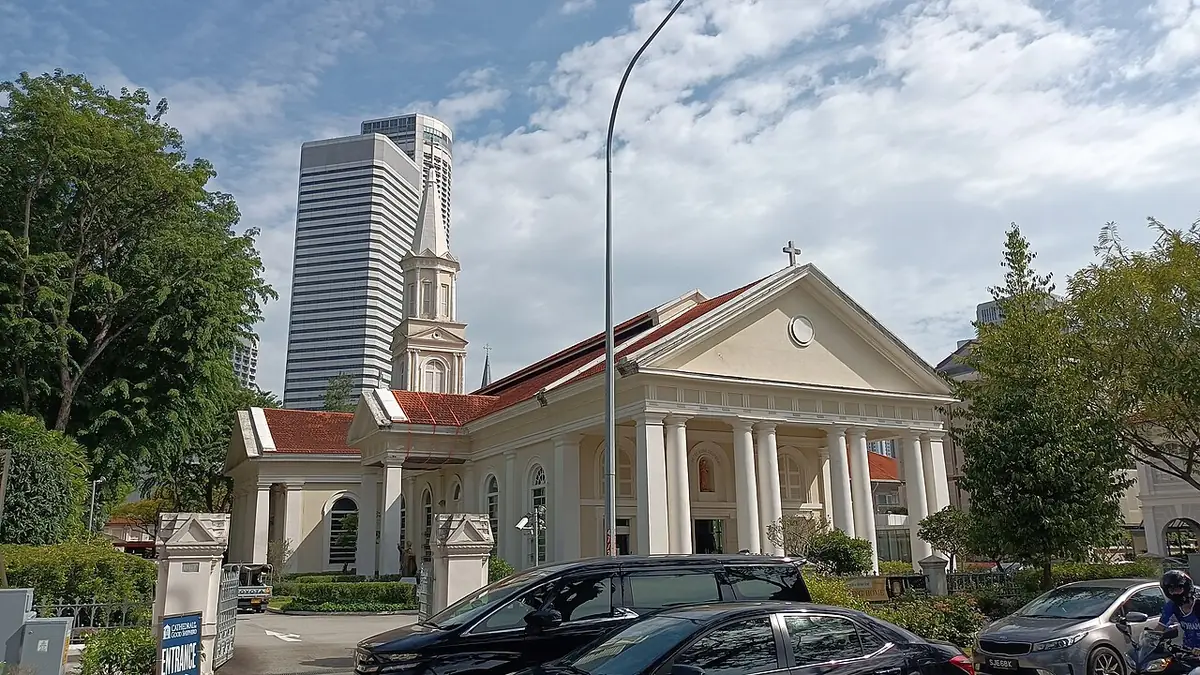
Heritage and modern Singapore side by side — Photo: GoAheadFan95 · CC BY-SA 4.0 · Wikimedia Commons
Once the budget is settled, it is worth looking at what a typical day in this environment actually involves.
The rental market for landed houses in Singapore follows very strict economic rules driven by the scarcity of land and strong demand from wealthy expats. The advertised rents are only the tip of the financial iceberg, because local taxes, compulsory maintenance costs and energy use weigh heavily on the annual accounts. You need to analyse every expense rigorously to avoid any major budget imbalance after signing the tenancy agreement.
Monthly rent ranges for a house in Singapore by property type and location
Property type
Sought-after areas
Indicative monthly rent (SGD)
What it includes
Terraced House
Districts 15, 19, 20
SGD 5,500 to SGD 8,500
Compact floor space, 3 to 4 bedrooms, small patio, no private pool
Semi-Detached House
Districts 10, 11, 21
SGD 8,500 to SGD 14,000
Side garden, parking for two cars, quality finishes
Detached House / Bungalow
Good Class Bungalow Areas (GCB)
SGD 25,000 to SGD 80,000+
Standalone plot, pool, large garden, complete privacy
Prices exclude local taxes and the tenant's routine maintenance costs.
Additional expenses and monthly running costs for a house
Expense
Monthly range (SGD)
Payment frequency
Technical comment
Air conditioning and electricity
SGD 400 to SGD 1,200
Monthly
Heavy use is essential to counter the constant equatorial humidity
Air-conditioning servicing
SGD 150 to SGD 300
Every 3 months
Servicing contract required, or the warranty on the split units is voided
Gardening and pest control
SGD 200 to SGD 500
Monthly
Essential to prevent mosquito breeding and meet NEA standards
Home insurance (Home Insurance)
SGD 50 to SGD 120
Annual, spread monthly
Covers contents, public liability and specific water damage
These amounts vary with the exact size of the plot and the age of the rented building.
What does an ordinary Tuesday actually look like when you rent a house in Singapore?
Beyond this well-oiled routine, many hidden aspects of the rental market deserve to be brought to light.
Living in a landed house in Singapore profoundly changes your daily rhythm compared with life in a city-centre tower. Between school runs, managing home maintenance services and work commitments, every hour is carefully orchestrated around traffic constraints and the tropical weather. Here is exactly how an ordinary Tuesday unfolds for a family living in a house in a residential area.
06:30Waking up and checking the air conditioningA quick morning look at the air-conditioning units and breakfast in the large kitchen that opens onto the back garden.
07:45Leaving for the international schoolBoarding the school bus that stops outside the property, or driving to campuses in districts 10 or 21.
09:00Managing service providersWelcoming the technicians for the quarterly air-conditioning filter clean and checking the anti-mosquito treatment system.
11:30Local shopping at the wet marketA trip to the hawker centre or local supermarket to stock up on fresh produce and Asian groceries.
15:00Remote work and adminSettling into the air-conditioned ground-floor office to handle work matters while enjoying the relative calm of the residential neighbourhood.
17:30Children home and time in the gardenGreeting the family at the front gate, putting bags away and relaxing outdoors before the quick tropical nightfall.
20:30Evening wind-down and locking upClosing the sliding glass doors, switching on the perimeter security system and checking the automatic outdoor lighting.
The hidden sides of renting a house that property agencies fail to mention
These contractual subtleties lead straight to the most common misjudgements made by newcomers.
Singapore property agency brochures always show houses in their best light, stressing the floor space and the rarity of the product. Yet the legal and technical reality of renting a standalone property holds plenty of unpleasant surprises for unprepared tenants. It is vital to decode these invisible elements to avoid major disputes when you hand back the keys.
The tenant repair clause (Minor Repair Clause)
This standard contractual clause makes the tenant solely responsible for all repair costs below a certain amount, often set between SGD 150 and SGD 300 per job. Over a year, the build-up of these small plumbing or locksmith call-outs adds up to a considerable sum on top of the headline rent.
The strict obligation to repaint when you leave
Most tenancy agreements in Singapore require the tenant to return the house freshly repainted by professionals approved by the landlord. This work, paid entirely by the outgoing tenant, can easily reach several thousand dollars depending on the area of the interior and exterior walls.
Noise from surrounding construction sites
Singapore is one vast, permanent building site because of constant urban renewal. A house overlooking an empty plot or an old property being demolished will suffer intense noise from 8am to 6pm on weekdays, as the Urban Redevelopment Authority allows construction work right next to residential areas.
Restrictions on cosmetic changes
Changing a wall colour, installing heavy ceiling fixtures or drilling into reinforced concrete requires the landlord's formal written permission. If you do not comply, the refund of your security deposit (security deposit) may be partly or fully withheld to restore the property to its original condition.
The misjudgements you discover six months after moving into your house
These disappointments raise the fundamental question of who should steer clear of signing at all.
Looked likeA charming older house full of character with a large, shady tropical garden.
Turned outA poorly insulated, insect-infested home with no protection against humidity and ageing pipes causing recurring leaks.
Would have caught itInsist on an independent technical inspection report before signing and favour properties that have been renovated or built to recent BCA standards.
Looked likeAn extremely peaceful and perfectly silent residential area during the Sunday viewing.
Turned outAn area under aircraft approach paths or next to a construction site for a new light rail line.
Would have caught itVisit at different times of day and on different days, especially during peak hours and on weekdays, to pick up the real noise levels.
Looked likeFull air conditioning in every room, running at full power during the move-in inspection.
Turned outOutdated compressors using an astronomical amount of electricity, leading to exorbitant utility bills every month.
Would have caught itCheck the energy efficiency of the units (NEA Tick Rating) and negotiate the replacement of old split units before moving in.
Looked likeA very accommodating landlord who promises to redo the kitchen and bathroom once you agree verbally.
Turned outA landlord who refuses in writing to honour those verbal promises once the deposit is paid and the tenancy agreement is registered.
Would have caught itInsist that every promise of works or improvements is explicitly attached to the official tenancy agreement (Tenancy Agreement) before any payment.
The kind of people who really should not rent a detached house in Singapore
Having reached the end of this analysis, it is time to make the final call on your move.
Contrary to the persistent myth that a detached house is the ultimate sign of a successful move abroad, this type of property does not suit every kind of resident. The practical, financial and personal demands of running such a property can turn the Singapore experience into a bureaucratic and logistical nightmare. It is therefore wise to identify clearly the profiles that are a poor fit for this option.
Highly mobile professionals who travel constantly for work
→A spacious detached house with a large garden on the outskirts
Maintaining a house requires someone on site or constant supervision to deal with plumbing, gardening and security. A resident who is away half the month will quickly be overwhelmed by breakdowns and maintenance obligations, with no one there to coordinate the contractors.
Couples without children looking for lively city life
→A terraced house in a quiet residential neighbourhood
Being far from bars, restaurants, shopping centres and MRT stations weighs heavily on everyday social life. Without the sociability and central location of a city condominium, these tenants end up feeling the distance and bitterly regret the lack of neighbourhood life on their doorstep.
Newcomers on a tight budget with no financial cushion
→A large older house to get the most floor space for the money
The hidden costs of a detached house (huge electricity bills, garden upkeep, minor repairs payable by the tenant) create a risk of rapid financial strain. A single major technical failure can wipe out the household's savings within weeks.
So, are you ready to take the plunge and rent a house in Singapore?
Making the final decision to rent a detached house in Singapore means weighing your legitimate desire for space, independence and peace against the hard reality of local financial and practical constraints. This choice should never be driven by the apparent prestige of a smart address or by nostalgia for a way of life from back home that cannot be reproduced exactly in the tropics. Every compromise you accept today will shape your daily comfort for the whole length of your lease.
If you fully appreciate the importance of the additional costs, the need to delegate or take on the day-to-day upkeep of a standalone property, and the distance from the Central Business District is no obstacle to your work commute, then a house will prove an exceptional lifestyle choice. The living space it gives your family, the absence of immediate neighbours and the chance to live close to tropical nature more than make up for the organisational effort that running it demands.
If, on the other hand, the slightest technical problem, managing local service providers or unpredictable rises in energy bills make you anxious, give up on the detached house without regret. Singapore's condominium stock offers a level of comfort, security and operational simplicity unmatched anywhere in the world, letting you make the most of the island without the hassles of managing an independent property.
Take the time to view several properties with a trustworthy property agent, read every line of the handover and maintenance clauses, and trust your instincts before signing the final lease. Singapore is an extraordinary city that rewards those who approach its property market with clear eyes, preparation and realism, far from romantic illusions and the misleading promises of glossy brochures.
Related questions
Is it easy for a foreigner to rent a detached house in Singapore?
Yes, foreigners holding a valid Employment Pass or Dependant's Pass can rent houses in Singapore. However, renting top-tier bungalows (Good Class Bungalows) is subject to very strict regulatory restrictions set by the Singapore Land Authority, which often reserve these exceptional properties for naturalised citizens.
What is the standard length of a rental contract (Tenancy Agreement) in Singapore?
The standard and most common length for a residential lease in Singapore is two years, renewable by mutual agreement. Some landlords accept one-year leases, but this usually comes with a higher monthly rent to offset the faster turnover of occupants.
What is the diplomatic clause (Diplomatic Clause) in a Singapore lease?
The diplomatic clause is an essential contractual provision for expats. It lets you end the tenancy early, usually after the first twelve months, if you are transferred abroad for work or lose your job, subject to two months' written notice.
Who pays for air-conditioning repairs in a rented house?
The tenant is legally and contractually obliged to maintain the air conditioning at their own expense through a regular quarterly servicing contract. Major repairs caused by normal wear and tear or a structural defect, on the other hand, fall to the landlord under the terms of the lease.
Is the security deposit (Security Deposit) refunded in full?
The security deposit is returned at the end of the lease, minus any costs for restoration, mandatory repainting or repairing damage noted at the move-out inspection. It can never be used to pay the final month's rent.
Do you need your own car to live in a house in Singapore?
Owning or leasing a car is strongly recommended when you live in a detached house, as these properties are often in outlying residential areas far from MRT stations and shopping centres. That said, ownership costs including the COE make this a very expensive option.
Which property taxes apply to tenants in Singapore?
Property tax (Property Tax) is legally payable by the owner of the property, not the tenant. However, landlords often pass this cost on indirectly through the overall rent quoted during negotiations.
How does paying for utilities (Utilities) work in a house?
Water, electricity and gas bills are handled by the national provider SP Group. The tenant must open an account in their own name on moving in and pay an initial deposit, the amount of which depends on their immigration status and type of work pass.
Are pets allowed in rented houses in Singapore?
Pets are generally accepted in landed houses, unlike some private condominiums with strict house rules. You must still obtain the landlord's prior written consent and include a specific clause in the tenancy agreement.
What is a Good Class Bungalow (GCB) in Singapore?
A Good Class Bungalow is the most prestigious and exclusive segment of Singapore's residential property market. These very large properties, located in specific protected zones, follow strict planning criteria that guarantee privacy, generous green space and remarkable architecture.
Property review of ting
No ting properties in Singapore yet
Be the first — share it on ting and it shows up right here.