Buying property in Singapore means getting to grips with strict legal rules and a market unlike any other. This guide sets out the key trade-offs between floor area and location, what long leaseholds really mean in practice, and the exact sequence of a successful purchase.
Get the app
What nobody tells you.
Real prices, hidden costs and the traps to check before you commit.
Why does floor area matter more than location alone for an apartment in Singapore?
Scroll
Why does floor area matter more than location alone for an apartment in Singapore?
Buying property in Singapore means getting to grips with strict legal rules and a market unlike any other. This guide sets out the key trade-offs between floor area and location, what long leaseholds really mean in practice, and the exact sequence of a successful purchase.
Written by the ting.ad editorial team ·
Singapore in Street View: drag to look around.
This squeeze between space and location weighs differently depending on your profile and your day-to-day habits.
Buying an apartment in Singapore forces you to rethink floor area completely compared with what you may be used to back home. Developers optimise every square metre under extremely strict building standards, which dictate how rooms are laid out and how much natural light they get. With prices per square metre among the highest in the world, the trade-off between a very central address and real living space becomes the first defining decision for any buyer. That constant financial tension reshapes how the home is used every day and radically changes how its long-term value is perceived. Choosing to live in the central districts means accepting compromises on size, offset by services on your doorstep and easy access to the transport network.
Buy a studio or a compact one-bedroom in central districts such as Orchard or Tanjong Pagar.vsMove out to residential areas with upgraded HDB-style estates or suburban condos to double your floor area.
Urban compactness saves a great deal of time every day but drastically shrinks your personal living space. Moving further out, by contrast, brings more comfort at home but means regular commutes, even with an efficient MRT.
Favour height and a panoramic view at the expense of floor area and cross-ventilation.vsLook for a mid-level floor with a dual-aspect layout that lets air flow through naturally.
High floors shield you from street noise and the humidity of the lower levels, but make you more dependent on air conditioning. Dual-aspect layouts, rarer in modern towers, provide real passive thermal comfort in the tropics.
Pay a substantial premium to move into a development with a full range of high-end facilities.vsOpt for an older condo with lower fees that needs major structural renovation.
New developments come with built-in pools and gyms that push up the monthly maintenance fees. Older buildings often offer more generous interiors but call for closer scrutiny of the roof and the plumbing.
How can you tell whether this property market really suits your situation as an expatriate or resident?
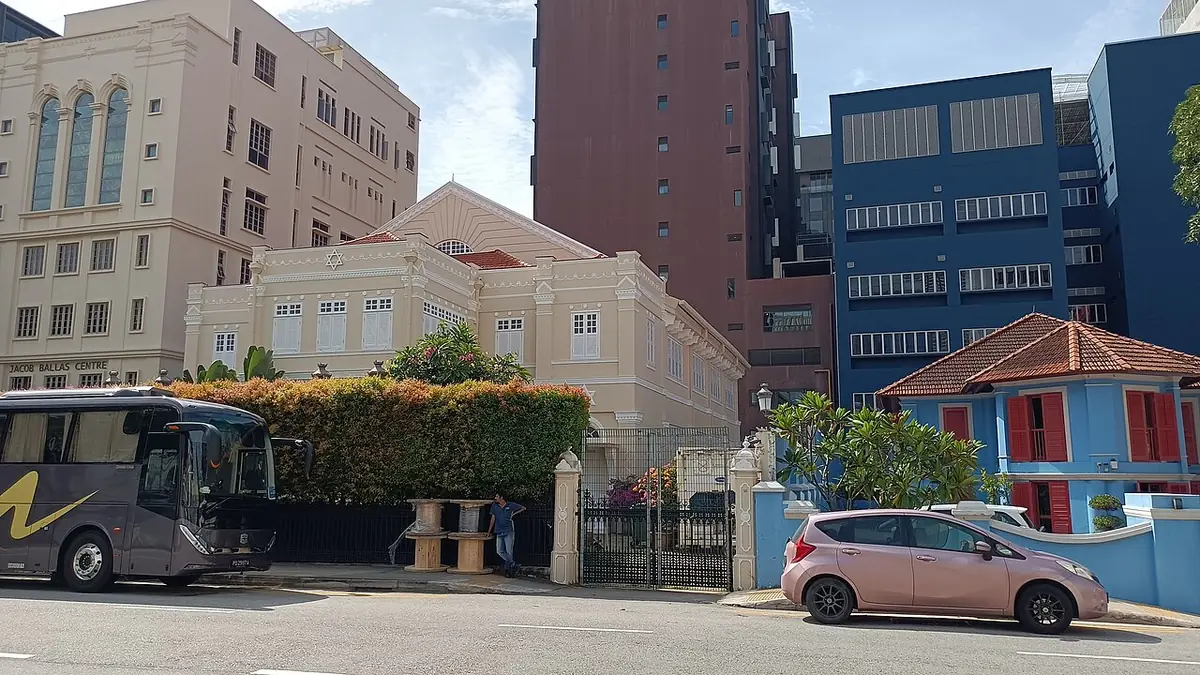
Old shophouses and new towers share this Singapore street — Photo: GoAheadFan95 · CC BY-SA 4.0 · Wikimedia Commons
Going from renting back home to buying in Singapore means gauging the cultural and administrative gaps precisely.
Property investment in this city-state does not follow the same wealth-building logic as in Western Europe or North America. Residency status, whether you are a permanent resident or an expatriate on a work pass, tightly governs access to the different types of property available. Every kind of buyer has to weigh the flexibility of renting against tying up capital in a market heavily regulated by the State. Credit controls and additional taxes weigh heavily on the final decision to buy. You need to assess your investment horizon coolly before committing to a complex, tightly regulated purchase process.
Long-term expatriate
Your top priority is a stable home and gradually building a tangible asset in a strong currency. Buying a private apartment frees you from the sharp rent rises seen on the local rental market. You do, however, need to factor in the additional purchase taxes that apply to non-citizens, which eat into overall returns if you resell quickly. Holding the property for seven to ten years is generally needed to absorb all the transaction and management costs.
Permanent Resident looking to settle
Your status opens up a wider range of properties, often with more favourable borrowing conditions. You can target private condos well served by public transport to secure your living environment. Proximity to international or local schools then becomes a deciding factor in choosing the exact location. This is a classic wealth-building approach in which bricks and mortar form the cornerstone of what you will pass on.
Investor seeking yield
The Singapore market is highly liquid but has traditionally offered moderate gross rental yields, often between two and three per cent. The authorities have introduced deterrent measures to curb speculation and keep residential prices stable. You therefore have to accept modest immediate returns, offset by legal certainty and the strength of the Singapore dollar. A rigorous look at condo fees is essential to protect your net margin.
What changes fundamentally between buying property back home and buying in Singapore?
This cultural shift takes concrete form in your choice of the neighbourhood where you will settle.
The legal, tax and cultural reference points you bring from abroad rarely apply in the city-state without adjustment. Singapore's land system rests on leaseholds of varying lengths or on freehold ownership, concepts whose economic impact is quite different from what many buyers are used to. Notaries are replaced by specialist lawyers, who speed up transactions while demanding absolute rigour with paperwork. Understanding these fundamental differences saves you from costly misreadings when you sign the first binding documents.
From abroad
The idea of perpetual ownership and shared boundaries handed down from generation to generation.
Singapore
The predominance of ninety-nine-year leases, or so-called freehold titles, overseen by state authorities.
The property's value moves with the time left on the lease, so it needs particular attention as the expiry date approaches.
From abroad
A notary at the centre of the process, securing the deed of sale and collecting transfer duties.
Singapore
Law firms appointed by each party to complete the transfer of ownership smoothly.
Transactions are much quicker, but every contractual clause has to be checked by your own legal adviser.
From abroad
Relative freedom to alter shared areas and façades in older buildings.
Singapore
Extremely strict regulation of condos by the management committee and national housing laws.
Any external change, from air-conditioning units to blinds, needs prior approval under demanding rules.
From abroad
Purchase costs calculated as a sliding percentage of the price, often around eight per cent.
Singapore
Specific additional taxes for non-residents or buyers of a second property, on top of administrative fees.
The overall budget must include these deterrent taxes from the outset to avoid any shortfall in financing.
Which neighbourhoods should you favour for your lifestyle and work commitments?
These location choices translate into specific financial realities, best analysed through price ranges.
Singapore's urban geography is shaped by a formidably efficient public transport network that links every district within minutes. Neighbourhoods differ in atmosphere, in the kind of residents they attract and in how close they are to business hubs or schools. A central area guarantees lively nightlife and culture, while outlying areas offer the residential calm that families appreciate. Each micro-market has its own price dynamics, which are worth studying before you put in an offer.
Orchard and River Valley
Constant bustle driven by giant shopping malls, streams of office workers and an abundance of international restaurants. The area pulses to the rhythm of its shopping streets and major roads.
Suits
Senior executives and buyers who want urban amenities on their doorstep and strong rental liquidity if they resell later.
Trade-off
Prices per square metre among the highest on the island, and a population density that erodes any sense of residential privacy.
Tiong Bahru and Outram
A unique architectural charm mixing historic art deco buildings, independent neighbourhood cafés and a preserved artistic atmosphere. It is a low-rise enclave rooted in local history.
Suits
Lovers of urban authenticity, design and walkable neighbourhood life a stone's throw from the Central Business District.
Trade-off
Older housing stock with sometimes limited floor area, and extremely limited parking for cars.
Marina Bay and Downtown
Futuristic glass towers overlooking the water, spotless streets and relative quiet despite the area's absolute economic centrality. Everything speaks of ultra-modernity and financial clout.
Suits
Finance and tech professionals working in the office towers who want a lifestyle with no compromise on comfort.
Trade-off
Activity drops sharply at weekends and in the evenings outside the restaurant areas, which can make the atmosphere feel impersonal.
East Coast and Katong
A relaxed seaside way of life shaped by the nearby coast, extensive cycle paths and colourful Peranakan heritage. The pace is noticeably gentler than in the centre.
Suits
Families with children and outdoor sports enthusiasts who accept a slightly longer commute to the business district.
Trade-off
Relatively far from the tech and finance hubs in the west and centre, offset by a better quality of residential life.
What budget do you really need to buy an apartment in the different areas?
Beyond the price tag, the legal structure of your ownership raises the fundamental question of what you actually own.
Singapore's property market divides into distinct categories, each with well-identified price dynamics. Apartments in private developments, known as condominiums, vary enormously in price depending on how close they are to MRT stations and business districts. Official data published by the Urban Redevelopment Authority lets you pin down these ranges objectively, without being swayed by agencies' marketing claims. Recent transactions show that prices have held up remarkably well despite the macroprudential measures introduced by the government.
SingaporeFor saleApartmentestimate
Median price / m²SGD 18,525Half the apartments sell below this
Median priceSGD 1.35mthe average is 14% higher — a few very large properties pull it up
Most common2 bedrooms34 % of listings
Average size90 m²
By number of bedrooms
Bedrooms
Share of market
Avg price
Price / m²
Avg size
1
22 %
SGD 1.05m
SGD 21,060 +8 %
50 m²
2most common
34 %
SGD 1.46m
SGD 19,500
75 m²
3
32 %
SGD 1.95m
SGD 18,525 −5 %
105 m²
4
12 %
SGD 2.51m
SGD 17,940best value / m²
140 m²
Each row is an average, compared against the area average of SGD 19,500 / m². These are indicative estimates of a typical local market, not a measured sample of live listings. Check current listings before relying on them.
What is the fundamental difference between freehold and long leaseholds in Singapore?
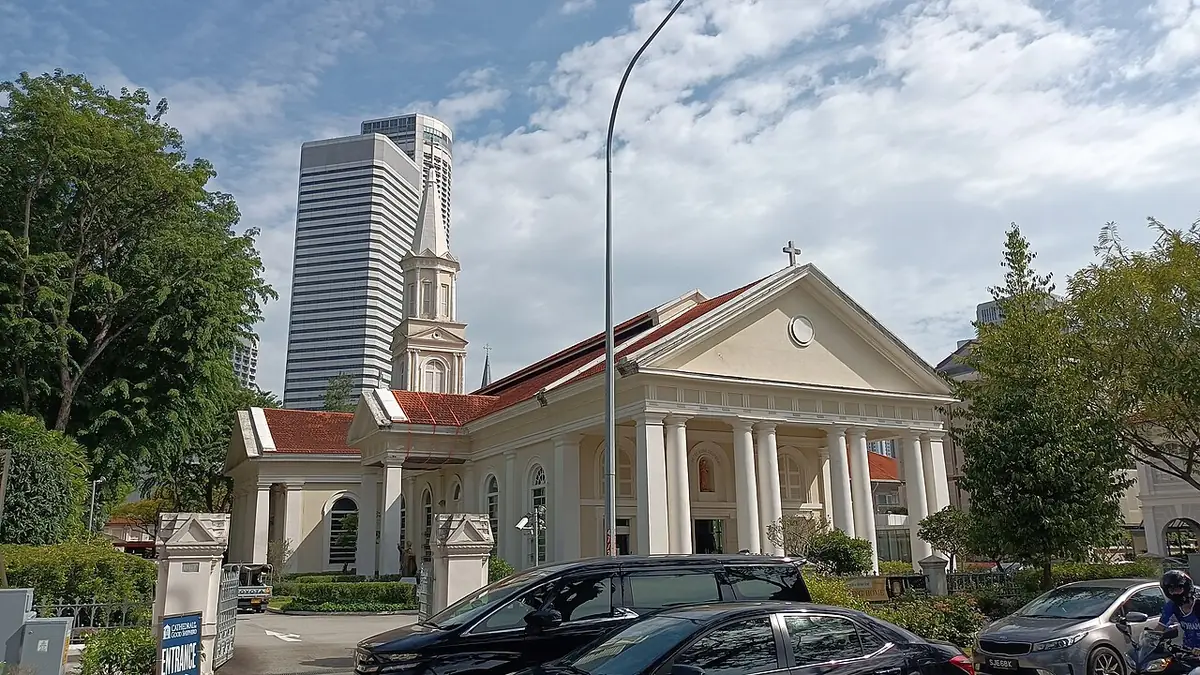
Heritage and modern Singapore side by side — Photo: GoAheadFan95 · CC BY-SA 4.0 · Wikimedia Commons
That legal vigilance should extend to the strict sequence of steps leading up to paying your deposit.
The debate between perpetual freehold and the ninety-nine-year lease is one of the defining features of the local market. A considerable share of the city-state's land belongs to the State, which grants it to private developers on long leases. This legal reality directly drives the discount applied to properties as their lease nears its original end. Understanding this time mechanism is essential if you want to avoid trapping your capital in an asset whose liquidity shrinks over the decades.
Freehold or 999-year leasehold properties
These very rare properties offer complete security for your wealth and suffer less from the erosion of land value over time. They attract families looking to pass on a lasting asset across several generations without worrying about a lease expiring.
What it changesThat scarcity comes at a high price from day one, with a significant upfront premium that weighs on the gross rental yield.
Properties on 99-year state leases
The majority on the market, these apartments have more accessible entry prices and often benefit from recent, high-performing infrastructure. Their management follows strict rules that ensure shared areas and communal facilities are properly maintained.
What it changesYou have to factor in the property's gradual depreciation once the remaining lease falls below the critical sixty-year mark, which makes bank financing harder.
What exact sequence should you follow before paying the first deposit on a purchase?
Seeing this rigorous sequence through takes the coordinated involvement of several professionals.
Buying property in Singapore follows a contractual procedure of absolute rigour that leaves no room for approximation. The process starts with the signing of a preliminary agreement called the Option to Purchase, which binds buyer and seller under strict rules. Each intermediate step is designed to clear up any legal or financial doubts before the funds are finally transferred. Skipping one of these steps exposes the buyer to losing the deposit for good.
Set a precise maximum budget that includes every tax, and obtain an in-principle approval from your bank.
View the property thoroughly and check the general condition of its technical installations and the condo's shared areas.
The seller grants the Option to Purchase in exchange for a first deposit, usually set at one per cent.
A legal review period during which your lawyer checks the title deeds and confirms there are no hidden charges or ongoing disputes.
Formally exercise the option within the legal window of fourteen to twenty-one days, paying the balance of the deposit.
Sign the final sale deed and have the transfer of ownership officially registered with the relevant authorities.
Who actually steps in at each stage of your property purchase in Singapore?
This careful coordination is what keeps your investment secure in one of the most stable environments in the world.
The smooth running of Singapore's property market rests on a clear division of roles between accredited professionals. Unlike markets where intermediaries wear several hats, each professional here works within a framework regulated by strict industry bodies. Knowing what each one is responsible for helps you deal with them effectively and avoid potential conflicts of interest. From the estate agent to the tax adviser, each expert secures a specific part of your purchase.
The licensed estate agent (Property Agent)Property selection and negotiationThey accompany you on viewings of properties listed on the official portal and draft offers using the industry's standard forms.
The property lawyer (Conveyancing Lawyer)Legal due diligence and securing the fundsThey check that the title is in order, make sure there is no undeclared mortgage and hold the funds in escrow until registration.
The bank adviser or mortgage brokerFinancing structure and securing the loanThey assess how much you can borrow under the strict ratios set by the Monetary Authority of Singapore and negotiate interest rates.
The licensed property valuerObjective estimate of market valueThey produce an independent valuation report, which the bank will require before releasing the funds for the transaction.
The condo manager (Managing Agent)Checking the development's rulesThey provide information on the building's reserve fund, upcoming works and the house rules that apply to residents.
Apartment or house in Singapore: what is the trade-off between space and urban convenience?
In Singapore, the choice between an apartment in a condominium, commonly called a condo, and the rare single-family houses comes down to a question of geography and lifestyle. Condos make up the vast majority of the housing open to foreign buyers, particularly in central districts such as the Core Central Region (CCR). They come with built-in facilities such as pools, gyms and round-the-clock security, pooling maintenance costs that would otherwise be prohibitive. Living high up also lets you partly escape traffic noise while enjoying natural ventilation that counts for a lot in the tropics.
Houses classed as landed property, whether terraces, semi-detached homes or bungalows, are tightly regulated. Buying one is in principle reserved for Singapore citizens, with very rare exceptions in the Sentosa Cove enclave for permanent residents and foreigners under strict conditions. Looking for a house therefore almost always means turning to long-term renting, or accepting heavy legal restrictions if you do not hold local citizenship. For an expatriate or a non-citizen investor, the apartment is often the default choice for legal reasons as much as for financial pragmatism.
Living space per dollar invested varies considerably depending on the option you choose. Moving away from the centre into the Rest of Central Region (RCR) or the Outside Central Region (OCR), condos gain in floor area at a noticeably gentler price per square metre. Families with children often find the best compromise there, combining proximity to international schools and MRT stations with more spacious interiors. Upkeep of the shared areas and the façade is handled entirely by the condo's management council, freeing owners from the heavy burden of the harsh equatorial climate on building materials.
The final choice depends fundamentally on the make-up of your household and how long you plan to stay in the city-state. An investor looking for liquidity and a stable rental yield will naturally lean towards an apartment well served by public transport. A family settling for the very long term, with an eye to naturalisation later on, may by contrast have good reason to look at the limited market for terraced houses in quiet residential neighbourhoods such as Serangoon Gardens or Opera Estate. Each option comes with its own financial and regulatory requirements, which are worth analysing before you sign the option to purchase.
What realistic budget should you plan for to buy and live in an apartment in Singapore?
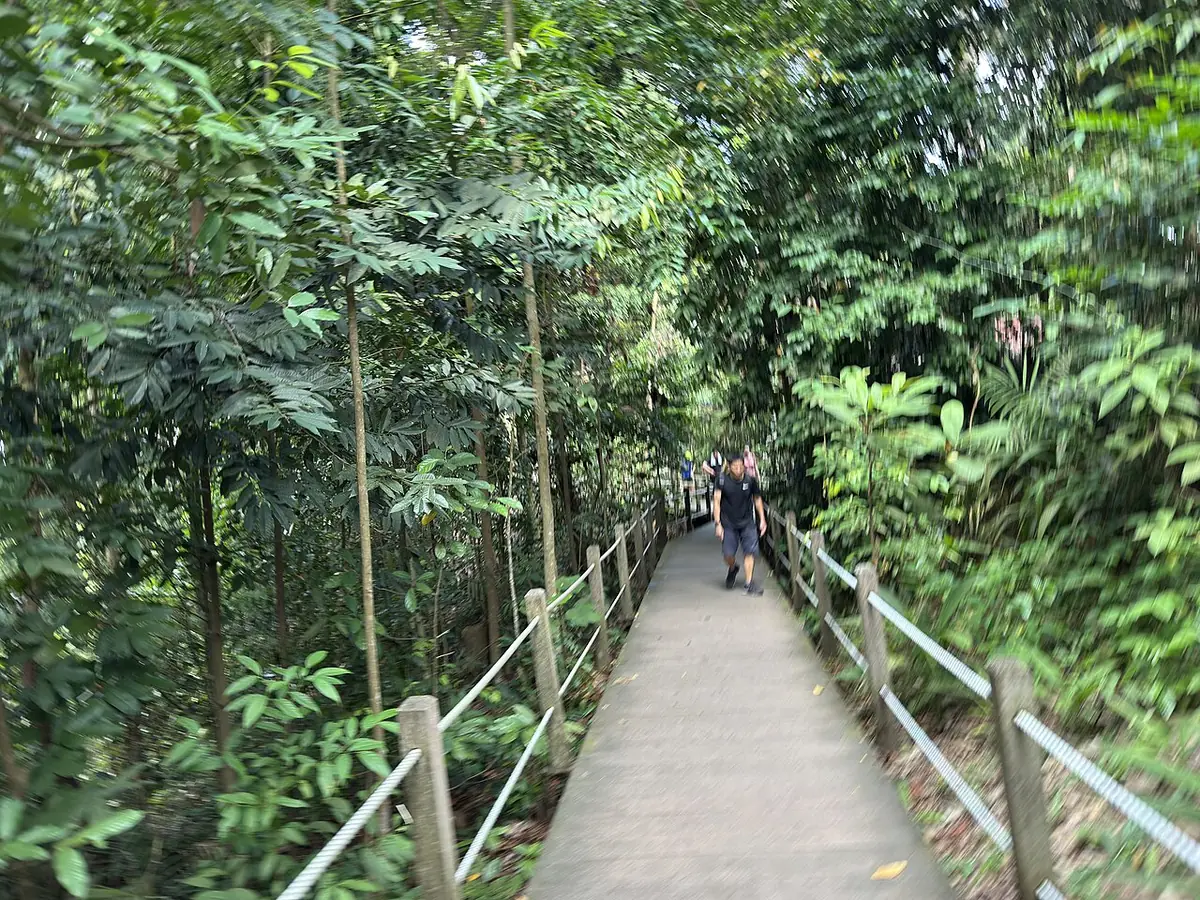
A quiet forest walk in Bukit Timah Nature Reserve — Photo: LN9267 · CC BY-SA 4.0 · Wikimedia Commons
Buying property in Singapore is about far more than the headline price shown on listing portals. You must factor in local taxes that bear down hard on non-residents, legal fees and regular upkeep. Historical data from the Urban Redevelopment Authority (URA) shows prices holding up strongly, but also high ongoing costs of ownership. Here is a breakdown of the spending items to anticipate so you can size your financing plan without nasty surprises.
Purchase costs and upfront taxes for an apartment
Cost item
Indicative rate or amount
Impact on the overall budget
Additional Buyer's Stamp Duty (ABSD)
0% for citizens, 20% for PRs, 60% for foreigners
The heaviest item for non-nationals, almost doubling the savings required
Buyer's Stamp Duty (BSD)
Progressive scale from 1% to 6% depending on the property's value
A compulsory transaction tax that applies to every buyer without exception
Legal and agency fees
Around 0.2% to 0.5% of the purchase price
Pays the lawyers handling the conveyancing and the estate agents
Minimum deposit
Generally at least 25% if you take out a bank loan
Requires substantial cash available in convertible currencies
ABSD rates have been raised sharply by the government to curb foreign speculation, making a purchase in a foreigner's name particularly expensive.
Running costs and annual property taxes
Type of charge
Frequency and estimate
What it means for the owner
Maintenance (Management Fee)
S$300 to S$800 a month depending on the size of the development
Pays for upkeep of the pool, security and lifts
Property Tax
Based on the annual rental value (AV) on a progressive scale
Compulsory annual payment due to the Inland Revenue Authority of Singapore (IRAS)
Home insurance (Fire & Contents)
S$300 to S$800 a year
Covers water damage and fire, both essential protections in the tropics
Reserve fund (Sinking Fund)
Included in or added to the monthly maintenance fees
Pays for major renovation works on the building without sudden calls for funds
Condo fees generally rise with the age of the development and the complexity of the facilities provided to residents.
Healthcare, schools, transport: what does day-to-day life look like for an owner in Singapore?
To understand what a property location in Singapore is worth, you have to look at how an ordinary day unfolds. Smooth public transport, nearby medical facilities and access to employment hubs set the rhythm of life. Here is the timeline of a typical Tuesday for a resident living in a well-connected residential neighbourhood.
07:30Local MRT stationAn early start to beat the rush hour. The Mass Rapid Transit network runs with remarkable punctuality, with trains every two minutes, getting you to the Central Business District in under twenty minutes.
08:15Office in the CBD (Raffles Place or Marina Bay)Arrival at work after a short, air-conditioned journey. The efficiency of Singapore's urban infrastructure greatly reduces the fatigue of the daily commute.
12:30Neighbourhood hawker centreLunch break in one of the many state-subsidised food centres. It is a chance to eat a wide variety of hygiene-inspected dishes for very little money.
17:00Medical centre or polyclinicA routine check-up or quick consultation in a healthcare system known for its technological excellence and clear pricing, whether at private clinics or public hospitals.
19:00FairPrice or Cold Storage supermarketEvening shopping for dinner. Local chains offer a mix of imported Western goods and fresh Asian produce to suit every diet.
20:00Condo developmentUnwinding by the development's pool or a workout in the air-conditioned gym, enjoying the evening quiet and the complete security of the enclosed shared areas.
What sales brochures and estate agents in Singapore leave out
Singapore's property market stands out for its institutional transparency, but glossy brochures mask crucial practical realities. Between time-limited land leases, renovation restrictions and construction noise, several subtleties escape first-time buyers. Here are the decisive points sellers deliberately avoid bringing up during viewings.
The depreciation of 99-year leases (Lease Decay)
A large share of Singapore's condos are built on land leased from the State for 99 years. Once the remaining lease drops below 60 years, getting a bank loan becomes much harder and the property suffers an unavoidable structural discount as the end of the term approaches.
Noise from never-ending construction sites
Singapore is a permanent building site because of the constant urban renewal driven by the Urban Redevelopment Authority. An empty plot opposite your future balcony can be sold to a developer the following month, bringing years of noise from 7 a.m.
Strict restrictions on interior alterations
Altering the structure of a condo apartment requires approval from the Management Corporation Strata Title (MCST). Knocking down a non-load-bearing wall or changing the external look of windows and balconies exposes you to hefty fines and an obligation to restore things as they were.
Overheated rents and volatile rental yields
If you are buying to let, be aware that Singapore's rental market reacts very quickly to government immigration rules and to swings in the supply of new HDB flats, which can temporarily squeeze your net return.
Draconian rules on pets and rubbish
Condo by-laws often ban certain dog breeds or limit how many you can keep. On top of that, failing to follow the rules on sorting and disposing of bulky waste in the shared refuse chutes brings immediate fines voted by the residents.
The disappointments buyers discover six months after getting the keys
Looked likeA south-facing aspect with an unbeatable view of the skyline and the illuminated towers around the bay.
Turned outDirect tropical sun that turns the apartment into an oven every afternoon, leading to sky-high air-conditioning bills and living with the blinds down.
Would have caught itCheck the property's exact orientation against the equatorial sun and favour a dual-aspect north-south layout to maximise natural ventilation without excessive electricity use.
Looked likeA calm, leafy neighbourhood tucked away at the end of a residential cul-de-sac, far from the bustle of the centre.
Turned outTotal dependence on a car or local buses because the nearest MRT station is far away, complicating the daily school run and commute.
Would have caught itAlways work out the real door-to-door journey time at rush hour to the places that matter to you before signing the purchase agreement.
Looked likeA small, intimate development of only forty units, promising peace and quiet and no overlooking neighbours.
Turned outExtortionate fees per unit, because the fixed costs of maintaining the pool and security are split between too few owners, making the budget unpredictable.
Would have caught itGo through the minutes of past owners' general meetings to spot recent special levies and gauge the financial health of the management.
Looked likeAn older property sold at a very attractive price per square metre compared with new developments in the area.
Turned outThe need for heavy renovation work to replace ageing plumbing and wiring, revealing hidden defects under fresh paint.
Would have caught itHave the apartment inspected by an independent architect or building surveyor before the conditions of the purchase are lifted.
Atypical profiles: who should definitely steer clear of buying property in Singapore?
Buying property in Singapore is a heavy capital commitment that does not suit every life path. Because of the punitive taxes for non-citizens and the rigidity of the resale market, committing too early can wipe out your savings. Here are the profiles for whom buying an apartment is a major financial risk to avoid at all costs.
The expatriate on a temporary assignment of less than five years
→Keeps renting a furnished apartment on the open market rather than buying.
Purchase costs (notably the 60% ABSD for foreigners) and resale costs in the event of an early departure completely cancel out any potential capital gain over a short period, turning the purchase into a financial sinkhole.
The investor looking for a high immediate rental yield
→Puts their cash into international financial instruments or government bonds.
Gross rental yields in Singapore generally hover around 2.5% to 3.5%. Once property tax, condo fees and upkeep are deducted, the net yield falls below the opportunity cost of other global asset classes.
The household whose work or residency situation is unstable
→Keeps maximum flexibility with a renewable annual lease.
Selling an apartment in a hurry in Singapore, in a market sometimes subject to regulatory cooling cycles, exposes you to forced discounts to find a buyer quickly among cautious purchasers.
So, are you ready to take the plunge and buy property in Singapore?
At the end of this analysis, buying property in Singapore shows itself for what it is: an exceptionally demanding financial decision, suited to those who see their future in the city-state for the long term. This market forgives neither improvisation nor loose financial planning. Between the deterrent taxes for non-citizens and the complexity of land leases, every dollar invested must be carefully weighed against your real priorities in life and your job security.
If you are a permanent resident or citizen, and your horizon stretches beyond a decade, Singapore property offers solid protection against inflation and an unrivalled urban setting. Rigorous urban planning and the island's complete safety help preserve the intrinsic value of good locations connected to the transport network. For this profile, buying is the logical next step after successfully settling into the local economy.
If, on the other hand, you are an international investor passing through or an expatriate subject to the ups and downs of job transfers, renting remains your best strategic ally. It gives you the freedom of movement you need to react to regulatory and tax changes without carrying the weight of an illiquid asset. Choosing to rent in Singapore is not giving up, it is a sensible way to preserve capital in one of the most structured rental environments in the world.
Take the time to review your personal situation, cost out all the hidden fees and consult independent experts before you write a single deposit cheque. Singapore's property market will always reward the patience and clear-sightedness of those who look beyond the gloss of the brochures. Your decision should rest on hard facts, your real tolerance for risk and a clear personal roadmap for the years ahead.
Related questions
Can a foreigner buy an apartment in Singapore without restrictions?
Foreigners can buy apartments in private condominiums (condos) without prior government approval. Buying houses or land (landed property), on the other hand, is strictly off limits to them, with very rare exceptions at Sentosa Cove under demanding conditions.
How much is the Additional Buyer's Stamp Duty (ABSD) for a non-resident buyer?
ABSD for foreign buyers is set at 60% of the property's purchase price. The government deliberately made this tax a deterrent, to rein in overseas demand and keep housing affordable for local citizens.
What is the fundamental difference between a 99-year lease and a 999-year lease?
A property on a 99-year lease returns to the State when the term expires, which means its market value gradually declines over the decades. A 999-year lease or a freehold title, by contrast, amounts to perpetual ownership with no time limit.
Can an expatriate get a mortgage from a local bank?
Local and international banks in Singapore do lend to non-residents, but the Loan-to-Value ratio is generally capped at 75% for a first loan, so you need a very substantial cash deposit of your own.
What legal fees and taxes should you budget for in a property transaction?
On top of the purchase price, you pay Buyer's Stamp Duty (BSD), charged at progressive rates of up to 6%, the lawyers' conveyancing fees, and the estate agent's commission, which is usually 1% for the buyer.
What is the average net rental yield for a condo in Singapore?
Gross rental yields generally sit between 2.5% and 3.5% a year. Once condo fees, annual property tax and letting management costs are deducted, the real net yield often comes out at around 1.5% to 2%.
How are condo maintenance fees calculated?
Fees are calculated according to the share value allocated to your unit within the development. They depend directly on the size of the apartment and on the facilities provided to residents, such as the pool or round-the-clock security.
Is it possible to resell an apartment straight after buying it?
Technically you can resell at any time, but Seller's Stamp Duty (SSD) applies if the sale takes place within three years of purchase, on a sliding scale that can reach 12% in the first year.
What is the HDB market, and is it open to foreigners?
The HDB market covers the public housing built by the Housing & Development Board. It is reserved first and foremost for citizens and for permanent residents who meet strict household criteria, and it remains completely closed to non-resident foreigners.
Where can you find official data on actual property transaction prices?
The official Urban Redevelopment Authority (URA) portal publishes every recorded transaction as open data, so you can compare real prices per square metre by neighbourhood and by type of development.
Property review of ting
No ting properties in Singapore yet
Be the first — share it on ting and it shows up right here.