Buying property in the city-state means decoding a market shaped by scarce land and strict rules. This guide takes you step by step through structuring your purchase with a clear head, well away from the marketing talk.
Get the app
What nobody tells you.
Real prices, hidden costs and the traps to check before you commit.
What you really get when you buy a house in Singapore
Scroll
What you really get when you buy a house in Singapore
Buying property in the city-state means decoding a market shaped by scarce land and strict rules. This guide takes you step by step through structuring your purchase with a clear head, well away from the marketing talk.
Written by the ting.ad editorial team ·
Sale House Singapore in Street View: drag to look around.
Land this scarce means you need to look closely at how you live to know whether this kind of home suits your everyday life.
Investing in a house in Singapore means coming to terms with the absolute scarcity of land on the island. Landed properties make up a tiny fraction of the total housing stock in a hyper-dense city-state. That structural scarcity completely redefines what value, as an asset and as a place to live, really means. Understanding it lets you move past the idea of an ordinary property purchase and see it as a unique investment in Southeast Asia.
Exceptional floor space for the regionvsReal maintenance demands and a very high purchase cost
Owning a detached house in such a dense city gives a rare sense of space. In return, maintaining the structure and the grounds calls for a steady, carefully managed budget.
A very secure asset you can pass onvsA heavily regulated market for non-residents
Singapore's institutional strength guarantees the legal security of your asset over the long term. Even so, access to this type of property remains tightly controlled by the local authorities for foreign buyers.
A protected, leafy residential settingvsOften a greater distance from the business districts
Neighbourhoods of houses offer complete calm and a surprising amount of greenery for a city. That usually means accepting slightly longer journeys into the Central Business District.
Land scarcity that protects value over the long termvsFewer resale opportunities because of low volumes
Since the number of detached houses can no longer grow, their underlying value tends to hold up well when the cycle turns. The pool of buyers able to afford this segment, however, remains smaller than for apartments.
Does this island lifestyle match what you expect from everyday life?
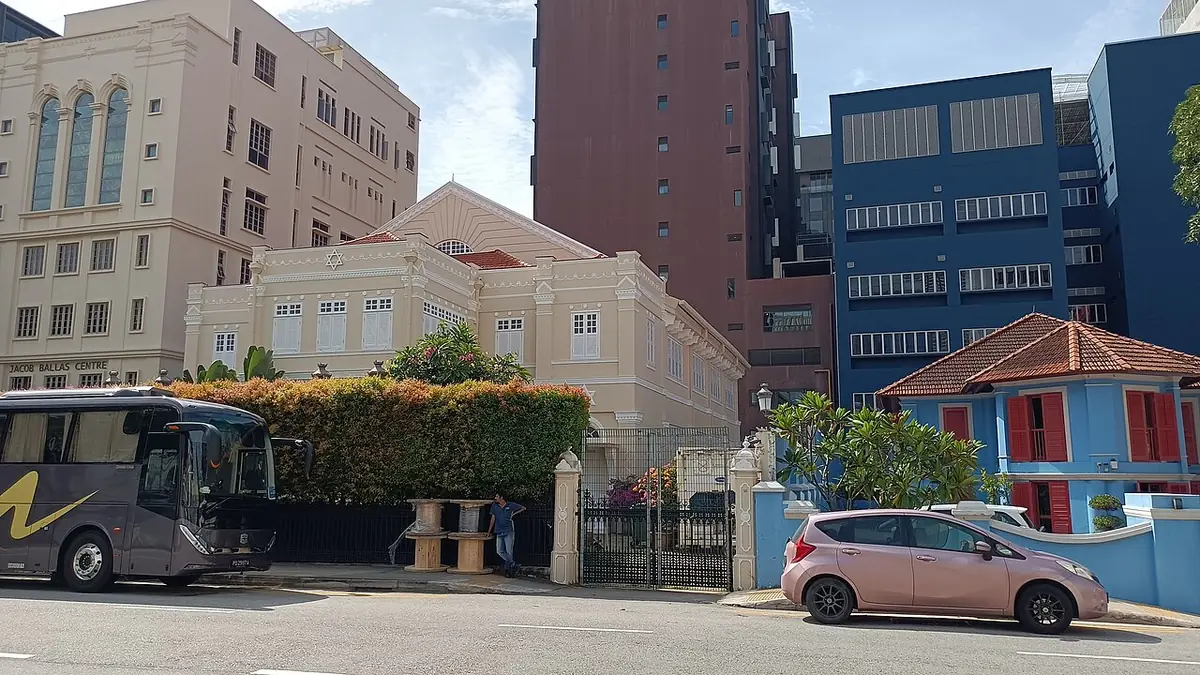
Old shophouses and new towers share this Singapore street — Photo: GoAheadFan95 · CC BY-SA 4.0 · Wikimedia Commons
To weigh these choices properly, it helps to set the reference points you arrive with against the reality of Singapore.
Living in a house in Singapore brings a rhythm and a way of organising things that differ noticeably from life in a high-rise condominium. Between managing outdoor space in the tropics, the equatorial climate and the household logistics, every type of buyer needs to assess how well they fit this environment. Looking hard at your daily priorities will spare you disappointment once you have moved in.
Family option
Residential neighbourhoods of houses offer a safe environment and indoor space suited to larger households. Being close to international schools and parks is a decisive advantage day to day. You will still need to plan the after-school driving if you choose outlying areas. Outdoor space quickly becomes the centre of family life in the tropics.
Resident investor option
You are buying a property meant to become your main home over the long term, with a view to passing it on. Running a house calls for direct involvement in its upkeep and in coordinating local contractors. You enjoy a privacy that condominiums cannot offer, while accepting the specific regulatory constraints of the landed property market. It is a choice driven by the search for stability and permanence.
Busy professional option
Living in a house while managing a demanding career in the financial centre calls for tight logistics. Neighbourhoods of houses are generally set away from the office towers, which lengthens morning and evening commutes. You have to balance the complete calm of your home against the time spent travelling each day. Some people choose enclaves closer to the central area to reduce that friction.
Living here when you come from abroad: what changes completely
Once those reference points have sunk in, the central question becomes choosing the location and the neighbourhood.
The cultural and practical leap between the property market back home and Singapore's is considerable. Planning rules, dealing with tropical humidity and contractual relationships rest on different foundations. Anticipating these structural differences will let you adjust your expectations from the very first viewings.
From abroad
A rental and sales market framed by many laws protecting the occupant
Singapore
A very precise legal environment where freedom of contract comes first, within strict rules
Every clause in the purchase or booking contract matters enormously and leaves no room for approximation.
From abroad
Proper winters that call for heating and reinforced insulation
Singapore
A permanent equatorial climate demanding continuous air conditioning and humidity control
The design of the house and its orientation to the sun directly determine your energy bills and your comfort.
From abroad
A varied supply of renovated older houses and traditional properties
Singapore
A stock of detached houses heavily constrained by legislation and purchase restrictions
Buying opportunities are rare, and you need to move quickly on properties whose features you have already checked.
From abroad
Local paperwork handled by notaries with regulated fees
Singapore
Specialist lawyers are indispensable to secure every property transaction
The cost of legal advice is an integral part of the overall budget and should never be overlooked.
From abroad
Public transport and road networks spread across a large territory
Singapore
A very dense territory, thoroughly connected but subject to strict quotas on car ownership
The location of your house needs to take access to the MRT lines into account to keep you mobile.
Which neighbourhood to target to settle and invest for the long term?
These location choices translate into hard financial realities that are worth examining in detail.
Singapore divides its residential areas of houses very clearly, often referred to by official district numbers. Each area has its own identity, its own level of accessibility and its own distance from city amenities. Knowing these nuances keeps you from investing in an area that does not match the way you live.
Districts 9, 10 and 11 (Bukit Timah, Tanglin)
A prestigious atmosphere, wooded residential calm and the city centre right on the doorstep.
Suits
Buyers looking for a prime, blue-chip location and well-regarded schools.
Trade-off
Prices per square metre among the highest in the whole city-state, and fierce competition for every property.
District 15 (East Coast, Joo Chiat)
A relaxed seaside setting, marked by a unique cultural heritage and neighbourhood cafés.
Suits
Those who value being near the sea and the coastal parks, with an urban village feel.
Trade-off
Possible noise from flight paths and main roads on certain streets.
Districts 19 and 20 (Serangoon, Bishan)
Lively residential neighbourhoods, very well connected to the transport network and focused on family life.
Suits
Buyers looking for a better balance between living space and overall purchase budget.
Trade-off
Architecture that is sometimes more standardised, and less historic prestige than in the central districts.
Districts 26 and 27 (Upper Thomson, Yishun)
Lush greenery on the edge of the large reservoirs and protected natural areas.
Suits
Those who put complete calm and nature at the heart of their plans, even at the expense of being central.
Trade-off
A marked distance from the business district that makes daily journeys significantly longer.
What buying a house on the island really costs
Beyond the headline purchase price, the legal structure of ownership deserves very close attention.
The market for detached houses (landed properties) in Singapore runs at very high price levels because land is so scarce. Prices vary considerably depending on the type of property (terrace house, semi-detached or bungalow) and the district it sits in. No figure should be taken as a firm promise, only as a broad observed trend.
SingaporeFor saleHouseestimate
Median price / m²SGD 15,190Half the apartments sell below this
Median priceSGD 2.52mthe average is 14% higher — a few very large properties pull it up
Most common2 bedrooms44 % of listings
Average size158 m²
By number of bedrooms
Bedrooms
Share of market
Avg price
Price / m²
Avg size
2most common
44 %
SGD 2.1m
SGD 15,990
131 m²
3
41 %
SGD 2.79m
SGD 15,190 −5 %
184 m²
4
15 %
SGD 3.6m
SGD 14,711best value / m²
245 m²
Each row is an average, compared against the area average of SGD 15,990 / m². These are indicative estimates of a typical local market, not a measured sample of live listings. Check current listings before relying on them.
What you can actually own depending on your residency status
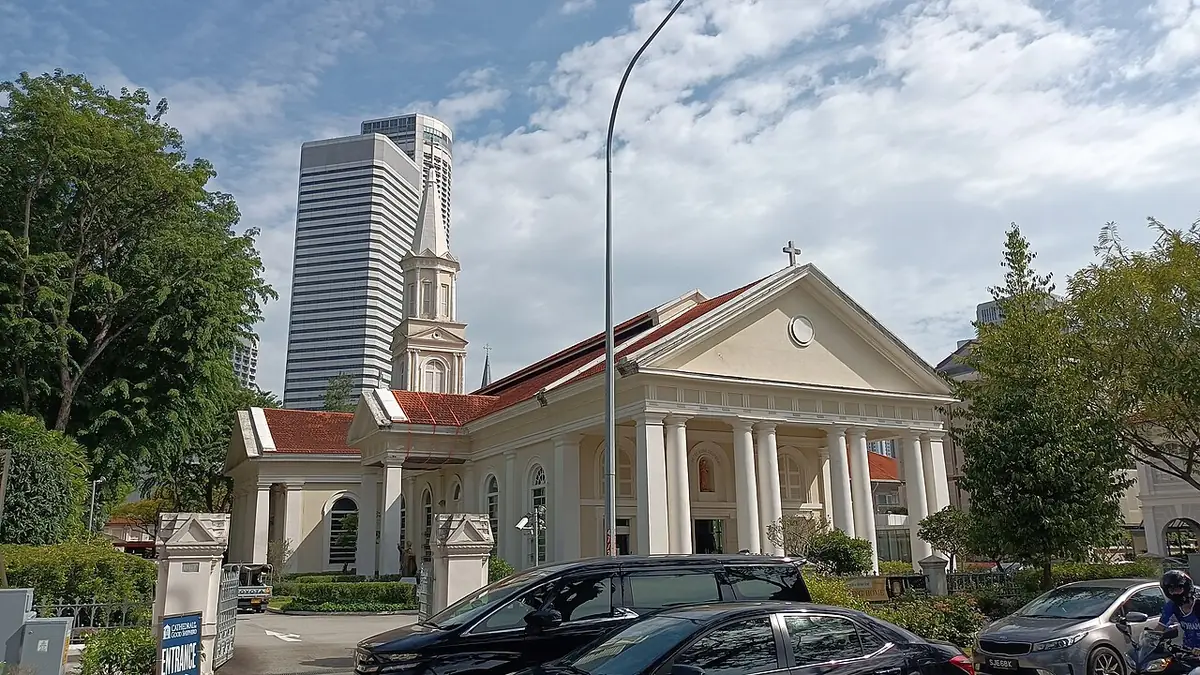
Heritage and modern Singapore side by side — Photo: GoAheadFan95 · CC BY-SA 4.0 · Wikimedia Commons
Once the legal and financial framework is confirmed, the transaction follows a strict timeline.
Singapore law guards its land fiercely and sets clear barriers between citizens, permanent residents and non-resident foreigners. Knowing exactly what you are allowed to buy will save you from wasting precious time on properties you cannot access. This legal distinction is the cornerstone of any purchase in the city-state.
Restricted ownership of landed properties (detached houses)
Buying houses on their own land, or plots of land, is in principle reserved for Singapore citizens. Permanent residents (PR) can sometimes obtain an exceptional approval from the authorities after a thorough review of their application and their economic contribution to the country. Foreigners without permanent status simply cannot buy this type of property, except in very specific cases such as the Sentosa Cove villas.
What it changesYou must confirm your legal eligibility with the relevant authorities before arranging a single viewing.
Freedom to buy apartments in condominiums
Unlike detached houses, apartments in private developments with shared facilities are freely open to foreigners. The regulatory constraints are much looser, even though additional purchase taxes apply to every non-citizen. This segment is therefore the main way in for most international investors settling in the city-state.
What it changesIf you are not a citizen or a long-standing permanent resident, your property plans will naturally turn towards high-rise homes rather than a house.
The fundamental rule to understand before paying any deposit
This strict timeline fits into a wider sequence that needs to be managed step by step.
Property transactions in Singapore rest on absolute contractual rigour and tight deadlines. As soon as you agree on a property, the option binds the parties according to a precise protocol. Mastering this chain of events protects you against beginner's mistakes and keeps your money safe.
Viewing the property and informally negotiating the price with the seller or their appointed agent.
The seller issues the Option to Purchase (OTP) once the final price is agreed.
An option fee is paid (generally 1% of the price) to take the property off the market.
Your lawyer carries out thorough technical and legal checks on the property while the OTP is valid.
The option is exercised and the balance of the deposit is paid (often a further 4 to 9%) to make the commitment final.
Final signature of the sale and transfer of ownership, handled by the law firms.
How a property transaction unfolds, step by step
Seeing a property purchase through in Singapore means coordinating several key players in a precise order. Bankers, lawyers and agents step in on a careful timetable so the transaction goes through without a hitch. Here is the roadmap to follow to structure your approach from start to finish.
The buyerConfirming the budget and obtaining an in-principle agreement from the bank (In-Principle Approval)This essential first step sets your real financial limits before you view the first property on the market.
The estate agentTargeted shortlisting of properties and viewings in the neighbourhoodsYou explore the chosen districts, looking at the immediate surroundings, the amenities and the planning projects nearby.
The lawyerChecking the title and compliance with planning rulesThe lawyer makes sure no hidden encumbrance or administrative restriction affects the property you want.
Both partiesSigning the Option to Purchase and paying the required depositsThe legal framework of the sale is formally fixed, with strict financial penalties if either side pulls out.
The lawyer and the bankFinalising the financing and releasing the fundsFunds are transferred securely between the lawyers' escrow accounts.
The buyerHandover of the keys and moving into your new homeYou officially take possession and start setting up water, electricity and fibre connections.
House or apartment in Singapore: weighing private space against shared services
Once that fundamental choice between house and apartment is made, it is worth looking in detail at the budget such a purchase implies in Singapore's economy.
The choice between buying a detached house, known here as a landed property, and an apartment in a private development, the well-known condominium, shapes your entire financial and everyday plan in Singapore. This decision is not only a matter of home comfort or personal taste in architecture: it directly determines your exposure to Singapore's regulatory framework, to the strict restrictions on owning land and to the realities of maintenance in a tropical climate that is particularly hard on building materials. Condominium apartments are remarkably easy to buy, spread upkeep costs across owners through the service charges and give you immediate access to built-in leisure facilities that make daily life run completely smoothly. In return, you share the walls, the corridors and the decisions of the owners' general meetings with hundreds of other owners, which considerably limits your architectural freedom and your ability to reshape the space to suit your deeper wishes over the years.
Buying a detached house in Singapore, on the other hand, whether a terrace house, a semi-detached or a bungalow, is the pinnacle of property ownership and is subject to extremely strict legal barriers. The great majority of houses with land are strictly reserved for Singapore citizens, and only a few very specific enclaves, such as the Sentosa Cove developments, are open to permanent residents or foreign investors, subject to complex and costly government approvals. For expatriates and foreign buyers who are not citizens, the choice is therefore, in practice, very largely steered towards the condominium market, unless they obtain citizenship or marry a local spouse. This legal reality completely reframes your original question, turning a lifestyle choice into an unavoidable administrative constraint that dictates your real options from the very first stages of your property search.
If you are lucky enough to be eligible to buy a house in Singapore, the practical implications differ radically from condominium living. There is no management corporation or managing agent to deal with roof leaks, repainting the facades or maintaining the private pool: everything rests on your shoulders, with labour and material costs that reach record levels on an island where every square metre of land is a scarce resource jealously protected by the state. However, the independence of your space, the absence of neighbours directly above your ceiling and complete freedom to fit out your interior or reconfigure the rooms give houses an unmatched value in use for families with children or anyone who loves complete calm. Long-term financial analysis also shows that the absolute scarcity of land in Singapore has historically given houses greater resilience as assets than apartments, whose constant renewal through new high-rise construction can saturate some segments of the resale market.
Ultimately, choosing between a house and an apartment in Singapore comes down to weighing your regulatory access rights, your tolerance for maintenance demands and your long-term vision of passing on your assets. If you are a citizen looking for a permanent foothold on land, with potential capital growth driven by the physical shortage of land, the house is the logical culmination despite the considerable maintenance effort it demands in the tropics. If you are a permanent resident or an expatriate, or if you prefer the simplicity of delegated management where security, the pool, the gym and the upkeep of shared areas are handled invisibly, the condominium remains the most rational and most liquid investment and home on the Singapore market. In both cases, the decision should be made with a sharp awareness of the costs involved and of the strict rules governing planning in this heavily regulated city-state.
A detailed look at purchase budgets and recurring costs for a property in Singapore
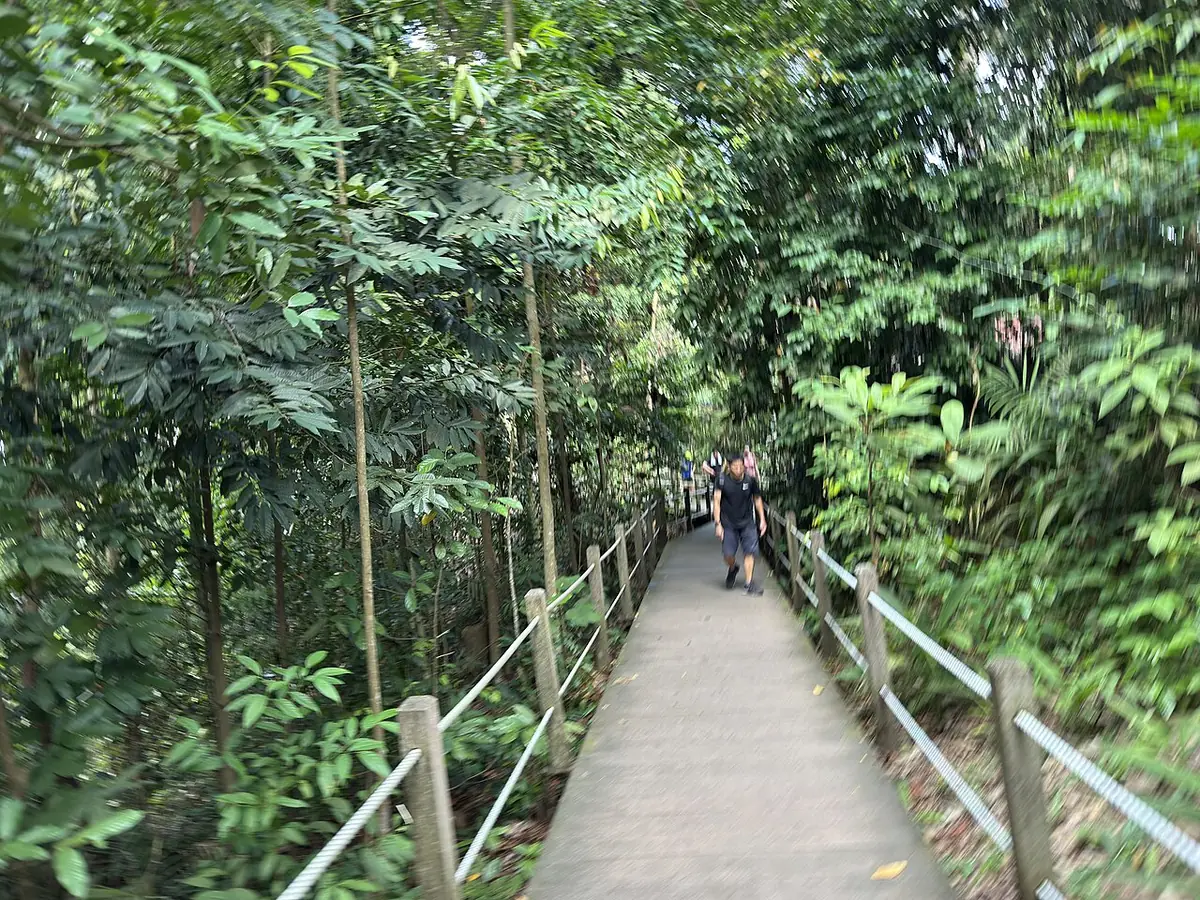
A quiet forest walk in Bukit Timah Nature Reserve — Photo: LN9267 · CC BY-SA 4.0 · Wikimedia Commons
Once you have measured the financial effort, it helps to picture the actual pace of life that comes with settling in one of the city-state's residential neighbourhoods.
Buying property in Singapore never comes down to the price shown on listing portals or in developers' sales brochures. Between steep transfer taxes for non-citizens, legal fees, bank interest and service charges, the overall budget calls for rigorous financial planning with no approximations. The tables below set out the real structure of upfront and recurring costs so you can anticipate every payment without unpleasant surprises.
Upfront fees and purchase taxes by buyer profile
Cost item
Singapore citizen
Permanent resident (first purchase)
Foreigner / non-resident
Additional Buyer's Stamp Duty (ABSD)
0%
5%
60%
Buyer's Stamp Duty (top BSD rate)
6%
6%
6%
Legal fees and formalities
SGD 2,000 to SGD 5,000
SGD 2,000 to SGD 5,000
SGD 3,000 to SGD 7,000
Minimum down payment required
25% (via CPF and cash)
25% (mixed)
25% to 35% (strictly in cash)
ABSD rates have been raised sharply by the government to cool foreign speculation, making a purchase financially very heavy for a non-citizen.
Annual and monthly recurring costs for a condominium apartment
Type of cost
Frequency
Estimated amount (typical range)
Impact on the budget
Management Fee
Monthly
SGD 300 to SGD 900 a month
Varies with the size of the development and its facilities
Property Tax
Annual
4% to 32% of the annual value (AV)
Progressive, depending on whether the owner lives in the property or rents it out
Comprehensive home insurance
Annual
SGD 400 to SGD 1,200 a year
Essential protection against water damage and tropical storms
Sinking Fund for major works
Included in the charges
SGD 100 to SGD 300 a month
Secures the long-term structural health of the building
These recurring costs rise regularly because of higher labour costs and infrastructure maintenance in Singapore.
Everyday life up close: an ordinary Tuesday between transport, schools and healthcare
Behind this front of flawless efficiency and modernity lie subtleties that sales brochures consistently leave out.
To judge whether a property location in Singapore makes sense, looking at the map on a Sunday afternoon is not enough. How smoothly the morning commute runs, access to international or local schools, how close you are to primary care and what the neighbourhood is like on weekdays are the real test of your investment. This timeline of an ordinary Tuesday shows the journey times, the interactions with local infrastructure and the level of practical comfort you can expect day to day.
07:00Home - residential condominiumWaking up in an air-conditioned, secure environment. City noise is muffled by double glazing and the distance from main roads.
07:45Local MRT (Mass Rapid Transit) stationA seven-minute walk along covered walkways to the station. Trains arrive every two minutes with absolute punctuality.
08:30School drop-off / international schoolThe children reach school on organised school buses or on the public bus network, which is very safe and widely used by pupils travelling on their own.
09:15Neighbourhood medical centre (polyclinic or general practitioner)A quick appointment for a repeat prescription or a routine check-up. Singapore's healthcare system is formidably efficient, without excessive waiting.
12:30Local hawker centre for lunchA dive into everyday food culture. A full, balanced and extremely cheap meal in a space closely inspected by the hygiene authorities.
18:00FairPrice Finest or Cold Storage supermarketPicking up fresh food for dinner. The shelves offer a sophisticated mix of products imported from Europe and Australia alongside Asian specialities.
20:00Back at the condominium to unwindA swim in the development's pool or a quiet moment on the balcony facing the city-state's illuminated skyline.
What sales brochures and estate agencies in Singapore leave out
Being clear-eyed about what the market leaves unsaid helps you avoid the classic disappointments that inevitably surface a few months after moving in.
Singapore's property market is one of the most transparent in the world in legal terms, but it is still complex and full of cultural and planning subtleties. Developers' brochures and agents' pitches naturally focus on the flattering aspects, leaving in the shadows technical and regulatory realities that can change your daily life or affect the future valuation of your property. Here are the key points you must check before signing an offer.
The trap of long leases (leasehold vs freehold)
A considerable share of Singapore property is built on land granted by the state for a limited term of 99 years. As the lease nears its end, the property loses value sharply and predictably, something many foreign buyers badly underestimate when they sign.
Urban Redevelopment Authority (URA) development plans
Singapore's master plan evolves constantly. An empty plot or an old low-rise building opposite your future window can become an elevated expressway, an underground MRT line under construction or a massive residential tower that permanently blocks your view and your light.
The strict rules on CPF use for non-residents
The Central Provident Fund (CPF) is the compulsory savings scheme for citizens and permanent residents, and it often serves as the down payment on a property. If you are a foreigner without permanent resident status, you cannot draw on these funds, which means you need large amounts of cash available immediately.
The microclimate effect of orientation and natural ventilation
In the tropics, a west-facing apartment with no sun protection is a permanent furnace that sends air-conditioning bills soaring. Estate agents often schedule viewings at cooler times of day, which hides this major thermal flaw.
The strict approach to nuisance and neighbour relations
House rules in Singapore condominiums are extremely strict about noise, pets and the use of shared spaces. Repeated breaches can lead to hefty fines imposed by the management committee, or even legal action by the management corporation.
Anatomy of property regrets: what you find out six months after moving in
With those disappointments avoided, you now need to ask the fundamental question of whether this market fits your personal and professional profile.
Looked likeA very quiet, leafy and perfectly peaceful neighbourhood during the Sunday afternoon viewing.
Turned outAn area that turns into a flight path or is crossed by a major infrastructure building site working seven days a week from six in the morning.
Would have caught itVisit the property several times at strategic hours, especially on weekdays at rush hour and in the evening after sunset, and check the URA master plan to identify future construction.
Looked likeA development with lavish facilities and an Olympic-size pool worthy of a luxury hotel.
Turned outSteep and steadily rising monthly charges to pay for renovating ageing lifts or chronic structural leaks in the underground car park.
Would have caught itAsk for the minutes of the last three general meetings of the development to assess the financial health of the reserve fund and identify any extraordinary works voted or under discussion.
Looked likeA compact apartment, beautifully laid out thanks to clever interior design and mirrors everywhere.
Turned outA heat trap with no natural airflow, where humidity lingers and the air conditioning must run constantly, producing astronomical electricity bills and mould problems.
Would have caught itCheck the ceiling height, which way the main windows face and whether there are openings on both sides allowing the natural airflow that is essential in Singapore's equatorial climate.
Looked likeAn ideal buy-to-let investment with a gross yield the sales agent described as exceptional.
Turned outLong vacant periods because of fierce competition in the same area and demanding tenants who shun properties poorly served by public transport.
Would have caught itStudy the historical rental transaction statistics published by the local authorities and check the real walking distance to the nearest MRT station, an absolute criterion for any tenant in Singapore.
Who should not be buying: the profiles that should stay away from Singapore property
With those warnings in place, it is time to take stock personally and make a final call on your purchase.
Buying property is often presented as the be-all and end-all of building wealth, but the Singapore context, with punitive taxes for foreigners and restricted liquidity, makes it counterproductive for many profiles. If you recognise yourself in one of the situations below, long-term renting or investing in other financial markets is a far more rational choice that better protects your savings.
The expatriate on a short assignment, or whose local employment contract is uncertain over a three to five year horizon
→To give up on buying and opt for a flexible rental in a well-run condominium.
Upfront purchase costs, combined with transfer taxes (ABSD) and resale costs, take at least six to seven years of ownership to recoup. Selling in a hurry because you have to return to your home country almost always ends in a substantial net loss.
The international investor looking for a high, immediate gross rental yield to generate cash flow
→To invest in other Asian or European markets with more generous rental yields.
In Singapore, gross rental yields have historically sat in a low range, often between 2% and 3.5%, because of rapidly rising asset values and rents held in check by the plentiful supply of HDB public housing.
The buyer with a down payment that is only just enough and no cash safety margin
→To build solid emergency savings before considering any property commitment in the city-state.
The slightest setback at work, a rise in bank lending rates or exceptional contributions voted by the development for major repairs can strangle a tight budget and lead to a forced sale on unfavourable terms.
The first-time buyer who cannot stand regulatory constraints and rigorous administrative procedures
→To turn to liquid, diversified financial investments (ETFs, international life insurance).
The Singapore market demands absolute legal rigour, compliance with inflexible conveyancing procedures and heavy administrative management that forgive no approximation from inexperienced buyers.
Decision summary: are you truly ready to take the step of buying property in Singapore?
At the end of this analysis, buying property in Singapore appears for what it really is: an exceptionally demanding financial commitment, governed by strict legal rules and an uncompromising financial reality. If you have confirmed your regulatory eligibility, absorbed the impact of transfer taxes such as the ABSD and secured a long-term view that goes well beyond a short-term speculative horizon, then the Singapore market offers one of the most stable, safe and transparent settings on the planet to anchor your family's wealth for the long term.
The key to success lies in a perfect fit between your investment horizon, your tax profile and the exact nature of the property you are targeting, whether a condominium well served by the MRT network or a landed house if your citizenship rights allow it. Never give in to the artificial urgency some market players create or to the lure of miraculous yields. Take the time to visit at different times of day, go through the developments' accounts line by line and model all the recurring costs over the period you plan to own the property.
If the administrative constraints, the entry costs and the prospect of tying up part of your cash seem too heavy given your current professional situation, renting at the high end remains a perfectly respectable and financially sensible alternative. In Singapore, renting is not throwing money out of the window: it is buying flexibility in one of the most pleasant and dynamic cities in the world while you wait for every financial indicator to turn firmly green.
Related questions
Can a foreigner buy any type of property in Singapore?
No. Foreigners who are not permanent residents face strict restrictions on buying property that comes with land (landed properties), which is in principle reserved for Singapore citizens. They can, however, buy apartments in private developments (condominiums) freely, without prior government approval.
Exactly how much is the Additional Buyer's Stamp Duty (ABSD) for a foreign buyer?
The Additional Buyer's Stamp Duty for foreign buyers stands at 60% of the purchase price or the market value of the property, a major deterrent the authorities introduced to cool an overheating residential market.
What is a 99-year lease (99-year leasehold) in Singapore?
It is a very common form of ownership in which the land belongs to the Singapore state (Singapore Land Authority), which grants the right to occupy and use it for a fixed term of 99 years. When the lease expires, the land and buildings revert to the state, which means the property loses value as the end of the term approaches.
Can you use your CPF account to buy an apartment in Singapore?
Yes, but that option is strictly reserved for Singapore citizens and permanent residents (PR). Non-resident foreigners do not contribute to the Central Provident Fund and must rely entirely on bank financing and their own cash.
What standard legal fees and transfer taxes apply to every purchase?
Every buyer, whatever their nationality, must pay the Buyer's Stamp Duty (BSD), a progressive tax whose top rate reaches 6% for the highest value bands, on top of the legal fees for drawing up the sale documents.
How do service charges work in a Singapore condominium?
Service charges, known as management fees and the sinking fund, are paid quarterly or monthly by the owners. They cover upkeep of the pool, security and lifts, and build a reserve fund for major renovation work on the building.
What is the average gross rental yield on the Singapore market?
Gross rental yield generally sits between 2% and 3.5% a year for well-located residential condominiums. That fairly modest return reflects how highly property assets are valued in the city-state.
Do you have to use a licensed estate agent to buy in Singapore?
It is not a strict legal requirement, but it is strongly recommended given how complex the contracts are, the need to check title and the strict rules overseen by the Council for Estate Agencies (CEA).
How long does it usually take to complete a condominium purchase?
The whole process, from signing the option to purchase (OTP), including paying the booking deposit, to final registration of the sale with the land authorities, generally takes between 8 and 12 weeks.
Where can you check the actual prices of past property transactions in Singapore?
Official data on all recorded property transactions is openly available on the public portal of the Urban Redevelopment Authority (URA) or on the Singapore Land Authority (SLA) website.
Property review of ting
No ting properties in Singapore yet
Be the first — share it on ting and it shows up right here.