Buying a villa in Singapore is a major wealth commitment, shaped by strict land regulation and a tax regime unlike any other in the world. This guide sets out the essential mechanisms for securing your property investment in the city-state without putting a foot wrong.
Tell us about your life. Ex: I’m relocating to Nice next year
Attach file
Get the app
Buy Villas Singapore
Buying a villa in Singapore is a major wealth commitment, shaped by strict land regulation and a tax regime unlike any other in the world. This guide sets out the essential mechanisms for securing your property investment in the city-state without putting a foot wrong.
Why buying a villa in Singapore upends your usual property reference points
Scroll
Why buying a villa in Singapore upends your usual property reference points
Buying a villa in Singapore is a major wealth commitment, shaped by strict land regulation and a tax regime unlike any other in the world. This guide sets out the essential mechanisms for securing your property investment in the city-state without putting a foot wrong.
Written by the ting.ad editorial team ·
Commonwealth Avenue, Singapore in Street View: drag to look around.
These structural constraints redefine how you need to assess your profile as a buyer before you commit.
Buying a prestige property in the city-state follows legal and tax logic that is radically different from what applies in most Western markets. Between absolute scarcity of land, the long-lease system and strict limits on foreign buyers, a property investment here is never just a simple wealth transaction. You need to factor in from the outset the constraints of an ultra-regulated market where every square metre is precisely controlled by the authorities to preserve the urban and social balance.
The vast majority of land belongs to the state or to institutional trusts. Freehold villas trade at a considerable premium, while 99-year leases call for close attention to how much of the term remains, so that your investment stays liquid in the future.
Complete freedom to buy regardless of statusvsStrict oversight by the SLA (Singapore Land Authority)
Buying a villa on its own plot (landed property) is in principle forbidden to non-residents, with an exceptional exemption for Sentosa Cove. In other neighbourhoods, access requires permanent residence or a major economic contribution approved by the local regulators.
Freedom to use and remodel the building as you wishvsSubjection to tough planning and conservation rules
Even as the owner, you cannot alter the external structure of a single-storey house or an estate home without approval from the government agencies. Aesthetic and environmental control is permanent, to keep the island's landscape harmonious.
Which type of home really fits your daily life in Singapore?
To gauge properly how far this is from what you are used to, it helps to set these local realities against your usual frame of reference.
The villa market in Singapore splits into very distinct types, from ultra-exclusive single-storey bungalows to cluster housing that combines shared facilities with privacy. Your choice should follow directly from how long you plan to stay, the make-up of your family and your tolerance for the maintenance demands of a challenging tropical climate.
The classic bungalow in an established residential area
This option suits households looking for independent space with a private garden and, ideally, a pool. You enjoy complete calm away from the congested roads, while staying close to the international schools and the long-established sports clubs. Day-to-day management does, however, mean supervising a team of contractors for regular upkeep of the roof, the lush vegetation and the air-conditioning systems, which the humidity puts under heavy strain.
Financially, landed property has historically been the island's safe haven par excellence, showing remarkable resilience to regional economic cycles and to the macroprudential cooling measures taken by the central bank.
The secure cluster house
Cluster housing brings several villas together within a gated development that shares common facilities such as a large landscaped pool, a gym and 24-hour security. It is the ideal compromise if you travel often or dread the logistical burden of an isolated detached house.
The maintenance fees are admittedly high, but they cover the whole exterior envelope, security and the shared green spaces. It is often a more accessible way in for eligible buyers looking for an upmarket setting without the direct operational hassle.
The waterfront villa at Sentosa Cove
Sentosa Cove is the only enclave in Singapore where non-resident foreigners can buy villas with a berth for a pleasure boat without the restrictive prior approval of the Singapore Land Authority. The market there follows its own international dynamics, partly decoupled from the domestic market of local citizens.
While the potential capital gain and the marina lifestyle are appealing, you need to factor in the cost of the daily commute to the Central Business District (CBD) and a greater sensitivity to swings in demand from wealthy expatriates.
What changes radically in your daily life compared with what you are used to?
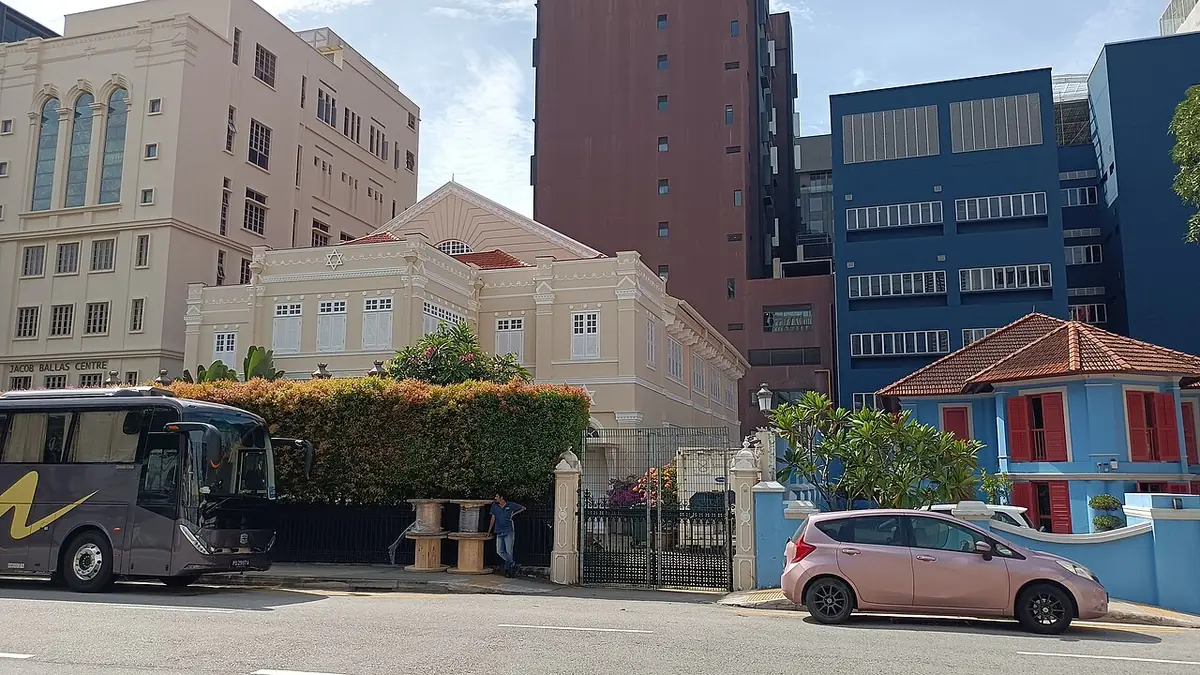
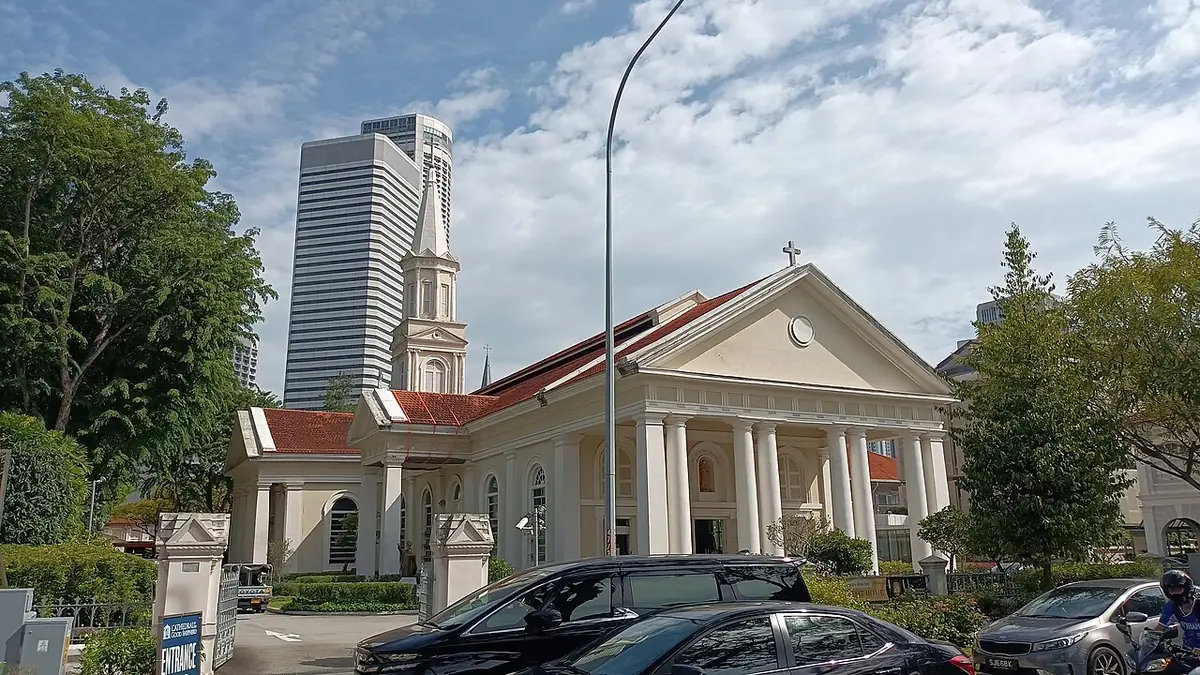
Old shophouses and new towers share this Singapore street — Photo: GoAheadFan95 · CC BY-SA 4.0 · Wikimedia Commons
Once you have taken these differences on board, everything comes down to a rigorous choice of micro-location and type of neighbourhood.
The property culture shock is not only about the purchase price, but about the whole operational ecosystem around the home. Between managing domestic staff, legal maintenance obligations and administrative rigour, the habits you bring from abroad need to be reset entirely if you want to avoid dead ends.
From abroad
Managing works yourself with local tradespeople whose schedules are unpredictable
Singapore
Mandatory use of licensed contractors and strict maintenance contracts
The slightest delay or breach of neighbourhood rules (noise, removal of construction waste) exposes you to immediate, heavy fines from the National Environment Agency (NEA).
From abroad
Moderate local property taxes and well-defined capital gains taxes
Singapore
Very heavy transfer duties and additional taxes (Additional Buyer's Stamp Duty - ABSD)
For a non-resident or an investor who already owns property, purchase taxes can reach prohibitive levels, forcing you to calculate your net return over a very long payback period.
From abroad
Older, renovated homes with carefully preserved heritage charm
Singapore
An aggressive tropical climate that demands major renovation every ten to fifteen years
Constant humidity, torrential monsoon rains and heat punish waterproofing, woodwork and paintwork, turning preventive maintenance into a budget line you cannot avoid.
From abroad
Neighbours protected by conventional civil laws on shared boundaries
Singapore
A development or urban neighbourhood tightly regulated by public law and good-neighbour rules
Respecting the rules on quiet and on upkeep of the exterior is taken seriously, and closely watched by neighbourhood committees or residents' associations.
Which micro-markets and neighbourhoods shape the supply of villas?
This geographical overview raises the central question of the orders of magnitude of budget you will need in this market.
Singapore groups its detached-house residential zones (Good Class Bungalow Areas and landed property districts) into very specific areas, dictated by the planning of the Urban Redevelopment Authority (URA). Each zone has its own rhythm, its own demographic profile and its own level of access to the main roads.
The historic central districts (Tanglin, Bukit Timah, District 10/11)
A leafy haven tucked away from the big boulevards, where the song of tropical birds rules the mature canopy.
Suits
Families who want to be right next to the best international schools, polo clubs and embassies.
Trade-off
Extreme scarcity of available properties and values per square metre among the highest on the planet.
The coastal and marina enclaves of the East (East Coast, Joo Chiat, Katong)
A relaxed, seaside atmosphere set to the rhythm of sea breezes, with a neighbourhood life animated by Peranakan culture.
Suits
Those who favour an outdoor lifestyle, coastal parks and the warmer feel of an urban village.
Trade-off
Direct exposure to potential aircraft noise from the approach corridors into Changi International Airport.
The exclusive island areas (Sentosa Cove)
The constant feeling of being on holiday in a luxury tropical resort, surrounded by yachts and saltwater.
Suits
Eligible buyers looking for contemporary architectural exclusivity and direct access to marine infrastructure.
Trade-off
Relative distance from the business district and from the administrative services on the main island.
What orders of magnitude of budget and cost structure should you expect?
Heritage and modern Singapore side by side — Photo: GoAheadFan95 · CC BY-SA 4.0 · Wikimedia Commons
Beyond the raw figures, a close look at the forms of ownership brings you face to face with legal realities you cannot sidestep.
The Singapore property market stands out for the exemplary transparency of the data recorded by the authorities, but also for its formidable tax complexity. The headline purchase price is only part of the overall financial equation, which also includes progressive purchase taxes and high recurring maintenance costs.
SingaporeFor saleVillaestimate
Median price / m²SGD 15,190Half the apartments sell below this
Median priceSGD 2.52mthe average is 14% higher — a few very large properties pull it up
Most common2 bedrooms44 % of listings
Average size158 m²
By number of bedrooms
Bedrooms
Share of market
Avg price
Price / m²
Avg size
2most common
44 %
SGD 2.1m
SGD 15,990
131 m²
3
41 %
SGD 2.79m
SGD 15,190 −5 %
184 m²
4
15 %
SGD 3.6m
SGD 14,711best value / m²
245 m²
Each row is an average, compared against the area average of SGD 15,990 / m². These are indicative estimates of a typical local market, not a measured sample of live listings. Check current listings before relying on them.
Restricted freehold or long leases: which compromise should you choose?
The same legal rigour carries straight through into the methodical steps of a local property transaction.
The legal structure of land tenure in Singapore directly determines the long-term value of your villa. Understanding the fundamental difference between perpetual titles and fixed-term leases saves you from major wealth setbacks when you pass the property on or sell it.
Choosing perpetual ownership (Freehold)
Buying freehold land guarantees that the asset can be passed on durably, free from the inevitable time-based discount that weighs on expiring leases. It is the ultimate option for investors who want to lock in capital that can be handed down over several generations without worrying about the end of the original land contract.
What it changesThat complete security comes at an immediate price: a purchase premium of 15% to 30% compared with a similar property on a 99-year lease.
Choosing a long lease (99-year Leasehold)
Opting for a long lease gives you access to larger living space, more central locations or better architectural quality for the same initial capital. Recent leases offer comfortable visibility over several decades before the ageing discount starts to affect liquidity significantly.
What it changesYou absolutely must check when the lease was issued: once fewer than 50 years remain, bank lending becomes considerably harder to obtain and resale requires buyers with very large down payments.
Which regulatory traps and key steps should you check before paying a deposit?
To see this process through, the coordinated involvement of the various professionals in the local ecosystem is essential.
The buying process in Singapore follows rigorous legal formalities, handled by specialist lawyers and governed by very strict standard contracts. Missing a deadline or leaving out a condition precedent can bind you permanently or cost you your booking deposit.
Choosing the villa you want and carrying out a preliminary check of your regulatory eligibility with the relevant authorities.
The seller issues the Option to Purchase (OTP) once a deposit has been paid into escrow (generally 1% of the price).
The buyer exercises the OTP within a strict 14-day deadline, paying the balance of the deposit (bringing the total to 5 or 10%).
The legal advisers examine the file thoroughly to confirm there are no hidden charges or public easements.
Stamp duties (Stamp Duty and ABSD) are paid to the Inland Revenue Authority of Singapore (IRAS) within the legal deadlines.
Signing of the final deed of sale (Completion) and handover of the keys, marking the actual transfer of ownership.
What is the operational timeline, and what does each party do during the transaction?
In short, buying a villa in Singapore demands method, forward planning and scrupulous respect for the local rules.
A successful property transaction in Singapore relies on precise coordination between licensed agents, conveyancing lawyers, bankers and technical experts. Each plays a strictly defined role to guarantee the legal and financial security of the deal.
The licensed estate agent (CEA)Sourcing and negotiationThey shortlist properties that match your brief, check the official transaction histories and coordinate the viewings on site.
The mortgage brokerConfirming the loan structureThey negotiate the best terms with local and international banks while making sure the Total Debt Servicing Ratio (TDSR) is respected.
The specialist property lawyerLegal due diligence and escrowThey draft or review the contract clauses, carry out land searches with the official registry and hold the funds in a secure escrow account.
The independent surveyorStructural inspectionThey examine the condition of the roof, foundations, waterproofing and services to identify any latent defects or urgent remedial work.
The state tax authority (IRAS)Registration and taxationThey confirm that transfer duties and additional taxes have been paid before the title is finally registered in the buyer's name.
Buying a villa or an apartment in Singapore: which is the right wealth choice for your family?
Once that fundamental choice between villa and apartment is made, the crucial question of the total cost of ownership and the purchase budget comes up straight away.
The choice between a villa and an apartment in Singapore arises as soon as the sums involved run to several million Singapore dollars. On one side, the market for apartments in managed developments, commonly called condominiums, offers greater liquidity, built-in amenities such as concierge services, pools and gyms, and maintenance handed over entirely to a professional managing agent. On the other, villas, whether terrace houses or detached bungalows, represent absolute scarcity in an ultra-dense city-state, offering full control over the building and an extremely rare private plot of land. This decision is not only about everyday comfort; it also shapes how wealth is passed on in an environment where land law is tightly regulated by the state.
Condominiums are the default choice for most expatriates and investors who want to keep operational friction to a minimum. Often located right next to public transport stations or the business districts of Raffles Place and Marina Bay, they ensure steady rental demand and a smooth resale. In return, the development's by-laws impose strict limits on the use of common areas, on keeping pets and on any structural alterations. The maintenance fees can also weigh heavily on the annual budget, without owners having any direct say in how those collective costs are optimised.
Buying a villa in Singapore, by contrast, is for a buyer with a very long-term outlook and substantial financial resources. Landed properties, particularly Good Class Bungalows or houses in exclusive residential areas such as Bukit Timah or Serangoon Gardens, offer complete architectural independence and capital appreciation that has historically been stronger, driven by the intrinsic scarcity of land. That freedom has a cost, however: full upkeep of the roof, the plumbing and the outdoor spaces falls entirely on the owner. In addition, legal restrictions prevent non-citizens from buying villas on landed plots, apart from very rare exceptions granted sparingly by the Singapore Land Authority to deserving permanent residents.
In terms of daily use, a villa is far better suited to large families looking for generous space and direct contact with nature in an otherwise built-up city. Children have a private outdoor space, and family gatherings can happen without the close-neighbour constraints that come with residential towers. Even so, living on one level or across several floors means relying more on the car, as villas are generally in suburban-style neighbourhoods further from the rapid transit lines. The final choice therefore depends on whether you are willing to accept the constraints of a managed development in exchange for geographical freedom, or to take on the burden of managing an individual property in order to secure a private plot in Singapore.
What real budget do you need to commit to buy a villa in Singapore?
Beyond the cold budget figures, living in a villa in Singapore shapes the rhythm of an ordinary Tuesday for the whole family.
Buying a villa in Singapore never comes down to the price shown on the initial deed of sale. Between punitive stamp duties for non-citizens, local legal fees and the recurring costs of maintaining a private plot in a tropical climate, your financing plan needs to account for several layers of mandatory spending to avoid running short of cash along the way.
Structure of the initial purchase costs for a villa
Cost item
Financial order of magnitude
Impact on the financing plan
Base purchase price
From SGD 5,000,000 to more than SGD 30,000,000
Sets the taxable base and the minimum down payment required by banks.
Additional Buyer's Stamp Duty (ABSD)
From 20% to 60% depending on residency status
A heavy tax that cannot be financed with a bank loan and must be paid in cash.
Buyer's Stamp Duty (BSD)
Progressive scale up to 6% above SGD 3,000,000
Standard transfer duties that apply to every property transaction.
Legal fees and agency commission
Around 1% to 2% of the total sale price
Payment for the legal advisers and brokers involved in the transaction.
ABSD rates are regularly adjusted by the Singapore government to cool an overheating residential market.
Annual running budget for a villa in Singapore
Type of cost
Estimated annual cost
Type of obligation
Property Tax (annual property tax)
Calculated on the estimated annual rental value (AV)
Recurring tax paid each year to the Inland Revenue Authority of Singapore.
Structural and roof maintenance
From SGD 10,000 to SGD 30,000 a year
Essential to counter aggressive tropical humidity and heavy rain.
Gardening and pest control
From SGD 4,000 to SGD 8,000 a year
Regular maintenance contracts for green spaces and termite prevention.
Comprehensive home insurance
From SGD 2,000 to SGD 5,000 a year
Essential cover for the building, its contents and third-party liability.
These estimates exclude any major renovation work or upgrades to bring the building up to energy standards.
Healthcare, schools and transport: what does an ordinary Tuesday in a Singapore villa look like?
While this idyllic daily life attracts many buyers, several hidden realities deserve close scrutiny before you sign the deed of sale.
Living in a villa in Singapore profoundly changes daily logistics compared with life in a central condominium. Between the morning school run to the international campuses, managing live-in domestic help and work journeys to the financial hubs, every hour is carefully planned to make the most of travel times on this dense island.
06:30Residential neighbourhood of Bukit Timah or Holland VillageWaking up in the calm of a villa surrounded by tropical greenery, away from the direct noise of the island's main roads.
07:30Setting off by private car to the international schoolsDriving the children to the large international campuses in the residential areas of the west and centre.
09:00Arriving in the Raffles Place business districtParking at the office and starting the working day after a journey smoothed by the urban expressways.
12:30Business lunch at a hawker centre or a CBD restaurantA dip into the local food culture for a quick lunch before getting back to the morning's files.
16:00Heading home and coordinating with the maidChecking the day's household tasks and overseeing the upkeep of the pool and the private garden.
19:30Family dinner in the villa's outdoor pavilionA relaxed family moment enjoying the relative cool of the tropical evening in the enclosed garden.
What the sales brochures and agencies will never tell you about villas
These non-negotiable technical points pave the way for a clear-eyed look at the mistakes made by buyers in too much of a hurry.
Behind the promise of prestige and space put forward by property developers lie severe technical and regulatory constraints. Knowing about these aspects, invisible at first glance, helps you avoid major financial disappointment once you have the keys to your future villa.
Fixed-term land leases (99-year leasehold)
A large share of residential land in Singapore belongs to the state and is held on 99-year leases. As the remaining term shortens, the property's value suffers a severe structural discount, and banks sometimes refuse to finance it in full.
Tropical humidity and hidden structural damage
Singapore's equatorial climate subjects villas to torrential rain and constant humidity, which encourage mould and water ingress. The cost of repairing foundations and roofs can quickly spiral if the building has not been rigorously maintained.
Absolute restrictions on adding storeys and making alterations
The Urban Redevelopment Authority imposes draconian rules on plot ratio and maximum building height. It is often impossible to extend the living space or change a villa's façade to suit your personal taste without facing repeated administrative refusals.
Complete dependence on live-in household staff
Managing the daily upkeep of a large tropical villa almost always requires employing a live-in domestic helper. That brings legal obligations as an employer, the need to provide separate quarters on the property and a loss of privacy in daily life.
The buying mistakes you only discover after six months in your villa
These classic traps naturally raise the question of whether this kind of investment really suits your personal situation.
Looked likeA highly profitable rental investment opportunity with insatiable demand in the prestige segment.
Turned outExtremely poor liquidity when an urgent sale was needed, since buyers able to pay for villas above 10 million dollars are very few in the local market.
Would have caught itAnalysing the URA's historical transaction statistics for the target neighbourhood over the past ten years in detail to confirm the real depth of the market.
Looked likeA charming, authentic house that only needed a fresh coat of paint before moving in.
Turned outA poorly insulated house eaten away by termites, with outdated wiring that required a complete and hugely expensive rebuild.
Would have caught itAlways commissioning an independent firm of surveyors to carry out a thorough technical inspection of the structure and foundations before signing the preliminary agreement.
Looked likeA quiet, green and perfectly peaceful residential area for bringing up children in complete peace of mind.
Turned outAn area directly affected by future road infrastructure or heavy metro line projects that generate constant noise.
Would have caught itStudying the official Master Plan published by the government in detail to identify every future development project around the plot.
Looked likeA purchase made easier by informal arrangements with unlicensed intermediaries to get around the taxes.
Turned outAn unrelenting tax investigation by the Singapore authorities, leading to colossal financial penalties and a court freeze on the property.
Would have caught itWorking only with accredited specialist property lawyers and top-tier banks to secure every financial flow.
Incompatible profiles: who should definitely not buy a villa in Singapore?
Now that the limits of this investment are clearly set out, it is time to make a final call on your plans.
Buying a villa in Singapore is in no way a universal solution suited to every internationally mobile profile. Certain personal, professional or financial situations make this purchase particularly risky and ill-suited to the realities of the local market.
The expatriate on an open-ended work assignment that is nonetheless likely to last less than five years
→Opt instead for a modern condominium in the city centre, or rent a villa directly without a long-term wealth commitment.
Punitive purchase taxes such as ABSD and legal fees cannot be recouped over such a short period, making a financial loss on a quick resale all but certain.
The investor with no patience for administrative constraints and technical management
→Turn to liquid financial investments or units in institutional property funds such as REITs.
Managing a detached villa demands constant personal involvement to oversee maintenance, contractors and local regulatory obligations.
The buyer whose budget only just stretches, with no cash reserve
→Build up savings in more accessible assets that are less exposed to the risks of heavy maintenance on detached properties.
The slightest major failure of the villa's roof or foundations can instantly swallow all of the household's emergency funds and push it into payment default.
So, are you ready to take the plunge and buy property in Singapore?
Deciding to buy a villa in Singapore demands complete clarity about your life aspirations and the strength of your wealth strategy. This market forgives neither financial guesswork nor emotional haste in the face of the tropical charm of the homes shown by agencies. If your time horizon is longer than a decade, if your finances can absorb the transfer taxes without flinching and if you accept the upkeep that comes with a private plot, then the purchase can be an exceptional family anchor in one of the most stable economies on the planet.
If, on the other hand, your presence in Singapore still depends on the uncertainties of an international employment contract, or if the prospect of managing major structural works puts you off, wisdom says to postpone the purchase or turn to easier-to-manage condominiums. True luxury in Singapore lies not in bricks and mortar for their own sake, but in freedom of movement and the absence of operational friction in daily life. Take the time to examine your real motivations before signing any mandate or committing your own funds with the local authorities.
Ultimately, a successful property project in Singapore rests on a perfect fit between your residency profile, your tolerance for regulatory risk and the structure of your capital. By surrounding yourself with the best legal advice and ignoring the siren calls of euphoric marketing, you will turn this purchase into a lasting pillar for your family's future. The Singapore property market always rewards the patience and analytical rigour of those who know how to look beyond appearances.
Related questions
Can non-resident foreigners freely buy a villa in Singapore?
No. Buying villas or residential land classed as landed property is strictly reserved for Singapore citizens. Permanent residents can sometimes obtain an exceptional exemption after the Singapore Land Authority has examined their economic contribution in depth.
What is the Additional Buyer's Stamp Duty and how much is it today?
ABSD is a transfer tax levied by the state on residential property transactions. Its rate varies considerably with the buyer's status, from moderate percentages for citizens buying their first home up to punitive rates that can reach sixty per cent for foreign buyers.
What is the fundamental difference between a 99-year lease and freehold in Singapore?
A freehold property belongs to its owner indefinitely, with no time limit, whereas a leasehold property is granted by the state for a maximum of ninety-nine years. When the lease expires, the property reverts automatically to the Singapore state, which weighs heavily on long-term resale value.
Do you have to use a licensed estate agent to buy in Singapore?
The law does not formally require you to use an agent, but the Singapore market is extremely regulated and standardised. Working with an agent registered with the Council for Estate Agencies ensures the transaction is legally compliant and gives you access to the official price databases.
How do local banks assess how much they will lend on a villa?
Banks in Singapore apply strict prudential rules, notably the Total Debt Servicing Ratio, which caps total debt repayments at a set share of the borrower's gross monthly income, while also requiring a substantial cash down payment.
Which residential neighbourhoods are most sought after for buying villas?
The most prized areas for villas and detached bungalows lie mainly in the traditional prestige districts, notably around Bukit Timah, Holland Road and Tanglin, as well as in certain residential parts of District 15 near the coast.
How does annual property tax on villas work in Singapore?
Property Tax is calculated by the Inland Revenue Authority of Singapore by applying progressive rates to the property's estimated annual rental value, whether it is owner-occupied or let on the market.
Does renovation work on a villa require prior approval?
Yes. Any structural change, extension of floor area or alteration to the exterior façade of a villa must have a technical submission approved by the Urban Redevelopment Authority and the Building and Construction Authority before work begins.
How long does it usually take to complete a property purchase?
A standard property transaction in Singapore generally takes between eight and twelve weeks from signing the option to purchase to final registration of the transfer with the Singapore Land Authority, subject to bank financing being approved.
What recurring maintenance costs are specific to tropical villas?
On top of roof repairs made necessary by the monsoon rains, villa owners have to pay for regular upkeep of private pools, pruning of tropical gardens and preventive anti-termite treatments, which are essential in the region.
Property review of ting
No ting properties in Singapore yet
Be the first — share it on ting and it shows up right here.