Investing in residential property in Toronto calls for a fine-grained understanding of local dynamics, of Ontario's legal specifics and of the market's economic realities. This guide walks you through structuring your purchase step by step with clear eyes, well away from marketing promises and received wisdom.
Get the app
What nobody tells you.
Real prices, hidden costs and the traps to check before you commit.
Buying a house in Toronto: the gap between the promise of space and the reality of central neighbourhoods
Scroll
Buying a house in Toronto: the gap between the promise of space and the reality of central neighbourhoods
Investing in residential property in Toronto calls for a fine-grained understanding of local dynamics, of Ontario's legal specifics and of the market's economic realities. This guide walks you through structuring your purchase step by step with clear eyes, well away from marketing promises and received wisdom.
Written by the ting.ad editorial team ·
Bloor Street East, Toronto in Street View: drag to look around.
That opening tension between the space you want and the location you can reach plays out differently depending on how you actually live day to day.
Investing in residential property in Toronto means going beyond floor area to understand how a sharply contrasted North American urban market is put together. On one side, listings hold out the promise of a single-family house with a garden, a way of living that many buyers chase in the name of independence. On the other, topography and economics impose deep compromises on distance and on exactly what kind of housing stock is available. You are constantly trading raw living space against immediate proximity to employment centres and to the transport lines that structure the region. It is a head-on collision between the wish for generous living space and the physical constraint of a metropolis growing fast in population.
The hunt for a large single-family house with private landvsHaving to move out towards outlying areas or residential suburbs
The more living space and independent garden you look for, the further from downtown you push your home, which permanently turns daily journeys into demanding commutes.
Choosing central urban living and a walkable neighbourhoodvsAccepting older properties needing work, or more compact floor plans
The historic districts near the subway lines offer townhouses or semi-detached properties with undeniable charm, but their older structure often calls for a substantial renovation budget to meet today's standards.
Looking for a secure long-term store of family wealthvsExposure to sharp interest rate cycles and high holding costs
The historic solidity of Toronto bricks and mortar is no protection against volatile monthly payments when monetary policy tightens, so you have to assess your repayment capacity coldly over several years.
What kind of daily life are you looking for when you settle in Toronto?
These trade-offs between city living and a residential setting take on a particular colour when you approach the market as a newcomer from another country.
Assessing a purchase is not an abstract financial calculation. It depends fundamentally on how your days are organised, on your professional commitments and on your tolerance for travel across a large urban area. Toronto's neighbourhoods offer extremely varied atmospheres, from the restless energy of the commercial arteries to the complete calm of leafy residential enclaves. Every buyer has to judge honestly whether their real rhythm of life fits the structural characteristics of the area they are targeting, because journey times and access to amenities feed directly into long-term satisfaction.
Prioritising centrality and fast transport
If your days are dictated by demanding office hours downtown, settling within easy reach of a subway station or a commuter rail line is an absolute necessity. Single-family houses in these areas are rare and fiercely contested, which often steers buyers towards semi-detached properties or older structures that need particular attention. You gain precious time every day and direct access to cultural life, but at the price of a smaller floor area and a cost per square metre markedly higher than in the outer ring.
The option of residential suburbs and well-regarded school catchments
For households with children, priority shifts naturally to the reputation of the public or private schools, the presence of proper parks and the safety of residential streets. Areas such as the eastern or western parts of the city, or well-served neighbouring municipalities, let you buy a house with a real garden and adaptable interior space. In exchange, you have to accept longer journeys into downtown at peak times and a greater reliance on the car for shopping and leisure.
The strategy of transitional areas and in-between neighbourhoods
If your main aim is to build up property assets while keeping your initial outlay under control, neighbourhoods in the middle of gentrifying, or areas served by future public transport projects, deserve sustained attention. These districts still offer purchase opportunities at more reasonable valuations, with interesting scope for urban transformation over the medium term. It does mean tolerating a transitional period during which local shops and services are still developing and the social mix of the area is still shifting.
Moving to Toronto and buying: what changes fundamentally compared with markets abroad
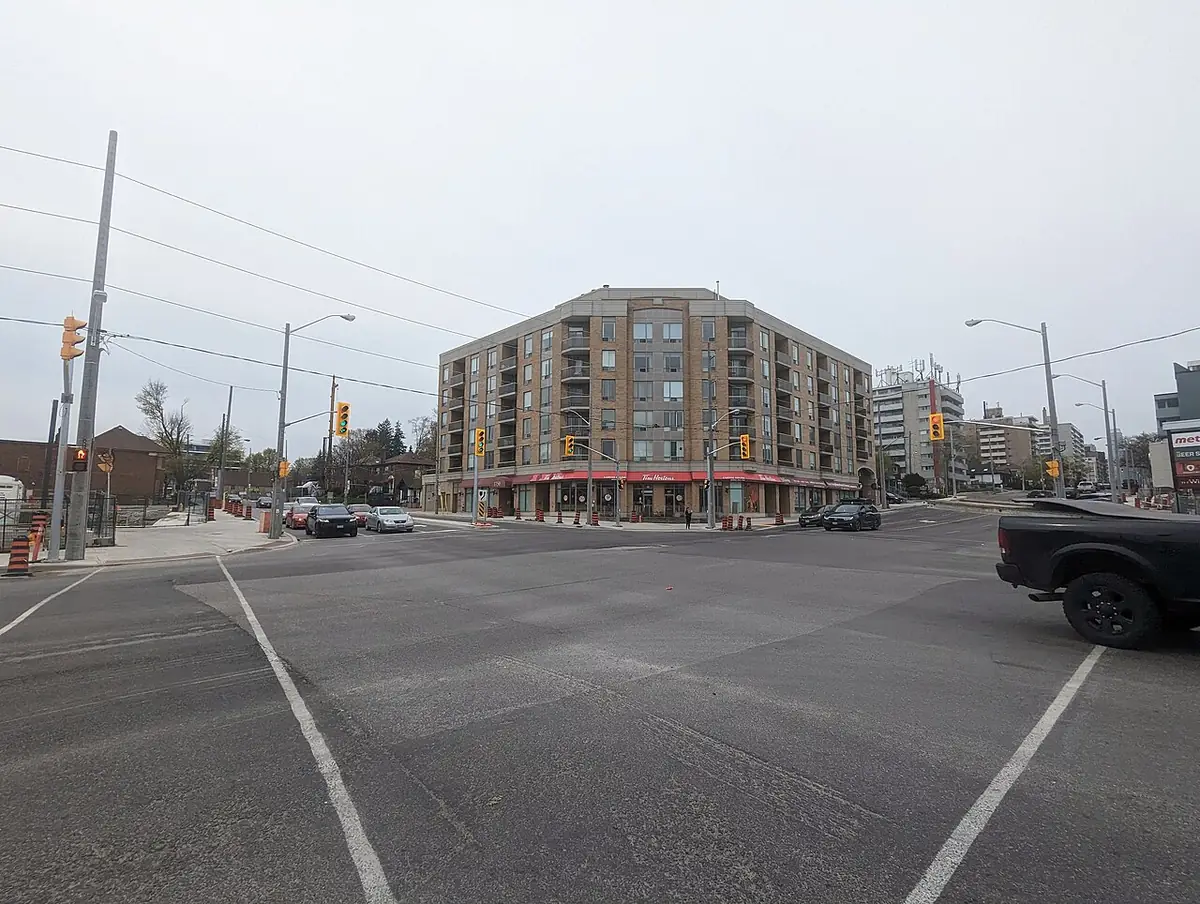
St. Gregory Armenian Catholic Church, a Toronto landmark — Photo: Amakuha · CC BY 4.0 · Wikimedia Commons
Once these cultural bearings are in place, the central question becomes which geographic area to choose and what makes it distinctive.
Buying property in Ontario differs deeply from the legal, cultural and financial reference points many newcomers bring with them. Where a lot of systems abroad rest on tightly supervised conveyancing, long administrative delays and heavily centralised planning rules, the Canadian market is defined by its fluidity, by the central role of real estate agents and by a transactional culture built on speed of execution. Understanding these structural differences is essential if you want to avoid misjudging things when you put an offer together or when you work out the real cost of ownership.
From abroad
In many countries abroad, a sale is governed by a rigid preliminary contract, statutory cooling-off periods and paperwork centralised through a neutral state-appointed conveyancer.
Toronto
In Toronto, transactions rest on conditional or firm offers negotiated quickly through licensed real estate agents.
Signing an offer commits you very abruptly and means having your financing and your technical inspections settled beforehand, or you risk losing your deposit.
From abroad
In many countries abroad, purchase costs are mostly transfer duties plus the regulated fees of a state-appointed official.
Toronto
In Toronto, acquisition costs include the provincial and municipal land transfer taxes plus the fees of agents and specialist real estate lawyers.
Your overall closing budget has to include these specific taxes from the outset, so nothing catches you out when you finalise the financing with your bank.
From abroad
In many countries abroad, insulation and building energy performance answer to uniform, enforced national standards.
Toronto
In Toronto, older houses have timber structures and heating systems that vary enormously with the year of construction.
A thorough building inspection is imperative in order to cost out the state of the roof, the basement and the mechanical systems before committing for good.
From abroad
In many countries abroad, property tax is calculated from national cadastral criteria run by the central tax administration.
Toronto
In Toronto, municipal property tax is calculated on the value the city assesses and varies directly with the municipality and its local services.
This recurring cost has to be built precisely into your annual budget, because it is a large fixed charge and there is no negotiating it.
How do you find your way among Toronto's different residential neighbourhood profiles?
These location choices feed straight through into the price structure and the budget you need to put a purchase together.
Toronto's urban structure is built around a multitude of neighbourhoods with strong identities, each with its own social and economic dynamic, its own local shops and its own architectural character. There is no universally ideal neighbourhood, only micro-markets that suit particular moments in life. Whether you are after the cultural buzz of the central arteries or the family calm of the residential rings, each area imposes its own compromises on budget, space and travel time.
The historic central neighbourhoods (The Annex, Cabbagetown)
A dense, walkable, lively urban feel, with streets lined by mature trees and a high concentration of cafes, bookshops and independent restaurants.
Suits
Working people without children, or couples who put walking, cycling and immediate access to downtown cultural life first.
Trade-off
Often smaller living areas, a high cost per square metre, and street parking that is regulated and complicated.
The in-between family neighbourhoods (High Park, Riverdale)
A well-judged balance between residential neighbourhood life, substantial parks and busy shopping streets carrying every day-to-day amenity.
Suits
Families looking for good local schools, accessible green space and a stable setting without cutting themselves off in a distant suburb.
Trade-off
Strong competition between buyers for this sought-after kind of property, which drives prices up and makes the purchase process highly competitive.
Urban renewal areas and the nearby rings
A visible transition between former industrial or modest residential fabric and new, denser modern projects connected to the transport network.
Suits
Buyers with a more measured budget who want to bet on the long-term appreciation of an area in the middle of changing.
Trade-off
A streetscape still in transition and local shops and services that are sometimes still being built out.
What are the realistic price ranges for buying a residential property in Toronto?
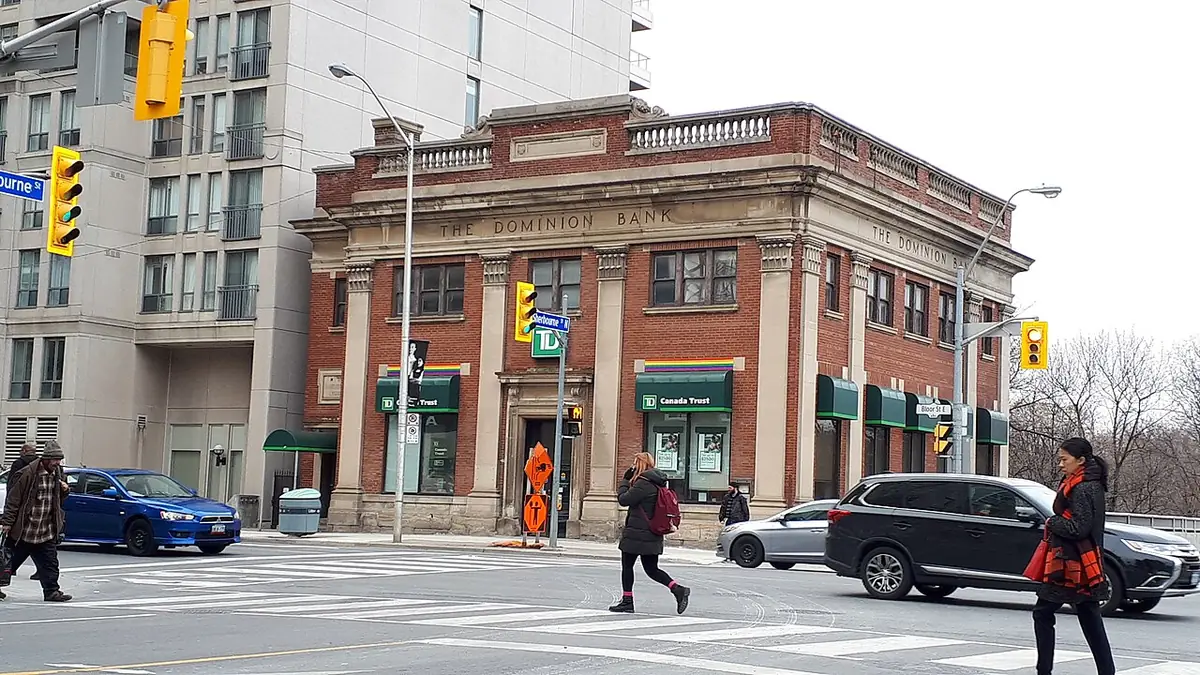
A heritage corner building on a lively Toronto street — Photo: Oaktree b · CC BY-SA 4.0 · Wikimedia Commons
Beyond the raw figures and statistical averages, exactly what you own in legal terms deserves a close look.
Working out what a Toronto property costs means reading market trends clear-headedly and separating the headline price from the unavoidable extra charges. The Toronto market is marked by notable gaps between high-rise condominiums, semi-detached townhouses and freestanding single-family houses with land. Aggregate data show that geographic location and the type of building dictate most of the valuation, which makes rigorous financial preparation essential before you put an offer in.
torontoFor saleHouseestimate
Median price / m²CA$8,180Half the apartments sell below this
Median priceCA$994kthe average is 14% higher — a few very large properties pull it up
Most common2 bedrooms73 % of listings
Average size116 m²
By number of bedrooms
Bedrooms
Share of market
Avg price
Price / m²
Avg size
2most common
73 %
CA$1.06m
CA$8,438
126 m²
3
21 %
CA$1.4m
CA$8,180best value / m²
172 m²
4
6 %
CA$1.79m
CA$8,180best value / m²
219 m²
Each row is an average, compared against the area average of CA$8,610 / m². These are indicative estimates of a typical local market, not a measured sample of live listings. Check current listings before relying on them.
Outright ownership or governed condominium: what you can actually hold
This legal and practical distinction leads straight to the unavoidable golden rule to observe before you commit any money.
The legal structure of property ownership in Ontario determines not only how much freedom you have in managing the place, but also your long-term financial obligations. Between a freehold single-family house and a property held in condominium (a condo, or a freehold townhouse with an association), the rules of the game change radically. Understanding these legal distinctions is essential if you want to anticipate the hidden costs and the decision-making freedom you will have once the keys are yours.
The freehold house
You own both the building and the land it stands on, with no monthly collective charge and no owners' association governing your decisions about exterior renovation. You take full responsibility for maintaining the roof, the foundations, the plumbing and the outdoor space.
What it changesYou decide on every repair and improvement on your own timetable and budget, but the whole maintenance cost falls squarely on you, with nothing shared out.
Condominiums and managed developments (condo / common elements)
You buy a private unit while sharing ownership and use of the common elements (grounds, roofs, corridors, leisure facilities) managed by a condominium corporation under strict rules. Compulsory monthly fees are paid in to fund the reserve fund and cover running expenses.
What it changesYou get major maintenance and shared services pooled across all owners, but you have to live with house rules that can be restrictive and absorb special assessments if the reserve fund is underfunded.
The golden rule to understand before you put a deposit down on a Toronto property
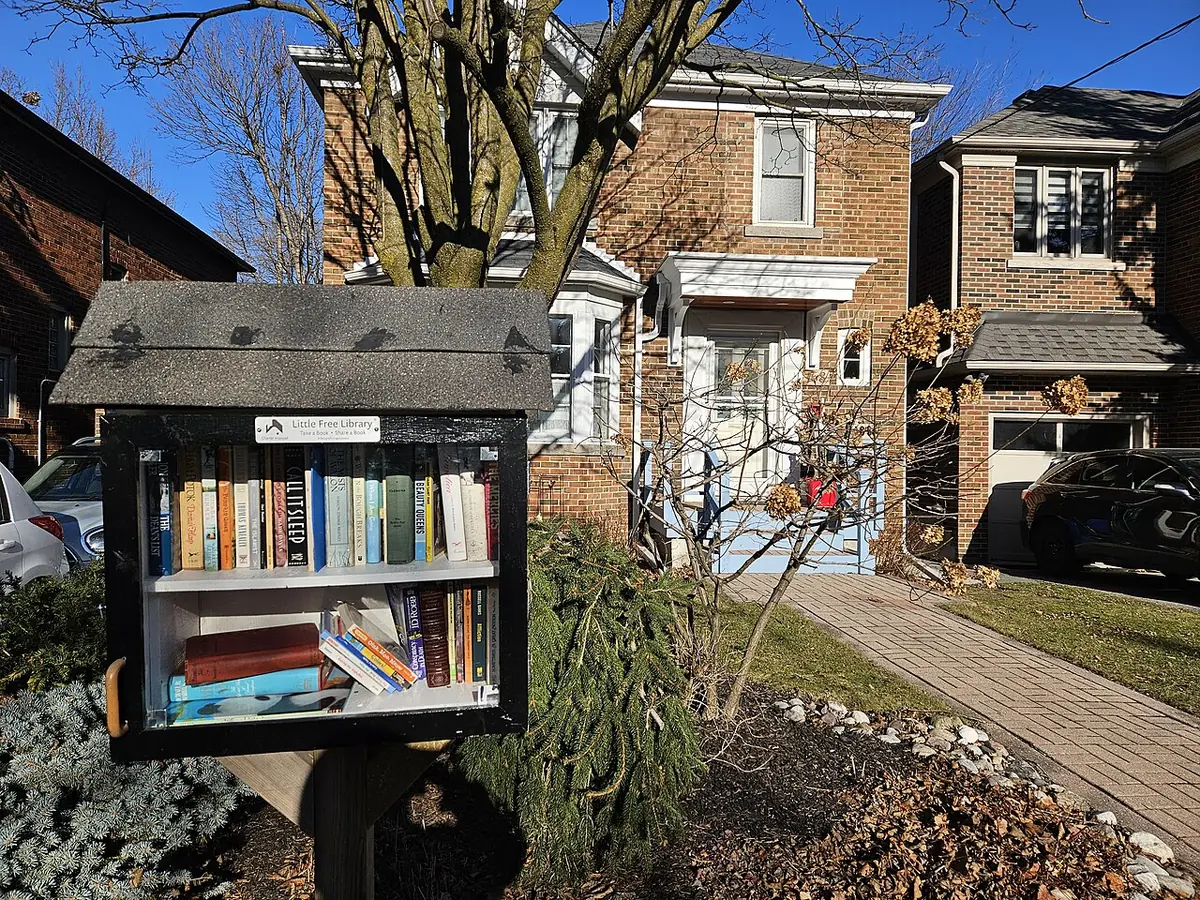
A quiet residential street with a neighborhood book box — Photo: ArthurGron · CC0 · Wikimedia Commons
Once you have this sequence of checks under control, it is worth tracing the practical course of the transaction from end to end.
Ontario's property transaction system tolerates no legal or financial vagueness from the buyer. Unlike markets where conditions nest inside long timeframes, local practice rests on responsiveness, clearly drafted clauses and solid advance checks. Skipping a single technical or financial check before you waive conditions can expose you to severe financial and legal consequences, which makes a structured method essential.
Starting the active search and identifying a target property
Get a formal mortgage pre-approval from a recognised financial institution so you know your real borrowing capacity.
View the property with a qualified agent and analyse the history of comparable sales in the neighbourhood.
Instruct an independent home inspector to examine the structure, the electrics, the plumbing and the insulation in detail.
Have a lawyer specialising in Ontario real estate law review every clause of the offer and the title reports.
Waiving the conditions and firming up the transaction
How does a property transaction in Toronto actually unfold, step by step?
Buying a property in Toronto follows a rigorous sequence involving several coordinated professionals. From your first contact with your agent through to closing day, orchestrated by your lawyer, each participant plays a precise part in making sure the transfer of ownership is sound. Knowing this timetable lets you anticipate the paperwork and go through the weeks before you move in without anxiety.
The buyer and the agentSelecting properties and analysing the local marketSetting the search criteria precisely, targeted viewings of the available properties and comparative analysis of recent sale prices in the areas in question.
The financial institutionValidating the financing and pre-approvalA detailed review of income and down payment in order to issue written mortgage confirmation matched to the buyer's budget.
The buyer and the agentDrafting and negotiating the offerFormal submission of an offer to purchase setting out the price offered, the preferred closing dates and the conditions attached.
The home inspectorTechnical inspection and condition checksA full physical examination of the house to identify any urgent work needed on the structure, the roof or the mechanical systems.
The real estate lawyerTitle searches and preparing for closingOfficial land registry searches, confirmation that there are no charges or disputes on the property, and drafting of the transfer documents.
All partiesClosing the transaction and handing over the keysTransfer of funds through the banks, official registration of the deed on the land register and physical handover of the keys to the new owner.
House or condo in Toronto: should you give in to the lure of a garden?
In Toronto, the choice between a single-family house and a condominium apartment is not only about lifestyle; it is a genuine piece of wealth engineering. Single-family houses, particularly in established neighbourhoods such as The Annex or High Park, have a structural scarcity that protects their capital value against economic shocks. That independence comes with a considerable maintenance burden, though, especially against harsh Canadian winters that test roofs and foundations. Every snowstorm is a reminder that the owner is their own building manager, with no collective reserve fund to soften the blow.
Conversely, the Toronto condo market, concentrated along transport corridors such as Yonge Street or around the Waterfront, offers liquidity and ease of use that are hard to match for younger working buyers. Even so, the buyer has to navigate the subtleties of condominium charges, usually called maintenance fees, which inevitably rise with the age of the building and with provincial regulatory requirements. Condo towers also face strong competitive pressure on resale, because a steady flow of new completions caps short-term gains. So you have to weigh whether the freedom of a private garden justifies the financial effort and the logistical distance from city amenities.
The final decision therefore depends on your time horizon and your tolerance for manual work or for condominium governance. Those who expect to stay less than five years in the same property generally bear the high transaction costs of a house without collecting the scarcity premium. Families looking to put down roots in a well-regarded school catchment, by contrast, find in a Toronto house an unmatched safe-haven asset. In every case, the Toronto property market does not forgive guesswork: every dollar invested has to be set against the hidden costs of the structure you choose.
You also have to take account of municipal property taxes, calculated on the value assessed by the Municipal Property Assessment Corporation (MPAC), which weigh differently depending on the type of property. Older houses in the central neighbourhoods often carry assessments out of step with the real market, which can lead to abrupt readjustments when they change hands. Condos, governed by strict forecast budgets, offer more immediate predictability on tax but leave less room for manoeuvre when special assessments arrive. Understanding these mechanisms is how you avoid the illusion of an affordable purchase and anticipate the real bill of Toronto ownership.
What is the real budget for living in and maintaining a house in Toronto?
Once the budget is settled, the daily reality of the Toronto rhythm asserts itself on every new resident.
Buying a house in Toronto does not stop at the monthly mortgage payment. You have to build in a set of unavoidable outgoings, from municipal property taxes to home insurance made heavier by the Ontario climate. Ignoring these recurring budget lines leads inevitably to a financial squeeze within the first year of occupation. Here is the detailed breakdown of the money needed to keep a property in good condition in the heart of the metropolis.
Monthly and annual cost lines for a house in Toronto
Beyond this well-oiled routine, the Toronto property market conceals regulatory and physical realities that viewings never reveal.
Living in Toronto means dealing with a multimodal transport network and heavily used public infrastructure. Daily life is structured around commuting, often dictated by a TTC subway line or by GO Transit commuter trains. For a homeowner, the day frequently starts earlier with clearing snow or checking mechanical systems before facing the bustle of the city. Here is the chronological shape of an ordinary Tuesday for a settled resident of the central or residential neighbourhoods.
07:00Home (residential neighbourhood)A quick look at the basement, a check on the heating, and an early start to get ahead of the traffic on the Gardiner Expressway or the crush on the subway.
08:15TTC subway station or GO stationA heavy flow of commuters. Boarding trains heading for the Financial District or the employment hubs of Midtown.
12:30Downtown (Financial District / PATH)A lunch break in the PATH underground pedestrian network, a parallel city that shelters you from the winter weather.
16:00The local school (TDSB)Collecting the children after after-school activities and organising the trips to local community centres for sport.
18:00The local shopping street (Danforth or Roncesvalles)Last-minute shopping in the local shops and independent bakeries before heading home to a quieter evening.
20:30HomeFamily time, household admin and planning the seasonal maintenance work on the house.
What the listings will never tell you about Toronto property
These technical omissions lead far too often to financial disappointments that new buyers discover far too late.
The Toronto property industry runs on strict codes, yet listing sheets systematically leave out structural and planning constraints that matter over the long term. Agents lead with the light and the nearby parks, and forget to mention the real state of the underground infrastructure or the plans to densify the neighbourhood. To avoid disappointment after closing with your real estate lawyer, you have to scrutinise technical questions that nobody raises spontaneously at an open house.
The state of lead water service pipes
Many Toronto houses built before the middle of the twentieth century still have lead water services connected to the municipal main. Replacing them entirely falls solely on the owner and can easily exceed $5,000 once road works and excavation are counted.
Strict municipal zoning rules (bylaws and the Committee of Adjustment)
Buying a house with the idea of extending it or adding a storey often runs into the City of Toronto's planning committees. Height restrictions and neighbours' rights to light and outlook regularly block any extension project.
The real age of basements and the risk of water ingress (backwater valve)
Summer downpours put the city's combined sewers under serious strain. A house without a certified backwater valve is exposed to major sewer backups that basic insurance does not cover.
Rights of way and complicated shared boundaries (shared driveways)
In sought-after neighbourhoods such as The Annex or Leslieville, many properties share a mutual driveway. That legal arrangement requires permanently cordial relations with the neighbour over garage access and winter snow clearing.
The classic traps buyers discover six months after moving into Toronto
Faced with these pitfalls, some buyer profiles would clearly be better off not investing in Toronto property at all.
Looked likeAn irresistible opportunity in a rapidly gentrifying neighbourhood with immediate scope for capital gains.
Turned outA noisy area, poorly served by school transport, where adjacent construction sites run for years without a break.
Would have caught itConsulting the City of Toronto's planning documents and visiting at different times of the week, especially at rush hour and at the weekend.
Looked likeA charming period house full of character with original woodwork and a cheaply finished basement.
Turned outA nest of hidden defects including obsolete electrics (fuse panels or aluminium wiring) and no thermal insulation at all.
Would have caught itAlways engaging an independent certified home inspector who specialises in older Ontario housing stock before waiving the purchase conditions.
Looked likeAn attractive asking price under the million-dollar mark, ideal for getting into the Toronto market.
Turned outA blind bidding strategy (offer night) designed to draw buyers in artificially before pushing the price up 20% in a single evening.
Would have caught itAnalysing recent comparable sales on the same street over the past three months rather than trusting the seller's asking price.
Looked likePrivate parking at the back, easily reached from the municipal laneway.
Turned outA laneway the city does not clear in winter, leaving the car completely stuck through cold snaps and snowstorms.
Would have caught itChecking explicitly whether the rear laneway is on the City of Toronto's priority snow clearing list or whether maintenance falls to the residents.
Risk profiles: who should absolutely not buy in Toronto?
With those warnings set out, it is time to take personal stock and measure how ready you are for a Toronto commitment.
The Toronto property market does not suit every life path or every financial situation. Rigid interest rates and heavy fixed charges demand a stability that some households do not yet have. Being determined to own at any cost in this metropolis can lead to a severe financial dead end. Here are the profiles who should postpone a purchase or steer their savings towards other asset classes.
The young professional on a short-term international posting
→Buying as soon as they arrive to avoid paying rent they see as money down the drain.
Land transfer tax and resale commissions swallow any potential gain entirely if the property is sold before a minimum period of five to seven years.
The household with a down payment that is only just enough and no contingency savings
→Putting every last saving into the down payment while overlooking structural surprises.
The slightest major failure, such as a central air conditioning breakdown or a roof replacement, immediately puts the household at risk of defaulting on the mortgage.
The investor after a quick rental yield with no management effort
→Taking on the constraints of Ontario tenancy law (the Residential Tenancies Act) without any legal knowledge.
Strong tenant protection in Ontario and rent control on older properties make it very hard to end a tenancy or adjust rental income quickly when rates rise.
Weighing the decision: are you really ready to commit in Toronto?
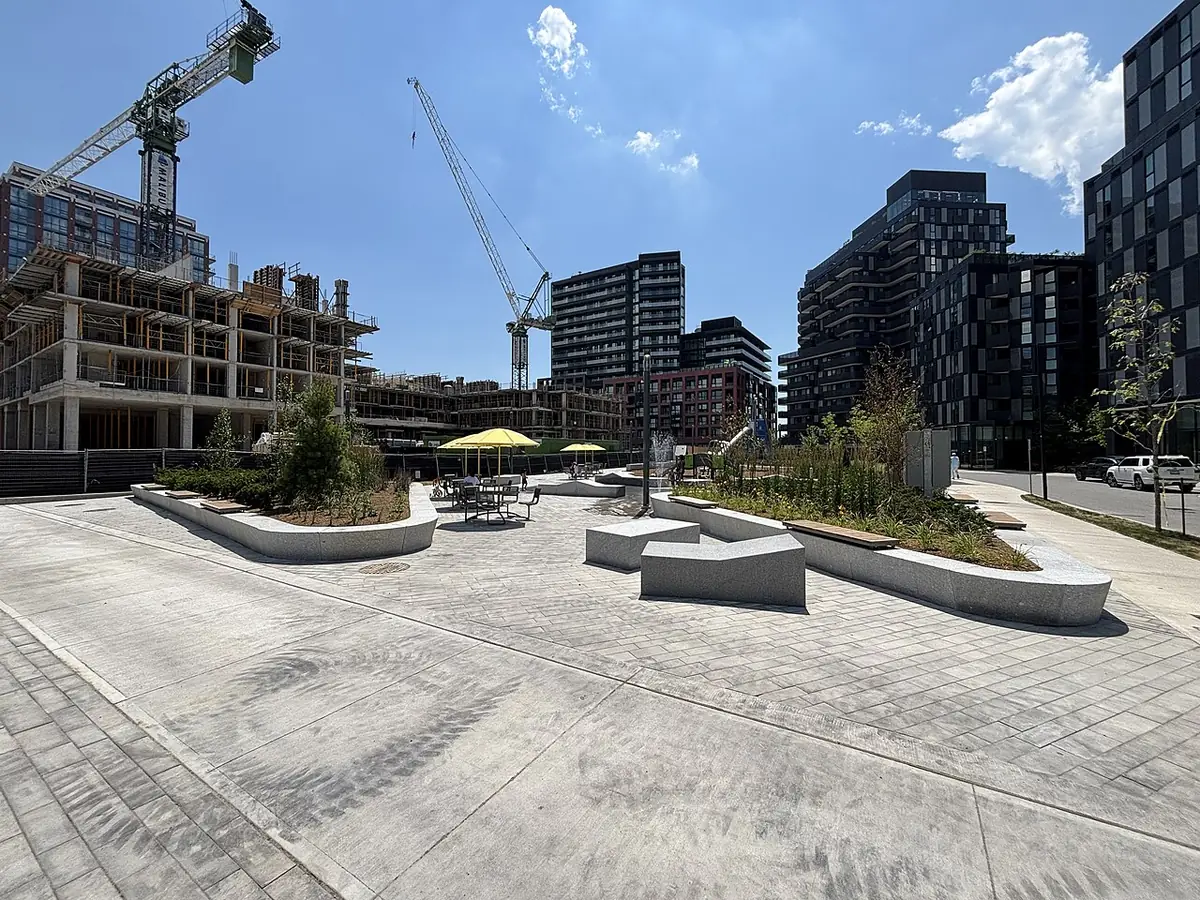
A new public plaza taking shape in Toronto — Photo: Canmenwalker · CC BY 4.0 · Wikimedia Commons
Buying property in Toronto demands complete clarity about your finances and your plans for life. If you have validated every cost line, factored in the double land transfer tax and accepted the maintenance demands of a North American market, you have the foundations you need. The city rewards the patience and rigour of those who invest with a long view, able to absorb the local economic cycles.
Take the time to review your personal priorities away from the ambient pressure of bidding wars. A successful purchase in Toronto is not measured by how fast the transaction closed, but by how calmly you get through the winters and manage your budget year after year. If the slightest doubt remains about your professional or geographic stability, renting for longer is a perfectly rational financial strategy.
In the end, Toronto property remains an exceptional asset for anyone who respects its rules and anticipates its hidden demands. Well-informed buyers who surround themselves with the right professionals (inspectors, straight-dealing agents and diligent real estate lawyers) turn the commitment into a solid financial base. It is for you to weigh it up independently and write your own chapter in the Ontario metropolis.
Related questions
What are the average legal fees for a property purchase in Toronto?
Legal and conveyancing fees in Toronto generally run between $1,500 and $3,000, depending on how complicated the title is and on the value of the property. Those fees cover the title search, the drafting of the transfer deed and official registration with Ontario's land registry authorities.
How does Toronto's double land transfer tax work?
In Toronto, buyers have to pay two separate transfer taxes: the Ontario provincial tax and the municipal tax specific to the City of Toronto. Each one is a progressive rate running from 0.5% to 2.5% of the purchase price, which doubles the tax impact compared with other municipalities in the province.
Is a home inspection mandatory before buying in Ontario?
An inspection is not strictly mandatory as a matter of law, but every serious professional strongly recommends one. Writing an inspection condition into the offer lets you walk away from the transaction or renegotiate the price if major hidden defects turn up.
What is the blind bidding system in Toronto?
Blind bidding means buyers submit their offers through their agents without knowing the amount or the terms of the competing offers. The practice, common on the offer days sellers set, can push final prices up artificially.
How does MPAC calculate municipal property taxes?
The Municipal Property Assessment Corporation assesses the market value of every property every few years using standardised criteria. The City of Toronto then applies the mill rate (tax rate) it votes each year to work out the exact property tax the owner owes.
What are the risks tied to Toronto's older sewer networks?
Toronto's older neighbourhoods sometimes have combined sewers carrying both wastewater and stormwater. During heavy storms those networks can be overwhelmed and back up into basements that lack a certified, maintained backwater valve.
What is the maintenance difference between a detached and a semi-detached house?
A detached house gives you complete structural independence but requires you to maintain all four walls and the roof yourself. A semi-detached house shares a party wall with a neighbour, which cuts heat loss but means coordinating closely on any major work affecting that shared wall.
How does the PATH network help downtown residents?
The PATH is an underground pedestrian network of more than thirty kilometres running beneath Toronto's Financial District. It links subway stations, office towers and shopping centres, letting commuters and residents move around completely sheltered from the Ontario winter.
What should you check regarding easements in Toronto?
Easements give third parties or the municipality a right of way or right of access over part of your land, for instance to maintain underground pipes. Identifying them on the survey is essential if you want to avoid nasty surprises when you plan outdoor works.
Why is it advisable to keep a contingency fund after buying?
Owning property in Toronto exposes you to severe weather and to high labour costs for repairs. Holding a reserve worth 1 to 2 percent of the property's value each year means you can absorb emergencies without upsetting your finances.
Property review of ting
No ting properties in Toronto yet
Be the first — share it on ting and it shows up right here.