Buying an apartment in Toronto is a major commitment that calls for a close reading of the local market, its legal rules and its cultural habits. From weighing condominium fees to picking the right neighbourhood, this guide walks you through each step so you can secure your purchase with clear eyes. Make your decisions on concrete reference points that match the reality of Toronto.
Get the app
What nobody tells you.
Real prices, hidden costs and the traps to check before you commit.
What buying an apartment in Toronto really means day to day
Scroll
What buying an apartment in Toronto really means day to day
Buying an apartment in Toronto is a major commitment that calls for a close reading of the local market, its legal rules and its cultural habits. From weighing condominium fees to picking the right neighbourhood, this guide walks you through each step so you can secure your purchase with clear eyes. Make your decisions on concrete reference points that match the reality of Toronto.
Written by the ting.ad editorial team ·
Bloor Street East, Toronto in Street View: drag to look around.
Before you commit, it is worth checking whether your own profile and habits really suit this way of living.
Putting money into property in the heart of Canada's economic capital means looking past the simple promise of yield or a quick capital gain. Between condominium fees that are often high and the reality of the local market, buying an apartment in Toronto reshapes your relationship with your budget and your space for the long term. Buyers quickly run into a delicate balance between the centrality of the neighbourhoods they want and the long-term upkeep of stock that is sometimes old. Understanding what sits behind each square metre is what keeps you from a financial let-down in the very first year of ownership. This move into ownership calls for a clear-eyed view of the structural constraints of the Toronto market.
The certainty of a central, energetic locationvsThe gradual saturation of neighbourhood infrastructure
Living in the heart of the city puts you next to the main employment areas and transport networks, but it comes with a permanent urban density that can weigh on daily quality of life. Noise and constant activity are part and parcel of the trade you accept in order to stay connected.
The promise of a modern, well-equipped condominiumvsThe inevitable rise in shared maintenance costs
Residential towers offer enviable shared amenities such as gyms, roof terraces and a concierge service. In return, reserve funds and special assessments for major work weigh heavily on owners' cash flow as the years pass.
The apparent affordability of smaller unitsvsThe added pressure on tight living space
Choosing a one-bedroom or a studio makes it easier to get into the Toronto market, but it demands rigorous organisation of the space inside. Working from home in under fifty square metres calls for significant layout compromises that people often underestimate at the point of signing.
The apparent ease of reselling in the medium termvsThe volatility of interest rates and credit conditions
Even though structural demand for housing remains strong across the Greater Toronto Area, the value of your property depends closely on macroeconomic factors you have no hold over. A turn in rates can freeze the liquidity of your investment for several quarters.
What kind of buyer are you when set against what the Toronto market demands?
With that personal diagnosis made, the next step is to measure the cultural and practical gap between the reference points you arrive with and the way things work in Ontario.
Urban life in Toronto does not forgive a badly cast housing decision. Whether you arrive alone to launch a career, as a couple looking for cultural proximity, or as an investor at a distance, your selection criteria and your tolerance for local constraints will have to adapt. The rhythms of the city dictate precise choices about where to settle, from the subway line to the quieter residential neighbourhoods. Analysing your current situation stops you buying a property whose defining features end up wearing on you after a few months.
Choosing immediate proximity and well-connected towers
By favouring an apartment within walking distance of your office, you remove the fatigue of daily travel on the TTC network. In exchange you accept smaller floor areas and a cost per square metre among the highest in the province. Neighbourhood life often comes down to basic amenities and the buzz of the residential towers, which suits a lifestyle built around professional efficiency and going out in the city.
Looking for a compromise between space and access
Your priority shifts to neighbourhoods a little further from the centre but served by rapid transit lines, which lets you get two bedrooms without swallowing your whole budget. You will be dealing with older condominium buildings whose management calls for vigilance about the work owners vote through. This profile means accepting somewhat longer journeys in exchange for a calmer residential setting and parks within walking distance.
The purely financial and rental approach
Your attention goes to how liquid the property is, the steady rental demand from young professionals and the soundness of the building's management. You have to factor in local rental regulations and a precise calculation of the net return after condominium fees and property taxes. The emotional side gives way to a rigorous analysis of the costs and the resale history in the area you are targeting.
Settling in Toronto for the long term: what changes most when you arrive from abroad
St. Gregory Armenian Catholic Church, a Toronto landmark — Photo: Amakuha · CC BY 4.0 · Wikimedia Commons
Once these rules are absorbed, the choice of neighbourhood becomes the structuring decision that will shape your daily life in Toronto.
The Ontario property system works to contractual codes and practices that consistently unsettle buyers arriving from elsewhere. Where many countries put heavy protective formalities in front of the transaction, the Canadian system leans largely on the work of real estate agents, on specialist lawyers and on a rigorous reading of the condominium's preparatory documents. Ignoring these differences leaves you exposed to misunderstandings about how binding an offer to purchase really is. Adopting new reflexes from the very first viewing is essential if you want to secure your purchase.
From abroad
Near-automatic legal protection from a public officer overseeing the deed, with strict cooling-off periods
Toronto
The central role of the real estate lawyer and firm offers that bind as soon as they are accepted
An offer that is drafted and accepted is a heavy legal commitment. Conditions for financing or inspection have to be negotiated and drafted with absolute precision, because there is no equivalent right to withdraw once the agreement is sealed.
From abroad
Condominium rules centralised around a standardised professional managing agent
Toronto
The vital importance of the Status Certificate and of self-governance by the local condominium board
You have to go through every financial and technical report on the building before you waive your conditions. An underfunded reserve or ongoing litigation against the developer translates directly into special assessments you will have to pay as the new owner.
From abroad
Relative transparency of asking prices and a culture of negotiating downwards
Toronto
Blind bidding wars and asking prices deliberately set below value to draw offers
Never rely on the asking price shown on the listing portals alone. Analysing recent comparable transactions with your agent is the only way to know the true market value and avoid overpaying in a tight market.
From abroad
Regulatory technical surveys supplied as a matter of course by the seller
Toronto
An independent, buyer-funded home inspection
The seller does not carry the same survey obligations you may be used to. It is on you to instruct a qualified inspector to scrutinise the state of the apartment, the plumbing and the electrical installations before you finally commit to the transaction.
Mapping the neighbourhoods: which part of Toronto matches what you want?
Knowing the areas is not enough; those preferences have to be translated into concrete budget realities.
Toronto is not just its financial core; it is a mosaic of neighbourhoods with strong identities, each offering a distinct trade-off between urban energy, residential calm and the budget required. From the cultural churn of Downtown to the leafier feel of the adjacent areas, every zone has its own rhythm and its own travel constraints. Assessing what daily life in these areas is actually like stops you choosing a location purely on the promise of a rising reputation. Your choice should reflect how you live, work and move around each week.
Downtown / Financial District
A continuous flow of professionals in a hurry, verticality everywhere and an energy that never lets up during the week.
Suits
People working in the core who want to cut travel time to nothing and live at the pace of the city's cultural calendar.
Trade-off
Very high prices per square metre, smaller floor areas for the same budget and almost no intimate green space.
King West / Queen West
A fashionable crossroads lined with galleries, independent cafes and a young, creative and very active population.
Suits
Those looking for lively neighbourhood life, varied places to eat and an urban setting that feels inspiring.
Trade-off
Regular night-time noise, complicated car traffic and buildings that sometimes see high turnover.
The Annex / Yorkville
A harmonious mix of Victorian architecture, tree-lined streets and immediate proximity to the campuses and upmarket shops.
Suits
Buyers who value architectural character, a feeling of safety and easy access to cultural and university institutions.
Trade-off
An extremely competitive market and older properties whose renovation can prove complex and costly.
Midtown / Yonge and Eglinton
A residential and commercial hub in full expansion, marked by numerous condominium towers and very complete local services.
Suits
Families and professionals looking for a balanced compromise between urban energy and access to fast subway service.
Trade-off
Permanent construction tied to urban development and an architectural uniformity that sometimes lacks historic charm.
What does buying and holding an apartment in Toronto really cost?
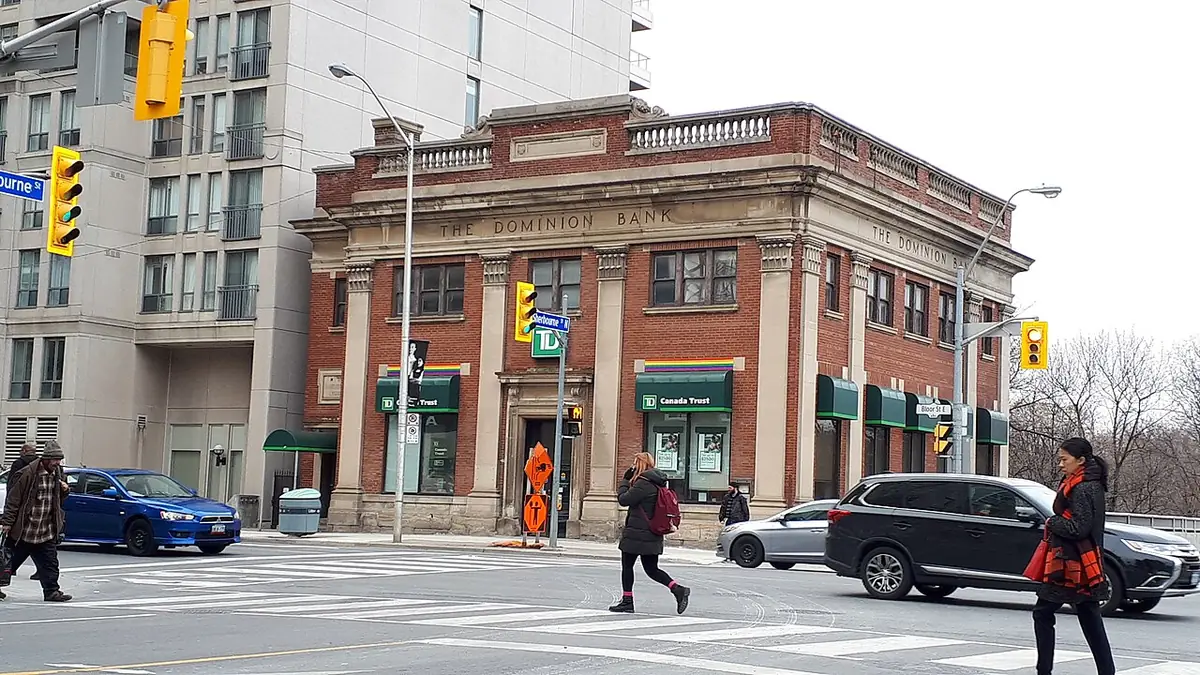
A heritage corner building on a lively Toronto street — Photo: Oaktree b · CC BY-SA 4.0 · Wikimedia Commons
Beyond the figures, the legal nature of what you are buying deserves very close attention if you want to avoid unpleasant surprises.
Working out the finances of a Toronto purchase does not stop at the asking price on the agent's listing. Numerous extra costs, both mandatory and recurring, add to the bill from the first year and throughout your ownership. Between the municipal and provincial land transfer taxes, the legal fees and the monthly condominium charges, calculating the total cost demands absolute rigour. The figures below set out the orders of magnitude you must build into your initial financing plan.
torontoFor saleApartmentestimate
Median price / m²CA$9,975Half the apartments sell below this
Median priceCA$690kthe average is 14% higher — a few very large properties pull it up
Most common1 bedroom48 % of listings
Average size66 m²
By number of bedrooms
Bedrooms
Share of market
Avg price
Price / m²
Avg size
1most common
48 %
CA$578k
CA$11,550 +10 %
50 m²
2
38 %
CA$741k
CA$10,290
72 m²
3
11 %
CA$978k
CA$9,975best value / m²
98 m²
4
3 %
CA$1.25m
CA$9,975best value / m²
125 m²
Each row is an average, compared against the area average of CA$10,500 / m². These are indicative estimates of a typical local market, not a measured sample of live listings. Check current listings before relying on them.
Outright ownership or regulated co-ownership: what you actually hold
Getting these legal categories straight leads directly to the chronological steps you cannot skip if you want your purchase to go through cleanly.
The Toronto market draws a clear line between several legal ownership regimes for apartments, and confusing standard condominium ownership with other forms of holding can prove costly. Between the strict rules governing common elements and the relative autonomy of the owner, each formula redefines your freedom to alter the home and your financial obligations. Grasping these legal nuances stops you discovering restrictions on your use of the property once the keys are in your hand. This distinction turns out to be decisive for the peace of mind of your investment over the long term.
Standard condominium ownership in a tower
You own your unit outright, along with an undivided share of the building's common elements and shared amenities. Management is entrusted to a board elected by the owners and administered by a professional manager. The building by-laws set strict limits on the use of spaces, on short-term rental and even on keeping pets.
What it changesYou get pooled maintenance and comfortable amenities, but you have to submit to collective rules that can be constraining and accept fee increases voted through at general meetings.
Freehold townhouses and related structures
Some low-rise or small residential developments run under a regime where you own the land under your home, or under a lighter legal structure as regards common elements. The co-ownership constraints are often more flexible, limited to shared outdoor areas or the private roads of the development.
What it changesYou gain autonomy over the upkeep and management of your property, but you carry the full cost of exterior renovation and roofing alone and directly, without the buffer of a collective reserve fund.
The critical sequence to master before you hand over a single deposit
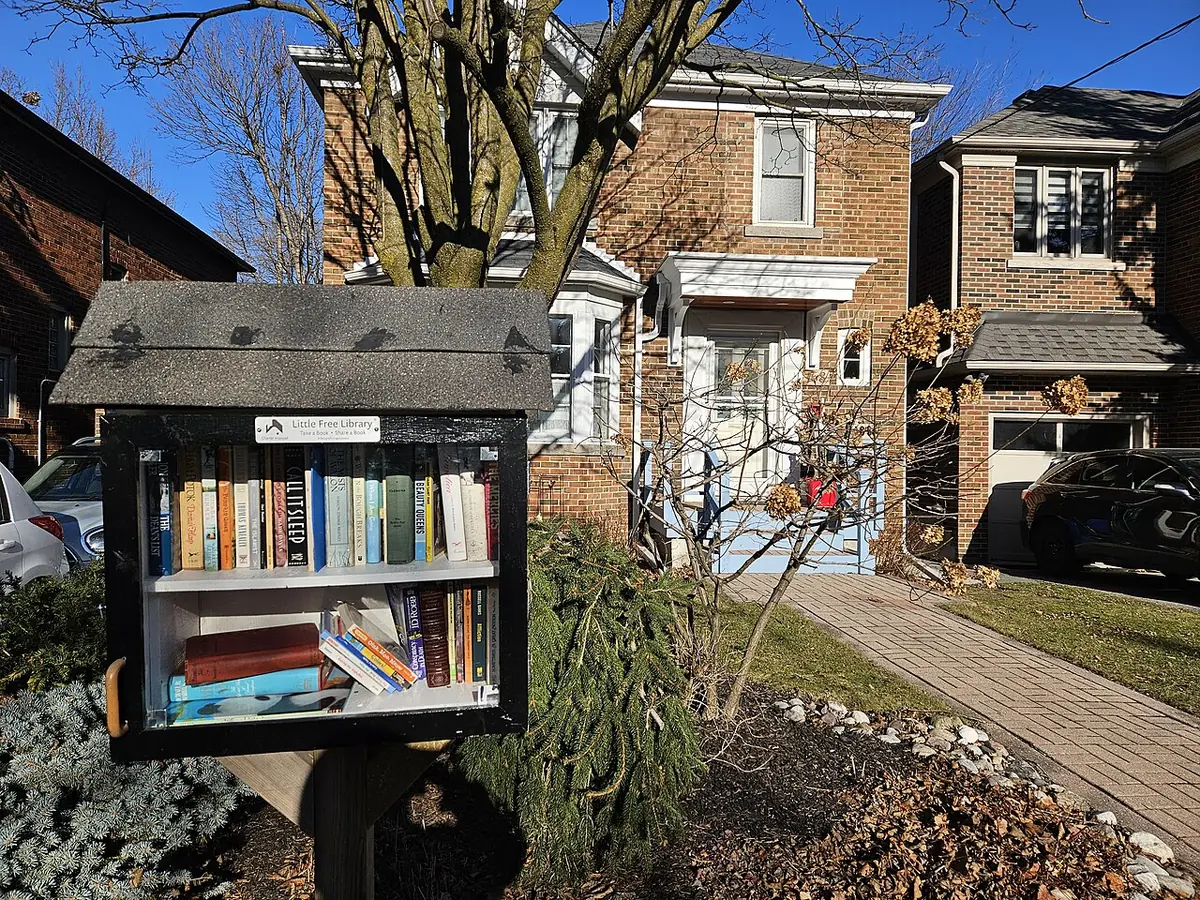
A quiet residential street with a neighborhood book box — Photo: ArthurGron · CC0 · Wikimedia Commons
To carry this through successfully, it helps to picture exactly what each professional in the transaction chain does.
Haste is the sworn enemy of the property buyer in the Toronto region, where the pace of transactions can push people into carelessness. Following a rigorous timeline, from securing your mortgage pre-approval to the final signing with your lawyer, is your best protection against hidden defects and financial dead ends. Each step serves a precise function in validating your plan and stripping out the major risks. Following that sequence scrupulously is what keeps the purchase calm.
Pinning down exactly how much you can really borrow from an Ontario financial institution
Obtaining a formal mortgage pre-approval so you know your maximum envelope and can hold an interest rate.
Rigorous selection of properties and targeted viewings run with an agent who knows the specifics of Toronto neighbourhoods inside out.
Drafting and submitting an offer to purchase with conditions covering financing and a technical inspection.
A thorough review of the Status Certificate by your specialist lawyer to check the financial health of the building.
Final signing of the transfer and the movement of funds on the official closing date
Who does what in a Toronto property transaction: the key players
A successful property transaction in Toronto rests on close coordination between several professionals with strictly defined roles. Unlike markets where a single intermediary centralises everything, the Ontario system splits responsibility between the agent, the inspector, the lawyer and the lender. Knowing what each one covers lets you approach the right person at the right moment and avoid confusion about who does what. This professional structure is what secures your investment legally and financially.
The real estate agent or brokerGuides your search, shortlists properties and negotiates the terms of the offer.They analyse market comparables so you do not overpay, and draft the contractual clauses that protect your interests when the offer goes in.
The real estate lawyerChecks title to the property, goes through the Status Certificate and handles the transfer of funds.This is the cornerstone of the legal safety of your purchase. They make sure no hidden claim or charge sits on the property on the closing date.
The home inspectorExamines the technical condition of the apartment, the installations and the built-in equipment.Their written report brings visible and potential defects to light, giving you factual grounds to negotiate or to walk away where a condition allows it.
The mortgage specialist or brokerStructures the financing plan and negotiates loan terms with lenders.They optimise the structure of your borrowing around your tax position and your down payment, making sure your file stands up financially.
The property managerRuns the building on behalf of the condominium corporation and enforces the rules.They are the contact for everything to do with the upkeep of common elements, scheduled work and daily life in the building.
Apartment or house in Toronto: how to choose according to the pace of your life
Once that first choice between urban verticality and horizontal space is made, the crucial question of the overall cost of property life arrives immediately.
Choosing between a condominium apartment, usually just called a condo in Toronto, and a detached house or a townhouse is the first big fork in the road for anyone buying as they settle in the city. The Toronto property market is marked by strong verticalisation downtown, where glass towers multiply along transit routes such as the Yonge-University subway line, while the residential suburbs and outer neighbourhoods such as East York or Etobicoke offer more horizontal structures. That geographic distinction feeds straight into your daily life, your travel times and how your weekends are organised, because looking after a property with land takes a considerable investment of time that many city dwellers prefer to avoid in favour of built-in services.
Financially, buying an apartment means monthly maintenance fees covering the common elements, security, access to the gym and sometimes even heating or water. Those fees rise predictably over the years, which is why a rigorous look at the building's reserve fund at the point of purchase matters, so you are not caught by unforeseen special assessments for roofing or facade work. Owning a detached house, by contrast, removes those recurring payments to a condominium corporation, but leaves you with full financial and physical responsibility for every repair, whether that means redoing the roof, clearing the French drains or replacing a failing central heating system in the depths of an Ontario winter.
Daily life also decides how relevant that choice is, depending on your family and professional situation. Professionals working in the Financial District or the tech cluster along King Street often go for the convenience of a condo within walking distance of the office, or connected directly to the underground PATH network, cutting out time lost in the traffic on the Gardiner Expressway. Families with children, on the other hand, generally look for the living space and calm of a house with a fenced back yard in residential neighbourhoods known for the quality of their public schools and leafy parks, accepting longer commutes by GO Transit train or car in exchange.
Flexibility and liquidity are a final decisive factor for buyers who may resell or move region in the medium term. Apartments generally resell faster to young professionals and to investors looking for rental stock, even if the market can swing with the Bank of Canada's policy rates. Detached houses in established locations, meanwhile, hold extremely solid long-term value because of the chronic scarcity of land across the Greater Toronto Area, which makes the land itself the main engine of capital appreciation over time.
What overall budget do you need to live comfortably as an owner in Toronto?
Now that the financial frame is clearly set, it is worth looking concretely at how an ordinary day unfolds to understand the impact of where you live.
Setting a realistic budget for buying a property in Toronto goes well beyond the simple monthly mortgage payment granted by your financial institution. You have to build in the full set of recurring charges and local taxes that fall on owners in the City of Toronto. Property tax, home insurance premiums, any condominium fees and the money set aside for preventive maintenance are what make up the true total cost of owning your future Ontario home.
Estimated recurring monthly costs for an apartment or a house in Toronto
Cost item
Apartment (two-bedroom condo)
Detached house (suburb or established neighbourhood)
Impact on the overall budget
Municipal property tax
$350 to $550 per month
$550 to $900 per month
Calculated on the value assessed by MPAC, with rates varying by municipality.
Condominium or maintenance fees
$600 to $1,000 per month
$150 to $300 per month (personal reserve fund)
Condos include upkeep of common elements; a house requires dedicated savings.
Home insurance
$40 to $70 per month
$120 to $200 per month
Higher for a house because the whole structure would have to be rebuilt.
Utilities (electricity, gas, water)
$80 to $150 per month
$250 to $450 per month
Heating and cooling cost more across a larger living area.
The figures shown are indicative orders of magnitude based on Toronto market averages and can vary with the age of the building and its energy performance.
Health, schools, transport: what does an ordinary Tuesday look like for an owner in Toronto?
Beyond the practical side and a well-oiled schedule, some hidden aspects of Toronto property deserve your full attention before you sign.
Nothing beats walking through a typical weekday hour by hour when you want to judge whether a location works. Between commuting on the Toronto Transit Commission network or the GO trains, juggling family obligations and reaching healthcare facilities, every neighbourhood imposes its own rhythm. Living a day out like this lets you measure the real impact of geographic choices on your quality of life and on the tiredness that builds up through the seasons.
07:30Leaving home and the morning journeyBoarding the subway line or the GO Transit commuter train into downtown. Riders appreciate the reliability of rapid transit compared with buses caught in rush-hour congestion on the Gardiner Expressway.
08:45Arriving at the office in the Financial DistrictA direct link into the underground PATH walkway network, letting you cross the economic core of the city sheltered from the weather and the harsh winter cold without ever stepping outside.
12:30Lunch break and neighbourhood lifeExploring the local food offering and neighbourhood markets such as St. Lawrence Market, or the shops along Queen Street West. The density of retail guarantees immediate access to every everyday service.
16:30School pick-up and activitiesA stop at the local public school run by the Toronto District School Board, or at the community centre for after-school activities. Being close to parks and municipal sports facilities is a decisive criterion for families.
18:30Shopping and running the householdLast-minute purchases at local supermarkets or neighbourhood delicatessens. Being able to walk to these shops avoids reaching for the car every evening and simplifies planning meals.
20:30Winding down and local life in the eveningMaking the most of what Toronto offers culturally, whether that is a theatre performance, dinner at a neighbourhood restaurant or simply a walk through residential streets lined with mature trees.
What the listing will not tell you about the Toronto market
Knowing these blind spots is what saves you from the classic traps that catch many inexperienced buyers in their first months of ownership.
The polished promotional photography and glowing descriptions published on MLS platforms frequently mask technical and administrative realities specific to Toronto's housing stock. Understanding these unwritten elements protects you from major financial let-downs and expensive corrective work that never featured in your original investment plan.
The real state of the plumbing and of lead water service lines
Many houses built before the middle of the twentieth century in historic neighbourhoods such as The Annex or Leslieville still have lead water connections between the property and the main municipal network. Replacing those pipes falls entirely on the owner and costs more every year.
Strict rules on Airbnb-style letting and the condominium by-laws
The City of Toronto applies very restrictive municipal rules to short-term rental, backed by the internal by-laws of condominium corporations, which often prohibit any letting shorter than six months. Buying a condo intending to list it on tourist platforms usually turns out to be illegal or liable to heavy fines.
Densification plans and towers going up next door
Toronto's dynamic zoning allows frequent changes to the urban landscape. An empty lot or a low commercial building across from your future purchase can quickly become a high-rise residential project, radically changing your view, your daylight and the resale value of your property.
The critical age of shared equipment in condominium buildings
An older building showing abnormally low condo fees may be hiding a reserve fund that cannot cope with the imminent need to replace the lifts or the central cooling system, or to waterproof the underground garage again. That work almost always brings large special assessments for the owners in place.
The buying mistakes you only discover after six months of living in Toronto
These hard-won lessons underline how important it is to ask yourself honestly about your own profile and your real capacity to adapt to the Toronto market.
Looked likeAn ultra-fashionable, lively neighbourhood with a very active nightlife right at the foot of the building.
Turned outA permanent source of night-time noise, difficulty parking for visitors and rubbish piling up on the pavements on weekend evenings.
Would have caught itVisiting the neighbourhood at different hours across the week and the weekend, especially late on a Friday night, so you can judge the real noise level objectively before making a firm offer.
Looked likeAn excellent financial deal, with a price per square foot below the local averages.
Turned outA property needing heavy structural work and a full upgrade of the electrics and the insulation, wiping out the saving you thought you had made.
Would have caught itAlways instructing a certified, independent home inspector to carry out a thorough analysis of the building envelope before waiving the conditions in your offer.
Looked likeA perfectly smooth commute thanks to the advertised proximity of a subway station.
Turned outLines so saturated at peak times that you have to let several trains go before you can board, turning the daily journey into a major source of stress.
Would have caught itTesting the journey yourself at the exact peak hours you expect to travel to your usual workplace before you commit.
Looked likeEnough storage for all your personal belongings and leisure gear.
Turned outA complete absence of built-in cupboards and of a private storage locker in the basement, leaving the apartment quickly cluttered and hard to organise day to day.
Would have caught itChecking that an assigned locker is recorded in the condominium's register and measuring the storage available in each room precisely.
Who should definitely not be buying property in Toronto right now?
It is now time to pull all these parameters together so you can make your final decision with clear eyes.
Getting on the property ladder is often presented as the ultimate goal of any housing journey in Canada, but it does not suit every household. Given what the Toronto market demands financially and the way interest rates move, some personal or professional situations make buying premature, or even financially perilous.
The internationally mobile professional, or someone still on probation in a new job
→To keep complete flexibility by renting an apartment rather than buying.
The transaction costs of buying and reselling a property in Toronto (provincial and municipal land transfer taxes, legal fees, agency commissions) require a minimum stay of four to five years before potential capital appreciation absorbs them.
The household whose savings barely cover the minimum down payment
→To keep saving and hold their cash in secure instruments while renting.
Buying without a solid financial cushion to absorb unexpected maintenance or a sudden shift in mortgage rates at renewal exposes the household to a critical risk of default.
The investor looking for a high, effortless rental yield straight away
→To turn their capital towards other financial asset classes or other regional markets.
The ratio between the high purchase prices in Toronto and rents framed by Ontario legislation produces gross yields that are often modest and barely cover the running costs and debt service at current rates.
So, are you really ready to go through with buying in Toronto?
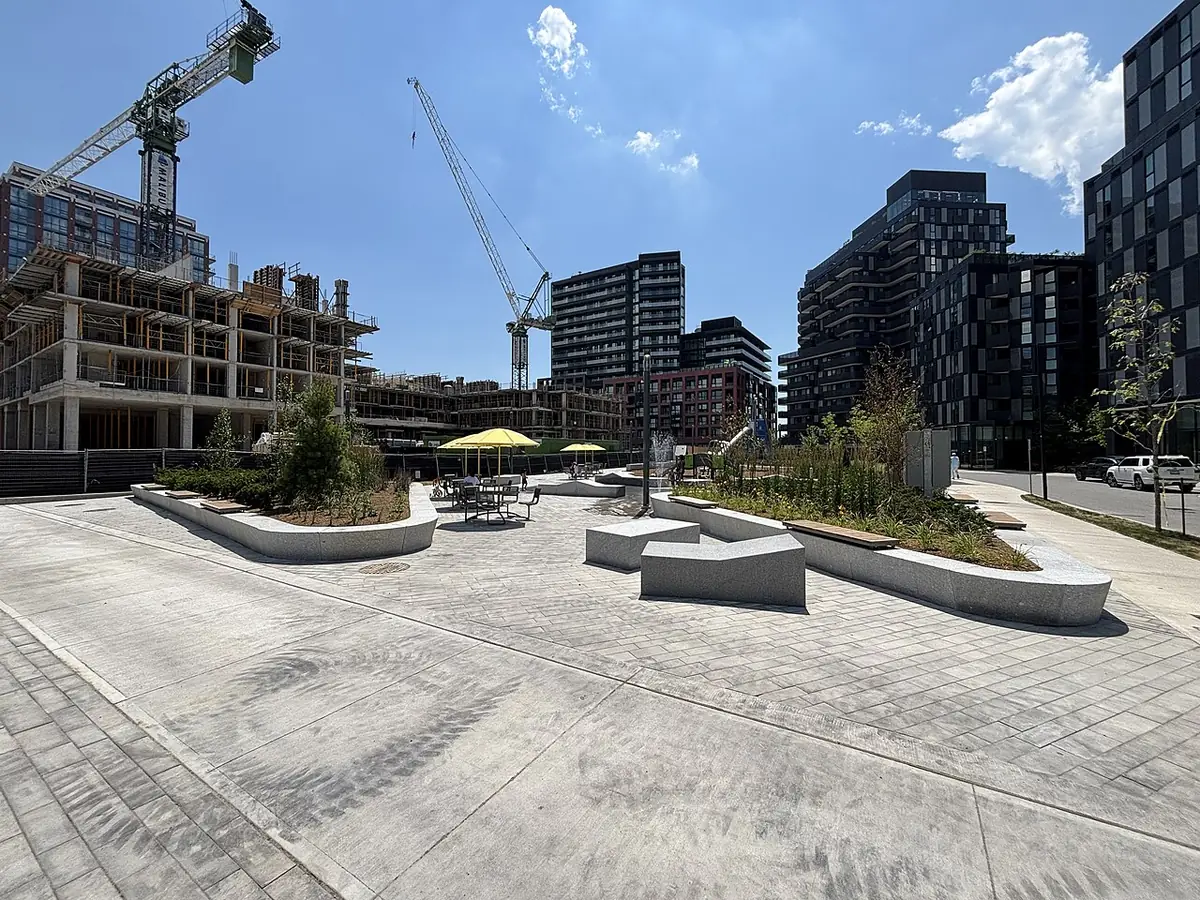
A new public plaza taking shape in Toronto — Photo: Canmenwalker · CC BY 4.0 · Wikimedia Commons
Deciding to buy a property in Toronto means moving past the emotion of the viewings and looking clearly at your finances and your horizon. The Toronto market rewards meticulous preparation, strategic patience and a close understanding of local constraints, whether that is property taxation, the subtleties of condominium law or the reality of travel times. If your plan sits within a long-term view of stability and your savings buffer survives a stress test on interest rates, buying a home in the city is a solid and durable anchor for your assets.
If, on the other hand, you feel the slightest doubt about your job stability, your tolerance for maintenance obligations or how long you will stay in the region, renting remains a financially rational and highly flexible alternative. The Toronto rental market, competitive though it is, keeps you from tying up substantial cash in an uncertain economy while leaving you free to adjust where you live as your personal and family needs evolve. Take the time to weigh every figure before signing any binding document with a seller.
Your next step is to meet an independent mortgage broker for a realistic pre-approval, then to explore the neighbourhoods you are targeting by walking their streets at different times of day to feel their real atmosphere. Do not hesitate to surround yourself with people of integrity, whether that is a rigorous home inspector or a lawyer specialising in Ontario real estate law, to validate every legal clause of your future transaction. That is what turns a Toronto property purchase, far from the simplistic marketing talk, into a genuine success in your life.
Related questions
What closing costs should you budget for when buying a property in Toronto?
Closing costs include land transfer tax (the combined municipal and provincial charge that applies in Toronto), the fees of your real estate lawyer, title insurance and the adjustment for property taxes the seller has already paid in advance. Budgeting between 2% and 4% of the total purchase price is the sensible way to cover all of these unavoidable obligations at final signing.
How does the double land transfer tax that applies in Toronto work?
The City of Toronto levies a municipal land transfer tax on top of the transfer tax charged by the Province of Ontario. Partial rebate programmes exist for eligible first-time buyers who meet the full set of strict criteria set by the municipal and provincial authorities, which slightly softens the initial tax cost of the purchase.
What is the basic difference between undivided co-ownership and condominium ownership in Toronto?
The Toronto market rests almost entirely on condominium ownership, where each owner holds full title to their own unit plus a clearly defined share of the building's common elements. That legal structure makes individual and collective financial responsibilities far easier to read than other forms of shared ownership.
Do you have to have a condo inspected before buying it in Toronto?
Inspecting a condominium apartment is not a legal requirement, but it remains strongly advisable in order to assess the state of the fittings inside the unit and to catch hidden defects or damp problems. It is also crucial to read the condominium's reserve fund study, prepared by engineers, so you can anticipate the building's future work.
How do Bank of Canada interest rates affect my buying power?
Movements in the Bank of Canada policy rate feed straight through to the cost of the mortgage credit offered by Ontario's commercial banks. A rate rise mechanically reduces the maximum loan that financial institutions will let you borrow under the strict federal stress test rules in force.
What is the mortgage stress test in Canada?
The stress test is a federal regulatory rule requiring every borrower to show they could still repay their mortgage at an interest rate above the one written into their contract, generally the contract rate plus 2 percentage points or the five-year benchmark floor rate, so that the banking system stays resilient.
Which Toronto neighbourhoods are most sought after for buying an apartment?
Central neighbourhoods such as the Entertainment District, Yorkville, King West and the Distillery District concentrate most of the demand for condos because jobs and services are within walking distance. Quieter residential areas along the subway line, such as High Park or Yonge-Eglinton, attract buyers looking for a balanced compromise between city life and green space.
How can you find out about future construction that might affect a property in Toronto?
The City of Toronto's official planning portal (Toronto City Planning) publishes interactive maps and public registers setting out every building permit application, zoning amendment and development project under way in each neighbourhood of the city.
Which documents must you absolutely review before buying a condominium in Toronto?
You must request and read the Status Certificate, which sets out the financial health of the condominium corporation, the exact size of the reserve fund, the history of meeting minutes and any legal proceedings the corporation may be involved in.
Can a non-resident of Canada buy property in Toronto?
Property purchases by non-residents of Canada are governed by specific federal and provincial laws, including additional taxes on non-resident purchases across the wider Golden Horseshoe region. Consulting a specialist tax adviser is essential in order to understand the full set of reporting and tax obligations that apply.
Property review of ting
No ting properties in Toronto yet
Be the first — share it on ting and it shows up right here.