Buying well in Montréal means reconciling the reality of the neighbourhoods, the particularities of Québec co-ownership and the rigour of the purchase process. This guide sets out each strategic aspect so you can make an informed and durable decision.
Get the app
What nobody tells you.
Real prices, hidden costs and the traps to check before you commit.
What buying an apartment in Montréal really means day to day
Scroll
What buying an apartment in Montréal really means day to day
Buying well in Montréal means reconciling the reality of the neighbourhoods, the particularities of Québec co-ownership and the rigour of the purchase process. This guide sets out each strategic aspect so you can make an informed and durable decision.
Written by the ting.ad editorial team ·
Belvédère Kondiaronk, Montréal in Street View: drag to look around.
Beyond the physical characteristics of the building, your own profile and daily habits decide whether settling in works out.
Buying an apartment in Montréal means accepting a permanent trade-off between the heritage charm of the central neighbourhoods and the reality of co-ownership fees. Between the harsh winters that test how well buildings are insulated and the cultural life within walking distance, every architectural choice carries its financial and practical counterpart. Buyers discover quickly that location is not everything, and that the internal management of the co-ownership dictates peace of mind over the long run. Reading these dynamics lets you approach the Montréal market clear-eyed rather than on the strength of a purely aesthetic first impression.
The architectural character of triplexes and converted buildingsvsUnforeseen maintenance costs on older structures
Period woodwork and exposed brick walls are immediately appealing, but they often demand major renovation to meet current thermal standards. Where a small co-ownership has no adequate contingency fund, a simple facade repair can turn into an unplanned extraordinary expense for every owner.
Immediate proximity to services and public transportvsUrban density, street noise and difficult parking
Living near metro stations and busy arteries means you can do without a car day to day, but it exposes you to noise and to a shortage of parking spaces, particularly during winter snow-clearing operations.
Participative, close-at-hand co-ownership governancevsPotential tension between co-owners at meetings
In modestly sized co-ownership syndicates, everyone's involvement is required for day-to-day management. A disagreement about how urgent the work is, or about how the costs are split, can quickly paralyse decision-making.
What kind of Montréal life are you looking for when you invest in property?
Moving country or province to settle in Montréal also means getting to grips with a property system that has its own rules and traditions.
The Montréal residential market splits along sharply drawn ways of living, from the professional energy of the central areas to the residential quiet of the outlying neighbourhoods. Your budget and your tolerance for commuting will steer your search directly towards particular building types and particular districts.
Urban life and active mobility
You favour walking, cycling and the underground network for getting around every day without depending on a car. You are looking for a modern condo in a building with shared amenities, with quick access to restaurants and concert venues. The trade-off is a smaller living area and higher co-ownership fees for services you make full use of.
Residential stability and neighbourhood life
You are aiming at a spacious three-bedroom apartment or a converted duplex that gives you a private yard or direct access to a local park. You accept a slightly longer journey into the centre in exchange for a quiet setting, an active community and far more predictability for the children's schooling.
Asset strategy and flexibility
You are targeting a university district or an area served by new public transport lines, to guarantee an easy letting or a straightforward resale. You have to work around strict municipal by-laws on short-term rentals and to examine the co-ownership syndicate's financial statements rigorously before you buy.
Buying in Montréal when you are arriving from abroad: the real changes to anticipate
Once these administrative differences are understood, the choice of district becomes the central element of your buying strategy.
The reference points you bring from buying property elsewhere rarely apply to the Québec context without adaptation. The terminology, the role of the various financial parties and the legal structure of co-ownership rest on distinct legislative foundations that deserve careful study if you want to avoid unpleasant surprises.
From abroad
A certified, standardised measurement of habitable floor area
Montréal
A gross or approximate area that sometimes includes part of the party walls
It is essential to ask for a recent certificate of location and to measure the key rooms yourself, because the area quoted in a listing may include balconies or common spaces that are not private.
From abroad
Central management by an external professional managing agent
Montréal
The co-ownership syndicate, often co-managed by the co-owners themselves
You will have to get directly involved in the life of the building, or accept that management rests on volunteers, which means reading the minutes of recent general meetings carefully to judge the health of the co-ownership.
From abroad
Conveyancing fees that are fixed and regulated by the state
Montréal
The notary's fees for examining title, plus the municipal land transfer duty
Your overall purchase budget has to allow for transfer duties that can be high depending on the municipality, along with closing costs that vary with the legal complexity of the file.
From abroad
A standardised, compulsory energy performance certificate
Montréal
An energy picture built from past utility bills, plus an independent pre-purchase inspection
Because Montréal winters impose heavy heating costs, a thorough inspection of the insulation, the windows and the heating system by a certified professional is an absolutely non-negotiable step.
How to choose your Montréal neighbourhood by budget and pace of life
Looking at the districts leads inevitably to the crucial question of what your project really costs.
Montréal is a mosaic of neighbourhoods with strongly marked identities, where the atmosphere, the accessibility and the demographic mix vary considerably from one street to the next. Judging each area on how it feels day to day and on its potential resale value will stop you relying on passing trends alone.
Le Plateau-Mont-Royal and Mile End
A constant cultural buzz, streets lined with mature trees, a high density of local shops and very heavy foot traffic.
Suits
Buyers after a walk-everywhere neighbourhood life, who like independent cafes, design and an artistic scene.
Trade-off
Prices per square metre among the highest on the island, older housing that often needs bringing up to standard, and strict planning rules for any external alteration.
Rosemont-La Petite-Patrie
A harmonious balance between family residential life, busy parks, lively green alleyways and genuine shopping streets.
Suits
Families and young professionals who want a comfortable space without the excessive intensity of downtown.
Trade-off
Sustained demand that keeps constant upward pressure on prices, and fierce competition whenever a good property comes to market.
The Sud-Ouest (Griffintown and Saint-Henri)
The striking contrast between rehabilitated industrial architecture along the Lachine Canal and new modern condominium projects.
Suits
Fans of contemporary architecture, immediate proximity to the water and green spaces laid out for sport and relaxation.
Trade-off
Co-ownership fees that are sometimes high because of the amenities built into the residential towers, and an urban fabric still in transition.
What does buying an apartment in Montréal really cost?
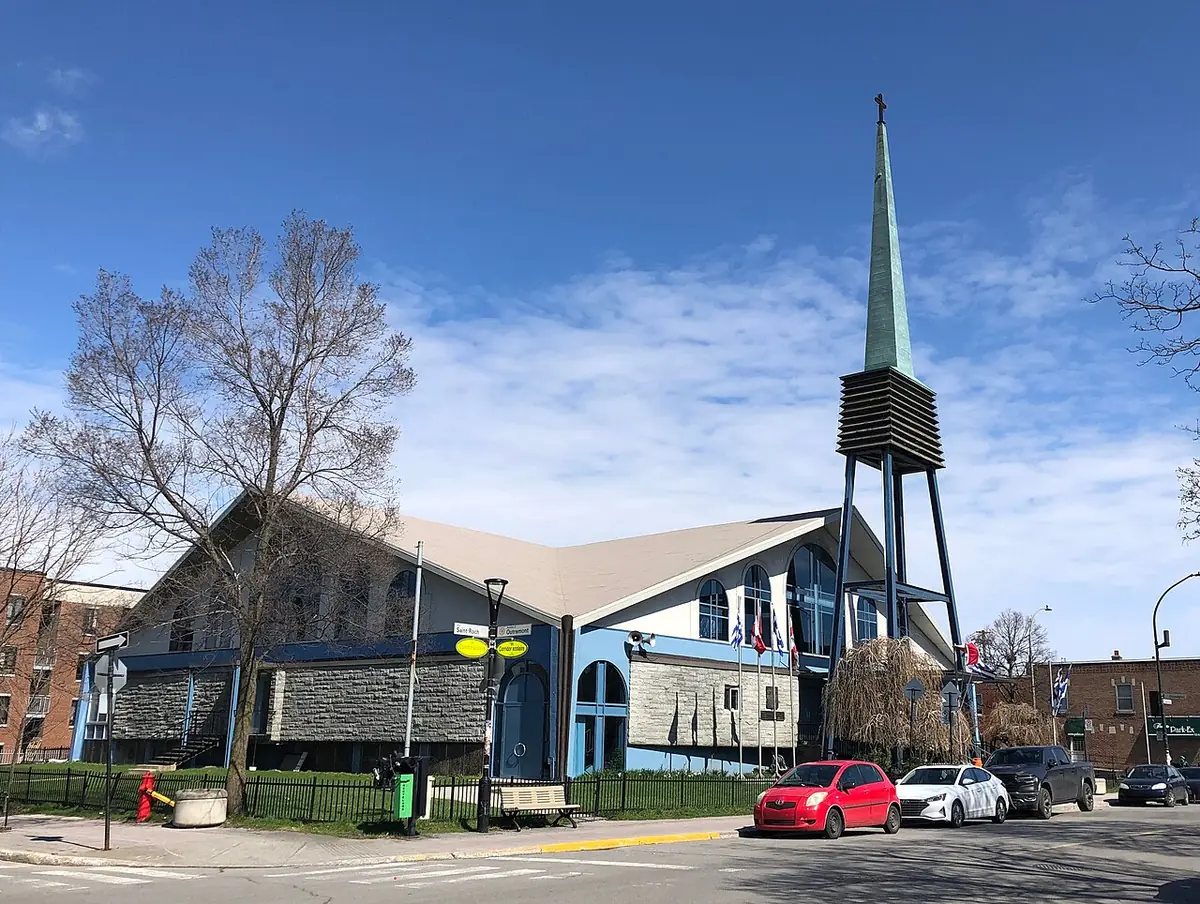
A striking church marks this Montreal street corner — Photo: LenMontreal · CC BY-SA 4.0 · Wikimedia Commons
Knowing the purchase price is not enough; you also need to understand the exact legal nature of what you own.
The Montréal property market shows price ranges that vary with floor area, year of construction and the precise location of the property. Beyond the seller's asking price, working out your total investment has to include municipal and school taxes, notary fees and the monthly co-ownership charges.
montrealFor saleApartmentestimate
Median price / m²CA$5,035Half the apartments sell below this
Median priceCA$435kthe average is 14% higher — a few very large properties pull it up
Most common2 bedrooms42 % of listings
Average size82 m²
By number of bedrooms
Bedrooms
Share of market
Avg price
Price / m²
Avg size
1
35 %
CA$335k
CA$6,095 +15 %
55 m²
2most common
42 %
CA$435k
CA$5,300
82 m²
3
20 %
CA$554k
CA$5,035best value / m²
110 m²
4
3 %
CA$730k
CA$5,035best value / m²
145 m²
Each row is an average, compared against the area average of CA$5,300 / m². These are indicative estimates of a typical local market, not a measured sample of live listings. Check current listings before relying on them.
Divided or undivided ownership: what can you actually hold in Montréal?
Once the legal form is settled, the chronology of the transaction demands absolute vigilance at every stage.
Québec law draws a clear distinction between two ways of holding property in co-ownership, and their financial and banking implications decide whether your purchase is feasible at all. Understanding this legal distinction saves you from major obstacles when you come to arrange your mortgage.
Divided co-ownership
You own an exclusive fraction of the building (your apartment) along with a share of the common areas calculated on the relative value of your lot. This model resembles classic European co-ownership and is recognised by every financial institution for the purposes of granting a mortgage.
What it changesYou get complete financial autonomy for your mortgage and a rigorous legal framework set out in the Civil Code of Québec.
Undivided co-ownership
You buy an overall percentage of the whole building alongside other buyers, with exclusive use of your apartment defined by a notarised indivision agreement. This format often applies to converted duplexes or triplexes and requires complete agreement between all the co-owners.
What it changesIt generally calls for a larger minimum down payment (often 20% or more) and narrows the choice of lenders, while sometimes offering more accessible purchase prices.
The fundamental rule to understand before you pay a deposit in Montréal
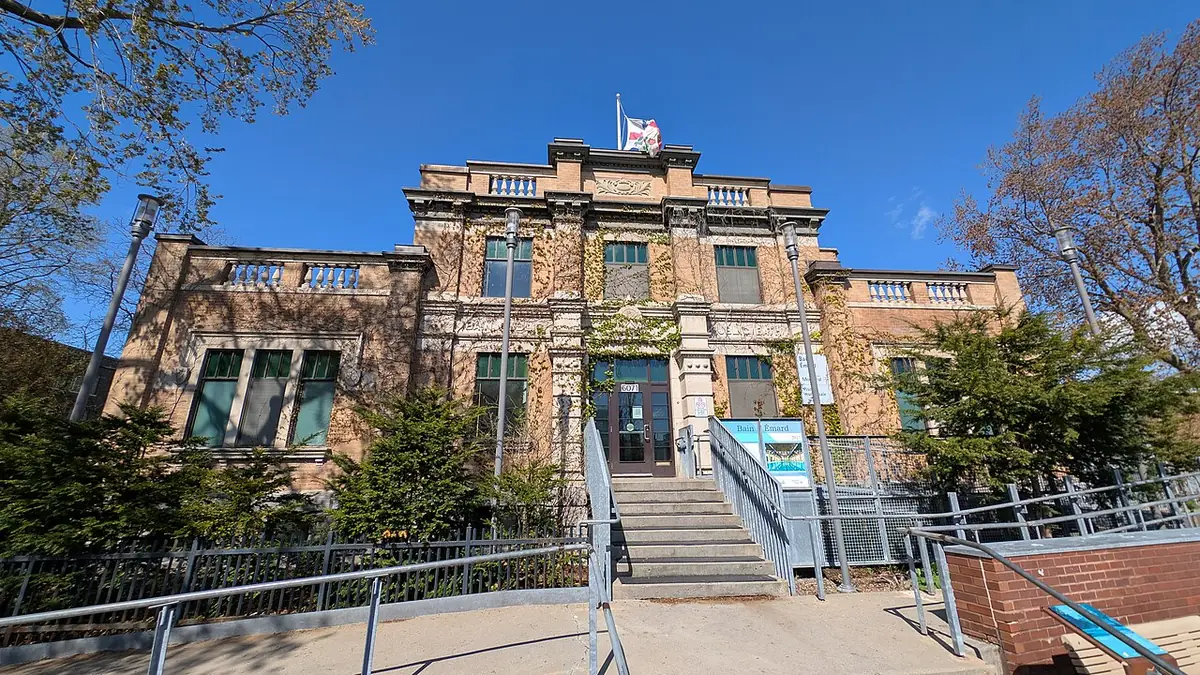
A heritage bathhouse anchoring this Sud-Ouest neighbourhood — Photo: Maxime Laterreur · CC BY 4.0 · Wikimedia Commons
To handle all of this calmly, it helps to picture the whole transaction as a chronological path.
Signing a promise to purchase binds buyer and seller very strictly in Québec. Mastering the sequence of conditions and the importance of the pre-purchase inspection protects your capital and secures the validity of your financial commitment.
Drafting the promise to purchase and presenting it to the seller, through your broker or directly.
The seller's acceptance of the promise to purchase, which starts the clock on the deadlines for satisfying the conditions.
Obtaining final, formal mortgage approval from your financial institution or your mortgage broker.
A thorough inspection of the building and the apartment by a qualified building inspector belonging to a recognised association.
A careful review of the co-ownership documents, including the maintenance log, the contingency fund and the minutes of meetings.
Signing the final deed of sale at the notary's office and transferring the funds to make your ownership official.
How a property transaction in Montréal unfolds, step by step
Anticipating each party and each administrative delay lets you get through the purchase without needless stress. From the first viewing to the handover of the keys, how rigorously you prepare makes all the difference in a competitive market.
YouFinancial preparation and pre-approvalSet your real budget with a financial adviser and get a mortgage pre-approval letter before you view the first property.
Broker or sellerActive search and targeted viewingsView several apartments at different times of day to judge the noise, the traffic and the natural light in each area.
You and your brokerDrafting and negotiating the promise to purchasePut together a realistic offer that includes precise deadlines for the inspection and for obtaining mortgage financing.
Building inspectorPre-purchase inspection and co-ownership checksGo through the inspection report and comb the co-ownership's financial statements and maintenance log to identify future works.
NotaryTitle examination and signing of the deedThe notary checks that no hidden charges sit on the building, prepares the official deeds and orchestrates the transfer of funds on closing day.
Condo apartment or single-family house: which choice suits your way of life in Montréal?
Once that fundamental choice between co-ownership and house is settled, the unavoidable question of the overall cost of living in Montréal shapes what comes next.
Choosing between a condo apartment and a single-family house in Montréal involves far more than your aesthetic preferences or your immediate budget. It is the fundamental trade-off between urban centrality and residential autonomy, two visions of the city that dictate your daily life, your maintenance obligations and your exposure to the Québec property market. The Montréal market is marked by high density in central neighbourhoods such as the Plateau-Mont-Royal, Rosemont or Ville-Marie, where the condo dominates, while more outlying or residential areas such as Ahuntsic, Notre-Dame-de-Grâce or Mercier-Hochelaga-Maisonneuve still offer a fabric of single-family houses and historic duplexes. Your decision should rest on your tolerance for co-ownership rules, common charges and the shared management of a building.
Opting for a condo apartment in Montréal means accepting the collective framework of the laws governing divided co-ownership in Québec. You buy a fraction of a building while sharing ownership and upkeep of the common areas, from the roof to the foundations by way of the stairwells. The formula appeals to buyers who value being close to local shops, metro stations and city parks without having to shovel snow off a large area or reroof a pitched roof on a Saturday in November. In exchange, the co-ownership fees, commonly known as condo fees, are an unavoidable monthly cost that rises over the years, particularly if the building's contingency fund has been neglected by the syndicate of co-owners. Recent legislative changes in Québec now require rigorous contingency fund studies, which can translate into substantial special assessments for owners in ageing buildings.
Buying a single-family house in Montréal, whether a bungalow in the inner suburbs or a venerable Victorian cottage in the central neighbourhoods, gives you total sovereignty but demands considerable investment of time and money in upkeep. You alone decide when to replace the heating system, repoint the brick or landscape the back yard, but you also carry the whole bill with no neighbours to share it with. In Montréal, harsh winters and spring freeze-thaw cycles put the building envelope through severe punishment, which makes preventive maintenance non-negotiable. If you like doing things yourself, if you have pets that need direct access to a yard, or if you dread stormy co-ownership meetings, the single-family house makes its own case, provided you accept being relatively further from the densest shopping streets or paying a distinctly higher price for the equivalent floor area in the heart of the city.
To settle between these two options in Montréal, look coldly at how you actually spend your free time and at your ability to save against property surprises. A well-run condo in a lively neighbourhood is often easier to resell and offers precious geographical freedom for active households who travel or work from anywhere. A single-family house is a powerful, stable anchor, but it demands strict budget discipline to cover the big repairs that always arrive at the wrong moment. Your buyer profile, your investment horizon and how much collective risk you accept will decide whether your Montréal future is written behind a co-ownership landing door or on the threshold of a front door opening straight onto the street.
What overall budget do you need to live comfortably and own in Montréal?
With that financial frame in place, it matters just as much to understand how daily life actually works across the city's services.
Buying an apartment in Montréal is not simply a matter of paying the monthly mortgage to your financial institution. You have to fold in all the recurring and occasional expenses that make up the real cost of owning property in Québec. Municipal and school taxes, co-ownership fees, insurance and the cost of electricity for winter heating all weigh heavily in the calculation of your debt ratio. A realistic assessment of what you can afford will stop you being suffocated by unforeseen increases in charges in your first year in your new home.
Monthly and annual expense lines for an apartment in Montréal
Expense line
Estimated average amount
Frequency
Impact on the budget
Mortgage (depending on down payment)
$1,800 to $2,500
Monthly
Depends directly on prevailing interest rates and on the original purchase price.
Municipal and school taxes
$350 to $550
Monthly (spread)
Varies widely by Montréal borough and by the city's assessed value of the property.
Co-ownership fees (contingency fund included)
$250 to $600
Monthly
Essential to the upkeep of the building; they rise steadily as the legislation tightens.
Electricity and heating (Hydro-Québec)
$120 to $250
Monthly
A significant peak during the harsh winter months, smoothed over the year through the equalised payment plan.
These amounts are indicative averages based on current Montréal market data for a four-and-a-half apartment.
Health, schools, transport: what does an ordinary Tuesday in the city actually look like?
Street art brings colour to this Montreal façade — Photo: Maxime Laterreur · CC BY 4.0 · Wikimedia Commons
Beyond that apparent smoothness of daily life, a close reading of the official documents often reveals subtleties the sales material leaves out.
To judge whether a Montréal location works, nothing beats a careful look at an ordinary working day. The public transport network run by the Société de transport de Montréal, combined with the city's cycling network, completely redefines how you get around depending on the neighbourhood you choose. Access to front-line health services, such as superclinics and family medicine groups, along with proximity to French-language or English-language public schools, sets the rhythm of your household. An ideal location should let you absorb these daily journeys without your personal time being wholly consumed by metro connections or traffic jams.
07:30Home neighbourhoodWaking up and leaving home. A quick check of traffic conditions or the state of the transport network to anticipate any delays.
08:15Metro station or active transport corridorThe commute towards downtown or a regional employment hub. Combined use of the OPUS card for the metro and the city buses.
12:30Local shops and nearby servicesA midday break making the most of local shops, neighbourhood life and green spaces within walking distance of work or home.
17:00Delicatessen or Montréal public marketA strategic stop for end-of-day shopping at a local public market or an independent grocer before heading back to the apartment.
18:30Settling in and home lifeBack home, dealing with homework or local leisure, making the most of the Montréal cultural and community life within walking distance.
What the listing will never tell you about the co-ownership and the building in Montréal
Knowing these blind spots helps you avoid the classic traps that turn a purchase into a lasting source of regret.
Listings for Montréal apartments skilfully showcase the light coming through from both sides, the sanded hardwood floors and the proximity to fashionable cafes. What they generally pass over are fundamental technical matters that determine the long-term value of your investment and your peace of mind. Reading the minutes of co-ownership meetings, the declaration of co-ownership and the building's maintenance logs critically is an indispensable exercise for any serious buyer before waiving the conditions on an offer.
The real state of the contingency fund and any pending special assessments
Many co-ownership syndicates hold financial reserves that fall short of what the new Québec laws expect. A contingency fund study that has not been done, or that shows a shortfall, translates without fail into heavy bills for new co-owners to repair the roof or the masonry.
Impact noise and the poor sound insulation of converted buildings
Many historic Montréal triplexes and quadruplexes converted into divided co-ownership suffer from deficient acoustic insulation between floors. Footsteps from the neighbours above or conversations through party walls can turn daily life into a noise nightmare if compliant soundproofing work has never been carried out.
Strict rules on signage, short-term rentals and pets
The declaration of co-ownership contains building rules that can be highly restrictive: prohibiting letting on platforms such as Airbnb, limiting the weight or the number of pets, or banning barbecues on balconies, all of which greatly restrict how freely you can use the property.
Municipal planning projects and infrastructure works coming to the street
An apparently quiet area can be paralysed for several seasons by a complete replacement of the underground water mains, major road reconstruction, or the imminent construction of a large adjoining development that blocks your view and your daylight.
The classic traps and buying mistakes you discover six months after moving in
If those mistakes catch out most unprepared buyers, some profiles should simply hold off buying in this market altogether.
Looked likeA beautiful turnkey apartment, freshly painted, with modern designer finishes.
Turned outA cosmetic cover-up applied in haste over structural hidden defects, masking water infiltration through the roof or cracks in the concrete foundation.
Would have caught itInsisting every time on a rigorous pre-purchase inspection by an inspector belonging to a recognised professional association in Québec, and inspecting the building's common areas.
Looked likeAn ultra-lively central neighbourhood with vibrant nightlife and busy terraces a step away.
Turned outA source of unbearable night-time noise at weekends, combined with a chronic inability to park in the street because residential parking permits are so scarce.
Would have caught itVisiting the surroundings of the property you have fallen for at different times of the week, notably Thursday, Friday and Saturday evenings, to gauge the real intensity of the noise and the traffic.
Turned outThe result of lax management in which successive board members refused to raise contributions, letting the building decline with no reserve fund to meet emergencies.
Would have caught itCombing scrupulously through the syndicate's financial statements for the past three years with the help of a legal adviser or a broker experienced in co-ownership.
Looked likeAn outdoor parking space included or easily accessible in the building's back yard.
Turned outA complex right of way, or a space nobody clears of snow in winter, blocked by the neighbours' vehicles during municipal snow-clearing operations.
Would have caught itChecking the notarised co-ownership deed to confirm whether it is a private portion, a common portion for restricted use, or simply a customary tolerance with no legal standing.
At-risk profiles: who should absolutely hold off buying an apartment in Montréal for now?
With those warnings taken on board, it is time to take a decisive view of how ready you really are.
Owning property in Montréal is often presented as the beginning and end of financial success in Québec. Yet in the current economic climate, marked by volatile interest rates and high property prices, buying an apartment does not suit every stage of life. Committing to a purchase without the professional or geographical stability it requires can turn your asset into a financial millstone. Looking at the situations where buying becomes a strategic error helps preserve your savings and your freedom to move.
The nomadic worker or someone in an international career transition
→Postponing the purchase and favouring flexible renting in the short to medium term.
The transaction costs of buying and reselling a property in Montréal (the welcome tax, brokerage commissions, notary fees) generally require a minimum holding period of five years to be recouped. Selling before then almost always ends in a net loss.
The household with savings stretched too thin and no safety cushion for surprises
→Keeping their capital in a tax-free savings account and building up their emergency fund.
Becoming an owner with no cash left after the down payment and the land transfer duty exposes the household to financial disaster at the first big unforeseen repair, such as a failed heat pump or a special assessment from the syndicate.
The buyer still undecided about the neighbourhood or about urban versus suburban living
→Renting for a full year in different target areas of the island of Montréal.
Committing to buy an apartment without knowing your neighbourhood's dynamics intimately, the quality of local transport and the feel of the immediate community often leads to a sense of isolation or mismatch that forces a premature and costly resale.
So, are you really ready to go ahead with buying in Montréal?
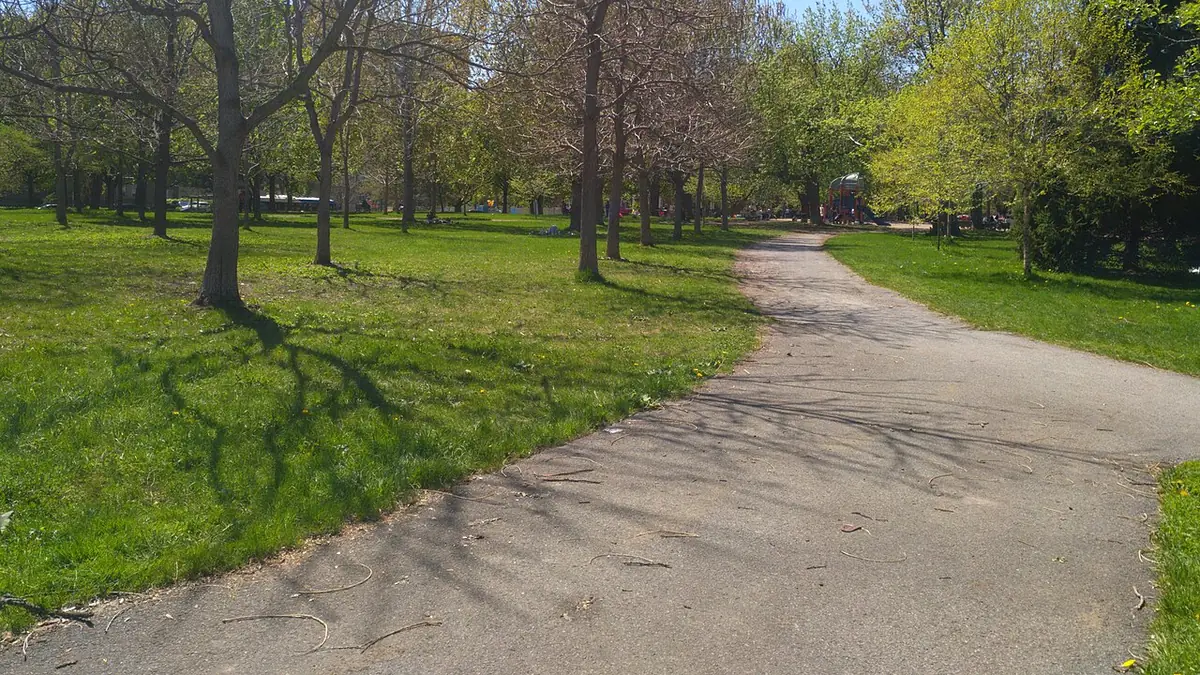
A shaded path for an easy walk in a Montreal park — Photo: Ptaff · CC0 · Wikimedia Commons
At the end of this close analysis of the Montréal property market, the decision to buy an apartment is no longer a matter of aesthetic infatuation but of a carefully considered life strategy. If you have clarified your fundamental need as between co-ownership and house, measured the real impact of the monthly charges on your budget and accepted the constraints that come with divided co-ownership in Québec, you hold the keys you need to complete a successful transaction.
The Montréal market rewards patient, informed and methodical buyers who know how to read between the lines of a declaration of co-ownership and to demand convincing financial documents. Buying in Montréal means putting down roots in a vibrant cultural city whose dense urban fabric offers an incomparable quality of life, provided you pick the right area for your working rhythm and your personal aspirations.
Never give in to the panic of an overheated market or to the artificial urgency some intermediaries manufacture. A successful purchase is the one that lets you sleep soundly at night, knowing that your budget absorbs rate movements and that your building is in competent, far-sighted hands.
Take the time to confirm your down payment, to consult your financial advisers and to visit the properties that hold your attention several times at different hours. When every box is ticked and your game plan is clear, stepping into ownership in Montréal becomes an obvious and rewarding move, and a landmark in building what you own.
Related questions
What are the average notary fees for buying an apartment in Montréal?
Notary fees for a residential property transaction in Montréal generally fall between $1,500 and $2,500, to which you must add applicable taxes and the cost of publishing the deed in the Québec land register. These fees cover the examination of title, the drafting of the deed of sale and the discharge of the previous mortgage.
What is the welcome tax in Montréal and how is it calculated?
The welcome tax, officially the land transfer duty, is a compulsory municipal tax payable in a single instalment in the months following the purchase. It is calculated progressively in brackets based on the higher of the purchase price and the municipal assessed value of the building, with rates reaching 3% in the top bracket in Montréal.
Is a pre-purchase inspection compulsory for an apartment held in co-ownership?
Although Québec law does not formally require an inspection, it is strongly recommended by every property professional, for the private unit as much as for the common areas and the general envelope of the building. A qualified inspector will detect concealed visible defects, water infiltration problems and the general condition of the installations.
How does the contingency fund work in a Québec co-ownership?
The contingency fund is an essential financial reserve built up by all the co-owners to pay for major replacement work on the common areas, such as the roof or the windows. The law now requires a contingency fund study by a professional to guarantee that the reserve matches the building's future needs.
Which Montréal neighbourhoods offer the best compromise between price and metro access?
Areas such as Rosemont-La Petite-Patrie, Villeray, Verdun and parts of Mercier-Hochelaga-Maisonneuve offer an excellent balance between proximity to the STM underground network, a lively neighbourhood life and prices per square foot that are still accessible compared with downtown or the Plateau-Mont-Royal.
What impact does Montréal's urban plan have on the value of my apartment?
The municipal urban plan directly influences the value of your investment by setting the densification zones, the structuring transport projects such as metro or tram line extensions, and the creation of new green spaces or cycle paths near your building.
How do financial institutions calculate the debt ratio?
Banks calculate two main indicators: the gross debt service ratio, which covers housing costs against gross income, and the total debt service ratio, which folds in all your financial commitments, including car loans and credit card balances.
What is a co-ownership agreement and how does it differ from the declaration?
The declaration of co-ownership is the official document published in the land register that governs the building permanently, whereas a co-ownership agreement may contain internal arrangements between co-owners about the exclusive use of certain spaces or the day-to-day management arrangements.
What pitfalls should you avoid when buying a duplex or triplex converted into co-ownership?
Pay particular attention to the history of past renovations, to how the shares of common expenses are split between co-owners (often few in number in these small syndicates) and to the possible existence of informal disagreements between neighbours about maintaining the yard or the roof.
How long does buying an apartment in Montréal take on average?
The full process, from the first viewings through to signing the deed of sale at the notary's office and taking possession, usually runs over a period of 60 to 90 days, depending on the conditions negotiated in the promise to purchase and how long the mortgage financing takes to come through.
Property review of ting
No ting properties in Montreal yet
Be the first — share it on ting and it shows up right here.