Buying an apartment in Brisbane calls for a clear-eyed reading of the local market, its legal particularities and the way the city is changing. This practical guide takes you step by step through structuring your property purchase in Queensland's capital, steering clear of the classic traps and laying the right foundations for your investment.
Get the app
What nobody tells you.
Real prices, hidden costs and the traps to check before you commit.
What you really get when you buy an apartment in Brisbane
Scroll
What you really get when you buy an apartment in Brisbane
Buying an apartment in Brisbane calls for a clear-eyed reading of the local market, its legal particularities and the way the city is changing. This practical guide takes you step by step through structuring your property purchase in Queensland's capital, steering clear of the classic traps and laying the right foundations for your investment.
Written by the ting.ad editorial team ·
Sale Apartment Brisbane in Street View: drag to look around.
That tension between financial opportunity and technical demands becomes clear as soon as you look at how well the property fits the way you actually live.
Buying residential property in Queensland's capital rests on a delicate balance between urban energy and the search for a subtropical way of life. The local market appeals because it offers a more affordable alternative to Sydney or Melbourne while keeping solid economic fundamentals. Buyers have to reckon with rapid urban change, driven by the prospect of the 2032 Olympic Games and a steady stream of new residents. Understanding what you are really buying means looking not only at the square metres of living space, but also at the quality of the surrounding infrastructure, how the strata scheme is run and what the local climate means over the long term. Properties close to the Brisbane River or to major transport corridors follow distinct growth patterns, and they deserve methodical scrutiny if you want to avoid disappointment.
A promise of immediate returns built on Queensland's population growthvsDirect exposure to swings in interest rates and to rising construction costs
Population pressure draws in plenty of investors, but rising strata levies and local taxes can eat into the net return if the purchase is poorly judged. You need to work out the real yield after deducting every associated cost.
An outdoor-focused lifestyle thanks to the subtropical climate and the public spacesvsA reliance on the building's amenities to make up for interiors that are sometimes small
Recent apartments often include large balconies and shared spaces such as pools or rooftop terraces. However, these amenities bring significant maintenance costs that you need to build into your annual budget.
A market more affordable than the country's southern cities, with room to catch upvsA risk of overpricing on some new developments built in a hurry to meet demand
Brisbane is enjoying a historic catch-up in its prices relative to Sydney and Melbourne. That appeal attracts developers whose build quality can vary, which makes a rigorous building inspection essential before you make a final commitment.
Does this place really suit your lifestyle and your ambitions?
To properly measure the gap between your usual reference points and the local reality, it helps to look at what concretely changes compared with buying back home.
Every buyer comes to the property market with expectations shaped by their personal path and their professional needs. In Brisbane, the layout of the city, with its green hills, its neighbourhoods threaded by the river and its changing public transport network, means you have to choose your area according to your daily rhythm. A young professional wanting to be right next to the tech hubs and coworking spaces will not make the same trade-offs as a family looking for stability and proximity to the best state schools. Working through the options below will help you place your plans against the concrete realities of the local urban landscape.
The search for urban efficiency and easy movement
You put shorter journeys and instant access to culture and dining first. Apartments in these areas offer welcome compactness and a direct link to the train stations and the CityCat ferry services. In return, you have to accept a smaller living space, exposure to city noise and, often, no private garden, offset by the nearby public parks laid out along the riverbanks.
Building wealth while managing risk
Your main goal is to secure an asset that can partly pay for itself while benefiting from the city's long-term growth. Properties near the universities or the major hospital precincts attract a constant flow of tenants. This strategy does, however, demand extra vigilance over the strata by-laws, the restrictions on short-term letting and the fixed costs that weigh on the overall net return.
Planning ahead for a change of life
You are buying an apartment today to stay in when you visit or to prepare for a future retirement in the sun. You are targeting quiet but well-connected residential neighbourhoods, such as New Farm or West End, which hold strong resale value. This approach means making sure the property is flexible, that it can easily be let while you are away and that it meets long-term comfort requirements.
Living here when you come from abroad: what changes in the property approach
Once these fundamental rules are in place, choosing the neighbourhood becomes the decision that shapes the success of your project more than any other.
The Australian property system differs fundamentally from what many buyers are used to at home, both legally and in the way homes are designed. A buyer arriving from abroad has to pick up new codes quickly to avoid misjudging properties at viewings and during contract negotiations. From the way apartment buildings are run, known here as strata title, to the widespread use of auctions, the regulatory and cultural environment calls for methodical adjustment. The familiar reference points around established property, new builds and legal guarantees do not apply in the same way in Queensland.
From abroad
Historic town centres and old stone-built apartment blocks
Brisbane
A young city, dominated by modern buildings in concrete, glass and timber
Ideas of age and architectural character are entirely different. An apartment's value rests far more on the quality of recent construction, thermal and acoustic insulation and the building's amenities than on the building's long history.
From abroad
Co-ownership regulated by national law and run by a professional managing agent
Brisbane
The 'Body Corporate' system and its strict internal management by-laws
The 'Body Corporate' has wide powers over how the building is run, the level of the quarterly levies and the enforcement of community living rules. It is essential to read the minutes of the latest general meetings to identify any disputes or works that have been voted through.
From abroad
A conventional sale through a notary or lawyer, with a cooling-off period and standard conditions
Brisbane
Frequent use of public auctions or unconditional private offers
At auction, the purchase is firm and final once the hammer falls, with no cooling-off period and no finance condition. That means you need your financing approved beforehand and the property inspected by an independent expert before the sale.
From abroad
A standard pack of technical surveys supplied by the seller
Brisbane
The buyer is responsible for arranging inspections (Building and Pest Inspection)
The seller does not provide a full technical file like the ones some buyers are used to back home. It is up to the buyer to commission professionals to check for termites, which are very common in the region, and the building's structural soundness before satisfying the conditions.
Which Brisbane neighbourhood should you target for your day-to-day priorities?
The geographical analysis has to be matched with a realistic view of the budgets needed to buy in each of these areas.
Brisbane is a mosaic of neighbourhoods with strong identities, linked by the bends of the river and a transport network in flux. Each area offers a different compromise between urban buzz, residential calm, access to green space and purchase budget. Choosing your location means understanding how the neighbourhood lives at the weekend, who lives there and how the planned infrastructure will evolve in the years ahead. The four neighbourhood profiles below sum up the main options open to buyers in today's market.
New Farm and Teneriffe
A lively, fashionable atmosphere, shaped by the riverside parks and specialty coffee shops close by.
Suits
Those looking for a dynamic lifestyle, direct access to the riverbanks and strong rental demand.
Trade-off
Prices per square metre among the highest in the city and fierce competition for quality properties.
West End
A bohemian, multicultural spirit, set to the rhythm of farmers' markets, galleries and independent restaurants.
Suits
Buyers who value cultural diversity, urban creativity and village-style neighbourhood life.
Trade-off
Heavy traffic at rush hour and a high proportion of dense development.
South Brisbane
A cultural and institutional hub, backing onto the museums, theatres and green spaces of South Bank.
Suits
Lovers of cultural life, and professionals working at the nearby hospitals or universities.
Trade-off
A supply dominated by large apartment complexes, which can limit privacy.
Toowong and the western suburbs
A more residential, family setting, with tree-lined streets and the large university campuses close by.
Suits
Families, and investors targeting a stable student population and fast rail links to the centre.
Trade-off
A calmer pace that may feel less appealing to young professionals looking for nightlife.
What does an apartment in Brisbane really cost in today's market?
Beyond the headline purchase price, the legal nature of the ownership you are buying deserves very close attention.
Budgeting for a property purchase in Brisbane goes well beyond the price shown in the listing. You need to take into account how prices are structured by property type and by neighbourhood, and to factor in all the additional costs specific to Queensland. Transfer duty, local legal fees, inspection fees and the quarterly 'Body Corporate' levies make up a significant share of the initial outlay. The indicative ranges below will help you build your financing plan transparently, without being swayed by headline claims.
BrisbaneFor saleApartmentestimate
Median price / m²A$8,170Half the apartments sell below this
Median priceA$860kthe average is 14% higher — a few very large properties pull it up
Most common2 bedrooms34 % of listings
Average size105 m²
By number of bedrooms
Bedrooms
Share of market
Avg price
Price / m²
Avg size
1
18 %
A$511k
A$9,288 +8 %
55 m²
2most common
34 %
A$731k
A$8,600
85 m²
3
32 %
A$980k
A$8,170 −5 %
120 m²
4
16 %
A$1.35m
A$7,912best value / m²
170 m²
Each row is an average, compared against the area average of A$8,600 / m². These are indicative estimates of a typical local market, not a measured sample of live listings. Check current listings before relying on them.
What you can actually own: the legal structure of ownership
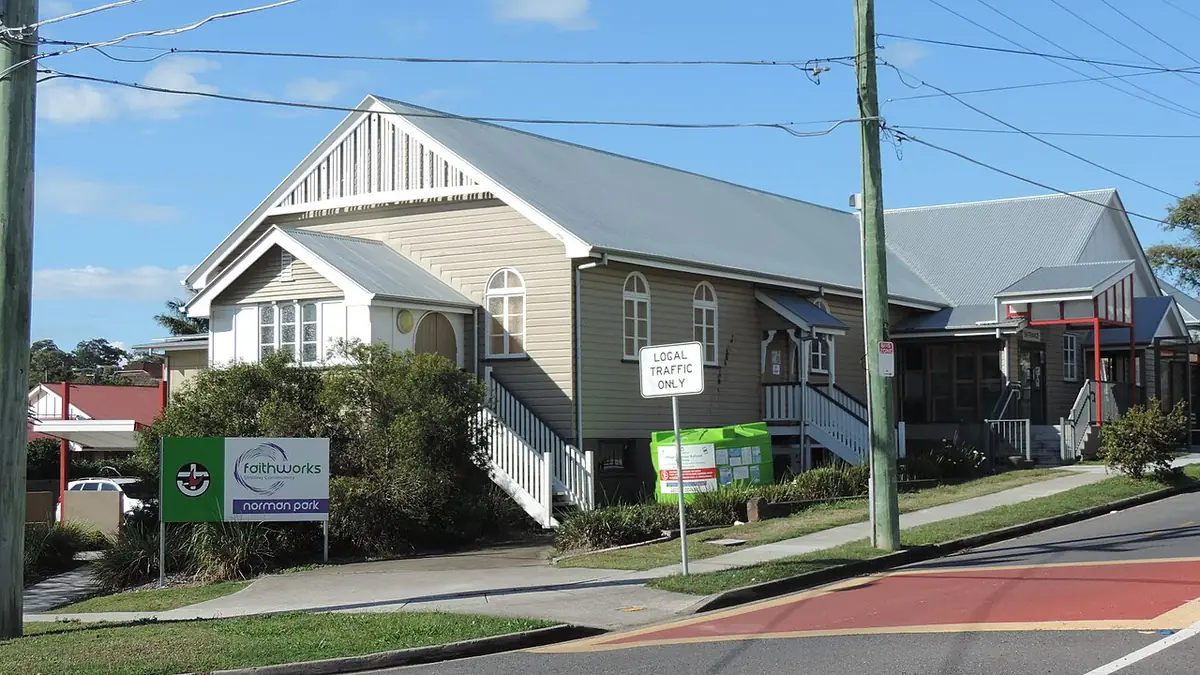
Timber buildings and quiet streets in Norman Park, Brisbane — Photo: Kerry Raymond · CC BY 4.0 · Wikimedia Commons
Once the legal and financial framework is settled, the transaction itself has to follow each step of the buying process to the letter, in order.
The security of a property investment rests on the clarity of the title you hold. In Brisbane, the vast majority of apartments come under strata ownership, but there are legal subtleties you should not overlook. Understanding exactly what your contract of sale covers helps avoid misunderstandings about the use of common areas, the management of outdoor spaces and voting rights at owners' meetings. The two perspectives below highlight the practical implications of the different legal structures available on the market.
Standard strata ownership (Strata Title)
You buy a clearly defined private lot and become a co-owner of the common property in proportion to your share, known as the 'lot entitlement'. This system guarantees structured management by an elected committee and a legal obligation to build up a sinking fund for major future works.
What it changesYou benefit from a clear and protective legal framework, but you have to abide by the building's strict by-laws on pets, changes to the facade or restrictions on letting.
Integrated, complex mixed-use developments
Some large recent developments combine residential, retail and hotel space within a single architectural structure, managed through complex arrangements such as 'Community Title' or a 'Building Management Statement'.
What it changesThese set-ups often offer very attractive hotel-style services, but the number of managing bodies and the complexity of the rules for sharing costs call for in-depth legal analysis before you sign.
The rule to understand before paying a deposit on an apartment in Brisbane
To handle these steps calmly, it is essential to know exactly what role each party plays in the transaction.
Committing money to a property purchase in Australia follows a chain of strict procedures that protect the buyer, provided they are followed in the right order. Unlike some informal practices, every document you sign creates a legal financial commitment. From making the initial offer to the final transfer of title at the Queensland land registry, the path is marked out by precise deadlines. The sequence below sets out the logic of the successive phases of the transaction that keep your investment secure.
Finding the right property and checking beforehand that everything is in order with a title search.
Making a written offer (Offer to Purchase) setting out the proposed price and the essential conditions.
Both parties signing the contract of sale and paying an initial deposit into trust, usually ten per cent.
Starting the due diligence period, including the building inspection and a review of the Body Corporate's accounts.
Formally satisfying the finance and inspection conditions within the deadlines set in the contract.
Paying the balance of the price and officially registering the transfer of ownership with the Queensland authorities.
How a property transaction unfolds, step by step and party by party
A successful property transaction in Brisbane depends on careful coordination between professionals with clearly defined roles. As a buyer, you are never alone in dealing with the seller, but you need to know whom to turn to for each technical, financial or legal aspect of the file. The Australian system relies on key figures whose responsibilities differ from what many buyers from abroad are used to, notably the central role of real estate agents and conveyancers. The table below details what each party does, in turn, throughout the buying process.
The buyerDefining the project and getting finance pre-approvalYou set your maximum budget with a mortgage broker and narrow down the areas you want to search before viewing a single property.
The real estate agentViewings, negotiation and passing on offersThe agent represents the seller's interests. They give you information about the property, arrange viewings and collect your written offers.
The building inspector (Building & Pest Inspector)Checking the structure and for pestsCommissioned by you, the inspector examines the home closely to detect any signs of termites, damp or construction defects.
The conveyancer or solicitorLegal checks and transfer of ownershipA specialist in local property law, they review the contract of sale, carry out the title and land searches and handle the transfer of funds on settlement day.
The bank or lenderReleasing the funds and issuing the loanThe lender confirms the property meets its requirements and releases the funds needed to pay the balance according to the agreed contractual timetable.
The Queensland land registryFinal registration of the titleThis office officially records the change of owner and updates the title in the buyer's name.
An apartment or a house in Brisbane: which choice for which lifestyle
Once the type of property is decided, the central question becomes the overall budget you need to commit to settle in with peace of mind.
In Brisbane, choosing between an apartment in a strata building and a detached house is not simply a matter of taste but of deeper considerations about urban layout, distance and upkeep. Buyers settling in Queensland's capital quickly discover that density is concentrated along the river and in the heart of well-served neighbourhoods, while vast suburban sprawl stretches out towards the city's foothills. Choosing an apartment means accepting a vertical life shaped by nearby transport, instant access to urban amenities and shared management of common areas, even if that brings sometimes substantial strata levies and compromises on private outdoor space. By contrast, opting for a detached house, particularly in the hilly suburbs to the north or south, gives you complete freedom over how you arrange your home and full control of your land, but the price is longer daily journeys and a considerable maintenance load tied to tropical gardens and the subtropical climate.
Brisbane's apartment market is aimed first and foremost at urban professionals, young couples and investors looking to capitalise on the steady rental demand in areas close to the Brisbane River and the major university precincts. These properties, whether new developments or established complexes from the 1990s, generally include sought-after features such as a shared pool, a barbecue area and a secure basement parking space. However, an apartment buyer needs to examine the strata scheme's accounts, the annual levies and the provisions for future works with the greatest rigour, because Queensland's regulatory framework imposes strict obligations on sinking funds and on the maintenance of high-rise buildings. Failing to anticipate these costs can turn a seemingly stable investment into a source of unexpected expense, all the more so as the cost of specialist repairs in high-rise buildings tends to climb quickly.
A detached house in Brisbane, on the other hand, whether a 'Queenslander' raised on stumps or a contemporary single-storey brick build, meets the aspirations of families looking for space, peace and independence from the immediate neighbours. These properties come with their own land, outdoor space that can take a pool or a covered deck, and let you avoid the constraints that come with strata living. Nevertheless, a house buyer has to build into their finances the recurring costs of maintaining the land, managing the risks linked to summer storms and termites, and the effect of distance on the transport budget. The roads leading to the CBD are regularly congested at rush hour, turning every morning journey into a time cost that has to be weighed against the calm of home in the evening.
The final decision therefore depends on a clear-eyed assessment of where your life is heading in the medium term rather than on purely speculative criteria. If you put a central location, shorter journeys and the simplicity of a home without major outdoor obligations first, an apartment is the obvious practical and financial choice. If, on the other hand, your absolute priority is control over your living space, the option to extend or transform your property and complete independence over your land, a detached house will meet your expectations despite the time and money it demands. Either option will shape your daily life for years to come in this fast-changing Australian city.
What budget do you really need to live and buy in Brisbane?
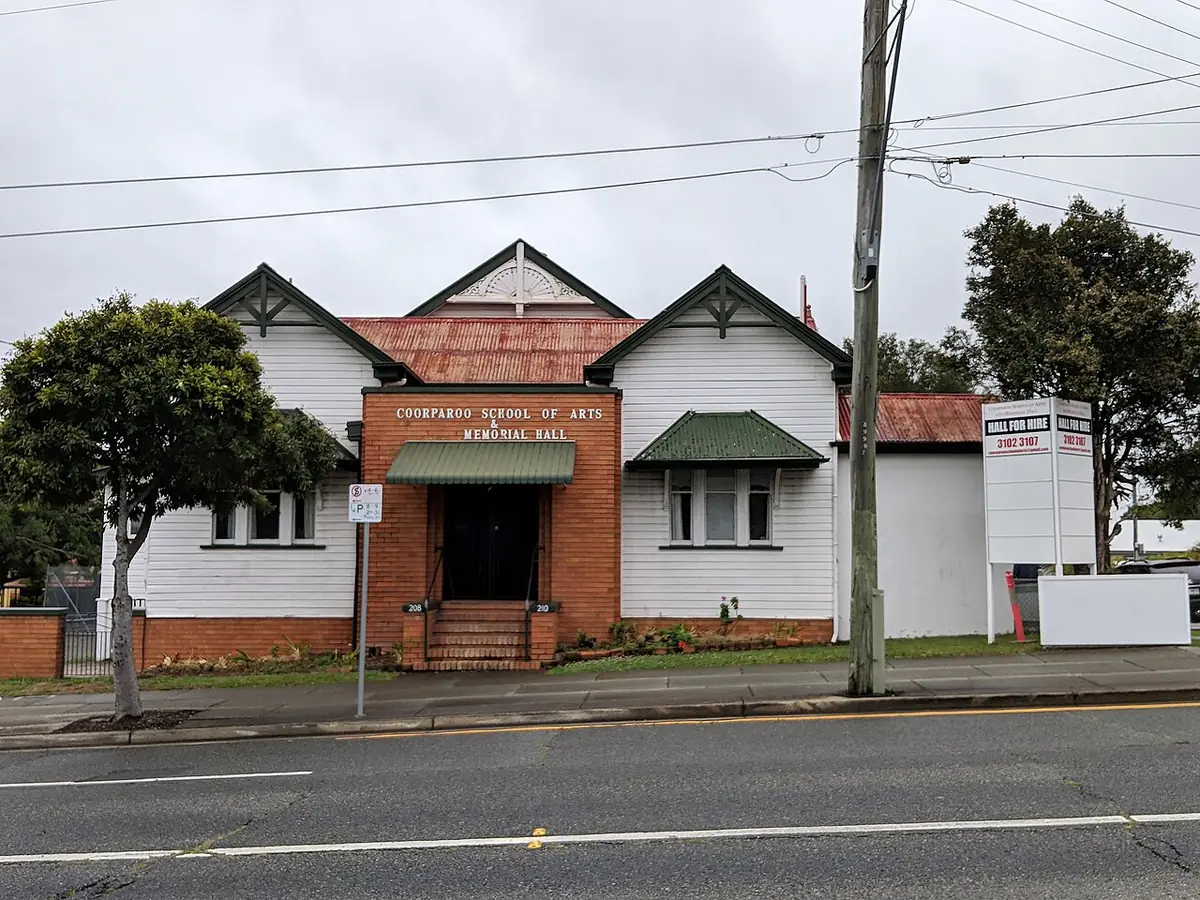
The heritage School of Arts hall on a Coorparoo street — Photo: Nickw25 · CC BY-SA 4.0 · Wikimedia Commons
Beyond the raw figures, it is the course of a typical day that shows what settling in this city really means in practice.
Drawing up a purchase budget in Brisbane means looking past the price shown on the property portals to take in all the local taxes, legal fees and day-to-day running costs. The property market in Queensland's capital has seen notable shifts, which makes a rigorous analysis of each cost item essential if you want to avoid financial strain. The tables below set out, first, the upfront costs of the transaction and, second, the estimated recurring costs for an average household settling in the metropolitan area.
Upfront purchase costs and taxes when buying a property in Brisbane
Cost item
Estimated amount or rate
Comment and effect on financing
Transfer duty
Sliding scale based on value (approx. 3% to 5%)
A government tax calculated on the purchase price or the market value, with specific concessions for first home buyers.
Legal and conveyancing fees
AUD 1,500 to AUD 3,000
Payment to the solicitor or conveyancer for checking the title and easements and preparing the contract of sale.
Pre-purchase inspections (Building & Pest)
AUD 500 to AUD 900
Essential for detecting termites or structural defects before the conditions are satisfied.
Bank application and valuation fees
AUD 600 to AUD 1,500
Fees charged by the lender for processing the loan application and for an independent valuation of the property.
Transfer duty in Queensland varies with how the property will be used (main residence or investment), and your legal adviser should calculate the exact amount to set aside.
Monthly budget for running costs for an apartment or a house
Type of cost
Indicative monthly range
Main factors behind the variation
Strata levies (Body Corporate)
AUD 300 to AUD 900
Depends directly on the building's amenities, whether it has a pool or a lift, and the size of the sinking fund.
Local rates (Council Rates & Water)
AUD 250 to AUD 450
Quarterly charges from Brisbane City Council for municipal services, roads and the water supply.
Home insurance (Building & Contents)
AUD 120 to AUD 250
Varies with the area, exposure to local weather risks (severe storms, floods) and the value of what is insured.
Energy (electricity and air conditioning)
AUD 180 to AUD 350
A sharp seasonal rise in the summer months because air conditioners run constantly to fight the subtropical humidity.
These estimates reflect the averages seen across the Brisbane metropolitan market and should be adjusted to your household's actual consumption.
Health, schools, transport: an ordinary Tuesday in Brisbane
While day-to-day logistics look smooth on paper, property listings often leave out decisive aspects of the local environment.
To judge whether a property in Brisbane is the right fit, it helps to follow an ordinary day from start to finish, from the morning commute to the local services in the evening. How smoothly you get around depends closely on your choice of transport and on exactly where the home sits in relation to train stations, busway routes or the CityCat river services. This hour-by-hour view brings out the logistical friction points every resident learns to plan for in order to balance work demands and family needs.
07:15Leaving home and handling the school runFamilies organise themselves to drop the children at local state schools (catchment schools) or private colleges, favouring walking, cycling or dedicated school buses to avoid the congestion around school zones.
08:30Commuting into the Central Business District (CBD)Using the TransLink network (Queensland Rail trains or city buses) or crossing the river on a CityCat ferry. Journey times range from 20 to 45 minutes depending on how far out the neighbourhood is.
12:30Access to healthcare and local servicesA routine appointment at a local practice (General Practitioner or Medical Centre) operating under the Medicare rebate system, with pharmacies in every neighbourhood shopping centre.
17:00Grocery shopping and suppliesA stop at the major supermarkets (Coles or Woolworths) or at local markets for fresh local produce, made easier by the car parks built into neighbourhood shopping areas.
19:00Back home and looking after the houseTime to rest and check the household systems, especially the air conditioning and the rainwater tanks or outdoor lighting that are very common in Queensland homes.
What the property listing will not tell you about Brisbane
Ignoring these hidden factors exposes a buyer to major financial and personal setbacks in the months after moving in.
The sales descriptions and glossy marketing photos published when a property goes on sale in Brisbane do not always reveal the environmental, regulatory or planning constraints that come with certain locations. Behind the promise of an idyllic life under the subtropical sun lie technical realities that only a thorough look at the site and a conversation with the neighbours will bring to light. Here are the crucial things buyers usually discover only after settlement.
Flood zones and the river's flood history
Part of Brisbane's riverside land and low-lying suburbs was hit by the historic floods of 2011. Checking the Council's official flood maps is essential to assess the real risk and the cost of insurance.
Many older neighbourhoods are home to traditional houses protected by very strict planning rules. Any change to the facade, extension or demolition requires complex and lengthy approvals.
Noise from flight paths and infrastructure
The expansion of Brisbane Airport and the development of major road and rail corridors create localised noise that is impossible to detect at a weekend viewing, when there is no heavy traffic.
The thermal reality of older uninsulated homes
Traditional houses on stumps have undeniable charm but can turn out to be extremely hot in summer and cold in winter if they lack modern ceiling insulation and glazing.
Urban development projects and future densification
A property bought for its open views can quickly lose them when new high-rise developments are approved on the same street, permanently changing the sunlight and the quiet.
The mistakes people discover six months after settling in Brisbane
These disappointments naturally raise the question of which buyers this property market is simply not suited to.
Looked likeA charming, cheap house on a leafy main road in the suburbs.
Turned outConstant noise every weekday from morning traffic, and no way to sell quickly without taking a loss.
Would have caught itAlways visit the property at rush hour on a Tuesday and look at how traffic is expected to change on the council's road plans.
Looked likeA modern apartment with very low strata levies at the time of purchase.
Turned outNo sinking fund at all to cover urgent roof or facade repairs voted through later.
Would have caught itAsk for the full minutes of the general meetings for the last three years and have the accounts reviewed by a professional.
Looked likeA beautiful leafy block with tall eucalyptus trees and a lush garden.
Turned outSwarms of insects, a higher bushfire risk in the dry season and pipes damaged by roots.
Would have caught itCommission an arborist and check the required distance between the large trees and the building's foundations.
Looked likeAn ideal rental investment in a booming university area.
Turned outAn oversupply of similar new developments completed at the same time, leading to long vacancies and disappointing returns.
Would have caught itStudy the council's building approval data to anticipate future competition in the rental market.
Who should not buy property in Brisbane right now?
After this clear-eyed look at the constraints and the opportunities, it is time to ask the decisive question about your commitment.
Despite Queensland's economic and demographic appeal, buying property in Brisbane is not the right answer for every individual. The fixed entry costs, the particularities of the rental market and the maintenance demands call for a personal and financial stability that some life plans cannot provide. Looking at individual paths shows that committing too quickly to local bricks and mortar can become a major source of vulnerability.
Professionals on short-term international assignments
→Insisting on buying a main residence as soon as they arrive in the state.
The upfront transaction costs (transfer duty, agency and legal fees) cannot be recouped in less than four or five years, exposing the buyer to a net loss if they have to sell in a hurry.
Investors chasing an immediate return without a substantial deposit
→Borrowing at maximum leverage on properties with high running costs.
Rising interest rates and the level of strata levies or house maintenance weigh heavily on monthly cash flow, turning the expected net return into a chronic shortfall.
Households with no emergency savings set aside for maintenance
→Using all their savings to put together the initial deposit.
Brisbane's subtropical climate puts homes under heavy strain (severe storms, humidity, termites), which calls for cash that is immediately available to cover unexpected repairs.
People undecided about their lifestyle (city or suburbs)
→Buying a property by default without knowing how the neighbourhoods really work.
The city's geographical spread and the big differences in quality of life from one street to the next quickly lead to a feeling of isolation or to unbearable commuting constraints.
So, are you ready to make your Brisbane property project happen?
Deciding to buy an apartment or a house in Brisbane means moving past the initial excitement of Queensland's sunny lifestyle and taking a methodical, rigorous approach. The previous sections have shown it: every property choice comes with its share of compromises, whether that is managing strata levies in a high-rise, maintaining a leafy block in the suburbs or anticipating the constraints linked to transport infrastructure and the weather. Settling in successfully does not depend on luck or a sudden opportunity, but on a close match between your real financial capacity, your time horizon and the exact nature of the property you are targeting.
If your work situation is settled for the next five to ten years, you still have emergency savings left after paying transfer duty and you have taken on board the logistical realities of the different neighbourhoods, then Brisbane offers an exceptional lifestyle and a promising property market. The key is being able to see past the marketing gloss of the listings and carry out the essential technical checks, whether that means strata audits, structural inspections or a close examination of the council's zoning plans and flood risks.
Take the time to view properties at different times of the week, to try the transport routes at rush hour and to talk to established residents so you understand how your future neighbourhood really works. A property purchase is above all a long-term anchor that should serve your own balance and that of your loved ones, not a response to the urgency of a tight market. By proceeding with method and clarity, you will turn your move to Brisbane into a solid, lasting and settled base for the future.
Related questions
What additional costs should you plan for when buying property in Brisbane?
Buying property in Brisbane means paying transfer duty, at a rate that varies with the purchase price and with whether the home will be your main residence or an investment. On top of that come the legal fees for conveyancing, the essential building and termite inspections, and the bank's valuation fees.
How do strata fees (Body Corporate) work for apartments?
The Body Corporate looks after the upkeep of the common areas, security and the building's shared facilities. Owners pay regular levies that feed both the administrative fund for day-to-day spending and the compulsory sinking fund set aside for major future works on the building.
Which are the most sought-after areas for buying an apartment in Brisbane?
Buyers generally favour the Central Business District (CBD) for being right next to the main employers, along with lively riverside neighbourhoods such as New Farm, Teneriffe, West End and South Brisbane, which offer a rich cultural life and direct access to river transport.
Can non-resident foreigners freely buy property in Brisbane?
Purchases by foreign investors are tightly regulated by the Foreign Investment Review Board (FIRB). Non-residents generally have to obtain approval before buying, and the restrictions most often require them to buy new dwellings rather than established properties.
How do you protect yourself against flood risk when buying a home in Brisbane?
It is essential to check the official Brisbane City Council flood maps before making any firm offer. These documents set out the river's flood history and show whether the plot in question sits in a risk zone, which has a direct effect on the cost of home insurance.
How do termites affect residential property in Queensland?
Brisbane's subtropical climate encourages wood-boring insects, termites in particular. Any serious purchase should come with a specialist inspection of the timber and the frame (Timber Pest Inspection) to detect structural damage that cannot be seen with the naked eye.
What contracts and protections govern a property sale in Brisbane?
The sale is made under a written contract drawn up or reviewed by a conveyancer or a solicitor. The process usually includes a cooling-off period of five business days for buyers in private sales, except when buying at auction, where the sale is firm and final the moment the hammer falls.
How do you gauge the daily commute from the suburbs into central Brisbane?
The TransLink network runs the buses, the Queensland Rail trains and the CityCat river ferries. You are strongly advised to try the actual journey at rush hour on a Tuesday morning before finalising the purchase of a property further out, because the main roads can quickly become congested.
What are traditional 'Queenslander' houses and what constraints come with them?
Queenslanders are timber houses raised on stumps with wide verandas, designed to make the most of natural ventilation in a hot climate. Buying one often comes with strict architectural preservation rules (Character Housing) that heavily limit what you can change on the outside.
Is it better to buy new or established property in Brisbane?
Established property generally offers more central locations, more generous floor space and marked architectural character, but it sometimes needs work to bring its thermal performance up to standard. New builds guarantee modern finishes and optimised energy use, but can suffer from an oversupply of developments in some areas.
Property review of ting
No ting properties in Brisbane yet
Be the first — share it on ting and it shows up right here.