Putting down lasting roots in Queensland's capital by buying a detached house calls for a careful look at how things work locally. This guide sets out the essential mechanics of the market, from choosing a neighbourhood to the legal and financial fine print, to walk you through your decision step by step.
Get the app
What nobody tells you.
Real prices, hidden costs and the traps to check before you commit.
What buying a house in Brisbane really changes in your daily life and your investment
Scroll
What buying a house in Brisbane really changes in your daily life and your investment
Putting down lasting roots in Queensland's capital by buying a detached house calls for a careful look at how things work locally. This guide sets out the essential mechanics of the market, from choosing a neighbourhood to the legal and financial fine print, to walk you through your decision step by step.
Written by the ting.ad editorial team ·
Brisbane in Street View: drag to look around.
To judge whether this set-up suits the way you live, let's look at how different kinds of buyers experience the move in practice.
Putting money into bricks and mortar in Queensland means understanding the particular dynamics of the capital and its immediate surroundings. Between leafy residential suburbs and the subtropical pace of life, buying a house completely reshapes your relationship with living space and the outdoors. Buyers quickly discover that value lies not only in the indoor square metres but in the close connection between the home, the lush vegetation and easy access to the river. It is a market where the climate dictates the architecture, favouring wide verandas and natural ventilation over sheer enclosed volume.
Indoor living space that is often more compact than in Europe for the same budgetvsA generous outdoor footprint with a private tropical garden and a veranda running the full length of the house
Life naturally moves outdoors as soon as the fine weather arrives, turning the deck into a genuine extra living room for most of the year. Interiors are designed to be light and cross-ventilated, putting easy upkeep and coolness first.
A greater physical distance from the central business districtvsImmediate access to self-contained local communities with their own shops, parks and schools
Each area works like a village within the city, greatly reducing the need to travel into the centre every day. This decentralisation encourages a neighbourhood lifestyle that is very popular with families looking for peace and quiet without being cut off.
Strict regulatory requirements on the upkeep of your surroundings and water managementvsRemarkable protection of the heritage and environmental value of your neighbourhood
Local authorities impose precise rules to protect the urban tree canopy and manage stormwater, which safeguards the long-term setting but demands constant attention from owners.
Direct exposure to subtropical weather swings and spells of intense heatvsArchitecture designed specifically to catch the breeze and stand up to storms
Traditional houses on stumps and contemporary builds alike incorporate sophisticated insulation and ventilation solutions that more than make up for the intensity of summer without overusing energy.
Does this place truly fit your lifestyle and your career plans?
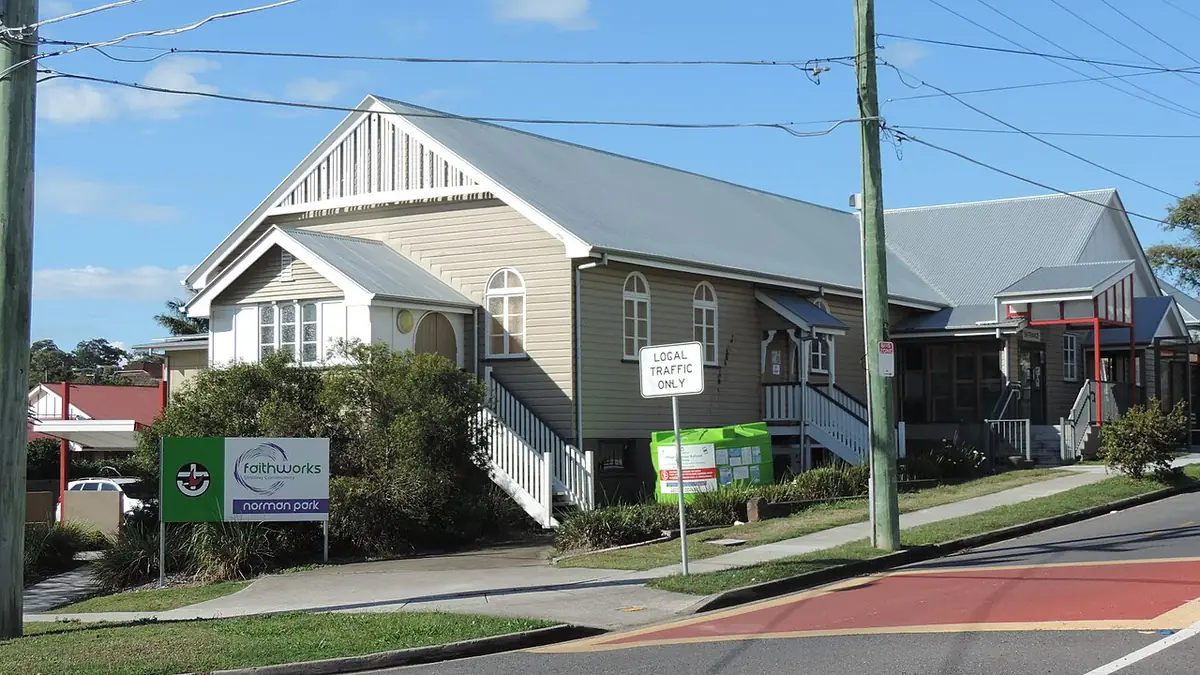
Timber buildings and quiet streets in Norman Park, Brisbane — Photo: Kerry Raymond · CC BY 4.0 · Wikimedia Commons
The cultural and practical gap between your home country and Queensland also deserves a clear-eyed look before you sign.
Choosing a property is not just a financial calculation or a question of floor area; it has to match your personal and professional aspirations. Whether you work remotely, are raising young children or want a lively base, location and the type of building shape the balance of your life. Transport constraints, closeness to natural parks and access to healthcare and education weigh heavily over the long term.
Choosing leafy middle-ring suburbs
By opting for areas a little further from the centre, you get more generous blocks of land and a deep calm that suits both concentration and family life. Your days revolve around local parks, neighbourhood cafés and walking trails within easy reach. The trade-off is the occasional trip into the centre, best timed outside peak hours to protect your time.
This set-up offers a very favourable space-to-price ratio compared with Europe's crowded big cities. You enjoy a bright house opening onto a private garden where children can grow up safely, close to unspoilt nature.
Looking for a location linked to fast transport corridors
For workers who must be physically present at the office, being close to train stations or high-frequency busway lines is the overriding criterion. Houses within ten to fifteen kilometres of the centre let you combine life in a detached house with control over your commute. These denser areas require a higher initial outlay but offer remarkable liquidity on the market.
You trade some land area for a drastic cut in your weekly travel time, freeing up precious hours for leisure and rest at the end of the day.
Opting for quiet riverside neighbourhoods with local services
Areas along the river or close to the major cultural centres offer an ideal balance between residential calm and stimulating activity. Landscaped walks, farmers' markets and specialist clinics within walking distance make daily life much simpler. Single-storey houses, or ones that are easy to adapt, are in strong demand there for their accessibility and thermal comfort.
This lifestyle puts the emphasis on good relationships with neighbours and involvement in local community life, in a safe environment that the council keeps particularly well maintained.
Living here when you arrive from abroad: what fundamentally changes in your reference points
To work out where to settle, the next step is to compare the micro-markets and the atmosphere of each major area.
Moving to Queensland from abroad means unlearning many habits tied to housing and urban planning. From dealing with paperwork to the very design of living spaces, the gap goes well beyond the weather or the distance from home. A whole culture of functional simplicity, everyday civic-mindedness and respect for the environment takes over from your very first days in your new home.
From abroad
Centralised administration and in-person offices in town
Brisbane
Almost fully digital services and autonomous local councils
Formalities for moving in, connecting utilities and registering a vehicle are handled smoothly online, drastically cutting trips to offices and bureaucratic waiting.
From abroad
Dense, vertical housing with heavily regulated apartment buildings
Brisbane
A culture of the detached house on its own private block
You look after your land, fences and roof yourself, which takes personal involvement but frees you from collective decisions at owners' general meetings.
From abroad
Short distances and heavy use of mass public transport
Brisbane
Moderate urban sprawl and daily use of a private car or multimodal connections
Parking at home is generally easier and free, but owning a car becomes essential for organising family trips and weekend leisure.
From abroad
An urban rhythm shaped by traditional hours and midday closures
Brisbane
A day that starts very early in the morning and winds down earlier in the late afternoon
The peak of activity shifts towards dawn, taking advantage of the cool morning for exercise, shopping and gardening, before a general slowdown from sunset.
Which neighbourhood to target for your budget and the setting you want?
Now let's turn to the budget ranges you need to plan for to make your purchase happen.
Brisbane's geography is shaped by the bends of the river, creating peninsulas and hills with very distinct characters. Each area has its own architectural identity, its own network of schools and its own price dynamics. Assessing these micro-markets helps you avoid disappointment over commute times or the make-up of the neighbourhood, and ensures an investment that fits your medium- and long-term plans.
Inner riverside areas and historic hills
An elegant atmosphere set to the rhythm of passing ferries, streets lined with flowering jacarandas and architecture mixing traditional timber with bold contemporary renovations.
Suits
Buyers with a comfortable budget who want to be right by the centre and value strong long-term capital retention.
Trade-off
A noticeably higher price per square metre and fierce competition at auction for character homes.
Family-friendly residential rings to the north and west
Deep calm broken by the song of tropical birds, huge parks for children and neighbourhood life centred on small local shopping centres.
Suits
Families with school-age children looking for plenty of space, generous blocks of land and a safe, green environment.
Trade-off
Slightly longer daily commutes to reach the business district at peak hours.
Urban renewal areas to the south
A palpable creative energy, warehouses converted into cultural venues, trendy cafés and a very lively mix of generations.
Suits
Investors and young professionals keen to get a foothold in a fast-growing area with attractive potential for capital growth.
Trade-off
A more patchwork architectural landscape and pockets of heavy traffic, so you need to choose your street carefully.
How much does buying a house in the Brisbane area really cost?
Beyond the raw figures, the nature of the ownership rights you are acquiring deserves close scrutiny.
Queensland's property market values homes on the size of the land, the soundness of the construction and the distance from major transport corridors. Asking prices do not always reflect the compulsory extra costs, such as transfer duty, inspection fees and specific insurance. Looking at price ranges by type of area lets you approach negotiations or auctions realistically and with financial peace of mind.
BrisbaneFor saleHouseestimate
Median price / m²A$6,699Half the apartments sell below this
Median priceA$1.3mthe average is 14% higher — a few very large properties pull it up
Most common2 bedrooms42 % of listings
Average size184 m²
By number of bedrooms
Bedrooms
Share of market
Avg price
Price / m²
Avg size
2most common
42 %
A$1.05m
A$7,052
149 m²
3
39 %
A$1.41m
A$6,699 −5 %
210 m²
4
20 %
A$1.93m
A$6,488best value / m²
298 m²
Each row is an average, compared against the area average of A$7,052 / m². These are indicative estimates of a typical local market, not a measured sample of live listings. Check current listings before relying on them.
What you can actually own: understanding the nature of property titles
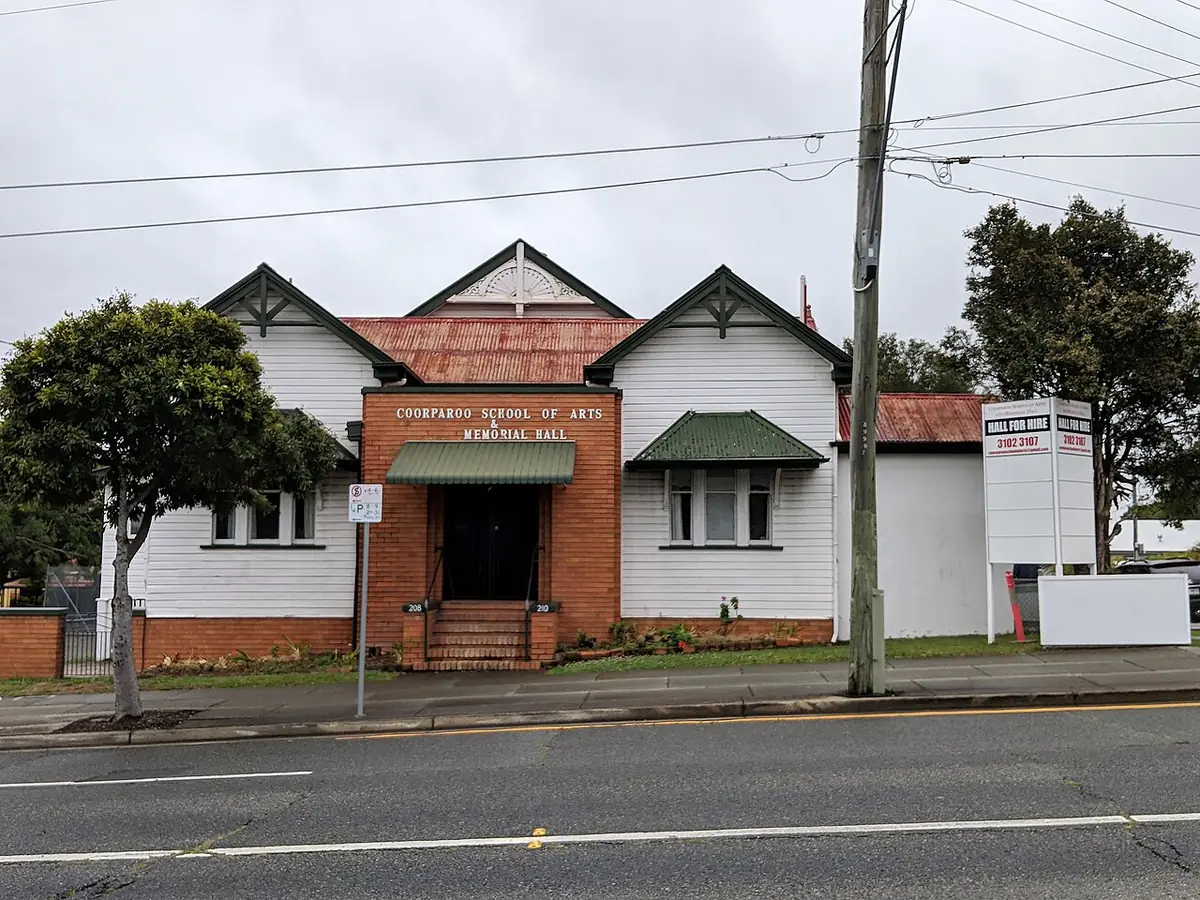
The heritage School of Arts hall on a Coorparoo street — Photo: Nickw25 · CC BY-SA 4.0 · Wikimedia Commons
This legal vigilance carries straight through into the timeline of the transaction.
Under Australian law, the distinction between the different types of property title is fundamental to understanding your freedom of action and your future costs. Unlike some European markets where long leaseholds or complex co-ownership arrangements dominate, buying a detached house usually comes with a direct freehold title. Even so, some local easements or environmental regulations can restrict plans to extend or landscape.
Full ownership of land and building (Freehold)
You own both the land and the building on it, with no periodic ground rent beyond the usual council rates. This status gives you complete freedom to renovate, move interior walls or landscape your garden as you wish, provided you respect the local planning scheme.
What it changesYou have full control over your capital and its future growth, without answering to an owners' association for routine upkeep of the exterior structures.
Local easements and planning restrictions (Covenants)
Even with freehold, your title may carry restrictions on use registered by the authorities or by previous owners, covering for example maximum building height, protection of significant trees or the look of street-facing fences. These rules keep the neighbourhood visually consistent and peaceful over the long term.
What it changesIt is essential to have every title reviewed by a specialist legal adviser before signing any binding commitment, so these invisible but restrictive clauses come to light.
The one rule to understand before paying any deposit on a property
To run this sequence without a false note, let's look in detail at the people involved and their respective roles.
Queensland's property transaction system follows rigorous procedures that protect both parties but demand real responsiveness from the buyer. Unlike some other jurisdictions, a formal written offer quickly binds the parties once the seller accepts it, often with a deposit held in trust. Mastering this chain of events keeps you from losing your deposit or finding yourself committed to a property with hidden defects.
Scouting the local market and identifying the right property.
Carrying out the essential inspections (structure, termites, roof) by an accredited independent professional.
Thorough review of the certificate of title and any easements by your legal adviser.
Submitting a written offer that includes your finance and inspection conditions.
Paying the deposit (usually 10% of the price) into a secure trust account when contracts are exchanged.
Final signing of the transfer and handover of the keys.
How a property transaction unfolds, step by step, with the right people
By following these steps and surrounding yourself with the right experts, your move to Brisbane gets off to the best possible start.
A successful property transaction depends on smooth coordination between professionals with strictly defined roles. From the finance broker to the building inspector and the specialist lawyer, each person secures a specific part of your purchase. Understanding who plays which part lets you steer your project with confidence and avoid the mix-ups over responsibilities that so often delay final signing.
The finance broker (Mortgage Broker)Confirming your borrowing capacity and putting together the loan applicationThey negotiate the best terms on your behalf with local lenders and make sure your pre-approval is solid before you start making offers.
The building inspector (Building & Pest Inspector)Full structural audit and check for timber pestsTheir detailed report is essential for spotting hidden defects, estimating the cost of bringing things up to standard and, where needed, negotiating the price down.
The legal adviser or conveyancerChecking the titles and securing the contractsThey make sure the property is free of hidden debts, handle the secure transfer of funds and manage the paperwork right through to settlement day.
The seller's real estate agentPoint of contact for negotiation and passing on offersThey represent the seller's interests while keeping communication flowing between the parties and passing on the supporting documents needed to process the sale.
The buyer (you)Making informed decisions and meeting contractual deadlinesYou approve each step on the basis of the expert reports you receive, sign documents on the agreed dates and pay funds according to your legal adviser's instructions.
Detached house or apartment in Brisbane: trade-offs and local market realities
Once the type of property is settled, the crucial question of financing and your overall budget inevitably follows.
Buying property in Brisbane forces you to choose straight away between a detached house with a garden and an apartment in an urban strata building. This decision shapes not only your everyday lifestyle but also the financial path of your investment over the medium and long term. The local market is marked by a strong appetite for space and independence, inherited from sprawling urban planning where the car is still everywhere. Single-family houses, often Queenslanders or recent brick builds, dominate the outer and middle-ring residential suburbs. They offer complete freedom to shape your home but need constant upkeep, which is particularly demanding in the subtropical climate of Queensland's capital. Insulation, managing vegetation and fighting humidity all cost time and money that should never be underestimated before you sign the contract of sale.
The apartment option, by contrast, appeals through its central location and relative freedom from exterior maintenance. Concentrated in South Bank, New Farm, Fortitude Valley and along the Brisbane River, residential developments offer modern amenities: pools, gyms, security and panoramic terraces. Choosing strata living, however, means accepting recurring charges that are often high, known as body corporate fees, which rise steadily over the years. These fees fund major repairs to the building, but they eat into rental returns if you plan to let the property later. On top of that, strata by-laws can limit your freedoms, whether it is keeping a pet, changing the exterior or letting the property short term on Airbnb.
Financially, price trends in Brisbane show houses historically outperforming apartments. The scarcity of land in sought-after areas close to the CBD generally gives landowners stronger capital growth than the vertical segment. Apartments, on the other hand, sometimes suffer waves of oversupply in certain central neighbourhoods, which dampens their resale growth. Even so, the entry price for an apartment remains far more accessible, allowing first-home buyers to get a foothold in areas where houses have become financially out of reach. Your final choice should therefore rest on a clear-eyed analysis of your investment horizon, your tolerance for maintenance and your fundamental need for living space.
What budget do you really need to live and to house yourself in Brisbane?
With the budget set, let's look at what daily life actually looks like for an established resident of Queensland's capital.
Drawing up a budget for settling in Brisbane means looking beyond the asking price of the property. Between transfer duty, legal fees and the rising cost of everyday living, your overall budget needs a comfortable safety margin. Figures compiled by the Real Estate Institute of Queensland and statistical bodies show substantial variation depending on distance from the business district. Here are the essential financial benchmarks for sizing your project without putting yourself at financial risk.
Median property price ranges in Brisbane
Property type
Inner zone (0-5 km from the CBD)
Middle ring (5-15 km)
Outer suburbs (15 km and beyond)
Detached house
AUD 1,300,000 to AUD 1,800,000
AUD 850,000 to AUD 1,200,000
AUD 650,000 to AUD 850,000
Apartment (2 bedrooms)
AUD 650,000 to AUD 900,000
AUD 480,000 to AUD 650,000
AUD 380,000 to AUD 480,000
Median prices vary widely depending on build quality, closeness to public transport and whether the property falls within a sought-after school catchment.
Estimated monthly budget for a two-person household in Brisbane
Expense
Frugal lifestyle
Standard lifestyle
Comfortable lifestyle
Strata levies / Maintenance
AUD 150
AUD 400
AUD 800
Groceries and household goods
AUD 800
AUD 1,200
AUD 1,600
Transport (fuel / TransLink)
AUD 250
AUD 450
AUD 700
Insurance (home, health, car)
AUD 200
AUD 400
AUD 750
Home insurance costs tend to rise in Queensland because of the climate risks of flooding and summer storms.
Health, schools and transport: an ordinary Tuesday in Brisbane, hour by hour
Beyond this apparent routine, many crucial aspects often slip past traditional property viewings.
To judge whether a location is right, nothing beats walking through a typical weekday hour by hour. In Brisbane, the pace of life is strongly shaped by transport infrastructure, whether that is the urban bus network, the CityCat ferries on the river or the motorways that clog at peak hours. Families also have to fit around strict school hours and access to local health services. This hour-by-hour run-through highlights the logistical friction points you will face every week.
07:00Residential suburb (e.g. Paddington or Chermside)The early wake-up coincides with commuters heading out. Traffic on the main roads starts to build, so you need to plan your travel time to the CBD or outlying business areas.
08:15Local school or childcare centreDrop-off takes place in tightly regulated school zones where the speed limit drops strictly to 40 km/h. Being close to a good public or private school often determines a house's resale value.
09:30Medical centre or GP clinicHealthcare relies on bulk billing, which is becoming increasingly rare, so you often have to pay a gap fee that is not covered by Australia's public health system (Medicare).
12:30Local shopping strip or Coles / Woolworths supermarketThe lunch break is a chance to stock up. Grocery prices in Australia call for close attention to the family budget because the supermarket sector is so concentrated.
15:30TransLink bus stop or suburban train stationPublic transport is easy to use with the Go Card, although connections between buses and trains take some planning if you live in the outer suburbs.
18:30Riverside public park or recreation areaThe end of the day makes the most of sunny weather that suits outdoor activities. Council parks have free barbecue facilities that residents love using to unwind after work.
What the gorgeous listing photos leave out
These invisible traps pave the way for common regrets that only fully sink in after several months of living there.
Australian property portals such as realestate.com.au and domain.com.au excel at showing off the light and space of the homes on offer. However, they systematically gloss over the environmental, structural and regulatory constraints that weigh heavily on owners' daily lives. Ignoring these hidden factors exposes buyers to financial disappointment or comfort dead ends. Here are the four fundamental realities that agents deliberately leave out during viewings.
Strict restrictions in local planning schemes (Queensland Character Code)
Many older houses in historic neighbourhoods are protected by rigorous heritage rules. Any plan to extend, raise or alter the exterior runs into complex, lengthy approval processes with Brisbane City Council that often end in refusal.
Exposure to flood risk and Brisbane River flooding
Historic maps of the 1974 and 2011 floods mark out the at-risk areas precisely. Buying a slightly low-lying block without checking its flood history can turn your investment into an insurance nightmare, with premiums reaching prohibitive levels.
Voracious termites and the need for regular inspections
Queensland's humid subtropical climate is an ideal habitat for wood-destroying termites. Owning a timber house, or even one with a traditional timber frame, means annual preventive maintenance contracts and termite barriers whose certification is essential when you sell.
Poor thermal insulation in traditional homes
Many older houses have neither double glazing nor insulation in the roof space and walls. In summer, indoor temperatures soar, driving up electricity use massively as reverse-cycle air conditioners run constantly.
The buyer regrets you only discover six months after moving in
Faced with these potential disappointments, you need to ask yourself whether this market truly suits your profile.
Looked likeA fantastic opportunity in an up-and-coming, affordable neighbourhood
Turned outAn isolated area suffering chronic road congestion with no fast rail link to the centre at all
Would have caught itDoing the commute yourself at peak time on a Tuesday morning before making a firm offer.
Looked likeA modern apartment with a stunning view and moderate strata levies
Turned outA badly run building with a depleted sinking fund facing major facade and waterproofing works
Would have caught itInsisting that a specialist lawyer reviews the minutes of the last three years of general meetings in full.
Looked likeA charming older house surrounded by mature trees that promise privacy and shade
Turned outA block overrun by invasive roots, cracked sewer pipes and recurring invasions of tropical insects
Would have caught itAlways commissioning a full inspection from a certified independent expert (Building and Pest Inspection).
Looked likeA large west-facing garden for enjoying the sunset at the end of the day
Turned outAn unbearable summer furnace that makes the outdoor space unusable for six months of the year without costly pergolas
Would have caught itChecking the sun's orientation and how shade falls across the block during the hottest hours of the day.
Who this investment is for: the buyers who should think twice before buying in Brisbane
The time has come to take stock and make up your mind with full knowledge of the facts.
The general enthusiasm around Queensland's demographic and economic momentum should not hide the deep mismatches between some life plans and the reality of the local property market. Buying property in Brisbane is a heavy capital commitment, with high transaction costs and liquidity that can be limited depending on the segment. Some buyers risk failure or quick disappointment if they ignore their own professional and personal priorities. Here are the situations where not buying is the wisest decision.
The expat or worker on a short, insecure contract (under three years)
→Holding off on buying for now and choosing the flexibility of renting
Purchase costs (stamp duty, agent and legal fees) often reach 5 to 7% of the property price, an amount that cannot be recouped over less than three or four years given market swings.
The investor seeking high, immediate rental yields without putting in any management effort
→Turning to other financial asset classes or other regional Australian markets
Gross yields in Brisbane generally sit around 3 to 4.5% for houses, eroded by progressive state land tax and high maintenance costs in a demanding climate.
The household that cannot stand maintenance and structural renovation
→Avoiding older properties and detached houses in favour of a managed rental
Brisbane's housing stock is ageing and needs constant vigilance against humidity, tropical storms and the regulatory requirements to bring electrical installations up to standard.
So, are you ready to take the plunge and buy property in Brisbane?
Below you will find answers to the questions future buyers ask most often.
Reaching the end of this analysis shows that buying property in Brisbane is neither an impulse decision nor a simple geographical bet. It is a life commitment that demands absolute clarity about your deeper motivations, your time horizon and your ability to absorb the ups and downs of the local market. If your plan is a long-term one, you have factored in the reality of the hidden costs and you accept the constraints of the subtropical climate, the Brisbane market offers an exceptional quality of life and solid prospects for building wealth. The key lies in careful preparation at every stage, from checking the title to a rigorous building inspection.
Never give in to the pressure of artificial scarcity or to the sales pitch of intermediaries trying to rush your signature. Brisbane's property market will keep evolving, driven by ongoing urban transformation and the region's lasting pull for new residents. Take the time to visit several neighbourhoods at different times of day, test your commute and budget every cent with an independent financial adviser. Your future peace of mind depends directly on the rigour and composure you show today as you lay the foundations of your new life.
Related questions
What fees and taxes do you pay when buying property in Brisbane?
Property transactions in Queensland involve paying stamp duty, charged at a sliding rate according to the value of the property, plus title transfer fees and the conveyancer's legal fees. Together these usually come to between 3 and 5% of the overall purchase price.
Can foreigners buy property freely in Brisbane?
Purchases by non-residents are tightly regulated by the FIRB (Foreign Investment Review Board). Foreign buyers must obtain approval in advance to buy residential property, which is generally limited to new builds or off-the-plan purchases, as a way of easing pressure on the market.
How does strata ownership work for apartments in Brisbane?
Apartments are governed by a body corporate. Owners pay quarterly levies calculated on their lot's share of the building, which cover upkeep of the common areas, building insurance and contributions to a sinking fund for major works.
Which are the most sought-after neighbourhoods to live in or invest in Brisbane?
The most prized areas are concentrated along the river and in the inner suburbs such as New Farm, Teneriffe, Paddington, West End and Ascot, known for their quality of life, their closeness to green space and the historical performance of their property markets.
How does flood risk affect property in Brisbane?
The historic floods of 1974 and 2011 left a lasting mark on the city. Brisbane City Council publishes detailed public flood maps that every buyer should check before making an offer, because they directly affect a property's value and the cost of insuring it.
Is a building inspection compulsory before buying?
Although an inspection is not always required by law to complete a sale, it is strongly recommended. A Building and Pest Inspection picks up hidden structural defects, mould and the termite damage that is very common in the region.
How is a property purchase usually financed in Australia?
Financing relies on mortgages from Australian banks. Non-residents and permanent residents generally need a deposit of at least 20% of the property's valuation to avoid paying for costly lenders mortgage insurance (LMI).
What is special about traditional Queenslander houses?
Queenslanders are timber houses raised on stumps, built to encourage natural ventilation in a tropical climate. Their architectural charm is undeniable, but they need rigorous timber maintenance, constant protection against termites and, frequently, upgrades to bring their thermal performance up to standard.
How long does it usually take to complete a property purchase in Brisbane?
Once the offer is accepted and the contract signed by both parties, the standard settlement period usually runs from 30 to 60 days, giving lawyers and lenders time to finish the legal checks and release the funds.
Does the Brisbane property market offer good prospects for capital growth?
Driven by interstate population growth, heavy infrastructure investment and hosting the 2032 Olympic Games, Brisbane has solid economic fundamentals that have historically supported the long-term growth in value of its housing stock.
Property review of ting
No ting properties in Brisbane yet
Be the first — share it on ting and it shows up right here.