Investing in property in Brisbane means understanding how the local market works, from its distinctive architecture to Queensland's legal rules. This practical guide takes you through it step by step, so you can weigh up the different neighbourhoods, work out your real budget and secure your purchase with peace of mind.
Get the app
What nobody tells you.
Real prices, hidden costs and the traps to check before you commit.
What is the real trade-off when you buy a house in Brisbane?
Scroll
What is the real trade-off when you buy a house in Brisbane?
Investing in property in Brisbane means understanding how the local market works, from its distinctive architecture to Queensland's legal rules. This practical guide takes you through it step by step, so you can weigh up the different neighbourhoods, work out your real budget and secure your purchase with peace of mind.
Written by the ting.ad editorial team ·
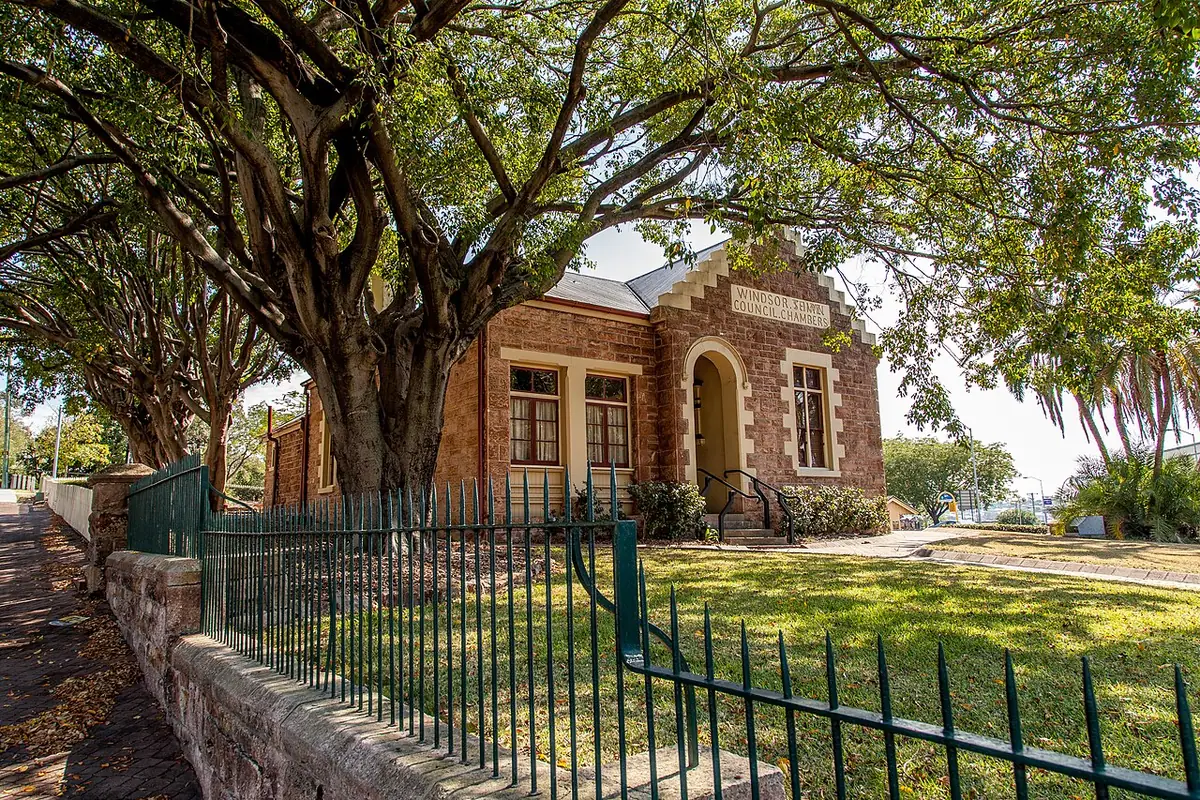
Valuation House Brisbane in Street View: drag to look around.
These fundamental trade-offs set the scene in which your lifestyle will take shape for years to come.
Buying a property in Queensland's capital is not simply a matter of choosing a floor area or a postcode. Every neighbourhood forces a choice between being close to the business district and the quiet that people look for in residential areas. Buyers quickly discover that land comes at a premium the closer you get to the Brisbane River. Understanding how this works helps you avoid the classic first-time buyer's mistake of underestimating how much the terrain shapes daily life. You need to weigh commuting time against the living space available to your household with your eyes open.
Being close to the main urban routesvsSpace and peace and quiet
The closer you get to the CBD or the lively hubs of Fortitude Valley, the smaller the plots and the higher the prices. Moving out to the outer suburbs gets you large family homes with gardens, but adds considerably to your daily travel time.
The charm of traditional architecturevsModern thermal performance
The beautiful timber houses on stumps typical of Queensland offer remarkable natural ventilation but need regular upkeep, and their insulation often leaves room for improvement. Contemporary brick homes, by contrast, need less care but make for a more standardised living environment.
The potential capital growth of the landvsImmediate comfort indoors
Investing in a well-located plot with an older house to renovate secures long-term capital growth. Choosing a new turnkey home removes the hassle of building work but reduces the upside that comes purely from location.
A lively neighbourhoodvsThe privacy of a residential home
Living right next to trendy cafés and transport hubs means noise and heavy traffic. Purely residential areas guarantee complete calm but mean getting back in the car for even the smallest errand.
Does this place really suit your habits and your everyday life?
Your personal profile directly determines the area you should focus your search on.
Brisbane's property market caters to buyers whose expectations differ radically depending on their work and family situation. Between the young professional looking for urban buzz and the family looking for plenty of space to raise children, the local reality changes completely. Every buyer needs to test their habits against the city's practical realities, especially transport and local services. Assessing your situation before you sign will spare you major disappointments in the first months after moving in.
Energy and a central location
You want to cut your weekly commuting time drastically by focusing on well-connected areas. Your daily life revolves around the culture, restaurants and coworking spaces of the centre. You are willing to live in a more compact space in exchange for a vibrant neighbourhood life within easy reach on foot or by public transport.
Space and schools
Your top priority is the size of the plot, the safety of residential streets and the reputation of public or private school catchments. You plan for your children's needs over the next decade by choosing a house with a fenced garden and flexible bedrooms. Car journeys to after-school activities become a central part of how you organise your life.
Rental demand and jobs
You target areas with strong rental demand, driven by the city's economic pull and major infrastructure projects. You go for properties that are easy to let, close to universities or major health precincts. Returns take priority over personal taste.
Peace of mind and natural surroundings
You want a slower pace of life, favouring proximity to nature reserves, green spaces and quiet neighbours. You are looking for a practical single-storey home or an easy-living house that needs little heavy maintenance. Quick access to medical facilities and everyday amenities weighs heavily in your final decision.
Living here when you come from abroad: what actually changes
These cultural and legal differences mean adapting your buying strategy methodically.
Leaving the property system you know back home to settle in Brisbane means unlearning many cultural and administrative reflexes. Attitudes to ownership, the way homes are laid out and the relationship with local intermediaries all rest on specific common-law legal codes. This change of scene is not just about the subtropical climate or seasons running the other way: it completely redefines how you think about a home. A well-informed buyer takes these structural differences into account from the moment they draw up their financing plan.
From abroad
Tightly regulated leases and rent controls
Brisbane
A very liberal rental market governed by Queensland legislation
The rules on ending a lease and raising rents are much more flexible for landlords, which calls for extra care when first negotiating contracts and renewal terms.
From abroad
Stone and reinforced concrete buildings everywhere
Brisbane
Timber, lightweight frames and houses on stumps predominate
Buildings behave completely differently thermally. You have to deal with humidity, the major role of natural ventilation and regular upkeep of timber exteriors.
From abroad
A single public official drafting the deed of sale for both sides
Brisbane
Specialist solicitors (conveyancers) representing each party
The transfer of ownership rests on close dialogue between legal advisers. Checks on land titles and easements demand absolute rigour before the conditions of the contract are satisfied.
From abroad
Centralised administrative procedures, often formalised by the state
Brisbane
A highly digitised but demanding state land registry (Queensland Titles Registry)
Transaction histories and local planning constraints are available online in a very transparent way, so you can quickly check the exact legal situation of a plot.
Which neighbourhood should you target to settle in Brisbane?
Once you have identified an area, the next step is to look at the hard figures on local prices.
Greater Brisbane is made up of a multitude of micro-markets with strong identities, shaped by the terrain and local history. From the trendy energy of the inner city to the leafy havens of the residential outskirts, each area appeals to a particular kind of buyer. Looking at the everyday atmosphere, travel times and the compromises built into each area keeps you from targeting one that does not fit your lifestyle. The choice of neighbourhood often matters more to long-term satisfaction than the features of the property itself.
Inner North (New Farm, Teneriffe)
Sophisticated urban buzz, set to the rhythm of neighbourhood cafés, riverside parks and getting around on foot or by bike along the river.
Suits
Professionals who want an uncompromising city lifestyle, immediate proximity to employment hubs and a highly liquid asset.
Trade-off
Some of the highest prices per square metre in the city and very small plots, often limited to small apartments or terraced houses.
Inner West (Toowong, St Lucia)
A harmonious balance of university life, streets lined with mature trees and fast river or rail connections to the business district.
Suits
Families who value being close to major schools, campuses and botanic gardens while staying connected to the heart of the city.
Trade-off
Fierce competition when properties come up for sale, and older homes that often need substantial budgets to bring them up to standard.
South Side (West End, South Brisbane)
A creative, multicultural melting pot, where art galleries, farmers' markets and outdoor leisure spaces liven up every weekend.
Suits
Buyers drawn to an artistic neighbourhood life, a cosmopolitan atmosphere and an architectural mix of heritage and modern.
Trade-off
Traffic that can be gridlocked at peak times, and rapidly rising density that is gradually eroding residential calm.
Outer Suburbs (Ascot, Hamilton or green residential areas)
Complete calm, peaceful streets, large tree-filled gardens and an unmatched sense of space, ideal for outdoor family life.
Suits
Those whose budget stretches to a large property with its own land and who can put up with a longer daily commute.
Trade-off
Near-total dependence on the car for even the shortest trips, and relative isolation from the cultural life of the centre.
How much does buying a house in Brisbane really cost?
Beyond the headline purchase price, the legal nature of the property and the type of ownership you hold deserve particular attention.
Budgeting for a property purchase in Brisbane cannot rely on a single, misleading overall average. Price differences are considerable between the highly sought-after central neighbourhoods and the more distant residential rings. On top of that, buyers must factor in unavoidable extra costs such as transfer duty and legal fees. This complete financial picture ensures your financing plan stands up to the requirements of local lenders.
BrisbaneFor saleHouseestimate
Median price / m²A$6,699Half the apartments sell below this
Median priceA$1.3mthe average is 14% higher — a few very large properties pull it up
Most common2 bedrooms42 % of listings
Average size184 m²
By number of bedrooms
Bedrooms
Share of market
Avg price
Price / m²
Avg size
2most common
42 %
A$1.05m
A$7,052
149 m²
3
39 %
A$1.41m
A$6,699 −5 %
210 m²
4
20 %
A$1.93m
A$6,488best value / m²
298 m²
Each row is an average, compared against the area average of A$7,052 / m². These are indicative estimates of a typical local market, not a measured sample of live listings. Check current listings before relying on them.
Outright ownership or a shared scheme: what can you actually own?
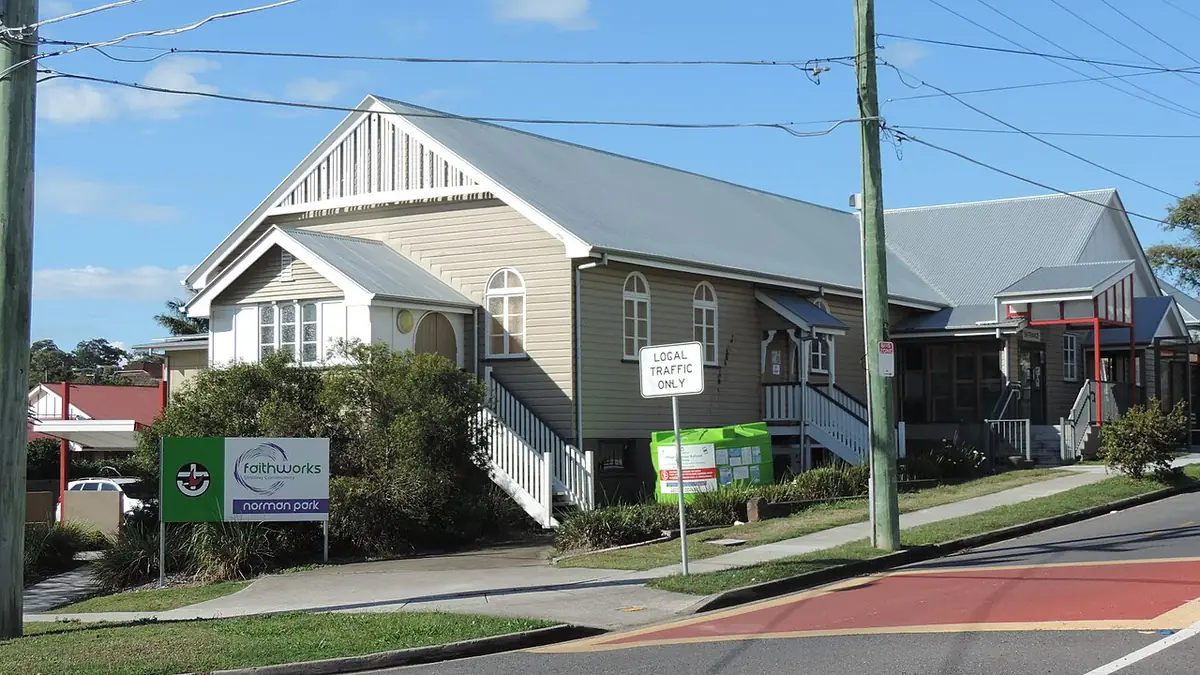
Timber buildings and quiet streets in Norman Park, Brisbane — Photo: Kerry Raymond · CC BY 4.0 · Wikimedia Commons
Understanding the legal structure of your future property leads straight on to the local buying procedures.
The Australian land system draws a clear line between forms of property ownership, which directly affects your freedom to manage the property and your recurring costs. Between outright ownership of a standalone plot (Freehold) and forms of shared ownership (Strata title), the rules of the game differ radically. An unprepared buyer risks underestimating the power of scheme by-laws or the maintenance burden of a standalone plot. Getting this fundamental point clear protects your investment over the long term.
Freehold (outright ownership of the land)
You own both the building and the land it stands on, with no external collective levy. This gives you complete freedom to extend, change the architecture or landscape your outdoor spaces as you wish, provided you comply with the council's planning scheme.
What it changesYou carry the full financial burden and responsibility for maintenance, with no shared safety net if major structural work is needed on the property.
Strata Title / Body Corporate (shared ownership)
Your property is part of a shared development where an owners' association (Body Corporate) manages the upkeep of common areas, the building insurance and compliance with the by-laws. This option simplifies the day-to-day management of outdoor spaces and keeps the site visually consistent.
What it changesYou have to pay regular contributions (levies), which can be high, and follow strict rules on pets, changes to the façade or short-term letting.
The crucial legal rule to understand before paying a deposit
To see this process through with peace of mind, let us break down when each party in the transaction steps in.
Buying property in Queensland follows a very strict procedural sequence that protects both parties but demands a quick response. Unlike in some other jurisdictions, making an offer (offer and acceptance) or signing a contract of sale requires a firm grasp of the contract conditions from the very first discussions. Overlooking any of these steps exposes the buyer to losing their deposit outright if something goes wrong. A rigorous approach is essential to secure every stage of the transaction.
Finding the property and reviewing the initial inspection reports
Making a formal written offer through the real estate agent appointed by the seller.
Negotiating the financial terms and essential conditions, including bank finance approval and building inspections.
Both parties signing the contract of sale and paying the deposit into trust (usually 10% of the purchase price).
The start of the period for satisfying conditions (the cooling-off period and due diligence conditions), during which you confirm the condition of the property and the titles.
Final payment of the balance and official registration of the transfer of ownership with the state land registry
How does a transaction actually unfold, step by step?
By surrounding yourself with the right experts and anticipating each step, your Brisbane purchase follows a clear, well-controlled path.
A successful property transaction in Brisbane relies on smooth coordination between professionals with clearly defined roles. From the selling agent who represents the owner's interests to the conveyancer who secures your legal title, each one secures a link in the chain. Knowing who is responsible for what avoids the cultural confusion international buyers often run into. Here is the practical sequence of the people who will guide you through to getting the keys.
The buyer (you)Setting the budget and actively searchingYou confirm your borrowing capacity with a local mortgage broker and shortlist properties that match your location and budget criteria.
The real estate agent (Selling Agent)Viewings and initial negotiationThey show the property, pass your offers on to the seller and manage the commercial side of things, while legally representing the owner's interests.
The inspector (Building & Pest Inspector)Checking the structural conditionThey carry out a detailed examination of the frame, the foundations and any termite activity, a major risk in this subtropical region.
The solicitor or conveyancerChecking titles and encumbrancesThey go through the land titles, check for hidden easements, prepare the legal documents and coordinate the final settlement of the transaction.
The lender (Bank / Lender)Loan approval and release of fundsThey issue the final loan approval (unconditional approval) and release the necessary funds on settlement day.
The land registry (Titles Registry)Official registration of the transferThe Queensland authorities officially record the change of owner on the public register, legally completing your purchase.
House or apartment in Brisbane: weighing space against day-to-day management
Once you have chosen the type of property, what remains is to assess precisely the real financial commitment needed to settle in for the long term.
In Brisbane, choosing between a detached house and an apartment in a strata scheme goes well beyond the number of bedrooms. It commits you to a lifestyle deeply shaped by the subtropical climate and the geography of the river. On one hand, a house gives you complete freedom over your land, no rigid strata levies and the option of creating a tropical garden or putting in a private pool to cope with humid summers. It is the preferred option for families wanting to put down roots in the leafy residential suburbs of the inner-ring hills or the wider outskirts. However, that independence comes at a direct cost in time and energy: looking after the outdoor spaces, pest control and structural repairs fall entirely on the owner, not to mention the growing distance from the busy employment hubs when you venture too far from the CBD.
An apartment, on the other hand, whether in the modern towers of South Bank or the more intimate buildings of New Farm, is about ease and a central location. Strata levies, often high in Brisbane because of amenities such as communal pools and lifts, actually pool peace of mind: roof maintenance, security and shared green spaces are handled by a professional strata manager. For a working couple or an investor, this arrangement removes the weekend chores. The compromise is on private space and living alongside others: noise, closeness to neighbours and the lack of any real private land mean accepting a more vertical way of life, where the balcony replaces the garden terrace and every extra square metre weighs heavily on the initial purchase price.
Brisbane's climate also plays a decisive role in this architectural choice. The traditional timber houses on stumps typical of Queensland were designed to maximise natural airflow and stay clear of the Brisbane River's periodic floods. Buying an older house means accepting specific renovation constraints linked to termites and heritage legislation, while a recent brick build means total dependence on air conditioning. Recent apartments, for their part, often benefit from insulation built to strict standards, which cuts energy bills but also takes away much of the picturesque charm that buyers from the south of the country often look for. The final decision therefore comes down to how much weekend manual work you are willing to put up with, set against your need for immediate access to the urban amenities of Queensland's capital.
Finally, the question of resale and how liquid the asset is strongly shapes buying strategy in Brisbane's property market. Houses on their own land in sought-after school catchments, such as around Kelvin Grove or Indooroopilly, have historically been safe havens whose structural scarcity protects their value in an economic downturn. Apartments, by contrast, sometimes suffer waves of oversupply in certain central neighbourhoods, which calls for careful selection of build quality and strata management so your capital growth is not eroded by competing new developments completed right next door.
What real budget do you need to buy and live in Brisbane?
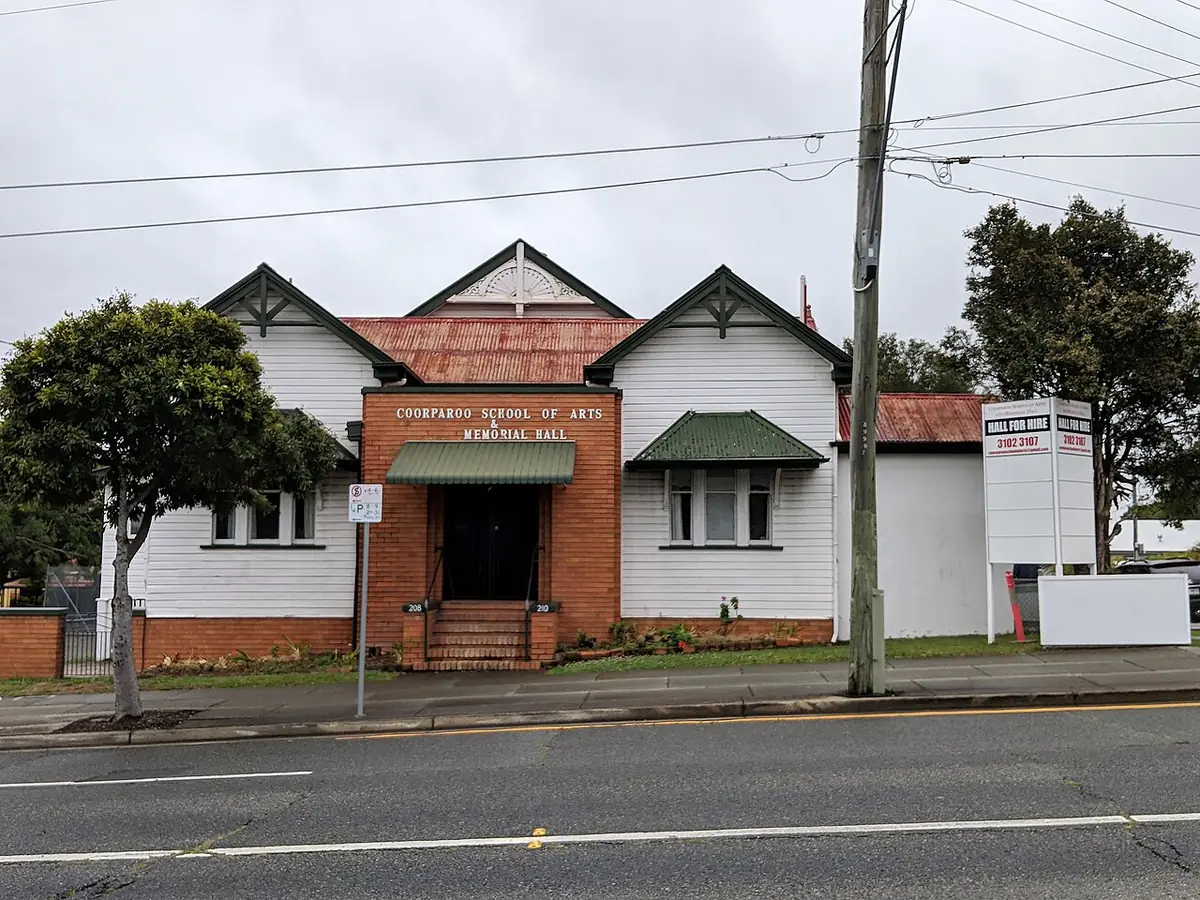
The heritage School of Arts hall on a Coorparoo street — Photo: Nickw25 · CC BY-SA 4.0 · Wikimedia Commons
To turn these figures into something concrete, let us follow a typical day in the life of a resident.
Buying a house in Brisbane means allowing for far more than the asking price shown by local agencies. Queensland transfer duty, legal fees and mandatory insurance add up to a significant share of the initial capital. At the same time, the everyday cost of living in the city reflects its strong demographic and economic pull, so you need to model your monthly budget carefully to avoid any cash-flow strain after you get the keys.
Purchase costs and upfront charges for a house in Brisbane
Cost item
Estimated range
Type and frequency
Transfer duty
3% to 5.5% of the purchase price
Progressive state tax payable on final settlement of the sale.
Legal and conveyancing fees
AUD 1,500 to AUD 3,000
Fees for the professional handling the legal transfer of title.
Pre-purchase inspections (building and termites)
AUD 500 to AUD 900
Essential to avoid major hidden defects in Queensland.
Home insurance (Home & Contents)
AUD 1,800 to AUD 3,500 per year
Annual premium covering climate risks and flooding.
These amounts are a guide only and vary with the market value of the property and its exact location within the Brisbane metropolitan area.
Annual running budget for a homeowner household
Budget item
Average annual amount
Main influencing factors
Rates (Brisbane City Council local taxes)
AUD 1,800 to AUD 2,600
Calculated on the land value (Land Valuation) set by the state.
Water and sewerage (Urban Utilities)
AUD 1,200 to AUD 1,800
Varies with consumption and whether there is an outdoor pool.
Electricity and air conditioning
AUD 2,200 to AUD 3,800
Sharp seasonal increase during the hot summer months.
Routine maintenance and gardening
AUD 2,000 to AUD 5,000
Needed to keep up with fast-growing subtropical vegetation.
Energy costs in Brisbane have risen steadily, which makes insulation and solar panels particularly worthwhile over the medium term.
Pace of life and infrastructure: an ordinary Tuesday in Brisbane
Behind this apparent ease lie less visible aspects that property marketing brochures are careful not to mention.
Daily life in Brisbane follows an early-morning rhythm set by the sun, which rises early all year round. Transport infrastructure, combining city buses, CityCat ferries and the suburban rail network, shapes the commuter flows into the CBD. Understanding how work journeys, school runs and access to healthcare fit together lets you measure the real impact of where you choose to live on your quality of life.
06:30Residential neighbourhood (e.g. Paddington or Chermside)The day starts with a morning jog or a walk in the local parks, making the most of the cool before subtropical temperatures climb.
07:45Local schoolDropping the children at the neighbourhood school, often within walking distance or a few minutes' drive in well-served residential areas.
08:30Train station or ferry terminal (CityCat)Commuting into Brisbane's business district, with regular, punctual river services offering a smooth alternative to the roads.
12:30South Bank Parklands or Queen Street MallLunch outdoors, enjoying the landscaped public spaces and the relaxed atmosphere typical of the local work culture.
17:30Local supermarket or neighbourhood marketPicking up fresh produce for dinner, with a wide choice of tropical fruit and seafood from the Queensland coast.
19:00Family homeA quiet evening on the veranda or in the garden, enjoying the gentle night breeze and the relative calm of residential neighbourhoods.
What Brisbane's glossy property listings will never tell you
These grey areas explain why some buyers quickly become disillusioned after the sale is finally signed.
Brisbane's property market has its own geographic and regulatory quirks that can turn a love-at-first-sight purchase into a lasting financial headache. Bright agency photos and idealised virtual tours systematically airbrush out local environmental and administrative constraints. Anticipating these hidden realities is essential to protect your assets and your everyday peace of mind.
Historic flood risk (Flood Zones)
A large part of Brisbane is built on the river's floodplain. Even if your property was not affected in 2011, the council's official mapping drives sharp changes in your home insurance premiums and your future resale value.
Strict rules on protected trees and vegetation
Owning a large, tree-filled plot in Brisbane does not mean you can cut down eucalyptus or century-old trees that get in your way. Local environmental regulations protecting the urban canopy impose heavy fines for unauthorised removal.
Aggressive termite activity in Queensland
The hot, humid climate encourages colonies of wood-eating termites. Without a certified chemical barrier and a thorough annual inspection, the timber structure of your property can suffer structural damage that is invisible from outside.
Queensland Character Code planning rules
If you buy an older house in an area protected for its historic character, you will not be able to demolish it or change its façade without complex council approval, which blocks any modern extension plans.
Noise from the airport flight paths
The expansion of Brisbane Airport and the use of its second runway regularly change flight paths. Once-quiet neighbourhoods can face regular aircraft noise at peak times.
The buying mistakes you only discover after six months in Brisbane
All these disappointments confirm that this property market does not suit every kind of buyer.
Looked likeA charming, affordable house in a leafy suburb far out on the city's fringe.
Turned outA daily ordeal of two hours each way stuck in traffic on congested motorways, eating up all your free time.
Would have caught itAlways prioritise being close to rail lines, or accept a smaller home closer to the centre.
Looked likeA modern apartment with a pool in a large residential complex with supposedly low strata levies.
Turned outA sudden spike in levies voted through to fix structural defects or replace ageing lifts.
Would have caught itAsk for the full records of general meetings over the last three years and review the scheme's sinking fund.
Looked likeA purchase made from a distance without a thorough physical inspection, based only on the superb marketing photos on the property portal.
Turned outThe discovery of serious damp under the floors, a roof in need of complete replacement and an active termite infestation.
Would have caught itAlways appoint a certified independent inspector to produce a full report on the building's structural and pest condition.
Looked likeDeliberately ignoring the lie of the land and nearby flood zones to save on the purchase price.
Turned outNo insurer willing to cover the property against flood risk at an economically viable premium.
Would have caught itCheck Brisbane City Council's official maps and speak directly to insurers before making an offer.
Looked likeUnderestimating the subtropical summer heat by buying a poorly oriented older house without effective air conditioning.
Turned outSky-high electricity bills to run outdated air conditioners and constant discomfort throughout the southern hemisphere summer.
Would have caught itCheck the house's orientation to the sun, whether it has effective insulation and whether it is fitted with solar panels.
Who Brisbane's property market really suits (and who should steer clear)
It is time to set out the final terms of your thinking, so you know whether to go ahead with your plans now.
Buying property in Brisbane is a major financial decision that requires a close match between your investment horizon, your tolerance for local constraints and your lifestyle. With rising interest rates and the particular dynamics of the Queensland market, some buyers expose themselves to significant financial or personal setbacks by rushing in.
A first-time buyer on a tight income who needs to be able to move for work at short notice
→Holding off on buying and opting for a long-term rental
The high purchase costs and tied-up capital do not pay off if you have to sell before a minimum of five to seven years because of a job move.
An overseas or interstate investor looking for immediate returns without hands-on management
→Passing on older properties and targeting very carefully selected assets
The complexity of managing a rental from a distance, combined with the specific maintenance costs of Queensland houses, quickly eats into the expected net return.
A household with school-age children that values central cultural life
→Buying a mid-sized property in the sought-after inner-ring school catchments
It offers excellent educational stability, quick access to amenities and solid protection of the property's value over the long term.
A retiree looking for a low-maintenance base without the burden of space
→Ruling out a detached house in favour of a well-managed apartment in a walkable neighbourhood
Looking after a tropical garden and maintaining a house on stumps quickly becomes too heavy a physical burden as the years go by.
So, are you ready to take the plunge and buy property in Brisbane?
At the end of this analysis, buying property in Brisbane shows itself for what it is: a strategic commitment that rewards methodical preparation and punishes improvisation. Queensland's capital offers an enviable subtropical lifestyle, a dynamic economy driven by major upcoming infrastructure projects and a range of neighbourhoods that can adapt to every stage of your life. Yet the success of your plans does not depend on the promises of marketing brochures, but on your ability to accept the reality of hidden costs, climate constraints and local regulations. If you have measured the real financial commitment, factored in maintenance costs and chosen a location that fits your transport and schooling needs, then the investment makes complete sense.
Never give in to the fear of missing out or to the artificial pressure generated by market cycles. Brisbane's property market will keep offering sound opportunities to patient, well-advised buyers. Take the time to visit the properties you are interested in several times at different times of day, insist on flawless independent inspection reports and always check the planning schemes and strata records. Your future peace of mind and the preservation of your capital depend entirely on how thorough you are at this investigation stage.
Ultimately, buying in Brisbane means choosing a lifestyle as much as a financial asset. It means embracing the bright rhythm of Queensland mornings, life beside a majestic river and the energy of a city booming in the run-up to the Olympic Games. If your personal and professional situation is stable, your investment horizon is longer than seven years and you are ready to take on the responsibilities of ownership in a subtropical environment, the signs are good. All that is left is to appoint your experts, fine-tune your financing plan and lay solid foundations for your future life in the most welcoming of Australia's big cities.
Related questions
How much is transfer duty on average in Brisbane?
Transfer duty in Queensland is calculated on a sliding scale that depends directly on the purchase price of the property and its status (owner-occupied home or investment). For an average house, you should generally allow between 3% and 5.5% of the purchase price, payable when the property is finally registered with the state.
Is a termite inspection compulsory before buying?
Although the law does not formally require one in every case, signing a purchase without a thorough inspection by a certified professional is strongly discouraged. Brisbane's subtropical climate encourages termite activity, and hidden structural damage can prove extremely expensive to repair after the sale.
Which are the best neighbourhoods for families in Brisbane?
Families have traditionally favoured inner-ring and middle-ring suburbs with excellent schools and easy access to parks, such as Paddington, Indooroopilly, Kelvin Grove and Ashgrove. The choice mainly depends on how close you are to your workplace and to public transport.
How does public transport into central Brisbane work?
The Translink network runs all the city buses, suburban trains and the well-known CityCat river ferries. Using a contactless Go Card or paying directly by digital payment gives you integrated, seamless fares for all your daily commutes into the CBD.
What are Queenslander homes and what constraints come with them?
Queenslanders are traditional timber houses built on tall stumps, historically designed to maximise natural ventilation and guard against flooding. Buying one means complying with strict planning rules that protect their heritage character, as well as keeping a closer watch on fire and termite risks.
What annual running costs should I budget for on top of the mortgage repayments?
As a homeowner in Brisbane, you pay rates to Brisbane City Council every year, along with water bills (Urban Utilities), home insurance covering climate risks, and a regular maintenance budget for the garden and the structure of the building.
Could the 2011 floods happen again in Brisbane?
The Brisbane River has seen major historic floods in the past, notably in 1974 and 2011. The council provides very detailed flood maps (Flood Awareness Maps), which every buyer should check for each property before making a firm offer.
Is it better to buy an older house or a new apartment in Brisbane?
It all depends on your lifestyle and how much renovation work you are willing to take on. An older house gives you land and complete independence but needs regular maintenance, while a new or recent apartment in the centre offers a central location and shared costs, at the price of living closer to your neighbours.
How are current interest rates affecting the local property market?
Changes in the Reserve Bank of Australia's cash rate directly affect how much households can borrow and temper price growth. That calls for a rigorous assessment of your projected budget, modelling higher-rate scenarios to protect your investment.
How long does it usually take to complete a property transaction in Queensland?
Once the offer is accepted and the contract signed by both parties, the settlement period (the legal completion of the sale) generally lasts between 30 and 60 days. This gives solicitors and conveyancers time to carry out all the necessary legal searches and finalise the bank financing.
Property review of ting
No ting properties in Brisbane yet
Be the first — share it on ting and it shows up right here.