Moving to the capital of Queensland to rent an apartment means getting to grips with the particulars of the local market, the subtropical climate and the way tenancy agreements work. This guide walks through every stage of your decision to give you a clear, realistic and practical picture of housing in Brisbane.
Get the app
What nobody tells you.
Real prices, hidden costs and the traps to check before you commit.
What renting an apartment in Brisbane really means day to day
Scroll
What renting an apartment in Brisbane really means day to day
Moving to the capital of Queensland to rent an apartment means getting to grips with the particulars of the local market, the subtropical climate and the way tenancy agreements work. This guide walks through every stage of your decision to give you a clear, realistic and practical picture of housing in Brisbane.
Written by the ting.ad editorial team ·
Brisbane in Street View: drag to look around.
Beyond the physical features of the building, it is your own lifestyle that will decide which area and which type of home suit your needs.
Renting an apartment in Brisbane offers a distinctive subtropical way of life, where outdoor space often flows into the living area through generous balconies. Property listings play up the light and the closeness to the river, but they frequently fail to mention the effect of summer humidity and the tropical storms that roll in late in the afternoon. Choosing a home here means understanding how the layout of the rooms affects natural ventilation and the electricity bill for air conditioning. By accepting these climatic realities from the moment you start searching, you avoid disappointment once the lease is signed and your first months in your new home are under way.
Buildings that open onto the outdoorsvsDemanding temperature management
Large balconies and floor-to-ceiling windows make the most of natural light and river breezes, but they call for constant attention during the intense summer heat and against water getting in during violent storms. Sun protection then becomes central to everyday comfort, something the photos never show.
The convenience of riverside neighbourhoodsvsConstant noise and a busy urban pace
Living near the bends of the Brisbane River guarantees quick access to transport and green space, but it also exposes you to traffic noise from the main roads and to the ongoing construction that comes with urban densification. Real peace and quiet usually means moving further from the main stations.
Buildings with shared facilitiesvsStrata costs passed on in the rent
Pools, rooftop terraces and in-house gyms in modern complexes add a lot to everyday comfort, but those amenities translate into high weekly rents and sometimes strict building rules about how common areas can be used.
What kind of tenant are you in the Brisbane rental market?
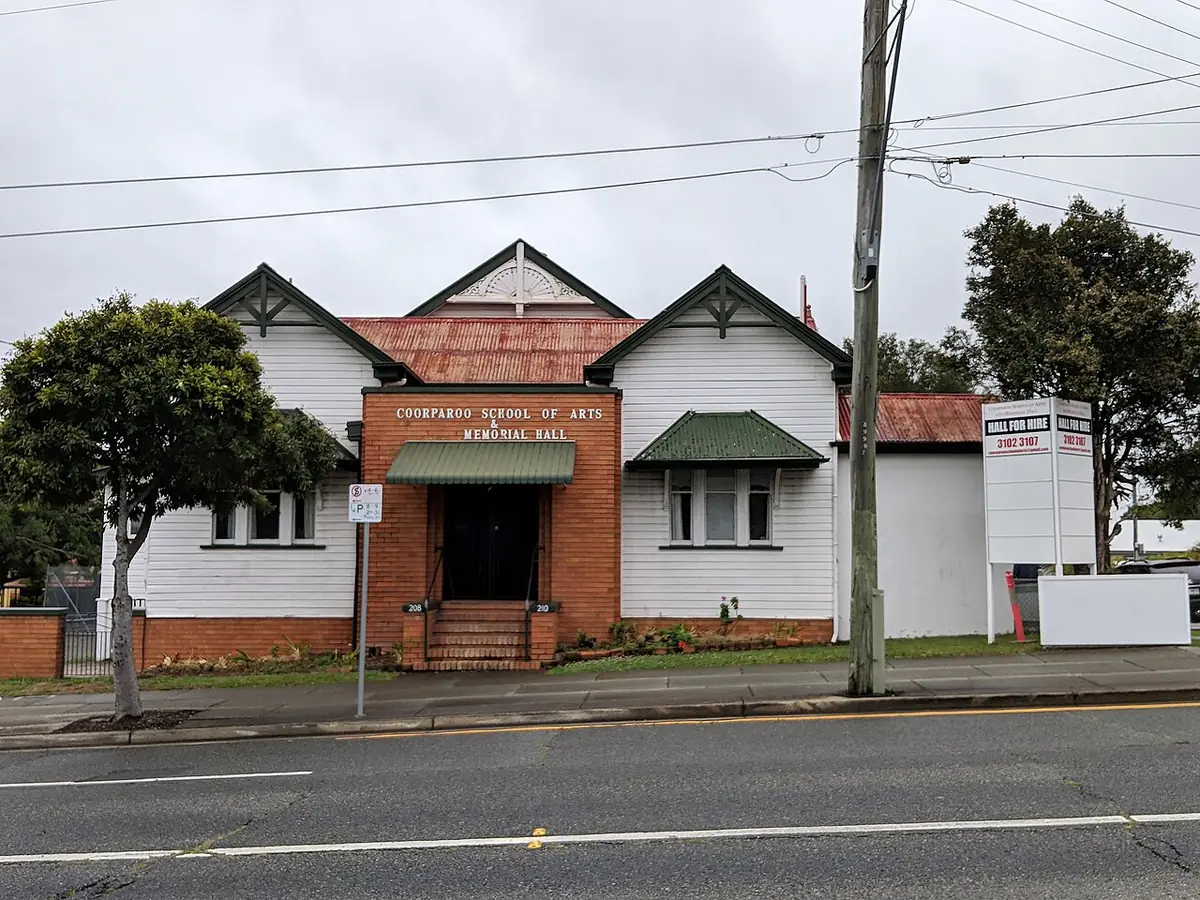
The heritage School of Arts hall on a Coorparoo street — Photo: Nickw25 · CC BY-SA 4.0 · Wikimedia Commons
Leaving your home country to settle here upends everything you are used to when it comes to contracts, deposits and dealing with landlords.
Brisbane's rental market follows very distinct neighbourhood patterns that do not suit every lifestyle equally. Whether you work in the city's business district, work from home most of the week or are looking for a stable base for your family, the geography of the decision changes completely. Looking closely at your daily routine lets you pinpoint straight away which part of the city will cost you the least energy in commuting and logistics. Seeing things in that light will spare you painful compromises over the length of your lease.
City-centred professional
Neighbourhoods such as Spring Hill, Fortitude Valley and Kangaroo Point give you immediate access to the business district on foot or by ferry. Here you are prioritising a dramatic cut in travel time over living space. Apartments tend to be more compact, in modern towers or converted buildings, but their location means you can live without owning a car. It is the ideal option if your daily schedule has no room for time lost in traffic jams on the bridges across the river.
Digital nomad or remote worker
Look to leafy residential neighbourhoods such as West End, Paddington or New Farm, where the urban fabric is more open. You will find apartments with an extra room that can become a home office, as well as quick access to independent cafés and parks for your breaks. The trade-off is a higher rent per square metre for a level of calm and greenery that is rare so close to the centre. The immediate surroundings more than make up for being slightly further from the city's institutional heart.
Long-term family move
Outer areas with good school catchments and peaceful residential streets, such as St Lucia, Indooroopilly or Ashgrove, meet that need for permanence. You swap the nightlife buzz for quiet streets, shady parks and more generous indoor space. The flip side is greater reliance on scheduled public transport or the car to reach the cultural life of the centre. It is a considered choice that puts everyday wellbeing and the quality of your immediate environment first.
What changes fundamentally when you move to Brisbane from abroad
Once these administrative rules are understood, the success of your move depends entirely on the neighbourhood you choose to live in.
Moving to Queensland from abroad confronts tenants with administrative and contractual practices that can be very different from what they know. Where many systems back home protect tenants with strict regulations and long leases, the Australian market runs on renewable fixed-term leases and applications focused on your immediate ability to pay. Understanding these cultural and legal differences avoids misunderstandings when you put your application together and when the entry inspection is done. Here are the most common friction points and what they mean in practice for your move.
From abroad
A highly protective, uniform national framework for residential leases
Brisbane
Legislation specific to the state of Queensland (Residential Tenancies Authority - RTA), with its own rules
You need to get familiar with Queensland's standard forms and the precise deadlines required for each step, or risk your application being rejected or your complaints ignored by the agencies.
From abroad
A security deposit capped at one month's rent, excluding charges, for an unfurnished let
Brisbane
A rental bond usually equal to four weeks' rent, lodged in a secure government-held account
The money is held by the public authority rather than by the landlord, which makes getting it back safer, but it ties up a significant amount of cash as soon as you arrive in the city.
From abroad
Viewings often held in groups and handled directly by the landlords or their managers
Brisbane
Timed viewings run by real estate agencies (property managers), with compulsory online application forms
Competition for a good property is fierce; you need your full digital application ready before the viewing and should apply online within minutes of leaving if you want a chance of securing the home.
From abroad
An inventory drawn up together on site at an in-person appointment
Brisbane
A very detailed entry condition report, often illustrated with dozens of photos, that you must complete and return within a few days
How carefully this initial inventory is done will directly decide whether you get your full bond back when you leave; no verbal approximation counts before the local tribunals.
How to choose between Brisbane's residential neighbourhoods
Knowing the neighbourhoods is one thing, but anticipating the financial reality of rents and running costs in Brisbane is another.
Brisbane is a patchwork of neighbourhoods with very strong identities, linked by a transport network that works smoothly but demands a good sense of the city's geography. Each area strikes its own balance between cultural energy, access to green space and travel time to the main employment hubs. Weighing these options through the lens of your real daily life, not the postcard version, lets you target your searches precisely on local property platforms. Here is a selection of key areas and what they mean in practice for your quality of life.
New Farm / Teneriffe
A lively, walkable and fashionable atmosphere along the converted former wharf warehouses.
Suits
City professionals looking for specialty coffee, riverside parks and an active social life without a car.
Trade-off
Some of the highest rents in the city, sometimes for small floor areas in older buildings.
West End
A bohemian, multicultural and creative spirit, shaped by local markets and the riverbanks.
Suits
Artists, freelancers and anyone who loves cultural and culinary diversity.
Trade-off
Difficult traffic at peak hours and tightly regulated street parking.
South Brisbane
The city's cultural and museum hub, backed by green space and public man-made lagoons.
Suits
People who want immediate access to cultural institutions, theatres and multimodal transport.
Trade-off
A very built-up area, dominated by high-rise towers and a constant stream of visitors at weekends.
Paddington / Red Hill
Green hills, traditional houses on stumps (Queenslanders) and independent shops.
Suits
Tenants looking for calm, architectural character and an English-style village feel.
Trade-off
Steep streets that make getting around on foot harder, and rental stock that is scarce and hotly contested.
What does the budget for renting in Brisbane really look like?
Beyond the purely financial side, the legal nature of Australian tenancy agreements deserves your constant attention.
Brisbane's rental market has seen significant price movements in recent years, driven by sustained population growth and historically low vacancy rates. Setting a realistic budget is not just about the advertised rent: you also have to factor in all the unavoidable costs of energy, building services and local charges. The figures below summarise the ranges seen on the market to help you size your finances without putting yourself at risk.
BrisbaneTo rentApartmentestimate
Median price / m²A$30Half the apartments sell below this
Median priceA$2.8kthe average is 14% higher — a few very large properties pull it up
Most common2 bedrooms34 % of listings
Average size105 m²
By number of bedrooms
Bedrooms
Share of market
Avg price
Price / m²
Avg size
1
18 %
A$1.9k
A$35 +9 %
55 m²
2most common
34 %
A$2.72k
A$32
85 m²
3
32 %
A$3.65k
A$30 −6 %
120 m²
4
16 %
A$5k
A$29best value / m²
170 m²
Each row is an average, compared against the area average of A$32 / m². These are indicative estimates of a typical local market, not a measured sample of live listings. Check current listings before relying on them.
What you are really signing: fixed-term leases versus rental flexibility
To complete the process with peace of mind, work methodically through the essential steps along the way to your new rental.
Renting in Brisbane relies almost entirely on fixed-term agreements, usually signed for six or twelve months. Unlike markets where automatic renewal protects the occupant over the long term, the end of the lease is a point at which the rent can be reset to market conditions. Understanding how these contracts work lets you prepare your negotiations and secure your home for the long run without nasty surprises.
The standard fixed-term lease (6 or 12 months)
This format guarantees your right to stay and fixes the rent for the whole agreed term, giving you valuable legal stability when you first arrive. In return, breaking the lease before its official end exposes you to substantial financial penalties covering the agency's re-letting costs and the rent until a new tenant moves in.
What it changesOnly commit if you are confident your job will keep you in the area and that you are happy with the neighbourhood you have chosen for that period.
Periodic renewal and rent reviews
At the end of the initial term, the landlord or agency often offers a new lease with a rent increase reflecting pressure on the local market. Turning down the offer, or failing to reach agreement, leads to a formal notice to leave, with timeframes strictly set by Queensland legislation.
What it changesAlways start thinking about the end of your lease two months ahead, so you can negotiate calmly or prepare your move to another home without rushing.
The chain of steps to master before paying anything on a rental
To round off your preparation, here is the detailed timeline of what to do, day by day, when you move in.
Securing an apartment in Brisbane follows a strict sequence in which each step depends on the one before. Speed is essential, but it must never come at the expense of checking the lease terms and the real condition of the property. Breaking this chain of actions down helps you avoid irreversible mistakes under pressure from the competitive local rental market.
Preparing your complete digital application (proof of income, references, translated identity documents).
Target only properties that fit your maximum budget and book viewings as soon as they are listed online.
Attend the group viewings (open homes) and introduce yourself professionally to the property manager.
Submit your application straight away through the dedicated online platform (1form or similar) as soon as the viewing ends.
Read the residential tenancy agreement offered by the agency carefully before signing anything.
Paying the bond and the first rent securely into the official accounts to confirm your move-in.
How the move-in process actually unfolds, step by step
The day you collect the keys marks the start of a thorough check of your new home. Queensland legislation sets strict deadlines for reporting any pre-existing defect, failing which you may be held financially responsible for it when you leave. This practical timeline guides you through the essential formalities to establish yourself as a model tenant.
The tenantCollecting the keys and final signingGo to the real estate agency or the property to sign the final agreement and collect the keys once the initial payments have cleared.
The tenantCompleting the Entry Condition ReportPhotograph every room, every wall and every appliance in detail to record the exact condition of the property from the very first hour.
The property managerReturning the completed inspection reportSend the signed and annotated document to the real estate agency within the legal deadline of three business days after receiving the keys.
The tenantSetting up energy and internet contractsConnect your electricity and gas and order your high-speed internet plan from approved local providers.
The tenantChecking the fittings and appliancesTest the air conditioning, locks, blinds and cooking appliances so you can report any technical fault immediately.
Apartment or house in Brisbane: which suits your lifestyle?
Once you have settled on the type of property, it is time to look closely at the financial reality of your move.
In Brisbane, choosing between a house and a strata apartment depends not only on your initial budget but above all on how much daily commuting you will tolerate and how you feel about upkeep. Houses with gardens are generally found in the residential rings, which means longer journeys into the CBD unless you accept a smaller plot closer to the centre. That set-up brings weekly mowing and watering, chores that are far from trivial in the subtropical climate of Queensland's capital. On the other hand, choosing a house means owning the land outright, which gives you complete freedom over how you use it and frees you from the strata fees that are often high in the modern towers of Bowen Hills or Newstead.
By contrast, a high-rise apartment offers an urban lifestyle built around convenience, with direct access to shared pools, gyms and barbecue areas and no personal maintenance effort. Neighbourhoods such as West End and Fortitude Valley are full of these residential developments, where everything can be done on foot or by bike along the Brisbane River. However, living in a strata building in Brisbane means living with the decisions of the owners' general meeting, strict rules on pets and running costs that rise regularly to pay for the upkeep of lifts and glass facades. The choice therefore shapes your daily life directly, between space and independence on the outskirts and logistical ease in the heart of the city.
Financially, resale and long-term value behave differently depending on the type of property you choose in the Brisbane metropolitan area. Houses on their own land have historically outperformed in terms of capital growth, because the supply of land close to the main transport corridors is structurally limited by the geography of the valley. Apartments, on the other hand, often offer a higher gross rental yield and a more accessible entry point for first-time buyers, but they face stiffer competition whenever new developments are completed. Assessing your time horizon is therefore essential before you decide, because a stay of under five years makes an apartment purchase far more sensible, with lower transaction costs to recoup than for a house.
Finally, the thermal comfort and energy use of your future home in Brisbane deserve particular attention because of the hot, humid summers. Older timber 'Queenslander' houses have undeniable architectural charm but need significant insulation work and a sizeable air-conditioning budget to stay at a pleasant temperature. Recent buildings generally meet stricter construction standards, with effective double glazing and natural ventilation that makes the most of the river breezes. Your final decision should therefore weigh character and space against energy efficiency and everyday simplicity.
What overall budget do you need to live comfortably in Brisbane property?
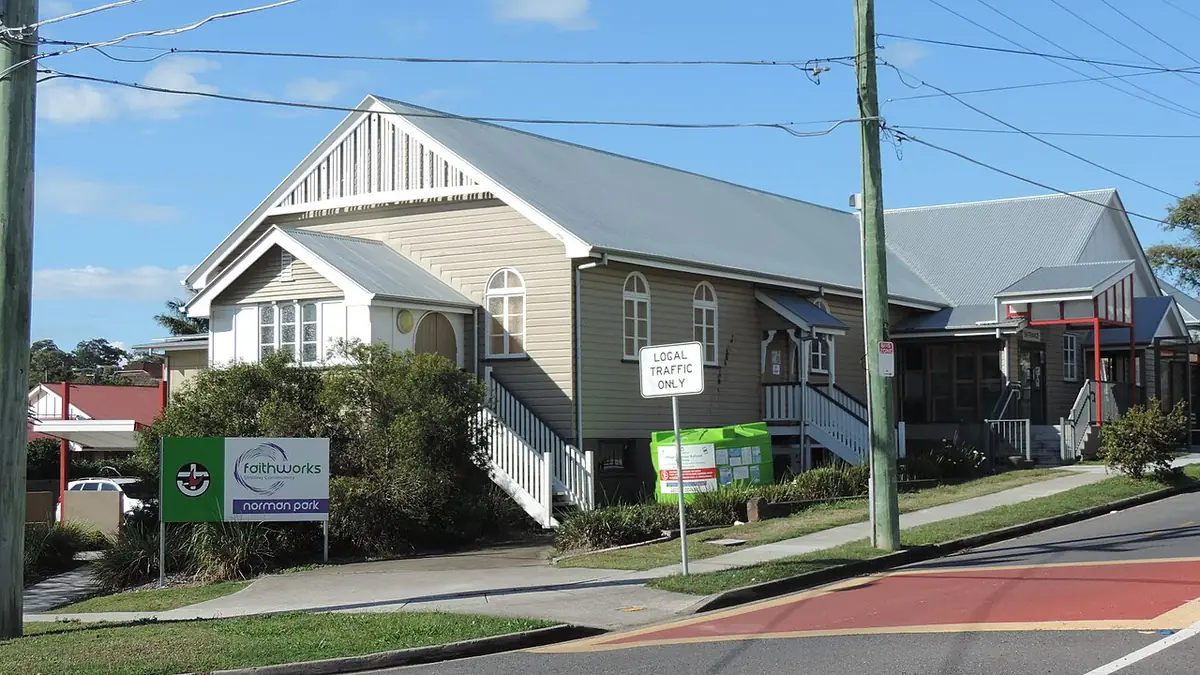
Timber buildings and quiet streets in Norman Park, Brisbane — Photo: Kerry Raymond · CC BY 4.0 · Wikimedia Commons
To understand the impact of these financial choices, let us look at how a typical day in the city actually unfolds.
Buying a property in Brisbane is not just about the asking price shown on the listing portals. You also have to factor in local rates, compulsory insurance and recurring strata fees. Strata costs vary considerably depending on whether the building has facilities such as a pool or a lift. Planning for these expenses avoids any budget shocks in your first months of living in Queensland's capital.
Property and everyday living costs in Brisbane
Expense
Estimated range (AUD)
Frequency
Comment and impact
Strata fees
AUD 800 to AUD 2,500
Per quarter
Varies with the shared facilities, the size of the building and the strata scheme's sinking fund.
Local council rates
AUD 450 to AUD 700
Per quarter
Collected by Brisbane City Council to maintain roads, waste collection and parks.
Home insurance (Building & Contents)
AUD 1,200 to AUD 2,500
Per year
Essential cover, including the risks linked to summer storms and local flooding.
Water and sewerage bills
AUD 250 to AUD 450
Per quarter
Billed by Urban Utilities based on actual usage plus a fixed connection charge.
Electricity and air conditioning
AUD 350 to AUD 700
Per quarter
Strongly driven by heavy air-conditioning use during the summer months from December to February.
These amounts are for a typical household and can vary with the exact location and the energy performance of the property.
One-off purchase costs and taxes
Type of cost
Basis of calculation
Indicative amount
Notes
Transfer duty
Sliding scale on the property's value
AUD 15,000 to AUD 35,000
A tax collected by the Queensland Government, calculated on the purchase price and your residency status.
Building and pest inspection fees
Flat fee per inspection
AUD 500 to AUD 900
Essential for detecting termites, hidden defects and the condition of the structure.
Legal and conveyancing fees
Fixed or percentage-based fees
AUD 1,500 to AUD 3,000
Handled by a licensed solicitor or conveyancer to secure the transfer of ownership.
Always allow a safety margin of 5% of the purchase price to absorb all the administrative and setting-up costs.
Health, schools, transport: what an ordinary Tuesday looks like living in Brisbane
Beyond this apparent ease on the surface, several less visible realities deserve to be brought to light.
Picturing your future life in Brisbane means decoding the rhythm of a typical weekday. Between the CityCat river services, the school run and access to healthcare, each neighbourhood sets its own pace. This timeline shows how travel times and local services really fit together for a resident settled in the city.
07:15Local bus stop or CityCat terminalThe working day starts with TransLink's scheduled public transport, which gets you into the financial centre while avoiding the traffic jams on the road bridges.
08:30School drop-off and local childcareA stop at the local state school or the private faith-based school, typically with leafy playgrounds and outdoor spaces designed for the subtropical climate.
12:30Medical centre or local GP practiceAn appointment with a local General Practitioner, which often needs to be booked in advance through online health platforms.
17:00Local supermarket (Coles or Woolworths)End-of-day shopping for fresh produce, in neighbourhood shopping centres with large free car parks.
18:30Local park or Brisbane River banksTime to unwind outdoors, making the most of the lit public spaces, cycle paths and fitness areas open to all residents.
What the glossy property brochures will never tell you about Brisbane
Staying alert to these hidden defects helps you avoid the most common wrong turns.
Developers' marketing materials present an idealised picture of Brisbane under permanent sunshine. Yet residents' experience on the ground reveals specific climatic, regulatory and structural constraints that are best anticipated before you sign a contract of sale. Here are the key points often left out of sales presentations.
The direct impact of historic floods on certain plots
The Brisbane River's hydrological system includes flood zones mapped by the council. Buying without checking the flood risk maps exposes you to sky-high insurance premiums and a potential discount on the property when you come to sell.
Strict rules on timber species and termites
The hot, humid climate encourages termites to spread through timber structures. A thorough professional inspection is a must to avoid structural repairs running into tens of thousands of dollars.
The draconian restrictions in strata by-laws
Owning an apartment does not mean total freedom. By-laws sometimes ban large pets, limit the use of balconies for drying laundry and tightly regulate Airbnb-style letting.
The rapid saturation of outer-suburban roads
Brisbane's urban sprawl creates major bottlenecks on the motorways at peak times. Choosing a home without carefully checking the real travel time by car or train turns every morning into an ordeal.
The obligation to install fall-prevention and pool safety devices
Queensland legislation sets rigorous standards for pool fencing and window locks on upper floors. Bringing them up to standard is entirely the owner's responsibility and can be a significant unplanned expense.
The Brisbane property mistakes you only discover six months later
With those disappointments avoided, it is also worth recognising that this market does not suit every kind of investor or buyer.
Looked likeAn exceptional financial opportunity in an up-and-coming neighbourhood
Turned outA noisy area with persistent late-night noise and relentless through-traffic during the week.
Would have caught itVisit the property at different times, especially on Thursday and Friday evenings, to get a true sense of the noise in the neighbourhood.
Looked likeA bright apartment with large windows and no buildings opposite
Turned outA summer furnace that makes the electricity bill unbearable because it faces the afternoon sun.
Would have caught itCheck exactly which way the property faces and insist on external blinds or effective double glazing.
Looked likeA strata building with very attractive, low initial monthly fees
Turned outAn empty sinking fund and urgent facade repairs voted through at the very first general meeting.
Would have caught itScrutinise the minutes of the last three strata general meetings and check the state of the sinking fund.
Looked likeA large, leafy block on the outskirts offering calm and complete tranquillity
Turned outDirect exposure to bushfire risk in the dry seasons and an insect problem that is hard to control.
Would have caught itCheck the council's official natural hazard zoning maps before confirming any offer.
Who really should not buy property in Brisbane right now?
With these limits reviewed, it is time to lay the groundwork for your final decision.
Buying property in Queensland's capital is often presented as a safe bet, but several personal or professional situations make it a risky move. Taking on a long-term loan without a clear view of where you will live or what your finances will look like can lead to a dead end. Here are the profiles for whom it is better to wait or to keep renting.
The expatriate or worker on a short-term temporary visa
→To buy an apartment straight away to avoid paying 'dead money' in rent.
High transfer duty and the surcharges that apply to non-residents wipe out any financial gain if the property has to be sold in a hurry within three to five years.
The investor looking for an immediate, high rental yield with no management
→To buy off the plan in one of the large urban densification developments.
The glut of similar developments on the rental market limits short-term capital growth and pushes up management costs.
The first-time buyer on a tight budget with no emergency savings
→To put all of their savings into the deposit without keeping any cash in reserve.
The slightest urgent plumbing repair or rise in official interest rates would immediately push the household into payment default.
So, are you really ready to go ahead with your property plans in Brisbane?
Deciding to buy property in Brisbane means bringing together all the financial, logistical and climatic factors we have looked at. Queensland's capital offers an exceptional quality of life, genuine economic momentum and a range of neighbourhoods that can adapt to many different life plans. Even so, the success of your project depends on seeing the local constraints clearly, whether that means the particulars of tropical building, transfer duty or the reality of daily commuting times. If your time horizon is more than five years and your finances include a comfortable safety margin, the investment makes full sense and fits into a long-term picture of stability.
Before signing any official document or paying a deposit, take the time to check every item on the ground. Visit the neighbourhood you are targeting at different times of the week, have rigorous technical inspections carried out by independent professionals and go through the strata accounts without indulgence. The Brisbane property market rewards methodical preparation and punishes haste. Your independence as a decision-maker depends directly on your ability to resist simplistic sales pitches.
Ultimately, buying an apartment or a house here is not just a financial transaction; it is the adoption of a lifestyle centred on the outdoors and the community. By calmly weighing the trade-offs between space on the outskirts and a central urban location, you build a solid, lasting plan. If all the lights are green and your project is a long-term one, Brisbane offers a particularly stimulating place to settle, with a promising future for your household.
Related questions
What conveyancing costs and taxes should I expect when buying property in Brisbane?
The purchase costs are mainly the transfer duty collected by the Queensland Government, whose amount depends on the price of the property and on your residency status. On top of that come the fees of the solicitor or conveyancer who secures the transaction, plus the cost of the essential building and pest inspections.
Is a termite inspection compulsory before buying in Brisbane?
Although the law does not formally require it in every case, a specialist inspection for termites and hidden defects is strongly recommended. The region's subtropical climate encourages wood-boring insects, and discovering structural damage after settlement can lead to very large repair bills.
How do strata fees work in Brisbane apartment buildings?
Strata fees are usually paid every quarter by apartment owners to cover the upkeep of common areas, the building's insurance and contributions to a sinking fund set aside for future major works. How much you pay depends directly on the facilities in the complex, such as a pool, a lift or a gym.
Which neighbourhoods are most sought after for buying an apartment in Brisbane?
The most popular areas for apartment living include the Central Business District (CBD), New Farm, Newstead, Fortitude Valley and West End. Each has its own atmosphere, easy access to river transport and close proximity to business, dining and entertainment hubs.
Can non-resident foreigners easily buy property in Brisbane?
Property purchases by non-residents require prior approval from the Foreign Investment Review Board (FIRB). Foreign buyers also face additional taxes on both purchase and resale, so a thorough legal and tax review is needed before taking any steps.
How do you get efficiently from the residential suburbs into central Brisbane?
The TransLink public transport network runs connecting buses, suburban trains and the CityCat river ferries. A contactless card or the dedicated app lets you travel smoothly, and because the roads are congested at peak times, the train and the ferry are often much faster than driving.
How does flood risk affect property in Brisbane?
Some riverside areas of Brisbane have historically suffered major floods. The council provides interactive flood risk maps that every buyer should check without fail. A property in a flood zone can attract very high insurance premiums and be harder to sell later on.
What is the fundamental difference between a 'Queenslander' house and a modern property?
Traditional 'Queenslander' homes are timber houses raised on stumps, designed to make the most of natural ventilation in a tropical climate. They have unique architectural charm but need regular timber maintenance and significant insulation work, unlike modern builds in concrete with double glazing.
How long does it usually take to complete a property purchase in Brisbane?
Once the offer is accepted and the contract signed, the standard settlement period generally runs from 30 to 60 days. That time allows the lawyers to complete the title searches, secure final loan approval from the bank and satisfy the contract's conditions.
Is it better to buy an older house to renovate or a brand-new apartment?
It depends on your appetite for renovation work and on your long-term wealth strategy. An older house offers potential capital growth on the land and complete independence, while a new apartment gives you immediate thermal comfort, lower initial maintenance costs and a more central urban location.
Property review of ting
No ting properties in Brisbane yet
Be the first — share it on ting and it shows up right here.