Settling into a detached house at the heart of India's technology capital means thinking well beyond floor area. Between the variety of neighbourhoods, the demands of the lease and adapting to the local pace of life, every choice shapes your everyday comfort. This analytical guide lays out the factual groundwork you need to get your move right without a false note.
Get the app
What nobody tells you.
Real prices, hidden costs and the traps to check before you commit.
Why renting a house in Bangalore upends everything you assumed about living space
Scroll
Why renting a house in Bangalore upends everything you assumed about living space
Settling into a detached house at the heart of India's technology capital means thinking well beyond floor area. Between the variety of neighbourhoods, the demands of the lease and adapting to the local pace of life, every choice shapes your everyday comfort. This analytical guide lays out the factual groundwork you need to get your move right without a false note.
Written by the ting.ad editorial team ·
Bangalore in Street View: drag to look around.
That split between raw space and the work of running a home immediately raises the question of what kind of resident you are.
Renting a house in Bangalore is not simply a matter of finding a roof in the tropics; it is a real change of scale, both in space and in relationships. The usual expectations about floor area and independence you bring from back home often fall apart when they meet local building realities. Between generous volumes and very particular upkeep demands, the everyday trade-off calls for a clear-eyed look at what you gain and what you give up. That structural gap redefines comfort well beyond the size of the living area.
A great deal of living spacevsHigh structural maintenance costs
Villas and detached houses offer large volumes and many rooms, but they need constant attention to damp, roofs and outdoor areas exposed to the monsoon.
Real architectural independencevsNo automated shared services
Unlike high-rise developments run by a single management company, a detached house means supervising security, water supply and equipment maintenance yourself.
Being firmly rooted in residential neighbourhoodsvsGreater reliance on congested roads
Living in a house usually means settling in quiet, green areas, but that often puts you further from the big business hubs and lengthens the daily commute.
What kind of occupant are you when it comes to renting a house in India's Silicon Valley?
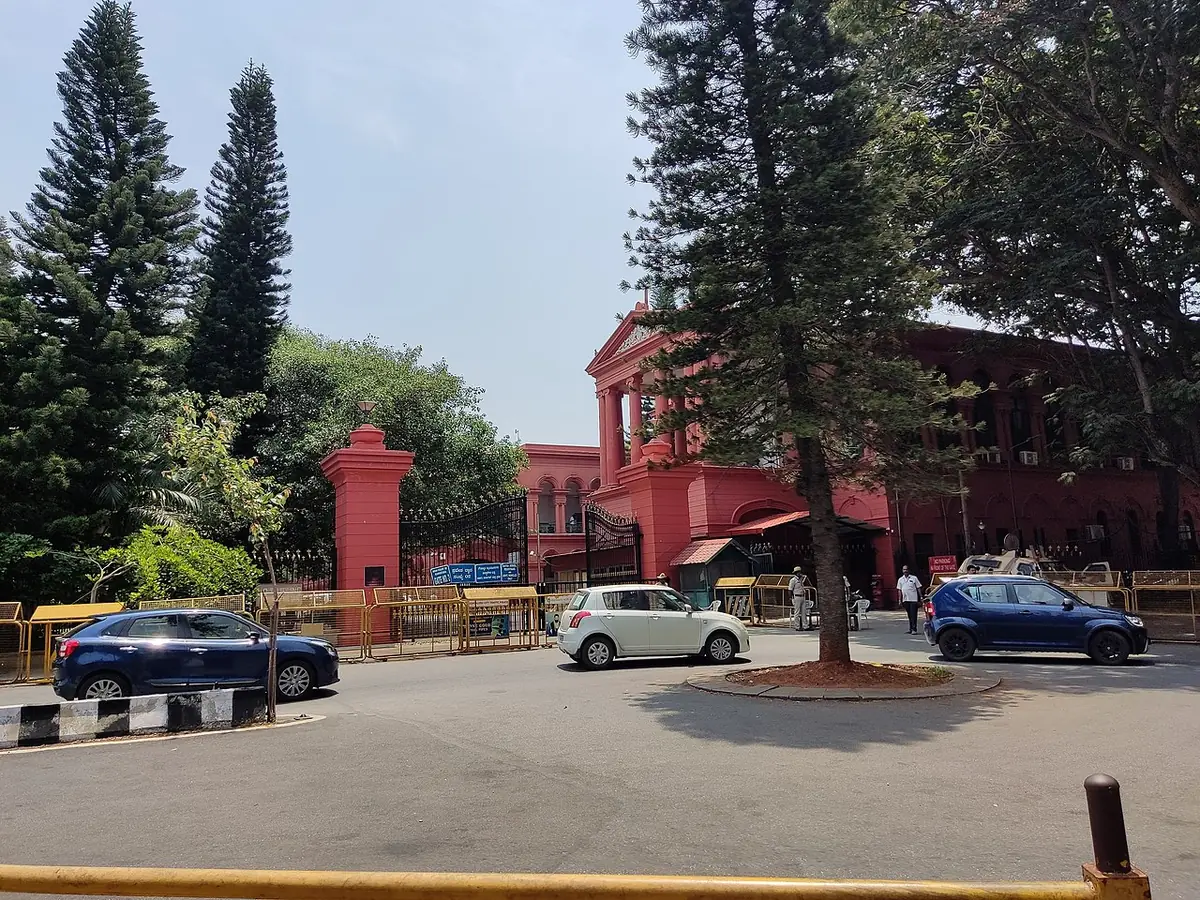
The red High Court building among the trees of central Bengaluru — Photo: Quantumtunneling · CC BY-SA 4.0 · Wikimedia Commons
Beyond your personal profile, the culture shock with the habits you bring from back home deserves careful perspective.
India's technology capital shows a different face depending on whether you are after family calm, constant professional connection or cultural immersion. Each way of life runs into sharply defined geographic and practical realities that are worth anticipating. Working through your daily priorities will spare you disappointment in the first weeks after you arrive. Here is how the typical profiles line up against the local property market.
The residential choice of quieter areas
Families generally favour leafy enclaves that offer a safe setting and private gardens. That option does mean accepting long school runs because of heavy rush-hour traffic. The house then becomes a peaceful family haven that more than makes up for the travel constraints.
Looking for agility and proximity
For very busy professionals, renting a detached house can backfire if it is badly placed in relation to the technology parks. You have to weigh the need for space for a home office against the overriding need to cut travel time. Central neighbourhoods, or those well connected to the main roads, then become essential.
Putting down roots in the historic neighbourhoods
Settling in the traditional areas offers unmatched cultural authenticity and lasting relationships with neighbours. In return, homes there are often older and need closer attention to wiring and plumbing. This choice suits patient residents who want to understand how things work locally.
Which assumptions do you absolutely have to leave behind when you move here from abroad?
Once those differences have sunk in, everything comes down to choosing carefully where you will settle.
Moving from a Western way of life to the capital of Karnataka overturns every contractual and practical certainty. What seems to go without saying back home, whether rental guarantees or how quickly services respond, follows relationship-driven and informal logic here. Understanding those cultural differences avoids needless friction with administrative workings that can be baffling. It is a gradual lesson in flexibility and negotiating on the ground.
From abroad
Housing stock built to strict, uniform standards
Bangalore
Buildings that vary completely from one street to the next
Every house has its own technical history, so the plumbing, thermal insulation and water connections need careful inspection before you sign anything.
From abroad
Leases governed by rigid national legislation
Bangalore
Contracts negotiated privately with customary clauses
Local practice, such as the size of the security deposit or the rules for returning it, rests on custom and direct agreement with the landlord.
From abroad
Services managed automatically by anonymous providers
Bangalore
A network of local tradespeople and caretakers you rely on every day
How smoothly your household runs depends directly on your relationships with the neighbours, the maintenance staff and the neighbourhood associations.
From abroad
Continuous, predictable urban infrastructure
Bangalore
A city whose neighbourhoods are highly contrasted and constantly shifting
Getting around and access to amenities vary radically with the exact location, which turns choosing a neighbourhood into a major strategic decision.
How do the city's residential faces differ across its best-known neighbourhoods?
This map of the neighbourhoods leads straight to the question of budget and the rents actually being charged.
The city is made up of micro-areas with very strong identities, from tree-lined enclaves to buzzing technology hubs. Each one shapes a distinct daily life, changing how you relate to time, quiet and getting around. Choosing where to live means accepting a specific trade-off between access to work and the quality of your immediate surroundings. Here is a side-by-side overview to guide your decision.
Indiranagar
A lively balance of tree-lined streets, fashionable cafés and constant shopping activity.
Suits
People looking for an active social life and immediate access to restaurants and shops.
Trade-off
Some of the highest rents in the city and heavy car traffic at weekends.
Jayanagar
A traditional residential feel, laid out in symmetrical blocks and remarkably green.
Suits
Families and residents who value quiet, public parks and a strong local identity.
Trade-off
Relatively far from the big technology business centres on the eastern outskirts.
Koramangala
A cosmopolitan hub where start-ups, coworking spaces and family homes sit side by side.
Suits
Entrepreneurs and ambitious professionals who want to keep their commute short.
Trade-off
Side roads chronically jammed at rush hour and strong pressure on land prices.
Whitefield
A modern, fast-growing area dominated by large secure complexes and business parks.
Suits
People working in the tech industry who want a modern house close to the office.
Trade-off
A sense of being cut off from the historic centre and overloaded road infrastructure.
What budget ranges should you expect when renting a house in the city?
Beyond the rent figure itself, the legal nature and exact make-up of the property you rent deserve your full attention.
Approaching the finances of a rental means looking beyond the advertised monthly rent alone. Additional charges, substantial security deposits and structural maintenance costs reshape the overall budget equation. Ranges vary considerably with floor area, the age of the building and how secure the chosen area is. A careful review of every spending item is needed to avoid unpleasant financial surprises.
BangaloreTo rentHouseestimate
Median price / m²₹249Half the apartments sell below this
Median price₹50.5kthe average is 14% higher — a few very large properties pull it up
Most common2 bedrooms50 % of listings
Average size193 m²
By number of bedrooms
Bedrooms
Share of market
Avg price
Price / m²
Avg size
2most common
50 %
₹45.9k
₹262
175 m²
3
38 %
₹61.1k
₹249
245 m²
4
13 %
₹80.3k
₹241best value / m²
333 m²
Each row is an average, compared against the area average of ₹262 / m². These are indicative estimates of a typical local market, not a measured sample of live listings. Check current listings before relying on them.
Independent house or villa in a gated community: which trade-off should you make?
Once you have settled on the type of property, the legal process of validating the contract calls for constant vigilance.
The rental market sets two distinct visions of the individual home against each other, and you need to choose between them with your eyes open. On one side, the standalone house offers complete freedom but leaves you to handle every practical matter yourself. On the other, the villa in a gated community guarantees shared services at the price of sometimes strict community rules. That choice structures your daily life and sets how much peace of mind you will have.
The independent house in an open neighbourhood
This option appeals through its authenticity, the absence of shared management fees and complete architectural freedom. In return, security depends entirely on your own arrangements, and dealing with technical mishaps (water cuts, electrical maintenance) falls directly to you.
What it changesYou gain independence in your relationships but lose the benefit of shared infrastructure and stronger residential security.
The villa in a secure 'gated community'
This format offers a controlled environment with 24-hour guards, maintained green spaces, a clubhouse and sometimes a shared pool. Its internal rules are strict, however, and shared maintenance fees are added to the base rent on a recurring basis.
What it changesYou get immediate practical comfort and logistical peace of mind, at the expense of some flexibility and a higher overall cost.
What is the unavoidable legal sequence before you commit to a lease?
That administrative rigour fits into a wider practical process that is best managed one step at a time.
Securing a rental follows formal stages in which careful paperwork protects you against any later dispute. Without the unified frameworks you may be used to back home, every phase of the negotiation needs to be put in writing and checked by knowledgeable local professionals. Skipping a verification step exposes you to major complications when deposits are returned or charges are settled. Here is the sequence of checks you cannot do without.
Finding the property you have fallen for and checking the original title deeds.
Demand formal proof that the person signing the lease is the rightful owner or an agent authorised by a notarised power of attorney.
Inspect the water installations, backup generators and electricity meters thoroughly before handing over any money.
Negotiate and put in writing the specific clauses on returning the security deposit and on who pays for major repairs.
The official signing of the rental agreement, registered according to local practice, and a joint check-in inventory.
How does the whole process of settling in unfold, step by step?
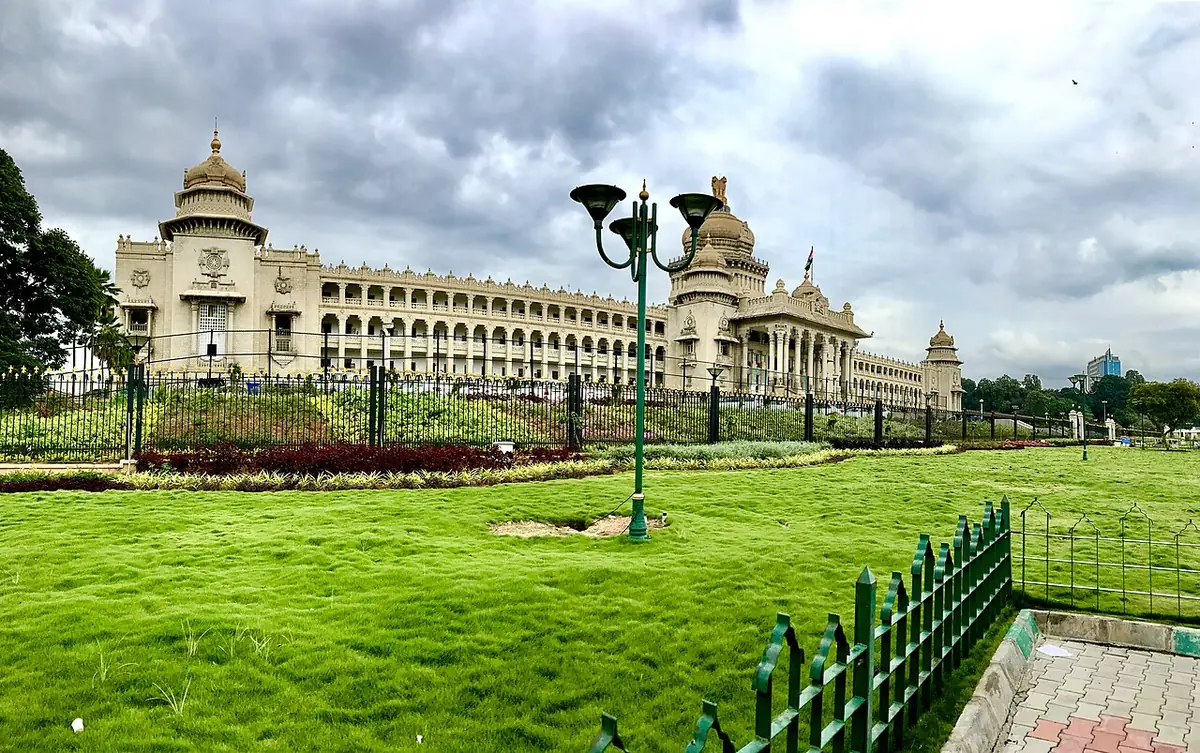
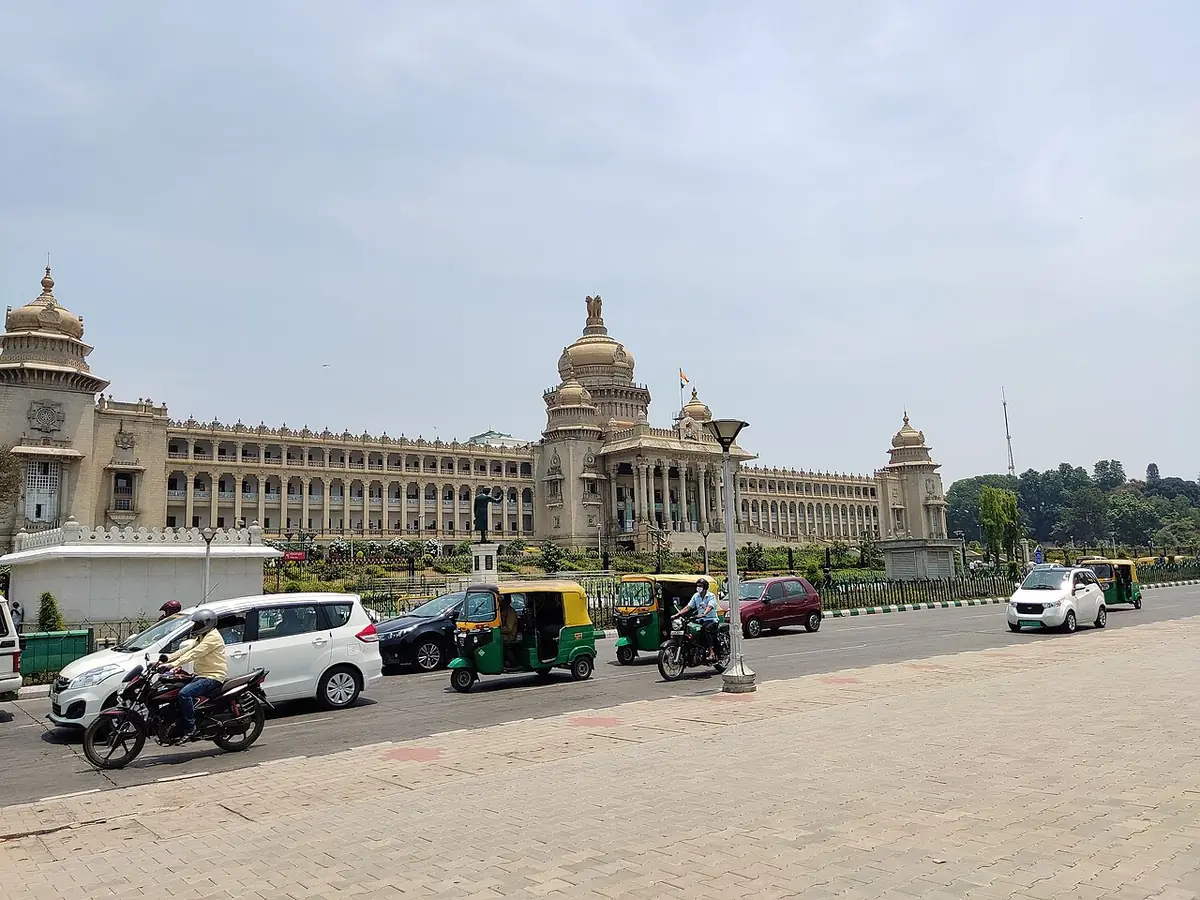
The Vidhana Soudha and its gardens in central Bengaluru — Photo: IM3847 · CC BY-SA 4.0 · Wikimedia Commons
Moving into a house successfully comes from careful coordination between searching, negotiating, technical checks and the move itself. Every player in the chain, from agent and landlord to municipal services and maintenance staff, has a decisive role in how the project turns out. Anticipating this timeline lets you absorb the delays that come with local formalities without undue stress. Let us go through the practical milestones of your move.
YouDefining your requirements preciselySet your non-negotiable criteria for distance to schools, maximum budget and the level of furnishing and equipment you want.
The estate agentShortlisting and viewing target propertiesView several properties at different times of day to judge the noise level and the real state of the surrounding traffic.
The landlordDiscussing the terms of the contract (Term Sheet)Put in writing the rent, the length of the lease, the terms of annual review and the exact amount of the security deposit.
A local legal expertChecking the lease and the titleHave the legal soundness of the contract confirmed to avoid any ambiguity about maintenance responsibilities.
The service providersCheck-in inventory and connecting servicesTest every appliance, the water pressure and the internet connection before the keys are handed over.
Detached house or secure apartment in Bangalore: which way of living should you choose?
Once the type of property is settled, the central question becomes financial balance and the overall cost of living in this megacity.
Renting a detached house in Bangalore, often called an 'independent house', gives you considerable freedom of space but means dealing directly with every practical aspect of daily life. You usually have a private entrance, a small plot or courtyard, and you do not have to put up with the constraints or strict house rules of a residents' association. That independence comes at a cost in security and maintenance, however, because it is up to you or your landlord to handle plumbing repairs, waterproofing during the monsoon and keeping an eye on outside access. Older residential neighbourhoods such as Indiranagar or Jayanagar have superb houses, but their structure often calls for upfront renovation to deliver modern comfort.
By contrast, choosing an apartment in a 'gated community' in Bangalore, found in large numbers in technology hubs such as Electronic City, Whitefield or the Outer Ring Road, radically changes the experience of everyday life. These residential complexes include shared services that are highly sought after by expats and senior Indian professionals: 24-hour security, backup generators to cover frequent power cuts, a pool, a gym and maintained green spaces. Management of the common areas is handed to a residents' association, which makes life much simpler for foreign tenants who may not speak the local language or have the time to supervise tradespeople repairing the stairwell or the gate.
The choice between these two types of property therefore depends directly on the make-up of your family, your tolerance for technical surprises and how you like to relate to your neighbours. If you work remotely or have young children who need a safe play area and a ready-made social circle, the apartment in a guarded development is the obvious practical choice. If you have large pets, value absolute quiet with no one overlooking you and prefer traditional architectural charm to standardised towers of glass and concrete, the detached house will meet your expectations despite the extra upkeep it demands month after month.
What total monthly budget should you plan for to rent comfortably in Bangalore?
Understanding the raw figures is not enough; you need to feel the physical reality of a typical day on Bangalore's roads and streets.
Drawing up a budget to rent property in Bangalore means looking well beyond the headline rent shown on listing portals. Additional charges, taxes, the electricity used by air conditioning and shared maintenance costs noticeably change the final bill each month. Amounts vary considerably depending on whether you choose a central, historic neighbourhood or a modern enclave close to the technology parks on the outskirts.
Average monthly rent ranges by property type and location in Bangalore
Property type
Central neighbourhoods (Indiranagar, Koramangala)
Outer neighbourhoods (Whitefield, Hebbal)
Technology outskirts (Electronic City)
2-bedroom apartment (gated community)
INR 55,000 to 85,000
INR 40,000 to 65,000
INR 28,000 to 45,000
3-bedroom apartment (upmarket)
INR 90,000 to 150,000
INR 70,000 to 110,000
INR 45,000 to 75,000
Detached house (3-4 bedrooms)
INR 120,000 to 250,000
INR 90,000 to 160,000
INR 60,000 to 95,000
Prices exclude maintenance fees and energy bills.
Breakdown of recurring monthly charges for a renting household in Bangalore
Expense item
Estimated amount (INR)
Estimated amount (EUR equivalent)
Comments and variability
Maintenance fees
INR 5,000 to 15,000
EUR 55 to 165
May or may not be included in the rent; covers security and shared areas.
Electricity (BESCOM + diesel backup)
INR 4,000 to 12,000
EUR 45 to 130
Rises sharply in summer and during the monsoon because of heavy air-conditioning use.
High-speed fibre internet (150 Mbps)
INR 1,000 to 2,500
EUR 11 to 28
Stable, unlimited connection through providers such as Airtel or Jio Fiber.
Water and waste collection
INR 1,500 to 4,000
EUR 17 to 45
Varies with tanker deliveries when the public supply runs short.
These estimates reflect a standard lifestyle for a household of three.
Healthcare, international schools, traffic jams: what does an ordinary Tuesday in Bangalore actually look like?
Behind the showcase of upmarket developments and ultra-modern technology parks, plenty of administrative and practical pitfalls await the newcomer.
Managing your time in Bangalore is inseparable from the layout of the city and the legendary density of its rush-hour traffic. Planning daily journeys between home, schools and business districts is the key to settling in successfully. Here is how an ordinary day unfolds for a working resident living in one of the established residential neighbourhoods.
07:30Residential neighbourhood (Indiranagar / Koramangala)Waking up in relatively calm surroundings before traffic builds on the main roads. Checking the water supply and switching on the equipment.
08:30School run to the international schoolsDropping the children at international schools, often located on the northern or eastern outskirts. The trip by school bus or cab (Ola/Uber) takes 35 to 50 minutes of patience.
09:45Coworking space or technology hub (Manyata Tech Park / Whitefield)Arriving at the office or settling in to work remotely. The digital infrastructure is excellent, with entirely reliable high-speed connectivity.
13:00Business lunch or local canteenA midday break to discover Karnataka's local cuisine or enjoy the high-end company canteens that are very common in India's Silicon Valley.
17:30Evening shopping at a modern supermarket (Nature's Basket or Foodhall)Buying fresh produce and imported goods. The choice is abundant and fully meets the most demanding Western standards.
19:30Back home and unwinding in the developmentMaking the most of the secure development's facilities, whether the gym or a stroll along the pedestrian paths away from the street noise.
21:00Dinner and getting ready for the next dayA quiet family moment, a look back over the day and, if needed, catching up with work teams in Europe or the United States.
What the gorgeous photos in Bangalore property listings never tell you
These hidden aspects soon turn into regrets if you fail to learn from the mistakes made by the expats who came before you.
Bangalore's rental market has unspoken rules and structural realities that agencies often fail to clarify during virtual viewings or first contact. Knowing about these grey areas before signing the lease will spare you heavy financial disappointment and lasting tension with your landlord. Examining these invisible points carefully makes all the difference between a smooth move and an obstacle course.
The disproportionate security deposit (Advance Deposit)
In India, and particularly in Bangalore, custom calls for a security deposit equal to 6 to 10 months' rent for an unfurnished or semi-furnished property. That huge sum is tied up without earning any interest, and getting it back when you leave often leads to complicated negotiations or even unfair deductions for supposed repainting work.
The real quality of the water supply
Many parts of Bangalore are not continuously connected to the public drinking water network (BWSSB). Buildings rely on boreholes (borewells) whose water table keeps falling, or on deliveries by water tankers whose frequency and hygiene vary with the seasons.
No thermal or sound insulation
Traditional construction in concrete and hollow brick soaks up heat during the day and does little to block out street noise, horns, religious festivals or local weddings. Without double glazing or effective air conditioning in every room, acoustic and thermal comfort can be very trying.
The strict rules of the Society Bye-Laws
If you rent in a modern development, the residents' association imposes very fussy house rules covering pool opening hours, guest parking, bans on changing certain fittings and restrictions on keeping large pets.
The classic property traps you only discover after six months in Bangalore
For all the appeal of this dynamic city, some kinds of working people would do better to stay away from Bangalore's rental market.
Looked likeAn ultra-trendy, walkable, cosmopolitan neighbourhood during a viewing on a sunny Sunday afternoon.
Turned outA traffic nightmare from Monday to Friday, turning the shortest 3-kilometre trip into a 45-minute expedition through exhaust fumes.
Would have caught itAlways view the target property on a Tuesday or Thursday at rush hour (08:30 and 18:30) to gauge the real noise and traffic.
Looked likeA standard 11-month rental agreement drawn up quickly in English without any formal legal input.
Turned outA document not registered with the local authorities, with no binding legal force in the event of a major dispute or an abusive one-sided termination.
Would have caught itInsist on a formal lease (Registered Lease Deed) drawn up and officially registered with the sub-registrar, protecting both parties.
Looked likeA modern, fully furnished apartment fitted with the latest appliances.
Turned outFlimsy, low-quality furniture and appliances that use an excessive amount of electricity, leading to exorbitant monthly energy bills.
Would have caught itDraw up an extremely detailed, photographic inventory of every piece of furniture and every appliance at check-in, countersigned by the landlord.
Looked likeA shared or basic internet connection offered directly by the landlord to save money.
Turned outConstant outages and speeds too slow to work remotely with servers in Europe or North America.
Would have caught itTake out your own fibre subscription straight away, independently, with a major and well-known national provider.
Exactly who should give up on renting in Bangalore?
At the end of this clear-eyed look at the constraints and opportunities, it is time to decide whether you are really ready to take the plunge.
Settling in Bangalore does not suit every lifestyle or every professional or personal expectation. The cultural, climatic and practical transition demands great psychological flexibility and a proven tolerance for the frictions of daily urban life in India. Identifying the profiles that are a poor fit helps avoid costly and stressful failed relocations.
Devotees of total silence and spontaneous life on foot
→To rule out any move to the central or busy neighbourhoods of the city altogether.
Bangalore is a teeming megacity of more than 13 million people where walking outside gated residential enclaves is made difficult by the lack of continuous pavements and the intensity of motor traffic.
People allergic to complicated paperwork
→To favour returning to Western cities where processes are fully digital and automated.
Managing service contracts (electricity, water, gas, internet, police registration of the lease) often involves in-person visits, multiple identity checks and unshakeable administrative patience.
Rigid budgets with no financial room for manoeuvre
→To postpone their move until their employer improves their relocation package.
Rising rents in sought-after neighbourhoods and the need to pay a very large security deposit call for a solid financial base to absorb the unexpected costs of the first months.
So, are you ready to unpack your bags and sign your lease in Bangalore?
Committing to a rental in Bangalore is a defining decision that will reshape your personal and working life for a long time. If you have accepted that the pace of the city, the bustle of its streets and the complexity of its infrastructure are all part of the experience, you will find a stimulating, warm place to live with a remarkably welcoming international community. The advantages of building a career in India's technology capital far outweigh the small practical annoyances of daily life, provided you approach the move methodically, pragmatically and realistically.
Before transferring the security deposit or signing the final lease, make sure you have checked every critical point: the legal soundness of the documents, the reliability of the development's water supply, real rush-hour journey times and whether your overall budget matches the actual charges. By working with a trustworthy estate agent or a professional relocation service, you remove the vast majority of the risks that come with this booming market. Bangalore will then show itself at its best, with its green parks, a pleasant climate for much of the year and an extraordinary technological energy.
Related questions
What is the average security deposit required to rent an apartment in Bangalore?
The security deposit in Bangalore is traditionally very high, usually somewhere between 6 and 10 months' rent for an unfurnished or semi-furnished property. For an upmarket furnished apartment it can sometimes reach 12 months. The sum earns no interest and is returned at the end of the lease after deducting any costs of putting the property back in order.
Do you have to register your lease with the authorities in Bangalore?
Yes, Karnataka state law requires any rental agreement lasting more than 11 months to be officially registered at the local sub-registrar's office. This registration (a Registered Lease Deed) gives legal protection to both landlord and tenant in the event of a dispute over rent, charges or the return of the deposit.
Which neighbourhoods are most popular with expats renting in Bangalore?
Expats have historically favoured the central, leafy neighbourhoods of Indiranagar, Koramangala and Jayanagar for their lively street life and many restaurants. To be closer to the big technology hubs, the secure residential enclaves of Whitefield, Hebbal and Sarjapur Road are also in high demand.
How does the electricity supply work in Bangalore housing developments?
Electricity is supplied by the public utility BESCOM. However, because of occasional short power cuts, almost all modern developments (gated communities) have diesel backup generators (power backup) that kick in within seconds to keep lights, sockets and fans running.
What are maintenance fees and are they included in the rent?
Maintenance fees cover round-the-clock security and the upkeep of gardens, the pool and shared facilities. In most cases in Bangalore the landlord pays these fees directly to the residents' association, but it is essential to check explicitly in the contract whether they are included in the headline rent or charged on top of it.
Is it easy to find a fully furnished home in Bangalore?
The market offers plenty of 'semi-furnished' properties (with built-in wardrobes, fitted kitchens and fans) as well as 'fully furnished' homes with beds, sofas, televisions and appliances. Fully furnished properties cost noticeably more and call for an extremely thorough check-in inventory.
How is drinking water managed, and what about possible shortages?
Many buildings are not permanently connected to the municipal supply and rely on deep boreholes (borewells) or deliveries by water tankers. It is strongly recommended to install a reverse osmosis (RO) filtration system in the kitchen so that the water is perfectly safe to drink.
What documents do you need to rent property as a foreigner in Bangalore?
A foreign national generally has to provide a copy of a valid passport, an Employment Visa or business visa, proof of a work address, and bank references or a guarantee letter from their local employer to reassure the landlord.
How does traffic affect the choice of home in Bangalore?
Road traffic in Bangalore is especially heavy at rush hour because of the city's rapid growth. Choosing a home within 30 minutes of your workplace or your children's school is the single most important factor in protecting your day-to-day quality of life and avoiding commuting burnout.
Can you end a lease early in Bangalore?
Most rental agreements include a notice clause (Notice Period), usually set at two or three months, as well as a fixed initial commitment (Lock-in Period) of 6 to 12 months during which the tenant cannot leave without losing all or part of the security deposit.