Investing in residential property in Bangalore calls for a close understanding of the local dynamics, the legal particulars and the economic realities of the city. This analytical guide takes you step by step through structuring your purchase, from choosing a neighbourhood to making your investment legally secure.
Get the app
What nobody tells you.
Real prices, hidden costs and the traps to check before you commit.
What buying an apartment in Bangalore really means for your capital
Scroll
What buying an apartment in Bangalore really means for your capital
Investing in residential property in Bangalore calls for a close understanding of the local dynamics, the legal particulars and the economic realities of the city. This analytical guide takes you step by step through structuring your purchase, from choosing a neighbourhood to making your investment legally secure.
Written by the ting.ad editorial team ·
Valuation Apartment Bangalore in Street View: drag to look around.
Understanding these underlying dynamics makes it easier to judge whether this market fits what you want.
Putting money into bricks and mortar in this Indian city is about far more than acquiring square metres of living space. It means entering an extremely fast-moving property ecosystem, shaped by the technology economy and steady population growth. Prospective buyers have to weigh an immediate rental return against building long-term wealth in business districts that are expanding fast. The perceived value of a property often hides complex structural realities, from managing service charges to fitting into secure gated communities.
Capital growth driven by the pull of the tech sectorvsDirect exposure to the cycles of the digital industry
Property values closely track the health of the big technology parks. When the sector is hiring, demand soars, but a macroeconomic correction quickly feeds through to how easily residential assets can be sold.
Access to developments with built-in amenitiesvsHigh maintenance and building management costs
Modern residential complexes offer upmarket facilities such as swimming pools, gyms and round-the-clock security. These services carry a significant recurring cost that weighs on the overall net return.
A rental market supported by a skilled workforcevsA potentially high tenant turnover
The high job mobility of managers and engineers guarantees a steady stream of prospective tenants. The flip side is that it demands careful management and frequent refreshes between each tenancy.
What kind of buyer are you in the Bangalore property market?
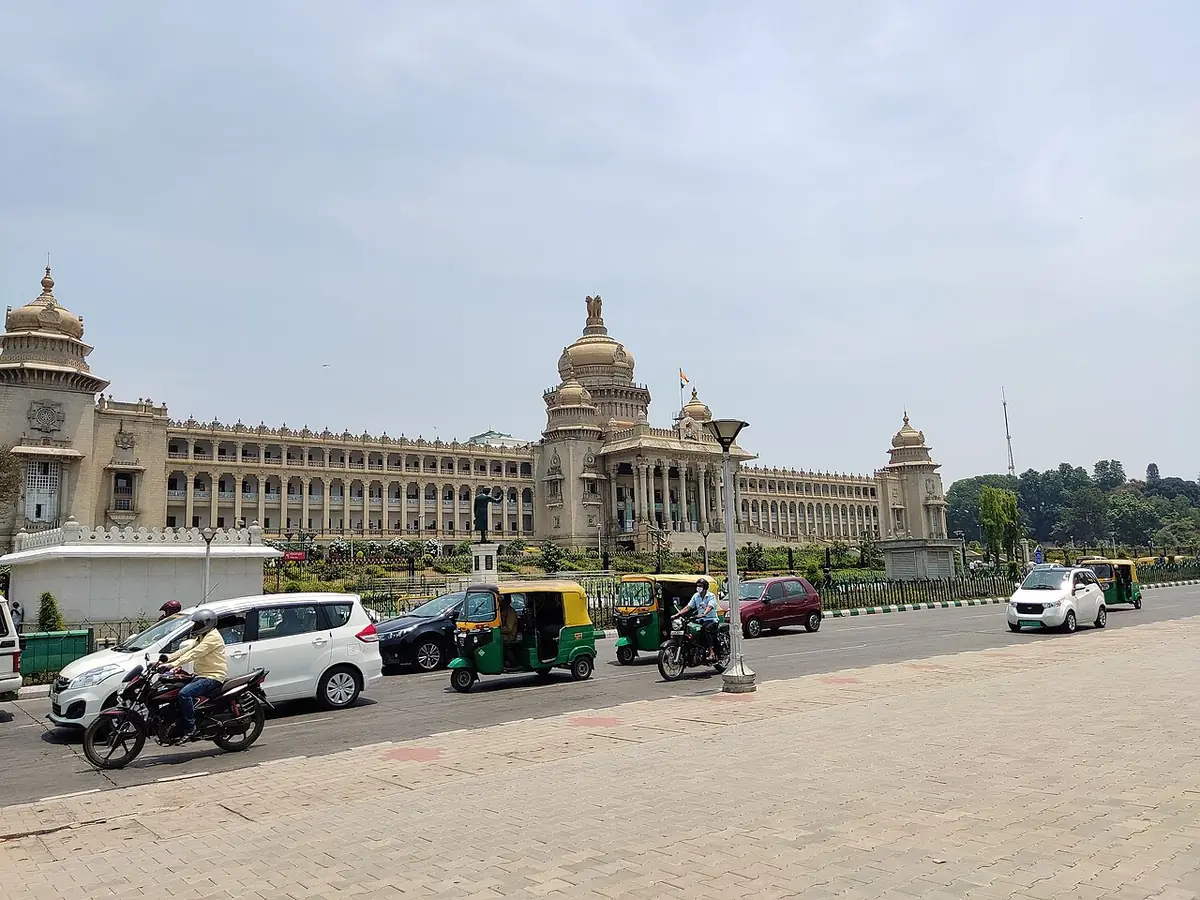
The Vidhana Soudha and its gardens in central Bengaluru — Photo: IM3847 · CC BY-SA 4.0 · Wikimedia Commons
Moving from onlooker to buyer also means measuring the cultural and practical gap with the country you come from.
Every investor or future resident comes to the property market with their own constraints and expectations. Whether you want a base for work assignments, a main home for your family or a purely financial investment, the right strategy differs radically. Central neighbourhoods do not meet the same needs as fast-developing outlying areas. Analysing your own situation will spare you mistakes over location and budget.
Yield-focused investor
Your top priority is being right next to the major technology and business hubs such as Electronic City or the Outer Ring Road. You favour one- or two-bedroom apartments in secure developments that are easy to let to young professionals. Gross yield matters more than floor area or the architectural character of the building. You need to keep void periods to a minimum by betting on modern, practical amenities.
Permanent resident with a family
You gravitate towards quiet, established residential neighbourhoods with international schools and well-regarded healthcare. Larger homes, with two to four bedrooms, along with green spaces and safe play areas, drive your choices. The quality of the immediate surroundings and smooth road links for your daily journeys matter more than pure financial return. You are buying a lasting place to live.
Remote or returning buyer
You need complete transparency on title deeds and rigorous legal support to secure your transaction from abroad. You naturally lean towards new-build projects from top-tier developers known for their reliability. Delegated building management and an easy resale down the line are non-negotiable criteria for you. Legal certainty comes before every other consideration.
What changes fundamentally when you buy an apartment in Bangalore from abroad
Once those reference points are in place, choosing the right area becomes the decisive step in your project.
The approach to property ownership in India differs profoundly from what many buyers are used to back home. Legal codes, building practices and the day-to-day running of property all follow their own administrative logic. Things that may seem obvious elsewhere, such as a single official handling the whole conveyance or standardised property surveys, have local equivalents here that you must master to avoid disappointment. Anticipating these cultural and operational differences is the key to a smooth purchase.
From abroad
A single conveyancing professional drafts and secures the entire transaction.
Bangalore
Title checks require an independent, in-depth legal audit going back several decades.
You need to instruct a specialist lawyer to trace the history of the deeds and make sure there are no earlier land disputes.
From abroad
Service charges cover basic upkeep and a statutory repairs fund.
Bangalore
Monthly charges include maintaining extensive shared facilities and 24-hour security.
The running budget takes a bigger share of the total cost of owning the property over the years.
From abroad
The market runs on exclusive mandates and tightly regulated agencies.
Bangalore
The sector involves many intermediaries whose practices can be informal and decentralised.
It is best to rely only on recognised institutional networks or accredited property consultants.
From abroad
Sales follow standardised procedures lasting around three months.
Bangalore
Negotiations and final payments can follow a looser, staggered timetable.
Flexibility and patience are essential to see the paperwork through without rushing.
How to find your way among Bangalore's residential neighbourhoods
This map of the areas lays the groundwork for your financial thinking and for assessing the budget you will need.
Bangalore's urban geography is a patchwork of neighbourhoods with very distinct identities. Between leafy historic areas, ultra-modern tech hubs and expanding residential suburbs, each district strikes its own balance between accessibility, quality of life and growth potential. Your choice will depend directly on how much daily commuting you can tolerate and whether you are after urban buzz or peace and quiet.
Indiranagar and Koramangala
A cosmopolitan, trendy and very lively atmosphere, set to the rhythm of cafés, restaurants and coworking spaces.
Suits
Buyers looking for a dynamic urban lifestyle and strong rental demand from young professionals.
Trade-off
Prices per square metre among the highest in the city, and heavy traffic at rush hour.
Whitefield and Electronic City
Work-oriented surroundings, defined by large technology parks and integrated residential complexes.
Suits
Investors seeking a high rental yield from tech employees, and families looking for new builds.
Trade-off
A long way from the historic centre and heavily dependent on the main roads.
Jayanagar and Banashankari
A traditional, well-planned and tree-lined setting, much loved by local families who value tranquillity.
Suits
Those seeking residential stability, solid schools and a network of local shops.
Trade-off
Mostly older housing stock, with recent properties coming onto the market less often.
What are the budget realities and price ranges in Bangalore?
Beyond the purely financial side, the legal nature of the property you are buying deserves the very closest attention.
Bangalore's property market shows wide price variation depending on location, the developer's reputation and the quality of the amenities on offer. Rather than relying on generic estimates, it is worth analysing the price ranges actually seen in each micro-market. Additional costs, including local taxes and registration fees, should also be built into your overall financing plan from the outset to avoid nasty surprises.
BangaloreFor saleApartmentestimate
Median price / m²₹90,250Half the apartments sell below this
Median price₹10.5mthe average is 14% higher — a few very large properties pull it up
Most common2 bedrooms40 % of listings
Average size110 m²
By number of bedrooms
Bedrooms
Share of market
Avg price
Price / m²
Avg size
1
20 %
₹6.16m
₹102,600 +8 %
60 m²
2most common
40 %
₹9.5m
₹95,000
100 m²
3
30 %
₹12.6m
₹90,250 −5 %
140 m²
4
10 %
₹16.6m
₹87,400best value / m²
190 m²
Each row is an average, compared against the area average of ₹95,000 / m². These are indicative estimates of a typical local market, not a measured sample of live listings. Check current listings before relying on them.
What exactly are the ownership rights you can hold?
Once these legal safeguards are confirmed, the transaction itself follows a precise sequence of stages.
Full ownership and clear title are central questions for any foreign or non-resident investor. The legal subtleties governing land in India mean you have to distinguish clearly between owning the building and owning the land beneath it. Understanding these legal mechanisms secures your investment for the long term and makes resale or passing the property on much simpler.
Shared ownership with a share of the land (UDS)
When you buy an apartment in a development, you become the owner of your home along with an undivided share of the land, known as the Undivided Share (UDS). That proportion is calculated from the floor area of your apartment relative to the total area of the complex.
What it changesThis structure secures your rights over the underlying land value and protects your investment if the development is later redeveloped or renewed.
Standard checks and clear title
A property's legal validity rests on a complete history of title deeds covering at least thirty years. Encumbrance certificates and planning approvals issued by the relevant authorities are the cornerstones of any secure transaction.
What it changesHaving an independent legal adviser audit these documents is the only real guarantee against ownership rights being challenged later.
The basic rule to understand before you put down a deposit
With these stages behind you, the practical timetable of the transaction follows a well-established sequence.
Making a financial commitment in Indian property follows strict procedural rigour that leaves no room for guesswork. Paying even a small deposit before the title has been fully cleared by a lawyer and financing has been agreed in principle exposes the buyer to deadlocks that may be impossible to undo. Each stage of the contract acts as a safeguard to protect your money and confirm that the property is compliant.
Finding a property that matches your criteria and verbally negotiating the net price with the seller.
Have an independent lawyer carry out a full legal audit of the title deeds to rule out any risk of a land dispute.
Sign a preliminary memorandum of understanding setting out the conditions precedent and the staggered payment schedule.
Pay the booking deposit into escrow on the terms agreed and approved by each party's legal advisers.
Register the final sale deed officially with the relevant state authorities.
The handover of the keys and the actual transfer of the registered property into your name.
How a property transaction actually unfolds, step by step
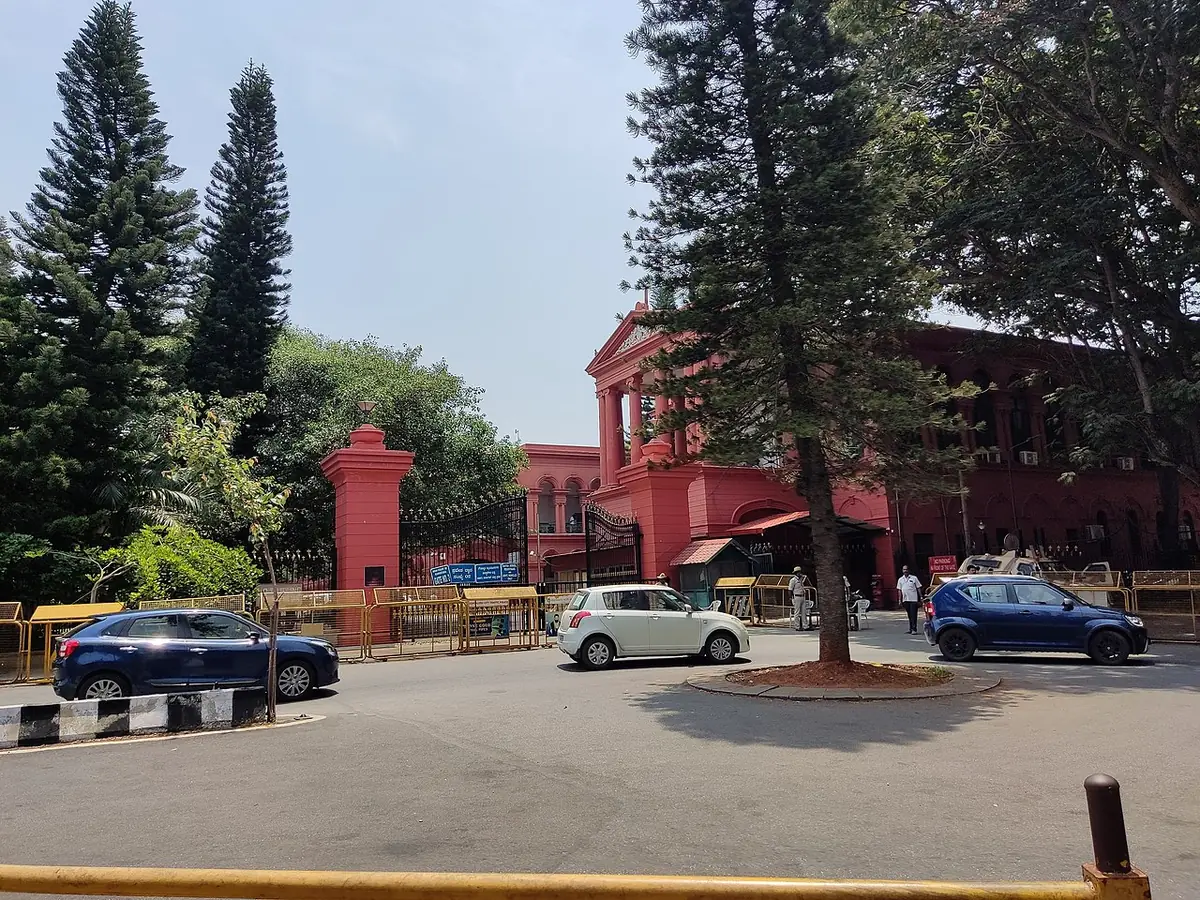
The red High Court building among the trees of central Bengaluru — Photo: Quantumtunneling · CC BY-SA 4.0 · Wikimedia Commons
Completing a property purchase in this Indian city requires coordinating several specialist parties. From the first search to the final registration of the title deed, each one plays a specific role in keeping the process smooth and lawful. Knowing this sequence lets you steer your project with confidence and see how much each party is involved.
The buyerSetting the budget and shortlisting areasYou set your search criteria based on what you can genuinely afford and on your lifestyle or investment goals.
The property consultantTargeted viewings and shortlisting propertiesThey show you properties that match your expectations and negotiate the initial terms of the offer with the seller.
The specialist lawyerLegal audit and title verificationThey go through the property's history, the authorities' approvals and check carefully that there are no charges or pending disputes.
Both partiesSigning the memorandum of understanding and paying the depositA framework agreement is drawn up, setting the conditions precedent, the payment schedule and the amount of the booking deposit.
The registration authorityPaying taxes and registering the deedThe balance of the price is paid, stamp duty and other applicable taxes are settled, and the official deed is entered in the land register.
Apartment or villa in Bangalore: weighing security, upkeep and living space
Once you have settled on the type of property, it is time to look closely at the budget needed to put down lasting roots in India's Silicon Valley.
In Bangalore, the housing question often comes down to a choice between the security of a gated community and the independence of a standalone villa. Outlying areas such as Electronic City, Whitefield and Sarjapur Road offer a wide range of high-rise developments with built-in amenities such as swimming pools, gyms, backup generators and reinforced 24-hour security. These shared facilities are especially popular with expatriate managers and young professionals working in the nearby tech hubs, because they make daily life far simpler and guarantee a predictable living environment amid the city's ups and downs.
By contrast, buying a villa or an independent house in more established areas such as Indiranagar, Jayanagar or Sadashivanagar reflects a very different approach to building wealth. Here the owner keeps full control of the land, without depending on the decisions of a residents' association that can be fussy or struggle with unpaid charges. That independence, however, has a direct and hidden cost: managing the water supply, maintaining the roof, perimeter security and structural repairs all fall entirely on the owner. In a city where municipal infrastructure is regularly under strain, this operational burden should never be underestimated when working out the overall return.
Financially, an apartment in a development usually has a lower entry price per square metre, while also offering better liquidity on resale, supported by steady rental demand from tech sector employees. Villas, which are scarcer and firmly tied to central land, often show valuations that are decoupled from ordinary economic cycles, driven by the dwindling supply of available plots. Their time to sell can, however, be considerably longer when the local property market turns.
The final choice therefore depends on your tolerance for operational risk and on your way of life. If you travel often or prefer the simplicity of shared services, a development is the obvious practical choice. If you want architectural permanence, no monthly fees and complete freedom to alter your home without anyone's prior consent, the independent house remains the benchmark asset in Bangalore.
What overall budget do you need to settle and live comfortably in Bangalore?
Beyond the raw figures on paper, it is the test of daily life that will show whether you chose the right location.
Buying a property in Bangalore is not just about the headline price quoted by the developer or seller. You must factor in all the legal, tax and operational costs that come with any transaction in the state of Karnataka. Looking at the full cost structure ensures there are no financial surprises when the sale deed is finalised, and helps you anticipate the recurring expenses of everyday life in the city.
Purchase costs and local taxes in Bangalore
Cost item
Indicative rate or amount
Impact on the total budget
Stamp duty
5.0% to 5.6% of the market value
Compulsory tax due when the sale deed is registered with the Karnataka authorities.
Registration fee
1.0% of the property value
Unavoidable administrative fee to make the transfer of ownership official at the sub-registrar's office.
Estate agent's commission
1.0% to 2.0% of the sale price
Standard commission paid to the local estate agent if one assists with the purchase.
Building reserve fund (corpus fund)
INR 50,000 to 200,000 depending on the standard
Initial contribution paid to the residents' association for future major works and upkeep of the common areas.
Stamp duty rates may be adjusted from time to time by the Karnataka state government depending on the amount or the buyer's profile.
Estimated monthly running costs for a household
Cost category
Monthly range (INR)
Practical comment
Maintenance charges
INR 3,000 to 12,000
Varies with the size of the property and the range of services offered (clubhouse, security, green spaces).
Electricity and air conditioning
INR 2,500 to 8,000
Usage depends on how much you run fans and air conditioners, especially during the hot season.
Water supply (tankers during shortages)
INR 1,000 to 4,000
A variable cost depending on connection to the municipal BWSSB network and occasional use of water tankers.
Property tax (BBMP)
INR 5,000 to 25,000 a year
Annual payment to Bangalore's civic corporation (BBMP), calculated by zone and floor area.
These indicative amounts reflect costs seen for a standard two- to three-bedroom apartment in a mid- to upper-range residential neighbourhood.
Health care, schools and transport: what does an ordinary Tuesday in Bangalore look like?
Even if the practical side of daily life seems under control, many crucial details escape the surface-level viewings arranged by sellers.
To gauge whether a property investment in Bangalore is viable, nothing beats walking through a typical weekday hour by hour. Between the traffic peaks on the Outer Ring Road, access to international or local schools and how close you are to primary healthcare, each hour reveals particular logistical constraints worth anticipating before you sign a sale agreement.
07:30 - 08:30Leaving home and the morning school runSchool buses or transport vehicles pick the children up. How smoothly traffic flows depends heavily on the distance between your home, the main roads and the international schools.
08:30 - 09:30Commuting to the tech parksPeak congestion towards technology hubs such as Manyata Tech Park, Electronic City or Bagmane Tech Park. Choose routes served by Namma Metro to avoid road delays.
11:00 - 12:30Household errands and shoppingThe ideal time for local shopping at neighbourhood markets or supermarkets (Nature Basket, Spar, More) at the foot of the developments or in local shopping centres.
15:00 - 16:30Health services and medical emergenciesCheck how close you are to leading hospitals (Manipal Hospital, Apollo, Fortis). Journey time by ambulance or taxi in a medical emergency is an absolute criterion when buying.
18:30 - 20:00Heading home and evening activitiesA second peak of heavy traffic in the evening rush hour. Residents then make use of the development's facilities (gym, walks in the green spaces) to unwind.
What developer brochures and property listings will never tell you in Bangalore
A few months after moving in, these technical blind spots often turn into bitter regret for buyers who were not prepared.
Bangalore's property market is extremely dynamic, but it comes with its share of optimistic sales practices. Marketing brochures praise the calm of supposedly green developments and the speed of road access, while deliberately leaving out structural and regulatory realities that weigh heavily on the long-term value of what you buy. Here are the fundamentals that sellers routinely fail to mention.
The complex management of water supply and borewells
Many outlying areas are not yet reliably connected to the public BWSSB network. Developments rely on deep borewells whose water table keeps falling, forcing them to buy tanker deliveries in the dry season, which drives up unexpected charges.
Ecological buffer zones (Rajakaluve / stormwater drains)
The National Green Tribunal (NGT) imposes strict building restrictions near stormwater drains. A property too close to one of these channels may be hard to resell, or even face administrative demolition if the required setbacks are not respected.
Real, working connection to the underground drainage network (UGD)
Some new developments outside the BBMP's historic limits still run on temporary septic tanks or private sewage treatment plants (STPs), whose poor maintenance causes bad smells and very high service charges.
Power supply and dependence on the backup generator
Although the Bescom grid has improved, power cuts still happen during storms or heatwaves. Make sure to check whether the development's generator can run all your appliances, including the air conditioners.
The property traps and disappointments you only discover after six months in Bangalore
Given these demanding requirements and specific risks, it is fair to ask whether buying property in Bangalore suits everyone.
Looked likeA great opportunity in an up-and-coming neighbourhood with the promise of quick capital growth.
Turned outAn isolated area hemmed in by endless building sites, with no usable pavements and no shops within walking distance.
Would have caught itVisit the neighbourhood at different times, including at weekends and at night, to see what the surroundings and walkability are really like.
Looked likeLow service charges advertised by the developer to attract the first buyers.
Turned outMaintenance costs deliberately understated at first, followed by a sudden jump in contributions as soon as the residents' association was formally set up.
Would have caught itAsk for detailed three-year budget forecasts and review the maintenance contracts for the lifts, pool and security signed by the developer.
Looked likeA daily commute estimated at twenty minutes to a workplace in a nearby tech park.
Turned outA daily ordeal of more than an hour and a half each way because of road bottlenecks that mapping apps do not flag.
Would have caught itTry the real journey at the exact rush hours (8am and 6pm) before signing any purchase agreement or paying a deposit.
Looked likeA perfectly clean title presented by a persuasive estate agent.
Turned outLegal uncertainty over the land's history (an agricultural conversion never fully cleared, or a family dispute over an ancestral deed).
Would have caught itHave the entire chain of title (Khata, 30-year encumbrance certificate) audited by an independent lawyer specialising in Karnataka land law.
Buyer profiles: who should firmly avoid buying property in Bangalore?
Now it is time to bring everything together so you can make your decision with full knowledge of the facts.
Buying property is not always the best option, especially in a market changing as fast as Bangalore's. Some professional or personal profiles take on disproportionate financial risk by committing to bricks and mortar too early. A clear-eyed look at your own situation helps you avoid getting your wealth locked up in a way that harms you.
The professional on a short assignment or with uncertain international mobility
→Put off any property purchase and choose a flexible furnished rental.
Transfer costs (stamp duty and registration adding up to more than 6% of the price), combined with how long it takes to resell a property in India, make the investment unprofitable if you stay less than five to seven years.
The investor looking for a high, immediate net rental yield
→Turn to other financial asset classes or other regional property markets.
In Bangalore, gross rental yields on residential apartments have traditionally been between 2.5% and 4% a year. Once property tax, service charges and void periods are deducted, the net return often turns out to be modest.
The buyer with too small a deposit or relying on a shaky loan
→Build up liquid savings before taking on a loan with an Indian bank.
Home loan interest rates and banks' strict requirements on the debt-to-income ratio (FOIR) call for a solid financial footing to cope with any rise in monthly repayments.
The decision in the round: are you truly ready to buy in Bangalore?
At the end of this analysis, buying an apartment or a villa in Bangalore should no longer come down to falling for a look or a sales pitch, but to how solid your personal equation is. If you expect to live in Karnataka's capital for more than seven years, your income is earned in rupees and you have checked for yourself what the commutes and water access are really like, the market offers solid prospects for building wealth. The city's economic fundamentals are still underpinned by a durable tech job market and structurally rising population demand.
However, if any doubt remains about the stability of your job, the clarity of the land titles (Khata) or your tolerance for the logistical hazards of local roads, the wise move is to rent. Renting in Bangalore gives you complete freedom to try out different neighbourhoods, whether the buzz of Indiranagar, the residential calm of Jayanagar or the tech energy of Whitefield, without risking your capital being tied up in an asset that is hard to sell quickly.
Take the time to instruct an independent lawyer to audit every legal document, view properties in the rain as well as the sunshine to judge how well water drains away, and work out your real charges rather than relying on sales promises. Your future peace of mind depends entirely on this methodical rigour before you sign the final deed.
Related questions
What additional costs should I budget for when buying an apartment in Bangalore?
Allow roughly 5% to 5.6% for stamp duty, 1% for registration fees, and 1% to 2% in commission if you go through an estate agent. On top of that come the building's initial reserve fund (the corpus fund) and annual property tax.
Can a foreign national or a non-resident buy property in Bangalore?
Non-resident Indians (NRIs) and Persons of Indian Origin (PIOs) can buy residential or commercial property in India without major restrictions, with the exception of agricultural land. Foreign nationals living in India, meanwhile, must meet specific residency conditions set by the Reserve Bank of India (RBI).
What is a Khata and why is it essential in a Bangalore transaction?
The Khata is a key administrative document issued by the BBMP that identifies the legal owner of a property and forms the basis for calculating property tax. There are several types (A Khata and B Khata). A property with an A Khata is legally compliant, which also makes it much easier to obtain a bank loan.
What is the average rental yield on a residential apartment in Bangalore?
Gross rental yield generally sits between 2.5% and 4% a year, depending on the neighbourhood and the standard of the development. Areas close to the big technology parks see strong rental demand, but high purchase prices hold down the overall net return.
How does water supply work in Bangalore residential developments?
The municipal network (BWSSB) serves much of the city, but many developments on the outskirts have to top up their supply with deep borewells and, during summer droughts, with regular purchases from water tankers.
Which neighbourhoods are most sought after for property investment in Bangalore?
Established areas such as Indiranagar, Jayanagar, Koramangala and Sadashivanagar draw buyers with their central location and leafy character. For people working in tech, Whitefield, Sarjapur Road, Electronic City and the Outer Ring Road are the main residential and rental hubs.
What precautions should I take regarding ecological buffer zones (Rajakaluve)?
The National Green Tribunal prohibits any construction immediately next to stormwater drains. It is vital to check with a legal expert that the land or the development does not breach these setback limits, or you risk administrative trouble.
How long does it usually take to resell a property in Bangalore?
Resale time varies widely with the quality of the location, the developer's reputation and market conditions. For a standard property, expect somewhere between three and nine months to close a sale at a good price.
Do Indian banks readily lend to local or expatriate buyers?
The main Indian banks (SBI, HDFC, ICICI) offer competitive home loans covering up to 75% or 80% of the property's value, provided you can show a stable income and the property passes a full legal due diligence check.
Why is it advisable to hire a specialist lawyer before signing a purchase agreement?
A lawyer specialising in Karnataka property law verifies that the chain of title over the last 30 years is genuine, that no disputes are pending, that BDA or BBMP approvals are valid and that the Khata is in order, so your investment is fully protected.