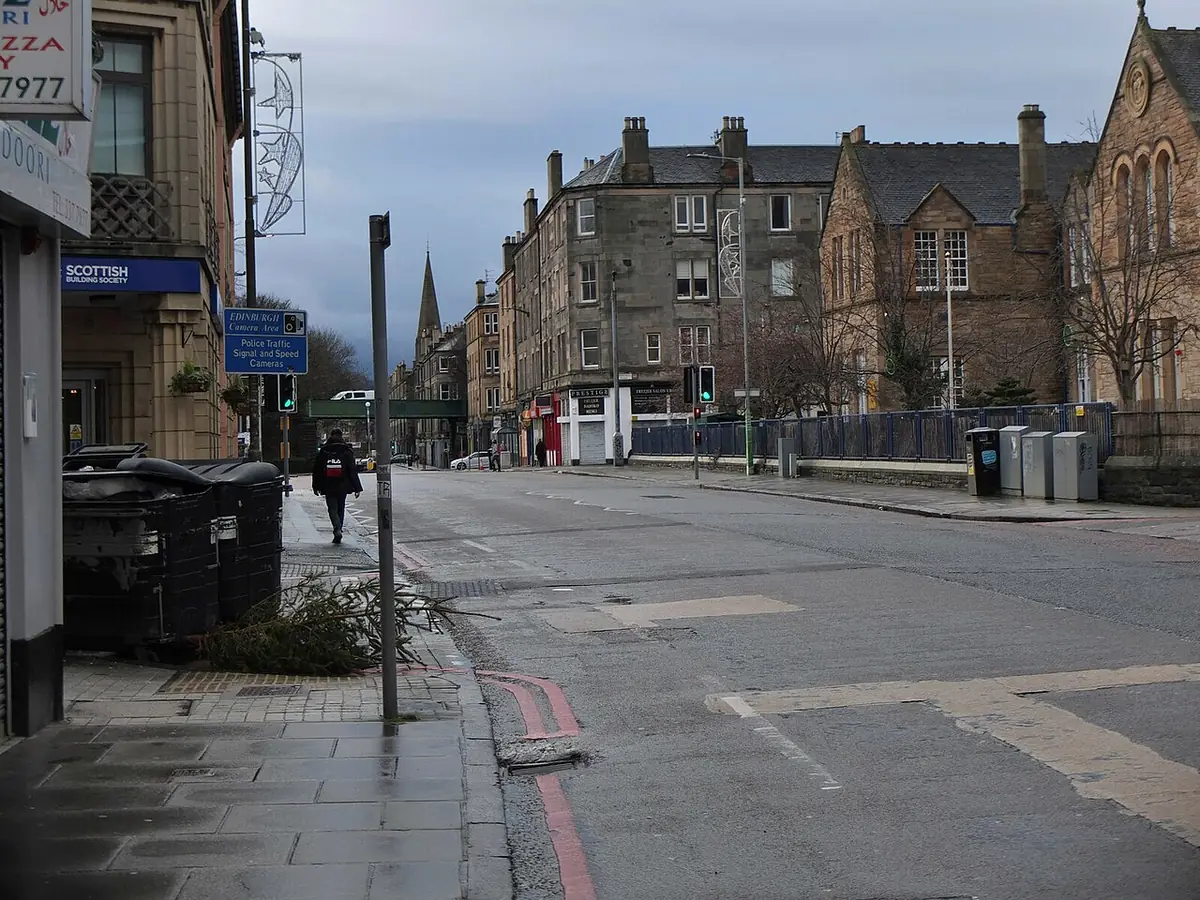
Putting a credible figure on an Edinburgh apartment means reading a market shaped by an exceptional architectural heritage and by legal rules that exist nowhere else in the United Kingdom. This guide walks you through what actually moves the estimate, from the comparables a surveyor leans on to the condition, floor and outlook adjustments that separate two flats on the same stair.
Get the app
What nobody tells you.
Real prices, hidden costs and the traps to check before you commit.
What really sets the value of an Edinburgh apartment
Scroll
What really sets the value of an Edinburgh apartment
Putting a credible figure on an Edinburgh apartment means reading a market shaped by an exceptional architectural heritage and by legal rules that exist nowhere else in the United Kingdom. This guide walks you through what actually moves the estimate, from the comparables a surveyor leans on to the condition, floor and outlook adjustments that separate two flats on the same stair.
Written by the ting.ad editorial team ·
Edinburgh in Street View: drag to look around.
Before you trust any number, it is worth seeing which of these trade-offs the market prices in and which it quietly discounts.
Valuing a flat in Edinburgh is not a matter of multiplying floor area by a district average. It is an exercise in weighing an unusual architectural inheritance against the technical liabilities that come attached to it. Owners discover quickly that the real value of a property sits less in its habitable square metres than in its ability to get through the next decade without generating unbudgeted repair bills. Understanding that from the outset is what separates an estimate that survives contact with a surveyor from one that does not.
The timeless appeal of Edinburgh stonevsThermal and acoustic performance
Victorian and Georgian frontages carry a character premium you will not find in newer stock, and buyers pay for it. Against that, those thick old walls demand continuous spending to hold an energy rating anywhere near current standards, and a weak EPC pulls the figure back down.
A central position in the historic districtsvsThe complexity of shared repair liabilities
Living in the heart of the Scottish capital puts every amenity within walking distance, and walkability is one of the most reliable price supports in the city. Collective management of roofs and common parts between owners, however, is slow and awkward, and any pending scheme sits on the valuation as a deduction.
A stable rental and resale marketvsThe rigidity of local regulation
Sustained demand protects your figure against sharp swings in the cycle, which is why Edinburgh comparables age more slowly than in volatile markets. The Scottish legal framework, on the other hand, imposes strict rules that limit short-term flexibility and narrow the pool of buyers for certain uses.
Which kind of valuation does your situation actually call for?
Old stone houses on Calton Hill, close to the centre — Photo: Jennifer Petrie · CC BY-SA 2.0 · Wikimedia Commons
Whichever route you take, the figure only means something once you understand how the Scottish rules differ from the ones you are used to.
Every district in Edinburgh shapes daily life in its own way, and each one also shapes the evidence available to whoever is putting a number on your flat. Where comparable sales are plentiful, an automated estimate can get reasonably close. Where the stock is unusual, listed or thinly traded, only someone who has been inside the building can produce a figure worth defending. Start by working out which of these three situations you are in, because it determines how much weight any single number deserves.
Central heritage stock, where comparables run thin
A flat in the old town or around New Town sits in a district defined by festivals, heavy footfall and awkward parking, and by strict controls attached to its listed status. Those same features make automated estimates unreliable: no two Georgian floors are alike, ceiling heights and outlook vary wildly within one stair, and the sample of recent sales in any given street is small. Here the surveyor's valuation in the Home Report, backed by an agent who has actually sold on that terrace, is the only figure worth building a strategy on.
The residential districts, where condition decides
Districts such as Marchmont and Stockbridge offer generous parks and tree-lined streets, and they trade often enough that the comparable evidence is genuinely good. Flats here tend to be larger in volume and the village atmosphere inside the city supports demand year round. Because the district premium is well established, the variable that moves your number is condition: recent rewiring, a renewed common roof, restored sash windows and a decent EPC can separate two otherwise identical flats by a full price band.
Rental-led stock, where yield anchors the estimate
Property close to the universities or the main transport routes turns over steadily, which gives you constant, reassuring liquidity and a dense set of recent sales to compare against. The stock is often more functional and of more recent construction, which simplifies technical management and narrows the range of plausible values. For this profile the sanity check is straightforward: cross-read the capital figure against achievable rent, because a valuation that no realistic yield supports will not survive a buyer's own arithmetic.
Valuing here when you have come from abroad: what genuinely changes
Once those reference points are reset, the next job is to map the districts, because in Edinburgh the address moves the number more than the floor area does.
Arriving in Edinburgh from another property culture means unlearning a good deal about who values a property, on what evidence, and at what point in the process. The Scottish system rests on legal principles and local practices that differ sharply from those in most other countries, including the rest of the United Kingdom. Anticipating those divergences will spare you serious misreadings both when you sign and for as long as you hold the property.
From abroad
A single notary or lawyer drafts and secures the whole transaction centrally, and value is discussed informally between the parties.
Edinburgh
Solicitors handle offers and negotiations through a highly codified system of formal bids, often against a closing date.
You need a local solicitor engaged from the very start, because in a closing-date market the figure you name has to be right first time; there is no second round in which to correct it.
From abroad
Common charges are voted at a general meeting and administered by a professional managing agent.
Edinburgh
The upkeep of common parts often rests on informal arrangements between owners, or on a light-touch factor.
There may be no reserve fund and no paper trail, so a valuation has to be adjusted by hand for repairs that are visibly due but nowhere recorded.
From abroad
The energy assessment is a standardised, compulsory indicator and nothing more.
Edinburgh
The Home Report bundles the energy assessment with a chartered surveyor's physical inspection and a formal valuation figure.
You get immediate transparency on the structural state of the property and an independent number to argue from, though reading across from the noted defects to the actual repair cost still takes technical advice.
From abroad
The kitchen is usually treated as a separate, enclosed room, and floor area is counted room by room.
Edinburgh
Open-plan living space combining kitchen and sitting room is close to the norm in renovated older stock.
Comparables are read on volume, light and outlook rather than on a room count, so two flats with identical stated areas can be valued well apart.
How do Edinburgh's districts pull an estimate up or down?
Duddingston and its loch, a green corner of the city — Photo: Bill Boaden · CC BY-SA 2.0 · Wikimedia Commons
District knowledge only becomes useful once you set it against the price bands the market is actually trading at.
Edinburgh's geography is built on striking contrasts, from the mineral mass of the medieval old town to the geometric elegance of the Georgian districts. Each area carries its own identity, its own rhythm and its own effect on a valuation. Reading these micro-markets tells you where a figure should sit above the city average, where it should sit below, and, just as importantly, how wide the plausible range is in each.
New Town
An ordered, well-heeled calm, set around handsome green squares and wide, bright avenues.
Suits
Owners of classically proportioned, large-volume flats: the architectural premium here is durable and well evidenced in the comparables.
Trade-off
Some of the highest prices per square metre in the city, paired with strict listing constraints that cap what any refurbishment can add to the value.
Old Town
Constant activity among cobbled closes heavy with history and sudden, arresting views.
Suits
Properties whose value rests on outlook, character and rental demand from visitors and students rather than on floor area.
Trade-off
Heavy pedestrian traffic, extremely limited parking and common parts that are sometimes in poor repair, all of which widen the valuation range considerably.
Stockbridge
The warm feel of an independent village, with its Sunday market and small local shops.
Suits
Family and couple-sized flats, where scarcity supports the figure and correctly presented properties sell close to the surveyor's number.
Trade-off
A small and highly sought-after stock, which means few recent comparables and estimates that can swing on a single unusual sale.
Leith
A maritime energy in mid-transformation, driven by a creative food scene and converted warehouses.
Suits
Owners looking at growth in value rather than settled prestige, where recent sales may already be behind the market.
Trade-off
An unfinished regeneration that varies street by street, so a district-level average is close to useless and the figure has to be built block by block.
What benchmark figures should you check an Edinburgh estimate against?
The numbers give you a range. What narrows it is the legal shape of what you actually own.
The Edinburgh market is defined by a structural gap between available supply and demand, which keeps values high. Prices vary considerably with the precise location, the general condition of the property and the energy performance of the building. Having a clear view of the ranges below gives you the first sanity check on any estimate: a figure that sits well outside the band for its size and district needs a specific, documented reason before you accept it.
edinburghFor saleApartmentestimate
Median price / m²£3,705Half the apartments sell below this
Median price£258kthe average is 14% higher — a few very large properties pull it up
Most common2 bedrooms40 % of listings
Average size66 m²
By number of bedrooms
Bedrooms
Share of market
Avg price
Price / m²
Avg size
1
28 %
£180k
£4,290 +10 %
42 m²
2most common
40 %
£244k
£3,939
62 m²
3
24 %
£315k
£3,705best value / m²
85 m²
4
8 %
£412k
£3,744
110 m²
Each row is an average, compared against the area average of £3,900 / m². These are indicative estimates of a typical local market, not a measured sample of live listings. Check current listings before relying on them.
What you actually own, and why it changes the number
General Register House, in the heart of the city centre — Photo: 瑞丽江的河水 · CC BY-SA 4.0 · Wikimedia Commons
That legal rigour runs through the whole process, which is why the figure has to be settled before anyone commits.
Scottish property law has particular features that any owner must grasp before signing a single binding document, and they feed directly into value. Outright ownership here comes bundled with collective responsibilities for the fabric of older buildings that buyers from elsewhere rarely expect. Knowing precisely what your rights and obligations are protects you from unpleasant surprises over common parts and roofs, and tells you which deductions a surveyor is entitled to make.
Outright individual ownership and its shared burdens
You own your apartment exclusively and hold an undivided share of the foundations and the roof along with your neighbours. That structure obliges you to contribute financially, and jointly, to decisions about conserving the older fabric, even where you disagree with a particular scheme. A block with an unfunded roof renewal on the horizon is worth measurably less than an identical one that has just completed the work.
What it changesRead the title deeds with your solicitor to identify your exact obligations, and treat any apportioned liability you find as a line item against the valuation, not as background detail.
Long-lease and historic tenure arrangements
Rarer for conventional residential flats, some forms of holding still carry ground payments or specific management rules inherited from older Scottish land law. These mechanisms have been reformed extensively but survive on a handful of particular developments, and they narrow the buyer pool.
What it changesYour legal adviser will confirm that historic burdens have been fully discharged, which is what allows a valuer to treat the property as straightforward outright ownership rather than applying a discount for uncertainty.
The rule to understand before you act on any figure
To work through that chain without exposing yourself, it helps to see who does what, and in what order.
The Scottish process differs sharply from most others in that it becomes irrevocable the moment formal negotiations conclude. When agreement is reached through the solicitors, at the point known as concluding missives, the commitment is immediately binding in law. There is no standard cooling-off period afterwards, which means every question about value has to be answered before that point, not after it. In practice the whole valuation exercise is front-loaded into the weeks before you commit.
Reading the Home Report supplied by the seller, which sets out the technical condition of the property and the surveyor's formal valuation, then testing that figure against recent sales on comparable stairs, adjusting for floor, outlook, condition and any common repairs noted in the report.
Having your solicitor put a formal offer in the terms the profession expects, at a figure your own evidence supports rather than at whatever the guide price suggests.
Negotiating conditions and technical clauses through successive exchanges between the legal advisers, which is the last window in which the price can still move.
The exchange of missives, which settles the agreement definitively and locks the transaction in on the figure you have named.
The settlement date, when funds transfer and the keys change hands at a price that is now fixed, whatever the property turns out to need.
Who produces, checks and challenges the figure, step by step
Waterloo Place, stone façades above street-level shops — Photo: Drnoble · CC BY-SA 4.0 · Wikimedia Commons
Arriving at a defensible number in Edinburgh calls for method and for the right professionals from the earliest viewings onward. Each party plays a precise role in establishing, testing or contesting the value, from the first search through to the final transfer. Knowing the sequence lets you see whose figure you are looking at at any given moment, and how much independence sits behind it.
YouSetting the brief and gathering your own evidenceYou establish what the property is and what it is not, and you assemble what a valuer will ask for: title deeds, EPC, factoring statements, minutes of owners' meetings and receipts for recent work.
The chartered surveyorHome Report inspection and formal valuationA qualified surveyor inspects the property, records its condition and states a market value. This is the independent figure everything else is measured against.
The solicitorReading the Home Report and the title against the figureYour legal adviser examines how transparent the technical file really is, checks what burdens the title imposes, and frames the offers that follow accordingly.
The estate agentMarketing appraisal and reading the local demandAn agent sets a guide price based on what comparable stock is achieving on that street right now, which is a commercial judgement rather than an independent valuation and should be read as such.
The lenderMortgage valuation and the final reality checkThe lender commissions its own view of the value to protect its security. A down-valuation at this stage is the market telling you the earlier figure was optimistic, and it is the one number you cannot argue away.
Tenement flat or Victorian house: what each does to the valuation
Once the type of property is clear, the next step is to work out the full financial envelope that sits behind the headline figure.
The Edinburgh market presents a striking architectural duality between the tenement flats of the historic districts, such as New Town or Stockbridge, and the family houses further out toward Morningside or Marchmont. For anyone concerned with valuation rather than taste, the distinction is not aesthetic: it produces an entirely different cost structure, and therefore a different set of comparables. Apartments in Georgian or Victorian buildings often offer impressive volumes, remarkable ceiling heights and a central position that lets you do everything on foot. That proximity to the heart of the Scottish capital comes with collective management of the common parts, which can be slow and a source of friction between owners, and which a surveyor will note as a risk against the figure.
A house, even a terraced one, removes any dependence on a factor or a managing agent for renewing the roof or repairing the frontage. You are in sole charge, which guarantees immediate action when something urgent appears, but it also puts the entire cost on you alone. In Edinburgh, where the winter climate tests old stone hard, maintaining a slate roof or a full set of sash windows represents a substantial budget that should never be left out of an initial estimate. Houses generally come with a private garden, a rare and much sought-after luxury in dense urban areas and one of the clearest premiums in the local evidence, while flats more often have shared access to a square or a simple paved back court.
On resale and liquidity, two and three room apartments in the established districts see constant demand from younger professionals and investors, which keeps transaction times short and makes their valuations comparatively easy to evidence. Family houses attract a more stable but much narrower pool, mainly families looking to settle within the catchment of the city's best state schools, so a single unusual sale can distort the picture for months. Your reading of the two should therefore weigh the freedom of action a house offers against the logistical convenience and often better energy efficiency of a well-insulated flat in the centre, and note that the flat is the easier of the two to price with confidence.
What to add to the valuation before you call it a budget
Dalry Road and its sandstone tenements — Photo: Jim Barton · CC BY-SA 2.0 · Wikimedia Commons
Beyond the arithmetic, the everyday texture of a street is something a valuer prices in whether or not it appears anywhere on the report.
Acquiring property in Edinburgh does not stop at the figure written on the deed. The Scottish tax system, and in particular the Land and Buildings Transaction Tax (LBTT), applies a strict progression that bears directly on your deposit and on your overall financing plan. On top of that, running charges, council tax and the cost of maintaining common parts, governed by the tenement management rules, need careful anticipation if the first year of ownership is not to spring a budget surprise. Treat the valuation as the start of the sum, never the whole of it.
Estimated cost of acquiring and holding an apartment in Edinburgh
Cost item
Estimated range (GBP)
Frequency or basis
Average purchase price (2 to 3 rooms)
250,000 GBP - 400,000 GBP
One-off payment at purchase
LBTT (Scottish property transaction tax)
2,100 GBP - 18,000 GBP
One-off, on a progressive scale
Legal and solicitor fees
1,500 GBP - 3,000 GBP
One-off, tied to the transaction
Council Tax (annual local property tax)
1,400 GBP - 3,500 GBP
Annual, according to band (Band C to G)
Common repairs fund / tenement bills
500 GBP - 2,000 GBP
Variable annual contribution
These ranges are based on averages for the Edinburgh market and depend heavily on the exact location and on the energy performance of the property being valued.
What an ordinary Tuesday looks like, and why a valuer pays attention to it
If daily life looks idyllic, a close inspection of any given property usually reveals subtleties the sales particulars deliberately leave out.
Living in Edinburgh means fitting into a human-scale city where walking and public transport set the rhythm of the day. From the morning school run to the evening shop at independent traders, each district has its own tempo, and each of those small conveniences is something the market pays for. Walk the day below and you are effectively walking the checklist a surveyor uses: distance to a good school, distance to a stop, distance to green space, and how the street behaves in the rain as well as when a thin Scottish sun lights up the dark stone.
07:45Your apartment in MarchmontWaking in a quiet residential district of wide tree-lined streets and the sandstone tenements typical of the Victorian period, the kind of stock with the deepest comparable evidence in the city.
08:30The local primary school (Bruntsfield Primary)A safe walk through the side streets to drop the children off, using the pedestrian priority measures the council has put in. Catchment is one of the few factors that shows up cleanly in the price data.
09:00The tram line or a Lothian Buses serviceThe trip to the business district or the historic centre on a dense, regular public transport network. Proximity to a stop is a small but persistent premium in the comparables.
12:30Lunch break in the MeadowsTime outdoors in one of the city's green lungs, much valued by residents. Open outlook onto a park is one of the largest single adjustments a valuer will make between two otherwise identical flats.
17:30Local shops (butcher and delicatessen)Buying local, seasonal produce from independent shops in the neighbourhood. A working parade of shops within a few minutes' walk supports demand across the whole street.
19:00Home againA quiet evening in the flat, with the thermal comfort of a renovated property and the acoustic calm of thick Scottish stone walls. Both are worth money, and only one of them shows on the EPC.
What the listing photographs of Edinburgh flats never tell you
These technical traps are exactly why some owners are still revising their figure bitterly a few months after getting the keys.
Wide-angle photography and glowing descriptions routinely conceal technical and structural constraints inherent to the city's building stock. Understanding these invisible factors is essential to producing an objective valuation rather than a hopeful one. Between the complexities of shared ownership and the specifics of the local climate, here are the realities any owner should audit before accepting a figure or committing to an offer.
Collective management of older buildings (tenement management)
Scottish law obliges every owner in a block to contribute financially to structural and roof repairs, but reaching agreement with neighbours who may be absent or unwilling can be extremely difficult and can hold urgent work up for years. A valuer who spots a known scheme with no consensus behind it will price the delay in, and so should you.
Thermal performance in historic buildings
Strict conservation rules often prohibit insulating frontages externally or altering the appearance of original timber sash windows, which makes improving the EPC score hard and keeps heating bills permanently high. That is a structural discount on the value rather than a fixable defect, and it should be treated as such in any estimate.
Saturated on-street residents' parking
Owning a car in the central and intermediate districts requires an expensive residents' permit, and holding one guarantees nothing about finding a free space outside your building in the evening. Anywhere a dedicated space exists, the premium attached to it is large and immediate.
Natural moisture and ventilation in stone walls
Traditional sandstone construction needs the fabric to breathe continuously. Fitting modern double glazing without compensating ventilation frequently causes condensation and internal mould, and visible damp is one of the fastest ways to see a surveyor's figure fall.
The valuation traps owners only spot after their first Scottish winter
Given those specific demands, it is fair to ask whether every owner should be relying on a headline number at all.
Looked likeA bright, romantic top-floor apartment with exposed beams and period charm, valued in line with the street
Turned outA furnace in summer and a thermal sieve in winter, with gas bills high enough that the next buyer discounted the flat well below the figure the previous survey had supported.
Would have caught itAlways asking for the detailed EPC and, on top-floor or single-aspect flats, commissioning an independent thermal assessment before you accept any valuation.
Looked likeAn ultra-central location letting you make the most of the city's cultural life, priced at a full central premium
Turned outPermanent night-time noise, made worse during the international festival season and by the number of short-term holiday lets in the same stair, which narrowed the resale pool sharply.
Would have caught itViewing the property at different times of day and night, and checking the local register for how many flats in the building are let to visitors, before you treat the central premium as fully earned.
Looked likeA peaceful, cooperative block with common charges advertised as very modest
Turned outNo reserve fund at all against a main roof renewal that became urgent in the first wet autumn, an apportioned bill that wiped out the margin between the purchase price and the valuation.
Would have caught itReading the minutes of the last three years of owners' meetings to identify outstanding major works and any arrears, then deducting your share from the figure before you compare it with anything.
Looked likeA charming shared garden at the foot of the building, treated in the appraisal as a genuine amenity
Turned outA neglected green space, poorly maintained, with access restricted by restrictive title conditions or long-running disputes between neighbours, so it added nothing to the resale figure.
Would have caught itChecking the title conditions governing exactly who may use the shared outdoor space and inspecting how well it is actually kept before you let it lift your estimate.
Who should not rely on a quick figure for an Edinburgh flat
It is time now to pull these parameters together and decide what your figure is really worth.
Owning property in Edinburgh is a heavy financial and legal commitment that does not suit every situation, and the headline valuation is a poor guide on its own. Because of the relative rigidity of the resale market, the specific taxation on transactions and the upkeep demands of older stock, certain profiles are all but guaranteed to be disappointed by a number that looked fine on a screen. Working out whether you fall into one of these categories is what stops a premature purchase from destroying value in the short term.
The professional on a short international posting
→Flexible renting over an outright purchase
Initial transaction costs (LBTT, legal fees and the costs of selling again) require a holding period of at least five to seven years to absorb, so the figure that matters is the net one after costs, and on a two-year horizon it is always negative.
The investor with no appetite for shared-building procedures
→To put capital into financial assets or diversified property funds instead
The Scottish regime for shared blocks demands constant involvement in collective decisions and continual negotiation with neighbours over the smallest piece of maintenance, and none of that effort is reflected in the valuation.
The household with a deposit that only just covers the figure and no contingency savings
→To keep renting while building a financial buffer
Buying older stock in Scotland almost always exposes you to unforeseen roof or compliance spending within months of moving in, and a valuation is not a warranty against that.
The buyer who wants standardised modern comfort with no upkeep
→A new-build house further out rather than a Georgian apartment
The appeal of old stone and historic architecture necessarily comes with technical compromises, out-of-square rooms and a heightened sensitivity to the local climate, all of which sit behind the character premium in the figure.
So do you have a figure you can actually stand behind?
Putting a value on property in Edinburgh reaches well beyond arithmetic on floor area; it is a judgement anchored in the history, the climate and the social organisation of a singular European capital. Across this guide we have taken apart the financial reality, the architectural particularities and the legal subtleties that shape the local market. If you have measured what the shared ownership rules imply, absorbed the real cost of taxes and of maintaining old stone, and set your figure against a horizon long enough to justify it, then you have what you need to defend the number.
The Edinburgh market rewards patience, rigour and preparation. The best valuations are not lucky guesses but the product of an unforgiving reading of survey reports, owners' meeting minutes and the direction of travel in the chosen district. Accept the compromises that come with historic buildings, whether in thermal management or in the collective organisation of repairs, and you end up with both an exceptional place to live and a figure that will still look sensible in five years.
Take the time to have your position reviewed by an independent local solicitor and to have any property you are serious about inspected by a professional who knows Scottish dressed stone. Never let a pressured deadline push you into a figure your own evidence does not support, because the market always brings new opportunities to owners who are informed and methodical. Your final number should reflect the weight of what you have checked, not the urgency someone else has manufactured.
Related questions
What is LBTT and how does it affect the figure I should be working with in Edinburgh?
The Land and Buildings Transaction Tax is the progressive tax the Scottish Government levies on property purchases. The rate depends on the transaction amount and bites from the first band upward, so it has to sit in your financing plan as a fixed, unavoidable cost alongside the valuation itself, before you put in an offer.
Do I have to use a solicitor to buy or sell property in Scotland?
Yes. The Scottish legal system requires a qualified solicitor to handle every stage of the transaction, from drafting the formal offer to buy through to registering the title with the official records held by Registers of Scotland.
How are repairs handled in older shared blocks (tenements), and does that show up in the value?
Scottish law sets out the rights and duties of owners in the same block through the Tenement Management Rules. Decisions on roof or structural repairs are taken collectively and the costs are split according to apportionment keys written into each flat's title deeds, which is why an outstanding common repair reads straight through into a lower figure.
Which districts hold their value best for a family apartment in Edinburgh?
Areas such as Marchmont, Bruntsfield, Morningside and New Town are among the most sought after, thanks to the quality of the architecture, the proximity of green space such as the Meadows, and the reputation of the catchment state schools. Those three factors are the ones that keep re-appearing in the comparables.
How do I assess the energy performance of a Georgian or Victorian apartment?
Read the property's EPC (Energy Performance Certificate) carefully, bearing in mind that listed historic buildings often benefit from exemptions, or run into technical limits, on external wall insulation and on replacing original windows. A poor rating that cannot be improved is a permanent discount, not a temporary one.
Is an Edinburgh apartment easy to sell quickly if I need to?
The Edinburgh market generally shows good liquidity for correctly valued properties in the established residential districts. Timescales stretch out for unusual layouts, poorly insulated stock, or flats carrying heavy shared repairs that have not yet been voted through.
What is the Home Report and why is it compulsory when selling?
The Home Report is a complete file that Scottish law requires before a property goes on the market. It contains an energy assessment, a valuation prepared by a chartered surveyor, and a questionnaire completed by the seller on the general condition of the house or flat. That surveyor's figure is the single most useful anchor you have.
What should I budget for factoring, common charges and routine upkeep?
Charges vary a great deal depending on whether there is a lift, a concierge service or shared gardens. For a standard two-bedroom apartment, set aside between 500 and 2,000 pounds sterling a year for routine maintenance and for building up a reserve fund.
How does residents' parking work in central Edinburgh, and does it move the price?
On-street parking is tightly controlled and chargeable across most central and intermediate zones. Residents have to buy an annual permit from the council, priced according to the vehicle's CO2 emissions, with no guarantee of finding a free space outside the building. A dedicated space, where one exists, carries a clear premium.
What should I look for when viewing an older apartment before trusting a figure?
Pay close attention to damp marks on stone walls, the state of the building's rainwater downpipes, the date the common roof was last renewed, and the minutes of recent owners' meetings, which will reveal work that has been agreed but not yet paid for.
Property review of ting
No ting properties in Edinburgh yet
Be the first — share it on ting and it shows up right here.