Buying an apartment in the Scottish capital runs on legal and financial rules of its own, and they reward careful preparation. From the close reading of the Home Report that no buyer can skip to the finer points of the sealed-offer system, this guide takes you through it step by step. It covers the neighbourhoods that define the city, the traps worth avoiding and the reality of a heritage market in very heavy demand.
Get the app
What nobody tells you.
Real prices, hidden costs and the traps to check before you commit.
What you are really buying with an apartment in Edinburgh
Scroll
What you are really buying with an apartment in Edinburgh
Buying an apartment in the Scottish capital runs on legal and financial rules of its own, and they reward careful preparation. From the close reading of the Home Report that no buyer can skip to the finer points of the sealed-offer system, this guide takes you through it step by step. It covers the neighbourhoods that define the city, the traps worth avoiding and the reality of a heritage market in very heavy demand.
Written by the ting.ad editorial team ·
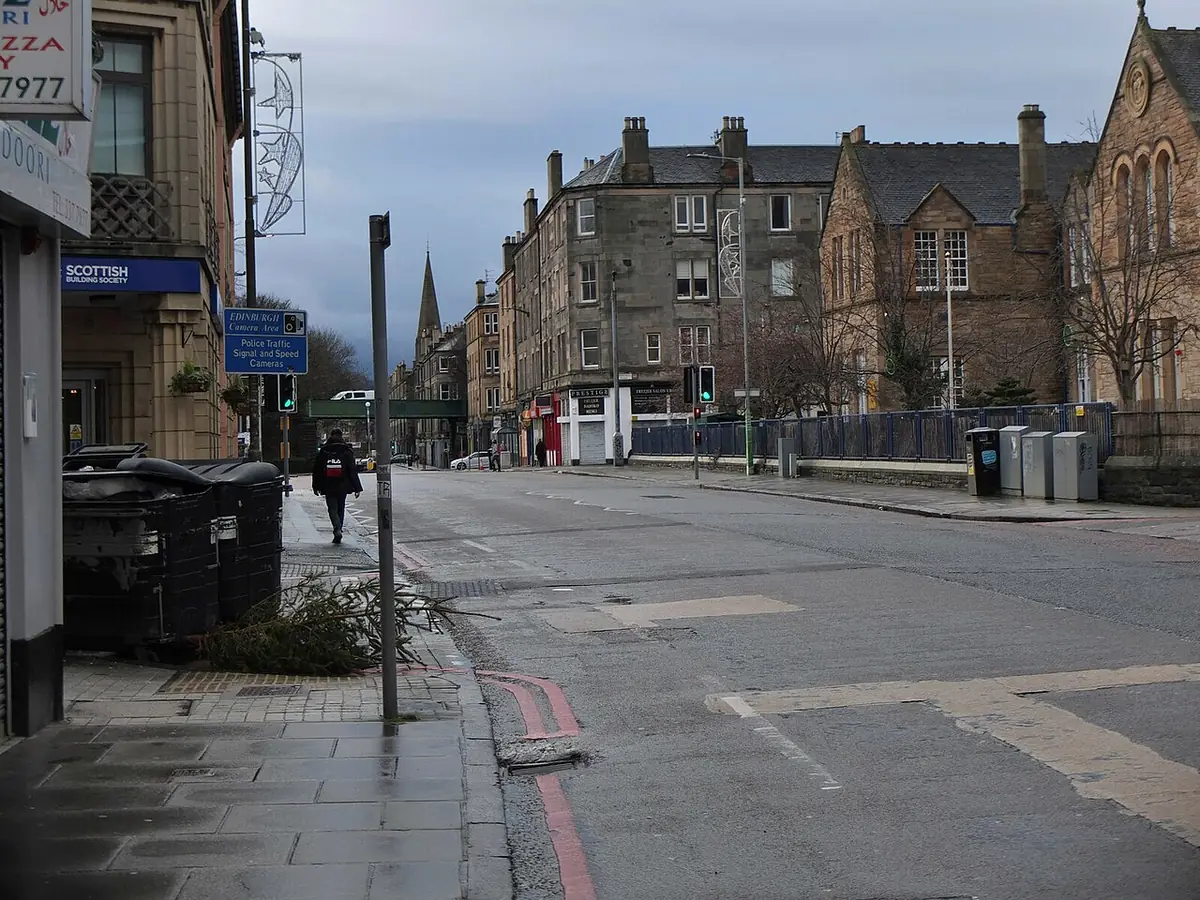
Edinburgh in Street View: drag to look around.
Now to the different buyer profiles, and which kind of setting genuinely matches how you expect to live day to day.
Buying an apartment in Edinburgh is not simply acquiring square metres of dressed stone or a roof to stand under Scottish rain. It is entry into a market governed by rules specific to Scotland, where the sealed-offer system upends the habits buyers bring with them from almost anywhere else. You weigh the timeless appeal of Georgian stone against structural realities that can be demanding when it comes to thermal upgrades and shared maintenance. Each neighbourhood sets its own rhythm, from the tourist churn of the centre to the residential calm of the greener rings. What a property is worth here rests as much on its historic position as on the financial health of the building it sits in, run under what is called the tenement management scheme.
The architectural appeal of the New Town and the Old TownvsThe insulation and maintenance constraints on listed buildings
Historic facades win buyers over immediately, but they rule out any unilateral change to the exterior. Roof and stairwell work is voted on collectively, which calls for patience and a solid personal cash reserve.
A dynamic market in very heavy demandvsThe pressure of sealed bids and competing offers
Demand structurally outstrips supply in the sought-after neighbourhoods, which regularly pushes buyers above the official valuation. Competing on that footing means your finances have to be beyond reproach before you put in an offer.
An exceptional standard of urban livingvsThe high cost of living and of local taxes
Enjoying a green setting at the heart of a cultural capital carries a direct cost and an indirect one. Council tax and maintenance charges weigh heavily on a resident owner's annual budget.
The stability of a solid long-term assetvsLimited short-term liquidity if the market turns
Scottish property has historically held its value well through economic shocks. Selling again quickly and on good terms, though, means accepting the strict rules of the local transaction.
Which kind of purchase fits your life and your working pattern?
Waterloo Place, stone façades above street-level shops — Photo: Drnoble · CC BY-SA 4.0 · Wikimedia Commons
Next, what actually changes in a purchase here once you arrive from another country and another legal tradition.
The kind of apartment worth buying in the Scottish capital shifts sharply depending on whether you are after urban energy or residential quiet. The city offers a rare balance between economic momentum, particularly in finance and tech, and immediate access to wild landscape. The changeable weather and a degree of remoteness still call for mental flexibility and tight organisation. Every way of living has an area that suits it, whether that means buying near the universities or paying for the wider spaces of the green outskirts.
Remote work and mobile professionals
If you work remotely in a knowledge or digital role, Edinburgh gives you an inspiring setting and strong connectivity. Buying a bright West End apartment strikes a good balance between cultural energy and quiet focus. Independent cafes and coworking spaces are scattered across the city, which makes local networking easy. The trade-off is a high price per square metre for the extra room you need as a dedicated office, so factor that room into your budget before you start viewing.
Families and neighbourhood life
Raising children here means putting a premium on quiet residential streets and on the quality of state or independent schools. Neighbourhoods such as Morningside or Bruntsfield combine parks, local shops and a strong sense of community. Buying a house or a large apartment with a garden changes the family experience entirely compared with the dense centre. Be ready, though, for how scarce family properties with several bedrooms and private parking are, which is exactly where competing offers get expensive.
Investors and part-time residents
Buying to let or to stay a few months a year runs into local rules that are strict and closely policed. The restrictions on short-term lets mean you have to test the economics of a conventional rental plan carefully before committing. A base in the Old Town puts you next to the festivals and the museums, but it also means managing the property from a distance. Gross yield has to be measured against local taxation and the building's maintenance charges.
Buying here when you are coming from abroad: what really changes
With those bearings in place, the choice of neighbourhood is what decides whether the purchase works out.
Arriving from another country to buy in Edinburgh puts you in front of legal and administrative traditions that work differently from most of what you know. Scottish property law does away with the traditional notary in favour of specialist lawyers called solicitors. Responsibility for the common parts of a building rests directly and collectively on the owners rather than on an all-powerful managing agent. And the local housing culture takes thermal performance and solar orientation seriously in a way buyers arriving from warmer climates routinely underestimate.
From abroad
A notary you go to as a matter of course to secure the sale and draft the deeds
Edinburgh
Solicitors alone, running the negotiation and completing the transfer
You hand the whole legal and financial process to a single law firm, which acts as your sole intermediary and as your adviser through the sealed-bid stage.
From abroad
Buildings run at arm's length by a centralised professional managing agent
Edinburgh
The Tenement Management Scheme, with self-managed or part-delegated ownership
Urgent repairs need direct agreement between neighbours and active participation in owners' meetings, or the common parts are left to decay.
From abroad
Recent insulation standards and standardised energy assessments
Edinburgh
Historic buildings in old stone with widely variable thermal performance
Budget for energy improvement work and accept higher heating bills through the long Scottish winter months.
From abroad
Advertised prices that are negotiated down over a long period
Edinburgh
The Home Report and sealed offers submitted in a closed envelope
The asking price is an indicative valuation, and the deal is often settled fast at a deadline set by the agent, which leaves no room for drawn-out hesitation.
From abroad
Strong administrative centralisation and one unified set of procedures
Edinburgh
An independent Scottish administration with tax powers of its own
Council tax and local charges follow rate bands specific to Scotland, and you need to build them precisely into the household's overall budget.
Which Edinburgh neighbourhood to buy in, according to your priorities
Dalry Road and its sandstone tenements — Photo: Jim Barton · CC BY-SA 2.0 · Wikimedia Commons
Now for something concrete: what the financial and budget reality of buying here actually looks like.
Edinburgh is a mosaic of neighbourhoods with very distinct personalities, running from Georgian grandeur to former industrial docks now transformed. Where you buy depends on your tolerance for urban noise, your need for green space and your overall budget. Central areas give you intense cultural life in tight quarters, while outer districts guarantee quiet and generous floor areas. Working out how each area actually feels day to day is what prevents regret after the purchase and protects the value of the investment.
New Town
An ordered, well-heeled calm beneath superb neoclassical facades bathed in light. The wide straight streets invite a walk and carry elegant shops.
Suits
Buyers drawn to historic architecture and professionals looking for refinement in the centre.
Trade-off
Some of the highest prices per square metre in the city and strict controls on alterations.
Leith
A relaxed, fashionable, multicultural maritime feel along the quays and the old docks. The area is full of creative energy and serious restaurants.
Suits
Buyers after a creative village spirit, contemporary art and well-regarded places to eat.
Trade-off
Relative distance from the historic centre and pockets still in transition.
Bruntsfield and Morningside
A leafy, peaceful small-town feel set by independent shops and family parks. The setting is reassuring in a way that is hard to fake.
Suits
Families with children and buyers who put residential quiet and good schools first.
Trade-off
Fierce competition for what comes to market and prices frequently above valuation.
Old Town
A fascinating medieval maze, alive with permanent student and visitor energy. The cobbled closes carry history at every turn.
Suits
Investors and buyers who want city life at full volume, close to the universities.
Trade-off
Heavy seasonal visitor traffic, difficult parking and homes that can be dark.
What does an apartment in Edinburgh really cost?
Next, exactly what kind of ownership rights you can acquire on Scottish soil.
The Scottish market is built on one compulsory disclosure document, the Home Report, which the seller has to provide. It carries an independent valuation of the property alongside a detailed technical survey. Advertised prices do not always reflect what deals actually close at, because bidding above the asking figure stays common in the tightest areas. You also need to budget for the costs on top, in particular the Land and Buildings Transaction Tax, which replaces the traditional transfer duty.
edinburghFor saleApartmentestimate
Median price / m²£3,705Half the apartments sell below this
Median price£258kthe average is 14% higher — a few very large properties pull it up
Most common2 bedrooms40 % of listings
Average size66 m²
By number of bedrooms
Bedrooms
Share of market
Avg price
Price / m²
Avg size
1
28 %
£180k
£4,290 +10 %
42 m²
2most common
40 %
£244k
£3,939
62 m²
3
24 %
£315k
£3,705best value / m²
85 m²
4
8 %
£412k
£3,744
110 m²
Each row is an average, compared against the area average of £3,900 / m². These are indicative estimates of a typical local market, not a measured sample of live listings. Check current listings before relying on them.
What you can genuinely own: the fine print of Scottish property
Old stone houses on Calton Hill, close to the centre — Photo: Jennifer Petrie · CC BY-SA 2.0 · Wikimedia Commons
Finally, the one rule to understand before you part with a penny of deposit.
In Scotland the legal structure of property ownership has historic quirks you need to master to avoid an unpleasant surprise. Unlike other European systems, the idea of absolute outright ownership applies differently once you are talking about an apartment inside an older shared building. Responsibility for the fabric of the building rests on legal obligations shared between all the owners named in the deeds. Understanding how that responsibility is divided protects the value of your purchase and keeps relations with your neighbours workable.
Outright ownership of the internal walls and private space
You own the whole of your living volume, your interior fittings and the non-load-bearing partitions inside your home. Nothing restricts your decorating or internal layout choices as long as you respect the structure. That legal security gives you complete freedom to optimise the space you live in.
What it changesYou can personalise and modernise your home to your own taste without asking the other owners for permission, provided the work does not affect the neighbours.
Undivided shared ownership of the structure and common areas
The roof, the foundations, the stairwell and the surrounding ground belong collectively to all the owners in the building. The Tenement Management Scheme sets tight rules for decision-making when repairs or safety work become necessary. Each owner contributes financially in proportion to the floor area of their apartment.
What it changesYou have to plan financially for shared maintenance costs and keep a constructive dialogue going with your neighbours so the work the building needs actually gets voted through.
The rule to understand before you pay any deposit
To close it out, here is the chronological run of a purchase that goes well.
Buying property in Scotland stands apart for how formal and how binding it becomes from the earliest stages. When the seller accepts an offer through the solicitors, the agreement quickly becomes legally binding. There is no flexible cooling-off period once the missives have been concluded between the two legal advisers. That rigour protects both parties against a last-minute withdrawal, but it demands that your financing is completely settled beforehand.
A careful reading of the Home Report and an honest assessment of what the property is really worth against the asking price.
Your solicitor lodges a formal written note of interest to register your firm position on the property.
The agent sets a closing date, the deadline for offers, which pushes every interested buyer to submit their best sealed figure.
The seller reviews the offers and formally accepts one of them through the legal advisers.
The exchange of missives, once concluded, locks the deal in definitively and makes the transaction legally binding on both seller and buyer.
The settlement date, when the funds are transferred and the keys are formally handed to the new owner.
How a purchase runs, step by step
Duddingston and its loch, a green corner of the city — Photo: Bill Boaden · CC BY-SA 2.0 · Wikimedia Commons
Getting a purchase over the line in the Scottish capital means following a marked-out route where each party has a precise and unavoidable role. From the first search through available properties to the handover of keys on completion day, administrative discipline is the whole game. An experienced solicitor is indispensable for securing each phase of the negotiation and keeping to the legal deadlines. Here is the exact sequence that takes you from the property you fall for to the day you move in.
The prospective buyerConfirming the financing and choosing a solicitorYou need a firm mortgage offer from a lender and a local law firm instructed to represent you throughout the process.
The independent surveyorWorking through the Home Report in detailThe valuation and energy assessment are picked apart to identify any structural work coming down the line and to check the asking price stands up.
The solicitorLodging the note of interest and tracking the closing dateYour adviser registers your formal interest with the selling agent and guides you on framing a competitive offer before the deadline.
The legal advisersNegotiating terms and exchanging missivesThe lawyers on both sides refine the contractual clauses until the missives are formally concluded, the point at which the commitment becomes irrevocable.
The lenderReleasing the funds and closing out the financingThe capital is drawn down and transferred to the seller's solicitor on the agreed date to settle the transaction properly.
The new ownerKey handover and moving inYou collect the keys to your new apartment, take the meter readings and take possession of your new Scottish home.
Tenement apartment or Victorian house in Edinburgh: which suits the way you live?
Once you have settled on the type of property, it is the overall financial equation that needs a hard look, so the surprises do not arrive later.
Buying property in Edinburgh forces a choice between two building types that are opposites in architecture and in how they are run. On one side, apartments inside the famous nineteenth-century dressed-stone tenements, often on the upper floors, with commanding views over the skyline or onto shared gardens. On the other, terraced Victorian or Georgian houses with their own front door and sometimes a small private garden, but demanding heavy structural upkeep and bigger heating budgets because of those vertiginous ceiling heights. Your decision should not rest only on the immediate charm of the blond stone but on how much shared-ownership obligation, Scottish style, you can genuinely live with.
Running a tenement in Edinburgh follows legal rules of its own that often surprise buyers used to a professional managing agent handling everything. Scots law makes all the owners in a building collectively responsible for maintaining the roof, the stairwells and the foundations, grouped together under the term common repairs. If a neighbour drags their feet over paying a share of a roof waterproofing job, the legal steps needed to force the work through can be long and draining, and that weighs heavily on the peace of mind of everyone living there. In a detached house or an end-terrace villa you stay in sole charge of your own timetable and your own spending, with no need to negotiate each job with a committee of owners whose interests sometimes point in different directions.
Even so, a tenement apartment in a sought-after area such as New Town, Marchmont or Stockbridge offers location advantages that are hard to beat for anyone who wants to live at the heart of the city without a car. Running charges are generally moderate where the building is well managed, and both sound and thermal insulation improve considerably in buildings that have been recently refurbished or fitted with double glazing designed to meet the requirements that apply to listed historic buildings. First-time buyers and investors often favour this option for its better liquidity in the local rental market, since demand for apartments with character has not let up despite economic swings and changes to property taxation in the United Kingdom.
Choosing a Victorian townhouse in a residential area such as Merchiston or Grange, by contrast, means accepting a long-term financial commitment and constant vigilance over the condition of an old building. Damp penetration, rising damp and the periodic need to repoint stonework call for a contact book of specialist trades and a substantial reserve budget every year. If you have children or need an isolated space for remote work without compromising on floor area, a house makes its own case despite an acquisition cost per square metre that is clearly higher. The final choice therefore depends as much on your overall financial capacity as on the energy you have available to manage the vagaries of an old building in a maritime climate.
What budget do you really need to buy and live in Edinburgh?
General Register House, in the heart of the city centre — Photo: 瑞丽江的河水 · CC BY-SA 4.0 · Wikimedia Commons
Pricing the budget is not enough on its own; you also need to see how an ordinary week in the city is put together.
Buying an apartment in Edinburgh does not stop at the price shown in the local agents' windows. You have to take in the local property tax, council tax, whose bands depend on the property's assessed value back in 1991, along with the purchase tax specific to Scotland, the Land and Buildings Transaction Tax. Regular building charges and the energy spending that goes with a northern climate complete a total worth anticipating from the very first viewings, so that your mortgage plan is calibrated properly.
Purchase costs and recurring taxes for an apartment in Edinburgh
Cost item
Average amount or range
Effect on the overall budget
Average price of a two-bedroom apartment
300,000 GBP to 450,000 GBP
Varies with proximity to the city centre and general condition
Land and Buildings Transaction Tax (LBTT)
2% to 10% of the purchase price
Progressive bands, with a surcharge on second homes and buy-to-let purchases
Solicitor and conveyancing fees
2,000 GBP to 4,500 GBP
Covers the legal work and the compulsory property searches
Annual council tax (bands D to G)
1,500 GBP to 3,500 GBP per year
Collected by the local authority for services such as roads and waste collection
The figures shown reflect averages observed in the Edinburgh market and can vary with the official assessment made by the local authority.
Monthly running budget for a household living in the Scottish capital
Category of cost
Monthly estimate
Explanatory comment
Building charges (factored properties)
80 GBP to 200 GBP per month
Covers maintenance of the common parts and sometimes the block insurance policy
Energy bill (gas and electricity)
150 GBP to 300 GBP per month
Strongly seasonal, tied to winter temperatures and the thermal performance of older buildings
Home insurance (buildings and contents)
35 GBP to 75 GBP per month
Essential cover for storm risk and for water damage between neighbours
Broadband and phone package
30 GBP to 60 GBP per month
Competitive offers are available in almost every residential neighbourhood
These estimates correspond to standard usage for a two-person household in a mid-sized apartment.
Health, schools and transport: what an ordinary Tuesday tells a buyer about a street
Behind the postcard and the practical logistics sit building realities that listings often leave unsaid.
Living in Edinburgh means getting to grips with an urban transport network that works well but is exposed to the weather and to the gradients of a city built on volcanic rock. Daily journeys are largely made on foot, by bike or on the modern tram line that links the airport to Newhaven by way of Princes Street. Having a GP practice and a good state school within walking distance is a decisive criterion when you are choosing which residential area to buy in, and it is worth walking the route yourself before you commit.
08:00Leaving the apartment for the local schoolMost local state primary schools are less than a ten-minute walk from the residential streets of Bruntsfield or Stockbridge, which makes a car-free routine realistic. Time that walk from any street you are seriously considering.
08:30The commute by tram or on the Lothian busesThe bus network run by Lothian Buses gives dense, regular coverage, while the tram line makes fast north-south connections easier despite the peak-hour crowds. Check what a given address actually connects to before you bid.
12:30Lunch and local shopping in the neighbourhoodIndependent local shops, butchers and bakers mean you can do your shopping on foot without falling back on the impersonal retail parks on the edge of town. The density of those shops is a fair proxy for how a street will hold its value.
17:30A stop at the GP surgery or the local pharmacyYou register with an NHS general practitioner as soon as you move in, on production of proof of address and identity. Confirm which practice covers the address you are buying into.
19:00Sport or a walk in the green spacesBeing close to protected open spaces such as the Meadows, Holyrood Park or the Water of Leith gives you an immediate escape at the end of the working day, and it is one of the few amenities you cannot add to a property later.
What the listing will not tell you about your future Edinburgh apartment
Knowing these technical details is what stops you making valuation mistakes whose consequences only land much later.
The Scottish market has conventions of its own that can throw an unprepared buyer, particularly around how prices are set and how older buildings are assessed. Behind the carefully staged marketing photographs sometimes sit significant structural challenges tied to the age of the materials and to the very strict planning rules in force across the capital's protected areas.
The sealed-bid system (offers over)
Properties are not sold at a fixed price but marketed as offers over, which means buyers often have to bid above the official Home Report valuation to have any hope of securing the apartment.
What the Home Report has to contain
Every seller must supply a full pack including an energy assessment and a technical survey carried out by a qualified surveyor, which lets you identify urgent work before you put a figure on the table.
The constraints on listed buildings
If your apartment sits in a building protected as historic heritage, you will need listed building consent for the smallest change of windows or heating system.
Thermal performance of solid stone walls
The thick dressed-stone walls of the tenements hold the cold in winter and need particular attention to ventilation to prevent condensation and internal mould.
How complicated shared roof work becomes
Working on the roof of an older building needs unanimous or majority agreement from the owners, which frequently delays repairs that cannot wait once water is getting in.
The buying mistakes you only discover six months after moving in
These accounts make it easier to say clearly which kind of buyer should hold off from this sort of purchase altogether.
Looked likeA charming, bright top-floor apartment with exposed beams in the historic Old Town.
Turned outNo lift at all, which made every trip up with the shopping punishing, and recurring insulation problems under the flat roof.
Would have caught itAlways check the condition of the roof in the Home Report and test the daily reality of the upper floors before you sign.
Looked likeA turnkey investment offered at an attractive asking price in a lively area near the shopping streets.
Turned outPersistent night-time noise from the surrounding bars and no way to park without an expensive resident's permit.
Would have caught itVisit the street at different times of day and night to get a real reading on noise levels and traffic.
Looked likeA healthy building whose monthly charges were initially quoted as remarkably low.
Turned outA completely empty reserve fund and an imminent vote on a special levy of several thousand pounds to restore the failing facade.
Would have caught itInsist on the minutes of the last owners' meetings to spot major work that has been put off in the past.
Looked likeA period home with magnificent original Georgian fireplaces and old floorboards.
Turned outConstant draughts that were hard to seal and eye-watering heating costs through the long Scottish winter.
Would have caught itRead the energy performance certificate (EPC) in the sale pack closely so you can anticipate the energy bills.
Who should not buy an apartment in Edinburgh and should postpone instead
Time to weigh it all up and decide whether your plan to buy in the Scottish capital is actually ready.
Buying in the Scottish capital does not suit every buyer, given the particularities of the local market and the constraints that come with older housing. Knowing when to walk away or wait keeps your capital out of a purchase that does not match your objectives over the short and medium term.
The buyer on a rigid budget with no room to go above the asking figure
→Postponing the purchase or moving to a long-term rental
The sealed-bid mechanism almost always requires offering more than the official valuation, which makes buying risky without a safety cushion.
The owner with no appetite for shared-building administration
→Favouring a detached house on the outskirts or in a rural area
Collective management of the common parts and of tenement roof repairs imposes constant compromise with the neighbours.
The investor after an immediate, high rental yield with no effort
→Looking at other British employment centres with lower entry prices
Scottish taxation and the rules governing short-term furnished lets weigh heavily on a landlord's net margin.
The mobile worker who needs to relocate every six months
→Staying a tenant to keep the freedom to move without friction
Upfront transaction costs and the time it takes to resell call for a minimum holding horizon of five years to absorb the costs.
So are you genuinely ready to buy in Edinburgh?
Reaching the end of this market analysis confirms that buying an apartment in Edinburgh is as much a decision about how you want to live as a rational financial one. If you have accepted that the advertised price does not necessarily reflect the final figure you will pay, because of the competitive offer system, you already have the clear-sightedness you need to approach the local agents calmly and to work through the survey reports.
Your willingness to accept the compromises that come with older housing, whether that means running a building of real character or maintaining listed joinery, is what will genuinely decide whether the move works. Edinburgh offers an exceptional setting, combining the economic weight of a dynamic capital with the quality of protected open space at the foot of extinct volcanoes and beside the North Sea, provided you go in with your eyes open to conditions on the ground.
Take the time to check your financial prerequisites, to assemble your team of trusted local professionals (a solicitor and an independent surveyor) and to visit several neighbourhoods in the rain as well as in the sun, so you can feel the particular atmosphere of each street. Once those steps are behind you without any real apprehension, you will know you are finally ready to unpack and build your future in one of the most captivating cities in Europe.
Related questions
How exactly does the offer system work when buying an apartment in Edinburgh?
The Edinburgh market runs on sealed bids, advertised as offers over. Buyers submit a financial proposal through their solicitor, often above the Home Report valuation, and the seller picks the best offer with no round of open back-and-forth negotiation afterwards.
What is the Home Report that is compulsory on a sale in Scotland?
The Home Report is a full pack the seller has to provide before putting a property on the market. It contains a market valuation prepared by a qualified surveyor, an energy performance certificate and a detailed report on the structural condition of the building.
What costs should you budget for on top of the purchase price of the apartment?
You need to add the Land and Buildings Transaction Tax, which replaces conventional stamp duty, the solicitor's fees for the conveyancing, and the registration fees payable to Scotland's official property registers.
Can a non-resident foreign buyer purchase property in Edinburgh?
Yes, non-residents can buy property in Scotland with no particular legal restriction on ownership, although adjusted rates of transaction tax and of tax on rental income apply depending on your personal tax position.
How much is council tax on average for a residential apartment?
Council tax depends on the valuation band assigned to the property based on its reference value back in 1991. Amounts generally run from 1,500 to more than 3,500 pounds a year for properties in the higher bands.
How are repairs organised in a shared tenement building?
The owners in a single building share responsibility for maintaining common structural elements such as the roof, the gutters and the stairwell. Decisions are taken collectively under the rules written into the title deeds.
Which neighbourhoods are most sought after for buying a family apartment?
Areas such as Marchmont, Bruntsfield, Stockbridge and Morningside are particularly prized for the quality of their state schools, their local shops and their immediate proximity to the parks and the historic centre.
How long does the buying process in Scotland usually take?
Once the seller has accepted your offer, the full legal completion generally takes between six and eight weeks, the time needed to run all the property searches and move the funds through the solicitors.
What restrictions come with a listed building?
Properties protected as historic heritage carry strict controls that forbid any external or internal alteration liable to change their architectural character without prior consent from the local authority.
Do you have to use a solicitor to buy in Edinburgh?
In Scotland a solicitor is required to carry through the legal side of a property transaction, from drafting the initial offer to the final transfer of title in the land register.
Property review of ting
No ting properties in Edinburgh yet
Be the first — share it on ting and it shows up right here.