Investing in property in Dublin means understanding the particulars of a fast-moving, tightly regulated market. This guide sets out the essential mechanics, the price ranges and the legal steps you need to value and buy an apartment with confidence in the Irish capital.
Tell us about your life. Ex: I’m relocating to Nice next year
Attach file
Get the app
Valuation Apartment Dublin
Investing in property in Dublin means understanding the particulars of a fast-moving, tightly regulated market. This guide sets out the essential mechanics, the price ranges and the legal steps you need to value and buy an apartment with confidence in the Irish capital.
What owning an apartment in Dublin really involves day to day
Scroll
What owning an apartment in Dublin really involves day to day
Investing in property in Dublin means understanding the particulars of a fast-moving, tightly regulated market. This guide sets out the essential mechanics, the price ranges and the legal steps you need to value and buy an apartment with confidence in the Irish capital.
Written by the ting.ad editorial team ·
Valuation Apartment Dublin in Street View: drag to look around.
With those core trade-offs laid out, let's look at which kind of buyer actually comes out ahead in this setting.
Investing in an apartment in Dublin is about more than acquiring square metres in a lively European capital. Between structurally very strong rental demand and an older housing stock subject to strict planning rules, every purchase carries a set of financial and practical trade-offs. You need to understand what you are really buying beyond the floor area if you want to avoid disappointment. The pressures of the local market feed directly into your potential return and your quality of life. Analysing these factors up front lays the foundations for a sound, lasting property project in the Irish capital.
Extremely strong rental demandvsNet yields sometimes eroded by tax and service charges
The chronic housing shortage guarantees record occupancy rates, but it also brings a specific tax treatment of rental income that you need to factor in from the start.
The charm of Georgian and Victorian buildingsvsRenovation and building maintenance costs that are often very high
Heritage restrictions rule out even superficial alterations and require specialist tradespeople whose rates weigh heavily on the budget.
Being right next to the major tech and finance employment hubsvsA price per square metre among the highest in western Europe
A very central location comes at a premium, limiting the floor area you can afford on a given budget and often forcing a choice between location and space.
What kind of buyer are you in the Dublin property market?
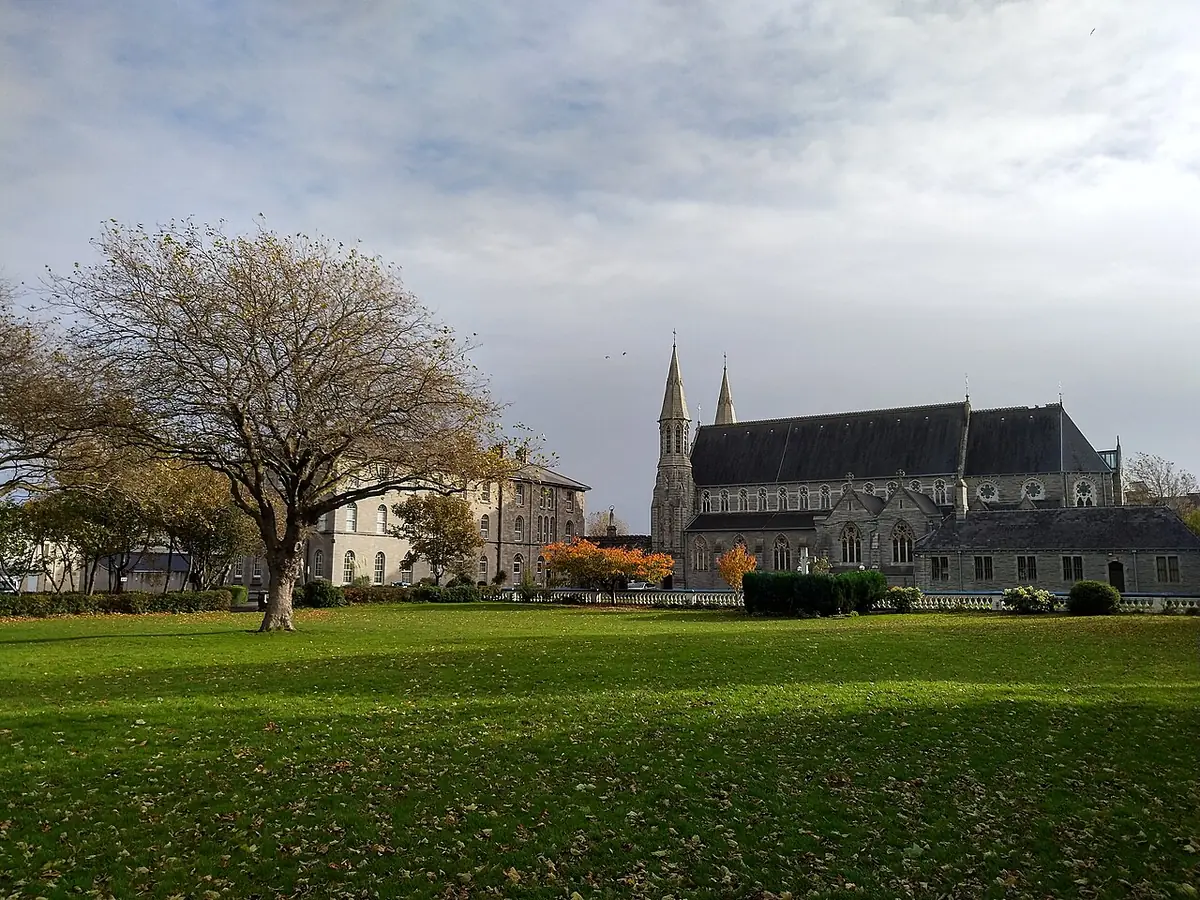
Open green space by the church grounds in Inchicore — Photo: Swifty4 · CC BY-SA 4.0 · Wikimedia Commons
Moving from an outsider's view to everyday reality means measuring the gap between the reference points you bring with you and life in Dublin.
The Dublin market serves buyers with very different goals, whether that is a main home for a professional who wants to be central or a long-term wealth investment. The layout of the city, shaped by the Liffey and its landmark bridges, forces clear lifestyle choices depending on how much commuting you will tolerate and how much urban buzz you want. Each situation comes with its own regulatory and financial constraints, which you should identify clearly before signing any agreement. Here is how your project takes shape depending on your personal circumstances.
City-centre professional
You want to walk to the office and have the capital's cultural amenities on your doorstep. This option exposes you to very high prices per square metre for sometimes compact spaces, but it guarantees maximum liquidity if you sell later. Service charges in these recent developments often include concierge services, which you need to budget for carefully.
Long-term investor
You are aiming for a steady return driven by the constant influx of international professionals and students. You will have to work within strict rent controls in Rent Pressure Zones and reletting rules overseen by the Residential Tenancies Board. The choice of neighbourhood and the energy rating of the property become your absolute criteria for success.
Deferred buyer
You buy an apartment today and let it out until you move in for good. This strategy shields your savings from local property inflation while partly funding your future home. It does, however, mean dealing with non-resident taxation and handing the letting management to a trusted local agency.
Settling in Dublin when you arrive from abroad: what really changes
Once those reference points are in place, choosing a neighbourhood stands out as the most decisive geographical call.
Buying property in Dublin from abroad means unlearning some of the legal and practical habits you bring from back home. The way apartment buildings are owned, the way tenancies work and even the relationship with property intermediaries all rest on Common Law and well-established local practice. That cultural gap goes beyond language; it reaches the very heart of the transaction and the management of your property. Here are the main friction points and adjustments to anticipate for a smooth transition.
From abroad
A strict, protective notary-led process back home
Dublin
A system centred on solicitors and the principle of caveat emptor
The buyer has to carry out their own technical and legal checks much more actively, with the help of their adviser.
From abroad
Building management run by regulated managing agents and highly codified general meetings
Dublin
Owner Management Companies (OMCs) run by the residents themselves
You become a shareholder in the company that owns the common areas, which means getting directly involved in budget decisions.
From abroad
Standard renewable three-year residential leases
Dublin
Flexible tenancies subject to strict caps on rent increases
Managing the relationship with tenants requires precise knowledge of the thresholds set by the Irish housing authorities.
From abroad
Capital gains tax on property that tapers off over time
Dublin
A flat-rate capital gains tax with no relief for length of ownership
A medium-term resale strategy has to be calculated differently to protect the net return on your investment.
Which Dublin neighbourhood should you target for your investment goals?
Sandymount Strand, the wide shoreline of Dublin Bay — Photo: Josi · CC BY-SA 4.0 · Wikimedia Commons
Knowing the neighbourhoods lets you tackle the central question of budget and the prices actually paid on the ground.
Dublin is a patchwork of neighbourhoods with very distinct identities, divided by the Liffey and linked by a public transport network that is still being modernised. From the tech energy of the Docklands to the upmarket charm of Rathmines and Ranelagh, each area strikes a different balance between price, accessibility and quality of life. Your choice should rest on a cool-headed analysis of your day-to-day priorities rather than on fleeting infatuations. Let's compare the main options on the market today.
The Docklands and Grand Canal Dock
An ultra-modern, international atmosphere set by the headquarters of the digital giants.
Suits
Young professionals and investors looking for strong rental liquidity and an urban lifestyle.
Trade-off
Prices per square metre among the highest in the city, and a buzz that fades at weekends.
Ranelagh and Rathmines
A much-loved village feel, lined with Victorian houses, independent shops and plenty of green space.
Suits
Families and buyers looking for a long-term main home with an excellent balance between calm and centrality.
Trade-off
Apartments are scarce and highly sought after, which frequently leads to bidding wars when they sell.
The historic centre (Dublin 1 and 2)
Constant cultural bustle, theatres, historic pubs and Trinity College right on the doorstep.
Suits
People who want to do everything on foot and make the most of the Irish capital's cultural life.
Trade-off
More night-time noise and apartment buildings that are sometimes old and in need of work.
What does an apartment in Dublin really cost today?
Beyond the raw figures, the legal nature of what you own deserves close attention.
Dublin's property market is marked by strong upward pressure on prices, fuelled by population growth and the city's economic vitality. Data published by the financial authorities and the land registries make it possible to set realistic ranges by property type and area. It is essential to separate the headline purchase price from the additional costs, including stamp duty and legal fees. This table summarises current orders of magnitude to help you structure your financing plan.
DublinFor saleApartmentestimate
Median price / m²€5,320Half the apartments sell below this
Median price€460kthe average is 14% higher — a few very large properties pull it up
Most common2 bedrooms38 % of listings
Average size85 m²
By number of bedrooms
Bedrooms
Share of market
Avg price
Price / m²
Avg size
1
28 %
€302k
€6,048 +8 %
50 m²
2most common
38 %
€420k
€5,600
75 m²
3
24 %
€532k
€5,320 −5 %
100 m²
4
10 %
€721k
€5,152best value / m²
140 m²
Each row is an average, compared against the area average of €5,600 / m². These are indicative estimates of a typical local market, not a measured sample of live listings. Check current listings before relying on them.
Freehold and long leases: what you can actually own
O'Connell Street, the broad main avenue of central Dublin — Photo: CAPTAIN RAJU · CC0 · Wikimedia Commons
With that legal security in place, one fundamental rule governs the timing of every transaction in Ireland.
Under Irish law, the distinction between the different forms of land ownership is a classic trap for unwary foreign investors. Whereas back home a share of the land may come attached to each apartment, the Anglo-Saxon system often separates the bricks from the ground beneath them. Knowing whether you are buying outright or on a long lease determines the future value of your investment and your legal peace of mind. Let's look at the two options open to you on the Dublin market.
Freehold, or full ownership of the land
You own the building and the land it stands on, or you hold a direct share in the legal entity that owns it collectively, with no time limit.
What it changesThis is the most comfortable position, guaranteeing the best long-term value and complete freedom of management.
Leasehold, or a long lease
You buy the right to occupy and own the apartment for a fixed term, often 99 or 999 years, paying an annual charge known as ground rent.
What it changesYou must check how many years remain on the lease before buying, to avoid a sharp drop in value when you come to sell.
The golden rule to understand before paying any deposit in Dublin
Mastering these legal steps lets you approach the practical running of the transaction calmly, from start to finish.
Property sales in Ireland follow a timetable and legal customs that often surprise buyers used to a more formal process back home. In particular, the initial offer, secured with a booking deposit, is not immediately binding the way it would be in many other countries. Both seller and buyer can walk away without any heavy penalty until the respective solicitors formally exchange contracts. That in-between period carries a risk of being outbid, which you need to anticipate to secure your position.
You spot an apartment and decide to make an offer through the estate agent handling the sale.
You pay a booking deposit (usually refundable) to the agent to take the property off the market while the solicitors make contact.
Your solicitor checks the title deeds and sends out the preliminary legal queries.
The contracts of sale are formally signed and the final contract deposit (often 10% of the price) is paid, marking a firm commitment by both parties.
The last outstanding conditions are cleared and the logistics of handing over the keys on closing day are arranged.
The balance of the price is paid and the deed transferring ownership is officially registered with the Property Registration Authority.
How a property transaction in Dublin works, step by step
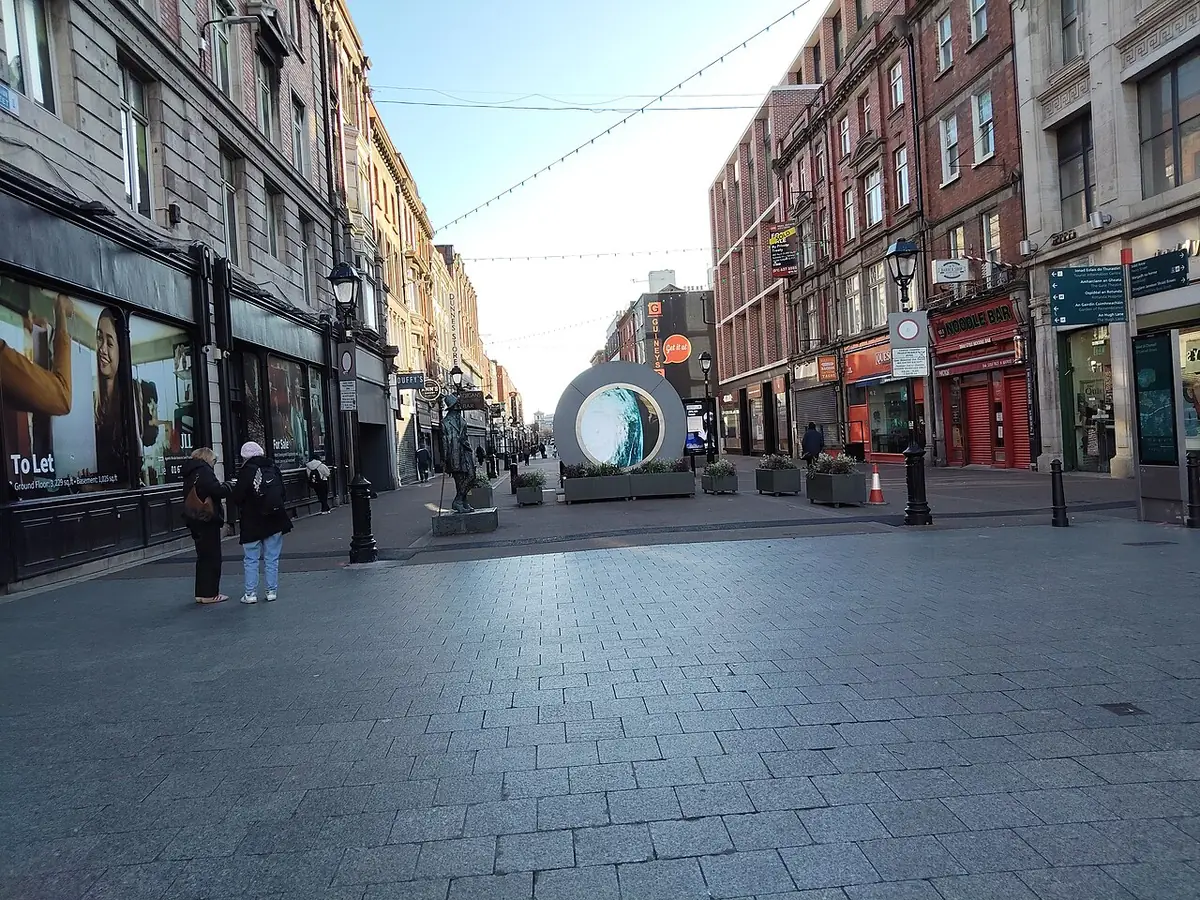
A pedestrian shopping street in central Dublin — Photo: CAPTAIN RAJU · CC0 · Wikimedia Commons
Seeing an apartment purchase in Dublin through to the end means coordinating several key players to a precise timetable. Contrary to a common assumption, the whole transaction can stretch over several months between the first accepted offer and actually moving in. Each party plays a clearly defined role, and it helps to map them out to avoid administrative delays. Here is the typical sequence of actions to complete your investment safely.
The buyerSetting the budget and getting mortgage approval in principleGet pre-approval from an Irish lender or a specialist broker so that your offers are taken seriously.
The estate agentViewings and submitting the offerYour offer is presented to the seller and the initial booking deposit is paid to secure the property.
The solicitorLegal due diligence and investigations (Requisitions on Title)A thorough review of the title deeds, the building's service charges and any easements attached to the property.
The surveyorStructural inspection of the buildingA full report on the condition of the structure, the roof and the apartment's energy systems.
The solicitors and the buyerExchange of contracts and payment of the binding depositSigning the contractual documents that commit both parties definitively to the transaction and the closing date.
All partiesClosing the sale and handing over the keysTransfer of the remaining funds, signing of the final deed and registration of the property in your name.
Apartment or house in Dublin: should you give in to the lure of a house or aim for the very centre?
Once that first choice between an apartment and a house is made, the crucial question of the real cost of everyday life in the Irish capital comes to the fore.
Choosing between an apartment in one of Dublin's lively areas such as the Docklands and a red-brick Victorian house in a residential neighbourhood such as Rathmines or Phibsborough immediately raises the question of how you want to live in the long run. New or recent apartments offer state-of-the-art insulation and hands-off management of the common areas, which appeals to busy professionals keen to keep their energy bills under control in a city where the oceanic climate dictates indoor comfort. On the other hand, an apartment building means fixed service charges that are sometimes high, and total dependence on the management company's decisions about facade repairs or re-roofing.
Buying a detached or semi-detached house in Dublin, by contrast, brings complete architectural freedom and a private plot, even if it is often just a tiny garden at the back. Yet the capital's older housing stock, charming as it is with its period bay windows and marble fireplaces, often springs unpleasant financial surprises in the form of damp, ageing plumbing and poor insulation. Renovating an old house to an acceptable level of energy performance takes not only a substantial budget but also endless patience, given how scarce and expensive skilled labour is in the Irish market today.
Dublin's urban layout sharpens this dilemma further, depending on your daily journeys and your relationship with the car. Living in an apartment in the central districts lets you do everything on foot or by bike along the Liffey, using the Luas tram network without suffering the notorious rush-hour jams on the M50 ring road. Family houses are by definition further from the tech and finance employment hubs, which means either putting up with longer journeys on Dublin Bus or hunting for scarce, paid residential parking.
In investment terms, a city-centre apartment offers exceptional rental liquidity should you ever decide to leave Dublin or invest in bricks and mortar, as demand for small and medium-sized homes structurally outstrips supply. A house, meanwhile, is a long-term safe haven whose value closely tracks the scarcity of land in the established residential neighbourhoods of the southern belt. Your final choice therefore depends not on a passing trend but on a cool-headed weighing of future maintenance costs, your tolerance for noise in a shared building and your acceptance of the transport constraints built into Dublin's geography.
What monthly and overall budget do you need to live comfortably in an apartment in Dublin?
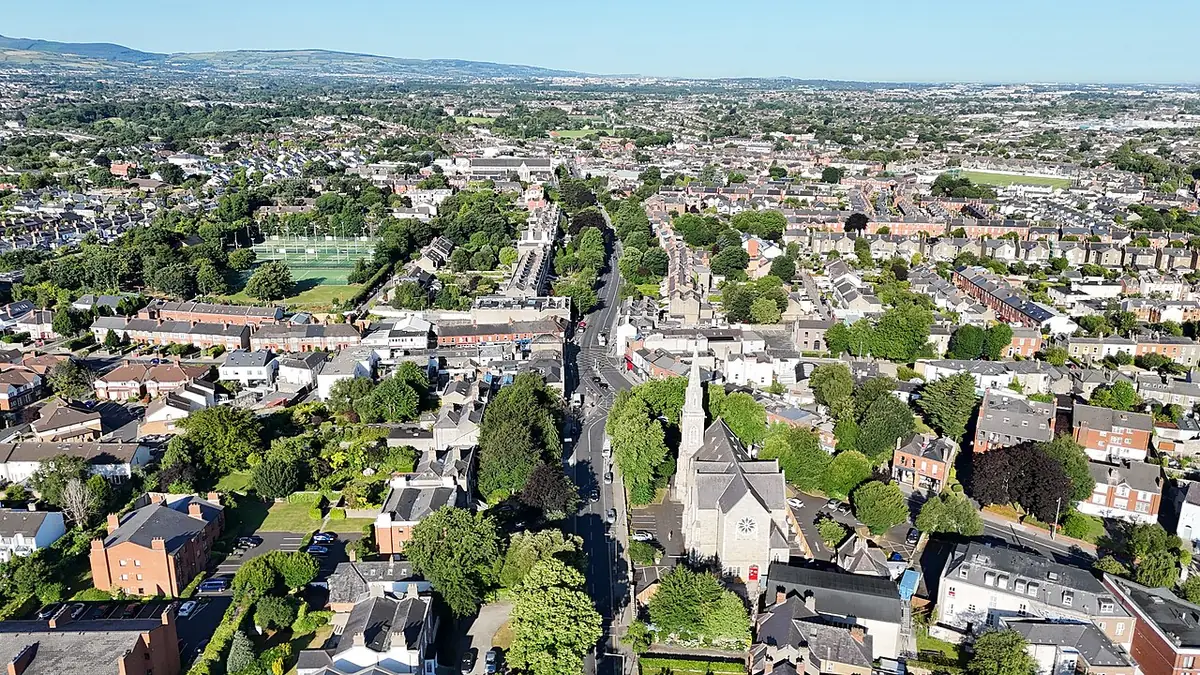
Rathgar from above, a leafy neighbourhood of houses and gardens — Photo: 瑞丽江的河水 · CC BY-SA 4.0 · Wikimedia Commons
Understanding the raw figures is one thing, but living through a typical day in the Irish capital shows you the real constraints of everyday life.
Buying an apartment in Dublin is about more than the monthly repayment on your mortgage with an Irish bank. You need to factor in a particularly dense structure of fixed and variable costs, from mandatory service charges to local taxes and seasonal energy bills. The tables below set out the unavoidable spending items for a standard two-bedroom apartment, based on the averages seen in the Dublin market today.
Estimated upfront purchase costs
Cost item
Estimated range
Comments and impact on the budget
Legal fees (solicitor)
€2,500 to €5,000
Essential fees for checking the title deeds and registering the contract of sale with the Property Registration Authority.
Stamp Duty
1% to 2% of the purchase price
A mandatory government tax charged on the transfer of ownership, applied at 1% on the value up to €1 million.
Technical survey report (Structural Survey)
€500 to €1,200
Strongly recommended to identify hidden defects, roofing problems or damp penetration in older buildings.
Broker and mortgage arrangement fees
€1,000 to €3,000
Possible fees for your financial adviser or broker to negotiate the best borrowing terms with the high-street banks.
These additional costs generally amount to between 3% and 5% of the apartment's net sale price and must be funded from your own savings.
Monthly and annual running costs for the apartment
Type of charge
Average monthly amount
What it covers
Service charges (Management Fees)
€150 to €300 / month
Upkeep of the common areas, building insurance, any concierge service and, in some developments, waste collection.
Energy (gas and electricity)
€120 to €220 / month
Bills that are highly sensitive to the energy performance certificate (BER) and to price changes among suppliers in the Irish energy market.
Local tax (Local Property Tax - LPT)
€35 to €75 / month
An annual tax calculated by the Revenue Commissioners on the estimated market value of your property as at 1 November of the previous year.
Comprehensive home insurance
€30 to €60 / month
Essential cover for contents and public liability, as the building itself is usually insured through the owners' management company.
Total fixed monthly charges excluding the mortgage therefore range between €335 and €655, a sum that must be strictly included in your borrowing calculations.
Healthcare, schools, transport: what does an ordinary Tuesday actually look like when you live in Dublin?
Beyond this well-worn routine, plenty of crucial details never make it into estate agents' brochures.
To judge whether buying property in Dublin makes sense for you, forget the tourist brochures and walk through an ordinary Tuesday in detail. The pace of life is set by the changeable weather, the efficiency of transport links such as the DART and the Luas, and the need to plan every journey ahead. Here is the hour-by-hour schedule of a typical day for a resident settling in the Irish capital for the long term.
07:30Leaving home and dealing with morning trafficYou leave the apartment to reach the nearest bus stop or Luas tram station. Traffic on main routes such as the Quays or Grand Canal Street is already heavy, making cycling or public transport essential if you want to arrive on time.
08:30Dropping the children at the local primary school (National School)You arrive at the local school. Places in state primary schools (National Schools) often have to be applied for well in advance because of population pressure in some fast-growing residential areas.
09:00Arriving at the office and a morning coffeeYou settle in at your desk, often in the Silicon Docks tech hub or the Central Business District around St Stephen's Green. A quick stop at the independent café on the corner lets you soak up the local working atmosphere.
13:00A quick lunch and a bit of shoppingThe lunch break is spent on a stroll along the Grand Canal or a dash into a local store (Tesco Express, Dunnes Stores) to pick up some fresh produce for dinner, as food prices in Ireland call for close attention.
18:00Heading home and sorting out healthcareThe journey home is by public transport. If you need medical care, this is the time to contact your GP, and getting access sometimes means joining a waiting list first because of the strain on the public health system.
20:00An evening at home and building mattersA quiet time in the apartment, reading the management company's letters about upcoming owners' general meetings and planning the week ahead in a residential setting that is generally peaceful.
What a property listing will never tell you about the real condition of homes in Dublin
These upfront checks help you avoid the worst disappointments, but some regrets only surface after several months of living in a place.
The bright photos and glowing descriptions of Dublin estate agents regularly hide technical and administrative realities that any prospective buyer should check before making an offer. Between the subtleties of the Irish market and the real state of the building stock, here are the key warning signs that separate a successful investment from a money pit.
The energy performance certificate (BER) and the real thermal picture
A poor BER grade (D, E or F), very common in buildings put up during the boom of the 1970s and 1980s, translates straight into sky-high heating bills in winter and chronic condensation problems. Improving the insulation of an apartment in a shared building requires the agreement of the owners' general meeting, which can hold up your renovation plans for years.
The financial health and actual management of the building (Management Company)
Many listings fail to mention that the building has built up significant unpaid service charges or faces major unfunded structural work (re-roofing, mandatory facade repairs). Always ask for the accounts for the last three financial years and the minutes of the latest general meeting before signing any purchase commitment.
Noise from neighbours and the sound insulation of the floors
Dublin buildings from certain decades suffer from inadequate sound insulation between floors, so you can hear every step of the neighbours upstairs or the traffic in the street. A viewing scheduled at busy times or at the end of the day lets you gauge objectively the real noise level of the building and its immediate surroundings.
Urban development plans and future building sites in the area
A vacant lot or car park right opposite your future balcony can quickly turn into a construction site for a seven-storey office complex for the next three years. Always check Dublin City Council's planning records to identify the planning permissions granted in the immediate vicinity of the property you are interested in.
The misjudgements you only discover after six months in your new home
Knowing these pitfalls helps you sharpen your buyer profile and work out whether this market is really right for you.
Looked likeA really trendy, lively neighbourhood in the heart of Dublin
Turned outA very noisy pedestrian zone at weekends, transformed by late-night noise from the pubs and heavy tourist activity
Would have caught itVisit the streets right around the property on a Friday or Saturday night between 10pm and midnight to hear the real noise level.
Looked likeA modern, fully fitted kitchen ready to use
Turned outCheap appliances installed in a hurry, causing repeated breakdowns and ineffective ventilation that creates damp
Would have caught itTest all the appliances at the final viewing and ask the seller for purchase receipts or warranties that are still valid.
Looked likeA parking space included at no apparent extra cost
Turned outA cramped, awkward space where daily manoeuvring proves impossible with a standard-sized family car
Would have caught itBring your own car to the second viewing to test access to the garage or the allocated parking space in practice.
Looked likeA high-speed broadband connection guaranteed by the developer
Turned outAgeing copper wiring in the building that drastically limits the real speed compared with the listing's sales promises
Would have caught itCheck actual line availability for the exact address on the websites of the main Irish telecoms providers before signing.
Who really should not buy an apartment in Dublin right now?
Now is the time to take stock and decide whether you are really in a position to take the plunge.
Buying property in Dublin is often presented as the only route to financial stability, but it is a completely unsuitable strategy for certain lifestyles or time horizons. Taking on a twenty-five-year mortgage in the Irish capital requires rock-solid professional and personal stability. Here are the specific cases where it is financially and strategically wiser to hold off and rent instead.
The young professional on a temporary assignment or making an international career change
→To put off any property purchase and keep complete geographical flexibility.
Legal fees, purchase taxes and the penalties of a quick resale wipe out any financial return if the property is sold less than five to seven years after purchase, given transaction costs in the Irish market.
The household with a total aversion to interest rate risk or unexpected building costs
→To keep renting and leave all the heavy charges and major repairs to the landlord.
Owning in a Dublin apartment building involves frequent special levies to bring buildings up to standard, which can throw a tight family budget off balance.
The buyer on a tight budget betting on a rapid, speculative rise in prices
→To wait until their savings are stronger and the market's macroeconomic direction is clearer.
Borrowing to the limit of your capacity in a highly competitive market leaves the household exposed to the slightest turn in interest rates or change in income.
So, are you ready to make your property project in the heart of Dublin a reality?
Buying an apartment in Dublin is a decision that goes well beyond simply building up assets in bricks and mortar; it is a life choice that roots you in a dynamic, cosmopolitan but demanding European capital. If you have weighed up the reality of service charges, accepted the constraints of the resale market and confirmed an investment horizon of more than seven years, then the signs are good for going ahead. Solid rental demand and the city's economic vitality continue to offer healthy prospects to those who buy with their eyes open, without getting swept up in bidding wars.
Take the time to do your own research on the ground, view several times at different hours, insist on the building's financial accounts and surround yourself with trusted professionals, from the solicitor to the broker and the surveyor. The Dublin property market rewards patient, methodical and rigorous buyers who can set aside superficial crushes and focus only on a property's intrinsic value. Your future home in the Irish capital only needs your good judgement to become a lasting, secure reality.
Related questions
What additional costs should you budget for when buying an apartment in Dublin?
Allow an extra 3% to 5% of the purchase price to cover the solicitor's fees, the government Stamp Duty, which is generally 1% for standard residential property, and the technical survey report that is essential for spotting any hidden defects in the building.
Can a foreigner easily buy property in Ireland?
Yes. There is no legal restriction preventing a foreign national, resident or non-resident, from buying property in Ireland. However, getting a mortgage from an Irish bank means proving a stable income and meeting the strict criteria set by the Central Bank of Ireland.
How does the Local Property Tax (LPT) work in Dublin?
The Local Property Tax is an annual charge calculated by the Irish tax authority (Revenue) on the estimated market value of your property. The owner has to declare that value within bands set by the State, and the amount is due every year to fund local public services.
What is the BER certificate for an apartment in Dublin?
The Building Energy Rating is a mandatory grade running from A (the most efficient) to G (the least efficient) that assesses a home's overall energy performance. It is required for any sale or letting of an apartment in Ireland and has a direct effect on the size of your heating bills.
What exactly does a solicitor do in an Irish property transaction?
The solicitor is the specialist lawyer who represents the buyer or the seller throughout the transaction. They check that the title deeds are valid, draft or approve the contracts of sale, make sure there are no hidden mortgages and carry out the final registration with the Property Registration Authority.
Can you negotiate the asking price of an apartment in Dublin?
Negotiation depends entirely on how tight the market is in the area you are targeting and how much competition there is between buyers. In the most sought-after areas, properties often sell at the asking price or even above it through an informal bidding process run by the estate agent, while properties that need work leave more room to negotiate.
What is a Management Company in a Dublin apartment building?
It is a company formed by all the owners of a building or development to manage the common areas, the upkeep of green spaces, the insurance of the structure and the collection of service charges. Every owner is a shareholder in it and must pay mandatory annual fees.
How long does a property purchase take on average, from offer to getting the keys?
The whole process generally takes between 8 and 12 weeks in Ireland, provided your financing has been approved in advance. That timeframe reflects the thoroughness of the legal checks carried out by both parties' solicitors and the administrative procedures for transferring the funds.
Do you have to commission a Structural Survey before buying?
Although Irish law does not always require it, bringing in an independent surveyor to inspect the structure of the building is strongly recommended, particularly for older apartments or Victorian houses. It lets you identify damp, roofing or plumbing problems before you make a final commitment.
What financial support is available for first-time buyers in Ireland?
The Irish government runs the Help to Buy Scheme, aimed mainly at first-time buyers purchasing or building a new property. It lets you recover part of the income tax paid over the previous four years as a tax refund to put towards your deposit.