Putting a value on a house in Ottawa means understanding a North American market that is dynamic and demanding. This decision guide gives you the keys to read neighbourhoods, work with real budget figures and check every step of your valuation in the federal capital.
Get the app
What nobody tells you.
Real prices, hidden costs and the traps to check before you commit.
Why the size of a house in Ottawa moves its valuation so sharply
Scroll
Why the size of a house in Ottawa moves its valuation so sharply
Putting a value on a house in Ottawa means understanding a North American market that is dynamic and demanding. This decision guide gives you the keys to read neighbourhoods, work with real budget figures and check every step of your valuation in the federal capital.
Written by the ting.ad editorial team ·
Elgin Street, Ottawa in Street View: drag to look around.
These fundamental trade-offs become very concrete depending on your own situation as an owner in Ottawa.
Valuing a house in the Canadian federal capital raises the question of usable floor area straight away, and of how much of the figure that area actually explains. Between hard winters that keep people indoors and a spread out urban layout, every square metre is lived in differently than it would be in an apartment, and priced differently too. Owners often overstate the value of raw volume and understate what condition, land and running costs do to a figure. You have to weigh the comfort of extended private space against the constant demand for outdoor maintenance that a valuer will read in the fabric of the house. This tension shapes the whole local market and forces you to look past the advertised floor area.
A generous floor area that reads well on papervsA floor area that demands continuous upkeep
Extra rooms give valuable flexibility for home working or for guests, and they lift the comparable figures, but they also multiply heating and renovation lines that a careful valuation adjusts for. In Ottawa the seasonal swings amplify the appetite for indoor space while making the upkeep behind it harder to sustain.
A private lot that carries real valuevsA snow clearing and mowing burden that eats into it
Owning your own lot removes the constraints of shared ownership and is one of the strongest drivers of an Ottawa figure, but it imposes a serious physical or financial discipline. Heavy snowfall turns every driveway into a compulsory morning job from November to April, and neglected access shows up in condition adjustments.
An anchor in an established residential neighbourhoodvsRelative distance from central amenities
Detached house neighbourhoods deliver remarkable quiet and strong school infrastructure, both of which support the comparables, at the price of a greater dependence on the car for daily shopping and cultural life, which pulls the same figure back down.
Complete freedom to alter the propertyvsNo collective fund to absorb major work
Redoing the roof, rebuilding the insulation or replacing the heating system falls entirely to you, financially and administratively, with no collective reserve fund to smooth the shock. A valuer prices the age of those systems directly, so deferred work is deducted rather than ignored.
Does this house really match the way its value will be read in the capital?
This geographic and residential position takes on a particular colour when you arrive from another country or another property system.
A valuation is never just a floor area multiplied by a rate, or a count of bedrooms. Your daily life, your work travel and your family habits determine which comparables an assessor will actually reach for. In Ottawa the structure of the city, between institutional hubs and green residential rings, forces sharp distinctions between one figure and another. Working out where your property sits before you ask for a number avoids the disappointment that follows an estimate you cannot explain.
The centre versus periphery trade-off
A house in central neighbourhoods such as the Glebe or Westboro sits close to the employment core, which lifts the per square metre figure sharply while cutting the floor area behind it. The location premium is real and shows up plainly in comparables, because buyers value the time saved and the avoided congestion on the bridges over the Ottawa River. Against that, these are older houses, and a valuer will deduct for the periodic upgrades they need to meet current standards.
The established suburb comparison
In areas such as Kanata or Barrhaven the valuation rests on large parks, well regarded schools and roomy houses with double garages, so floor area and lot size carry far more of the figure than centrality does. In exchange, longer commutes and a life organised around the car cap what buyers will pay, which is why suburban comparables cluster tightly around a predictable range rather than spreading the way central ones do.
The value of a dedicated room
Home working changes the hierarchy of criteria by favouring quiet and adaptable interior space, and valuations increasingly recognise a properly separated office. A suburban house lets you carve out a bright study, but it needs an excellent fibre optic connection and a lively enough setting to avoid social isolation through the long winter months. Document the fibre connection and the room layout, because both are easy for an automated estimate to miss.
Valuing a house here when you have come from abroad: what genuinely changes
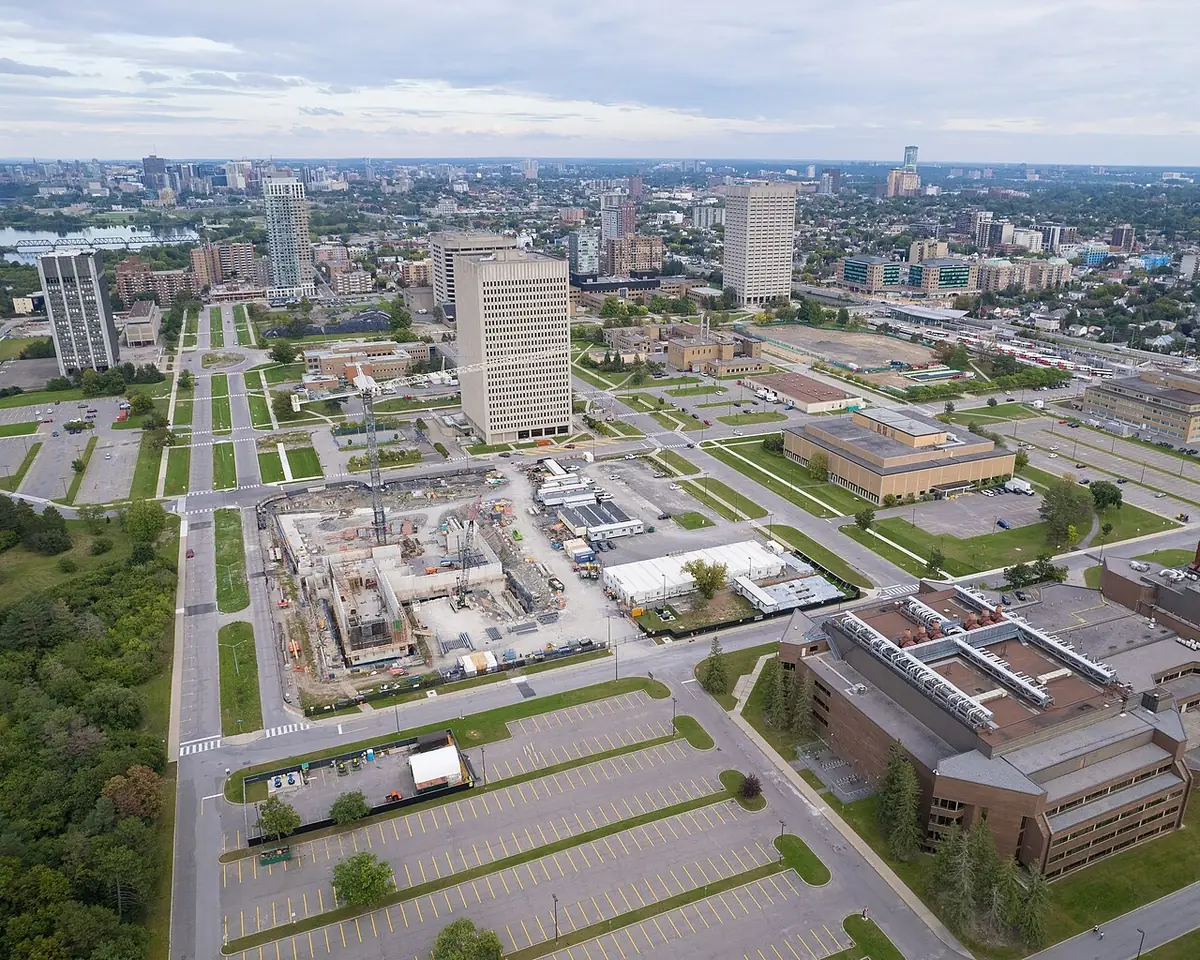
Ottawa's river-lined green spaces, seen from above — Photo: Harleyd613 · CC BY-SA 4.0 · Wikimedia Commons
Once these reference points are in place, the next task is to identify the area whose comparables actually apply to your property.
Carrying property instincts from another country into the Canadian context exposes you to deep cultural and technical mismatches, and a valuation is where they surface. The housing market in Ottawa follows building, contractual and professional conventions that differ from those of many other countries. Understanding these structural divergences before you commit to a figure protects both your investment and your peace of mind.
From abroad
Dense urban centrality and walkable neighbourhood life
Ottawa
Planned urban spread and a strong dependence on the car
Local services are not automatically around the corner, so accessibility weighs on a valuation in a way newcomers rarely expect; organising shopping and family journeys takes a logistical planning that is easy to underestimate at the start.
From abroad
Construction in stone or reinforced concrete
Ottawa
Timber frame structure, very widely used
Thermal and acoustic insulation follows a different logic, and the handling of humidity and forced air central heating surprises anyone used to cast iron radiators. It also changes the useful life a valuer assigns to each component of the building.
From abroad
A single centralised legal officer who oversees the whole transaction
Ottawa
A transaction handled by lawyers specialised in real estate law
The lawyer role is purely transactional and focused on verifying title, without the broad wealth advice that some newcomers expect as a matter of habit. A valuation figure is produced separately, by an agent or an appraiser, not by the lawyer.
From abroad
Tightly regulated horizontal shared ownership
Ottawa
Freehold ownership with strict municipal by-laws
You are entirely responsible for the external appearance of your property, while having to respect local planning by-laws scrupulously on matters such as fence height or winter parking. Non compliant work is a common source of downward adjustment in a valuation.
Which Ottawa neighbourhood sets the comparables for your house?
This geographic diversity translates into strict budget realities that are worth mapping precisely.
Ottawa is a mosaic of neighbourhoods with sharply drawn identities, running from the historic core to modern residential rings. Each area strikes a distinctive balance between proximity to employment, quality of school infrastructure and the price level that sets its comparables. Reading these options tells you which recent sales genuinely belong in your own valuation and which ones do not.
The Glebe and Old Ottawa South
A lively village atmosphere along Bank Street, edged with green parks and crossed by the Rideau Canal.
Suits
Valuations that lean on walkability, proximity to the universities and a strong heritage character.
Trade-off
Some of the highest per square metre figures in the city, and older houses whose condition adjustments can be substantial.
Westboro and Wellington West
A fashionable urban energy with independent cafes, design shops and open views over the Ottawa River.
Suits
Younger working owners and families whose properties benefit from an active lifestyle and modern comfort.
Trade-off
Heavy market pressure and a very thin stock of detached houses against a wave of new attached builds, which makes clean comparables hard to find.
Kanata and Barrhaven
Large, orderly, reassuring residential developments with full shopping centres and modern schools.
Suits
Family houses whose value rests on space, a garage and parks within walking distance.
Trade-off
Distance from the historic core, which translates into long peak hour drives and caps the figure a comparable can support.
What does a house in Ottawa actually sell for?
A quiet Ottawa neighbourhood, seen from the air — Photo: Harleyd613 · CC BY-SA 4.0 · Wikimedia Commons
Beyond the headline figure, the legal structure of the ownership deserves particular attention.
The Ottawa property market reflects its position as a stable federal capital, while still moving with interest rates and demographic demand. Prices vary considerably with the age of the building, its energy performance and how central the area is. Any valuation has to fold in local property taxes and running costs, which are often higher than newcomers assume. Here are the orders of magnitude to anchor your own figure.
ottawaFor saleHouseestimate
Median price / m²CA$3,973Half the apartments sell below this
Median priceCA$607kthe average is 14% higher — a few very large properties pull it up
Most common2 bedrooms68 % of listings
Average size145 m²
By number of bedrooms
Bedrooms
Share of market
Avg price
Price / m²
Avg size
2most common
68 %
CA$622k
CA$4,182
149 m²
3
26 %
CA$749k
CA$3,889 −7 %
193 m²
4
6 %
CA$922k
CA$3,764best value / m²
245 m²
Each row is an average, compared against the area average of CA$4,182 / m². These are indicative estimates of a typical local market, not a measured sample of live listings. Check current listings before relying on them.
What you actually own, and what it does to the figure: freehold versus shared ownership
Grasping these legal subtleties prepares you to approach the valuation process itself with a clear head.
The legal nature of your ownership directly shapes your freedom of action, your long term financial obligations and the way a valuer builds a figure. Contrary to a common assumption, owning a house does not always guarantee complete autonomy, particularly in recent developments with shared facilities. Knowing which form you hold tells you which comparables belong in your estimate and which ones quietly do not.
Freehold ownership with no collective obligation
You own the building and the land it stands on, with no monthly charge and no owners association. You alone decide when to redo the roof or repaint the facade to your own taste, subject only to municipal planning by-laws. A valuation of a freehold house therefore prices the land separately from the building, and the age and condition of each system is read directly off the property.
What it changesYou keep complete freedom to act, but you carry the entire financial risk of a major loss or of structural work, and a valuer will deduct for anything visibly deferred.
Ownership with development or condominium charges (Condo / HOA)
Common for some town houses and integrated residential projects, this form includes shared management of common areas, private roads or green space by a board of directors. Fixed monthly charges are levied to feed the reserve fund. A valuation here has to net those charges out and look at the health of the reserve fund, because a weak fund pulls the figure down whatever the interior looks like.
What it changesYou hand over the upkeep of shared infrastructure, but you submit to strict internal rules and to potential increases in the charges, both of which a careful valuation reflects.
The golden rule to understand before you accept a valuation figure in Ottawa
A waterfront restaurant along Ottawa's riverside — Photo: SpaceplaneSus · CC0 · Wikimedia Commons
Once these precautions are in place, the valuation itself follows a rigorous sequence.
Property practice in Ontario rests on an extremely strict contractual commitment as soon as an offer is accepted by both parties, which is exactly why the figure you carry into that moment has to be sound. The culture of bidding wars and fast sales should never push you to skip the checks that make an estimate defensible. A number produced without the supporting evidence behind it commits you to a position you cannot easily walk back.
The decision to establish what a particular house in Ottawa is genuinely worth.
The comparative market analysis prepared by your agent, built from recent sales of genuinely similar houses in the same area.
A thorough building inspection by a certified professional, whose findings become the condition adjustments applied to the figure.
A formal appraisal commissioned by, or confirmed through, your Canadian lender before any mortgage is advanced.
A careful check of title and easements by your real estate lawyer, since anything registered against the property changes what it is worth.
A supported figure you can explain line by line, rather than a number handed to you without evidence.
How a house is valued in Ottawa, step by step
In closing, a sound valuation in Ottawa rests on methodical preparation and a constant realism about the numbers.
Knowing who does what, and in what order, is what turns a rough guess into a figure you can rely on in the capital. From the first walk through to the final number, the process generally runs over a period of thirty to sixty days. Understanding this calendar avoids last minute pressure and gives you a figure that holds up when it is tested.
You and your agentTargeted viewings and comparative market analysisSelecting genuinely comparable properties, studying recent transactions in the neighbourhood and assessing the general condition of the houses seen against your own.
YouAssembling the file before the valuationGathering the documents that support a figure: floor areas, the MPAC assessment notice, property tax bills, permits and invoices for past work, and the age of the roof and heating system.
Your agentDrafting the opinion of value and testing itProducing a written figure with the adjustments set out for lot size, age and condition, then stress testing it against the sales that did not fit the pattern.
Building inspectorPhysical inspection of the houseA close examination of the roof, foundations, insulation, electrical system and plumbing to detect hidden faults, each of which becomes a quantified adjustment.
Certified appraiserFormal appraisal and title verificationAn independent appraisal for lending purposes, alongside land registry searches and confirmation that no lien or mortgage encumbers the property in a way that alters its value.
All partiesReconciling the figures and settling on the numberComparing the agent opinion, the appraisal and the MPAC assessment, explaining the gaps between them, and settling on the figure you will actually rely on.
House or apartment in Ottawa: how the two are valued differently
Once that first distinction is clear, the question of running costs and the real financial picture arrives immediately.
Understanding why a detached house and an apartment in Ottawa are valued so differently is not a matter of floor area or of taste. It is a structural difference in what carries the figure, and it will shape every estimate you receive over the next ten years. On one side, the detached house, whether it sits in a mature residential neighbourhood such as Alta Vista or in a fast growing part of Barrhaven, carries an undeniable amount of private space, a lot for the family and the complete absence of neighbours above you. All three are priced directly, and the lot in particular is often the single largest line in the calculation. But that autonomy has a cost in time and energy, because roof maintenance, mowing and above all manual snow clearing in winter fall entirely to the owner, and a house where those jobs have visibly been let go is marked down for it.
An apartment or condo in downtown Ottawa, along the Confederation Line light rail corridor or in the lively parts of Centretown and the ByWard Market, is valued on a quite different basis. Here the upkeep of common areas is delegated to a condominium corporation, which removes the worry of exterior maintenance but introduces monthly charges that are sometimes high, along with strict rules. A valuation of a condo therefore leans much more heavily on the building than on the unit: the health of the reserve fund, the level of the monthly charges and the recent minutes of the owners meetings can move the figure more than a renovated kitchen ever will. Location in Ottawa amplifies the difference, because a house often means accepting a longer daily commute if you work in the federal core, while the urban apartment sits at the centre of things at the occasional cost of night time quiet and of room sizes.
You also have to fold in how each type behaves over time and how easily it converts back into cash. Detached houses in Ottawa have historically shown robust appreciation because land in sought after areas is genuinely scarce, but they demand more capital up front and carry heavier running costs that any honest figure has to account for. Apartments and condos, while generally more accessible, can face slower resale cycles when the rental market is oversupplied or when reserve fund contributions rise unexpectedly, and both of those show up as a discount rather than as a footnote. Your reading of a figure should therefore rest on a clear eyed assessment of the maintenance burden and of how long you expect to hold the property in the federal capital.
In short, the gap between house and apartment valuations in Ottawa comes down to what the figure is actually made of. For a house, it is land, floor area, age and condition, in roughly that order, and you can influence most of them. For an apartment, it is the building, the corporation and the charges, and you can influence very little of it on your own. Knowing which set of drivers applies to your property is what lets you challenge an estimate that looks wrong, and accept one that looks low but is honest.
Which running costs does a valuation of an Ottawa house have to absorb?
These raw figures make full sense only when you see what an ordinary day in the capital actually looks like.
Valuing a property in Ottawa demands a financial picture far wider than the monthly mortgage payment. Between municipal property taxes calculated by the City of Ottawa, energy costs driven by hard winters and preventive maintenance, the running total is what buyers quietly deduct from what they are willing to pay, so it belongs in any figure you take seriously.
Annual and recurring cost lines for a house in Ottawa
Cost line
Estimated range (CAD)
Effect on the figure
Municipal property taxes
$4,000 to $7,000 per year
Varies with the MPAC assessment and the area chosen within the capital.
Heating and energy (gas / electricity)
$2,000 to $3,500 per year
Strongly influenced by consumption peaks during the deep cold of winter.
Full home insurance
$1,200 to $2,200 per year
Depends on the age of the building, its rebuild value and the cover against water damage.
Maintenance and reserve
1% to 2% of value per year
Essential to meet unplanned replacement of the roof, the windows or the furnace.
These estimates are based on the averages observed for a standard detached house in the Ottawa area.
Health, schools and transport: what an ordinary Tuesday in Ottawa tells a valuer
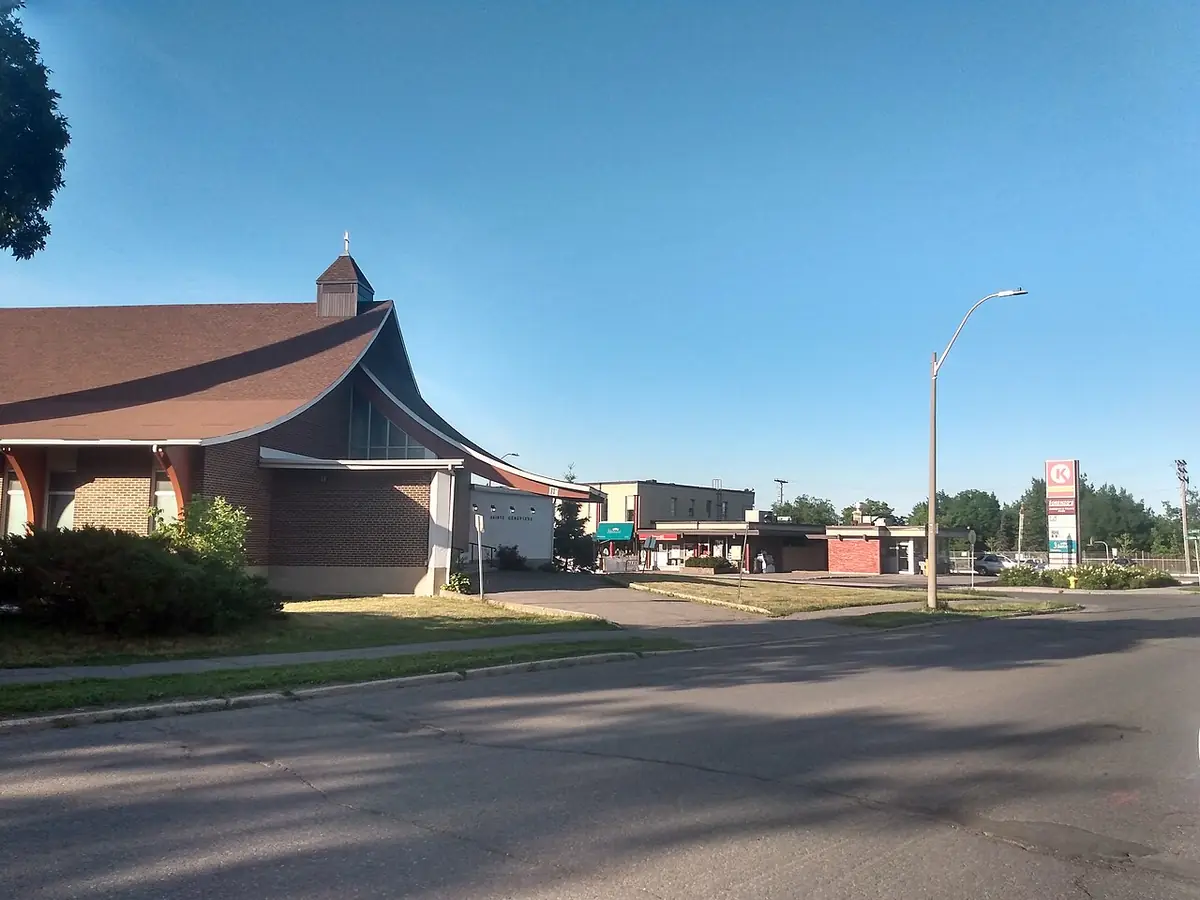
A neighbourhood church along an Ottawa street — Photo: Earl Andrew · CC BY-SA 4.0 · Wikimedia Commons
Behind this apparent smoothness sit the things that listings and automated estimates systematically leave out.
To judge whether a figure on an Ottawa house is fair, you have to set the marketing brochures aside and look at how a weekday actually unfolds. From commuting on the main road corridors to local services, every logistical detail weighs on quality of life, on how tired the seasons leave you, and in the end on what a buyer will pay.
07:30Departure and the morning commuteThe run towards downtown or the employment hubs via Highway 417 or the OC Transpo network, which calls for careful handling of peak hours and shows up plainly in what buyers pay by area.
08:30School and childcare drop offAccess to French language public schools (CEPEO or CSDCEO) or English language ones (OCDSB), often at the heart of residential neighbourhoods and one of the steadiest supports under local values.
12:30Neighbourhood life and shopsLocal shopping in the markets or on commercial streets such as Wellington Street or in Westboro for daily needs, the kind of walkable amenity that separates two otherwise identical houses.
17:00The return and family logisticsManaging end of day traffic and the move into after school activities at municipal sports complexes, a convenience that quietly firms up the figures in family areas.
19:30Evening and residential quietEnjoying the calm of the riverside parks along the Ottawa River or the Rideau Canal depending on the season, away from the working day; proximity to that green network is a recognised value driver.
21:30Preparing for tomorrowChecking the local forecast to plan snow clearing or the next morning journey, a routine that explains why driveway access and exposure both feed into condition adjustments.
What an online estimate will never tell you about a house in Ottawa
Ignoring these technical details almost always leads to a painful correction a few months later.
Advertising photographs and glowing agency descriptions always show a property at its most flattering, and an automated estimate reads little more than the same surface facts. Yet the structural reality of the housing stock in Ottawa carries technical and regulatory particularities that any serious figure has to account for.
The real age of the underground infrastructure and water connections
Many established neighbourhoods have ageing pipework that raises the risk of municipal sewer backup during heavy spring rain, which makes a backwater valve essential to protect your basement. No automated model sees this, and a single flooded basement in the street history can move a figure by thousands.
Local micro climates and exposure to prevailing winds
The open geography of the Ottawa valley exposes some areas to particularly violent freezing winds in winter, which sends heating bills up sharply if the original insulation has not been properly upgraded. Two houses of identical floor area can be worth visibly different amounts for this reason alone.
The strict limits set by municipal planning by-laws
The City of Ottawa applies tightly framed planning rules on felling mature trees, extending buildings and creating secondary suites, which sometimes sharply limits what a buyer could add later. Since much of a valuation rests on unrealised potential, those limits are a direct deduction.
The real acoustic impact of transport corridors and flight paths
A street that seems quiet on a Sunday afternoon viewing can become a noisy through route by Monday morning, which affects residential calm and, in a measurable way, the resale figure. Visit at peak hours before you accept any number.
The valuation mistakes owners in Ottawa only discover six months later
These painful accounts show that a quick figure on an Ottawa house does not serve every owner equally.
Looked likeA charming older house with plenty of character in a central historic neighbourhood, valued on its street appeal.
Turned outA permanent financial drain because of porous limestone foundations and an obsolete electrical installation needing a complete and very costly upgrade, none of which the original figure had deducted.
Would have caught itInsisting on a thorough inspection by a certified professional who specialises in the older building stock of the Ottawa area, and folding every finding into the figure as an explicit adjustment.
Looked likeA large, private wooded lot on the edge of the city, priced as though land area alone carried the value.
Turned outA daily logistical nightmare with endless journeys to schools, health services and workplaces, and a resale figure well below what the lot size suggested, because buyers discount hard for that distance.
Would have caught itTiming the real peak hour journey between the area and your usual destinations, and checking that the comparables behind your figure share the same commute, not just the same lot size.
Looked likeA modern, affordable condo whose charges were presented as stable and whose value looked easy to read.
Turned outPoor management by the condominium corporation leading to massive special assessments to fund the imminent replacement of the roof and the lifts, which wiped out the apparent value.
Would have caught itReading the general meeting minutes for the last three years and the reserve fund report closely, and treating a weak reserve as a deduction from the figure rather than a footnote.
Looked likeA residential area under rapid development, valued on the promise of quick capital growth.
Turned outA permanent building site on the neighbouring lots, generating constant noise, daily dust and clogged roads for years, and holding the figure flat while the promise never arrived.
Would have caught itConsulting the City of Ottawa planning documents to identify every construction and zoning project planned within a kilometre before you accept a growth assumption in any valuation.
Who should not act on a quick valuation of an Ottawa property right now?
If you have avoided these traps and your position is settled, the final question remains open.
A headline valuation figure is treated as an unquestionable fact, but it is a strategic trap for certain owners. Acting on a number at the wrong point in your working or personal life in the Ottawa area can destroy your financial flexibility and lock you into an asset that is slow to convert back into cash.
The worker whose job mobility is uncertain in the short term
→To hold off, and to treat any figure as indicative rather than as a basis for a move.
The transaction costs of buying and selling (legal fees, agency commission, land transfer tax) generally require a holding period of at least five years to absorb without a straight loss, so a favourable valuation alone is not a reason to act.
The household whose savings barely cover the minimum down payment
→To wait and keep building a solid cash reserve before relying on any figure.
Owning a house in Ottawa exposes you to major unplanned expenses (a failed furnace, water getting in) that need immediate cash, and a valuation reflects none of that liquidity risk.
The person with no appetite for maintenance and manual work
→To stay in rented accommodation, or to opt for a managed condominium with integrated property management.
Holding a detached house in Ottawa demands a constant personal investment of time and energy, particularly against the demands of four Canadian seasons, and a house whose upkeep slips loses value faster than the figure suggests.
So, are you ready to put a real number on your Ottawa property?
A calm end to the day beside the water in Ottawa — Photo: ContribQC · CC BY-SA 4.0 · Wikimedia Commons
Settling on what a property in Ottawa is worth marks a real turning point in a plan. It is not a formality, but a structural judgement that shapes your savings, sets your geographic anchor and commits your finances for a long time. If you have read this analysis clearly, you now understand that a sound figure does not come from finding the perfect deal or waiting for a hypothetical crash, but from a precise match between the property in front of you and the evidence the local market in the capital actually provides.
The Ottawa market rewards careful preparation and punishes improvisation without mercy. Between winters you have to learn to handle, the subtleties of municipal taxation and a fine grained assessment of the hidden costs attached to each type of building, every judgement counts. Being ready means accepting that your figure will not be a single perfect number, but a defensible range that meets the fundamental tests of evidence, condition and comparability, without resting on assumptions you cannot support.
Take the time to validate your numbers with straight dealing professionals, walk the neighbourhoods at different hours, ask established residents and audit every technical document before you commit. Compare the agent opinion, the appraisal and the MPAC assessment, and make yourself explain each gap between them out loud. When the prospect of shovelling your driveway on a January morning does not put you off and your financial cushion is firmly in place, you will know that you are ready. Ottawa will give you back an exceptional setting, stable and deeply rooted in its community, in exact proportion to the effort you put into understanding it.
Related questions
What legal fees should you expect when a house sale in Ottawa closes?
Legal fees for a residential transaction in Ottawa generally run between $1,500 and $3,000, depending on the complexity of the file, the title search and the mortgage documents that have to be drawn up.
Does Ontario charge Land Transfer Tax on a property bought in Ottawa?
Yes. The province of Ontario applies a land transfer tax calculated on a sliding scale against the purchase value of the property, payable when your real estate lawyer formally registers the transfer.
What is the minimum down payment required to buy a house in Ottawa?
Under federal Canadian rules, the minimum down payment is 5% on the first $500,000 of the purchase price, and 10% on the portion above that amount up to one million dollars.
Is mortgage loan insurance compulsory in Ottawa?
This insurance, generally provided by CMHC, is compulsory for any buyer whose down payment is below 20% of the total acquisition price of the residential property concerned.
How does the City of Ottawa calculate property taxes?
Municipal property taxes rest on the market value assessment of your property set by the Municipal Property Assessment Corporation (MPAC), multiplied by the tax rate voted by Ottawa city council.
How do Ottawa winters affect the condition, and therefore the value, of a detached house?
Hard winters demand particular attention to the roof to prevent ice dams, to the central heating system, and to regular mechanical snow clearing of outdoor access to avoid water getting in during the spring thaw.
Do central neighbourhoods or Ottawa suburbs hold value better?
The answer depends mainly on your tolerance for commuting time and on your stage of life: central neighbourhoods offer walkable urban living while the suburbs offer larger floor areas for families.
What warranty covers a newly built home in Ottawa, and how does it affect its value?
New residential properties in Ontario carry the compulsory protection of the Tarion warranty, which covers construction defects and hidden faults on one, two and seven year tiers.
How do you assess the real condition of a condominium before valuing a condo in Ottawa?
A close reading of the reserve fund study certificate and of three years of owners meeting minutes is essential to spot the risk of future special assessments.
How long does a residential transaction in Ottawa usually take to complete?
The standard interval between an accepted offer and the effective closing date (taking possession) generally runs between 30 and 90 days, depending on what the seller and the buyer agree between them.
Property review of ting
No ting properties in Ottawa yet
Be the first — share it on ting and it shows up right here.