Putting a credible value on an apartment in Ottawa takes a careful reading of the local market, of Ontario condominium rules and of the building itself. This guide sets out what actually moves the figure, so you can arrive at a number you can defend in the federal capital.
Get the app
What nobody tells you.
Real prices, hidden costs and the traps to check before you commit.
Why valuing an apartment in Ottawa means looking past the facade
Scroll
Why valuing an apartment in Ottawa means looking past the facade
Putting a credible value on an apartment in Ottawa takes a careful reading of the local market, of Ontario condominium rules and of the building itself. This guide sets out what actually moves the figure, so you can arrive at a number you can defend in the federal capital.
Written by the ting.ad editorial team ·
Elgin Street, Ottawa in Street View: drag to look around.
That gap between the value a building appears to carry and the value it actually supports narrows once you look at who is asking for the figure and why.
Valuing residential property in Ottawa comes down to more than a headline price per square metre and a clear view of Parliament Hill. The local market requires a close reading of condominium fees and of the real state of the building's reserve fund. Behind the appeal of secure urban living, every condominium hides subtle financial balances that decide what a unit will genuinely fetch. So the promises of modern comfort have to be separated from the administrative reality of the federal capital's residential towers.
The promise that a recent building, with minimal upkeep and turnkey comfort, values at a premiumvsThe reality that rigorous condominium management, and the occasional unforeseen special assessment, pulls the figure back
Owners often underestimate how heavily Ontario reserve fund rules weigh on value. A condominium document review by an independent firm is essential before you accept any estimate.
The assumption that a figure is as easy to prove here as in far larger metropolitan marketsvsA stable but seasonal market where comparable sales thin out and time on market stretches as interest rates move
Demand in Ottawa is underpinned by the federal public service and the institutions, but pricing an apartment for resale demands a faultless read of recent comparables.
The idea that a rental income figure can be plugged straight into an investment valuationvsA strict legal framework governing leases and the relationship between owners and tenants in Ontario
The Landlord and Tenant Board of Ontario protects tenants strongly. Valuing a tenanted unit means calculating the net return after property taxes and fees, not the gross rent.
The belief that spectacular contemporary architecture downtown automatically lifts the valuationvsThe dominance of a functional housing stock valued mainly on proximity to transport routes and parks
Ottawa rewards quality of life and green space over ultra-dense towers. The buildings that hold their value integrate comfortably into their natural surroundings.
Which kind of owner are you, and what should your Ottawa valuation answer?
Once you know what your figure is for, the next surprise is how differently valuation is practised here from what you may be used to.
Not everyone needs the same number from the same apartment, and the federal capital serves public servants, business owners and people preparing for retirement in very different ways. What a valuation of an Ottawa apartment has to prove depends closely on whether you are about to list, to refinance, or simply to know where you stand. Working out which of those you are keeps you from paying for the wrong exercise.
The short-horizon owner
Your unit sits in a central area such as Centretown or the ByWard Market, where sale evidence is plentiful and a figure can be supported by genuinely recent comparables. For you the valuation is a quick, defensible market read rather than a deep exercise, so an agent's comparative market analysis, built from units in your own building, is usually enough. You should still expect the higher condominium fees found in towers with full service packages to be treated as a downward adjustment. Strong demand from young professionals in these areas keeps the evidence fresh and the figure easy to test.
The owner tracking long-term value
Your attention is on quieter residential districts such as the Glebe or Westboro, where mid-rise buildings sit beside the parks and the Rideau Canal. Sound and thermal insulation, and the long-term financial strength of the condominium corporation, matter more to your figure than any recent cosmetic upgrade. Because comparable sales in these small buildings are scarce, expect a valuer to lean harder on adjustments and on the reserve fund study. The premium per square metre here reflects an established neighbourhood and a value that has proved resilient through economic swings.
The investor owner
You need a valuation that weighs municipal property taxes, condominium fees and the real rental value on the Ontario market against each other, rather than a single headline number. Studios and one-bedroom units near the universities or the major technology employers are valued largely off achievable rent, so the evidence base is different from an owner-occupier sale. Ontario legislation on rent increases caps what a sitting tenancy can produce, and any credible figure has to reflect that ceiling rather than an open-market rent.
What changes about valuing an apartment when you arrive in Ottawa from abroad
Ottawa's river-lined green spaces, seen from above — Photo: Harleyd613 · CC BY-SA 4.0 · Wikimedia Commons
With those practical differences understood, the next step is to map the districts, because in Ottawa location is one of the largest single adjustments.
Establishing value in Ontario follows legal and practical conventions that sit a long way from those in many other countries. The idea of condominium ownership, the central role of the real estate agent and the sequence in which an offer is made all shape how a figure is arrived at and tested. Understanding these differences keeps you from misreading what a local estimate is actually telling you.
From abroad
A price fixed at a preliminary contract drawn up and certified by a public official as soon as the parties agree
Ottawa
A price tested through an Agreement of Purchase and Sale prepared by a broker and carrying strict conditions
Timelines are far shorter and the figure becomes binding as soon as conditions are waived, so your valuation has to be right before you sign rather than during a cooling-off period.
From abroad
Charges calculated on complex ownership shares with unpredictable quarterly calls for funds
Ottawa
A fixed monthly condominium fee budget that often covers water, maintenance of common areas and sometimes heating
Reading the Status Certificate is essential, because it shows how these fees will move and how healthy the reserves are, and both feed straight into the value of the unit.
From abroad
A single legal officer who drafts, certifies and secures the whole process from the outset
Ottawa
Licensed real estate agents who structure the transaction, with the real estate lawyer acting mainly on closing and the transfer of title
Legal advice is split between your broker and a lawyer specialising in Ontario real estate law, and neither of them is the person who produces your market figure.
From abroad
Local taxes based on a cadastral rental value across two separate charges
Ottawa
A single municipal property tax calculated by the City of Ottawa on the assessed value of the property
The amount varies by district and has to be built precisely into your annual figures, and the assessed value gives you a second reference point against the market estimate.
How the Ottawa district sets the baseline your valuation starts from
This district-level picture translates into figures that are worth looking at in detail.
Ottawa's urban geography is built around distinct cores linked by an efficient transport network and well-regarded cycle routes. Each area has its own rhythm, its own characteristic architecture and its own social profile, and each produces its own evidence base of comparable sales. Reading a district means weighing immediate proximity to the centres of activity against the residential calm buyers pay for.
Centretown and the downtown core
Constant urban activity, modern residential towers and direct access to the light rail transit (LRT) lines.
Suits
Valuations that need plenty of recent, closely matched comparable sales in the same or a neighbouring building.
Trade-off
A higher price per square metre, offset in the figure by condominium fees inflated by the range of shared services.
The Glebe and Old Ottawa South
Incomparable heritage character, streets lined with mature trees and immediate proximity to the Rideau Canal.
Suits
Owners whose value rests on an established, walkable setting with lively local shops rather than on building amenities.
Trade-off
A scarce apartment stock, mostly conversions or small older condominiums, which leaves few direct comparables and widens the range.
Westboro and Hintonburg
A creative, on-trend feel, plenty of independent cafes and a strong connection to the banks of the Ottawa River.
Suits
Units where contemporary design, an artistic street life and outdoor access genuinely lift the achievable figure.
Trade-off
Strong upward pressure that means quality units draw competing offers, so recent sales can sit above the underlying trend.
What the Ottawa apartment numbers actually say
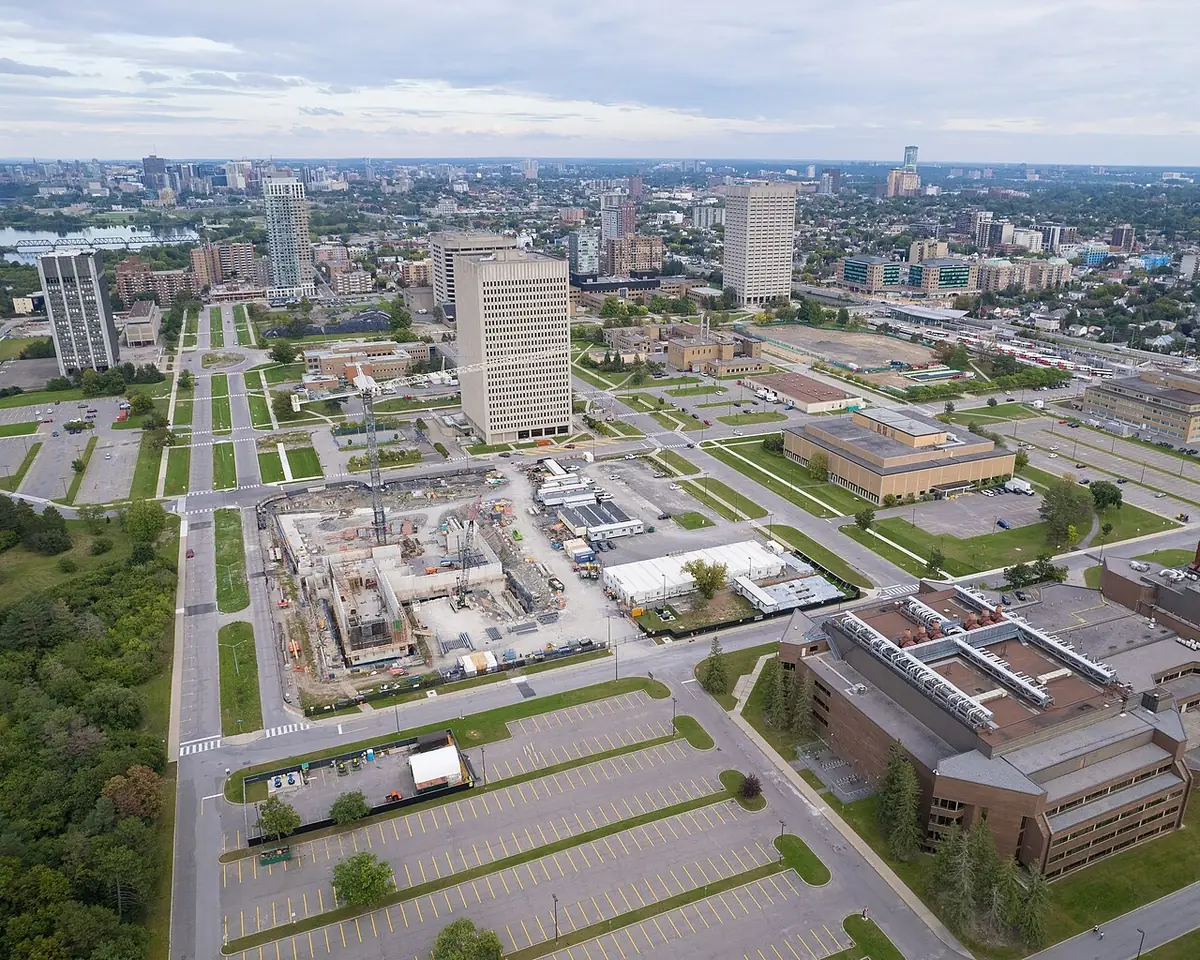
A quiet Ottawa neighbourhood, seen from the air — Photo: Harleyd613 · CC BY-SA 4.0 · Wikimedia Commons
Beyond these market-wide figures, the legal nature of what you are valuing deserves particular attention.
Valuing an apartment in Ottawa does not stop at the price shown on a listing sheet. A usable figure also accounts for provincial Land Transfer Tax, legal fees, annual property taxes and monthly condominium fees, all of which shape what a buyer can pay. Ranges vary considerably with floor area, the age of the building and the quality of what the condominium provides.
ottawaFor saleApartmentestimate
Median price / m²CA$4,845Half the apartments sell below this
Median priceCA$425kthe average is 14% higher — a few very large properties pull it up
Most common2 bedrooms45 % of listings
Average size83 m²
By number of bedrooms
Bedrooms
Share of market
Avg price
Price / m²
Avg size
1
34 %
CA$352k
CA$5,865 +15 %
60 m²
2most common
45 %
CA$434k
CA$5,100
85 m²
3
17 %
CA$522k
CA$4,743 −7 %
110 m²
4
4 %
CA$643k
CA$4,590best value / m²
140 m²
Each row is an average, compared against the area average of CA$5,100 / m². These are indicative estimates of a typical local market, not a measured sample of live listings. Check current listings before relying on them.
Unit or common elements: what a valuation is actually measuring
Once you know what is being measured, a strict order of steps decides whether the figure holds up.
Owning an apartment in Ontario means sitting inside a Condominium Corporation governed by strict provincial law. You have to separate what belongs to you exclusively from what belongs to all the owners together. That legal distinction decides what area is measured, which improvements you can claim credit for, and how the building's condition is treated as an adjustment.
The private area (Unit)
You own the interior space bounded by the party walls, floors and ceilings as set out in the official description registered when the condominium was created. You are free to fit out that interior, subject to the building's rules on nuisance and structural changes, and it is this boundary that defines the measured area a valuation works from.
What it changesImprovements and maintenance inside these boundaries are yours to fund, and only these count as your own contribution to the figure.
The common elements (Common Elements)
The land, the structural frame, the roof, the corridors, the lifts and the leisure facilities belong collectively to all the owners. They are run by an elected board and often administered by a professional management company appointed by the corporation, and their condition is documented rather than guessed at.
What it changesTheir state and funding move every unit's value at once, which is why the reserve fund study is read before any figure is settled.
The order of steps to follow before you accept a valuation figure in Ottawa
A waterfront restaurant along Ottawa's riverside — Photo: SpaceplaneSus · CC0 · Wikimedia Commons
To run that sequence properly, it helps to know exactly who does what.
A defensible valuation in Ontario rests on a strict order of work in which each step protects the figure against a specific error. Skipping one of them, or failing to check an official document, leaves an owner holding a number that will not survive a lender's review. Administrative rigour is the best protection against an unpleasant correction.
A thorough inspection of the unit and the assembly of recent comparable sales by your broker.
Obtaining and reading in detail the Status Certificate and the reserve fund study, through your lawyer or a specialist broker.
Cross-checking the market figure against the MPAC assessed value and the property tax history for the address.
Adjusting the comparables for floor level, exposure, parking, storage, condition and the level of condominium fees.
Testing the result against what a lender's appraiser would accept before it is relied on for a listing or a refinance.
A written figure with its comparables and adjustments set out, ready to be produced to a lender, a lawyer or a buyer.
Who contributes what to the valuation of your Ottawa apartment
In short, valuing an apartment in Ottawa rewards method, financial clarity and respect for the local rules.
A sound valuation in Ottawa depends on close cooperation between professionals whose roles are tightly defined by Ontario law. Understanding what each of them is responsible for lets you ask the right person for the right piece of the figure and avoid confusing one kind of opinion with another. Each of them secures a specific link in the chain of evidence.
The real estate agent (Real Estate Agent)Comparative market analysisThey assemble recent comparable sales and produce the comparative market analysis, the market-facing figure used to set an asking price.
The home inspector (Home Inspector)Condition assessmentThey examine the general state of the apartment, identify potential hidden defects and check that the installations work, which sets the condition adjustments.
The real property lawyer (Real Property Lawyer)Legal verificationThey check title, run the municipal searches and confirm that what is being valued, including parking and storage, is genuinely part of the ownership.
The condominium manager (Condo Manager)Building documentationThey supply the official documents on the building's financial health and confirm the fees and rules, which is where the building-level adjustments come from.
The accredited appraiser (Appraiser)Formal opinion of market valueInstructed by the bank, they confirm the real value of the property to support the amount of the mortgage granted, and their figure is the one that binds a lender.
Condominium apartment or detached house in Ottawa: why the two are valued in different ways
With the method understood, it is worth looking closely at the recurring costs that sit behind any figure.
Valuing a condominium apartment and valuing a detached house in Ottawa are two different exercises, because the evidence available for each is different. Condominiums, heavily represented in Centretown, the ByWard Market and along the LRT Confederation Line corridor, usually sit in buildings where several near-identical units have sold recently, so a figure can be built from close comparables and small adjustments. Against that, monthly condominium fees, which cover the common areas and the building envelope but move outside your control, act as a standing deduction that a house does not carry.
A detached house in districts such as Westboro, Alta Vista or Orleans carries full ownership of the land and the structure, with no collective monthly fee to deduct. That independence brings an exclusive maintenance burden, from cutting the lawn in summer to clearing serious volumes of snow through the long Ottawa winters, and deferred maintenance shows up directly as a downward adjustment. Acquisition cost is generally higher for a house, and distance from the economic heart of the federal capital is itself a measurable factor in the figure where buyers work downtown in the federal public service.
Over a longer horizon the two respond differently to local economic cycles, which changes how much weight old comparables deserve. Detached houses have historically shown stronger capital appreciation because of the growing scarcity of land in established districts, so a stale comparable understates them faster. Condominium apartments offer a more accessible entry point for first-time buyers and for investors seeking steady rental income from the student and professional population of the Ottawa-Gatineau region, which keeps their evidence base broad and their figures tighter.
Finally, weigh your own horizon before deciding how much precision you need. If you expect to move within three to five years, the liquidity of an apartment makes a market figure easier to test and to act on, although Canadian mortgage conditions dictate the pace of transactions. If you are looking for a lasting family base with private outdoor space, a house holds its value well, but expect a wider range around any single figure because each property is genuinely unique.
The running costs an Ottawa apartment valuation has to allow for
Numbers on paper are useful, but the way a unit actually lives is what a buyer, and so a valuer, ends up paying for.
The value of an Ottawa apartment is shaped by what it costs to hold, not only by the price of comparable sales. Recurring condominium charges, municipal property taxes and the energy costs peculiar to the Ontario climate all feed into what a buyer will offer, and therefore into the figure. Two otherwise identical units with different fee levels do not carry the same value.
Monthly and annual cost lines behind an Ottawa apartment valuation
Cost line
Estimated amount (range)
Frequency
Why it moves the figure
Municipal property taxes
$300 - $500
Monthly
Calculated from the City of Ottawa assessment and the mill rate in force for the residential class, so the assessed value is also a cross-check on your figure.
Condominium fees (condo fees)
$400 - $800
Monthly
Vary with floor area, the age of the building and the services included, such as the pool, parking or concierge, and above-market fees discount the unit.
Owner's home insurance
$40 - $80
Monthly
Covers personal property and liability, with the condominium corporation insuring the structure, so a poor claims history at building level raises this line.
Heating, electricity and water
$100 - $200
Monthly
Heavily influenced by the severity of the Ottawa winter and by the energy performance of the unit or the building, which is a genuine adjustment between comparables.
These ranges are based on averages observed in the Ottawa residential market and can vary with the exact location and the size of the property.
What an ordinary Tuesday tells a valuer about an Ottawa apartment
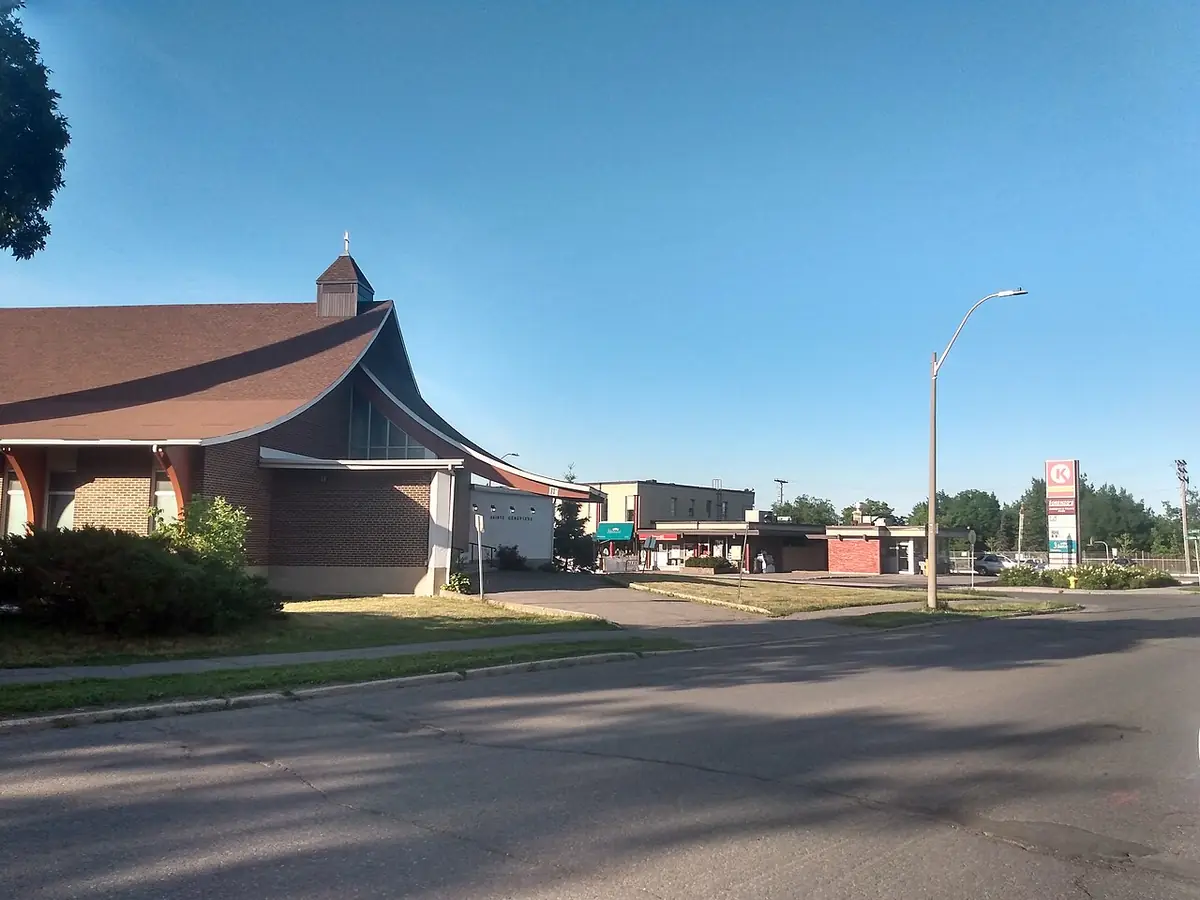
A neighbourhood church along an Ottawa street — Photo: Earl Andrew · CC BY-SA 4.0 · Wikimedia Commons
Beyond the visible practical and financial factors, an apartment carries subtleties that sales brochures tend to leave out.
How a unit is lived in day to day is exactly what a buyer pays a premium for, and it is what separates two apartments with the same floor area. Between commuting to the federal buildings, using nearby services and relying on municipal infrastructure, each hour of the day maps onto a factor that a valuation records. Walking a Tuesday through the building is one of the more reliable ways to test whether a figure is fair.
07:30Public transport station (Confederation Line)Quick departure towards Parliament or the Kanata technology sector on the integrated OC Transpo network, and distance to a station is one of the clearest measurable premiums in the district.
08:30Office in downtown OttawaArrival at work after a short journey, which is precisely the strategic advantage of a central position that buyers pay for and comparables in outer districts do not carry.
12:30ByWard Market or Sparks StreetA lunch break using the local shops and restaurants reachable on foot from most residential buildings in the area, a walkability factor that lifts value block by block.
17:30Neighbourhood grocery and servicesLast-minute shopping made easy by shops at ground level or a few minutes on foot from the building, which is worth checking before you accept a figure built on units further out.
19:00The home and its living spaceA quiet return to the apartment, free of heavy outdoor chores such as landscaping or clearing the yard, which is part of what the condominium fee buys and has to be weighed against it.
21:00Rideau Canal or green spaceAn evening beside the canal or in the surrounding parks, and proximity to those green spaces is a documented adjustment in the federal capital rather than a matter of taste.
What listings leave out that moves the value of an Ottawa apartment
Knowing about these blind spots is what keeps a valuation from drifting away from reality.
Reading a listing closely is not enough to grasp the legal and technical reality of a condominium apartment in Ottawa. Behind modern finishes and professional photographs sit structural and financial factors that only a careful review of the condominium documents brings to light, and every one of them is capable of moving the figure by more than a cosmetic renovation ever will.
The reserve fund study (Reserve Fund Study)
This document, mandatory in Ontario, shows whether the condominium is saving enough to replace the roof, the lifts or the windows. An underfunded reserve guarantees heavy special assessments for existing owners, and any honest valuation discounts the unit accordingly.
Strict rules on renting and on pets
The building's rules may prohibit Airbnb-style letting, limit pets or restrict interior alterations. These clauses narrow the pool of buyers, which is why they show up as a reduction in the resale figure rather than as a footnote.
How parking and storage are held
In many Ottawa buildings the parking space or the storage locker is held under a long-term lease or has a separate legal status, so it cannot simply be added to the unit's value. Confirming which of the two you hold can change the figure by a five-figure sum.
Construction projects nearby
Ottawa's rapid expansion brings a great deal of urban densification work. A clear view today is no guarantee that a residential tower will not block your natural light later, and a valuation that prices in a view without checking the planning pipeline is fragile.
The history of damage and insurance claims
Repeated water damage in a building pushes the condominium's insurance deductibles up sharply and can make individual cover hard or expensive to obtain, which buyers price in even when the unit itself was never affected.
The valuation mistakes owners regret six months later in Ottawa
Given those technical demands, it is equally worth asking whether a quick figure is the right tool for your situation at all.
Looked likeAn unusually strong figure, supported by condominium fees that were remarkably low for a well-placed building in downtown Ottawa.
Turned outA condominium corporation that had frozen fees artificially to attract buyers, leading to a massive special assessment in the first year to repair the underground garage and a sharp correction in every unit's value.
Would have caught itInsisting on a full review of the minutes of the last three annual general meetings by an inspector or a legal adviser specialising in Ontario real estate law before the figure is settled.
Looked likeA peaceful, perfectly quiet residential area, valued at a premium for exactly that calm in the heart of the capital.
Turned outA sector directly affected by intensive bus corridors or immediately adjacent to multi-year municipal works planned by the City of Ottawa, none of which the comparable sales had yet reflected.
Would have caught itVisiting the surroundings at different times of day and consulting the municipal planning documents to identify infrastructure projects coming within a kilometre.
Looked likeAn efficient floor area with no apparent wasted space, measured straight off the plan during a quick or virtual viewing.
Turned outPoor sound insulation between floors and party walls, audible with the slightest movement from neighbours, which buyers discount heavily however good the measured area looks.
Would have caught itChecking the year the building was constructed and the acoustic standards of that period, or arranging a second visit in the evening when the building is fully occupied.
Looked likeIndoor parking treated as part of the unit and added to the figure with no particular mention in the title documents.
Turned outA parking space leased exclusively from the condominium, at a monthly rate the corporation can revise unilaterally, so it added nothing to the capital value at all.
Would have caught itHaving your Ontario real estate lawyer confirm from the transfer documents whether the parking is genuinely a separate condominium unit before it is counted in the figure.
Who should not rely on a quick apartment valuation in Ottawa right now
With the risks and the limits measured, it is time to decide whether your figure is one you can stand behind.
A market estimate is often treated in Canada as a settled fact rather than an opinion with a range around it. Yet the current economic backdrop in Ottawa, with fluctuating interest rates and high maintenance costs, makes a single quick figure unsuitable for several kinds of owner, and it is worth recognising which of them you are.
The federal public servant facing an imminent posting elsewhere
→Commission a full valuation rather than acting on an online estimate, and weigh renting the unit out instead.
Transaction costs on a sale and a repurchase (Ontario Land Transfer Tax, legal fees, brokerage commissions) require a horizon of at least five years to be absorbed by potential appreciation, so the figure has to be net rather than headline.
The owner whose savings are stretched with no financial cushion
→Wait for a valuation that includes the reserve fund position before treating any equity as available.
Unlike a tenant, an apartment owner is directly liable for condominium special assessments if the building fails in a major way, and an estimate that ignores the reserve overstates what you actually hold.
The self-employed owner with unstable or seasonal income
→Obtain a lender-grade appraisal before counting on a refinance at the figure they have been quoted.
Canadian financial institutions apply strict eligibility criteria and require evidence over several tax years, so a favourable market estimate does not translate into borrowing at that value.
The investor looking for an immediate and guaranteed rental return
→Have the unit valued on its actual net income rather than on comparable sale prices.
Rent controls in Ontario and the current level of condominium fees compress net rental margins sharply in the central districts of Ottawa, so a sales-based figure overstates what the unit is worth as an investment.
So, is the figure you are holding for your Ottawa apartment one you can defend?
A calm end to the day beside the water in Ottawa — Photo: ContribQC · CC BY-SA 4.0 · Wikimedia Commons
Settling on a value for an apartment in Ottawa is a decision with real consequences, whether you are listing, refinancing or simply keeping track of what you own. The figure should not be dictated by the mood of the market or by the fear of missing a moment, but by a genuine match between the evidence available and the property in front of you in the federal capital.
If you have confirmed the comparables, read the condominium's financial statements carefully and built in the recurring charges that the Ontario market imposes, you hold the elements of a defensible number. Support from qualified local professionals, whether an independent real estate broker or a real estate lawyer, remains your best protection against a figure that will not survive scrutiny.
Remember that a good valuation is the one you can explain line by line, not the highest one you were offered. Take the time to look at several comparable units, put demanding questions to the condominium board and its managers, and insist on full transparency about the technical state of the building before you rely on the result.
In the end, valuing an apartment in the Ottawa-Gatineau region is an exercise that rewards methodical preparation and financial clarity. If your figure survives the tests set out in this guide, you can put it in front of a buyer, a lender or a lawyer with confidence.
Related questions
What legal costs should a valuation account for on an Ottawa apartment?
Fees for the real estate lawyer in Ontario generally run between $1,500 and $3,000, plus disbursements for title searches, zoning and compliance certificates and registration of the mortgage on the land register. A realistic net figure for an owner subtracts these from the headline price.
How does Ontario Land Transfer Tax affect the figure a valuation produces?
Ontario Land Transfer Tax is calculated on a sliding scale according to the value of the property, so the tax a buyer faces is set by the valuation itself. First-time buyers can claim a refund of up to $4,000 on this provincial tax, which changes what a given asking price costs them in practice.
Does a condominium unit need an inspection before it can be valued properly?
An inspection usually concentrates on the interior of the unit, but having an expert review the full set of condominium documents is strongly recommended, because the overall financial and technical health of the building is one of the largest adjustments applied to any unit valuation.
How long does a valuation stay reliable in Ottawa?
Because the standard gap between an accepted offer and possession usually runs between 30 and 90 days depending on what the parties agree, a figure produced today is normally treated as current for a comparable window before the comparables need refreshing.
Can condominium fees rise unpredictably and change what a unit is worth?
Yes. Condo fees rise regularly to absorb inflation in maintenance costs, utilities and the building insurance premiums voted at the annual general meeting of owners, and a unit carrying above-market fees is valued below an otherwise identical one.
Does the right to rent short term on platforms like Airbnb change an Ottawa apartment's value?
The City of Ottawa applies strict rules limiting short-term rental to an owner's principal residence, and the condominium's own rules often prohibit tourist-style letting outright. A valuation therefore cannot assume any short-term rental income.
What defines the area being valued in a condominium?
For a condominium apartment you look at the condominium description, which sets out precisely the legal boundary of the private unit against the common elements and the structural components. That document, not the listing, tells you what square footage you are actually valuing.
How do lenders in Ottawa test a valuation figure?
Lenders instruct their own appraiser, and where the appraised value comes in below the agreed price the shortfall falls on the buyer. Working with an independent mortgage broker who compares offers from several dozen Canadian financial institutions helps you understand how each lender will treat the number.
Which running costs are usually bundled into monthly condominium fees?
Fees typically cover maintenance of the common areas, snow clearing, landscaping, the contribution to the reserve fund and sometimes shared services such as water, heating or central air conditioning. What is included, and what is not, is a standard adjustment between comparable units.
Where can you check the assessment history of a property in Ottawa?
The history of property assessments and the applicable taxes can be consulted directly on the official City of Ottawa website or through the Municipal Property Assessment Corporation (MPAC) of Ontario. The assessed value is a useful cross-check, though it is not the same thing as market value.
Property review of ting
No ting properties in Ottawa yet
Be the first — share it on ting and it shows up right here.