Becoming the owner of an apartment in Ottawa calls for a close reading of the local market, its institutional quirks and its demanding legal framework. This practical guide walks you through structuring a purchase in the federal capital step by step, with clear eyes.
Get the app
What nobody tells you.
Real prices, hidden costs and the traps to check before you commit.
What you actually get when you buy an apartment in Ottawa
Scroll
What you actually get when you buy an apartment in Ottawa
Becoming the owner of an apartment in Ottawa calls for a close reading of the local market, its institutional quirks and its demanding legal framework. This practical guide walks you through structuring a purchase in the federal capital step by step, with clear eyes.
Written by the ting.ad editorial team ·
Elgin Street, Ottawa in Street View: drag to look around.
That tension between being central and living well plays out differently depending on your working life and your personal one.
Buying an apartment in Canada's federal capital is not simply buying floor area. Buyers have to work with a market pulled in two directions at once, by the federal public service and by the local technology sector. Between wanting to be a short walk from the centres of decision-making and wanting a calmer residential setting along the Rideau Canal, those trade-offs shape every transaction. A property's value in Ottawa rests as much on its institutional location as on how well it copes with the region's harsh climate. That reality demands a clear-headed reading of the architectural and financial compromises before you commit.
Administrative centralityvsResidential quiet
Living near Parliament buys you remarkable walkability, but it also means a higher price per square metre and a street life that rises and falls with office hours. Move out toward the leafier districts and you get more generous floor areas, at the cost of a longer trip to the main employment zones.
Renovated older stock downtownvsNew energy-efficient builds further out
Historic downtown buildings have undeniable architectural character, but they often carry unpredictable condo fees and complicated insulation work. Recent construction makes managing heat through a hard winter far simpler, though the design language can feel more standardised.
A condominium with full servicesvsRelative independence in a smaller condo
Large residential complexes offer a concierge, gyms and indoor pools, all of which push fixed monthly costs up permanently. Smaller condominiums strip out those extras but ask owners to get more involved in decisions about major work.
Does this place actually fit the life you live now, and the one you are planning?
Arriving in Ottawa from another country or another big city means absorbing a distinctive set of urban and administrative reference points.
Life in Ottawa turns on a strongly marked seasonal rhythm and on a city laid out for getting around by several means at once. Whether you lean toward working from home, commuting to the federal ministries or a neighbourhood cultural life, the fit with the type of apartment you choose becomes decisive. The options below describe the typical paths buyers take once they meet the realities of urban and suburban living here.
Downtown and close to light rail
You are aiming for an apartment within walking distance of an O-Train station or a major bus corridor so you can avoid driving every day. That choice maximises your free time and puts restaurants and everyday services immediately at hand. In exchange, living space usually shrinks for the same budget, and underground parking becomes an unavoidable line item in your financing plan.
Riverside and inner-edge neighbourhoods
You would rather settle in areas such as The Glebe or Hintonburg, where the urban-village feel encourages neighbourhood life and direct access to parks. Apartments there tend to come in more spacious formats, sometimes in small income buildings or in conversions of older structures. The compromise is a slightly more spread-out route to the big employment centres, which asks for some planning around peak hours.
A modern, professionally managed condominium
You go for a new or recent apartment in a residential tower run by a rigorous, professionally supported condominium corporation. That approach shields you from short-term budget surprises on the building envelope and guarantees strong rental liquidity if your plans change. You do have to accept the strict rules the corporation imposes on interior alterations, short-term rentals and pets.
Living here when you arrive from abroad: what fundamentally changes
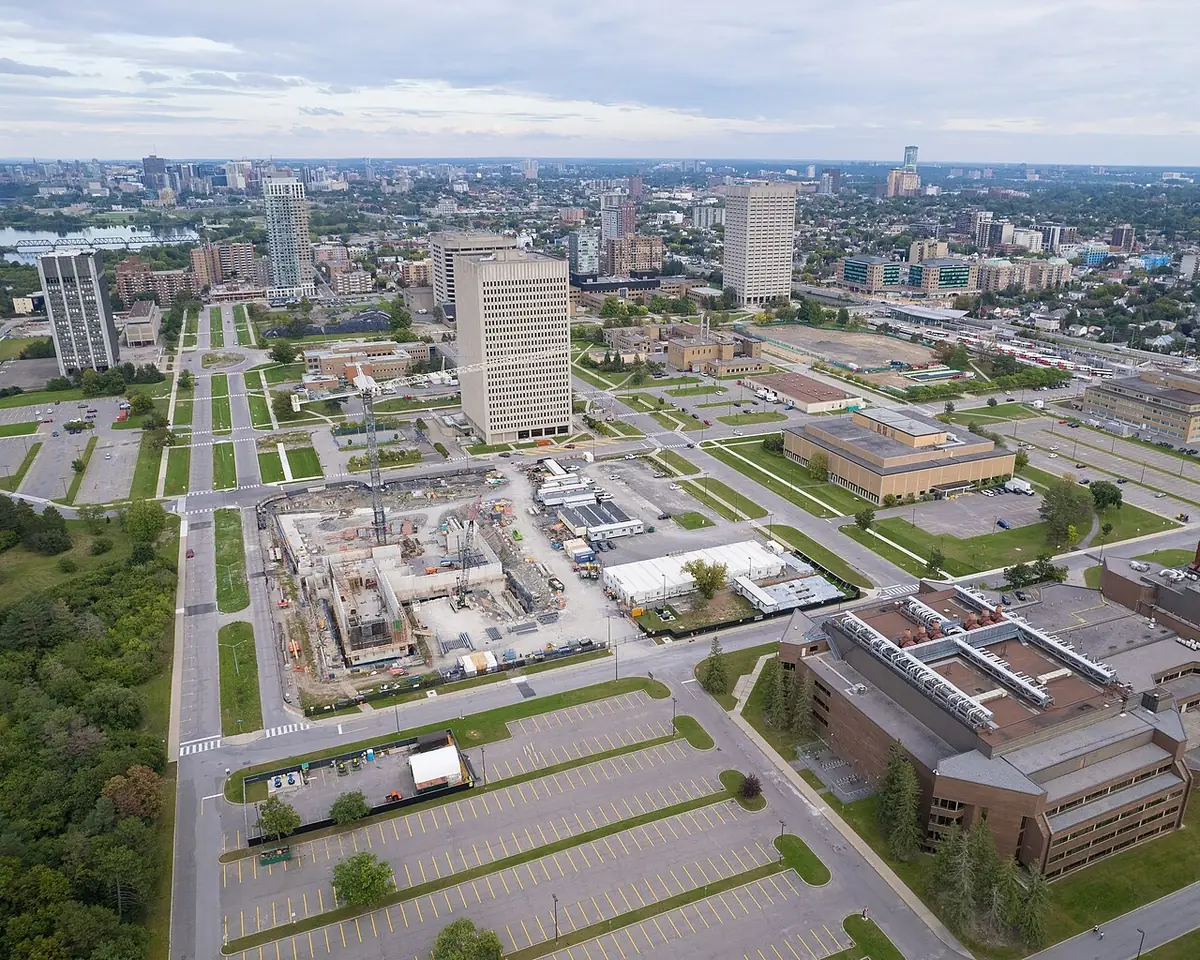
Ottawa's river-lined green spaces, seen from above — Photo: Harleyd613 · CC BY-SA 4.0 · Wikimedia Commons
Once those bearings are in place, choosing the neighbourhood becomes the decisive step in shaping your daily life.
Moving to Ottawa from abroad unsettles a lot of assumptions about housing, about how a city is laid out and about the contractual relationship itself. The dimensions of homes, managing a Canadian winter and the way condominium corporations operate all call for quick adaptation. Understanding those structural differences is what keeps the final purchase from producing financial and personal surprises.
From abroad
Housing built around older masonry stock and dense historic centres
Ottawa
A spread-out city, structured by wide arteries and airy residential districts
Distances get measured in driving time or minutes on transit rather than in walking radius, which changes what being central even means.
From abroad
Thermal insulation treated as a standardised regulatory box to tick
Ottawa
Extreme climate demands that impose very specific construction and heating standards
Check the performance of the windows, the air conditioning and central heating systems and the state of the condominium's reserve fund carefully so you can anticipate the bills.
From abroad
A property market run through long-established, single-track conveyancing habits
Ottawa
A process led by licensed real estate brokers and finalised by specialist real estate lawyers
Conditional clauses, prior inspections and title searches require contractual discipline from the moment you draft the offer.
From abroad
Condo charges often read as nothing more than running costs
Ottawa
A monthly budget (condo fees) that includes mandatory contributions to the reserve fund
A poorly capitalised condominium corporation can hand owners heavy special assessments to pay for a new roof or foundation work.
Which Ottawa neighbourhood should you target, given your priorities?
Reading the neighbourhoods only works if you cross it with the financial reality of the local market.
Ottawa is built from micro-neighbourhoods with sharply different moods and property dynamics. Whether you favour the cultural buzz of Centretown, the heritage character of the ByWard Market or the residential calm of the outer areas, each one sets its own balance. The profiles below compare what daily life actually feels like, to guide where you look.
Centretown and Centretown West
A dense, busy urban setting, ideal for getting around on foot or by bike along the cycling paths.
Suits
People working in the service or institutional sectors who want to drop the car from daily life entirely.
Trade-off
Some of the highest prices per square metre in the city, and condominiums sometimes housed in older buildings that call for closer attention to maintenance.
The Glebe and Old Ottawa South
The atmosphere of a comfortable residential neighbourhood, lined with mature trees, parks and independent local shops along Bank Street.
Suits
Buyers after a settled family setting, strong community cohesion and privileged access to the Rideau Canal.
Trade-off
Condominium apartments are scarcer here and much sought after, which keeps constant upward pressure on asking prices.
ByWard Market and Lower Town
A vibrant area, defined by the historic market, plentiful restaurants and cafes and a lively night scene.
Suits
Those who enjoy constant urban activity, social and cultural mix, and the ability to do everything on foot.
Trade-off
Sharing the space with downtown safety issues can be uncomfortable, and weekend nights are noticeably noisier.
Hintonburg and Westboro
A fashionable pocket in full transformation, mixing artist studios, craft breweries, design shops and the Ottawa River right nearby.
Suits
Tech professionals and younger workers looking for creative energy and a generally newer housing stock.
Trade-off
Rapid gentrification is squeezing out affordable opportunities and sharpening competition between buyers for the better properties.
What does buying an apartment in Ottawa really cost?
A quiet Ottawa neighbourhood, seen from the air — Photo: Harleyd613 · CC BY-SA 4.0 · Wikimedia Commons
Beyond the raw financial picture, what you legally own deserves a careful look.
Budgeting for a purchase in Ottawa does not stop at the headline price on the listing. You have to fold in municipal property tax, the monthly condo fees, and the Land Transfer Tax charged when the transaction closes. The orders of magnitude below reflect the trends observed for standard properties, excluding legal fees and additional taxes.
ottawaFor saleApartmentestimate
Median price / m²CA$4,845Half the apartments sell below this
Median priceCA$425kthe average is 14% higher — a few very large properties pull it up
Most common2 bedrooms45 % of listings
Average size83 m²
By number of bedrooms
Bedrooms
Share of market
Avg price
Price / m²
Avg size
1
34 %
CA$352k
CA$5,865 +15 %
60 m²
2most common
45 %
CA$434k
CA$5,100
85 m²
3
17 %
CA$522k
CA$4,743 −7 %
110 m²
4
4 %
CA$643k
CA$4,590best value / m²
140 m²
Each row is an average, compared against the area average of CA$5,100 / m². These are indicative estimates of a typical local market, not a measured sample of live listings. Check current listings before relying on them.
What you can actually hold: standard condominium versus shared undivided ownership
That legal security comes from following the key due-diligence steps scrupulously before you commit to anything.
Ontario law frames shared property ownership with strict rules that bear directly on your autonomy and on your ability to resell. Contrary to a common assumption, not all apartments are equal in legal terms. Knowing the fundamental distinction between forms of ownership protects your investment from unexpected administrative deadlocks.
The standard condominium
You own your unit outright, along with a clearly defined share of the building's common elements (roof, corridors, elevators, grounds). This legal form makes mortgage financing straightforward with any Canadian financial institution, and it offers a protective management framework thanks to the provincial legislation governing condominiums.
What it changesYou have to abide by the corporation's strict rules and pay monthly fees you cannot cut, fees that rise steadily with inflation.
Undivided co-ownership and alternative structures
Rarer in Ottawa's large modern developments but present in some heritage conversions, this arrangement means collective ownership of a whole building, governed by a formal co-ownership agreement between the co-buyers. It can occasionally open access to characterful properties in very central locations at a more modest initial cost.
What it changesThe financing usually demands a larger down payment and the unanimous agreement of the co-owners for any major decision, which complicates resale or mortgage refinancing.
The essential rule to understand before you hand over a deposit
A waterfront restaurant along Ottawa's riverside — Photo: SpaceplaneSus · CC0 · Wikimedia Commons
Once those markers are cleared, the transaction itself follows a rigorous protocol run by the professionals involved.
Signing an offer to purchase binds the buyer legally as soon as the seller accepts it, subject to whatever conditions are written in. In the context of a condominium purchase in Ottawa, skipping over the building's legal documents exposes you to serious financial risk. Getting the order of the essential checks right is what makes the whole acquisition safe.
Drafting the conditional offer to purchase
Systematically inserting conditional clauses that protect you until mortgage financing is confirmed by an approved lender.
Requiring a thorough technical inspection of the apartment by a certified professional working in the Ottawa area.
Obtaining and carefully reading the Status Certificate, including the financial statements and the reserve fund.
Confirming that no litigation is under way and that no major unfunded work is pending within the condominium.
Waiving the conditions and signing the final deed of sale with the real estate lawyer
How a property transaction unfolds, step by step
Buying property in Canada follows a formalised process in which each participant has a precise role at a precise moment. From the initial mortgage pre-approval to the handover of the keys, the administrative discipline is what keeps the transaction transparent. The table below sets out the stages and the people involved in getting your purchase done.
The buyer and the mortgage brokerGetting financial pre-approvalThis first step sets your maximum borrowing capacity and locks in your interest rate for a defined period, letting you target properties that match your real budget.
The buyer and the real estate brokerActive searching and targeted viewingsSelecting the apartments that fit your criteria across Ottawa's neighbourhoods, comparing them against the market and weighing the strengths and weaknesses of what you have seen.
The buyer and their legal adviserDrafting and negotiating the offerSubmitting a formal offer with conditions covering financing, inspection and review of the Status Certificate, followed by negotiation with the seller.
The home inspector and the condominium corporationWaiving conditions and technical auditsCarrying out the physical inspection of the unit and combing through the Status Certificate to confirm the financial and structural health of the building.
The real estate lawyerTitle search and preparation of the deedsThe lawyer confirms there are no hidden encumbrances on the property, prepares the transfer documents and coordinates the flow of funds between the bank and the seller.
All partiesFinal signing and taking possessionSigning the official documents on closing day, releasing the funds and handing over the keys so you can move into your new Ottawa apartment.
Condominium apartment or single-family house in Ottawa: how do you decide?
Once the type of property is settled, the question of financing and the real budget arrives immediately.
Choosing between a condominium apartment and a single-family house in Ottawa is not simply a calculation of floor area or a matter of taste. It is above all a trade between total freedom to manage your own property and the peace of mind that comes with a collective maintenance structure. In central neighbourhoods such as the Glebe or Centretown, apartments give you immediate access to transit, local shops and urban parks without ever having to maintain a roof or clear a long driveway in the middle of an Ontario winter. That suits buyers who value their free time above all else and refuse to spend weekends on renovation work or mowing a lawn.
Going the other way, choosing a single-family house, whether in established residential areas such as Nepean or Kanata, means accepting full material and financial responsibility for the property. No reserve fund is going to spread the cost of replacing a water heater or repairing foundations. In exchange, that complete autonomy guarantees total architectural freedom, no monthly condo fees that can move unpredictably, and exclusive use of private land, which changes daily life radically for families with children or pet owners. Ottawa's market rarely penalises one option over the other, but resale liquidity varies considerably by price bracket and by how the demographics of the outer neighbourhoods are shifting.
To settle between these two ways of living, a buyer has to assess the medium-term budget honestly, taking in not just the purchase price but the recurring costs that are easy to miss at first glance. Condo fees rise steadily to meet energy-efficiency requirements and the new construction standards set by the province of Ontario, while property taxes on single-family houses move with the periodic reassessments applied across the City of Ottawa. Looking hard at how you actually live today is what avoids the classic mistake of buying a large space for an imagined future when your real needs are about mobility and being close to everyday services.
Finally, geography plays a decisive part in this decision. Settling into an apartment high up along the light rail transit (LRT) corridor profoundly changes your relationship with getting around the city through the coldest months, cutting your dependence on a car. Suburban single-family houses, by contrast, demand rigorous logistical planning for daily trips downtown, while offering stable community roots and more generous green space. Each option traces a distinct residential path, and it is worth owning that choice fully from the moment you sign the deed of sale with your real estate lawyer.
What overall budget do you need to live comfortably in an Ottawa apartment?
With the financial frame in place, it helps to understand what daily life in the federal capital actually looks like.
Buying an apartment in Ottawa calls for a rigorous, detailed reading of the recurring costs that make up total cost of ownership, well beyond the mortgage payment. Between the property taxes collected by the city, the condo fees that keep the building running and the specific insurance you need, the monthly budget has to be built with a prudent safety margin. Local market data shows that condo fees vary widely depending on the age of the building, the shared amenities available such as a pool or a gym, and the financial health of the reserve fund held by the condominium corporation.
Monthly and annual cost items for a standard Ottawa apartment
Cost item
Estimated amount
Frequency
Main factors
Municipal property taxes
$300 to $550
Monthly
City of Ottawa property assessment and the tax rate in force
Condo fees
$400 to $850
Monthly
Unit size, shared services and the age of the condominium
Owner's home insurance
$45 to $80
Monthly
Replacement value of your contents and liability coverage
Electricity and supplementary heating
$80 to $160
Monthly
Insulation, exposure and Hydro Ottawa rates
These estimates reflect the averages observed in Ottawa's residential market for standard-sized apartments.
Upfront and transaction costs at purchase
Type of cost
Budget range
When it is paid
Nature of the charge
Land Transfer Tax
1.5% to 2.5% of the price
At signing
Mandatory provincial and municipal tax calculated on the purchase price
Legal fees and lawyer's charges
$1,200 to $2,500
At closing
Title search and registration of the deed
Pre-purchase inspection
$500 to $900
Before the firm offer
Assessment of overall condition by a certified professional in Ontario
Moving and utility connections
$600 to $1,800
On the day
Transport services and setup fees for energy accounts
First-time buyers can sometimes claim federal or provincial tax credits that partly offset these upfront costs.
Health, schools and transport: what does an ordinary Tuesday look like for an Ottawa resident?
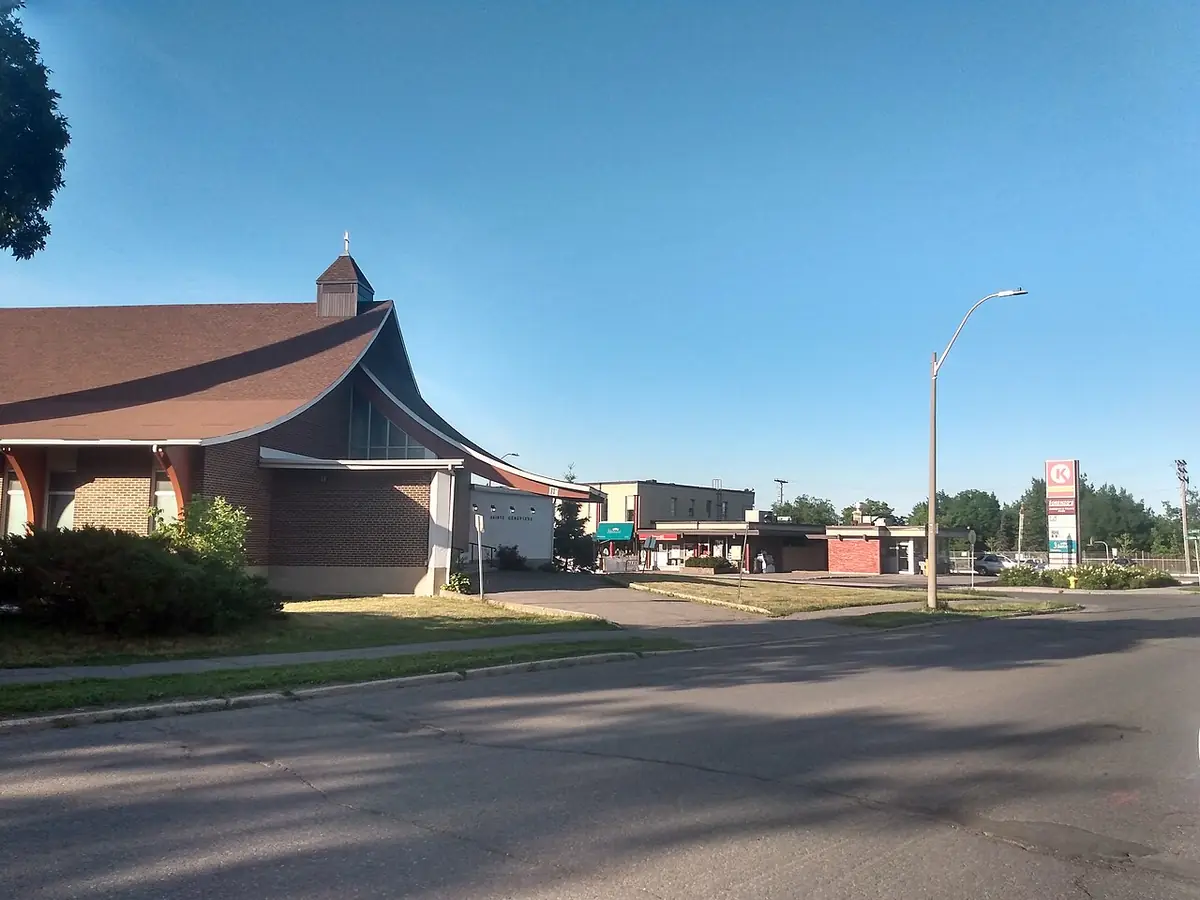
A neighbourhood church along an Ottawa street — Photo: Earl Andrew · CC BY-SA 4.0 · Wikimedia Commons
Beyond that well-oiled routine, looking closely at a property often reveals things that are less visible.
Nothing tests whether a location works like watching an ordinary weekday closely, from waking up to going to bed. In Ottawa, how smoothly you move depends heavily on being near the transit network built around the O-Train and OC Transpo's main bus routes. Residents in well-served areas quickly notice that quality of life rests on getting through work and personal errands without spending hours behind the wheel in Highway 417 traffic at peak times.
07:30A central residential neighbourhood (Centretown, for example)Leaving home on foot for the nearest transit station, avoiding the car for the morning trip.
08:15The O-Train corridor or the main arteriesA smooth commute to work, whether that is Parliament Hill, the federal ministries or the technology sector.
12:30Local shops and neighbourhood servicesA midday break making use of the dense local supply of restaurants, cafes and public spaces laid out in the heart of the city.
17:00The local school or daycareCollecting the children from public or Catholic schools, French-language or English-language, within a safe walking distance.
18:15The public market or a local food shopLast-minute shopping for dinner at neighbourhood stalls, favouring short supply chains and a lively street.
19:45Riverside green space or an urban parkUnwinding in the evening along the Rideau Canal or in the municipal parks, with outdoor exercise available all year.
What the listing will not tell you about the real condition of Ottawa buildings
That documentary vigilance is what dodges most of the disappointments that surface after you move in.
Online listings reliably lead with light from both sides, renovated quartz countertops and being steps from fashionable amenities. What they leave out, deliberately or by omission, are the structural facts that determine an apartment's real value and comfort over the long term. Reading the building's history, the make-up of the condominium corporation and the work voted at recent general meetings is a mandatory step for any careful buyer who wants to avoid unpleasant financial surprises.
The real state of the reserve fund and the reserve fund studies
An out-of-date or underfunded reserve fund study means a major special assessment of several thousand dollars will land on owners before long, to pay for new elevators or a new roof.
Strict condominium rules on renting out
More and more Ottawa condominium corporations limit or outright ban short-term rentals of the Airbnb type, and some restrict long-term letting too, which cuts the flexibility of your investment.
The real acoustic performance between adjoining floors
Recent concrete construction insulates sound very well, but many converted buildings and light wood-frame structures let impact noise through in a way that wears on you day to day.
Urban development plans and future construction nearby
An apartment bought for its open view can end up staring at a wall if a developer wins municipal approval to put up a neighbouring tower within three years.
The quality of the outside property management company
An incompetent or understaffed management company means delays in routine maintenance, poorly collected fees and lasting friction between residents.
The buying mistakes you only discover after six months in your new apartment
Those hard-won lessons show that not everyone gets the same benefit from this kind of purchase.
Looked likeAn ultra-quiet residential pocket, perfect for resting undisturbed
Turned outA heavy traffic corridor at peak hours, with constant road noise in summer once the windows are open
Would have caught itVisiting the neighbourhood at different key moments of the day, particularly Friday evening and Monday morning when traffic is at its heaviest.
Looked likeCondo fees that were affordable and stable for several years
Turned outA sudden jump in insurance costs for the whole building after recent severe weather in Ontario
Would have caught itAsking for the minutes of the last three general meetings to spot recurring increases and past claims.
Looked likeAn indoor parking space included and perfectly accessible
Turned outA cramped spot that is impossible to manoeuvre into in winter, because of piled snow and badly placed structural pillars
Would have caught itTesting the parking yourself with your own vehicle at the final viewing, before the conditions are waived.
Looked likeA spacious, secure private storage space in the basement
Turned outA damp room prone to spring water infiltration, with no properly secured partitioning
Would have caught itPhysically inspecting the locker you have been assigned and checking the walls for damp marks or mould.
Unusual profiles: who should categorically not buy an apartment in Ottawa?
It is time now to lay the groundwork for your own conclusion and take a position.
Home ownership is treated as an absolute social given, but in reality it does not suit every way of living or every financial situation. In Ottawa, where the rental market offers varied alternatives in the livelier neighbourhoods, committing to buy an apartment without proven professional and personal stability can turn into an expensive trap. Some buyers would do better to keep the flexibility of renting, preserving their capacity to save and their freedom to move.
The professional who relocates often or works on short contracts
→Renewing a flexible lease
Transaction costs on the way in and the way out (legal fees, brokerage, Land Transfer Tax) wipe out any potential gain if the property is resold before roughly five years of ownership.
The saver with a very tight down payment
→Putting their capital into diversified financial instruments
Buying with a minimal down payment and no emergency savings leaves you immediately exposed if the condominium votes an unforeseen special assessment for urgent work.
The dedicated landscaping and garden enthusiast
→Renting a single-family house with a private garden
The complete absence of private land, and of any freedom to alter the exterior, in a condominium apartment produces unbearable frustration for keen gardeners.
So, are you really ready to buy property in Ottawa?
A calm end to the day beside the water in Ottawa — Photo: ContribQC · CC BY-SA 4.0 · Wikimedia Commons
Reaching the end of this structured reflection means taking honest stock of your personal ambitions, your real financial capacity and the objective state of Ottawa's property market. Buying an apartment is not an act of blind faith but a considered economic decision that shapes your finances for many years. If your plans keep you in the region for the long term, your job is stable and you have absorbed all the hidden costs of condominium living, buying is an effective shield against rising rents and a form of forced saving that makes particular sense in Ontario right now.
If the slightest doubt remains about your professional horizon, however, or if your down payment leaves you too exposed to surprises in the building, wisdom says wait and consolidate your position as a well-informed tenant. Ottawa's market will keep offering solid opportunities to patient, well-prepared buyers who can read a condominium's financial reports and pick the right location along the main transit corridors. Take the time to view several properties with a critical eye, question the property managers without flinching and demand total transparency before you sign anything.
In the end, the success of your purchase lies in the fit between how you actually live and the structural constraints of the property you choose. Whether you are putting down roots in the middle of the urban buzz or calmly planning your financial future, every choice you make today shapes tomorrow's independence. You now have all the factual bearings you need to see this through with confidence, without rushing and without false promises.
Related questions
What do condo fees typically cost for an apartment in Ottawa?
Monthly condo fees generally range from $400 to $850 depending on the size of the unit, the age of the building and whether it offers elaborate shared amenities such as an indoor pool or round-the-clock security.
Do you pay Land Transfer Tax when buying a condo in Ottawa?
Yes. Land Transfer Tax is mandatory in Ontario and is calculated on a graduated scale based on the market value of the property at the time the transaction closes with your real estate lawyer.
Is a pre-purchase inspection compulsory for an apartment?
Although it is optional in strictly legal terms, a pre-purchase inspection by a certified professional is strongly recommended to uncover hidden defects in the unit and assess the overall condition of the building.
How do you check the financial health of a condominium corporation in Ottawa?
Go through the Status Certificate in detail: it gathers the audited financial statements, the current annual budget, the reserve fund study and the amount of any special assessments in force.
Which neighbourhoods are most sought after for buying an apartment in Ottawa?
Centretown, the Glebe, the ByWard Market and Hintonburg concentrate the strongest demand thanks to their walkability, their commercial vitality and their excellent public transit service.
Are pets always allowed in Ottawa condominiums?
No. Each condominium corporation writes its own by-laws, and these can impose strict limits on the number, the weight or even the presence of pets in the building.
How long does a typical real estate transaction take in Ontario?
The standard interval between acceptance of a firm offer and the closing date handled by the real estate lawyer generally runs from 30 to 60 days, depending on what buyer and seller agree to.
Is there government help for first-time buyers in Ontario?
Yes. First-time buyers can claim the federal Home Buyers' Tax Credit and use the Home Buyers' Plan, which allows funds to be withdrawn from an RRSP without a tax penalty.
How does parking work in central apartment buildings?
A parking space can be held as a separate unit with its own title, or it can come as an exclusive-use right attached administratively to the purchase deed for the apartment itself.
What effect does the light rail transit system (LRT) have on condo values in Ottawa?
Apartments within a ten-minute walk of an O-Train station have historically held up better on the market and resold more easily than units in poorly connected pockets.
Property review of ting
No ting properties in Ottawa yet
Be the first — share it on ting and it shows up right here.