Buying a detached house in Ottawa means understanding a North American market with rules and rhythms of its own. This guide walks you through it step by step: how to work out the real costs, how to pick the neighbourhood that suits the way you live, and how to secure every stage of the transaction.
Get the app
What nobody tells you.
Real prices, hidden costs and the traps to check before you commit.
Why buying a house in Ottawa means setting aside the assumptions you arrived with
Scroll
Why buying a house in Ottawa means setting aside the assumptions you arrived with
Buying a detached house in Ottawa means understanding a North American market with rules and rhythms of its own. This guide walks you through it step by step: how to work out the real costs, how to pick the neighbourhood that suits the way you live, and how to secure every stage of the transaction.
Written by the ting.ad editorial team ·
Elgin Street, Ottawa in Street View: drag to look around.
These first structural contrasts feed straight into daily life, and how much they matter depends on the kind of buyer you are.
Buying a detached house in the federal capital is not simply a matter of more floor space or a different architectural style. Buyers discover quickly that the Canadian housing market is built on territorial logics, climate demands and municipal planning rules that are radically different from what they knew before. Between getting through hard winters, the heavy insulation the climate requires, and strict condominium or zoning rules, every detail weighs on the real long-term budget. Understanding these fundamentals before you sign spares you financial disappointment and lets you adjust your strategy from the very first viewings.
Floor space that feels enormousvsEnergy costs to match
The interior volumes and finished basements are immediately appealing, but heating through the winter months is a substantial annual line item that has to be built into the budget from the start.
The apparent freedom of a detached housevsTightly drawn municipal rules
Contrary to the assumption of total autonomy, changing the exterior appearance, felling a tree or parking certain vehicles on your street is governed by strict local by-laws.
A quiet, leafy residential streetvsNear-total dependence on a car
The North American urban pattern favours spread, which means walkable access to everyday shops is often limited outside the historic central areas.
Which kind of buyer are you in the Ottawa housing market?
Moving into Ottawa life means measuring precisely what changes in the shape of your days.
Whether a lifestyle and a property fit each other comes down to specific criteria: how your days are organised, how far you are from the main employment areas, and how much commuting you can tolerate. Whether you are arriving as a family with school-age children, as a couple working in the federal public service, or as an investor looking to build an asset, expectations differ radically. Looking at your situation through these lenses immediately shows which trade-offs are acceptable and which ones will wear you down after a few months.
Outer residential neighbourhoods
The suburbs offer larger lots, accessible parks and proximity to well-regarded schools. In exchange, you accept longer daily journeys into the city centre and a greater reliance on the car for every after-school activity. Neighbourhood life revolves around neighbours and quiet, but there is next to no cultural activity in the evenings.
Central and historic districts
Living in the neighbourhoods near the Rideau Canal or downtown cuts commuting time drastically and gives you a lively local scene with plenty of shops and restaurants. The market there is far tighter, however, living space is often smaller for the same budget, and older houses call for higher and more regular renovation and maintenance budgets.
Transitional areas and inner suburbs
These areas stand to benefit from future extensions of the transit network and from steady rental demand among young professionals. The risk lies in values that can be more volatile depending on economic cycles and federal government budget decisions. A close reading of local transaction history is essential if you are to avoid overpaying.
What changes most when you settle here from another country
Ottawa's river-lined green spaces, seen from above — Photo: Harleyd613 · CC BY-SA 4.0 · Wikimedia Commons
Once those differences have sunk in, choosing the area becomes the decisive step in your purchase.
Moving to another country comes with a set of habits that has to be unlearned before you can read the Canadian housing market calmly. Construction standards, the relationship with property professionals and the way domestic space is handled all follow their own conventions. This table sets your existing reference points against the local reality so you can avoid the most common misjudgements during viewings.
From abroad
Dense, centralised city living where everything is close at hand
Ottawa
Planned urban spread, organised as a set of self-contained neighbourhoods
You have to redefine what proximity means and accept that the weekly shop is done by car at large specialist stores rather than at small neighbourhood shops.
From abroad
Solid stone or traditional brick walls with high thermal mass
Ottawa
Wood-frame construction, which is very widespread
Sound and heat insulation behave differently; managing moisture in basements and maintaining vinyl or wood exterior cladding call for closer attention.
From abroad
A centralised conveyancing system where the legal checks are done up front
Ottawa
A transaction run by real estate brokers and completed by real estate lawyers
The buyer's broker plays a central role in negotiating and drafting the conditions, because the system rests on the contractual force of those conditional clauses.
From abroad
Standardised, compulsory technical surveys and disclosures
Ottawa
An independent pre-purchase inspection paid for by the buyer
The inspection report becomes your main negotiating tool and your main protection, because the legal guarantees available after the purchase are far more limited than in many other countries.
Which part of Ottawa matches your pace of life and your ambitions?
Weighing up these neighbourhoods has to go hand in hand with a realistic view of purchase costs and local property taxes.
The federal capital is a mosaic of neighbourhoods with strong identities, from the urban energy of the central districts to the quieter, family-oriented feel of the leafy suburbs. Each area has a direct effect on your budget, your travel times and the kind of property available. Comparing the options methodically lets you focus your search instead of scattering your viewings.
The Glebe and Centretown
Steady urban activity, journeys you can make on foot or by bike along the Rideau Canal, and a high concentration of independent shops.
Suits
Buyers who want city living, historic architecture and cultural venues on their doorstep.
Trade-off
Clearly higher prices per square metre, often smaller homes, and older houses that need a serious renovation budget.
Westboro and Hintonburg
A sought-after balance of fashionable energy, green space along the Ottawa River and an urban village atmosphere.
Suits
Young professionals and active families who want modern neighbourhood life together with quick access to the main road routes.
Trade-off
Strong competition in the market, constant upward pressure on prices, and a streetscape that is changing fast.
Kanata and Barrhaven
Complete residential quiet, large parks, modern school facilities and full shopping centres nearby.
Suits
Families with children who want space, safety, newer houses and a very favourable space-to-price ratio.
Trade-off
Total reliance on a car for daily journeys and long travel times into the city centre at peak hours.
What does buying and maintaining a house here actually cost?
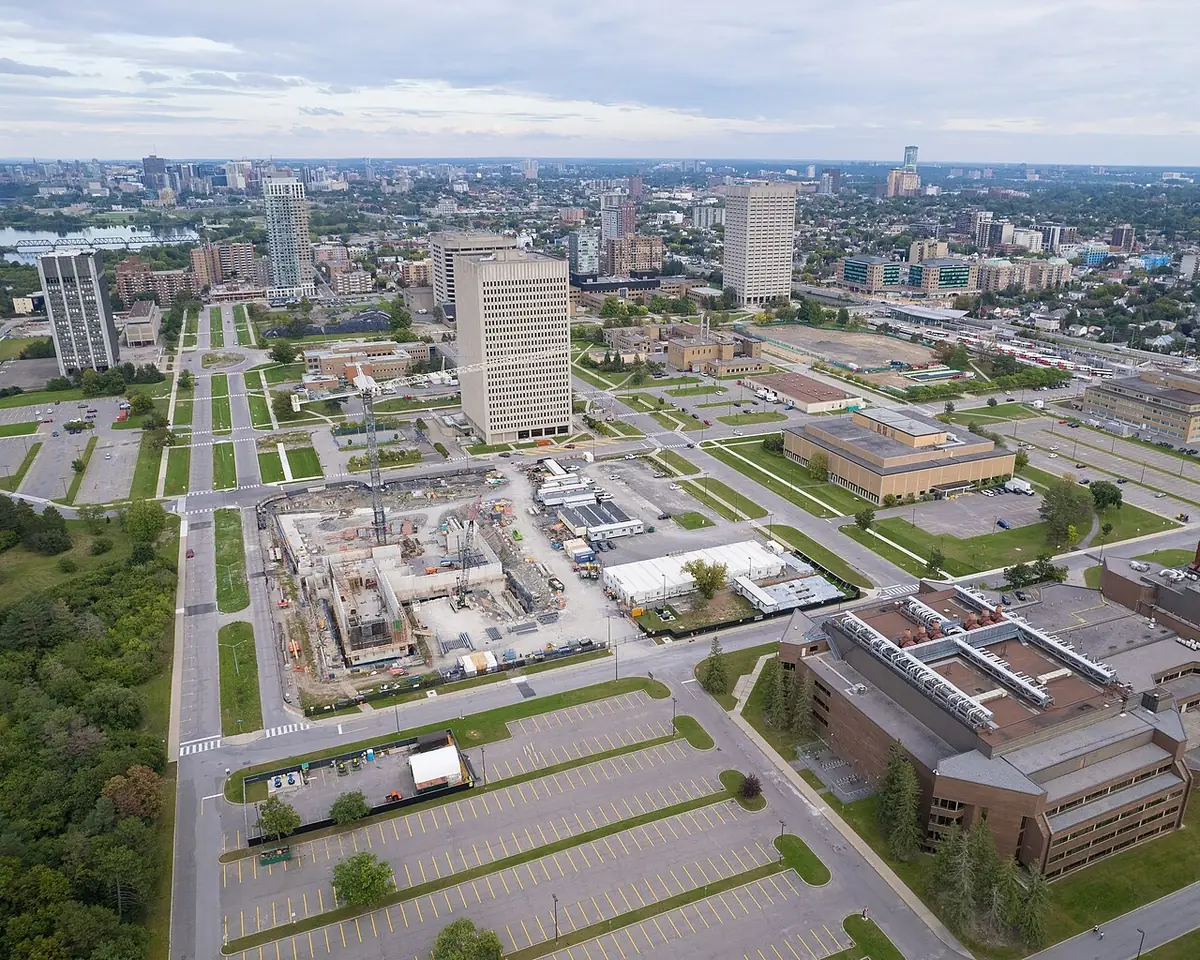
A quiet Ottawa neighbourhood, seen from the air — Photo: Harleyd613 · CC BY-SA 4.0 · Wikimedia Commons
Beyond the purely financial side, the legal nature of what you own deserves close attention of its own.
Estimating a purchase budget does not stop at the price on the listing. The Ottawa market brings in municipal property taxes that vary by area, strict closing costs, and seasonal maintenance costs specific to the Canadian climate. This table sets out the main expense headings to plan for, so you can build a solid financing plan and avoid any unpleasant financial surprise once the keys have changed hands.
ottawaFor saleHouseestimate
Median price / m²CA$3,973Half the apartments sell below this
Median priceCA$607kthe average is 14% higher — a few very large properties pull it up
Most common2 bedrooms68 % of listings
Average size145 m²
By number of bedrooms
Bedrooms
Share of market
Avg price
Price / m²
Avg size
2most common
68 %
CA$622k
CA$4,182
149 m²
3
26 %
CA$749k
CA$3,889 −7 %
193 m²
4
6 %
CA$922k
CA$3,764best value / m²
245 m²
Each row is an average, compared against the area average of CA$4,182 / m². These are indicative estimates of a typical local market, not a measured sample of live listings. Check current listings before relying on them.
What you actually own: freehold versus condominium
Once you have settled on the type of property, the transaction itself follows a strict procedural order.
Buying a house in Ottawa covers quite distinct legal realities, and it pays to master them if you want to avoid disputes with neighbours or financial surprises. Between the freehold house, where you control the whole of the land and the building, and the house held in condominium (a condo, or freehold with an association) which brings shared management fees, the constraints on use differ radically. Looking at both options lets you choose how involved you want to be in day-to-day upkeep.
Freehold
You own the building and the land outright, with no condominium corporation governing your aesthetic choices or your exterior renovation work. You alone decide when to redo the roof, change the windows or landscape the garden as you please.
What it changesYou carry the full financial burden of emergency repairs and must personally keep to municipal rules on snow clearing and upkeep.
Condominium townhouses and attached homes
A condominium corporation manages the common elements of the development, such as private roadways, shared green space and sometimes the building envelope. Fixed monthly condo fees are charged to build a reserve fund for major future work.
What it changesYou gain peace of mind on exterior maintenance, but you have to live with strict condominium rules that can limit what you are allowed to change.
The rule to understand before you put down a deposit on a property
A waterfront restaurant along Ottawa's riverside — Photo: SpaceplaneSus · CC0 · Wikimedia Commons
This legal path sits inside a precise operating calendar involving several parties who have to be coordinated.
Buying property in Ontario rests on a system of conditional offers that protects the buyer, provided the deadlines are respected. Submitting an Agreement of Purchase and Sale without the essential conditions exposes you to major financial risk if hidden defects come to light or financing falls through. Understanding the chain of legal consequences keeps you in control of the negotiation at every moment.
Your real estate broker drafts the offer to purchase in line with local market conditions.
Conditions are written in covering the granting of mortgage financing and the completion of a thorough technical inspection.
The inspection report from a certified professional is read closely for structural problems, water infiltration or electrical compliance issues.
The conditions are waived within the strict deadlines set out in the contract, making the offer firm and binding, and the deposit is paid into trust.
Your real estate lawyer searches the title and prepares the official documents ahead of the closing date.
The transfer documents are signed and the keys handed over on closing day.
How a property purchase in Ottawa unfolds, step by step
Buying a house draws in a chain of professionals whose coordination is what makes your investment safe. From the initial bank pre-approval through to moving day, each party plays a specific role, and knowing what it is helps you anticipate the administrative and technical delays. This chronological run-through sets out who is responsible for what so you can carry the project through calmly.
The mortgage broker or the bankGetting the mortgage pre-approvalEstablishes what you can genuinely borrow and locks in an interest rate for a set period before you start viewing at all.
The real estate brokerShortlisting properties and targeted viewingsAnalyses comparable sales in the Ottawa market and arranges viewings according to your location and property criteria.
The buyer and their brokerDrafting and negotiating the offerSubmission of the offer to purchase, with financing and inspection conditions attached to protect your interests.
The home inspectorCarrying out the technical inspectionA thorough walk-through of the property to assess the state of the roof, the foundations, the plumbing and the heating system.
The real estate lawyerTitle search and closing documentsConfirms there are no liens or mortgages registered against the property and prepares the official transfer documents.
The buyerHandover of the keys and moving inFinal funds are paid through the lawyer and you formally take possession of your new house in Ottawa.
House or condominium in Ottawa: weighing autonomy against shared management
Once that fundamental choice is made, it is worth looking closely at the overall financial envelope needed to settle here for the long term.
Choosing between a detached house and a condominium in Ottawa involves far more than lifestyle. The single-family house, often rooted in mature neighbourhoods such as the Glebe or Westboro, gives you complete freedom over your lot, no condominium fees and a very clear potential for the land itself to gain value. It also leaves you alone with harsh Ontario winters, where clearing the driveway and maintaining the roof fall entirely on you, financially and physically. It is a choice for autonomy, and it demands a disciplined preventive maintenance budget every year.
A condominium apartment or a condominium townhome in Centretown or around the ByWard Market, by contrast, centralises the exterior burdens. Condo fees cover maintenance of the common elements, the roof, sometimes water and heating, which greatly simplifies day-to-day management for first-time buyers or for professionals with very little spare time. In exchange, you live with the decisions of the owners' meeting, unpredictable fee increases where the reserve fund has been poorly managed, and condominium rules that can be strict about pets or short-term rentals.
Financially, the detached house has traditionally built more capital over the long term, thanks to the intrinsic value of land in the national capital region. Condos often show a more accessible entry price, but their fixed monthly charges weigh heavily in the debt-service calculation Canadian banks apply. So you have to judge whether your tolerance for manual work and for the unpredictability of condominium life outweighs your need for private space and a fenced garden.
For families settling in Ottawa, the house with a back garden remains the preferred configuration for its flexibility, despite the relative distance out to suburbs such as Kanata or Barrhaven. Couples without children, and buyers who want light rail and city amenities immediately to hand, will naturally lean towards a condo and spare themselves the weekly chores of mowing and heavy snow clearing.
What budget do you really need to live comfortably in a house in Ottawa?
To make sense of that budget, it helps to see concretely what daily life looks like for an owner living here.
Buying a house in Ottawa does not stop at the asking price on MLS. Between municipal property tax set by the City of Ottawa, home insurance premiums shaped by the Ontario climate, and energy costs driven by continental winters, the annual running budget calls for methodical planning. First-time buyers regularly underestimate these recurring items, and they bear directly on how much you can save and on your financial security over the medium term.
Annual running costs for a house in Ottawa
Cost item
Annual order of magnitude
What drives it
Municipal property tax
$4,500 to $7,500
Depends directly on the municipal assessed value and on the rate in force for the urban or suburban zone.
Heating and electricity (Hydro Ottawa)
$2,400 to $3,800
Heavily influenced by energy efficiency, the age of the property and the severity of winter cold snaps.
Home insurance
$1,200 to $2,200
Varies with the area, the claims history and the coverage options for sewer backup.
Maintenance reserve
1% to 2% of the value
Needed to absorb replacing the roof or the water heater, or overhauling the plumbing.
These estimates are based on averages observed for a standard single-family house in the Ottawa area.
Upfront purchase costs, excluding the down payment
Transaction cost
Estimated amount
When it falls due
Land transfer tax
1% to 2% of the purchase price
Payable in cash through your lawyer on the day the transaction closes.
Legal fees and disbursements
$1,500 to $2,500
Covers the title search and the preparation of the mortgage documents.
Pre-purchase inspection
$500 to $900
Paid directly to the certified inspector at the point where the conditions are waived.
Always allow a safety margin of at least 5% of the purchase price to cover all of these incidental costs.
Health, schools, transport: what does an ordinary Tuesday look like for an Ottawa homeowner?
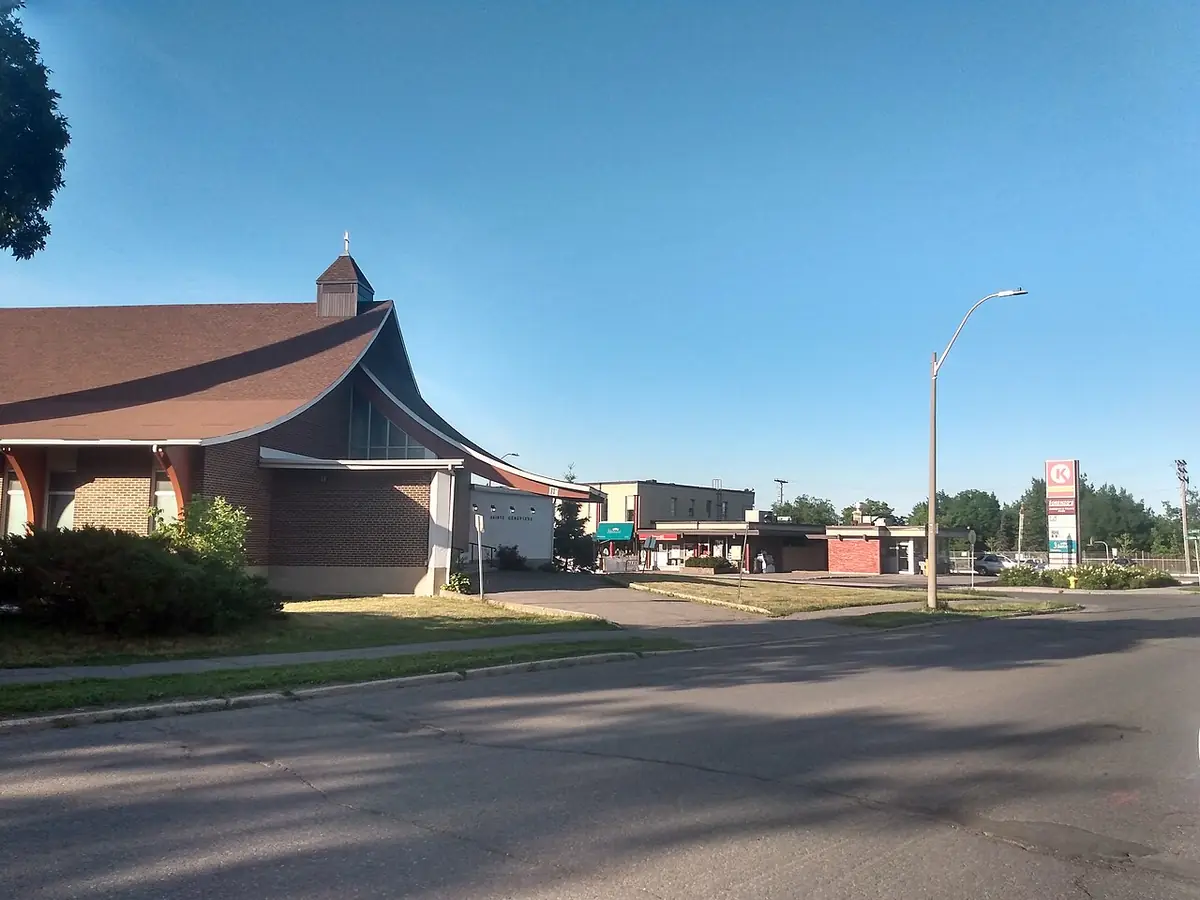
A neighbourhood church along an Ottawa street — Photo: Earl Andrew · CC BY-SA 4.0 · Wikimedia Commons
Well-oiled as that routine is, some realities of the local market deserve careful scrutiny before you sign.
Living in Ottawa means a routine set by the commute between residential neighbourhoods and employment areas, while working around Ontario public services. Between transit journeys on the O-Train or the OC Transpo network, the school drop-off, and the daily shopping, each stretch of the day is planned carefully to keep time spent travelling down.
07:15Residential neighbourhood (Kanata or Orléans, say)Morning preparation and a check of local weather conditions to anticipate the state of the roads in winter.
08:00Local public or Catholic schoolDropping the children at the local school, often within walking distance or a short drive for families.
08:45O-Train station or main road corridorThe journey downtown or out to the technology hubs of Kanata North, combining transit with the road network.
12:30Downtown Ottawa (Parliament Hill or Centretown)The lunch break and everyday errands, including quick access to local medical clinics and pharmacies.
17:30Local supermarket (Metro, Loblaws or Farm Boy)Fresh produce and the week's supplies, helped by the wide availability of regional chains.
18:30The family homeHome again, homework with the children and time to unwind in a quiet residential street.
What listings and property sheets leave out in Ottawa
Knowing these technical points spares you nasty surprises, as does recognising the classic mistakes inexperienced buyers make.
Beautifully staged photographs tell you nothing about Ottawa's urban and technical fabric. Behind the visual appeal of a property sit local specifics that often go unmentioned at open houses, whether that is the clay soil, the heritage constraints on certain areas, or the municipal infrastructure projects still to come.
Clay soils and the risk of drought movement
Much of the Ottawa area sits on clay that reacts to changes in moisture, which can affect foundation stability if watering around the house is not managed carefully through dry summers.
The strict rules of the conservation authorities
If you buy near the Ottawa River or the Rideau Canal, tight restrictions apply to any landscaping change or extension, in order to protect the banks and the surrounding environment.
Noise from the federal transport corridors
Being close to Highway 417 or the Sir John A. Macdonald Parkway brings constant noise, and it is worth testing that yourself at peak hours before you put in an offer.
The light rail (LRT) extension schedule
Transit infrastructure work can disrupt the calm of some neighbourhoods for a long stretch and can radically change traffic flows around your future street.
The traps and regrets that surface six months after moving to Ottawa
Given those demands, it matters just as much to know whether this market really suits the life you want.
Looked likeA charming single-family house on a large wooded lot in an outer suburb.
Turned outAn exhausting daily commute into the city centre during winter snowstorms.
Would have caught itDriving the exact route at peak hours on a Tuesday in November before you sign the final purchase.
Looked likeA handsome century-old duplex in a historic, fashionable neighbourhood.
Turned outPunishing electricity bills caused by period insulation, plus structural renovation nobody had planned for.
Would have caught itInsisting on a full energy assessment in the inspection report and budgeting for major work in the first year.
Looked likeAn extremely quiet, family residential street with no neighbours overlooking.
Turned outPronounced social isolation, with the car needed for the smallest local errand.
Would have caught itChecking the walking distance to parks, essential shops and health services before you settle on the area.
Looked likeA rental investment, or a house with quick extension potential.
Turned outComplex municipal planning restrictions that ruled out the changes envisaged under the current zoning.
Would have caught itGoing directly to the City of Ottawa planning department to confirm that the proposed work is permitted.
Who should not be buying a house in Ottawa right now?
If you have checked your profile and your motives, here is the conclusion to carry forward.
Buying property in the federal capital calls for professional and personal stability, and for a real attachment to the place. Not every profile comes out ahead in this market or under Ontario's climate constraints. Some buyers would gain a great deal by renting instead and keeping their financial and geographic flexibility.
The professional who moves internationally or between provinces often
→Postponing the purchase and taking a flexible long-term rental instead
Upfront transaction costs and mortgage break penalties swallow any potential gain if the property is sold again within five years.
The buyer with no appetite for manual and winter upkeep
→Moving towards managed rented accommodation or a condominium with services included
Maintaining a detached property in Ottawa means weekly physical chores and constant availability to deal with seasonal weather.
The household on a tight budget with no emergency savings
→Building a solid reserve fund first, before starting to look at all
A single major failure of the heating system or the roof in the depths of an Ontario winter can put an unprepared household's finances at risk.
So, are you ready to go ahead with buying in the Ottawa area?
A calm end to the day beside the water in Ottawa — Photo: ContribQC · CC BY-SA 4.0 · Wikimedia Commons
Committing to buy a house in Ottawa is a defining decision, and it means reconciling what you want personally with financial discipline and a clear view of Ontario's climate and urban realities. This guide has shown that success rests on anticipating the real costs, beyond the price shown on the listing portals, taking in property taxes, energy spending and the preventive maintenance that keeps the value of the asset intact.
Take the time to weigh your everyday priorities: would you rather have the autonomy of a house in a leafy suburb at the price of a regular commute, or the centrality of a more compact urban life? The trade-offs you find acceptable today will determine how satisfied you are with where you live over the next five to ten years. Never give in to haste or to the pressure of the moment, because property in Ottawa rewards patience, method and careful preparation.
In the end, if your finances are solidly anchored, if your investment horizon runs longer than a short economic cycle, and if you fully accept the responsibilities of owning and occupying a home, then Ottawa offers an exceptional, stable and reassuring setting in which to build your future. Surround yourself with capable local professionals (an independent inspector, an experienced mortgage broker and a real estate lawyer) to make every stage of the transaction secure.
Related questions
What are the usual legal closing costs when buying a home in Ottawa?
Legal fees and disbursements charged by a real estate lawyer in Ottawa generally run between $1,500 and $2,500. That covers a careful title search, verification of municipal charges, and preparation of the official mortgage documents.
How is municipal property tax calculated for a house in Ottawa?
Property tax in Ottawa is calculated by multiplying the property's assessed value, set by the Municipal Property Assessment Corporation (MPAC), by the tax rate approved each year by City of Ottawa council for the residential class.
Is a home inspection compulsory before buying in Ontario?
Ontario law does not formally require a pre-purchase inspection, but it is strongly advised to include an inspection condition in your offer so you can identify hidden defects, structural problems or a failing roof.
What is the Ontario land transfer tax for buyers?
Land transfer tax is a duty payable on closing. In Ontario it is calculated on a graduated scale according to the price bracket of the property, with a specific rebate available to qualifying first-time buyers.
Which Ottawa neighbourhoods work best for a car-free lifestyle?
For day-to-day living without a car, central areas such as Centretown, the ByWard Market, the Glebe and Hintonburg offer the highest concentration of local shops, cycling paths and direct connections to the city's public transit network.
What does an Ontario winter mean for maintaining a detached house?
Winter in Ottawa calls for particular attention to clearing the driveway, watching snow load on the roof, preventing exposed pipes from freezing, and managing the heating system through deep cold snaps.
Why does a survey of the property matter?
An up-to-date survey is crucial for pinpointing the exact property boundaries, the position of fences, any encroachments, and whether outbuildings comply with municipal planning rules.
Is it better to buy a single-family house or a condominium townhome?
It depends on how much exterior upkeep you are willing to take on. A condominium townhome hands responsibility for the building envelope and the roof to the condominium corporation in exchange for a monthly fee, while a single-family house gives you complete freedom over decisions and over the asset itself.
How long does a property transaction usually take in Ottawa?
The standard gap between acceptance of the offer and the closing date, when the sale is completed through the lawyers, is generally 30 to 60 days, depending on what buyer and seller agree between them.
How do you assess the energy efficiency of an older Ottawa house?
It is worth asking for the previous occupants' energy bills, checking the depth and type of insulation in the attic, and finding out the age of the natural gas or electric heating system and of the windows.
Property review of ting
No ting properties in Ottawa yet
Be the first — share it on ting and it shows up right here.