Settling into Canada's federal capital by renting a house means getting to grips with the local market, the residential neighbourhoods and Ontario tenancy law. This guide walks you step by step through building a life in Ottawa with confidence.
Get the app
What nobody tells you.
Real prices, hidden costs and the traps to check before you commit.
What renting a house in Ottawa really changes about daily life
Scroll
What renting a house in Ottawa really changes about daily life
Settling into Canada's federal capital by renting a house means getting to grips with the local market, the residential neighbourhoods and Ontario tenancy law. This guide walks you step by step through building a life in Ottawa with confidence.
Written by the ting.ad editorial team ·
Elgin Street, Ottawa in Street View: drag to look around.
Beyond these practical considerations, the choice of home has to line up precisely with your stage of life and your working habits.
Renting a detached or semi-detached house in the federal capital transforms your relationship with space and with the city. Unlike the dense condominium blocks downtown, living in a house in Ottawa means managing far more floor area, a private lot and demanding winters. That shift redefines not only your monthly budget but also how you spend your time and how you move between the residential neighbourhoods and the places where things happen.
More space and a private lotvsTaking on the upkeep and the grounds yourself
A garden and extra rooms are worth a great deal to a family, but they translate into unavoidable weekly chores. Snow clearing in winter and mowing in summer take steady physical effort and time, and many tenants underestimate both.
The quiet of the residential neighbourhoodsvsA longer trip to fast public transit
Suburban streets guarantee real calm and plenty of green space, but they often sit some distance from O-Train stations. Your daily journeys then need tighter planning, especially at peak times on major routes such as Highway 417.
An energy bill spread over a lot of volumevsHigher heating and air conditioning costs
Heating a whole house through Ontario winters, when the thermometer stays below freezing for long stretches, is a serious line in the budget. Unlike an apartment sheltered by the units around it, a house takes the weather directly on every side.
What kind of tenant are you as you settle into the capital?
For newcomers arriving from abroad, the Canadian rental market holds administrative and cultural surprises worth knowing about in advance.
Ottawa's urban structure, alternating lively urban cores with wide suburban rings, forces clear-cut choices. Whether you are here for a professional posting of a few years, looking for a stable family base, or determined to do most things on foot, a house answers very different needs. Reading your own situation honestly saves you from settling in the wrong place in the first few months.
Professional mobility
If your time in the region is tied to a fixed-term contract in the federal public service or with an international organisation, a detached house may be more logistics than you need. Running a standard residential lease and looking after a lot demand a stability you may not yet have. It is often wiser to look at well-connected middle-ring areas, which keep the paperwork light and make it far easier to move on when the time comes.
Putting down family roots
For families planning a long stay, a house in Ottawa becomes the obvious option: a secure setting with room to grow. Being close to parks, to well-regarded public or Catholic schools and to leisure facilities matters more than being close to the very centre. You get a strong local community, living space that fits and the kind of residential stability that is much sought after in the national capital region.
Hybrid or remote working
Professionals splitting their week between an office and home find in Ottawa's residential neighbourhoods the chance to set up a proper enclosed, well-lit study. Being able to shut a door on a dedicated room while green space and open country sit a few steps away changes quality of life outright. In that case the relative distance from downtown stops mattering, and the acoustic and thermal comfort of your workspace matters instead.
What changes most when you arrive from abroad and rent here
Ottawa's river-lined green spaces, seen from above — Photo: Harleyd613 · CC BY-SA 4.0 · Wikimedia Commons
Once those administrative bearings are in place, everything comes down to choosing where in the city to unpack your boxes.
Moving to Ottawa from another country quickly confronts a tenant with legal and contractual habits that work quite differently. The Ontario rental system runs on specific rules set out in the Residential Tenancies Act, and the background checks and guarantees landlords ask for bear little resemblance to the rental files newcomers are used to assembling.
From abroad
A rental file stuffed with payslips and named human guarantors
Ottawa
A check built around credit, solvency and employment references
In Ontario, landlords rarely ask for a family member to stand as joint guarantor, but they do expect a credit check and a verifiable employment letter. Arriving with no local financial history complicates things, and it often means offering alternatives such as paying several months ahead, though what can be asked for is regulated.
From abroad
Rent increases tightly framed by official national indices
Ottawa
Increase rules that vary with the year the building was completed
It is essential to check whether the property you are renting is covered by rent control. Homes built and occupied for the first time after November 2018 do not benefit from the same protection against rent increases, which can catch out tenants used to a single regulated ceiling.
From abroad
Notice periods counted in months, shortened in high-pressure markets
Ottawa
Sixty calendar days' notice, tied strictly to the end of the lease term
In Ontario a residential lease is usually agreed for a firm term of one year and then converts automatically to a month-to-month tenancy. To end it you must notify your landlord in writing at least sixty days before the effective termination date, or the agreement simply rolls on.
From abroad
A written condition report drawn up by a bailiff or an appointed agent
Ottawa
An informal joint inspection where photographic proof is what really counts
Inspection culture here rests on mutual trust and common sense, but the absence of strict legal formality is no reason to be casual about it. Take dated photographs of every room when you move in, and you will avoid a tangled dispute when the keys go back.
Which part of Ottawa matches your way of life and your commute?
That choice of neighbourhood sets the financial reality of your rental plans in the capital.
Ottawa is made up of historic neighbourhoods with real character, lively central districts and wide, green residential suburbs. Each zone has its own rhythm, its own access to public transit and its own advantages. Weighing travel time against local energy and living space is essential before you sign a lease.
The Glebe / Old Ottawa South
A walkable, animated neighbourhood lined with handsome older houses, shaded parks and independent local shops along Bank Street.
Suits
Families and professionals who want unmatched historic character and a lively neighbourhood life within walking distance.
Trade-off
Rents are among the highest in the city, for houses that are often old and carry substantial energy bills.
Westboro / Hintonburg
A creative, contemporary feel set by specialty coffee shops, design boutiques and the banks of the Ottawa River close at hand.
Suits
People who want an active, outdoor-facing lifestyle linked to the centre by cycle paths and the O-Train.
Trade-off
Strong demand keeps the rental market permanently tight, so listings are scarce and go quickly.
Kanata / Barrhaven
Modern, spacious residential developments organised around large shopping centres, newer schools and wide, safe green spaces.
Suits
Families who want generous living space, a comfortable private lot and a calm setting to raise children in.
Trade-off
The distance from downtown means long road journeys at peak times and a much greater reliance on the car.
Centretown / Glebe Annex
The urban compromise at its best, mixing federal institutions on the doorstep with relative residential quiet on the side streets.
Suits
Working people who want to cut commuting to nothing and enjoy the cultural and food scene of the city centre.
Trade-off
The stock of individual houses to rent is very limited, dominated by condominiums and townhouses with small outdoor space.
What should you really budget to rent a house in Ottawa?
A quiet Ottawa neighbourhood, seen from the air — Photo: Harleyd613 · CC BY-SA 4.0 · Wikimedia Commons
Beyond the raw figures, the legal structure of the property and the type of home you rent deserve close attention.
Ottawa's rental market reflects its position as a stable federal capital under constant demographic pressure. Setting a realistic budget goes well beyond the advertised monthly rent: you have to fold in everything a detached house brings with it, from utilities to insurance and seasonal upkeep.
ottawaTo rentHouseestimate
Median price / m²CA$20Half the apartments sell below this
Median priceCA$3.1kthe average is 14% higher — a few very large properties pull it up
Most common2 bedrooms68 % of listings
Average size145 m²
By number of bedrooms
Bedrooms
Share of market
Avg price
Price / m²
Avg size
2most common
68 %
CA$3.17k
CA$21
149 m²
3
26 %
CA$3.82k
CA$20
193 m²
4
6 %
CA$4.7k
CA$19best value / m²
245 m²
Each row is an average, compared against the area average of CA$21 / m². These are indicative estimates of a typical local market, not a measured sample of live listings. Check current listings before relying on them.
What you can actually rent, and how much of it you control
Before you commit financially and hand over any money at all, one fundamental rule of Ontario tenancy law applies.
Ottawa's rental market offers two broad kinds of residential structure, and they change your day-to-day autonomy and your dealings with the landlord considerably. Understanding the legal difference between a free-standing detached house and a house inside a condominium (a condo townhouse) spares you the friction that condominium rules can create.
The free-standing detached house
You rent a whole building and its private lot, with no condominium rules layered on top. The owner or the property manager deals with you directly for major structural repairs. You have complete freedom in how you use the garden and the outdoor space, provided you respect the City of Ottawa by-laws on noise and tidiness.
What it changesYou get complete privacy and maximum flexibility, but you carry a larger share of the watchfulness over how the grounds are kept.
The house inside a condominium (condo townhouse)
This home is part of a development run by a condominium corporation that sets strict rules on exterior appearance, vehicle parking and the use of common areas. The condominium fees are the owner's responsibility, but the restrictions in the corporation's by-laws apply directly to you as the tenant.
What it changesExterior upkeep is fully taken care of (lawn, snow clearing on the common areas), but you have to live with rules that can feel constraining.
The essential legal rule to understand before you hand over any money
A waterfront restaurant along Ottawa's riverside — Photo: SpaceplaneSus · CC0 · Wikimedia Commons
With those legal basics in hand, the practical progress of the deal follows a clear timetable worth planning for.
Residential tenancy law in Ontario runs on strict provisions of public order designed to protect both sides, but they demand steady attention from anyone applying for a home. Understanding the legal sequence of a tenancy protects you against sharp practice and against cultural misunderstandings.
Viewing the property and formally expressing your interest to the landlord or their real estate agent.
Checking the mandatory standard form of lease that the province of Ontario requires for all residential tenancies.
Handing over the legal rent deposit, which in Ontario can only amount to one month's rent paid in advance (normally the last month of the tenancy) and is applied to the end of the lease.
Signing the tenancy agreement jointly, fixing the move-in date, the rent and the respective upkeep responsibilities.
Taking out the liability and contents insurance that almost every landlord requires before the keys are handed over.
Taking possession on the first of the month, after a careful inspection of the condition of the property.
How a rental deal unfolds, step by step
Renting successfully in Ottawa means structuring the process into distinct phases, from the first online search to the day you actually move in. Each party plays a defined role, and knowing what that role is keeps the exchanges moving.
The tenantGetting the financial file readyGather your proof of employment and your past rental references in advance, and get a copy of your Canadian credit report so you are ahead of the competition.
The agent / landlordTargeted viewings and choosing the propertyView properties with a close eye on the insulation, the heating system and the general state of the roof and the foundations.
The tenantSubmitting the offer (agreement to lease)Write a clear offer setting out the rent offered, the length of the lease, the move-in date you want and any conditions attached.
The landlordReviewing and accepting the applicationThe landlord assesses your solvency and your history before formally accepting your proposal and countersigning the Ontario standard lease.
The tenantPaying the last month's rent in advanceTransfer the funds for the legal last month's rent deposit by a traceable, secure method that both sides have agreed on.
Both partiesMove-in inspection and handover of keysWalk through the whole house, record its condition in writing and in photographs, then collect the keys and start settling in.
Detached house or condominium in Ottawa: which kind of rental should you choose?
Now that you have a sense of the kind of home that fits your rhythm, it is time to look at what your rental plans will actually cost.
Choosing between a detached house and another kind of rental home in Ottawa shapes your daily life directly. Residential neighbourhoods such as the Glebe or Westboro offer detached houses with private lots, but they ask for real time and money on outdoor upkeep, particularly through the hard winters when snow clearing and keeping an eye on the roof fall to whoever lives there under the terms of the lease. That autonomy comes with more space and more privacy than almost any other option in the city.
Renting a condominium unit or a townhouse instead, in busy districts such as Centretown or the ByWard Market, simplifies daily life because the upkeep is pooled. The trade-off is that you live under the strict rules set by the condominium corporation, and those rules reach you as a tenant even though the fees are the owner's to pay. You have to weigh precisely whether freedom to use the outdoor space matters more to you than peace of mind about maintenance.
Financially, the gap between renting a whole detached house and renting a condominium in Ottawa feeds straight into what you can still save each month. The running costs attached to an older house, energy above all, frequently outweigh the convenience of a smaller, better-insulated unit over the course of a year. Your decision should therefore rest on a clear-eyed look at your tolerance for the unexpected and the time you have to keep a home running.
Finally, geography usually dictates what type of home is on the market at all. The areas near downtown and the O-Train stations lean towards urban density and apartments, while the outer suburbs, from Kanata to Orleans, are built around the detached house with a garage. Accepting those geographic and architectural compromises is the first unavoidable step in settling into the federal capital.
What budget should you plan for to live in Ottawa for the long term?
With the budget framework in place, it helps to understand how daily life in the city is actually organised.
Renting a house in Ottawa goes well beyond the rent transfer itself. You have to fold in the utilities that come to you separately, energy above all, which are heavy because Ontario winters are long and hard, along with the tenant insurance premium that almost every landlord requires. The property tax and the condominium fees stay with the owner, which simplifies the picture but does not make it small. Planning these unavoidable costs carefully keeps the first year of the tenancy free of unpleasant surprises.
Monthly cost lines for a rented house in Ottawa
Budget line
Estimated range
What moves it
Rent for a house (median to average)
$3,100 to $3,530 / month
Neighbourhood, floor area, condition of the house and how tight the market is
Heating and electricity (Hydro Ottawa)
$200 to $450 / month
Floor area, insulation and how severe the winter turns out to be
Tenant insurance
$100 to $200 / month
Claims history, value of contents and location
Rent for a larger four-bedroom house
$4,700 / month
Number of bedrooms, size of the lot and distance from the core
The purchase-side figures in the original table (property tax, reserve fund) belong to the owner, so this table has been rebuilt from the rent and running-cost figures given elsewhere on this page. The amounts are indicative averages for the Ottawa rental market and vary with each property.
One-off costs at the start of a tenancy in Ontario
Type of cost
Amount
When it is paid
Rent deposit (last month's rent)
One month's rent, so roughly $3,100 to $3,820
On signing the lease
First month's rent
One month's rent, so roughly $3,100 to $3,820
On or before the move-in date
Tenant insurance, first premium
$100 to $200
Before the keys are handed over
Ontario caps the deposit at one month's rent and it can only be applied to the last month of the tenancy, so a separate damage deposit cannot be demanded on top.
Health care, schools and transport: what does an ordinary Tuesday in Ottawa look like?
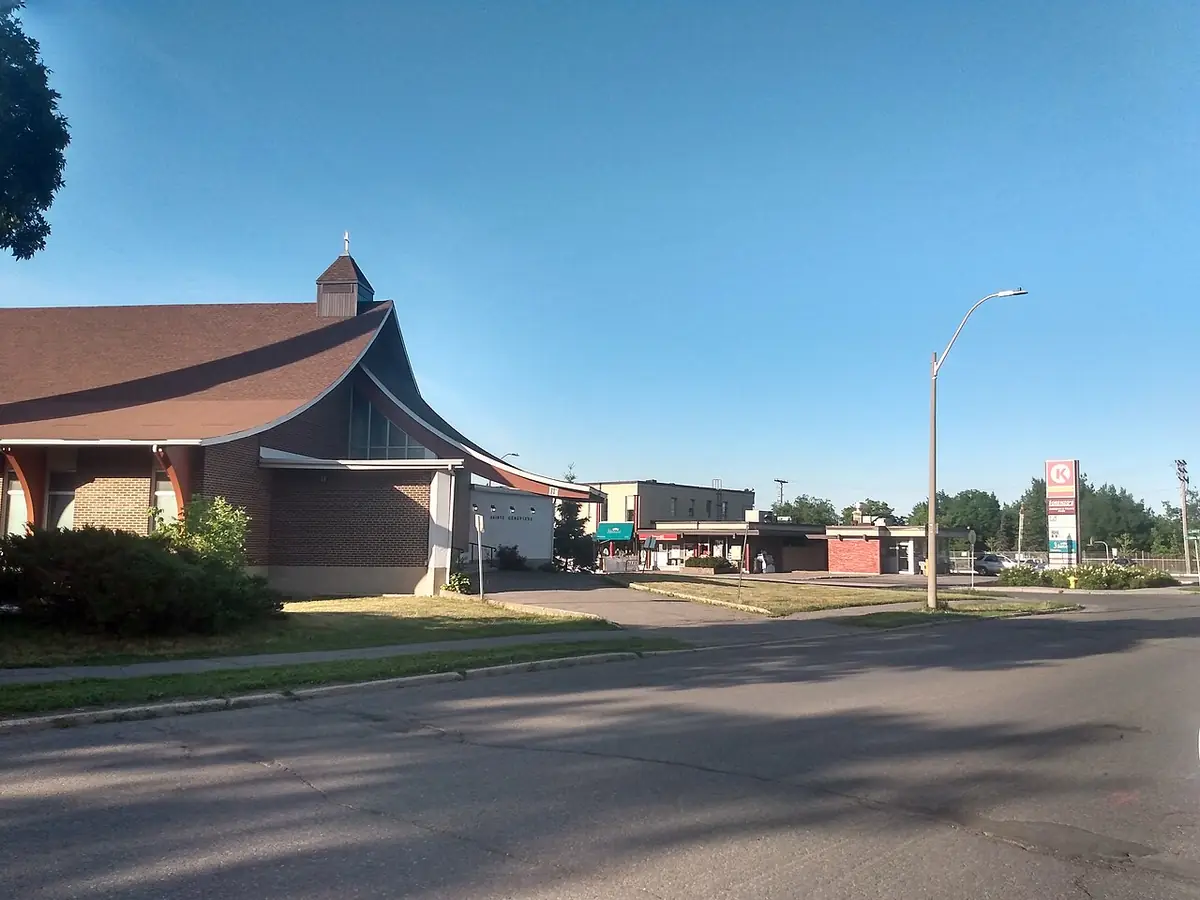
A neighbourhood church along an Ottawa street — Photo: Earl Andrew · CC BY-SA 4.0 · Wikimedia Commons
Beyond that well-oiled routine, plenty of things never appear in a listing and deserve your full attention.
How a typical day in Ottawa is organised depends closely on where you are in relation to the transport routes and the essential services. Between the commute downtown, school activities and getting to health services, every minute counts. Municipal infrastructure works to keep things flowing, but winter conditions often set a more measured pace than the summer months do. Here is how an ordinary Tuesday plays out for a resident of the capital.
07:30Residential street and the school runChildren take the yellow school bus or walk to the school for their catchment, in the French-language or English-language board depending on the choice made.
08:15The commute to workTaking the O-Train (Line 1) or the main road routes such as the Sir John A. Macdonald Parkway or Highway 417 to reach downtown.
12:30Lunch break and services close at handMaking use of the local shops and the green space nearby for a proper break in the middle of the working day.
17:00Home again and neighbourhood errandsA stop at the local markets or the larger stores for the weekly shop, timed to miss the worst of the rush.
19:30Leisure and community activitiesMunicipal arenas, the Ottawa Public Library branches or the outdoor trails, depending on the season.
What listings and quick viewings will never tell you about Ottawa
These overlooked technical points are often what turn into sour regrets, and they can be anticipated and avoided.
Renting a house in Ottawa sometimes holds technical and planning surprises that the advertising photographs leave out. The geology of the ground, the age of the buried infrastructure and strict municipal rules all feed directly into how comfortable the home is to live in. Knowing about them beforehand protects you from disruption and from arguments with a landlord later on.
The clay soils under Ottawa
Moisture swings in the Leda clay found in several parts of the city cause ground movement that can damage foundations. Look carefully at the weeping tile drainage and at how dry the basement is before you sign, and report any crack or damp patch to the landlord in writing straight away.
The age of the sewers and water pipes
Some mature neighbourhoods still have lead service connections or ageing pipework that needs costly upgrading. The City of Ottawa sometimes requires that work when a street is rebuilt, and in a rented house it can mean disruption, water shut-offs and contractors on site for weeks.
Zoning and heritage restrictions
In historic areas such as the Glebe or Sandy Hill, what can be changed on the outside of a house is tightly limited. Municipal planning committees scrutinise every project, which means repairs and improvements your landlord has promised can take far longer to arrive than either of you expects.
Noise and proximity to transport routes
Heavy traffic on the Queensway (Highway 417) or passing trains generate constant noise that you will not notice on a quiet Sunday afternoon viewing. Visit the area at different peak hours before you commit to a full year of it.
The misjudgements you only discover after six months of living here
Now that the traps are clearly identified, the fundamental question is whether renting a whole house really suits you.
Looked likeA charming older house full of character in a leafy, peaceful central neighbourhood
Turned outAn energy sieve with punishing heating bills, badly in need of new insulation and windows
Would have caught itAsking to see the utility bills for the past three years and checking the windows and the attic yourself before you sign.
Looked likeA large wooded lot on the edge of town promising absolute quiet and nature on the doorstep
Turned outA logistical nightmare to keep up, thick with mosquitoes in summer and cut off during winter ice storms
Would have caught itChecking how well the municipal snow clearing serves the street, and pinning down in the lease who clears the drive and the walk.
Looked likeAn affordable rental in a district in the middle of gentrifying
Turned outA property outside rent control where the increases kept coming with no ceiling to fall back on
Would have caught itEstablishing when the building was first built and occupied, and reading the standard lease carefully before you commit.
Looked likeA house right beside the main road routes, guaranteeing quick access to the whole region
Turned outConstant air and noise pollution that makes it impossible to enjoy the outdoor space in summer
Would have caught itConsulting the City of Ottawa noise maps and noting the prevailing wind direction relative to the highway.
Unusual cases: who should avoid renting a whole house in Ottawa?
It is time to pull all of this together so you can make your decision with your eyes open.
Renting a whole house is not a universal answer, and for some profiles it carries real financial and practical risk. If your professional or personal situation lacks stability, committing to a firm one-year lease on a detached house in the federal capital can become a burden. It is sometimes far wiser to take something smaller and keep your flexibility and your savings intact. Here are the profiles for whom renting a house in Ottawa is best avoided.
Professionals who move internationally or between provinces often
→Renting a flexible apartment in downtown Ottawa instead
An Ontario lease is normally a firm one-year term with sixty days' written notice to end it, so breaking it early to follow a posting is costly and awkward.
Households with very little in the way of emergency savings
→Keeping cash liquid and renting a smaller, cheaper home
A house asks for the rent deposit plus the first month up front, and heating a whole house through an Ontario winter is a monthly cost that a thin buffer cannot absorb.
People with no appetite for maintenance and outdoor chores
→A condominium townhouse where the exterior upkeep is handled for them
The lease on a detached house in Ottawa hands you constant seasonal work: mowing, weeding and snow clearing all take real time and physical effort.
So, are you ready to sign a lease on a house in Ottawa?
A calm end to the day beside the water in Ottawa — Photo: ContribQC · CC BY-SA 4.0 · Wikimedia Commons
Deciding to rent a house in Ottawa means setting aside the pressure of a tight market and the alarming talk about scarcity. Your decision should rest on a clean match between how long you expect to be in the region, how solid your financial cushion is and how willing you are to take on what a house demands. If you plan to stay in the federal capital for years rather than months, a firm one-year lease with a proper garden and proper space makes complete sense.
Remember that the perfect house does not exist and that every rental choice involves compromises of geography, layout or budget. Letting go of a few superficial criteria in favour of what really matters (the quality of the location, how well the building is looked after, and keeping your overall budget under control) is what makes the search calm rather than fraught. Take the time to read every clause of the standard lease, and get any promise about repairs or upkeep written into it.
In the end, renting a house in Ottawa should be seen as a considered move rather than a snap decision made under pressure. By preparing your budget carefully, planning for the severity of the Ontario climate and judging honestly how much day-to-day upkeep you can handle, you turn this step into a settled and lasting home for you and your household.
Related questions
What money do you have to hand over to sign a lease in Ottawa?
Ontario allows a landlord to collect a rent deposit that can only be applied to the last month of the tenancy, and it cannot exceed one month's rent. Add the first month's rent on the move-in date and, in almost every case, proof of a tenant insurance policy before the keys change hands.
Who pays the municipal property tax on a rented house?
The property tax bill belongs to the owner, not to you. It is worked out by multiplying the value assessed by the Municipal Property Assessment Corporation (MPAC) by the rate the City of Ottawa council sets each year, and the landlord builds it into the rent rather than billing you for it.
Is a formal move-in inspection required in Ontario?
Ontario law does not impose a formal, notarised style of inventory, and the walk-through is usually an informal joint inspection. That makes your own record essential: take dated photographs of every room, the basement and the exterior on the day you move in so nothing is disputed when you hand the keys back.
How are rent increases controlled for a house in Ottawa?
It depends on the building. Homes built and occupied for the first time after November 2018 do not benefit from the same protection against rent increases, so check the status of the property before you sign rather than assuming a fixed ceiling applies.
Which Ottawa neighbourhoods offer the best balance of city life and quiet?
Areas such as Westboro, Hintonburg or the Glebe combine quick access to public transit and cycle paths while keeping the residential feel that families look for.
How does the O-Train network work for commuters?
The O-Train is made up of light rail lines crossing the city east to west and south to north, connected to a large bus network run by OC Transpo that serves the suburbs.
What should a tenant watch for given Ottawa's clay soils?
The Leda clay found in several parts of Ottawa shrinks in dry spells and swells in wet ones, which can crack foundations. Check the drainage system and the way the ground slopes away from the house, and report cracks or basement damp to the landlord in writing early.
How long does a residential lease in Ottawa normally run?
A residential lease is usually signed for a firm term of one year and then rolls automatically into a month-to-month tenancy. To end it you must give the landlord written notice at least sixty days before the termination date, or the agreement simply carries on.
Who is responsible for repairs and upkeep in a rented house?
Major structural repairs sit with the owner or the property manager, who deals with you directly. The lease sets out the day-to-day duties, and in a detached house snow clearing, lawn mowing and general tidiness of the grounds are commonly the tenant's job.
Is it better to rent a detached house or a condominium townhouse?
It depends on your way of life and your tolerance for rules. A condominium townhouse comes with the exterior upkeep handled for you but imposes the corporation's restrictions, while a detached house gives you far more autonomy and demands real time for seasonal maintenance.
Property review of ting
No ting properties in Ottawa yet
Be the first — share it on ting and it shows up right here.